
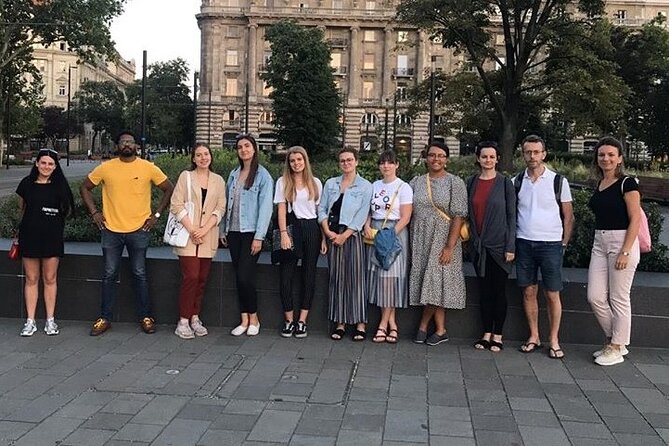
Reviewed · COMMUNIST ERA HISTORY TOURS
Communist History Evening Walking Tour of Budapest
Communism in Budapest is written in stone. I love how this tour connects big ideas to everyday life, and I love the small-group pace that keeps questions welcome. One thing to plan for, though, is that some stops happen on busy streets where you may be standing around for a bit while the guide sets the scene.
I also like that it is not just a list of famous buildings. You get a guided walk that helps you read what changed, what disappeared, and what Hungary lived through, with bottled water and an easy-going evening start. The route is only about 3 km, but you still need to be comfortable walking that distance yourself.
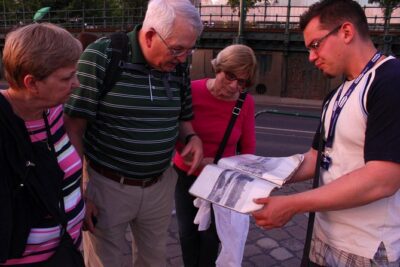
A frequent highlight is the English guide Victoria, praised for clear explanations and a professor-style approach, with stories and humor that make heavy topics easier to follow. If you want mostly museum-style information, you might find this less your style, since it is built around street-level history and strong context.
In This Review
- Key things you will notice on this tour
- Why a communist history walk works best at dusk in Budapest
- Getting your bearings on Andrassy Avenue’s changing monuments
- St. Stephen’s Basilica: faith under communism, and a football escape story
- Liberty Square: the Stock Exchange that closed and protests that flared
- Parliament Building and the 1956 uprising against the ruling communist party
- What you actually learn, from regime mechanics to today’s everyday effects
- Small group pace, clear English, and why it matters on serious topics
- Comfort, walking distance, and how to dress for the evening
- Price and value: what you are paying for at about $36
- Pair it with the Museum of Terror if you want the sharper edge
- Who should book, and who might want a different kind of history tour
- Should you book this communist history evening walking tour?
- FAQ
- What is the duration of the Communist History Evening Walking Tour of Budapest?
- What time does the tour start?
- Where is the meeting point?
- Where does the tour end?
- Is the tour offered in English?
- Is bottled water included?
- How far do you need to walk?
- What is the maximum group size?
Key things you will notice on this tour
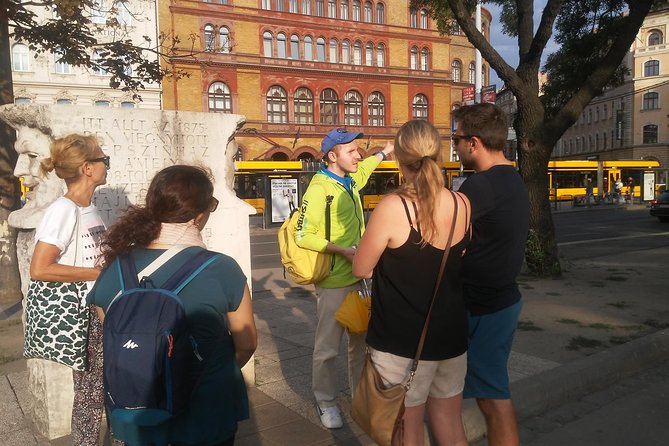
- Andrassy Avenue context: you learn what changed along the avenue and where earlier monuments went or reappeared in new ways
- St. Stephen’s Basilica connections: you connect church life under communism to a famous Hungarian footballer’s escape and burial there
- Liberty Square as a turning point: you see how the Stock Exchange era shifted under the new regime and how protests erupted
- Parliament Square and 1956: you get a grounded explanation of the uprising against the ruling communist party
- A small group feel: capped at 15 travelers, the tour keeps attention on your questions and not just the schedule
Why a communist history walk works best at dusk in Budapest
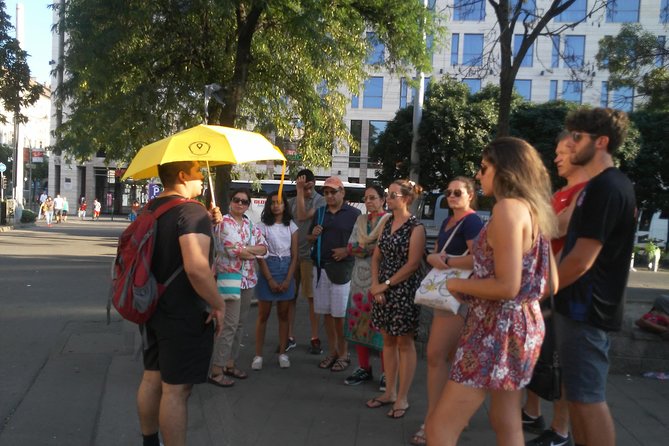
Budapest at early evening has a way of making old decisions feel closer. Streetlights soften the edges of grand façades, and that matters here because communist history is not just dates. It is also control, fear, propaganda, and the way people adapted while still going to work, worship, and play football.
This tour is designed for that kind of learning. You walk through central areas and get a story you can picture, not a slideshow you forget on the tram ride home. The timing also fits real travel life. Starting around 6:00 pm means you can do a morning sightseeing plan, eat lunch, then shift to history without burning your whole day.
The best part is the perspective. Instead of treating communism as a closed chapter, the guide explains how the era echoes in today’s Hungary. That is what helps the sites stop being just pretty backdrops and turn into something you can interpret.
And yes, you will spend time outdoors. On a cold or rainy evening, you will want a coat and shoes you trust.
Getting your bearings on Andrassy Avenue’s changing monuments
The tour starts at Blaha Lujza tér, then moves you into one of Budapest’s most recognizable corridors: Andrassy Avenue. This is not a random warm-up walk. The guide uses the avenue to show how the city’s look and symbols shifted over time, including references to former monuments and how certain areas changed under different political eras.
Andrassy Avenue is also a useful anchor for your trip. Even if you have seen it before from photos, walking it with political context helps you spot what you might otherwise miss, like the way power tends to claim prime real estate and visible lines of sight. It also helps you understand why people would have felt communism in the urban design, not just in government offices.
Along the way, the tour covers a large patch of central Budapest, hitting areas across districts including VIII, VII, VI, and V. That breadth is part of the value. A lot of city-history tours focus on one neighborhood. Here you get a wider map of how the communist era touched different parts of the city.
If you are sensitive to crowding, keep in mind you will be in a very public place. You may have moments where you are listening while walking through active street areas.
Further tours of Hungary’s state-socialist years:
- Budapest: Communist History Tour with House of Terror Option
★ 4.8 · 182 reviews - Communism in Hungary with a Historian
★ 5.0 · 70 reviews - Budapest: 3-Hour Walking Tour About Communism (Small Group)
★ 4.7 · 70 reviews
St. Stephen’s Basilica: faith under communism, and a football escape story
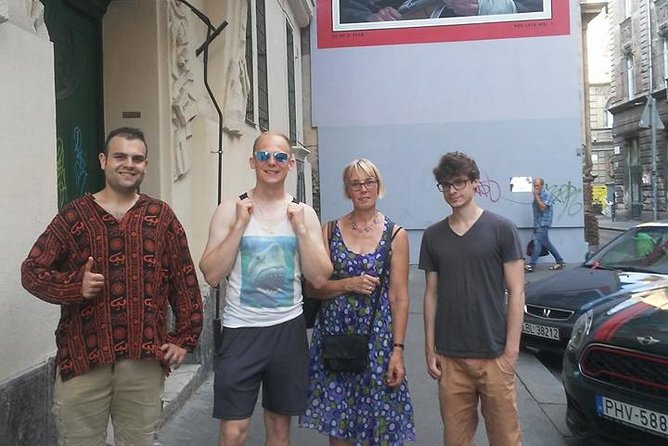
St. Stephen’s Basilica, Szent Istvan Bazilika, is one of those stops that lets you feel the contrast between politics and personal life. From the outside it looks like a monument to faith and national identity. The guide then reframes it by explaining how communism impacted Hungarian church and religion, and how religious life operated under an atheist-leaning state ideology.
This is where the tour becomes more than architecture. The guide connects the political pressure on institutions to what it meant for everyday believers. You get a sense of how religion could be both protected by tradition and challenged by the rules of the regime.
Then comes a story that makes the whole stop memorable: the basilica’s connection to a famous Hungarian football player who fled the communist system and was later buried at the church. Even if you already know who that is, the point of the story is bigger than name recognition. It shows how communist power affected ordinary ambitions, including sports careers and the choice to leave.
Time-wise, this stop is short, around 10 minutes. That is the right length if you are trying to cover several major sites in two hours. The basilica is also a strong landmark for photos, so you are not just learning in place.
Practical note: the tour states the admission ticket here is free, so you are not paying separately to access the stop.
Liberty Square: the Stock Exchange that closed and protests that flared
Next up is Liberty Square, a place many people pass through quickly without realizing why it matters so much. Here, the guide focuses on communist-era disruption, including what happened to the Stock Exchange, which was located there and shut down at the start of the communist period.
That is a powerful detail because it turns the political story into an economic one. Communism was not only about ideology and policing. It also changed who controlled money, markets, and opportunity. The closed Stock Exchange becomes a symbol you can point to, and suddenly the theme of loss is not abstract.
The tour also links Liberty Square to protest history. The guide explains that the square became the site of bloody protests. That gives you a clearer mental image of where conflict played out and how the public responded when things tightened.
This stop is around 15 minutes, which feels like the sweet spot for a square-based story. Squares are open, but they can be noisy. You will want to keep your focus and listen closely as the guide explains what to look for.
If you are hoping for a quiet, scenic break, this is not that stop. It is about meaning, and sometimes meaning lives in places that do not feel serene.
Parliament Building and the 1956 uprising against the ruling communist party
The last major viewpoint is the Hungarian Parliament Building on or near Parliament Square. This is the stop where the tour’s theme lands hardest: the 1956 uprising against the ruling communist party, including the reality that considerable blood was shed.
You will likely recognize the building instantly, but the guide’s framing changes what you notice. Instead of thinking only about grandeur, you start seeing political stakes in urban design, crowd movements, and the way power was confronted.
1956 is one of those moments that can feel big and vague when you read it in a book. On this tour, the explanation is built for street learning. You get context that makes it easier to connect the uprising to the places you are standing near now, including how people gathered and how the state responded.
This stop is also about 15 minutes, so you do not get an overwhelming history lecture. You get a focused, emotional outline that makes the rest of your Budapest trip feel more coherent.
The tour ends at Kossuth Lajos tér 1-3, close to either Kossuth red line metro station or tram 2. That ending is smart. You can step right into transit while the story is still fresh.
More of the city, bank to bank on foot:
- Budapest: Buda Castle Walk with Saint Stephen’s Hall★ 4.5 · 3,012 reviews
- Big Bus Budapest Hop-On Hop-Off Bus and Walking Tour★ 3.5 · 2,206 reviews
- Budapest: Buda Castle District Walking Tour★ 4.6 · 2,108 reviews
What you actually learn, from regime mechanics to today’s everyday effects
The strongest praise you will hear about this tour is how it ties communist history to present-day Budapest. That is exactly how I think you should use a walking tour like this. Otherwise, you risk learning dates and losing the human meaning.
Here, the guide’s approach is more like a class than a brochure. The explanations help you understand the logic of control and the way people navigated it. That includes learning how institutions and public spaces reflected the regime, and how resistance showed up in protests, choices, and sacrifices.
There is also a subtle bonus: you start noticing Hungary as a country shaped by pressure and survival, not just by politics on paper. That kind of viewpoint sticks when you continue sightseeing after the tour.
One extra detail that can enrich the experience is the mention of how the story of communist repression connects to memorial and resistance themes in the city. If you are the type who likes to follow a thread across sites, this tour gives you a thread worth pulling.
Keep expectations realistic. In two hours you cannot master everything about Hungary in the communist era. What you can do is get a strong foundation that makes other visits, like museums and memorials, hit harder.
Small group pace, clear English, and why it matters on serious topics
This tour caps at 15 travelers, and that size is not a minor detail. With serious topics like censorship, church restrictions, protests, and 1956 violence, a large group can turn listening into guessing. Here, the small group structure helps you stay connected to the guide and ask questions.
The most common compliment is the guide’s style. The English guide, mentioned by name as Victoria, is described as having a professor-level way of teaching, plus humor and clear speech. That combination matters because it keeps the content from turning heavy in a way that shuts people down.
It also helps you learn more than the basics. Instead of just walking past landmarks, you get explanations for how and why things changed. That is the difference between seeing a square and understanding its role.
Bottled water is included, which is a nice practical touch. Even on a cool evening, you will talk while walking and listen while standing. Having water makes the experience smoother.
Comfort, walking distance, and how to dress for the evening
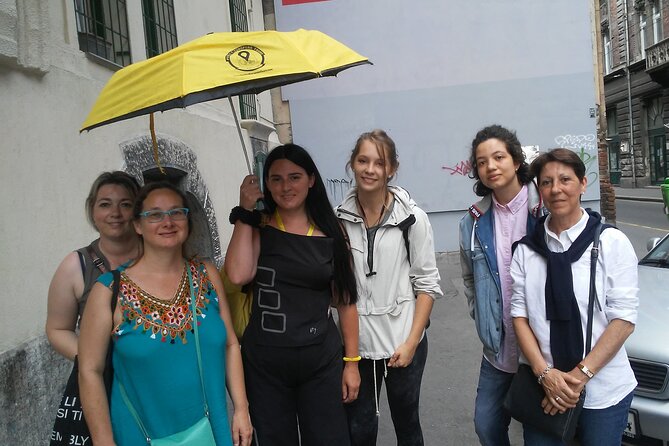
Plan on about 2 hours total, with the walking broken up by short stops. You are expected to walk (or wheel) on your own for around 3 km. If you pace yourself, that is manageable for most visitors, including those who are not super fast walkers.
Because the tour is outdoors, weather matters. The experience is described as weather-dependent, so you should keep an eye on conditions the day of your booking. If rain is likely, wear shoes with grip and bring a compact layer.
You do not need to worry about special equipment. The provided info specifically does not include anything like scuba gear, so you can travel light. Service animals are allowed, and the tour is near public transportation, which makes it easy to connect before or after.
The end point near Parliament Square is also convenient. You are not stranded on the edge of town.
Price and value: what you are paying for at about $36
At $36.01 per person for an English guided walking tour, you are paying for three things: a time-efficient route, expert interpretation, and a small-group setting.
This is not a ticketed museum experience where you are just buying access. You are buying a guide who can connect political shifts to the specific buildings and squares you see. In two hours, that is hard to replicate on your own without spending time researching every site.
Value also comes from what is included. Bottled water is included, and at least one key attraction stop, St. Stephen’s Basilica, is listed as free admission ticket for this tour. That means your main costs are straightforward.
You should still consider what you want from your Budapest trip. If you are only after postcard sights, this might feel more focused on interpretation than on beauty. If you want context, you will likely feel the price is fair because the tour is doing real work for you: explaining the why behind what you see.
Pair it with the Museum of Terror if you want the sharper edge
One of the best practical add-ons mentioned is the Museum of Terror. If you are hungry for more detail on how the communist era operated, this walking tour can act like a map for the next step.
I like pairing them in a sensible order. Start with the walking tour to understand the places and themes. Then head into a museum for documents, rooms, and deeper explanations. That way, you do not just experience information, you also recognize where the story fits into the city.
This is optional. If you prefer a lighter evening, you can simply use the tour as your introduction and skip additional heavy topics.
Who should book, and who might want a different kind of history tour
Book this tour if you:
- enjoy political history but want it connected to real places
- like walking tours that teach you how to read a city
- want an English guide who explains with detail and also handles serious topics with a human tone
- appreciate small-group attention, not a big group shuffle
Consider skipping or choosing something else if you:
- want only quiet, scenic stops without street-side listening
- dislike standing around in public areas while the guide talks
- expect a long, inside-the-museum style experience rather than street-level interpretation
There is also a realistic balance point on scenery. Some buildings and squares feel more beautiful than others, but the tour includes sites based on historical significance, not on how good they look for photos.
Should you book this communist history evening walking tour?
I think you should book it if you want a focused, two-hour way to understand how Hungary’s communist era shaped Budapest, not just what buildings look like. The small group size, the included water, the English delivery, and the guide’s ability to connect the political past to the present-day city make it a smart value play.
If you are the type who likes asking questions while walking, this is especially worth your time. It is also a great fit for the beginning or middle of your trip, when you still want the city to teach you how to see it.
If your schedule is tight, remember the tour ends near Kossuth red line metro and tram 2, so it is easy to keep going afterward.
FAQ
What is the duration of the Communist History Evening Walking Tour of Budapest?
It runs for about 2 hours.
What time does the tour start?
The start time is 6:00 pm.
Where is the meeting point?
The tour starts at Budapest, Blaha Lujza tér, 1085 Hungary.
Where does the tour end?
It ends at Budapest, Kossuth Lajos tér 1-3, 1055 Hungary, near Kossuth red line metro station or tram 2.
Is the tour offered in English?
Yes, it is offered in English.
Is bottled water included?
Yes, bottled water is included.
How far do you need to walk?
You must be able to walk (or wheel) yourself about 3 km.
What is the maximum group size?
The tour has a maximum of 15 travelers.
Lamplit Hours
- Budapest: By Night Sightseeing Cruise with Welcome Drink★ 4.3 · 15,533 reviews
- Budapest: 1-Hour Evening Sightseeing Cruise with Drink★ 4.5 · 9,421 reviews
- Budapest: Evening Cruise including Drink Options★ 4.2 · 6,896 reviews
- Budapest: Buda Castle District Vampires and Myths Night Tour★ 4.6 · 3,830 reviews
Centuries on the Banks
- Budapest: Historic Cruise with Welcome Drink★ 4.7 · 6,512 reviews
- Budapest Historical Sightseeing – Free Walking Tour★ 5.0 · 1,302 reviews
- Buda Castle District Dark History, Legends and Vampire Night Tour★ 4.5 · 1,240 reviews
- BloodThirsty Hungary: Walking tour & Dark Historical Stories★ 4.9 · 633 reviews
The newest crossings added in Budapest


Communist Era History Tours, compared.
Communist History Tour with House of Terror Option
Read our review →
3-Hour Walking Tour About Communism (Small Group)
Read our review →
Memento Park Visit with Private Trabant Transfer
Read our review →
Browse the lists this tour appears in