
Reviewed · COMMUNIST ERA HISTORY TOURS
Communism in Hungary with a Historian
Communism in Budapest is written in stone. This guided walk mixes big landmarks with family stories from guides like Judit, Raymond, and Gabriel, and it stays personal with a max group of 10 travelers. Two things I really like: you move through Elizabeth Square and other key sites at walking speed, and you end with a Communist-style cafe stop. One catch to consider is that most sights are seen from the outside, including St. Stephen’s Basilica and the Parliament area, so it is less about interior visits and more about seeing the setting and hearing what happened there.
In about 3 hours, you’ll start on the Pest side near the start point by the Kempinski Hotel Corvinus at Erzsébet tér, ride the metro with tickets included, and finish at Bambi Café on the Buda side when weather and timing allow. It is in English, and the format is practical for a half-day afternoon plan, even if you are only in Budapest briefly.
In This Review
- Key highlights
- First stop at Elizabeth Square: Stalin-era monuments and real street context
- St. Stephen’s Basilica outside: faith during communism, plus family stories
- Szabadság tér: memorials, statues, embassies, and a bunker glimpse
- Parliament and the 1956 Revolution: Bloody Thursday on Kossuth Square
- The metro ride and the Communist-style cafe that actually feels like a period detail
- Guides, storytelling style, and how the small group size changes everything
- What you should bring and how to set expectations for a 3-hour walk
- Who this tour is best for
- Should you book Communism in Hungary with a Historian?
- FAQ
- How long is the Communism in Hungary walking tour?
- How much does it cost per person?
- What time does the tour start?
- Where do I meet, and where does the tour end?
- Is the tour offered in English?
- Is there a group size limit?
- Does the tour include metro tickets and coffee?
- Does this tour visit synagogues?
Key highlights
- Intimate group size (10 max), so your questions actually get answered
- Metro ride with tickets included, which saves time and keeps you on schedule
- Elizabeth Square to Szabadság tér: communist-era reminders tied to real places you can stand on
- St. Stephen’s Basilica and religious life under communism, explained while you view the building from outside
- The 1956 revolution story at Kossuth Square near Hungary’s Parliament building
- Communist-style cafe with coffee included, ending the tour on a calmer note
First stop at Elizabeth Square: Stalin-era monuments and real street context
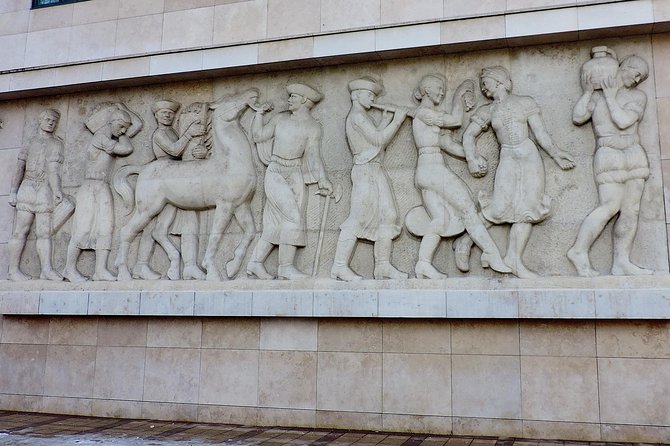
Your tour begins at Erzsébet tér, at the Kempinski Hotel Corvinus Budapest. That location matters. You are not starting in a museum. You are starting where Budapest’s political history shows up in public space, in statues, layouts, and the kind of monuments that feel like they were meant to be seen every day.
Elizabeth Square is often called the former Stalin square, and that alone sets the tone. Your guide connects what you are seeing to what these places were used to communicate during the communist era. The effect is simple, but strong: you stop treating the square as just a pretty waypoint and start reading it like a message.
This is also where the walking pacing helps. You get enough time to hear the stories, take in the monuments, and not feel rushed while the guide builds the bigger picture for you.
What to watch for: even if you know some Hungarian history already, slow down here. This tour is built on place plus explanation, not on facts dumped at speed.
St. Stephen’s Basilica outside: faith during communism, plus family stories
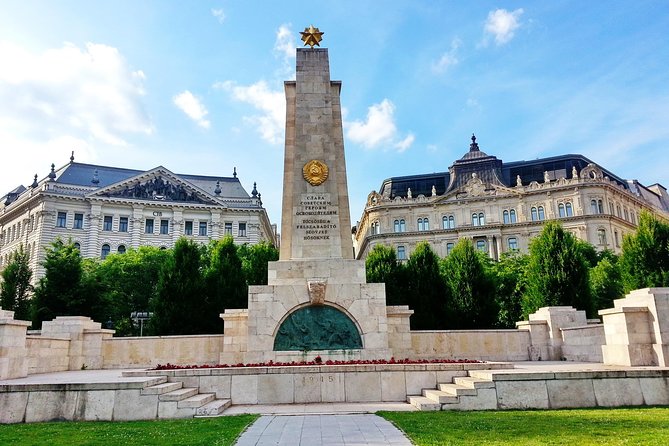
Next, you walk by St. Stephen’s Basilica (Szent Istvan Bazilika). The tour focuses on churches and religious life under communism, with the guide weaving in family stories. You look at the building from the outside, so plan this stop as a visual anchor for the conversation rather than a classic inside sightseeing moment.
This stop works especially well because it shifts the spotlight. Many history tours emphasize politics and state power. Here, religion and daily life get attention too. You’ll hear the way faith had to operate under communist rule, including the tension between public life and what people believed. Guides also bring personal details into the explanation, and that is what makes this stop feel less like a lecture and more like history you can almost overhear.
Some guides go in deeper than others depending on how many questions you ask, but the main value is consistency: you see the basilica, you understand why it matters in this period, and you move on with your mental map more complete.
Possible drawback: if you are hoping for a lot of interior visits on a 3-hour schedule, this is not that kind of tour. The basilica is discussed with an outside view.
Further tours of Hungary’s state-socialist years:
- Budapest: Communist History Tour with House of Terror Option
★ 4.8 · 182 reviews - Budapest: 3-Hour Walking Tour About Communism (Small Group)
★ 4.7 · 70 reviews - Budapest Hammer & Sickle Communist Times Tour
★ 4.5 · 68 reviews
Szabadság tér: memorials, statues, embassies, and a bunker glimpse
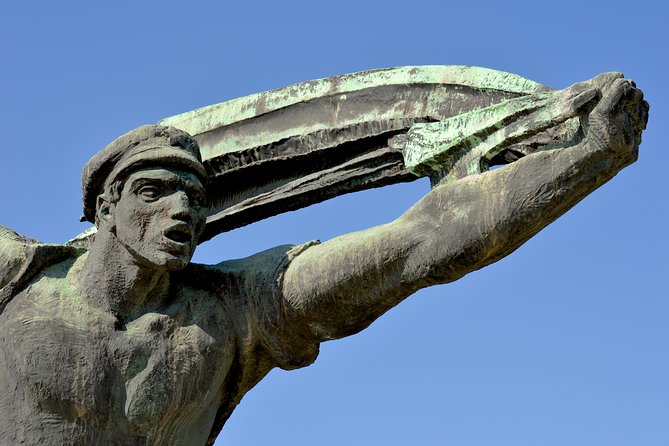
Szabadság tér is where the communist leftovers start to feel more layered. You look at remnants of the communist period through memorials and statues, and the guide ties it to the way institutions shaped everyday life.
One of the most memorable details here is the mention of embassies and even part of a bunker you can see from the outside. That kind of sight changes your whole feel for the era. Instead of thinking only about speeches and propaganda, you start thinking about fear, planning, and the physical reality of political systems.
Guides often bring the time period to life with concrete examples. In past tour stories, that has included how businesses were affected, how apartments were reassigned, and how people learned to manage risk in daily routines. Even if you are not looking for that level of personal detail, it helps you understand why these memorials and statues were built and why they still land emotionally.
Tip for you: dress for weather. This part is outdoors, and since the tour moves between sites without long breaks, cold or rain can make the experience harder than it needs to be.
Parliament and the 1956 Revolution: Bloody Thursday on Kossuth Square
The tour’s most intense history moment is tied to the Parliament building area. You cover one major event from the 1956 revolution, the so-called Bloody Thursday, connected to Kossuth Square in front of the Hungarian Parliament Building.
This is a short stop on paper, but it carries a lot of weight. Your guide uses the surroundings and the timing of the story to explain what happened there, why it mattered, and how it fits into the broader communist-era story in Hungary. Because you are outside by a modern symbol of Hungarian government, the 1956 details can feel sharply relevant.
I like this approach because it avoids turning 1956 into a distant date. You are standing in a real urban location while hearing the chain of events. The city becomes part of the lesson.
What to consider: like the basilica, this is not about entering the Parliament building. If your main goal is inside access, you might feel underwhelmed. If your goal is to understand the streets where history unfolded, it is a strong payoff.
The metro ride and the Communist-style cafe that actually feels like a period detail
Between monuments, you travel by metro, with tickets included. That is a small line item that makes a big difference. Budapest is easy to walk part of the way, but time adds up. Getting the metro sorted means you spend more of your 3-hour window on the story.
Then the tour ends with a Communist-style cafe, called out with coffee included. This part is not just a snack. It gives you a social setting to match the political setting you just learned about.
One guide’s notes that stuck with me: Bambi Café opened in 1961 and, according to the tour team’s perspective, it has not changed too much since. That detail matters because it is one more way the communist era can feel “still here,” not only as a monument but as a lived-in place.
And yes, the ending is structured so you can absorb what you saw. If you have questions, this is the moment when it often comes out naturally. You can compare what you just learned to what you noticed on your own that day.
Value check: for $59.13, this is not just a walking guide with a tip jar. You get a guided route, metro tickets, and coffee, plus a tightly focused set of stops that stay aligned with the theme.
Still to cross in Budapest
- Budapest: City Highlights Sightseeing Cruise★ 4.6 · 43,981 reviews
- Budapest: Unlimited Prosecco, Beer and Aperol Spritz Cruise★ 4.8 · 37,304 reviews
- Budapest: Széchenyi Spa Day Ticket with Optional Upgrades★ 4.3 · 23,911 reviews
Guides, storytelling style, and how the small group size changes everything
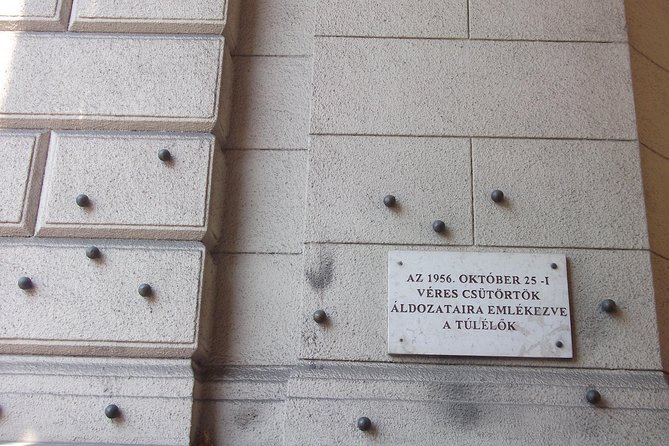
The guides are where this tour really wins. I have seen lots of Budapest tours that feel like they are reciting highlights. This one is different because it is anchored in personal narrative and local interpretation, tied to the specific sites you visit.
Names that have led tours include Judit, Raymond, Gabriel, Greg, András (Andras), Virág, and Gábor. Regardless of which guide you get, the tone tends to be consistent: engaging storytelling, room for questions, and a focus on how communism shaped real life.
A few example themes from guide stories that help you understand the era:
- A family business being nationalized, with workers reorganized under party control
- Housing changes, including apartments being reassigned and people moved into poorer quarters
- The church navigating communism, including survival through arrangements like donating money to the party
- Fear in daily life, including the possibility that someone could report you to the authorities
That last one is important. It is easy to discuss communism as an ideology. This tour helps you understand it as a system that affected what people dared to say, where they could go, and how they managed relationships.
Small-group benefit: with a maximum of 10 travelers, it is easier to ask your questions without shouting. You can also pay attention to details like what monuments mean, not just where they are.
What you should bring and how to set expectations for a 3-hour walk
This is an approximately 3-hour experience that starts at 2:00 pm. It is a walking history tour, with metro used to connect the route. You should expect to be outside at multiple points, including major squares and memorial areas.
So plan like you would for an afternoon city walk:
- Comfortable shoes (you will want them)
- A layer for colder days, especially since the route is designed for outdoor viewing
- A phone for your mobile ticket
You’ll also want to know this: the end point can vary a little. On colder or wet days, the tour often ends on the Pest side in the center closer to where you began. On more comfortable days, it usually ends at Bambi Café on the Buda side near the center and Margaret Bridge.
Finally, if you are mixing tours while in Budapest, double-check themes. This is a communism-focused experience. It does not include synagogue visits. If you are curious about other community history in the city, there are separate tours designed for that.
Who this tour is best for
This is the kind of tour I recommend if you want more than postcard Budapest. You want to understand how communist rule shaped public space and daily life, and you like your history with a human angle.
It is a great match if:
- You enjoy political and social history, especially Hungary in the 20th century
- You want a short, structured route rather than piecing together sites on your own
- You appreciate outside viewing paired with explanation, not just museum-style facts
- You want to ask questions and get answers in real time
It may be less ideal if:
- You want mostly inside access to major buildings
- You dislike walking outdoors in weather (since most stops are outside and the tour is only about 3 hours)
Should you book Communism in Hungary with a Historian?
If your goal is a focused, story-driven introduction to Budapest’s communist era, I’d book it. The combination of a small group size (10 max), the metro tickets, and the cafe coffee makes it feel like a complete experience, not just a stroll with a guide.
The biggest decision for you is this: can you enjoy history when the key buildings are viewed from the outside? If yes, the route works. If you need interior access and lots of museum time, you might want to pair this with other stops that match that style.
One more practical tip: ask your guide questions early, not late. The tone is built around dialogue. If you do, you’ll get more out of every square you step into, including Elizabeth Square and Kossuth Square, and you’ll leave with a clearer sense of how communism shaped what you can still see in Budapest today.
FAQ
How long is the Communism in Hungary walking tour?
The tour runs for about 3 hours.
How much does it cost per person?
The price is $59.13 per person.
What time does the tour start?
It starts at 2:00 pm.
Where do I meet, and where does the tour end?
You start at the Kempinski Hotel Corvinus Budapest at Erzsébet tér 7-8, 1051 Hungary. You usually end at Bambi Café on the Buda side close to the center and Margaret Bridge, but on colder or wet days you may end on the Pest side closer to where you began.
Is the tour offered in English?
Yes, it is offered in English.
Is there a group size limit?
Yes. The maximum group size is 10 travelers.
Does the tour include metro tickets and coffee?
Yes. The tour includes metro travel with tickets, and the Communist-style cafe stop includes coffee.
Does this tour visit synagogues?
No. This communism tour does not include synagogue visits.
The newest crossings added in Budapest


Communist Era History Tours, compared.
Communist History Tour with House of Terror Option
Read our review →
3-Hour Walking Tour About Communism (Small Group)
Read our review →
Memento Park Visit with Private Trabant Transfer
Read our review →
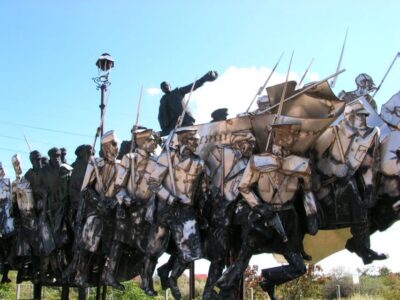
Memento Park: Official Guided Tour with Entry Ticket
Read our review →Browse the lists this tour appears in