
Reviewed · COMMUNIST ERA HISTORY TOURS
Budapest: 3-Hour Walking Tour About Communism (Small Group)
Budapest remembers Communism on every corner. This 3-hour, small-group walk in Pest pairs expert historian commentary with personal family stories, so you get more than dates. Communism shows up in the streets, not just in a lecture.
I also like the tour’s practical rhythm. You cover sights on foot, then you ride the red M2 subway, and you finish with a drink in a retro cafe that has barely changed since 1961. One caution: this is a focused, story-driven walk from WWII through 1956 and up to 1989 and the early 90s, so if you want a fully chronological, textbook-style overview, you may wish for more structure.
In This Review
- Key things I’d watch for
- A Communism tour that starts where politics lives, on the sidewalk
- Meeting at Erzsébet square, then moving into Deák tér
- The walk through Pest’s Communist-era clues, from WWII to 1956 and beyond
- Bullet holes and street-level facts, why the guide’s tone matters
- The red M2 subway ride: history you feel with your feet
- The retro cafe stop: a drink in a place that refuses to age
- Small group size, and why family stories make it feel personal
- Price and value: is $57 fair for 3 hours?
- Who should book this tour, and who might skip it
- Should you book Budapest’s Communism walking tour?
- FAQ
- How long is the Budapest Communism walking tour?
- What is the price per person?
- How big is the group?
- What language is the tour in?
- Where is the meeting point?
- How do I get there by public transport?
- What is included in the tour besides the walking?
- Is there a ride on the subway?
- What is the cancellation policy?
Key things I’d watch for
- Historian-led storytelling with your questions welcome throughout the walk
- Family anecdotes that add humor and hardship to big political events
- Remnants you can still see, including bullet holes and other street-level traces
- A built-in red M2 ride with a transportation ticket included
- A retro cafe stop for a drink and a chat in a place with old-school character
- Small group size (10 max), so the guide can actually respond to you
A Communism tour that starts where politics lives, on the sidewalk
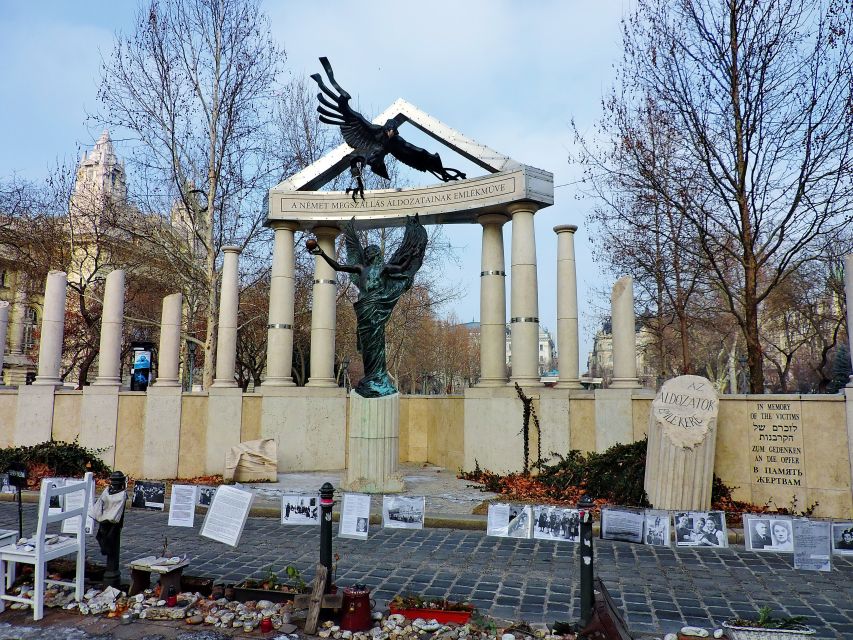
Most history tours point at monuments. This one points at the everyday city stuff you walk past, then explains why it matters. Budapest’s Communist-era imprint is physical, too, including visible scars like bullet holes. Once you know what you are looking for, the city reads like a puzzle you can actually solve while walking.
The “expert historian plus family story” format is the best part. Ideology can sound like a system on paper. Add real personal accounts, and suddenly you understand what it felt like: pressure, improvisation, and the weird comedy of making do. I like that this approach is not about scoring points. It’s about understanding how Hungary was shaped, and what the legacy looks like now.
Meeting at Erzsébet square, then moving into Deák tér
You meet in front of Kempinski Hotel Corvinus Budapest, facing the Ferris wheel on Erzsébet square. It is a simple landmark meetup that makes it easier to show up without stress, especially if you are arriving by tram or subway.
From there, the walk begins through one of Pest’s pleasant areas, starting around Deák tér. The tour then works through the city’s Communist-era remnants, from WWII context into the revolution of 1956 and forward to the end of the Communist system around 1989 and the early 90s. That timeline focus is built into the way the guide tells the story, not treated like an afterthought.
If you want the easiest route, plan to use subway access at Deák Ferenc tér (served by M1, M2, and M3), since that area makes getting there straightforward.
Further tours of Hungary’s state-socialist years:
- Budapest: Communist History Tour with House of Terror Option
★ 4.8 · 182 reviews - Communism in Hungary with a Historian
★ 5.0 · 70 reviews - Budapest Hammer & Sickle Communist Times Tour
★ 4.5 · 68 reviews
The walk through Pest’s Communist-era clues, from WWII to 1956 and beyond
The route is designed for walking pace and storytelling. Expect to move through central Pest areas where remnants of the Communist period are still visible. The guide ties each spot to the larger theme: how the ideology arrived, how it was enforced, and what lingered after.
One detail I really like is how the tour treats the city as evidence. You are not just hearing theories. You are seeing symbols, street marks, and the kind of everyday textures that show how history stays present. In the experience, that includes things like street art and pop-culture references that help connect the past to modern Hungarian identity.
Then the story threads through major turning points. You get WWII context, the revolution of 1956 (a hinge moment that matters deeply in Hungarian memory), and the shift toward the end of the system around 1989 and the early 90s. It’s not presented as a dry timeline. It is presented as a chain of cause and effect, with people trying to live through it.
Bullet holes and street-level facts, why the guide’s tone matters
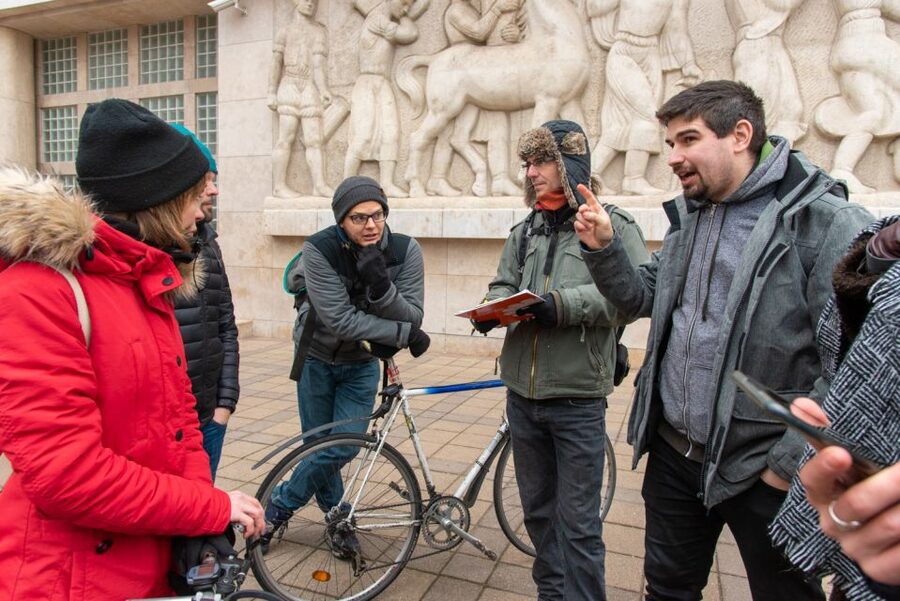
There’s a moment in this kind of tour when the content gets heavy. You are dealing with political repression and real conflict, and the physical reminders can be uncomfortable. What keeps it from turning into doom and gloom is the guide’s balance: historical context stays anchored, and then family stories add humanity.
I also like that guides handle questions openly. In many tours, Q and A becomes an awkward interruption. Here, the guide invites questions, which helps you clear up confusion on the spot. That matters because Communist-era history is full of shifting labels and confusing propaganda, and you do not want to leave a key detail unresolved.
You might notice the tour steers you toward interpretation. You learn what certain symbols meant, how buildings and public spaces fit into control and messaging, and why different eras feel different in retrospect. It is a practical kind of learning, not just academic.
The red M2 subway ride: history you feel with your feet
You get a ride on the red subway line, M2, and the transportation ticket is included. That sounds small, but it’s smart. You are not just walking around the past. You are using the city’s working infrastructure, which makes the experience feel more lived-in.
The M2 segment gives you a break from nonstop talking while still staying inside the story framework. It also helps you understand how Budapest’s modern movement systems sit beside the political layers you are learning about. You come back to street-level sightseeing with a clearer sense of distance, scale, and direction.
If you enjoy transit as a cultural lens, this is one of the nicest ways to fold it into a short 3-hour time window.
More of the city, bank to bank on foot:
- Budapest: Buda Castle Walk with Saint Stephen’s Hall★ 4.5 · 3,012 reviews
- Big Bus Budapest Hop-On Hop-Off Bus and Walking Tour★ 3.5 · 2,206 reviews
- Budapest: Buda Castle District Walking Tour★ 4.6 · 2,108 reviews
The retro cafe stop: a drink in a place that refuses to age
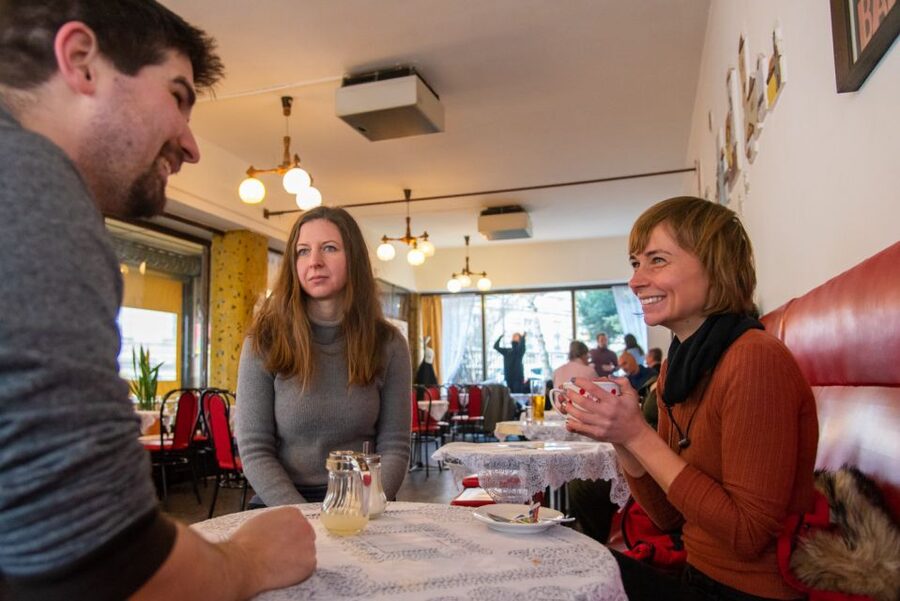
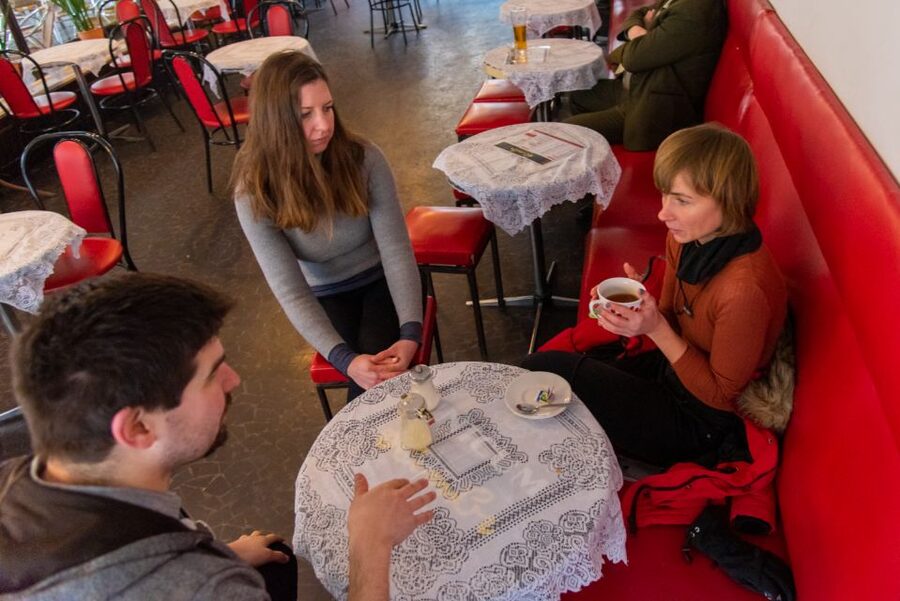
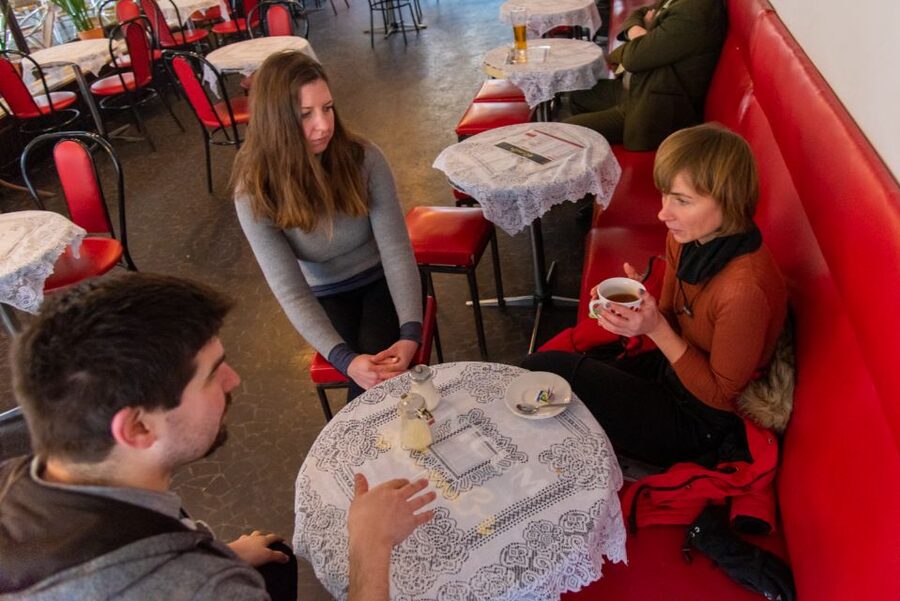
The tour includes a drink at a cult retro cafe that has changed very little since 1961. Some descriptions also point to it feeling the way it has since the 1970s. Either way, the vibe is the point: you are sitting in a venue where the atmosphere matches the theme of memory and continuity.
This is not just a snack break. The cafe stop is built for conversation, and the guide uses it to connect history to everyday culture. It is where personal stories often land best, because you are not standing on a sidewalk trying to take it all in at once.
If you like tours that end with a human moment, this cafe finish is a real strength. You leave with more than facts. You leave with questions answered and impressions that stick.
Small group size, and why family stories make it feel personal
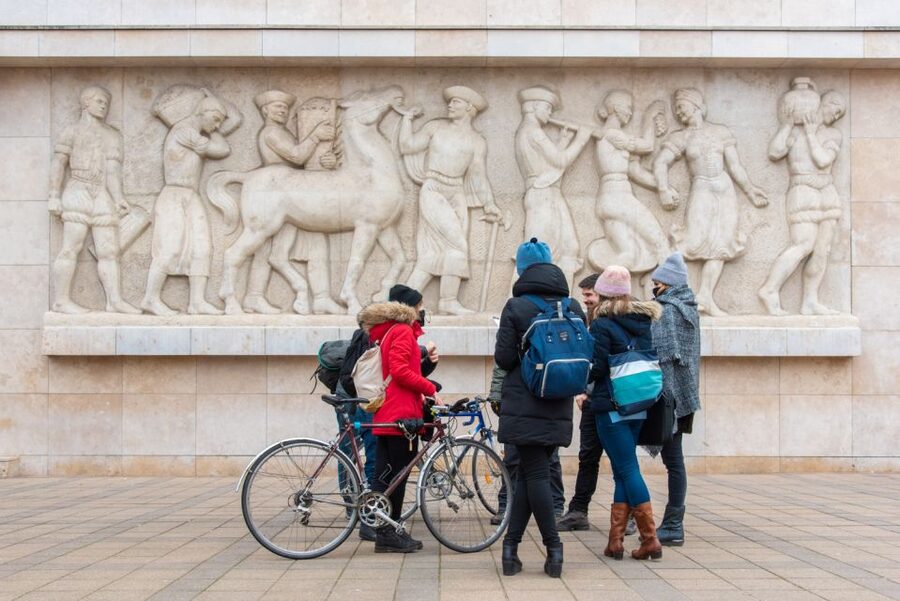
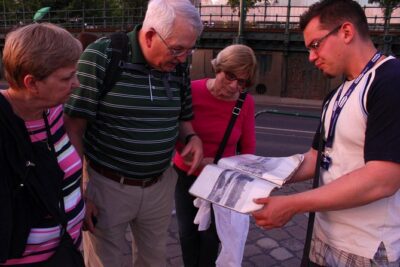
This tour is limited to 10 participants. That small number is not a marketing line. It matters because Communist-era topics can trigger lots of curiosity, and the guide needs room to respond. You can ask follow-ups, not just rush through the experience.
The standout storytelling ingredient is the family angle. The guides share real family stories from the period, including hardships and comic moments. That mix is important. It prevents the tour from becoming one-note. It also helps you understand resilience as a lived reality, not a slogan.
From guide names mentioned in past runs, you may get storytellers like Judith, Zsuzsanna, Greg, Gergely, Monica, Virág, or Dániel. I like that the tone often described is lively and interactive, with guides ready to explain Hungary’s past in a way that keeps you engaged.
Price and value: is $57 fair for 3 hours?
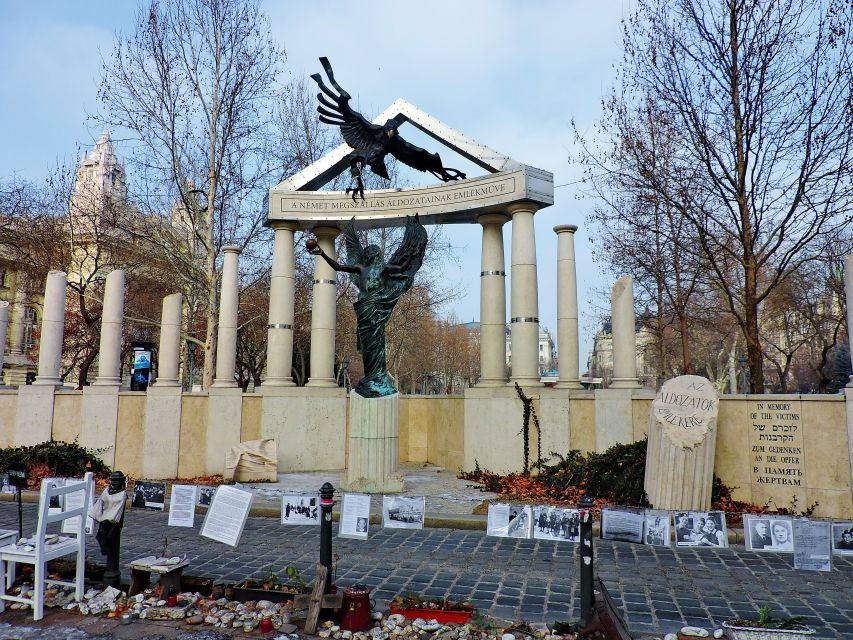
At $57 per person for a 3-hour small-group tour, the value depends on what you want out of Budapest. If you want a quick hit of monuments, it might feel pricey. If you want context and guidance that turns street signs and scars into meaning, it starts to make sense fast.
Here’s what you are getting for your money:
- A historian guide delivering expert commentary in English
- A drink at the retro cafe (not just water or a quick stop)
- A transportation ticket for the M2 subway ride
- A small group format that keeps the experience interactive
In other words, you are paying for interpretation, not just movement. For most people visiting for a few days, that is the hardest thing to recreate on your own. You can always read about Communism. You cannot easily walk the city, spot the right clues, and ask questions while the story is explained in a way that fits the place.
Who should book this tour, and who might skip it
This is a great choice if you:
- like history that connects to what you can see right now in Budapest
- want Communist-era Hungary explained through real personal stories
- enjoy discussion and questions as part of the tour
- value a short, efficient 3-hour format with transport and a cafe stop
It may not be ideal if you:
- prefer a very structured, chronologic lecture with fewer personal anecdotes
- want broader regional comparisons outside Hungary’s experience
- get uncomfortable with reminders of conflict, even when they are handled responsibly
Should you book Budapest’s Communism walking tour?
Yes, if your goal is understanding, not just sightseeing. I’d book it when you want a guide to translate Budapest’s Communist-era traces into a clear, human story. The small-group size, the historian-led commentary, and the fact that you end with a drink in a long-running cafe make it feel like more than a standard walking tour.
If you are on the fence, think about this: you can walk Budapest for free any day. But you cannot easily recreate the combination of street-level clues, M2 transit context, and family storytelling in just 3 hours.
FAQ
How long is the Budapest Communism walking tour?
The tour duration is 3 hours.
What is the price per person?
The price is $57 per person.
How big is the group?
It is a small group limited to 10 participants.
What language is the tour in?
The tour is guided in English.
Where is the meeting point?
Meet in front of Kempinski Hotel Corvinus Budapest, facing the Ferris wheel on Erzsébet square.
How do I get there by public transport?
You can easily reach the area using subway lines M1, M2, or M3, with the Deák Ferenc tér stop.
What is included in the tour besides the walking?
The tour includes a drink in a retro cafe and a transportation ticket for the red M2 subway ride.
Is there a ride on the subway?
Yes. The tour includes a ride on the red subway line, M2.
What is the cancellation policy?
Free cancellation is available up to 24 hours in advance for a full refund.
The newest crossings added in Budapest





Communist Era History Tours, compared.
Communist History Tour with House of Terror Option
Read our review →
Memento Park Visit with Private Trabant Transfer
Read our review →
Memento Park: Official Guided Tour with Entry Ticket
Read our review →Browse the lists this tour appears in