

Reviewed · COMMUNIST ERA HISTORY TOURS
Born Under The Red Star – The History of Communism in Hungary – Private Tour
Hungary under communism is not theory. This private 3-hour walk links big sites like the House of Terror to the public memorials that still shape Budapest today, with a Communist-themed bar stop for a retro drink. I especially like how the route keeps moving, so you get history plus atmosphere without getting stuck in one room all day.
The main thing to watch is timing and ticket details. Most stops are quick, and while several sites are listed as free, St. Stephen’s Basilica is not included, with one confusing moment reported about what counts as covered entry.
In This Review
- Key things to know before you go
- A 3-hour private tour that turns politics into street-level reality
- Soviet Heroic Memorial: WWII memory before the communist story
- House of Terror Museum at Andrássy út 60: where the story gets hard
- St. Stephen’s Basilica: a major landmark with possible extra ticketing
- Szabadság tér Liberty Square: reading the city’s arguments in stone
- The 1956 Memorial: why Hungary’s resistance keeps returning
- Hungarian Parliament Building: the ending you can see from the outside
- The Communist-themed bar stop: retro soda and a pause with meaning
- Price and logistics: is $108.14 per person worth it?
- What to expect from the guide experience
- Who this tour suits best, and who should skip it
- Should you book Born Under The Red Star?
- FAQ
- What is the duration of Born Under The Red Star?
- Where does the tour take place?
- Is pickup included?
- Is the tour private?
- What is included during the tour?
- Are admission tickets included for the stops?
Key things to know before you go
- Private guide, pickup at your address so you are not trying to herd yourself across Budapest
- House of Terror focuses on both fascist and communist-era abuses and includes a memorial for victims
- Short stops add up to a clear overview, but do not expect hours inside museums
- Liberty Square and 1956 memorial show how politics lives in monuments you walk past
- Retro soda plus coffee or tea gives the tour a fun, very on-theme pause
- Basilica entry is not included, so plan for possible extra ticketing
A 3-hour private tour that turns politics into street-level reality
You do not come to this part of Budapest for fluffy facts. You come for what buildings, squares, and memorials whisper about power, fear, and control. This tour is a tight, guided loop through the communist story, anchored by the House of Terror and reinforced by landmark memorials around the city.
I like two things right away. First, it stays focused on the subject rather than turning into a general history stroll. Second, the experience is led by real people with real delivery styles. Guides named Julia, Brigit, Norbert, and Leslie were all highlighted in past tours, and that shows up in how personal the commentary can feel when the topic is heavy.
The downside is simple. With a schedule that keeps each stop fairly brief, you will get a guided overview, not a slow, museum-depth experience. If you want to spend long stretches reading every panel, you may still want time to return on your own.
Soviet Heroic Memorial: WWII memory before the communist story
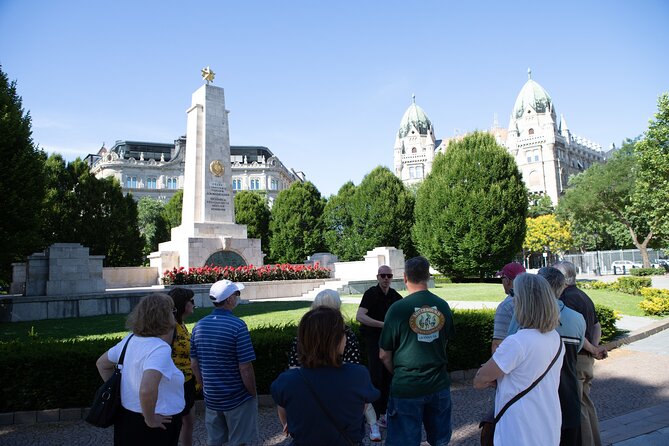
You start at a Soviet-themed monument: the Soviet Heroic Memorial, a white obelisk in a landscaped park commemorating Russian military who served in WWII. It is not communism by itself. But it is the framing. Empires and occupations rarely arrive with a label on the forehead, and this memorial helps you spot the early layers of influence.
What I found useful here is the way you can learn to read monuments like captions. A memorial like this is doing cultural work. Even if you are only looking at a single object for about 15 minutes, you are training your eyes for what comes next, when Budapest starts speaking more directly about repression.
Practical tip: expect outdoor time. Wear comfortable shoes, because even when each stop is short, you are walking between them in real city weather.
Further tours of Hungary’s state-socialist years:
- Budapest: Communist History Tour with House of Terror Option
★ 4.8 · 182 reviews - Communism in Hungary with a Historian
★ 5.0 · 70 reviews - Budapest: 3-Hour Walking Tour About Communism (Small Group)
★ 4.7 · 70 reviews
House of Terror Museum at Andrássy út 60: where the story gets hard
The centerpiece is the House of Terror Museum on Andrássy út 60. This is the stop that gives the tour its bite. The museum presents exhibits tied to both fascist and communist regimes in 20th-century Hungary, and it also functions as a memorial to victims who were detained, interrogated, tortured, or killed in the building.
This matters because communism can be discussed at two levels. One level is dates, ideologies, and slogans. The other level is what state control looks like when it is in the same building you are standing in. A museum focused on detainment, interrogation, and torture turns the topic from abstract to physical.
Time is also important. The tour schedule keeps this stop around 15 minutes. That is enough for the main thread, but not enough to absorb every exhibit deeply. If you feel that tug to read more, you will probably want a longer follow-up visit on a different day.
St. Stephen’s Basilica: a major landmark with possible extra ticketing
After the museum comes a sharp contrast: St. Stephen’s Basilica (Szent Istvan Bazilika). It is named for Stephen, the first king of Hungary, and the basilica is known for the reliquary holding his right hand. The building itself has historic weight, and the tour typically uses this stop as a quick cultural reset after the political intensity.
Here is the key practical point: admission is listed as not included for this stop. One traveler also reported that there was confusion about what the tour description meant by free admission, and that the guide ended up arranging the cheapest ticket option for entry linked to the dome. The takeaway for you is straightforward.
Before you go, confirm what exactly is covered for the basilica on your specific booking date, especially if the tour description language mentions free admission. If you have even a small preference for dome views or extended interior time, plan for the possibility of an additional ticket.
Szabadság tér Liberty Square: reading the city’s arguments in stone
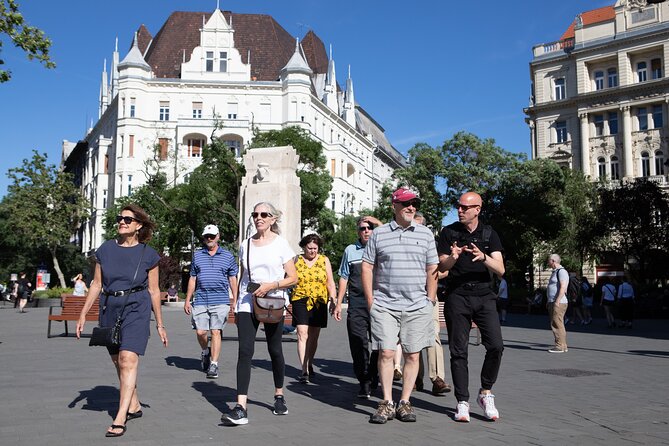
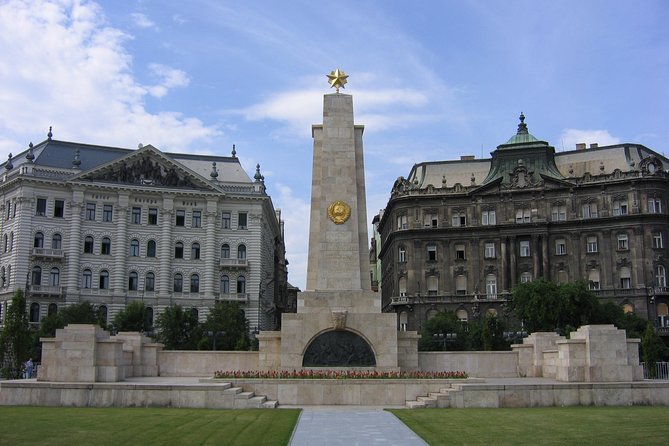
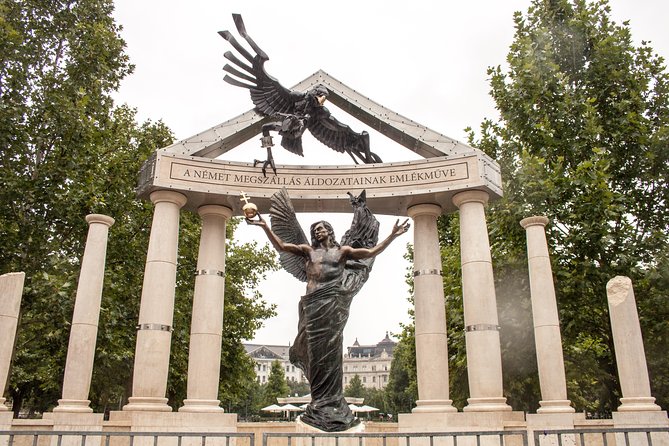
Next is Szabadság tér, Liberty Square, in the Lipótváros area. This square is famous for two controversial memorials. One commemorates Hungarian Jewish victims of the Holocaust, and the other honors Soviet soldiers who liberated Budapest from the Nazis in 1945. That pairing alone is a reminder that even liberation can come with complicated aftermath.
The tour also frames the surrounding power architecture. You pass the historicist headquarters of the Hungarian National Bank and the United States Embassy in Hungary, which gives you an idea of how governments and institutions place themselves in public view.
Why this stop works for understanding communism is that it shows how memory gets negotiated. Memorials are not neutral. They shape what a city teaches you to feel, and they still sit in the middle of daily life, not behind glass.
More centuries stacked along the banks:
- Budapest: Historic Cruise with Welcome Drink★ 4.7 · 6,512 reviews
- Budapest Historical Sightseeing – Free Walking Tour★ 5.0 · 1,302 reviews
- Buda Castle District Dark History, Legends and Vampire Night Tour★ 4.5 · 1,240 reviews
The 1956 Memorial: why Hungary’s resistance keeps returning
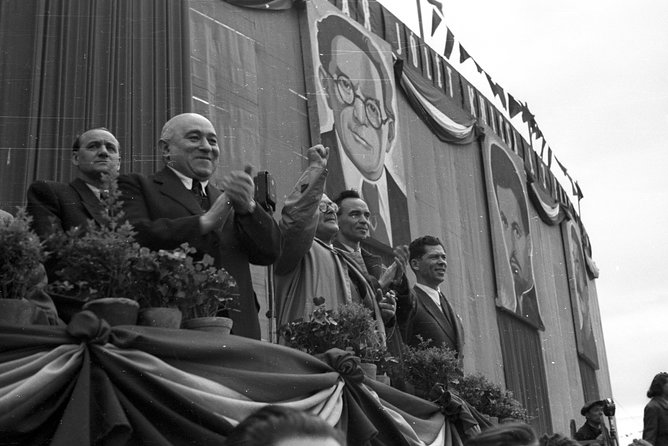
Then you move to the memorial dedicated to the 1956 Hungarian Revolution and War of Independence. This is the moment where the communist story shifts from occupation and control to resistance and uprising.
With about 15 minutes here, you should expect a focused interpretation rather than a long historical seminar. The point is to connect what you saw in the House of Terror with what happens when people push back. The 1956 memorial is one of those places where a few sentences from a good guide can make the whole century feel less like a textbook.
If you like emotionally intense history, this is often one of the most moving segments. If you prefer a lighter tone, it may still hit you, because it is specifically about courage under a regime people were fighting.
Hungarian Parliament Building: the ending you can see from the outside
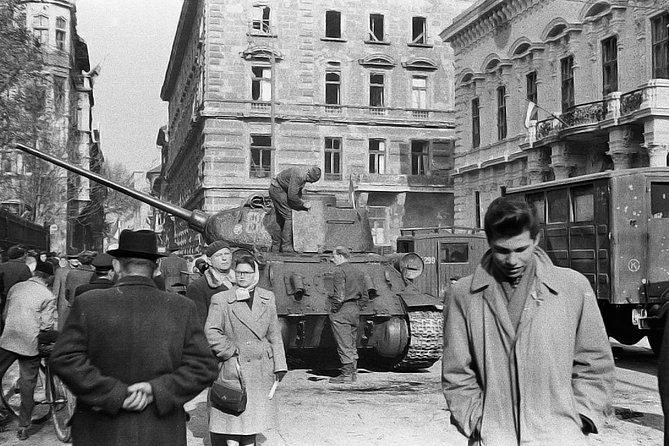
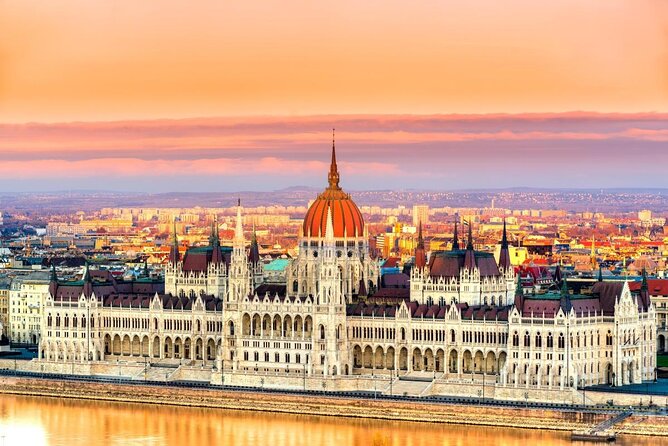
You finish at the Hungarian Parliament Building, Országház, the seat of Hungary’s National Assembly and one of Budapest’s most recognizable landmarks. Admission is listed as not included, so do not expect a tour inside the building itself.
Instead, the value is in how the day closes visually. You have moved through WWII Soviet commemoration, state terror, and revolution memory. Ending at Parliament makes a bigger point: regimes change, but governance still needs buildings, symbols, and narratives.
A good guide will help you make that final connection without turning it into a lecture. Even with a short 15-minute stop, this is a strong “look up and take it in” moment.
The Communist-themed bar stop: retro soda and a pause with meaning
One included treat is a retro soda in a Communist-themed bar. You also get maps and recommendations, plus coffee and/or tea. This is not just a snack break. It is a chance to reset your head after heavy subject matter, while still keeping the theme close.
Some guides lean more into personal storytelling than others, and that can make a big difference with a tough topic. In the best versions of this tour, you feel the guide is human and adaptable. Norbert and Brigit were praised for friendliness and knowledge, while Julia was noted for adding personal details that made the subject feel more real. That style can matter when you are learning about fear, oppression, and survival rather than just policies.
Price and logistics: is $108.14 per person worth it?
At $108.14 per person, you are paying for three things: a private guide, pickup from your address, and a curated route with included drinks. With a schedule of about 3 hours, it is not a long day, but it is a dense one.
So, is it value? It can be, especially if you like guided context and you want your first pass at communist-era sites to be coherent. The free or listed-free admission stops also help keep the total cost down, but you should be smart about one detail: tickets can vary by site and by what is actually covered.
Your strongest value signs:
- Private experience (only your group participates), which usually means less time lost on logistics
- Pickup (no transit guesswork)
- Included retro soda plus coffee and/or tea, so you are not scrambling for refreshments mid-route
Your watch-outs:
- Stops are short, so if you want deep reading time, you may feel it is too quick
- Basilica entry is not included, and there may be confusion about what part of entry is covered
What to expect from the guide experience
The guides can make or break a subject like this. The topic is emotionally loaded, so tone matters. Past tours described guides like Julia, Brigit, Norbert, and Leslie, and the feedback suggests that the best guides add clarity and shape the narrative in a way that helps you connect the dots.
In one less satisfying experience, the tour ended early and the guide spent more time on current events and general discussion than on the daily theme. That is the main risk you should keep in mind: you want time spent on the communist story, not a detour that dilutes the focus.
If you care about the balance, you can ask your guide early on what the priority will be during your 3 hours. A good guide will be able to map the story quickly and stick to it.
Who this tour suits best, and who should skip it
This tour is a great fit if you:
- Want a first-time overview of Hungary’s communist past in Budapest
- Prefer guided interpretation over solo wandering
- Like structured routes with clear stops, even if each one is relatively short
- Enjoy a theme-based stop like a Communist-themed bar
It might be less ideal if you:
- Want lots of time inside museums and want to read panels slowly
- Are very sensitive to ticket wording and want full certainty that every admission line will match exactly what you expect
- Are looking for a light, casual day. This is history with heavy content.
If you do decide to go, a smart plan is to treat this as your guided launch day, then come back on your own for the one place you cannot stop thinking about.
Should you book Born Under The Red Star?
I would book it if you want a tight, guided answer to a big question: what did communism do to everyday life in Hungary, and how does Budapest still show the scars in public spaces? The House of Terror stop is the reason most people will feel this was worth it, and the route keeps you from getting lost in dates.
I would hesitate if you are the type who needs long museum time or you hate ticket surprises. In that case, confirm the basilica coverage before you go, and be ready to buy what you need.
If you like tours where the guide can turn memorials, museums, and architecture into a story you actually understand, this one is built for you.
FAQ
What is the duration of Born Under The Red Star?
The tour lasts about 3 hours.
Where does the tour take place?
It is in Budapest, Hungary.
Is pickup included?
Yes. Pickup is offered, and the guide meets you at your requested address.
Is the tour private?
Yes. It is a private tour, so only your group participates.
What is included during the tour?
Included items are hotel or apartment pickup, a retro soda in a Communist-themed bar, maps and further recommendations, and coffee and/or tea.
Are admission tickets included for the stops?
House of Terror Museum is listed as free admission, and St. Stephen’s Basilica is listed as not included.
The newest crossings added in Budapest





Communist Era History Tours, compared.
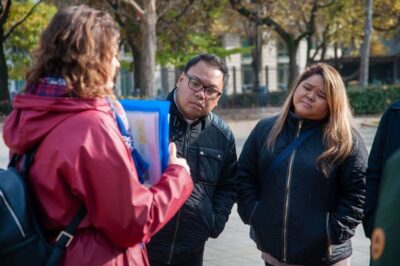
Communist History Tour with House of Terror Option
Read our review →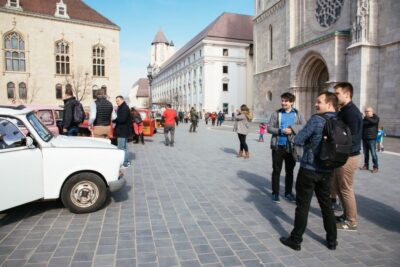
3-Hour Walking Tour About Communism (Small Group)
Read our review →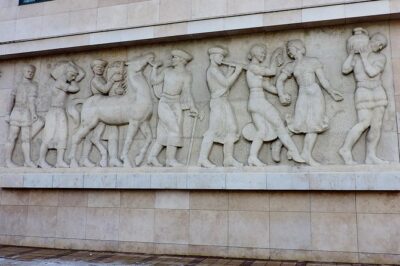
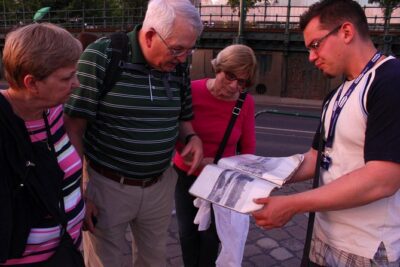
Memento Park Visit with Private Trabant Transfer
Read our review →
Browse the lists this tour appears in