
Reviewed · COMMUNIST ERA HISTORY TOURS
Still Watching You! – Hungary’s Communist Story
Budapest has layers, and this walk reads them fast. It focuses on the country’s red era with real-world sights, tight timing, and story-telling that feels more like lived memory than a lecture. I like that it ties politics to places you can actually point at, from big monuments to the building where regimes left scars.
Two things I really liked are the guided story flow and the access to key sites. You’ll pause at major landmarks, then keep moving so the message sticks, without turning into a museum marathon. Plus, the tour includes a retro soda in a Communist-themed bar, along with snacks and maps, so you stay comfortable between stops.
One drawback to consider: two big stops are shown outside or visited briefly, and admission is not included for places like St. Stephen’s Basilica and the Hungarian Parliament Building. So plan on extra time or extra ticket costs if you want more than a quick look.
In This Review
- Key highlights you should know before you go
- Walking the communist era, stop by stop
- Stop 1: Soviet Heroic Memorial and why it matters first
- House of Terror Museum: where regimes meet your eyes
- St. Stephen’s Basilica: a necessary pause with an extra ticket
- Szabadság tér: Liberty Square and two contested memories
- Freedom Statue on Gellért Hill: independence given stone form
- Parliament Building and the 1956 memorial moment
- The included retro soda, snacks, and why they help
- Price and what $87.27 buys you in real terms
- Who should book this tour, and who might want a different plan
- Should you book Still Watching You! Hungary’s Communist Story?
- FAQ
- What is the meeting point for this tour?
- How long does the tour last?
- How many people are in the group?
- What is included in the tour price?
- Are tickets included for St. Stephen’s Basilica and the Hungarian Parliament Building?
- Is there free admission for any stops?
- What is the cancellation policy?
Key highlights you should know before you go
- A focused 3-hour “Red Past” storyline that connects monuments to the choices that shaped modern Hungary
- House of Terror Museum included free, with exhibits tied to both fascist and communist regimes
- Liberty Square’s two memory lanes, Holocaust victims and Soviet liberation, side by side
- Stops include a free 1956 memorial, built for the uprising against the communist regime
- Small group size (max 15), which keeps questions and pace manageable
- Retro soda, snacks, and maps included, so you are not scrambling for food mid-walk
Walking the communist era, stop by stop
This tour is built for people who want context without drowning in dates. You move through central Budapest, and the guide keeps returning to one idea: regimes do not only change laws, they change daily life, power, and even what people are allowed to remember.
The route also works well if you are the type who likes to ask why. When I look at monuments or government buildings, I always want the backstory. Here, you get it in a way that is meant to make the visuals click, not just sound impressive.
The best part, in my view, is the human scale. Even when you are in front of something grand, the talk stays grounded, like you are learning how decisions were made in war and government, and how those decisions echoed into the present.
Stop 1: Soviet Heroic Memorial and why it matters first
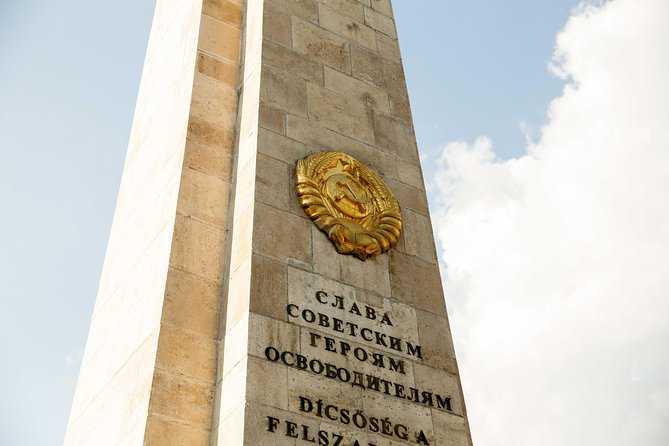
You start in the area around the Hungarian State Opera House, then head to a Soviet WWII memorial set in a landscaped park. The centerpiece is a white obelisk honoring Russian military who served in the war.
It might look clean and formal from the outside, but the tour uses this stop as an opening frame. You get help reading monuments like arguments. Who they honor, how they are placed, and what they choose to emphasize all signal what the official story is trying to teach.
This is also a low-pressure start. The visit is short, and admission is free. It is a good moment to get your bearings and settle in before you move toward heavier sites.
Further tours of Hungary’s state-socialist years:
- Budapest: Communist History Tour with House of Terror Option
★ 4.8 · 182 reviews - Communism in Hungary with a Historian
★ 5.0 · 70 reviews - Budapest: 3-Hour Walking Tour About Communism (Small Group)
★ 4.7 · 70 reviews
House of Terror Museum: where regimes meet your eyes
Next is the House of Terror Museum at Andrássy út 60. This is one of the most important stops on the whole route, and it is included with free admission on this tour.
The museum is dedicated to the fascist and communist regimes in 20th-century Hungary, and it also functions as a memorial to victims detained, interrogated, tortured, or killed in the building. That last detail is important. You are not just reading history on panels. You are walking through a place tied to what happened.
A practical way to handle a museum like this: keep your focus narrow. In a short time, you can still learn a lot if you pay attention to the patterns the exhibits emphasize, not just individual cases. The guided story helps you notice what the displays are trying to show about power and fear, and why both regimes are treated here as part of the same broader machinery of control.
One good sign that this tour works for real learners is the guide interaction. In one experience, the guide named Emma answered every question and connected war decisions to how Hungary ended up the way it did. That style matters most in a place like this, where it is easy to leave with feelings but hard to explain what you actually learned.
St. Stephen’s Basilica: a necessary pause with an extra ticket
Then you head to St. Stephen’s Basilica, officially Szent Istvan Bazilika. It is a Roman Catholic basilica named for Stephen, the first King of Hungary, and the guide points out that his right hand is housed in the reliquary.
This stop is shorter, about 15 minutes, and admission is not included. So you are getting the exterior and a taste of the setting, not a full church visit with time to roam every chapel.
Why include it at all on a communist-focused tour? Because it gives you contrast. Political regimes that tried to control society also had to contend with traditions people still held close. A basilica is not a communist symbol, and that is the point. It helps you see the tension between what the state promoted and what many Hungarians continued to value.
If you care about religious art or want more than a quick look, you might plan to come back later. The tour gives you the landmark, but it does not promise the full basilica experience.
Szabadság tér: Liberty Square and two contested memories
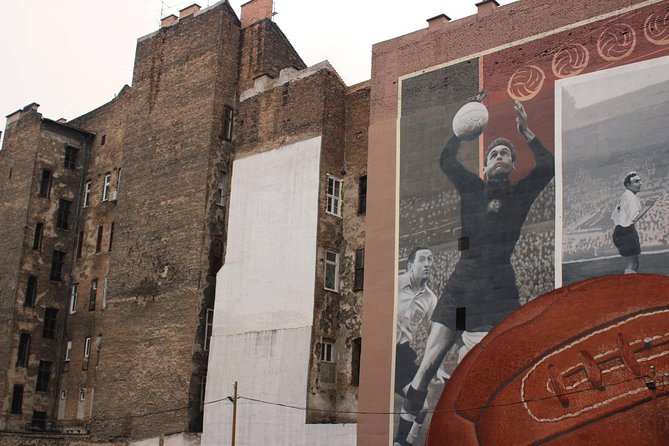
Liberty Square, Szabadság tér, is one of those places that makes you slow down. You get about 20 minutes here, and the admission is free.
The square is famous for two controversial memorials: one commemorates Hungarian Jewish victims of the Holocaust, and the other commemorates Soviet soldiers who liberated Budapest from Nazis in 1945. Standing between these memories can feel jarring, because they reflect different kinds of suffering and different political narratives.
The guide’s job here is key: help you hold both truths without collapsing them into one simple story. That is not easy, but a good explanation makes a difference. You start to see how even liberation narratives can carry political weight, and how memorials can shape what people think the past means.
You’ll also notice practical landmarks around the square, including the United States Embassy in Hungary and the Hungarian National Bank headquarters on the west side, both in a historicist style. Those details matter because they show how power and institutions evolved in the same area, across very different regimes.
Still to cross in Budapest
- Budapest: City Highlights Sightseeing Cruise★ 4.6 · 43,981 reviews
- Budapest: Unlimited Prosecco, Beer and Aperol Spritz Cruise★ 4.8 · 37,304 reviews
- Budapest: Széchenyi Spa Day Ticket with Optional Upgrades★ 4.3 · 23,911 reviews
Freedom Statue on Gellért Hill: independence given stone form
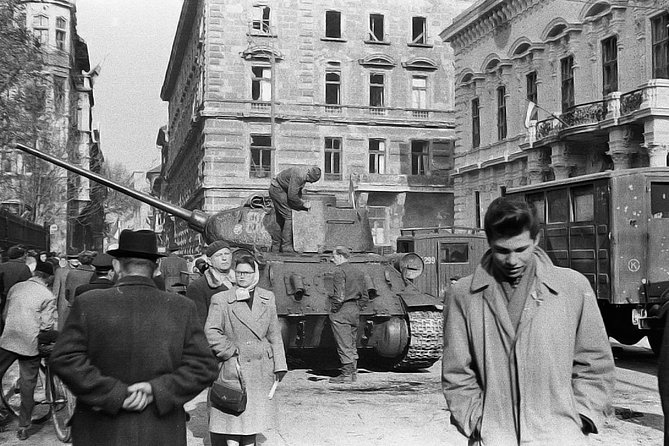
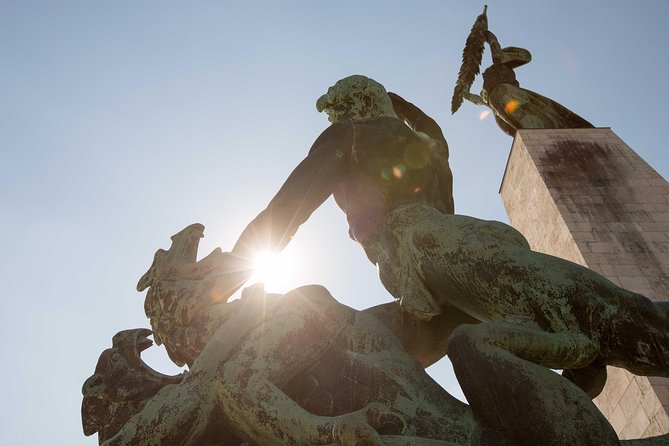
After Liberty Square, the route includes the Liberty Statue, also called the Freedom Statue (Szabadság-szobor) on Gellért Hill. This monument commemorates those who sacrificed their lives for Hungary’s independence, freedom, and prosperity.
This stop shifts the tone slightly. Instead of only focusing on oppression and control, you get a reminder of what resistance and national self-determination were supposed to mean. Even if you do not know the story beforehand, you can feel the intention behind the monument: it wants you to connect personal sacrifice to the survival of a country’s identity.
It also works well as a visual “anchor” after the heavy museum stop. By the time you get here, you have context and questions. The statue gives you something concrete to reflect on.
Parliament Building and the 1956 memorial moment
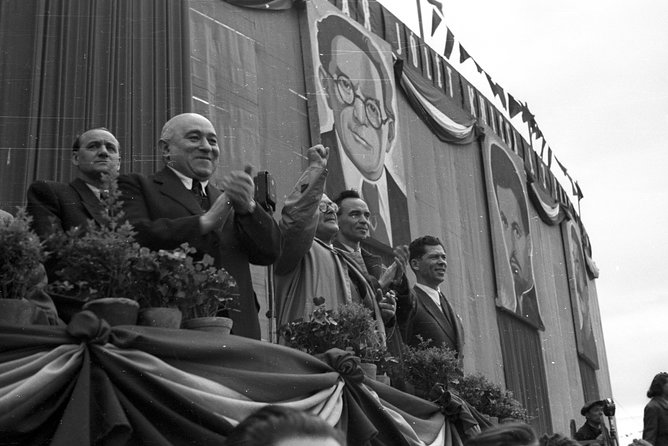
The tour then reaches the Hungarian Parliament Building, Országház, a landmark and a popular tourist destination. Admission is not included, and the stop is about 15 minutes, so expect an exterior look and guided context rather than a full inside visit.
This matters because, in a communist story, parliaments represent more than architecture. They represent the struggle over who gets to make decisions and how much power actually belongs to citizens. The guide’s framing helps you read the building as a symbol of governance, not just a sightseeing stop.
Finally, you end with the Memorial to the 1956 Hungarian Revolution and War of Independence, a memorial that commemorates the heroes of the uprising against the communist regime. Admission is free, and the visit is about 15 minutes.
This is the emotional close to the walk. You have already seen how regimes shaped institutions and controlled narratives. Now you see a monument to people who pushed back. It makes the whole tour feel like a single thread, from propaganda and power to resistance and memory.
The included retro soda, snacks, and why they help

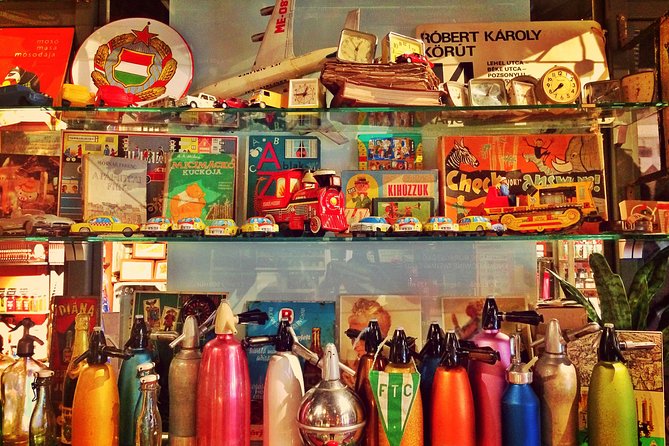
At some point during the tour, you get a retro soda in a Communist-themed bar. You also receive snacks, plus maps and further recommendations.
That sounds like small stuff, but it helps a lot. A 3-hour walk moves quickly, and food breaks are usually the thing that makes short tours feel tiring. Having a planned snack and a cold drink keeps your energy steady, especially if you hit this as part of a busy day.
The maps and recommendations are also more useful than they seem. After a politically focused tour, you often want a safe way to keep exploring without wandering into confusion. The added guidance can help you choose what to see next based on your interests, not just proximity.
Price and what $87.27 buys you in real terms
At $87.27 per person for about 3 hours, you are paying for a guided, themed route with multiple major sites, plus included refreshment.
Here is the value math that matters: several stops have free admission on this tour, including the Soviet Heroic Memorial, the House of Terror Museum, Szabadság tér, and the 1956 memorial. Meanwhile, St. Stephen’s Basilica and the Hungarian Parliament Building are not included for admission, so you are not paying to enter everything. You are paying for access and context where it counts most.
Also note the tour group size, max 15 travelers. A smaller group usually makes it easier to ask questions and keep pace reasonable, rather than turning into a slow herd.
Lastly, mobile tickets and group discounts are listed features. That is helpful for smooth entry and fair pricing if you are traveling with friends or family.
If you like structured walks and you prefer your history to feel explained in plain language, the price can make sense. If you only want quick photos at every stop, you might not get full value from the time spent in guided storytelling.
Who should book this tour, and who might want a different plan
I would book this if you:
- want a guided overview of Hungary’s communist era using recognizable Budapest landmarks
- like asking questions and getting direct answers, like the experience with Emma where she explained how decisions in war influenced the size of Hungary today
- are comfortable with a moderate walking pace and short stops rather than long museum time
I would think twice if you:
- want to spend lots of time inside St. Stephen’s Basilica or Parliament, since admission is not included and the stops are brief
- prefer a purely neutral tone with no political framing. This is a story-driven tour about contested memory, and it expects you to engage with that.
This is also a good match for solo travelers who do not want to organize a route alone. With a max of 15 people, you are not lost in a massive crowd.
Should you book Still Watching You! Hungary’s Communist Story?
Book it if you want the fastest way to understand how Budapest remembers the 20th century. The mix of the House of Terror Museum, Liberty Square’s memorial contrasts, and the 1956 memorial gives you a clear arc, and the included retro soda plus snacks makes the day feel less heavy.
Skip or adjust your plan if you are mainly chasing indoor tickets at big attractions. This tour gives context and orientation, not a full deep museum day.
If you can only do one themed walk on communism in Budapest, this is one I’d put near the top, especially if you like clear explanations and you want to walk away with more than just photos.
FAQ
What is the meeting point for this tour?
The tour starts at the Hungarian State Opera House, Budapest, Magyar Állami Operaház, Andrássy út 22, 1061 Hungary, and it ends back at the meeting point.
How long does the tour last?
The tour lasts about 3 hours.
How many people are in the group?
This experience has a maximum of 15 travelers.
What is included in the tour price?
The tour includes a retro soda in a Communist-themed bar, maps and further recommendations, and snacks.
Are tickets included for St. Stephen’s Basilica and the Hungarian Parliament Building?
No. St. Stephen’s Basilica and the Hungarian Parliament Building have admission not included for this tour.
Is there free admission for any stops?
Yes. Admission is listed as free for the Soviet Heroic Memorial, the House of Terror Museum, Szabadság tér, and the Memorial to the 1956 Hungarian Revolution and War of Independence.
What is the cancellation policy?
You can cancel for a full refund if you cancel at least 24 hours before the experience’s start time. Free cancellation is available up to 24 hours in advance.
The newest crossings added in Budapest





Communist Era History Tours, compared.

Communist History Tour with House of Terror Option
Read our review →
3-Hour Walking Tour About Communism (Small Group)
Read our review →
Memento Park Visit with Private Trabant Transfer
Read our review →
Browse the lists this tour appears in