
Reviewed · COMMUNIST ERA HISTORY TOURS
Private Tour of Communist Era Budapest
Communist Budapest is right under your feet. This private tour strings together the symbols, buildings, and everyday places that shaped Hungary from postwar control to the 1956 revolution and beyond, with a guide who adds personal context. I especially like how the day balances big political sites with small, human details like a preserved communist-era café and real housing estates you can still picture yourself living in.
Two things I really value: personal attention in a private group, with time to ask questions and adjust how deep you want to go, and a neutral, fact-led approach that explains what happened without trying to sell you an ideology. You also get pickup and a comfortable, air-conditioned ride, plus soda, water, and snacks along the way.
One thing to consider: parts of the day depend on timing and outside factors. The Liberty Statue area is under renovation (expected reopen in December 2025, though you can still climb to it), and if traffic runs long, you may need to save the Budapest Retro Interactive Museum for another visit since it can be an add-on based on the schedule.
In This Review
- Key Highlights You Will Actually Feel
- Communist-Era Budapest, explained street by street
- Szabadság Square, Socialist Realism details, and the messages in stone
- House of Terror and Bem Square, where 20th-century control meets 1956
- Bambi Café and communist youth culture, the everyday side of power
- Hotel Budapest and the Gellért Hill viewpoint story you can still climb
- Socialist Realist campuses and housing-area architecture that reads like a map
- Lunch at Restaurant Alba Regia, plus a communist-era church stop
- Housing estates to Memento Park, from daily life to the regime’s final monuments
- Experimental Housing, Csepel’s Red Industrial Belt, and riverfront housing time capsules
- Budapest Retro Interactive Museum and when you should schedule it
- Price and logistics, what $245 buys you, and what costs extra
- Should you book this Communist-Era Budapest tour?
- FAQ
- How long is the private tour?
- Where does pickup happen?
- Is the tour in English?
- Is this tour private or shared?
- What is included in the price?
- Are any admissions included?
- Is lunch included?
- Will the House of Terror Museum be visited inside?
- Can I bring a service animal?
- What is the cancellation policy?
Key Highlights You Will Actually Feel
- A private, flexible format where you can steer how in-depth you want the story to be
- Preserved everyday communist life at places like the original presszó café
- Iconic power sites outside the ticket booths, including a stop by the House of Terror without entering
- A “then and now” route through socialist realist architecture and real neighborhoods
- Memento Park plus Trabant photo time, a powerful way to see the regime’s monuments outside museums
- Practical comfort all day, with pickup, snacks, and a clean, comfortable vehicle
Communist-Era Budapest, explained street by street
If you want communist history that feels real, you have to go beyond plaques. This tour is built like a guided walk through cause and effect, from the German occupation memorials to the Soviet-aligned dictatorship that followed, and then to the cracks that widened after 1956. The route is spread across different parts of the city so you can see how ideology shaped both official landmarks and ordinary urban life.
I like that the guide, Tamas Varga, checks in early to match your interests. On my day, he asked what level of detail mattered most and then worked those priorities into the pacing, rather than forcing one fixed script. That matters because communist-era history can get dense fast, and you want someone to calibrate the day to your curiosity.
Also, the day is structured to mix architecture with stories. Some stops are emotional, like the symbolism at Memento Park, while others are light in tone but still meaningful, like a preserved café from communist times or a playful statue detail tucked into the cityscape. You walk away feeling like you understand how systems show up in daily life, not just how governments ended.
Szabadság Square, Socialist Realism details, and the messages in stone
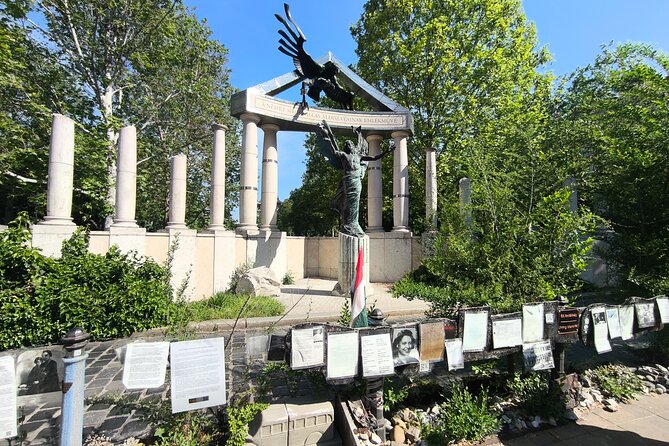
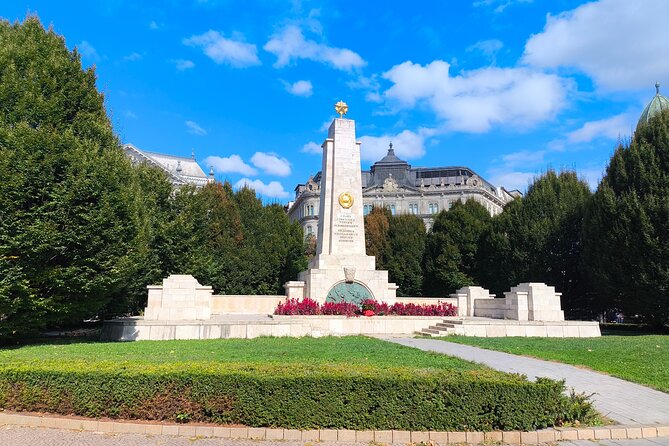
You start at Szabadság Square in downtown Budapest. The focus here is the historical setup that led Hungary into communist power, using two key memorial points to frame the timeline: the Memorial for Victims of the German Occupation, then the memorial referencing the Soviet liberation of Hungary in World War II. This first stretch works well because it gives you the background you need before you hit the heavier sites later.
From there, the tour moves to a nearby area with some of the remaining examples of Socialist Realism, often called Stalin Baroque. You’ll see how “official style” was used for power and legitimacy, including a huge residential complex and interesting relief work in an inner courtyard. One quirky detail included in the stop is a statue of a bear riding a scooter, which sounds odd until you realize how daily life and propaganda imagery share the same streets.
This segment stays mostly visual and story-based, so it is ideal if you like learning while you walk. The trade-off is that the best value here is listening and absorbing context, not checking off museum rooms. Wear comfortable shoes because you’ll cover ground before you even reach the larger attractions.
Further tours of Hungary’s state-socialist years:
- Budapest: Communist History Tour with House of Terror Option
★ 4.8 · 182 reviews - Communism in Hungary with a Historian
★ 5.0 · 70 reviews - Budapest: 3-Hour Walking Tour About Communism (Small Group)
★ 4.7 · 70 reviews
House of Terror and Bem Square, where 20th-century control meets 1956
Next comes a stop at the House of Terror Museum on Andrássy Avenue. The tour keeps you on the outside this time, which still works because the building itself carried fascist and then communist power functions, including its role as the headquarters of the Arrow Cross Party and later the office of the communist secret police. You do not need to enter to understand why the building is a symbol.
The benefit of not rushing into a museum at this moment is pacing. You get the significance first, then later you can decide if you want the deeper museum experience on your own. If you prefer to spend your attention on architecture and street context today, this format fits.
After that, you head to the Bem Jozsef Memorial at Bem Square on the Buda side. This is where the 1956 Hungarian revolution began, and the guide connects the square to the protests that spread across the city. You get a sense of the city as a living stage for resistance, not just a background for political speeches.
If you are the kind of traveler who likes clear chronology, this is the part that turns the story from “how power formed” into “how it was challenged.” It also sets you up for the emotional weight that shows up in Memento Park later.
Bambi Café and communist youth culture, the everyday side of power
One of my favorite parts of the day is the contrast between grand symbols and everyday routines. You get that through a stop at Bambi Café, a preserved communist-era presszó (coffee house) that remains in its original form. This is the kind of place where the setting makes history feel normal, like people once just came in, ordered coffee, and lived their day while the system watched.
Then you pause at the Marczibányi Téri Művelődési Központ, a cultural center built in 1972 with young people in mind. The point was to give youth a supervised alternative to social spaces authorities considered suspicious. You’ll get a brief look into the reception hall, and the stop is quick, but the atmosphere and architecture help you understand how control could be wrapped in social life.
These stops are short, but they do important work. They show how ideology did not only show up in courts and ministries. It shaped leisure options, youth activities, and even the feel of a public space.
If you like photos, this section is friendly for quick snapshots too, especially at Bambi Café where the interior is part of the story. Just remember, because the stops are brief, you’ll enjoy them most if you listen for context while you look.
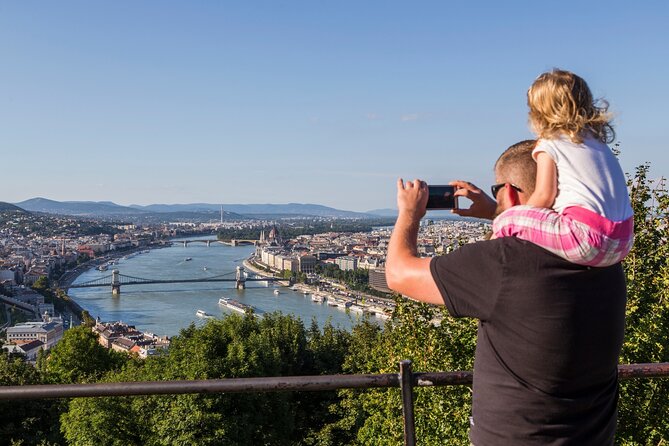
Hotel Budapest and the Gellért Hill viewpoint story you can still climb
Budapest has landmarks that tourists miss, and this tour uses that gap to your advantage. One stop focuses on Hotel Budapest, a circular-shaped building completed in 1967 that looks almost like a skyscraper in Buda’s hills. The guide explains the political messaging behind such developments, including the idea that socialist countries could also build big, modern projects with unique designs.
What I like here is the shift from architecture as decoration to architecture as propaganda. This is the day in microcosm: buildings are never just buildings. They are arguments made in concrete and steel.
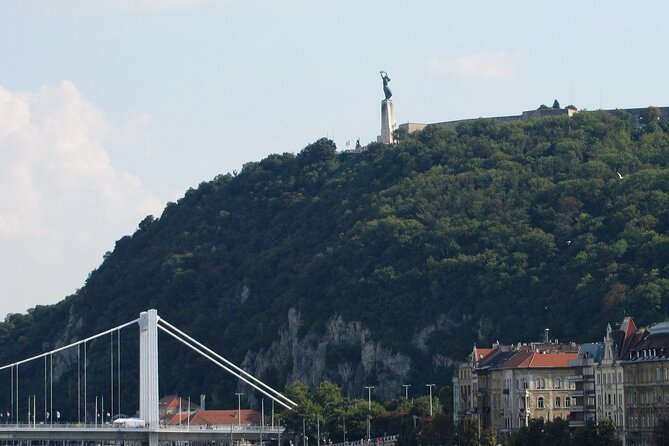
After that, you climb toward the Liberty Statue atop Gellért Hill. The statue was unveiled on April 5, 1947, originally tied to the idea of liberation and victory, yet many people associated it with Soviet occupation. The guide shares the story behind its original inscription, which referenced memory of liberating Soviet heroes, and also the “living statue” concept involving Erzsébet Gaál, the model-like figure whose real-life role became part blessing, part complication.
There is a practical note you should plan around: the statue and the Citadel area are under renovation, expected to reopen in December 2025. Even so, you can still walk around the site and climb the steps to the monument, and the surrounding lookouts give you great city views for photos.
This is a good segment for travelers who care about both symbolism and skyline time. The emotional payoff is strong because you connect the monument to the wider storyline, not just to the view.
Still to cross in Budapest
- Budapest: City Highlights Sightseeing Cruise★ 4.6 · 43,981 reviews
- Budapest: Unlimited Prosecco, Beer and Aperol Spritz Cruise★ 4.8 · 37,304 reviews
- Budapest: Széchenyi Spa Day Ticket with Optional Upgrades★ 4.3 · 23,911 reviews
Socialist Realist campuses and housing-area architecture that reads like a map
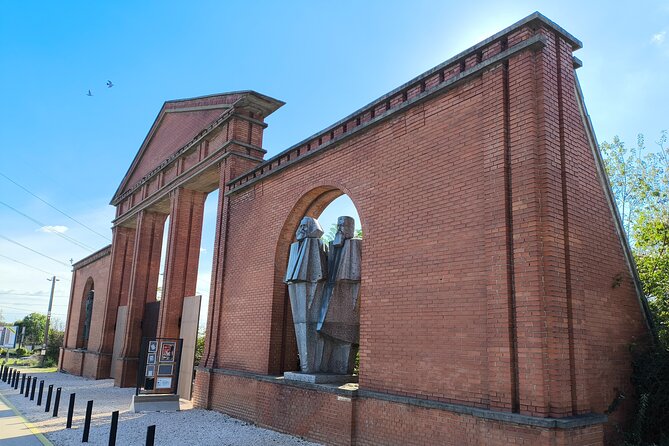
Next up is a stop at Budapest University of Technology and Economics. The guide points out the H, T, and R buildings as among the largest remaining examples of Socialist Realist architecture in Hungary. You’ll specifically focus on the facade of the R building, and on weekdays you can enter parts of the campus.
There is also a playful, memorable bit shared during the stop, the idea that inside, you feel like Moscow awaits. You are not entering a museum here, but you are stepping into a preserved mood of an era, and that is often what these architectural stops do best.
After the campus, the tour transitions toward everyday urban spaces through Fehérvári Way and its market hall. This place carries a history that many visitors skip because it is not a classic postcard. The hall began as a distinctive 1977 brutalist building, and later received a bland white exterior over time. The contrast becomes a quiet lesson in how Hungarian architecture at times rejected or misunderstood brutalist design principles tied to Soviet influence.
The guide also gives you time to browse and shop if you want. Hours vary by day (the tour info includes a schedule), and you get a half-hour window here, which is enough to look around and grab something small without turning the day into errands.
If you are the type who loves “how people actually live,” the architecture and the market stop together do a solid job. You see both official style and the practical rhythm of local shopping.
Lunch at Restaurant Alba Regia, plus a communist-era church stop
For lunch, the tour takes you to Restaurant Alba Regia, described as a local favorite far from tourist crowds. The menu is in Hungarian, so if you are not comfortable reading it, you will appreciate that the guide helps you choose something that fits. You get about an hour here, which is enough for a relaxed meal without rushing right back into walking.
If you care about value, this is a smart use of time. The tour makes room for food that feels real, and it does it in a way that reduces stress for non-Hungarian speakers. The only catch is that lunch itself is not included, so you should budget separately.
Between lunch and the later housing and memorial segments, there is also a short, fascinating church stop. The tour notes that churches were still built during communist times, but often without looking like traditional places of worship. This particular stop is described as a hidden brutalist-style church built mostly from metal, tucked at the base of stark residential towers. This is not a “big sign” destination. It is the kind of place you find only if someone knows what to look for, and the tour gives you that advantage.
This part of the day works because it breaks the stereotype that communism only meant strict atheism and empty streets. Instead, you see how faith and everyday structures adapted under pressure.
Housing estates to Memento Park, from daily life to the regime’s final monuments
The tour then shifts into the residential world, where you truly feel what communist housing meant. You’ll visit a typical communist tower block estate and its urban center. The guide gives a brief explanation of how these estates were constructed and what daily life in prefabricated tower blocks could feel like. You also get a nearby photo opportunity with a statue of three bulls.
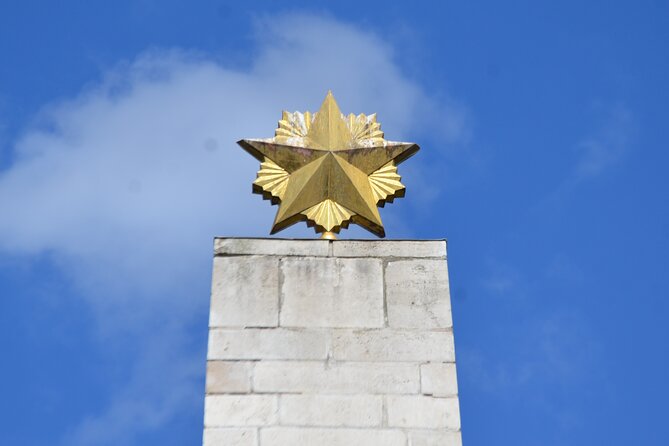
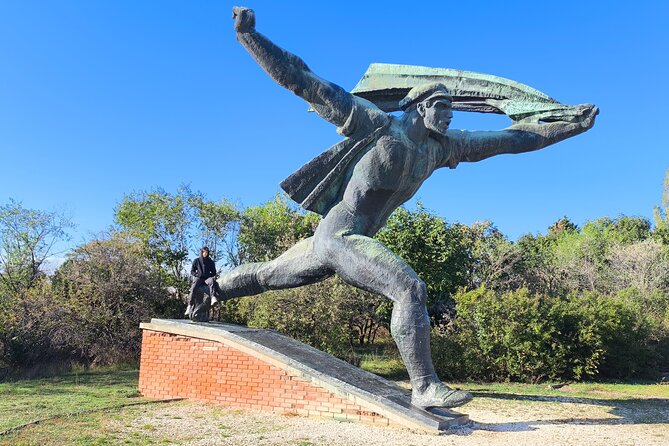
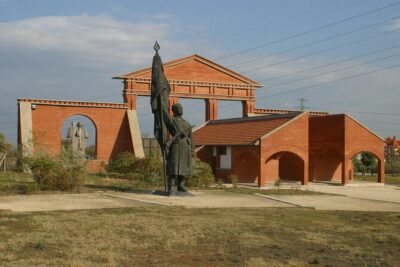
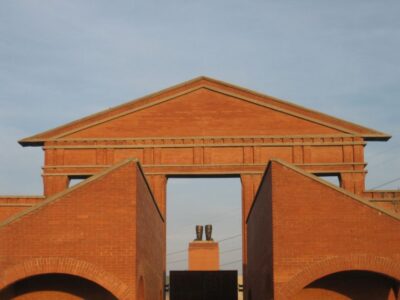
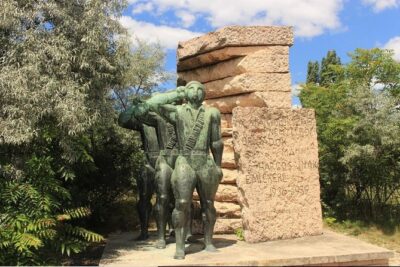
After that comes Memento Park, the tour’s emotional weight. This open-air museum preserves the imposing statues and monuments that once stood as symbols of the regime around Budapest. You do not just look at objects, you experience what it means when political art decays outside its intended setting, under wind and weather. It is a visceral way to connect ideology to material culture.
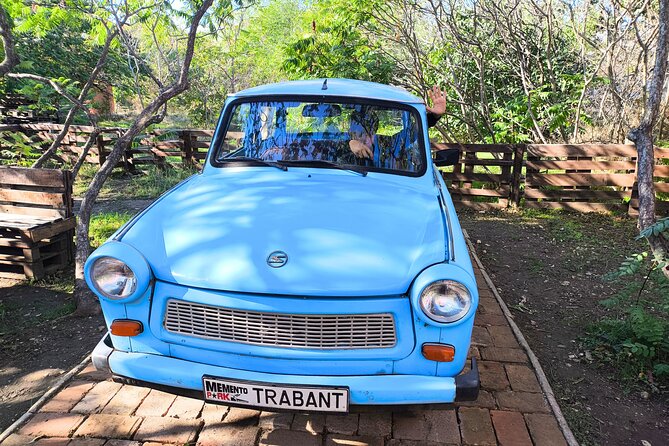
An added practical bonus is that Memento Park offers a chance to sit into a real East-German Trabant, described as probably the worst communist car ever made. Even if you treat it as a photo moment, it still anchors the story in everyday objects and propaganda-era design.
Admission for Memento Park is not included, and you should plan for the extra cost. The duration here is about 1 hour 30 minutes, so it is not a rushed stop. If you prefer quiet, reflective time during tours, this is where you’ll feel it most.
Experimental Housing, Csepel’s Red Industrial Belt, and riverfront housing time capsules
After Memento Park, the tour returns you to lived experience through housing details again. There is a brief stop at the Experimental Housing Estate, highlighted as one of the more successful examples of communist-era housing in Budapest. The guide mentions he lived there until age six, which adds a grounded, personal layer to what could otherwise feel like abstract urban planning.
Then you head to Csepel Island in the Danube, known during the communist era as “Red Csepel” for its industrial role and working-class significance. You’ll visit the Csepel Iron Works, described as a massive industrial complex tied to Soviet-style industrialization, employing tens of thousands and producing steel, machinery, and vehicles. The guide also connects the factory to the 1956 Hungarian Revolution, noting that workers held out even when much else had fallen.
The stop is paired with a view of the surrounding communist-style tower block housing estates. Even when you are just passing by, you get a sense of how the industrial engine and the residential blocks were linked in daily life and social identity.
A final housing-focused segment takes you to Gubacsi Road Housing Estate along the Ráckevei-Danube riverfront. Here, you see post-war architectural transition from socialist realism to modernism during the 1950s. The tour also highlights rare, colorful ceramic reliefs that reflect the area’s industrial and communist past.
These segments are great for travelers who want more than just famous monuments. You end up with a city map in your head, not just a list of stops.
Budapest Retro Interactive Museum and when you should schedule it
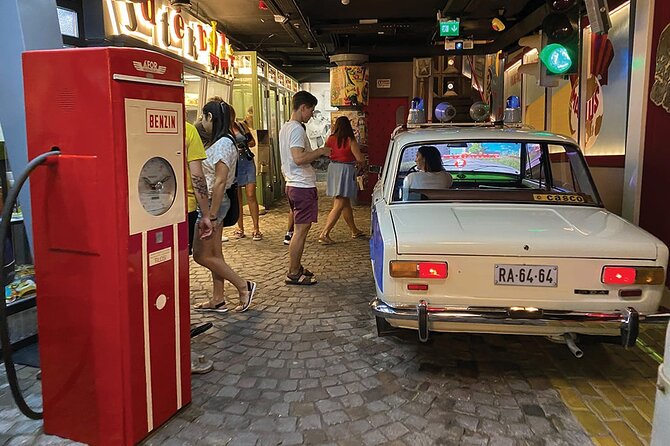
The last major stop is the Budapest Retro Interactive Museum. It is interactive and playful, with experiences like being a broadcaster or driving a Communist-era police car. The museum covers different eras through exhibits focused on everyday objects and even space adventure themes, plus a Communist era bistro you can enjoy after your nostalgic trip.
This is also the part most likely to depend on time. If traffic runs heavy and the day runs late, it can be easy to save this for another visit, as happened on at least one tour day described in feedback. If you really care about the hands-on elements, I suggest arriving with a flexible mindset, meaning you should not plan a tight dinner right after unless your day schedule is protected.
The Retro Museum admission cost is not included, and the tour notes a weekend price detail, which means your actual cost can depend on the day. Plan on paying it separately if you want it.
Price and logistics, what $245 buys you, and what costs extra
At $245 per person for a private tour of about 7 to 10 hours, the value comes from two things. First, you are not paying for a long bus ride through a few highlights. You are paying for a private vehicle with pickup, an air-conditioned trip across neighborhoods, and a licensed driver plus guide to connect the dots.
Second, the included extras reduce your day-to-day friction. The tour includes soda/pop, bottled water, snacks, plus the air-conditioned transport. That sounds small, but on a full-day architecture and memorial route, it keeps the day from turning into an energy crash.
What costs extra is clearly called out for the two main ticketed stops. Memento Park is $9 per person, and the Budapest Retro Interactive Museum costs extra (with the tour listing a weekend price amount of $16.50 per person). Lunch is not included too.
So, if you want the full set of experiences, budget for those additions. If you only care about the street-level sights and architecture, you can still do a lot without those ticketed entries, especially since several stops are described as free admissions.
Also, the service operates within a 9:00 AM to 6:00 PM availability window, with a specific pickup time agreed at booking. That matters if you have a pre-booked morning or evening plan, because you want your day to fit the city’s rhythm.
Should you book this Communist-Era Budapest tour?
I recommend booking if you want communist history that feels practical and human. This is a strong choice when you like architecture, streets, and city planning, and when you value a guide who can answer your questions without turning the day into a lecture. The private format helps too, because you get pacing control, plus a calm, comfortable vehicle for the longer jumps between areas.
I would skip or consider alternatives if you only want famous monuments with minimal walking. This route is built for wandering, looking closely at buildings, and absorbing context. You also need to be okay with some entries being outside-only and some parts depending on time, renovations, and traffic.
If you do book, a smart move is to bring curiosity, and also a light appetite for variety. The day goes from heavy memorial context to a preserved presszó, from housing estates to statue parks, and that mix is exactly what makes it work.
FAQ
How long is the private tour?
It lasts about 7 to 10 hours.
Where does pickup happen?
Pickup is offered from your hotel or another agreed location in Budapest.
Is the tour in English?
Yes, it is offered in English.
Is this tour private or shared?
It is private, meaning only your group participates.
What is included in the price?
The tour includes soda or pop, bottled water, snacks, and air-conditioned transport in a certified passenger vehicle with a licensed professional driver and guide.
Are any admissions included?
Many stops have free admission, but there are ticketed stops not included: Memento Park costs $9 per person, and the Budapest Retro Interactive Museum costs extra (with a listed weekend price amount of $16.50 per person).
Is lunch included?
No, lunch is not included.
Will the House of Terror Museum be visited inside?
The tour description says you will pause at the House of Terror Museum without entering this time.
Can I bring a service animal?
Yes, service animals are allowed.
What is the cancellation policy?
You can cancel for a full refund if you do so at least 24 hours before the experience starts.
The newest crossings added in Budapest



Communist Era History Tours, compared.
Communist History Tour with House of Terror Option
Read our review →
3-Hour Walking Tour About Communism (Small Group)
Read our review →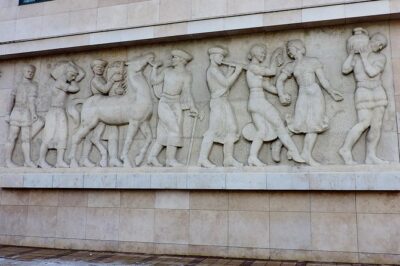
Memento Park Visit with Private Trabant Transfer
Read our review →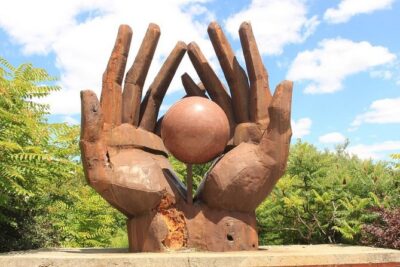
Browse the lists this tour appears in