
Reviewed · COMMUNIST ERA HISTORY TOURS
Private Communist Budapest Tour
Communism leaves big marks in Budapest. This Private Communist Budapest Tour turns that past into a street-level, walkable route, with hotel pickup so you spend less time figuring out transport.
What I really liked is the way the guide connects big political events to what people actually lived through. Names like Martin and Bogota come up in the guide reports for a reason: their English is clear, and they share personal context alongside the facts.
One possible drawback: it is still a walking tour plus public transit for around four hours, and at least one key stop has an admission ticket not included. If you hate cold weather or hate walking, you will want to plan your day carefully.
In This Review
- Key things I’d watch for before booking
- Why a private communist tour beats DIY in Budapest
- Price and logistics for a $361 private tour
- Meeting at 10:30 and what a four-hour route feels like
- Szabadsag ter: the Soviet Red Army memorial and its diplomatic awkwardness
- Parliament and St Stephen’s Basilica: connecting the communist era to Budapest’s big landmarks
- Why the guide’s personal perspective matters (Martin and Bogota examples)
- Customizable private itinerary, so the story fits your group
- Transportation and pacing: walking plus public transit without the headache
- Who this Budapest communist history tour is best for
- Quick practical checklist before you go
- Should you book the Private Communist Budapest Tour?
- FAQ
- What is the duration of the Private Communist Budapest Tour?
- What time does the tour start?
- Is this tour private, or shared with other people?
- Do you offer hotel pickup?
- What language is the tour in?
- Is there an admission fee for Szabadsag ter?
- Is free cancellation available?
Key things I’d watch for before booking
- Hotel pickup and drop-off mean you can start the tour without wrestling maps or trams.
- A private group keeps the pace flexible for questions and photo pauses.
- Szabadsag ter and WWII context are the anchor point, with real political tension in plain sight.
- Major landmarks on the same thread help you connect communist-era choices to Budapest’s wider story.
- English-led guidance makes the history easier to follow without a lot of guesswork.
- All-weather operation means you should dress for the day, not the forecast.
Why a private communist tour beats DIY in Budapest
Budapest is full of plaques, statues, and buildings that look official even when the meaning is complicated. The communist era is one of those chapters where it is easy to skim the surface if you are doing it on your own. A guided private tour helps you connect the symbols you see outdoors with what was happening inside the city at the time.
With this tour, you are not just collecting sights. You are building a timeline as you move. The best value here is that the guide can answer the annoying questions you usually have after reading a sign for five seconds: Why is this here? Why does it feel controversial? What did it mean to everyday people?
Because it is private, you also get a pace that fits your group. If you want to pause for a photo or ask about a particular neighborhood detail, you do not have to wait for a busier schedule. And since this is built around a walking route, you are seeing the city as you experience it, not just as it looks in a brochure.
Price and logistics for a $361 private tour
At $361.23 per person for an approximately four-hour tour, this is not a budget “spray and pray” sightseeing option. You are paying for the combination of private guiding, hotel pickup, and a route designed to work on foot.
So the value question becomes simple: are you likely to spend that much time and effort trying to replicate this with taxis, transit tickets, and a self-made itinerary? If you want the communist-era story tied to specific outdoor locations, the guide pays off fast. If you only want a few quick photos of the big monuments, you might find a cheaper group tour more appealing.
Also note what the logistics cover. Pickup is offered from your hotel, but you need to specify it. You get a mobile ticket, and the tour runs in English. That matters because it reduces the chance of a day derailing due to meeting point confusion.
Further tours of Hungary’s state-socialist years:
- Budapest: Communist History Tour with House of Terror Option
★ 4.8 · 182 reviews - Communism in Hungary with a Historian
★ 5.0 · 70 reviews - Budapest: 3-Hour Walking Tour About Communism (Small Group)
★ 4.7 · 70 reviews
Meeting at 10:30 and what a four-hour route feels like
The tour starts at 10:30 am. In practice, this kind of half-day timing is great for two reasons. First, you can still enjoy the rest of your day in Budapest without feeling locked into a full itinerary. Second, it often keeps you away from the busiest midday crowds, which makes outdoor viewing less frustrating.
The route is designed for real movement: you explore by foot, and public transit is also part of the plan. That is a smart way to cover ground without turning the day into an all-day marathon. It also helps you see how communist-era locations fit into the modern city layout, not as isolated museum stops.
One more real-world point: this tour operates in all weather conditions, so you should dress for cold, wind, rain, or whatever Budapest throws at you. A guide report specifically mentioned walking in the cold and still keeping things engaging, which is a good sign that the tour does not get canceled the moment the sky looks dramatic.
Szabadsag ter: the Soviet Red Army memorial and its diplomatic awkwardness
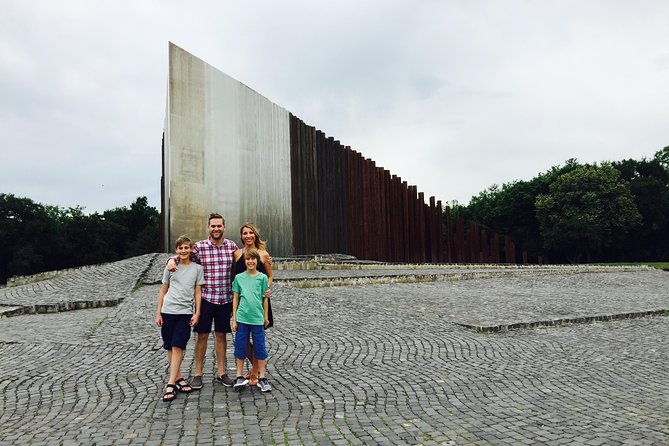
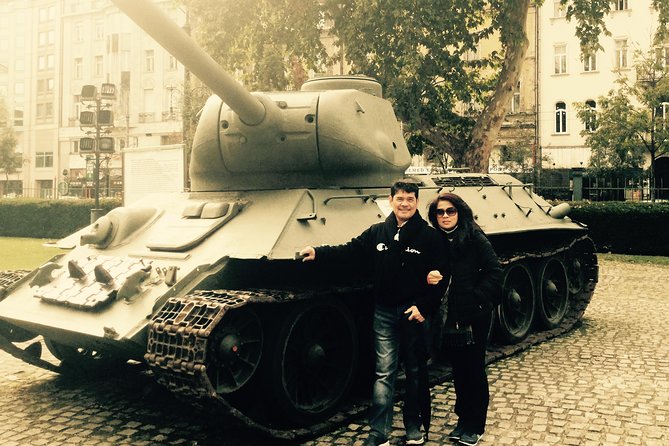
Stop one is Szabadsag ter, and it sets the tone for the whole tour. Here you will see a memorial to the Soviet Red Army, honoring fallen Soviet soldiers from the Siege of Budapest during WWII. That alone would be enough for an important historical stop, but the site has an added layer of controversy because the American Embassy is located next to it.
That neighbor-to-neighbor detail is not a small trivia point. It is the kind of place where you understand that history is not just past tense. It lives in geography. When the guide explains the context, the memorial becomes more than a statue. It becomes a clue about how different powers wanted to write meaning onto Budapest’s public spaces.
Timing is tight enough to keep it efficient. This stop is around 20 minutes, and admission tickets are not included for that memorial. If you are budgeting, assume you might need to cover any required entry fees yourself.
Potential drawback: because the stop is about political history in a very specific physical location, you will want to stay engaged rather than treat it like a quick photo. If you only want landmarks without interpretation, the significance may be lost on you.
Parliament and St Stephen’s Basilica: connecting the communist era to Budapest’s big landmarks
Even though the first stop is the anchor, the tour does not stay trapped in one square. As you continue, you will cover major landmarks associated with the city’s political and cultural identity, including Parliament and St Stephen’s Basilica. These are famous enough that you might already recognize them from photos, but the guided element is what changes the experience.
Here is the practical value: the guide helps you connect what you are seeing to the communist-era lens. That means you are not only staring at grand architecture. You are learning what kinds of power were emphasized, what was celebrated, and what was suppressed, depending on the period.
Parliament is the kind of building that forces a question of governance and legitimacy. St Stephen’s Basilica adds another angle, because religion and public life intersect in ways that communist ideology often treated differently than previous eras. When these landmarks appear in one guided thread, you start to see how Budapest’s public face changes with political pressure.
Another advantage of a walking plus transit approach is that you also see in-between spaces. Communist history is not only about the loud monuments. It is also about the way the city is arranged and how people move through it now. The guide can point out what matters, and you get to see it with your own eyes.
Still to cross in Budapest
- Budapest: City Highlights Sightseeing Cruise★ 4.6 · 43,981 reviews
- Budapest: Unlimited Prosecco, Beer and Aperol Spritz Cruise★ 4.8 · 37,304 reviews
- Budapest: Széchenyi Spa Day Ticket with Optional Upgrades★ 4.3 · 23,911 reviews
Why the guide’s personal perspective matters (Martin and Bogota examples)
In the best tours, the guide knows the dates. In the best tours, the guide knows why those dates feel real. That is what stood out from the guide experiences described.
Martin is highlighted for being perfect in terms of personality and thoughtfulness, and for covering a lot of territory by foot and public transit without turning the tour into rushed storytelling. Bogota is mentioned for staying effective even in cold weather, with an emphasis on making the communist era understandable, not just impressive.
There is also a recurring theme about language clarity. The guide reports emphasize that English was perfect, which matters more than people expect. Communist history can get complicated fast, especially when you are sorting through propaganda versus lived experience. When the guide is easy to understand, you can actually follow the meaning, not just the vocabulary.
If you like history explanations that feel human, this tour is a strong match. One guide-focused review specifically praised personal experiences from citizens and framed it as straight scoop rather than trying to tell you only what sounds comfortable. That kind of honesty style usually leads to better conversations and better questions from you.
Customizable private itinerary, so the story fits your group
A private tour is only worth it if it lets you shape the day. Here, the idea is that the itinerary can be customized. That can mean you spend a little more time where your group has extra questions, or you adjust the pace depending on walking comfort and interest levels.
You should expect the route to still follow a logical storyline. The first stop is fixed around Szabadsag ter, because it is the clearest starting point for Soviet commemoration and the memorial controversy next to the American Embassy. After that, the rest of the landmarks like Parliament and St Stephen’s Basilica help widen the lens.
The key benefit for you is focus. Instead of bouncing around Budapest with a generic guidebook route, you stay on a theme. You are not guessing which stop explains what. You are getting a guided link between the communist past and the cityscape you see today.
Transportation and pacing: walking plus public transit without the headache
One of the quiet wins here is that the tour handles the movement puzzle. Highlights explicitly call out a no-hassle approach with hotel pickup and drop-off. That is not just convenience. It protects your time and reduces the stress that can creep into history tours.
Public transit also matters. It helps you cover more than you could realistically walk in four hours without turning every stop into a long trek. In a city like Budapest, transit is part of how people live, so seeing locations while you travel between them can make the city feel more connected and less like a set of isolated postcards.
For pacing, plan on comfortable shoes. Even if you enjoy walking, the combination of outdoor standing time plus transit steps can add up. If your group is sensitive to cold or long exposure, pack accordingly. This is the kind of tour where dressing right makes the difference between learning and just surviving.
Who this Budapest communist history tour is best for
You should seriously consider booking if you want more than “top sights.” This is a good choice if you care about how ideology shows up in public space, not just what a building looks like.
It also fits well if you enjoy discussion. The guide style described emphasizes thoughtful responses and a personal angle. If your group likes asking follow-up questions, a private setup gives you that room.
This tour also makes sense if you have limited time and want a guided route that covers multiple major landmarks in about four hours. Hotel pickup makes it easier for older travelers or anyone who does not want to navigate on arrival.
On the flip side, you might skip it if your goal is mostly casual sightseeing. If you only want quick photos and minimal talking, you may find four hours of political context heavy. This is designed for people who want the story to land.
Quick practical checklist before you go
To get the best experience, keep these points in mind based on what the tour is built around:
- Wear shoes that handle walking and outdoor standing.
- Bring a layer for cold weather, since the tour runs in all conditions.
- Know that the Szabadsag ter stop is about history and meaning, not just a picture.
- Budget time for one stop where admission tickets are not included.
- Expect an English-led experience, with guides like Martin and Bogota praised for clarity and personal context.
Should you book the Private Communist Budapest Tour?
Book it if you want a focused, guided way to understand communist-era Budapest, with real context attached to specific places you can still see today. The value is strongest when you care about interpretation, not just sightseeing, and when you appreciate a guide who can explain the emotional and personal side of history in clear English.
Skip it if you want only a light, casual monument tour or if you cannot handle walking plus public transit for about four hours. Also, if you are very tight on extra fees, remember that admission ticketing is not included for at least the Szabadsag ter memorial stop.
For the right traveler, this is a smart use of time: private guiding, hotel pickup convenience, and a coherent communist narrative that hits at least Szabadsag ter, plus big landmarks like Parliament and St Stephen’s Basilica.
FAQ
What is the duration of the Private Communist Budapest Tour?
The tour lasts about 4 hours.
What time does the tour start?
The start time is 10:30 am.
Is this tour private, or shared with other people?
It is private. Only your group participates.
Do you offer hotel pickup?
Yes. Pickup is offered from your hotel, and you need to specify your hotel details.
What language is the tour in?
The tour is offered in English.
Is there an admission fee for Szabadsag ter?
The Szabadsag ter stop lists admission ticket not included, so you should expect to cover any ticket costs yourself if required.
Is free cancellation available?
Yes, you can cancel for a full refund up to 24 hours before the experience start time.
The newest crossings added in Budapest




Communist Era History Tours, compared.
Communist History Tour with House of Terror Option
Read our review →
3-Hour Walking Tour About Communism (Small Group)
Read our review →
Memento Park Visit with Private Trabant Transfer
Read our review →
Browse the lists this tour appears in