
Reviewed · COMMUNIST ERA HISTORY TOURS
Life Under Communism” with optional visit to the House of Terror
Communism left more than buildings in Budapest. This 3-hour walk connects Soviet and 1956 sites to what daily life felt like behind the Iron Curtain, with strong guiding like Miklós and Balázs. I especially love the on-street context and the coffee stop at Bambi Presszó, which makes the whole story feel human. One thing to watch: House of Terror is optional, so pick the right option if that is your priority.
In This Review
- Key tour takeaways before you lace up
- Budapest Under Communism: A Walk You Can Read With Your Feet
- Liberty Square and the Siege of Budapest Memorial: Start Where the World Changed
- Szabadság tér’s Space and Silence: Habsburg-Era Layout Meets Communist-Era Reality
- Kossuth Square and the Parliament Building: Where 1956 Ignited
- Petőfi Statue and Március 15 Square: Public Life at the Edge of a Bridge
- Corvin köz: The Resistance Center Linked to Molotov Cocktails and Guns
- Crossing Toward Gellért Hill: Big Views and the Liberty Statue
- Bambi Presszó Coffee Break: Communist Culture Without the Script
- If You Choose Memento Park: Statues Kept After 1989
- If You Choose House of Terror: Andrássy Avenue’s Black Monument and the T-54 Tank
- Price and Time: Is $280.33 Worth It for a Private Group?
- Who This Tour Fits Best in Your Budapest Plans
- Tips for Getting the Best Guide Conversation
- Should You Book This Communist-Era Tour in Budapest?
- FAQ
- How long is the Budapest Communist-era walking tour?
- How many people are in the group?
- Is the House of Terror visit included?
- Is Memento Park included?
- What is the price?
- What language is the tour offered in?
- What is included in the tour price?
- Can I get a full refund if I cancel?
Key tour takeaways before you lace up
- Liberty Square to Gellért Hill: you move through major Soviet- and 1956-linked spaces on foot
- Real 1956 context: you trace the revolution from Kossuth Square to the resistance at Corvin köz
- Coffee at Bambi Presszó: a pause that ties the era to everyday culture
- Memento Park option: statues kept after 1989 instead of erased
- House of Terror option: a focused museum visit inside a stark renovated building on Andrássy Avenue
- Small private group: up to 5 people, with informative handouts and a guide in English
Budapest Under Communism: A Walk You Can Read With Your Feet
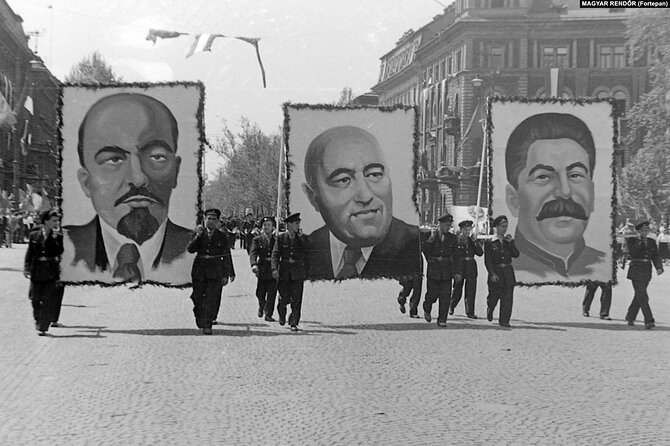
If you like history, this is the kind that lands on your skin, not just in your head. You do not just see monuments. You walk between the spaces where power was displayed, where crowds gathered, and where violence sparked in 1956. The pacing is built for a real conversation with your guide, so you can ask follow-ups and get the short version first, then the deeper story when you want it.
What makes the experience especially good value for a private group is the way the guide connects places to lived experience. In particular, I like how Miklós and Balázs bring it down to daily life themes, not abstract dates. Another highlight is the planned stop for coffee at Bambi Presszó, which is a rare chance to experience the atmosphere of Communist-era culture without turning it into a museum performance.
The main consideration is simple: this is a walking route with a few longer transfers by foot, and the tour is listed as requiring moderate physical fitness. Wear comfortable shoes, and you will feel in control instead of rushed.
Liberty Square and the Siege of Budapest Memorial: Start Where the World Changed
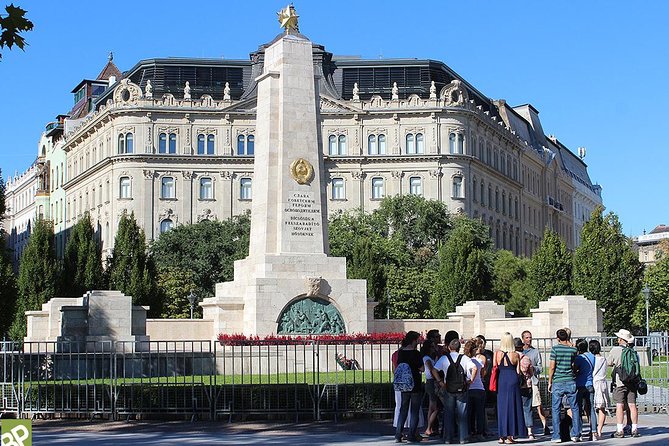
The tour opens at Liberty Square, where you face a grand Soviet army memorial tied to the Siege of Budapest. This is not a small, quiet plaque. It is the kind of statement that was meant to dominate the skyline and the conversation about who mattered at the end of World War II.
Here is what you gain if you pay attention: this memorial is a clue to how history was framed after the war. The siege lasted 50 days, and the story is not only about military events. It is also about the narrative that followed, and how power likes to write the official version first, then let everyone else argue later.
If you are arriving early, take a moment before you start walking to get your bearings. Liberty Square is one of those spaces where Budapest feels both imperial and scarred, depending on what angle you are looking from.
Further tours of Hungary’s state-socialist years:
- Budapest: Communist History Tour with House of Terror Option
★ 4.8 · 182 reviews - Communism in Hungary with a Historian
★ 5.0 · 70 reviews - Budapest: 3-Hour Walking Tour About Communism (Small Group)
★ 4.7 · 70 reviews
Szabadság tér’s Space and Silence: Habsburg-Era Layout Meets Communist-Era Reality
From there you head to Szabadság tér, a wide, stately square in the city center. It owes much of its size and feel to the Habsburg era, when the area held a Bastille-like structure known as Újépület.
That detail matters. Big open squares can look like they are built for peace, rest, and ceremonies. But in Communist regimes, large public spaces also become stages. Your guide helps you notice how architecture can be used for speeches, surveillance, or simply intimidation through scale.
In practice, this stop also gives you a breather. It is a peaceful green area where you can reset and listen before the route gets more intense near Kossuth Square.
Kossuth Square and the Parliament Building: Where 1956 Ignited
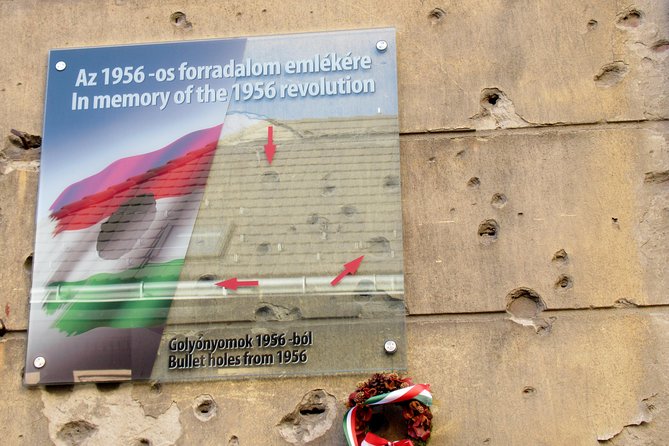
Kossuth Square is where the story sharpens. The Hungarian Parliament building sits here, and you learn how, during the 1956 revolution, a firefight started in front of it. The data on how many demonstrators died is still not fully known, which your guide frames in a grounded way: in revolutions, chaos makes history messy, and official records can be unreliable.
One of the most useful parts of this segment is the crowd description. The crowd at Kossuth Square was mixed. It included men, women, children, and the elderly. That helps you understand 1956 as a broad social rupture, not just a clash between military units.
Practical note: the Parliament stop includes time on site (about 20 minutes) and is listed as admission ticket free. You can treat it as a place for photos and orientation, then move on with the bigger context still fresh.
Petőfi Statue and Március 15 Square: Public Life at the Edge of a Bridge
Next up is Petőfi Statue and Március 15. Square, down by Erzsébet Bridge, in front of one of the oldest churches of Budapest. After the heavy Kossuth Square focus, this stop works like a palate cleanser. The route gives you room to notice how civic life continues around political history.
A key detail here is the 2011 renovation, which made the area a popular scene of social life, not only for tourists. That matters because it prevents the tour from becoming a one-note experience. You are not just “learning about Communism.” You are seeing how Budapest kept functioning, even when the politics were brutal.
If you want a smooth experience here, walk slowly. This is one of the spots where you can notice the everyday rhythm of the neighborhood while still keeping the historical thread in your head.
Still to cross in Budapest
- Budapest: City Highlights Sightseeing Cruise★ 4.6 · 43,981 reviews
- Budapest: Unlimited Prosecco, Beer and Aperol Spritz Cruise★ 4.8 · 37,304 reviews
- Budapest: Széchenyi Spa Day Ticket with Optional Upgrades★ 4.3 · 23,911 reviews
Corvin köz: The Resistance Center Linked to Molotov Cocktails and Guns
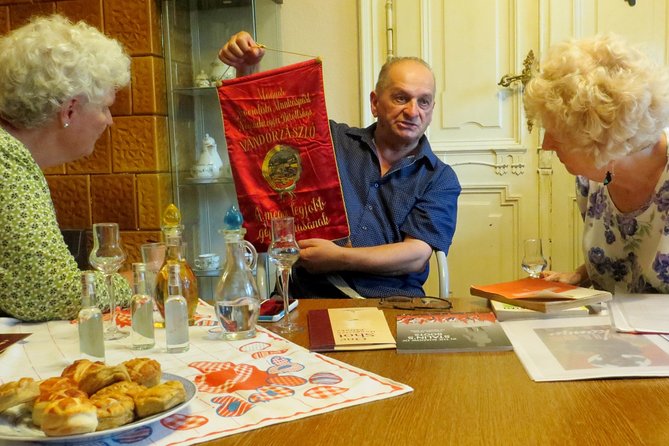
Corvin köz is where the tour becomes emotionally vivid. In 1956, this was a major resistance center, and local youngsters fought the invading Russians using Molotov cocktails and guns they had stolen from soldiers to target Soviet tanks.
Even if you know the headline version of 1956, Corvin köz helps you picture the scale of improvisation. These were not trained units with unlimited supplies. This was resistance driven by urgency, risk, and local knowledge of the streets.
This is also a good stop to ask your guide a question. I like prompts like: What did the days after the uprising feel like? What did people lose first, and what did they try to protect? A strong guide, the kind you get with this company, can answer in a way that makes the tragedy intelligible instead of just depressing.
Crossing Toward Gellért Hill: Big Views and the Liberty Statue
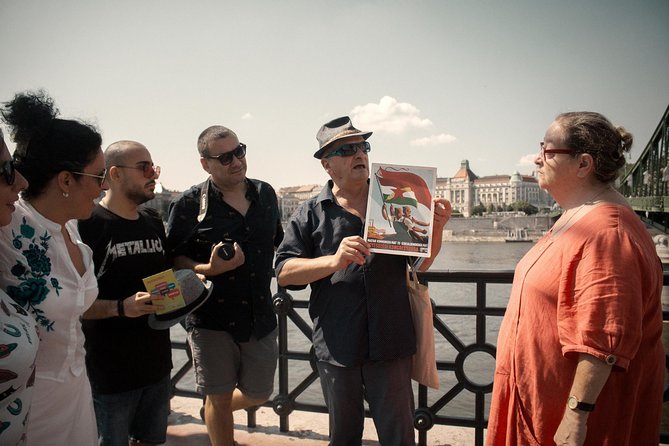
After Corvin köz, you cross one of Budapest’s beautiful bridges to the foot of Gellért Hill. St Gellért Square sits in Buda and is named for Bishop St Gellért, also called the Martyr for Hungarian Christendom.
Then the tour moves to a landmark you can actually see from the square: the Liberty statue, erected in 1947 as a remembrance of Soviet liberation of Hungary. It is a perfect example of how the same event can be framed as liberation in one political language, and as occupation in another.
This stop is a two-for-one. You get a view that makes the city feel connected, and you get a visual lesson in propaganda. Look at how the statue positions the message in relation to the surrounding buildings and streets, because that is exactly how these regimes wanted people to think.
Bambi Presszó Coffee Break: Communist Culture Without the Script
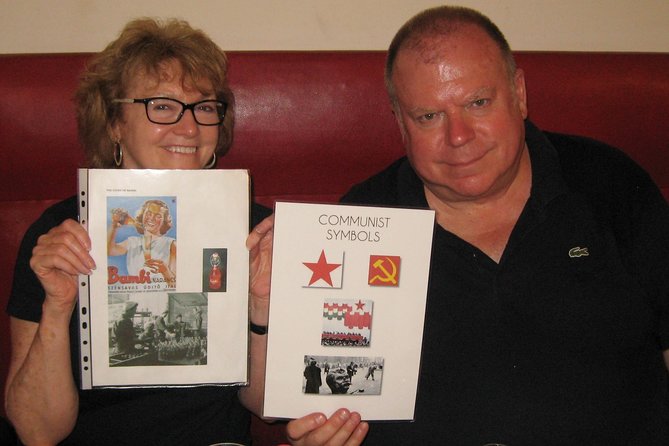
One of the highlights is sipping coffee at Bambi Presszó, described as the last stronghold of Communist culture. Even if you only grab one drink, the stop does something valuable: it changes the tone from heavy facts to a more normal human pace.
I like coffee breaks on history tours because they reset your brain and give you time to process what you just walked past. It is also a chance to ask your guide about how people used culture, food, and public behavior to survive everyday restrictions.
If you are the type who takes notes, this is where you can write down questions while they are still fresh. Then you can follow up later, possibly on your own with what you learned during the walk.
If You Choose Memento Park: Statues Kept After 1989
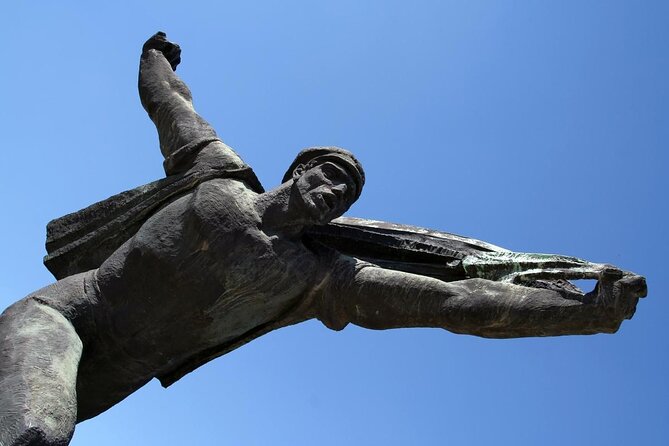
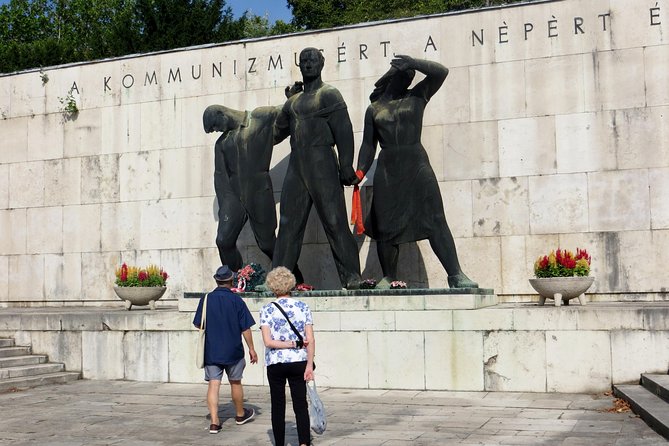
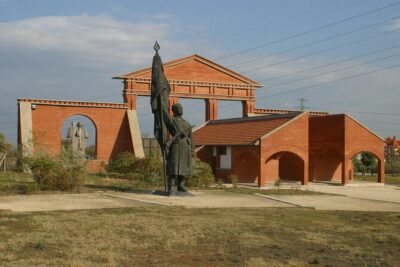
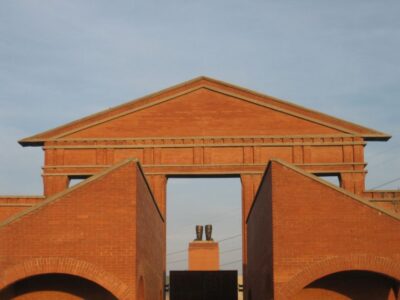
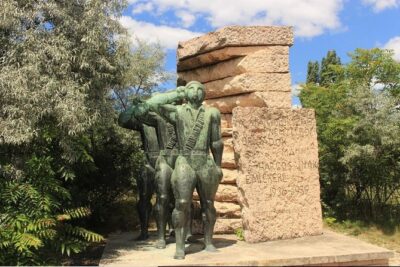
Memento Park is an option, but it is one of the best ways to see how post-Communist Budapest dealt with its own past. When Communism collapsed in Hungary in 1989, the city was left with public works of art that celebrated that era. In 1993, the city decided to save the statues rather than destroy them, and the idea for Memento Park was born.
So instead of pretending the Communist period never existed, the city created a place where the symbols could be seen, compared, and interpreted. On this stop, you will spend about 1 hour, and the admission ticket is included.
Here is why I think this option works for most people: it turns ideology into objects. When you can walk around sculptures and read their meanings, you can spot how propaganda looked when it was dressed up as public art.
If You Choose House of Terror: Andrássy Avenue’s Black Monument and the T-54 Tank
The House of Terror Museum is also an option, and it is a stronger mood shift. The building has been renovated inside and out, and the exterior is described as a kind of monument itself: black architectural framing that makes it pop sharply against the surroundings on Andrássy Avenue.
Inside, the museum has a T-54 tank on display. That detail helps you understand the scale of state power. Tanks do not belong in a casual history lesson. They belong to a system that controlled people through force, fear, and intimidation.
The visit is listed at about 1 hour, and the admission ticket is included. Architects named János Sándor and Kálmán Újszászy are credited with the reconstruction plan, which gives the stop an extra layer beyond museum walls.
One practical note: if your priority is a deeper, slower museum experience, you may want to set expectations. This tour format is built around connecting sites through walking and guiding, so museum time is meaningful but still part of an overall route rhythm.
Price and Time: Is $280.33 Worth It for a Private Group?
The price is $280.33 per group (up to 5), with a duration of about 3 hours on average. That may sound steep until you factor in how tours like this are actually sold: a private guide, a curated walking route across multiple major sites, and included entrance tickets only for the selected options (Memento Park and House of Terror).
For groups of up to five, value often comes from two things.
First, you get a guide who can answer questions, and in the feedback for this experience, the most praised guides are the ones who stay responsive and willing to clarify points. Second, you get context you cannot easily piece together from a map and a few plaques.
You also do not have to pay for the Museum options yourself, since entry is included when you pick them. If you compare this to the cost of museum admission plus a guided route, it becomes easier to justify.
That said, the experience depends on choosing the right option. If you want House of Terror, you should confirm it is the option you booked. In the past, confusion about options has led to frustration, so treat your booking selection as the first step in getting exactly what you want.
Who This Tour Fits Best in Your Budapest Plans
This is a good fit if you like history that connects politics to streets, and if you are curious about what Communist rule meant for normal people, not just leaders. It is also a strong choice for first-time Budapest visitors who want a focused lens on the city, especially the 1956 revolution sites.
It can also work well if you are a solo traveler joining a private group, because you still get the guide attention level of a small tour. The tour is in English, uses a mobile ticket, and offers pickup, though hotel pickup and drop-off are listed as not included, so you will want to confirm exactly where you are expected to meet.
If you are traveling with anyone with mobility concerns, know that the tour requires moderate physical fitness. You can still manage it, but bring realistic expectations, wear supportive shoes, and plan for outdoor time.
Tips for Getting the Best Guide Conversation
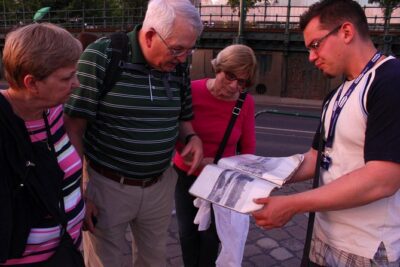
A tour like this lives or dies by the guide interaction. The experience is often praised for firsthand, grounded storytelling. That is the kind of guidance where questions actually matter.
A few practical tips:
- Stay close at quieter moments, especially if your guide speaks softly.
- Bring a few questions, like how the regime shaped daily life, or what changed after 1956.
- Use the bridge and square viewpoints to ask for clarifications while the scenery is still in front of you.
- If you take public transit around Budapest, ask your guide for quick practical advice so you can extend what you learned after the walk.
Should You Book This Communist-Era Tour in Budapest?
Book it if you want Budapest with a clear political lens, but not in a cold, lecturing way. The route is built to connect Soviet-era memorials, the 1956 uprising, resistance history at Corvin köz, and a viewpoint from Gellért Hill. Add coffee at Bambi Presszó and you get a break that keeps the day from turning into a funeral march.
Choose Memento Park if you want symbols and statues, seen at walking speed, with the idea that post-1989 Hungary decided to save parts of the past instead of only destroying them. Choose House of Terror if you want a darker, more direct museum experience with the striking exterior and that T-54 tank.
If you are only interested in one museum and you do not want a walking route, this might not match your style. But if you like the way stories make sense when you walk past the actual stones and squares, you will likely find this tour a very solid use of a half-day in Budapest.
FAQ
How long is the Budapest Communist-era walking tour?
The tour duration is listed as about 3 hours (approx.).
How many people are in the group?
It is a private tour/activity, with your group only, and the price is per group up to 5.
Is the House of Terror visit included?
House of Terror is an optional visit. You choose the option, and the entrance ticket is included for that option.
Is Memento Park included?
Memento Park is also an optional visit. If chosen, it includes admission, and you spend about 1 hour there.
What is the price?
The price is $280.33 per group (up to 5).
What language is the tour offered in?
The tour is offered in English.
What is included in the tour price?
Included items are informative handouts, a local guide, and entrance tickets for the visit options you choose. Coffee and other food and drink are not listed as included.
Can I get a full refund if I cancel?
Free cancellation is available. You can cancel up to 24 hours in advance of the experience for a full refund.
The newest crossings added in Budapest





Communist Era History Tours, compared.

Communist History Tour with House of Terror Option
Read our review →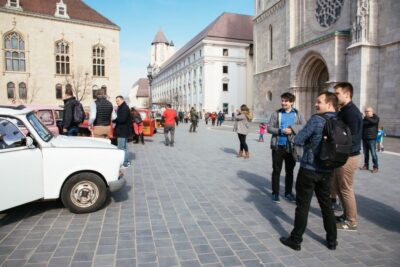
3-Hour Walking Tour About Communism (Small Group)
Read our review →
Memento Park Visit with Private Trabant Transfer
Read our review →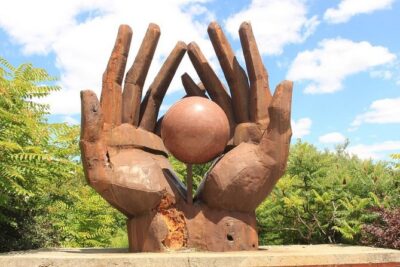
Browse the lists this tour appears in