
Reviewed · COMMUNIST ERA HISTORY TOURS
Communist Budapest Walking Tour
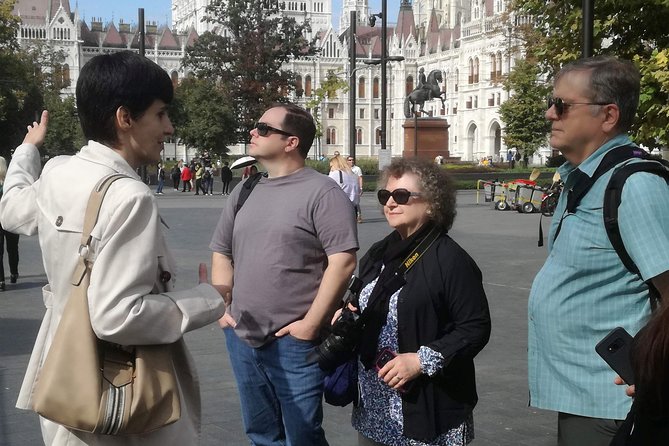
Budapest turns into a Cold War map. This 3-hour Communist history walking tour threads together key sites tied to 1956, Soviet influence, and the legacy of the Iron Curtain, with a historian guiding you scene by scene. I like how the route mixes famous grand buildings with very specific “you are standing where history happened” moments, like Freedom Square memorials and the socialist realist look of the old People’s Stadium.
The two things I’d call out most are the small-group feel and the way the guide explains daily life behind the politics, not just dates on a timeline. One possible drawback: if you want mostly pretty views and casual photo stops, this is going to feel more serious than sightseeing tours.
In This Review
- Key highlights at a glance
- A Cold War map on foot
- From Parliament to Freedom Square: 1956, Soviet symbols, and the US thread
- House of Terror finish: the Berlin Wall slab and what you still need to plan
- Puskás Stadium and the propaganda that stayed in stone
- Ronald Reagan in Budapest: why it matters here
- Bem József Square and the 1956 spark, plus a 1960s coffee interior
- Value, pacing, and why the guides make the difference
- Should you book the Communist Budapest Walking Tour?
- FAQ
- How long is the Communist Budapest Walking Tour?
- What is the price per person?
- What language is the tour offered in?
- How small is the group?
- Where does the tour start?
- Where does the tour end?
- Is the House of Terror Museum included?
- Is admission required for the other stops?
- Do I need tram and metro tickets?
- What is the cancellation policy?
- Who can participate?
Key highlights at a glance
- Small-group pacing with a historian, so questions actually get answered
- 1956 to Cold War storytelling anchored to real street corners and monuments
- Liberty Square and Freedom Square stops tied to Soviet symbols and US relations
- People’s Stadium to Puskás Stadium and the socialist realist propaganda still visible
- House of Terror area ending right outside, great if you want to continue inside on your own
A Cold War map on foot
This tour is built for people who want context fast. In about three hours, you get a guided walkthrough of how Budapest looked and felt during the Communist era, and how the country navigated Soviet pressure and Western tension. You are walking between major civic spaces, squares, and stadium grounds, so you are not stuck in one neighborhood theme.
I love that you are not just handed a lecture. The historian guide connects monuments to the human experience: protests, state power, and the uneasy balance between East and West. If you have ever wondered how “propaganda” becomes part of everyday visual life, this route shows you how.
Also, it helps that the group stays tiny. Even with a cap listed as up to eight travelers, the practical feel is still intimate, and that matters when you want to ask, wait, and clarify.
Practical tip from the tone of the experience: wear good walking shoes and bring water. The stops are short, but you still cover real city distance.
From Parliament to Freedom Square: 1956, Soviet symbols, and the US thread
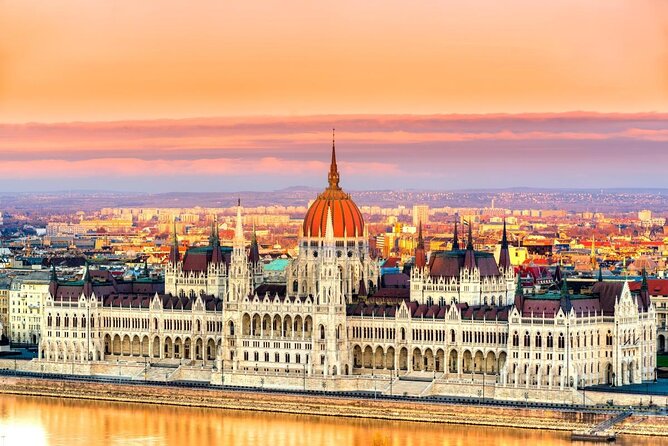
The walk starts near the Hungarian Parliament area, with a subway transfer to Kossuth Square in front of Parliament. From there, the guide points out monuments linked to the 1956 revolution, then pushes forward into the Cold War setting. You are basically moving from Hungary’s national turning points into the larger East versus West story.
One of the best parts is that the “big ideas” land with physical landmarks. As you continue toward Liberty Square, you discuss Cold War themes around the US Embassy and the monument associated with the Soviet Army. You also see the Soviet War Memorial on Freedom Square, which makes the Soviet presence feel far more concrete than a textbook would.
There is also a stop tied to Ronald Reagan and the Cold War era. The tour doesn’t treat him like a random celebrity statue. It explains the Hungarian sense of obligation to the US president for his role in pushing back against the Iron Curtain. If you like your history with angles, this is where you get them.
One note on logistics: the guide can help you purchase Budapest Tram and Metro tickets if you do not already have a visitor pass. So, plan to have a way to pay for transit.
Further tours of Hungary’s state-socialist years:
- Budapest: Communist History Tour with House of Terror Option
★ 4.8 · 182 reviews - Communism in Hungary with a Historian
★ 5.0 · 70 reviews - Budapest: 3-Hour Walking Tour About Communism (Small Group)
★ 4.7 · 70 reviews
House of Terror finish: the Berlin Wall slab and what you still need to plan
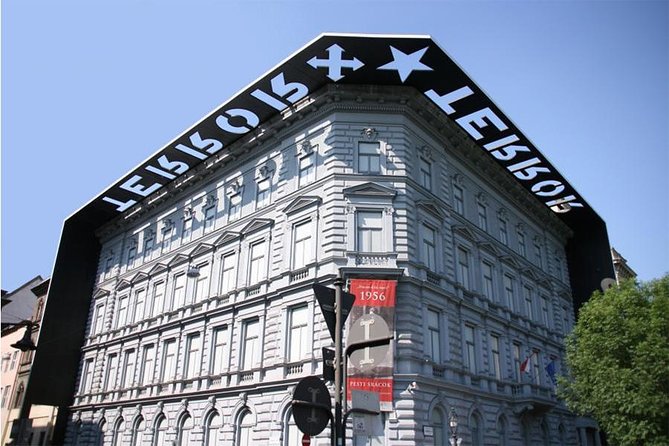
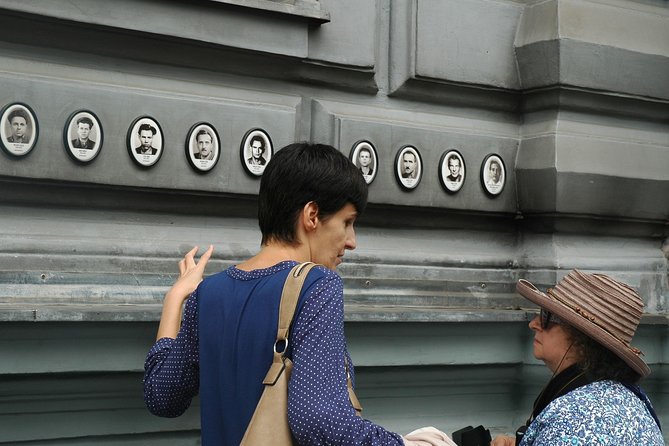
The tour ends outside the House of Terror Museum, in the former headquarters of Hungary’s communist secret services. Even without entering, the location carries weight. There is a slab of the Berlin Wall placed out front, so you can physically connect what happened in Germany with what was happening under the broader Soviet system across the region.
The exhibit inside is not included in the tour. That can be a downside if you were expecting the guide to take you through the museum rooms. On the other hand, it can be a smart way to pace yourself. You finish with a “here is why this place matters” framing, then you decide whether you want to spend extra time inside.
This ending also works well because it sets you up for your next move. If the subject energizes you, you can keep going immediately. If it overwhelms you, you can step away and process while you’re still close to one of Budapest’s most historic corridors.
If you go in, plan mentally for emotional content. This is a site built around fear, repression, and surveillance themes, so it is not the kind of museum you speed through.
Puskás Stadium and the propaganda that stayed in stone
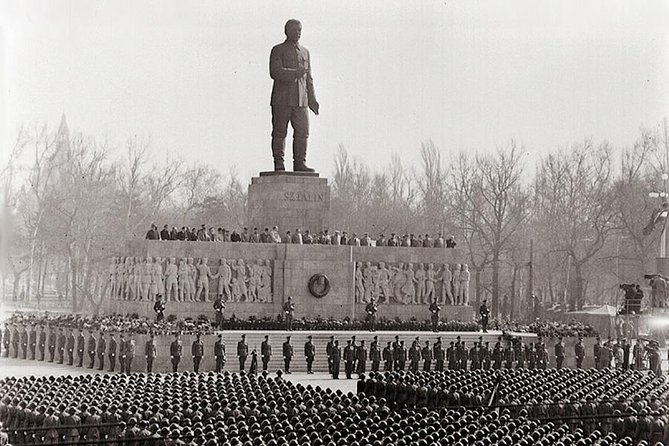
After the downtown political landmarks, the route shifts to the former People’s Stadium, now Puskás Soccer Stadium. You stop for about twenty minutes, with plenty of time to look around before moving on. This is where the tour does something clever: it shows how socialist realist messaging shows up in everyday public architecture, not just in political speeches.
The classic socialist realist statues still standing here are the point. You see how regimes shaped public space using idealized forms, symbolism, and hero-like figures meant to project strength and permanence. Even if you are not into art history, you can read the intent quickly, especially when the guide connects it back to the Communist era’s need to control public narratives.
A small consideration: this stop is more “look and interpret” than hands-on. There is no included admission requirement for this part, so your experience depends heavily on how well the guide frames what you are seeing.
If you enjoy photo moments with meaning, this is a good place to pause. If you only want grand interiors and ticketed museum time, you might wish for a more formal venue here. But for many people, that is exactly the value of the tour.
Ronald Reagan in Budapest: why it matters here
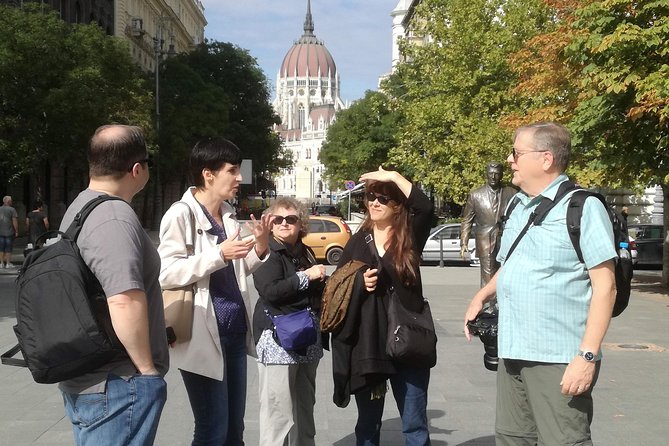
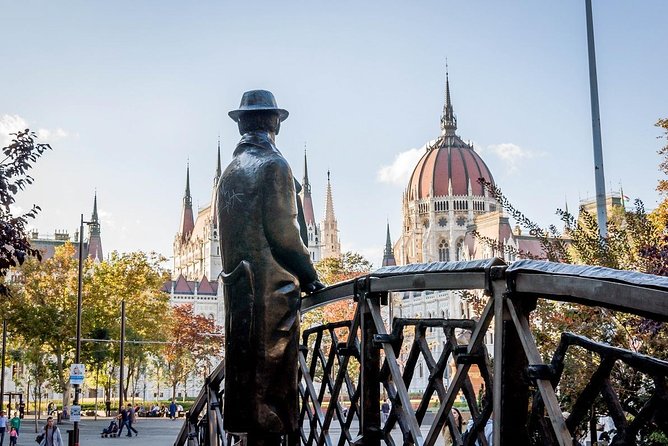
Ronald Reagan could be just another statue stop in another city. Here, the context is what changes everything. The tour includes a dedicated look at the Ronald Reagan statue, timed as a short stop so you can focus on explanation rather than rushing through.
You learn about Hungary’s sense of obligation to Reagan for his efforts to help bring down the Iron Curtain. That matters because it shows how Communist countries remembered and reacted to Western political pressure. In other words, you get the “why did Budapest care about US leadership?” answer in the place where the symbolism sits.
It also complements what you saw earlier around US and Soviet landmarks. When you tie together the US Embassy area, Soviet-related memorials, and Reagan’s local presence, the story becomes less abstract. You start to see the Cold War as something that played out through real buildings, squares, and visible markers.
A practical note: this stop is short, so wear layers and keep your phone battery topped up. The explanation is worth your attention, but you will be moving on quickly.
More of the city, bank to bank on foot:
- Budapest: Buda Castle Walk with Saint Stephen’s Hall★ 4.5 · 3,012 reviews
- Big Bus Budapest Hop-On Hop-Off Bus and Walking Tour★ 3.5 · 2,206 reviews
- Budapest: Buda Castle District Walking Tour★ 4.6 · 2,108 reviews
Bem József Square and the 1956 spark, plus a 1960s coffee interior
The final major stop focuses on Bem József Square. The guide explains how this was tied to early demonstrations of the 1956 uprising, one of the turning points that still shapes how Hungarians talk about freedom and resistance.
Around the square, you also get a small but memorable detail: a coffeehouse that has kept its original interior from the 1960s. It is the kind of stop that makes the Communist era feel less like a headline and more like a lived timeline. You see how culture and daily routines continued under political control, and how certain spaces preserved a look and feel from that period.
You get about twenty-five minutes here, which is enough to absorb the main story and take in the atmosphere without feeling rushed. If you want to add time afterward, you can also use this as your setup for a casual break before heading to your next plan.
The main consideration is that this part is still part of the historical walk, not a free-form hangout. If you love slow strolling and long pauses, you might want to build extra time into your afternoon or evening.
Value, pacing, and why the guides make the difference
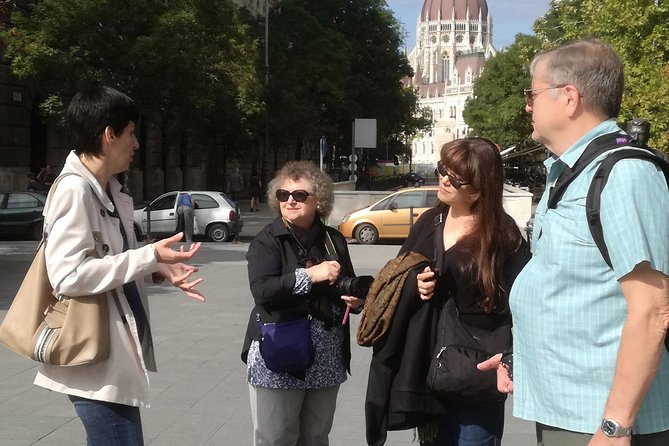
At $126.50 per person for about three hours, this isn’t a budget “quick look” tour. But it is priced for a specific payoff: a historian-led route through multiple politically significant spaces with a small-group format.
Here is how the value adds up for you:
- You get structure. The guide connects monuments, symbols, and streets to a coherent Cold War narrative, so you do not have to stitch it together yourself.
- You get time to ask questions. The tiny group size helps, especially if you want clarity on how events link to everyday life.
- You get coverage without overload. The stops are short, but the explanations are designed to keep the story moving.
The experience is consistently described as worth the money, and that makes sense given the focus. It is not just standing in front of plaques. The guide’s style matters, and names like Andras and Kata come up in feedback, both associated with sharp detail and thoughtful conversation. Even if your interests are more general, you should still walk away with a stronger sense of what Communist Budapest felt like.
Who should bring their expectations? If you want heavy themes with real context, you will likely love it. If you want pure sightseeing with minimal explanation, this may feel too serious for your taste.
Should you book the Communist Budapest Walking Tour?
Book it if you want more than scenery and you like your history grounded in place. This tour is at its best when you enjoy questions, explanations, and understanding how symbols, monuments, and architecture reflect power. It is also ideal for first-time visitors who want a fast but meaningful start to Budapest’s modern story.
Skip it only if you are looking for a casual photo tour with no emotional or political weight. The “House of Terror” ending alone signals the tone, and the rest of the route keeps the emphasis on the Communist era and the Cold War.
If you are on the fence, pick the departure that matches your energy, and come in ready to walk, read the symbols, and ask why things look the way they do.
FAQ
How long is the Communist Budapest Walking Tour?
It runs for about 3 hours.
What is the price per person?
The price is $126.50 per person.
What language is the tour offered in?
The tour is offered in English.
How small is the group?
It is limited to a small group size, with a maximum listed of eight travelers.
Where does the tour start?
The start point is Budapest, Frankel Leó út 2-4, 1027 Hungary.
Where does the tour end?
The tour concludes outside the House of Terror Museum at Budapest, Andrássy út 60, 1062 Hungary.
Is the House of Terror Museum included?
The tour includes the House of Terror area outside only, and the museum exhibit inside is not included.
Is admission required for the other stops?
The stops listed for the walk have free admission where noted, while the House of Terror Museum admission is not included.
Do I need tram and metro tickets?
Your guide can help you buy Budapest Tram and Metro tickets if you do not already have a visitor pass.
What is the cancellation policy?
Free cancellation is available up to 24 hours in advance for a full refund.
Who can participate?
Most travelers can participate.
The newest crossings added in Budapest





Communist Era History Tours, compared.

Communist History Tour with House of Terror Option
Read our review →
3-Hour Walking Tour About Communism (Small Group)
Read our review →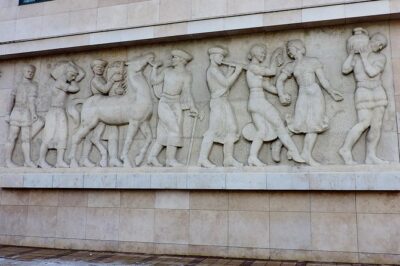
Memento Park Visit with Private Trabant Transfer
Read our review →
Browse the lists this tour appears in