
Reviewed · COMMUNIST ERA HISTORY TOURS
Communist Budapest Walking Tour
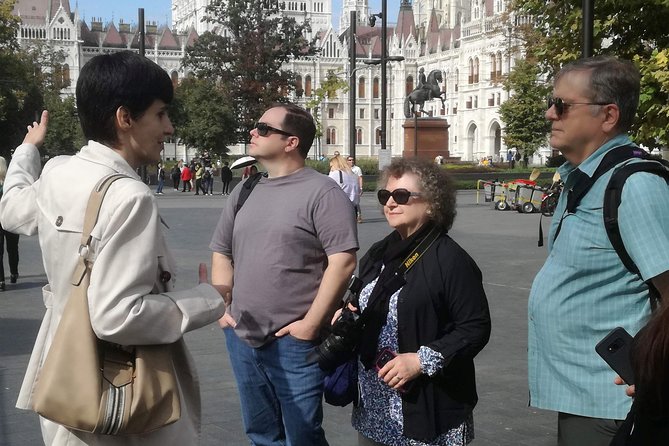
Communism in Budapest is not abstract. This 3-hour walk connects 1956 shock moments to the slower routines of control, starting at Bem József Square and moving through landmarks that show how power shaped daily life. I especially liked the way the guide, often András, kept the pace conversational while using old images to make the eras feel real.
One possible drawback to plan for: the tour is designed as a clear, site-to-site story, so if you already know Hungary’s postwar decades well, you may want a more specialized or deeper follow-on tour to get more detail.
In This Review
- Key highlights to watch for
- Why this communist walking tour works better than reading alone
- Getting started at Bambi Eszpresszó, then using metro and trolley lines
- Bem József Square and the 1956 spark you can still feel
- Kossuth Square and Parliament: monuments that explain conflict, not slogans
- Freedom Square’s four Cold War signals, packed into one walk
- 1970s housing estates: drab from afar, hopeful up close
- Socialist Realism at Puskás Stadium: propaganda as public art
- Stalin’s trolley bus, May Day street energy, and the iPad photo contrast
- The House of Terror and the Berlin Wall slab: the cost of the system
- Price and value: what $123 buys you for 3 hours
- Who this tour suits best, and who might want something else
- My practical call: should you book this tour?
- FAQ
- How long is the Communist Budapest Walking Tour?
- How much does the tour cost?
- Where is the meeting point?
- Is the tour only walking?
- Are metro and tram tickets included?
- What language is the tour in?
- What are some of the main stops?
- What type of guide will lead the tour?
- Can I book for a private or small group?
- What is the cancellation policy?
Key highlights to watch for
- Bem József Square starts the 1956 thread with the first big demonstration of the uprising
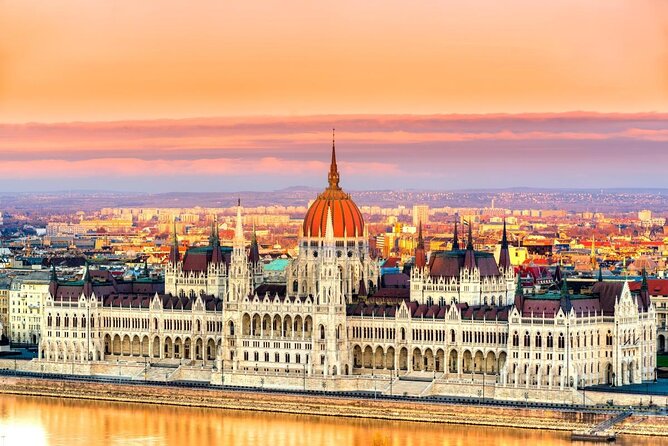
- Kossuth Square and Parliament frame the revolution’s stakes with monuments tied to armed conflict
- Freedom Square compresses the Cold War into four stone symbols, including the US embassy and an atomic shelter entrance
- 1970s housing estates show what housing promises felt like in the moment rather than only how they look now
- Social Realist sculpture appears at Puskás Stadium, where propaganda meets real architecture
- House of Terror closes the story on the costs, in the former secret services HQ, with a slab linked to the Berlin Wall
Why this communist walking tour works better than reading alone
Budapest’s communist-era story can feel like dates and names, until you stand in the exact public spaces where those decisions played out. This tour takes you through squares, streets, and housing blocks that still shape how the city moves today. You get the political timeline, but you also see the stage where everyday people lived through it.
What makes it hit is the contrast built into the route. You go from monuments tied to revolt to housing estates where a new apartment was a real prize. You also move from symbolic Cold War sites to the stark setting of the House of Terror, where the consequences are the point.
I also like the guide style. The experience is led by historians and researchers, including professors and doctoral students, not just a regular walking guide. That matters, because the explanations tend to connect each stop to the system behind it, not just to the event on a plaque.
Getting started at Bambi Eszpresszó, then using metro and trolley lines
The tour meets at Bambi Eszpresszó, on Frankel Leó út 2/4 in Budapest. From the start, you’re set up for a mix of walking and short public-transport hops, so you are not stuck doing 3 hours straight on foot.
Plan for transit tickets as well. Metro and tram tickets are not included, even though the itinerary uses the metro more than once. If you’re coming from outside the center, it’s worth having local transport sorted before your start time so you don’t lose momentum early.
Timing is straightforward: it’s 3 hours, and it runs on available starting times. You’ll cover a lot of ground because the route links multiple zones of the city, from central squares out to the edge of the center where 1970s housing estates begin to dominate.
Further tours of Hungary’s state-socialist years:
- Budapest: Communist History Tour with House of Terror Option
★ 4.8 · 182 reviews - Communism in Hungary with a Historian
★ 5.0 · 70 reviews - Budapest: 3-Hour Walking Tour About Communism (Small Group)
★ 4.7 · 70 reviews
Bem József Square and the 1956 spark you can still feel
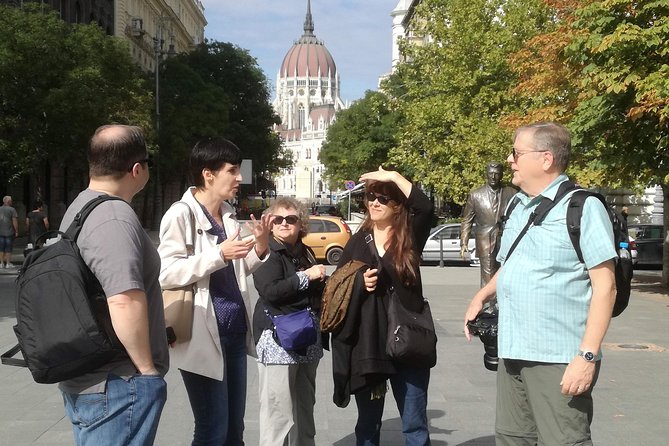
The walk begins at Bem József Square, and the guide ties the location to the first large demonstration of the 1956 uprising. That’s a smart opening choice, because it frames the whole theme as something that erupted from real people, not something that only happened in archives.
From there, you’ll also see a coffeehouse that has kept its original interior from the 1960s. This type of stop does real work in the story, because it anchors politics in the everyday spaces where people chatted, argued, and waited. Even if the politics were heavy, life still carried on in rooms that looked familiar.
One practical tip: bring a little mental flexibility. In tours like this, the guide often uses the space itself as a visual aid, so listening closely early on makes the later “symbol stops” easier to understand.
Kossuth Square and Parliament: monuments that explain conflict, not slogans
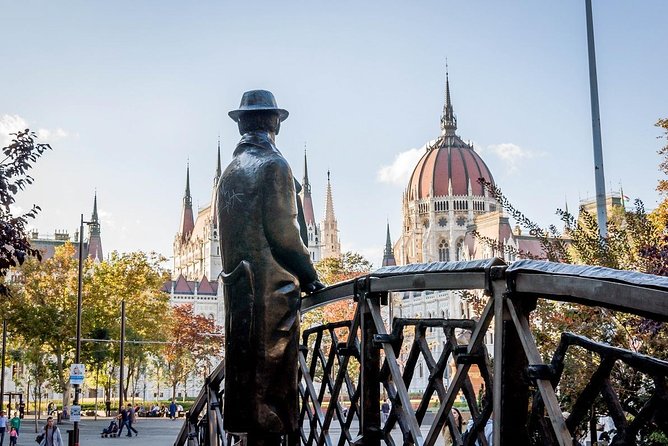
Next up is Kossuth Square, reached by metro. This is where you see how the revolution is remembered in stone, especially in front of Parliament, where monuments mark political and armed clashes connected to 1956.
I like this stop because it’s not just about commemorating heroes. The guide can point out the difference between official memory and the lived reality of conflict, and you start to notice how governments use the city to teach people what to think.
If you tend to skim monument plaques on your own, this is the moment where a guided reading pays off. You get the context for why these figures and markers are placed here, and what they were meant to communicate during and after the revolution.
Freedom Square’s four Cold War signals, packed into one walk
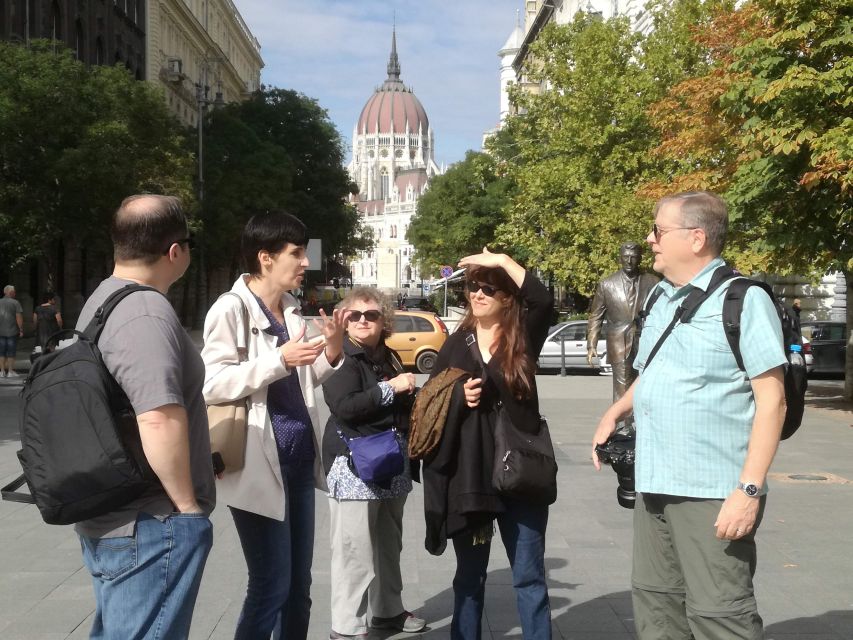
After Kossuth Square, you’ll walk to Freedom Square, and the guide frames it as a Cold War stage set. You’ll see four stone structures symbolizing competing powers: the US embassy, a monument to the Soviet army, a statue of President Ronald Reagan, and the entrance to a secret atomic shelter.
This is one of the tour’s best parts, because the square is small enough to process quickly, yet loaded enough to feel like a lesson. You can literally map the ideological battle onto visible objects around you.
Take your time here and let the symbols “talk” in your head. The tour’s structure encourages you to notice how Western and Soviet presences coexist spatially in Budapest, and how the city became a messaging ground long before the internet or TV made everything instantly global.
More of the city, bank to bank on foot:
- Budapest: Buda Castle Walk with Saint Stephen’s Hall★ 4.5 · 3,012 reviews
- Big Bus Budapest Hop-On Hop-Off Bus and Walking Tour★ 3.5 · 2,206 reviews
- Budapest: Buda Castle District Walking Tour★ 4.6 · 2,108 reviews
1970s housing estates: drab from afar, hopeful up close
The metro takes you to one of the 1970s housing estates at the edge of the city center. Today, the blocks can look grey and heavy, especially if you’re comparing them to the ornate parts of Budapest. But the guide emphasizes something important, the emotional math back then.
Young Hungarian families were reportedly thrilled to receive apartments in these estates, especially because elevators and modern conveniences were unknown in much older housing stock. That shift matters more than the building style, because it shows how socialism offered real benefits in exchange for obedience on major issues.
When you understand that tradeoff, the photos and descriptions you get later make more sense. Housing is where ideology meets daily comfort, and it’s also where people felt both security and pressure.
Socialist Realism at Puskás Stadium: propaganda as public art
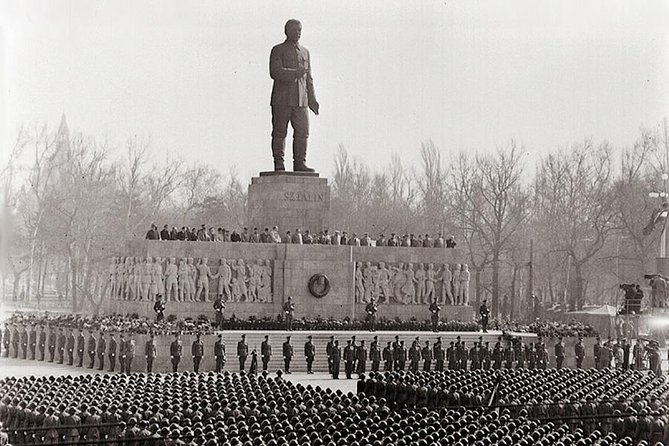
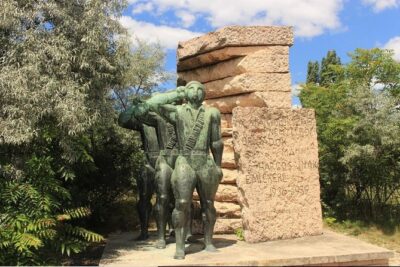
Next you’ll stop by the former People’s Stadium, now Puskás Soccer Stadium. This is one of the few places in town where you can see typical Socialist Realist statues of heroic workers, soldiers, and intellectuals, presented as guiding figures toward a bright future.
This is a great contrast stop. At the beginning, you followed the revolution and its immediate shocks. Here, the story shifts to the longer, controlled rhythm of the system, where art and sculpture became tools to teach conformity.
I like how this works for first-time visitors. Even if you are not an art person, the statues are hard to ignore, and a guide helps you see the “how” behind them, how public space and approved images were used together.
Stalin’s trolley bus, May Day street energy, and the iPad photo contrast
The tour then includes a short ride on one of Stalin’s trolley buses to Dozsa György Street. This boulevard was used for May Day parades, so it has that broad, ceremonial feel, even when you’re walking through it now.
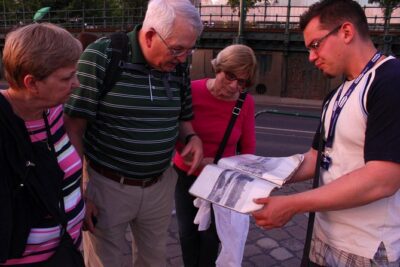
This is also where the guide uses an iPad plus old photos to show the contrast between the current city and how it looked during Stalin’s era. That kind of visual comparison is more effective than hearing it as a story alone, because you can immediately “place” the past onto what’s still there.
If you’re the type who likes structure, you’ll appreciate the sequencing here. The tour doesn’t just jump between random sites. It uses each location to build an idea, then reinforces it with a visual cue.
The House of Terror and the Berlin Wall slab: the cost of the system
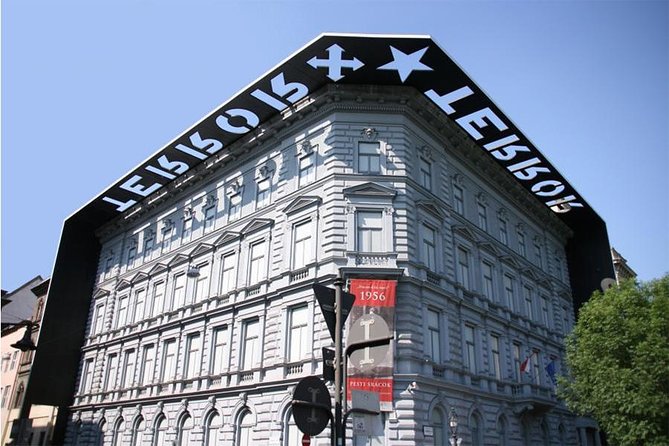
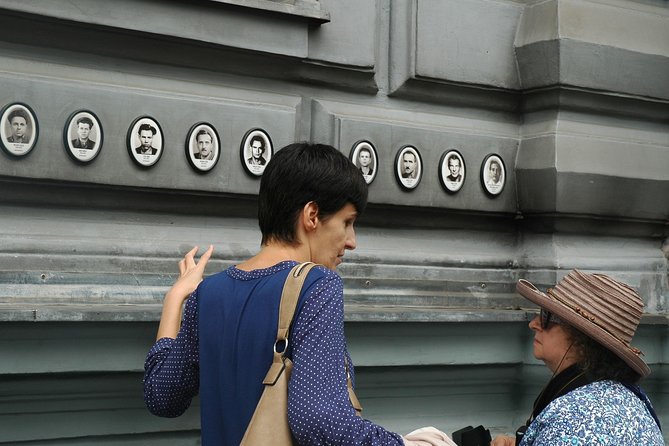
To wrap up the walk, you head toward the House of Terror, located in the former headquarters of the secret services. This museum commemorates the crimes of communism, especially during the Stalinist years.
In front of the building, you’ll also see a slab connected to the Berlin Wall. That detail helps close the loop between Eastern bloc power and the physical barriers that kept people trapped behind a political system.
This stop is emotionally heavy by design, and that’s part of why the tour has value. It doesn’t only show “a different time,” it shows the price, so you leave with a clearer sense of what the earlier symbols and housing promises were covering.
Price and value: what $123 buys you for 3 hours
At $123 per person for a 3-hour guided tour, you’re paying for interpretation, not just access to sights. The experience includes the walking tour and a historian guide, which is a big deal if you want more than “here’s what this building is.”
The route is also efficient. You’re using metro and trolley transport during the 3 hours, which means you’re not just trudging across town. That said, tram and metro tickets are not included, so budget a bit extra for public transit.
To me, the best way to think about the price is simple. If you plan to visit these sites on your own, you will need a lot of background reading to avoid turning everything into disconnected monuments. This tour supplies that connective tissue, with the guide acting like the timeline in human form.
Who this tour suits best, and who might want something else
This tour is a strong fit if you’re seeing Budapest for the first time and want the communist-era story in a guided, logical path. It also works well if you like context, because the guide background runs deep, from professors and doctoral students to historians and journalists.
It’s also ideal if you’re curious about the “why” behind the city’s layout. Squares like Kossuth and Freedom Square are not random stops, they are the public stage for ideology, and the tour helps you read that stage.
If you already know a lot about Hungary between the end of WWII and 1989, there is one thing to consider. The experience is designed as a clear storyline, so the explanations may feel like a solid overview rather than a very deep dive into every policy shift.
My practical call: should you book this tour?
If you want a straight answer, I think you should book if you value a historian-led route and you want communist-era Budapest to make sense in one connected day. The combination of 1956 sites, Cold War symbolism at Freedom Square, housing estates, Socialist Realist sculpture, and the House of Terror creates a full arc from revolt to control to consequence.
I would not skip it, even if you are a bit museum-weary, because the tour is built around public places, not just indoor exhibits. Still, if you’re already an expert on Hungary’s late 20th century, you may want to pair this with a more specialized follow-up so you get additional depth beyond the core sites.
FAQ
How long is the Communist Budapest Walking Tour?
The tour lasts 3 hours.
How much does the tour cost?
The price is $123 per person.
Where is the meeting point?
The meeting point is Bambi Eszpresszó, Frankel Leó út 2/4, 1027 Hungary.
Is the tour only walking?
No. The route includes walking plus metro and a short ride on Stalin’s trolley buses.
Are metro and tram tickets included?
No. Tram and metro tickets are not included.
What language is the tour in?
The tour is offered in English.
What are some of the main stops?
You’ll visit Bem József Square, Kossuth Square, walk around Freedom Square, see housing estates from the 1970s, visit the former People’s Stadium (now Puskás Soccer Stadium), ride to Dozsa György Street, and reach the House of Terror.
What type of guide will lead the tour?
It is a historian guide. Guides can include professors, doctoral students, historians, journalists, art critics, and published authors.
Can I book for a private or small group?
Yes. The tour offers private or small groups.
What is the cancellation policy?
You get free cancellation up to 24 hours in advance for a full refund.
The newest crossings added in Budapest




Communist Era History Tours, compared.

Communist History Tour with House of Terror Option
Read our review →
3-Hour Walking Tour About Communism (Small Group)
Read our review →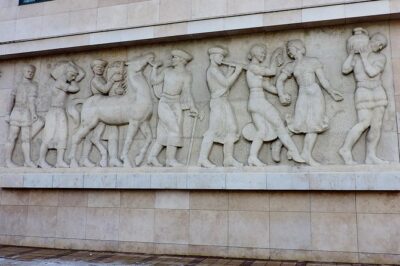
Memento Park Visit with Private Trabant Transfer
Read our review →
Browse the lists this tour appears in