
Reviewed · COMMUNIST ERA HISTORY TOURS
Born Under The Red Star – Communist tour with Coffee in a Retro Bar
One walk, big ideas. This Budapest tour pairs tight, English commentary with a smart hit-list of 20th-century sites most visitors skip, plus a simple break at a Communist-themed retro bar. I especially like the way the stops connect the city’s present-day streets to the political forces that shaped them, and the included classic soda plus coffee or tea makes it feel human, not like a lecture. A consideration: you will be walking and standing outdoors for about three hours, and the route works best in good weather.
You also get practical takeaways, not just dates. The small-group size (up to 15) helps the guide keep it conversational, and you’ll leave with maps and recommendations for what to see on your own after the walk. If you prefer history that stays purely celebratory, this may feel heavy at times, because a couple of the stops are intentionally about repression and violence.
In This Review
- Key Points You’ll Care About
- Red-Star Budapest in 3 Hours, Starting at the Opera
- Stop 1: Soviet Heroic Memorial and WWII Memory in White Stone
- Stop 2: House of Terror Museum, Where Political Regimes Are Not Abstract
- Stop 3: St. Stephen’s Basilica, Hungary’s First King and a Reliquary Detail
- Stop 4: Liberty Statue on Gellért Hill and Szabadság tér’s Contested Memory
- Stop 5: The 1956 Hungarian Revolution Memorial, Freedom After the Soviet Shadow
- Stop 6: Hungarian Parliament Building and the Scene of Modern Governance
- The Retro Communist Bar Soda, and Why a Pause Is Part of the Lesson
- Price and Value: Is $90.31 Worth It?
- Who This Tour Fits Best (and Who Should Skip It)
- Smart Ways to Prepare Before You Go
- Should You Book Born Under The Red Star?
- FAQ
- FAQ
- How long is the tour?
- What is the price per person?
- What language is the tour offered in?
- What is included in the tour?
- Are museum and church admissions included?
- Where does the tour start and end?
- Is the group size small?
- Is free cancellation available?
Key Points You’ll Care About
- English-led context at each stop, so landmarks make sense fast
- House of Terror (Andrássy út 60), focused on Hungary’s 20th-century fascist and communist regimes
- Liberty Statue on Gellért Hill and the memory politics around Szabadság tér
- A break at a Communist-themed retro bar with a classic soda plus coffee and/or tea
- Small group up to 15, with time for questions
Red-Star Budapest in 3 Hours, Starting at the Opera
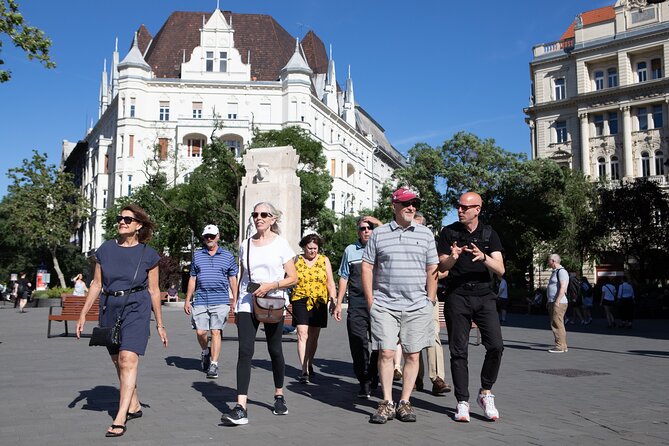
This is a compact, three-hour walking tour that starts at the Hungarian State Opera on Andrássy út (Andrássy út 22). You end at Liberty Square (Szabadság tér), which is a handy place to keep exploring after the tour, especially since it sits near major landmarks and transit.
You’ll move at a steady walking pace, with short stops designed for orientation and understanding. Each main stop is about 15 minutes, so think of it as a guided “what you’re looking at, and why it matters” route, not a slow museum day.
One reason I like this format in a city like Budapest is that you can connect dots quickly. You’ll see buildings and memorials that look obvious on a postcard, but you may not grasp the story behind them until someone explains the political context.
Stop 1: Soviet Heroic Memorial and WWII Memory in White Stone
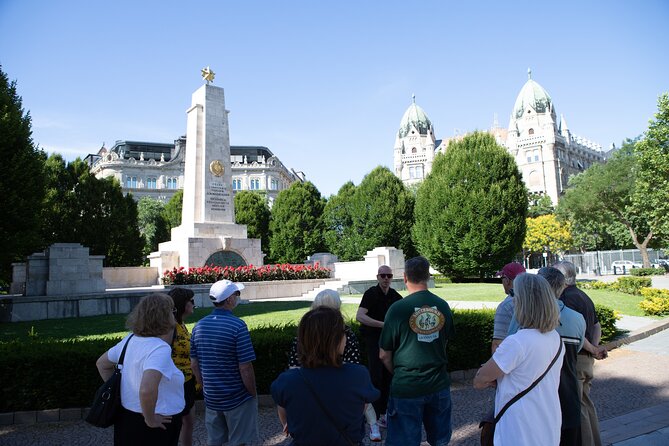
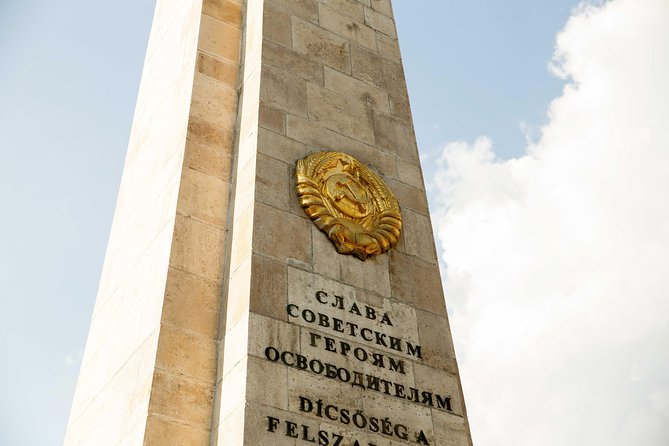
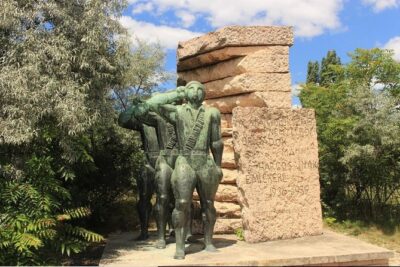
The tour starts in a park setting at the Soviet Heroic Memorial, a white obelisk commemorating Russian military who served in WWII. On the surface, it is a simple monument, but this is the kind of first stop that sets the tone for how later memorials will be read.
Why this stop helps: it trains your eye to notice that monuments are not just art. They’re public statements about legitimacy, sacrifice, and who gets to define the past.
A practical tip: because this is outdoors, bring a layer. You’ll likely spend a little time standing while the guide explains what the memorial is saying and how it fits into Budapest’s shifting political landscape.
Further tours of Hungary’s state-socialist years:
- Budapest: Communist History Tour with House of Terror Option
★ 4.8 · 182 reviews - Communism in Hungary with a Historian
★ 5.0 · 70 reviews - Budapest: 3-Hour Walking Tour About Communism (Small Group)
★ 4.7 · 70 reviews
Stop 2: House of Terror Museum, Where Political Regimes Are Not Abstract
Next up is the House of Terror Museum at Andrássy út 60. This museum covers exhibits related to both fascist and communist regimes in 20th-century Hungary. It also functions as a memorial to victims, including people who were detained, interrogated, tortured, or killed in the building.
Even if you’re not the type who loves museums, this stop is valuable because the place is specific. You’re not just hearing general history, you’re seeing how one location became an instrument of state power.
What to expect during your short visit: you’ll get a quick guided frame for what you’re about to see, and you’ll likely focus on key exhibits that explain the “how” and “why,” not every room in the building. With only about 15 minutes allocated here, go in ready to absorb themes, then consider returning on your own later if something pulls you deeper.
Consideration: the subject matter can be emotionally intense. If you want lighter content, plan a quiet evening afterward. If you’re okay with heavy history, this is arguably the most direct and educational stop on the entire route.
Stop 3: St. Stephen’s Basilica, Hungary’s First King and a Reliquary Detail
From the museum’s weight, the tour shifts to St. Stephen’s Basilica, named for Stephen, the first king of Hungary. The tour includes a quick stop here, and admission to the basilica is not included.
Why I think this pairing works: it shows how Hungary’s identity gets expressed through different eras and institutions. One site deals with 20th-century terror and ideology, while another centers on religion, kingship, and national symbolism.
A detail worth clocking while you’re there: the basilica is known for housing Stephen’s right hand in a reliquary. Even if you don’t go inside beyond a quick look, that kind of fact changes how you interpret the building and why it is treated with reverence.
If you want to make the most of this stop, check in advance whether you want to pay to see inside. Because admission isn’t included, you’ll need to decide based on your time and interests.
Stop 4: Liberty Statue on Gellért Hill and Szabadság tér’s Contested Memory
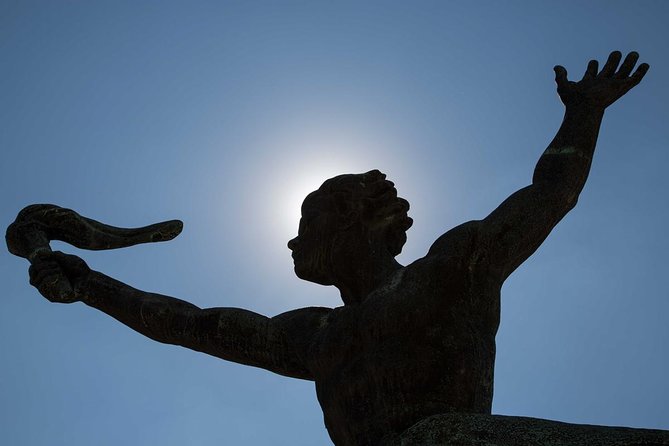
The tour then heads to the Liberty Statue (also called the Freedom Statue, Szabadság-szobor) located on Gellért Hill. This monument commemorates those who sacrificed their lives for independence, freedom, and prosperity of Hungary.
This matters because the statue’s message is not just “good things happened.” It’s a reminder that national freedom is argued and remembered in different ways, depending on the political moment.
Next comes Szabadság tér, Liberty Square, famous for two controversial memorials. One remembers Hungarian Jewish victims of the Holocaust, and the other commemorates Soviet soldiers who liberated Budapest in 1945. You’ll also see big institutional backdrops around the square, including the United States Embassy and the historicist headquarters of the Hungarian National Bank.
Why this stop is so important for independent sightseeing: once you understand that public memory can be contested, you’ll read the rest of the city differently. You’ll notice how the physical placement of memorials, the wording, and who built or supported them shape what visitors feel and understand.
Practical consideration: Liberty Square can be busy, and you may want to take a moment to recheck where you are before moving on. The guide’s framing is especially helpful here because the square’s meaning is not one simple story.
More gilded coffeehouse mornings:
- Grand Segway Tour of Budapest – Private Tour with Coffee Stop★ 5.0 · 163 reviews
- Budapest: City Bike Tour with Coffee Stop★ 5.0 · 37 reviews
- Castle District tour with Matthias Church Ticket & Cake & Coffee★ 5.0 · 31 reviews
Stop 5: The 1956 Hungarian Revolution Memorial, Freedom After the Soviet Shadow
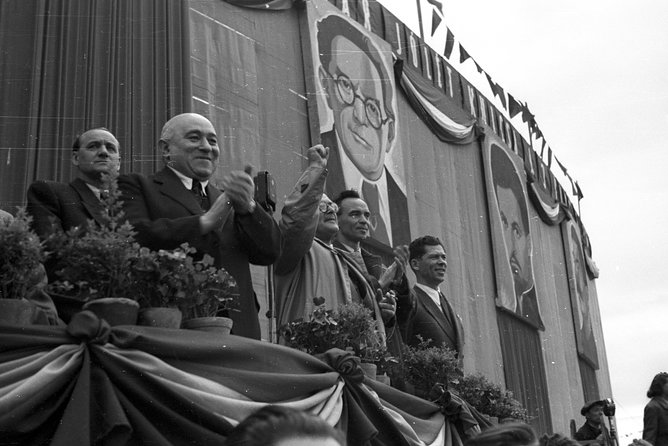
After Liberty Square, the tour visits the memorial to the 1956 Hungarian Revolution and War of Independence. This is a tribute to the heroes of the uprising against the communist regime.
This stop bridges the story arc. After seeing Soviet-era symbolism and the conflict over liberation narratives, you get the specific Hungarian voice of resistance in 1956. It’s the kind of reminder that Hungary’s history is not only about being ruled, it is also about pushing back.
Because the time here is about 15 minutes, focus on the message the memorial is trying to communicate rather than trying to read every inscription or symbol in one pass. If you want to go deeper, treat this as a starting point for your own follow-up.
Stop 6: Hungarian Parliament Building and the Scene of Modern Governance
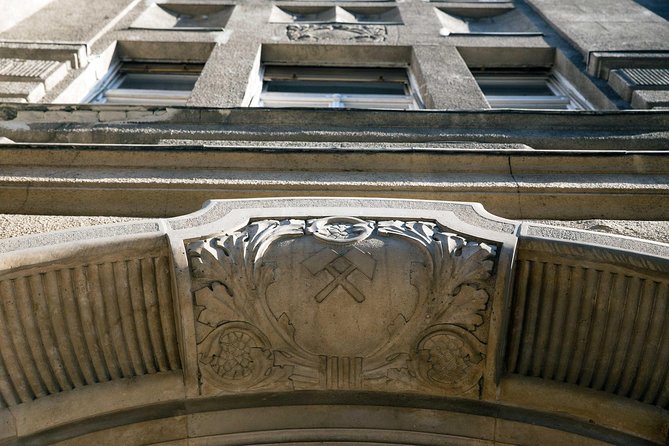
The walk ends at the Hungarian Parliament Building, known in Hungarian as Országház, sometimes described as the House of the Country or House of the Nation. It is the seat of the National Assembly of Hungary and one of Budapest’s most recognizable landmarks.
Admission to the Parliament is not included in the tour stop, so you’re getting an exterior-focused view plus the guide’s context. That said, the building is hard to ignore. Even from outside, it communicates power, legitimacy, and the role of law in shaping society.
Why ending here feels smart: the tour began with monuments that explain ideology and sacrifice. Ending with the Parliament helps you connect the dots to the present, where governance is supposed to replace the coercion of earlier eras.
If you want to add a little extra value after the tour, this is a good time to grab a map and choose one nearby area to explore at a slower pace. The included recommendations are meant for exactly that.
The Retro Communist Bar Soda, and Why a Pause Is Part of the Lesson
One of the most memorable inclusions is the classic soda served in a Communist-themed retro bar. You also get coffee and/or tea as part of the tour.
This isn’t just a quirky add-on. After stops centered on political ideology and repression, a break helps your brain reset. You’ll often remember facts better when you’re not rushing through them with your feet still pounding.
Also, the retro decor does something useful. It turns the era into something you can visually process in a different way than a memorial plaque. It’s like shifting from “textbook mode” to “sensory mode,” which can make the history stick.
Think of this stop as your chance to ask practical questions too. If you’re leaving with a list of places to see on your own, this is a comfortable moment to clarify what to prioritize.
Price and Value: Is $90.31 Worth It?
At $90.31 per person for about three hours, this is not a budget walk. But it has three clear value drivers.
First, the guide-led format. You’re paying for interpretation, not just for being taken from A to B. Stops like House of Terror and Liberty Square are places where the meaning can be missed if you only read a sign.
Second, you get more than walking. Admission tickets are free for some stops, but not all, and the tour also includes the retro bar refreshment plus coffee and/or tea. That small included food and drink can help you avoid spending time and money finding a place mid-walk.
Third, you leave with maps and recommendations. In practice, those extras can save you hours of sorting what matters. If you’re the type who wants to get oriented quickly and then explore independently, that guidance is where the value really shows.
A consideration on value: you still have non-included admissions at key buildings like St. Stephen’s Basilica and the Hungarian Parliament Building. If you want full access inside both, you may spend extra. If you mainly care about the exterior and context, the tour fits neatly without surprise costs.
Who This Tour Fits Best (and Who Should Skip It)
I think this tour is a strong fit for travelers who want history with street-level direction. If you like understanding why a city looks the way it does, you’ll appreciate how the route ties memorials, institutions, and ideology together.
It’s also a good match for couples or anyone traveling with a friend, because small groups make it easier to ask questions. One advantage of a maximum group size of 15 is that you’re less likely to be lost in a crowd.
You might want to choose something else if you prefer a more casual, light sightseeing day. House of Terror covers torture, detention, and deaths tied to political regimes, so this is not a low-stakes tour.
Also, if you hate walking in the open air, plan for breaks and weather changes. The tour runs only when conditions are decent, and good weather matters for how enjoyable it will be.
Smart Ways to Prepare Before You Go
Since this tour is short per stop, you’ll get the most if you arrive with a clear mindset: you’re here to learn how to read the city.
- Wear comfortable shoes. You’ll be moving between multiple major sites, ending at Liberty Square.
- Bring a layer for outdoor waiting and photo pauses.
- If you plan to go inside St. Stephen’s Basilica or the Parliament Building, decide in advance so you do not waste time.
And when you get to the bar, use it as a planning checkpoint. Ask the guide what to prioritize next with the maps you get. That kind of follow-up is what turns a three-hour tour into a full trip advantage.
Should You Book Born Under The Red Star?
Book it if you want an efficient, English-led walk through Budapest’s most politically charged landmarks, with clear guide commentary and a break that keeps the pace human. The House of Terror stop and the Liberty Square context are especially useful if you plan to keep sightseeing afterward, because they change how you read the city.
Skip it if you want a purely scenic day or if heavy historical topics are not your thing right now. The tour is also weather dependent, so if your schedule is locked to a single day and conditions look uncertain, be ready to adjust.
FAQ
FAQ
How long is the tour?
The tour lasts about 3 hours.
What is the price per person?
The price is $90.31 per person.
What language is the tour offered in?
It is offered in English.
What is included in the tour?
It includes a classic soda at a Communist-themed retro bar, maps and further recommendations, and coffee and/or tea. Some admissions are free, but not everything is included.
Are museum and church admissions included?
Admission is free for the Soviet Heroic Memorial and House of Terror Museum. St. Stephen’s Basilica and the Hungarian Parliament Building are not included, so you would need to pay separately if you want to go in.
Where does the tour start and end?
It starts at Hungarian State Opera, Andrássy út 22, 1061 Hungary, and ends at Liberty Square (Szabadság tér), Budapest, Hungary.
Is the group size small?
Yes. The maximum group size is 15 travelers.
Is free cancellation available?
Yes, you can cancel for a full refund if you cancel up to 24 hours in advance. The experience requires good weather, and if it is canceled due to poor weather you will be offered a different date or a full refund.
Until the Trams Restart
- Budapest: Unlimited Prosecco, Beer and Aperol Spritz Cruise★ 4.8 · 37,304 reviews
- Budapest: Unlimited Prosecco, Beer & Aperol Spritz Cruise★ 4.5 · 3,371 reviews
- Budapest: Guided Pub Tour to Ruin Bars with Games & 6 Shots★ 4.7 · 1,641 reviews
- Budapest: Ruin Bar Pub Crawl with Entry Tickets★ 4.7 · 1,028 reviews
The newest crossings added in Budapest





Communist Era History Tours, compared.

Communist History Tour with House of Terror Option
Read our review →
3-Hour Walking Tour About Communism (Small Group)
Read our review →
Memento Park Visit with Private Trabant Transfer
Read our review →
Browse the lists this tour appears in