
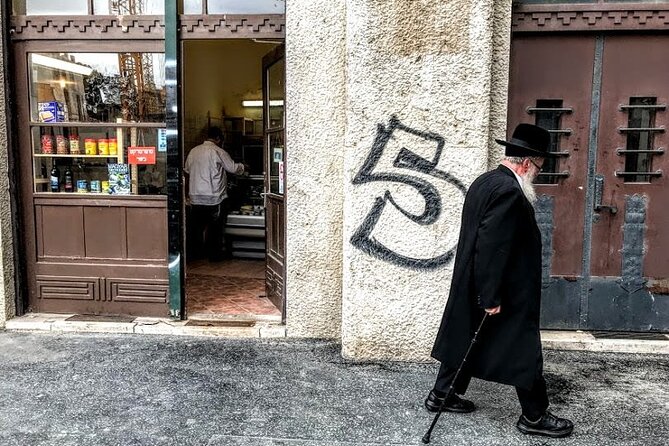
Reviewed · JEWISH BUDAPEST & GREAT SYNAGOGUE TOURS
PRIVATE GUIDED Budapest Jewish Heritage walking Tour
Synagogues and memorials, packed into two calm hours. This private Budapest Jewish Heritage walking tour strings together ghetto history and real synagogue architecture with a guide who makes the facts feel clear, not just pasted on a wall. Each stop is short, so you keep moving without rushing.
The main thing to consider is the weather. Since it is an outdoor walking route, good weather really matters.
In This Review
- Key highlights worth knowing
- Why this Budapest Jewish Heritage walk works in 2 hours
- Meeting at Starbucks FashionBudapest, then walking with purpose
- Stop 1: Ghetto Memorial Wall, the holes that force you to look
- Stop 2: Kazinczy Street Synagogue, Art Nouveau Orthodox and still active
- Stop 3: Rumbach Street Synagogue, Moorish Revival in a huge octagon
- Stop 4: Carl Lutz Memorial, saved lives given a name and a scene
- Stop 5: Dohány Street Synagogue, Europe’s largest, and why the interior layout matters
- Stop 6: Shoes on the Danube Bank, the memorial built from absence
- Price and value: what you get for about $60.49 per person
- Who this tour fits best
- Should you book this Budapest Jewish Heritage walk?
- FAQ
- How long is the Budapest Jewish Heritage walking tour?
- Is the tour private?
- What language is the tour offered in?
- Where does the tour start and end?
- What is included in the price?
- Is admission required for the sights?
- What sights are included on the route?
- How much does the tour cost?
- What should I bring since it is a walking tour?
- What if I need to cancel?
- Is brunch included?
Key highlights worth knowing
- A private guide for your group, so you can ask questions as you go.
- Big emotional stops, handled with context at the Ghetto Memorial Wall, Carl Lutz Memorial, and Shoes on the Danube Bank.
- Synagogues in different styles, from Art Nouveau to Moorish Revival, all still functioning.
- Free admission listed for each sight, which helps you plan a lean day.
- A tight 2-hour route, with each major stop built for about 10 to 15 minutes.
Why this Budapest Jewish Heritage walk works in 2 hours

I like city tours that stay focused, and this one does. In about two hours, you hit six major touchpoints that explain how Jewish life in Budapest was shaped, restricted, destroyed, and then remembered through memorials and restored worship spaces.
What makes it especially useful is the mix. You start at a Holocaust-era ghetto reminder, then move into the architecture and ongoing community life shown by synagogues like Kazinczy Street Synagogue, Rumbach Street Synagogue, and the Dohány Street Synagogue. Later, you end with two of the most haunting public memorials in Budapest: the Carl Lutz Memorial and Shoes on the Danube Bank.
Meeting at Starbucks FashionBudapest, then walking with purpose
You meet at Starbucks FashionBudapest, Deák Ferenc u. 23, 1052 Hungary, and you end back at the same spot. That round-trip design is practical, especially if you want to keep the rest of your day flexible.
The start point is in a central area with public transportation nearby, so you are not stuck trying to build a route from scratch. Since the tour is private, you also do not have to time your day around a big fixed crowd flow.
Timing-wise, plan on a quick sequence:
- short orientation and walking time
- 10 to 15 minutes at each stop
- a final memorial stop that lands with a strong emotional finish
Further Jewish Budapest and Great Synagogue tours:
- Budapest Jewish Heritage Memorial Walking Tour & Synagogue Entry
★ 5.0 · 568 reviews - Budapest: Jewish Heritage Guided Tour with Synagogue Ticket
★ 4.8 · 533 reviews - German tour in the Budapest city centre & the Jewish quarter
★ 5.0 · 359 reviews
Stop 1: Ghetto Memorial Wall, the holes that force you to look
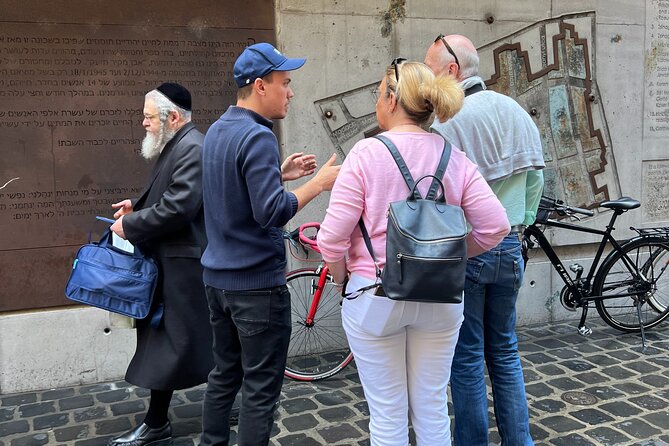
The walk begins at the Ghetto Memorial Wall, where you will see holes in the wall that act like a visual window into what Jewish life in Budapest was during the ghetto era. This is not a statue you can ignore. It is more like a physical reminder that something was cut off, blocked in, and then survived in memory.
Here is the key context your guide should cover as you stand there:
- On 29 November 1944, the Arrow Cross-affiliated Hungarian Minister of Internal Affairs, Gábor Vajna, issued the decree establishing the Budapest ghetto.
- Jews were required to move to the 7th district area, bounded by streets including Dohány, Kertesz, Király, Csányi, Rumbach, Imre Madách, and Károly ringroad.
- By 10 December, the area was locked down, and at the entry there was a sign stating Christians forbidden entry.
- By the next January, close to 70,000 people were crowded into apartments, with many people forced to be outside on the streets.
This stop is powerful because it connects policy to place. You are not just learning numbers. You are seeing how geography becomes a tool of confinement.
One practical note: the atmosphere here can feel heavy. If you are sensitive to Holocaust-related memorial sites, take your time and let the guide’s pacing help you process.
Stop 2: Kazinczy Street Synagogue, Art Nouveau Orthodox and still active
From the memorial wall, the tour pivots to lived tradition through architecture at Kazinczy Street Synagogue. This one is Orthodox, and it was built between 1912 and 1913 in the Art Nouveau style. It is one of the characteristic synagogue buildings in Hungary from the period just before World War I.
Your guide will likely point out details that make this more than a pretty exterior:
- Designed by Sándor Löffler and Béla Löffler
- Built for the Pest Orthodox Jewish Community, described as the most tradition-bound branch at the time
- A main prayer hall that is long and narrow, with a high barrel-vaulted ceiling
- Colorful stained glass windows
- The bimah (Torah reading platform) placed at the eastern end of the room
It was damaged during World War II and then restored. Today, it functions as a synagogue and is also a popular tourist attraction.
The value here is balance. After learning about persecution, you see community space that still carries meaning. If you want a quick win, this is one of the best stops for it.
Stop 3: Rumbach Street Synagogue, Moorish Revival in a huge octagon
Next comes Rumbach Street Synagogue, also called the Rumbach Synagogue, located in Budapest’s 7th district. This building is Neolog, built between 1891 and 1892 in Moorish Revival style, and it is described as one of the largest synagogues in Europe.
Look up, because the design choices are meant to impress:
- Designed by Komor & Jakab
- Built for the Neolog Jewish Community of Pest
- The main prayer hall is a large octagonal space topped with a high dome
- Walls decorated with colorful Moorish-style tiles
- The bimah is located in the center of the room
Like the other synagogue on this route, it was damaged in World War II and later restored, and it remains a functioning synagogue.
This stop helps you read the city as a place of different Jewish communities and different architectural tastes, not one single story. Even in a short walk, you get contrast.
More of the city, bank to bank on foot:
- Budapest: Buda Castle Walk with Saint Stephen’s Hall★ 4.5 · 3,012 reviews
- Big Bus Budapest Hop-On Hop-Off Bus and Walking Tour★ 3.5 · 2,206 reviews
- Budapest: Buda Castle District Walking Tour★ 4.6 · 2,108 reviews
Stop 4: Carl Lutz Memorial, saved lives given a name and a scene
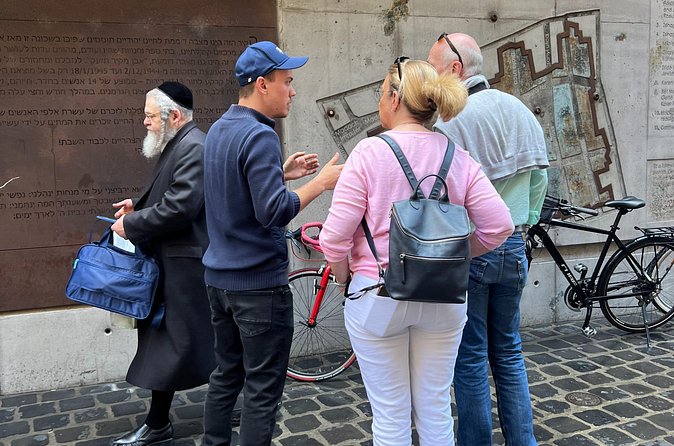
Then you hit the Carl Lutz Memorial near the entrance to the former ghetto on Dob utca. This is where the tour turns from places of restriction into a place of rescue.
You will see a bronze sculpture by Tamás Szabó that shows:
- one figure symbolizing Lutz reaching down from a building wall
- a flowing cloth connecting that figure to another person lying on the ground, representing a rescued Jew
The inscription (Hungarian translated in the tour context) reads: Whoever saves a life is considered to have saved an entire world.
Why it matters: Carl Lutz was a Swiss diplomat who saved tens of thousands of Jews by issuing protective documents and creating safe houses during World War II.
If you are the type who likes your history with names attached, this stop will hit hard in a good way. It gives you a specific person, not just an abstract outcome.
Stop 5: Dohány Street Synagogue, Europe’s largest, and why the interior layout matters
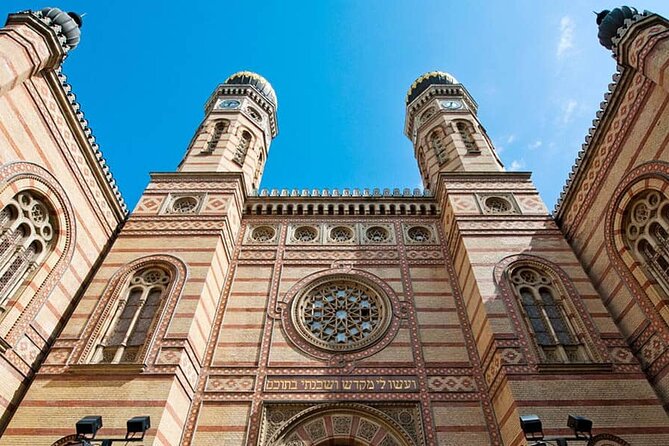
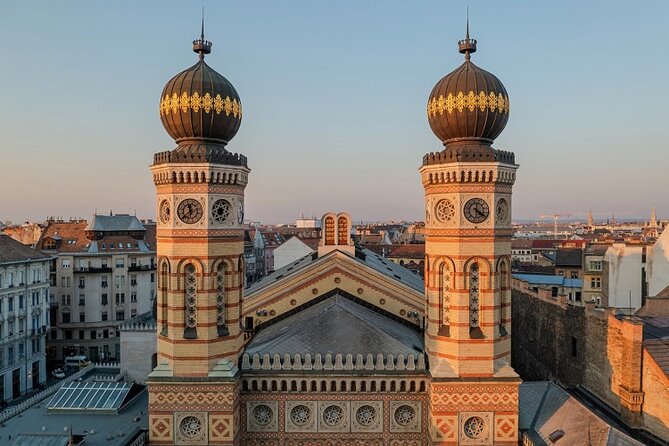
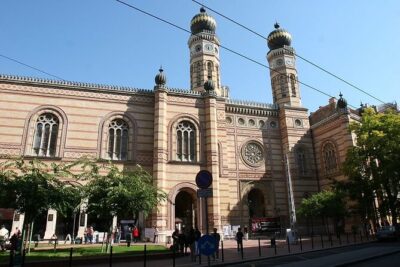
The tour’s synagogue centerpiece is the Dohány Street Synagogue, also known as the Great Synagogue of Budapest. It is described as the largest synagogue in Europe and the second largest in the world.
It was built between 1854 and 1859 in Moorish Revival style, designed by Ludwig Förster and Ignác Wechselmann, for the Pest Jewish Community.
Your guide should connect two things: size and structure.
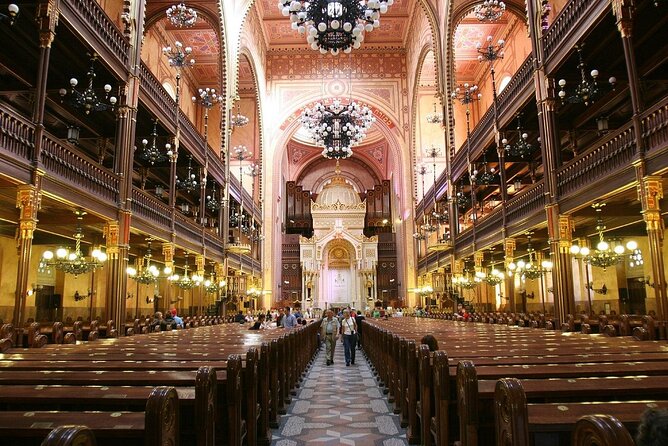
- The main prayer hall is a long, narrow space
- It has a high barrel-vaulted ceiling
- Walls are decorated with colorful stained glass windows
- The bimah is at the eastern end of the hall
After World War II damage, it was restored. Today, it is functioning and also a major tourist attraction.
Why this stop is worth your time: you see how grand religious architecture can still serve daily life. Even with a short 15-minute allocation, the building’s scale and interior orientation make it hard to forget.
Stop 6: Shoes on the Danube Bank, the memorial built from absence
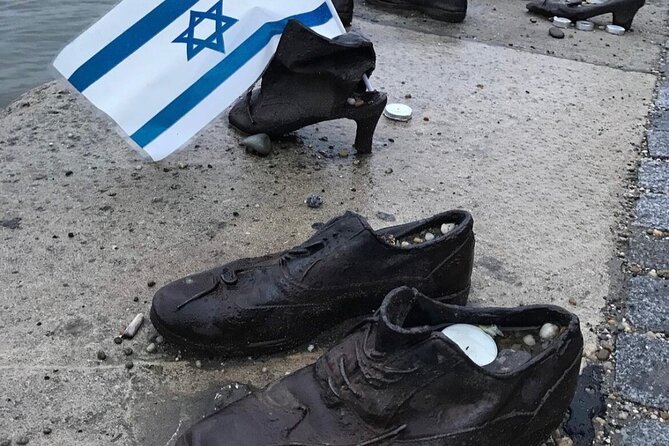
The final stop is the Shoes on the Danube Bank, on the east bank of the Danube River. This is one of those memorials that does not need extra decoration. The idea is brutal and clear.
The artwork consists of 60 pairs of cast-iron shoes, styled to resemble shoes worn in the 1940s, including men’s, women’s, and even children’s. They appear scattered along the riverbank like people stepped out and never returned.
Your guide should explain the why behind the scene:
- Jewish victims were often forced to remove shoes at the Danube’s edge before being shot and the bodies dumped into the river.
- Shoes were valuable in wartime, so they were often stolen by executioners.
The memorial was installed in 2005, on the 60th anniversary of the Holocaust, and it is a joint project by film director Can Togay and sculptor Gyula Pauer.
This is not a stop you rush. If you only remember one thing from the entire route, make it this: the memorial uses ordinary objects to represent catastrophic loss.
Price and value: what you get for about $60.49 per person
At $60.49 per person for an approximately 2-hour private guided walk, the value depends on your style.
Here is what you are paying for that you cannot easily DIY:
- A guide who connects the dots between ghetto policy, community life, and memorial meaning
- A route that strings together sites you might otherwise pair incorrectly
- Short, timed stops that keep you moving while still giving each place enough attention
You also have practical savings built in: the stops listed here have admission ticket free noted for each major sight. That means your spending stays focused on the tour itself rather than stacking extra entry fees.
One more useful detail: this tour is often booked about 91 days in advance. So if your dates are fixed, you will likely want to reserve early.
Who this tour fits best
I think this is a strong match if you:
- want a focused Budapest walk centered on Jewish heritage sites
- like history explained with clear context, especially at emotionally heavy places
- prefer a private format where your questions can shape the pacing
- care about seeing working synagogues, not just museum-style exhibits
It might be less ideal if you:
- cannot handle outdoor walking for about two hours, especially in poor weather
- want a long, slow museum-style day with lots of time inside each site
Should you book this Budapest Jewish Heritage walk?
Yes, I would book it if you want a tight, meaningful introduction to Budapest’s Jewish heritage and Holocaust remembrance in one guided session. The standout strength is the way the tour connects memorial spaces to living religious architecture, so you do not just leave with sorrow, you also leave with continuity and context.
Before you go, bring a practical mindset: wear comfortable walking shoes, expect some emotionally intense moments, and give yourself mental room to absorb what you are seeing. If the forecast looks rough, wait for a day with better conditions so you can enjoy the route without rushing.
If you like to understand the story behind landmarks, this one delivers.
FAQ
How long is the Budapest Jewish Heritage walking tour?
It is approximately 2 hours.
Is the tour private?
Yes. It is a private tour/activity, so only your group participates.
What language is the tour offered in?
The tour is offered in English.
Where does the tour start and end?
It starts at Starbucks FashionBudapest, Deák Ferenc u. 23, 1052 Hungary, and it ends back at the meeting point.
What is included in the price?
The guide is included.
Is admission required for the sights?
Admission tickets are listed as free for the stops mentioned.
What sights are included on the route?
The tour includes: Ghetto Memorial Wall, Kazinczy Street Synagogue, Rumbach Street Synagogue, Carl Lutz Memorial, Dohány Street Synagogue, and Shoes on the Danube Bank.
How much does the tour cost?
The price is $60.49 per person.
What should I bring since it is a walking tour?
The main practical requirement is good weather, since the tour depends on weather conditions. Comfortable walking shoes are a smart idea.
What if I need to cancel?
You can cancel for a full refund if you cancel at least 24 hours in advance. If you cancel less than 24 hours before the start time, the amount paid is not refunded.
Is brunch included?
No, brunch is not included.
Centuries on the Banks
- Budapest: Historic Cruise with Welcome Drink★ 4.7 · 6,512 reviews
- Budapest Historical Sightseeing – Free Walking Tour★ 5.0 · 1,302 reviews
- Buda Castle District Dark History, Legends and Vampire Night Tour★ 4.5 · 1,240 reviews
- BloodThirsty Hungary: Walking tour & Dark Historical Stories★ 4.9 · 633 reviews
The newest crossings added in Budapest



Jewish Budapest & Great Synagogue Tours, compared.
Budapest Jewish Heritage Memorial Walking Tour & Synagogue Entry
Read our review →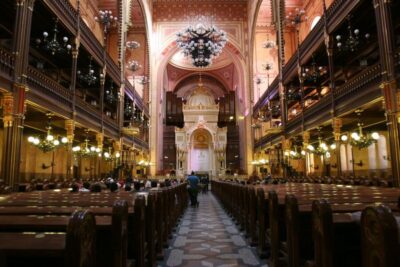
Jewish Heritage Guided Tour with Synagogue Ticket
Read our review →
German tour in the Budapest city centre & the Jewish quarter
Read our review →
Past and Present of Budapest Jewish District Tour
Read our review →
Budapest Dohany Synagogue & Hungarian Jewish Museum & free extras
Read our review →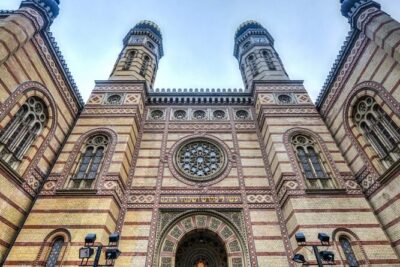
Jewish History Guided Walking Tour with Historian
Read our review →
Budapest Dohany, Heroes’, Rumbach synagogues & Jewish Ghetto Tour
Read our review →Browse the lists this tour appears in