
Reviewed · JEWISH BUDAPEST & GREAT SYNAGOGUE TOURS
Budapest City Walk in Jewish Quarter
Budapest’s Jewish Quarter tells a whole city story on foot. This 4-hour walk focuses on one compact slice of Pest, so you can connect the sights to the people, from synagogue architecture to WWII-era memory. I love that the guide brings real, lived-in context to the history, including the darker parts of Budapest’s Jewish past.
I also like how personal the experience feels, especially with a private-group vibe and flexibility. You can spend more time where you care most, whether that means the synagogue triangle, museum stops, or everyday local scenes like courtyards and café life.
The main drawback is tone and pacing: you’ll cover heavy WWII material and memorial sites, and while walking is moderate with break options, the route still takes time and attention.
In This Review
- Quick hits before you go
- Why a Jewish Quarter walk makes sense in Pest
- The synagogue triangle: Dohány, Kazinczy, and Rumbach
- The micro-history you feel in courtyards and everyday streets
- Raoul Wallenberg Memorial Garden and Carl Lutz: memory with a human face
- Jewish Museum and Jewish Archives: where stories get evidence
- WWII traces on the street: stumbling stones, ghetto walls, and Shoes
- Local food, kosher needs, and how the tour handles meals
- Price and logistics: what you are really paying for
- Timing, walking comfort, and what to bring
- Who should book this Jewish Quarter city walk
- Should you book this Budapest Jewish Quarter City Walk?
- FAQ
- How long is the Budapest Jewish Quarter city walk?
- Where does the tour pick up, and where do we meet?
- Is hotel pickup included in the price?
- What’s included in the tour price?
- Are synagogue entrance fees included?
- How much walking is involved?
- Is the tour offered in English?
- What group size should I expect?
- What is the cancellation policy?
Quick hits before you go
- Private-feeling pace with room to go slower, ask questions, and adjust the route
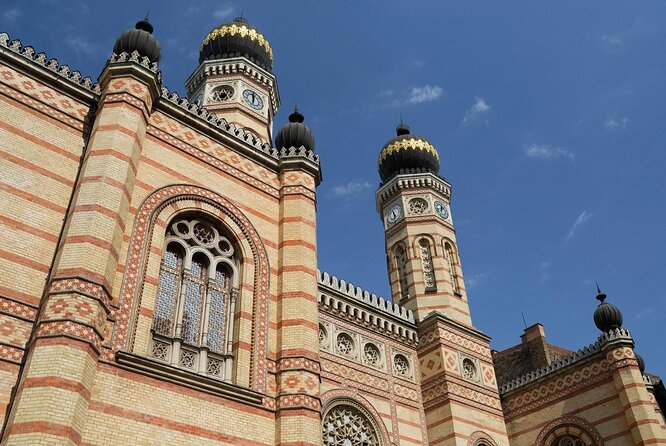
- Synagogue Triangle focus: Dohány Street, Kazinczy, and Rumbach plus smaller prayer houses
- WWII memory stops including the ghetto wall traces and the Shoes Monument on the Danube
- Personal connection from the guide, often shared through family history and community ties
- Courtyard and street-life breaks like Gozsdu Courtyard and local cafés, plus ruin bars such as Szimpla
- Hotel pickup and drop-off for easier logistics, especially in a city with lots of walking
Why a Jewish Quarter walk makes sense in Pest
The 7th district Jewish Quarter is compact. That matters because it means you do not need to play “tourist taxi” every few minutes. You get to walk, look closely, and absorb how one block can hold prayer, commerce, grief, and daily routine in the same neighborhood.
You also get a cleaner sense of geography. Synagogues like the ones in the so-called synagogue triangle are close enough that they naturally group together into a story. Memorial gardens, museum spaces, and the Danube riverfront landmarks also fit into an efficient walking plan without rushing you through everything like a checklist.
And you will feel how the neighborhood works today, not just how it looked decades ago. The tour is designed to connect history to the living city: courtyards, small shops, eateries, confectioneries, and art galleries. That is where the neighborhood stops being a museum and starts being a place you could actually hang out.
The synagogue triangle: Dohány, Kazinczy, and Rumbach
The big draw here is the range. You are not only seeing famous names. You are seeing different synagogue styles and different ways Jewish life has been practiced and organized in Budapest.
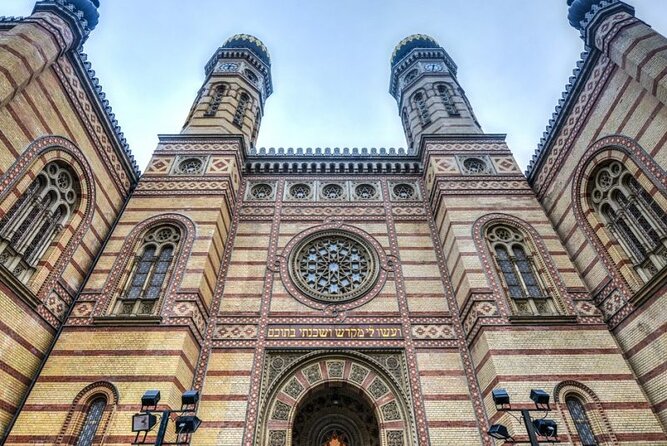
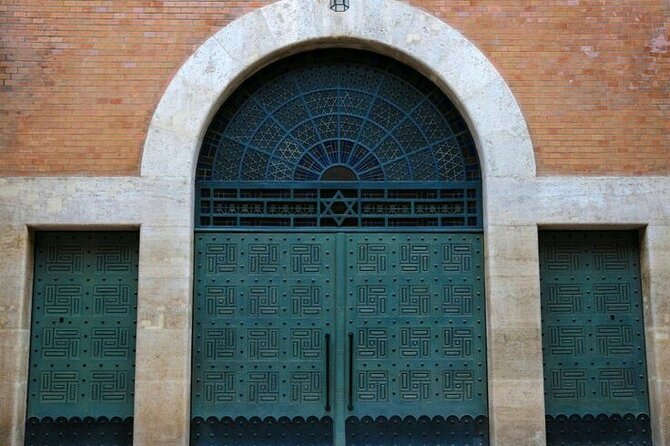
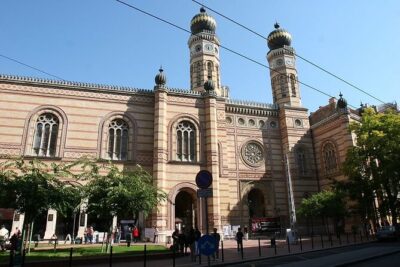
Dohány Street Synagogue is part of the famous triangle, and you will also look at the Kazinczy and Rumbach synagogues. Even if you know the headlines, the value is in the guide’s framing: what each synagogue represents historically, how the buildings fit into the community story, and why the neighborhood still matters.
You may also stop at smaller prayer houses, including the Vasvári Street Synagogue, which helps you see that the Jewish Quarter was never only about one grand landmark. Smaller sites are where you often notice details that get missed on fast group tours.
One very practical tip: plan for synagogue etiquette. The tour notes dress expectations like bringing your own hat/cap and scarf if you prefer not to wear the pieces provided by synagogues. Even if you are not religious, it is worth treating this as respectful visit time, not just sightseeing time.
Further Jewish Budapest and Great Synagogue tours:
- Budapest Jewish Heritage Memorial Walking Tour & Synagogue Entry
★ 5.0 · 568 reviews - Budapest: Jewish Heritage Guided Tour with Synagogue Ticket
★ 4.8 · 533 reviews - German tour in the Budapest city centre & the Jewish quarter
★ 5.0 · 359 reviews
The micro-history you feel in courtyards and everyday streets
A lot of walking tours stop at big monuments. This one adds the in-between spaces that make the Jewish Quarter feel real.
You might pass through places like Gozsdu Courtyard, and you can expect to see the neighborhood’s everyday rhythms: courtyards where people linger, little shops, eateries, and local confectionery stops. The tour also leans into scenes you are more likely to experience the way locals do, not just the way postcards do it.
There is also a strong “current Budapest” component. If you care about how the Jewish community and the neighborhood coexist with modern city life, you will appreciate stops that point to current cafés, art galleries, and festival energy. The tour even includes a look at ruin bars, including Szimpla, which helps explain how Budapest has repurposed old spaces without erasing their past.
This part is where the guide’s style really matters. Many guides can recite facts. What you want is someone who can explain why a courtyard or a café setting connects back to community life, migration patterns, and changing social space over time.
Raoul Wallenberg Memorial Garden and Carl Lutz: memory with a human face
WWII memorials can feel abstract, like plaques and dates. This tour tries to make them personal, and two stops are designed for that: the Raoul Wallenberg Memorial Garden and the Carl Lutz Memorial.
At the Wallenberg memorial site, you will hear about the story behind it, and the tour highlights the Emmanuel tree in the memorial garden. That kind of detail is not random. It helps the place work emotionally, not just informationally.
The Carl Lutz Memorial adds another layer. Instead of treating WWII like one event with one hero, the tour emphasizes how different people and networks shaped rescue efforts and survival. For many visitors, this is the part that shifts the experience from history-as-data to history-as-human decisions.
If you are the type who hates heavy topics, you might find this emotionally intense. But if you can handle serious history, these memorial stops are where the tour becomes deeply meaningful.
Jewish Museum and Jewish Archives: where stories get evidence
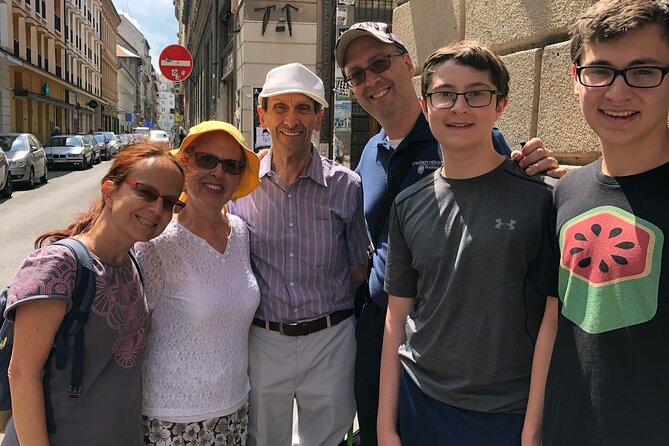
Along the walk, you may visit the Budapest Jewish Museum and see exhibitions connected to the Jewish Archives. This is a strong pairing with the street stops, because the neighborhood you are walking through is not just a “site.” It is backed by documentation.
Even if you are not a museum person, this segment helps you make sense of what you are seeing outside. The walking portions give you names, places, and emotional context. The museum and archival exhibitions provide structure and evidence.
There is also a practical advantage: museum-like stops give you a natural pause. You get a change of pace from the outdoors, a chance to sit with what you learned, and then you can return to the streets with a clearer mental map.
More of the city, bank to bank on foot:
- Budapest: Buda Castle Walk with Saint Stephen’s Hall★ 4.5 · 3,012 reviews
- Big Bus Budapest Hop-On Hop-Off Bus and Walking Tour★ 3.5 · 2,206 reviews
- Budapest: Buda Castle District Walking Tour★ 4.6 · 2,108 reviews
WWII traces on the street: stumbling stones, ghetto walls, and Shoes
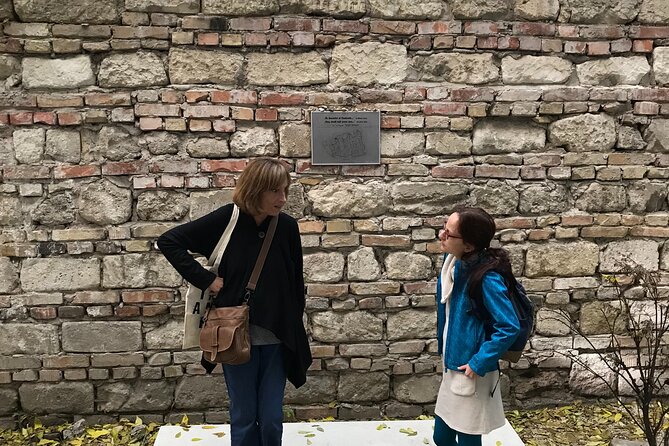
This is one of the most powerful stretches of the tour because it connects WWII history to the city’s physical traces.
You will likely encounter the stumbling stones of the quarter’s streets. Those details are small, but they matter, because they show how history can be embedded in daily movement. Walking becomes part of the lesson, not just a method for reaching stops.
You will also see the last remaining part of the WWII ghetto wall. In some cases, the guide may have access to locked or private areas, so you can view rare remnants rather than only what is visible from the street. That access is a big deal for value, because it changes what you get out of the same general location.
Finally, you will visit the Shoes Monument on the riverbank of the Danube. It is iconic for a reason: it forces the mind to slow down. Pairing this with the ghetto wall remnants earlier helps you understand the timeline, the geography, and the human loss behind the memorial.
If you are taking photos, do it thoughtfully here. This is not the stop for “quick snapshot and move on.” Let it land.
Local food, kosher needs, and how the tour handles meals
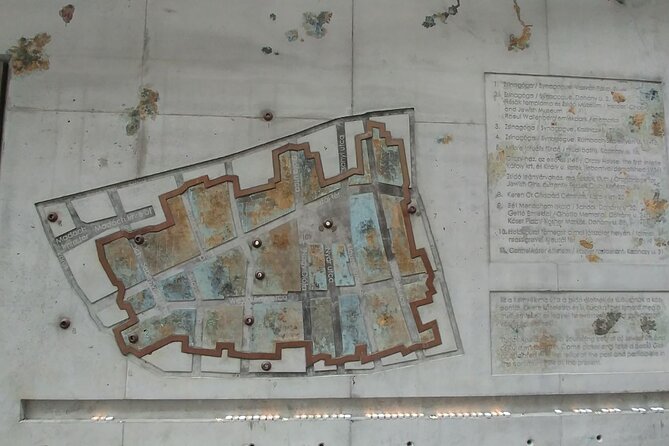
Meals are not included in the price, but food planning is part of the experience design.
The tour includes help with restaurant planning: the guide can recommend and even help book a table at a local restaurant on your tour day or on another day during your stay if you want. If you need kosher meals or snacks, the tour can arrange that too.
This matters because Jewish Quarter dining choices can be easy to miss if you only rely on the loudest tourist options. A guide who understands the neighborhood can help you pick something that fits your day, your timing, and your dietary needs without turning your meal into an extra research project.
What to keep in mind: you still need to pay for food and drinks yourself. But if you want a smooth day, this “help finding the right table” can be worth more than it sounds.
Price and logistics: what you are really paying for
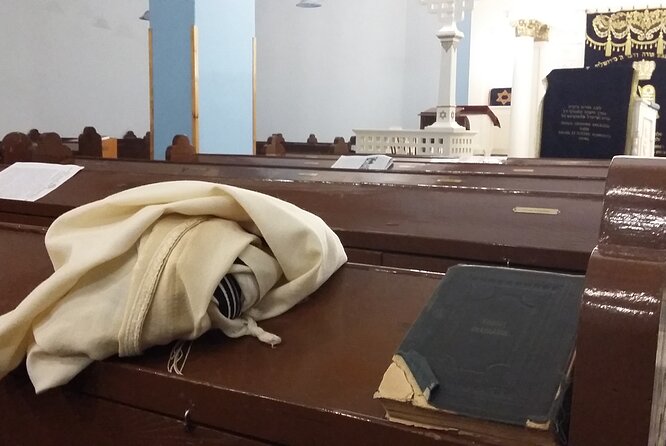
This tour costs $356.90 per group, up to 6 people, for about 4 hours. That price can be very reasonable if you are traveling as a pair or a small family, because you are not paying a per-person group fee that jumps with every seat.
At the same time, plan for additional entrance fees. The tour notes that entrance is not included, with a maximum additional cost of €46 per person. You can choose to visit one synagogue only, and you may get discounted rates (like family or senior pricing). Practically, that means the total cost stays predictable, as long as you decide ahead of time how many synagogue interiors you want.
Pickup and drop-off are included. You can meet your guide at your hotel lobby or in front of your accommodation, including a rented flat, and the tour offers pickup. That can save you time and hassle, especially because the Jewish Quarter walk is designed to be compact and efficient once you are in place.
Group size is also kept small. The tour is described as private and provides personalized attention, and it lists a maximum of 10 travelers. Either way, you should expect more conversation, more questions, and more pacing control than you would on a large group bus tour.
Timing, walking comfort, and what to bring
The walk involves moderate walking. The tour explicitly allows you to ask for breaks, so you are not signing up for an all-out grind. Still, you should wear comfortable shoes, because Budapest’s streets and memorial locations involve curbs, uneven spots, and time outside.
Bring a hat/cap and scarf if you do not want to use synagogue-provided coverings. Also consider water and light snacks, since food is not included and the day includes memorial stops where you may not want to rush to find something.
The tour operates daily, and the published hours include Monday from 9:00 AM to 2:00 PM. Your booking confirmation should show your exact start time, so you can plan your morning accordingly.
Language is listed as English, and the guide experience is a standout feature. Many visitors highlight how the guide feels warm and personal, with stories that go beyond dates and facts.
Who should book this Jewish Quarter city walk
This is best for you if you want Jewish history in Budapest that feels human, not robotic.
Book it if you:
- want a guided walk through the Jewish Quarter’s major religious sites, including the synagogue triangle
- care about WWII history and the memorial geography of the area
- like tours where your questions matter and the pace can shift
- want both street-level life today and context for what happened in the past
- prefer a small-group or private feel over a mass-tour format
It might be less ideal if:
- you want a purely light, entertainment-focused sightseeing day
- you strongly dislike serious history topics like WWII ghetto life and memorial sites
- you are hoping for every entrance fee to be included automatically
Should you book this Budapest Jewish Quarter City Walk?
I think you should book it if you want one day in Budapest to feel anchored. The mix of synagogues, museums, memorial traces, and real neighborhood spaces makes it more than a route. It helps you understand the Jewish Quarter as a lived place, past and present.
The value is strongest when you can use the private-group pace and pickup convenience, and when you are comfortable paying a clear extra amount for synagogue entrances if you choose to go inside. If you can handle the emotional weight of WWII memory and still want context, this walk can turn into one of the most memorable parts of your Budapest trip.
If you want, tell me your travel dates and group size, and I can help you think through the best start time and how to plan the rest of your day around the Danube Shoes stop and museum pacing.
FAQ
How long is the Budapest Jewish Quarter city walk?
The tour lasts about 4 hours.
Where does the tour pick up, and where do we meet?
Pickup is available from your hotel lobby or in front of your accommodation. A restaurant drop-off for lunch or dinner may also be offered.
Is hotel pickup included in the price?
Yes. Hotel pickup and drop-off are included.
What’s included in the tour price?
You get a professional licensed local guide, pickup and drop-off, help recommending and booking a table at a local restaurant, and arranging kosher meals or snacks if required.
Are synagogue entrance fees included?
No. Entrance fees are not included, and the tour states a maximum additional cost of €46 per person. You can choose to visit one synagogue only, with possible discounted prices.
How much walking is involved?
Moderate walking is involved. You can ask for breaks during the tour.
Is the tour offered in English?
Yes, the tour is offered in English.
What group size should I expect?
The tour is described as private and personalized. It also lists a maximum of 10 travelers.
What is the cancellation policy?
Free cancellation is available. You can cancel up to 24 hours in advance for a full refund. If you cancel less than 24 hours before the start time, the amount paid is not refunded.
The newest crossings added in Budapest






Jewish Budapest & Great Synagogue Tours, compared.
Budapest Jewish Heritage Memorial Walking Tour & Synagogue Entry
Read our review →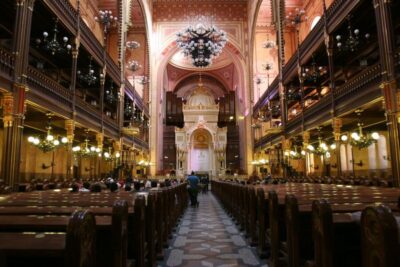
Jewish Heritage Guided Tour with Synagogue Ticket
Read our review →
German tour in the Budapest city centre & the Jewish quarter
Read our review →
Past and Present of Budapest Jewish District Tour
Read our review →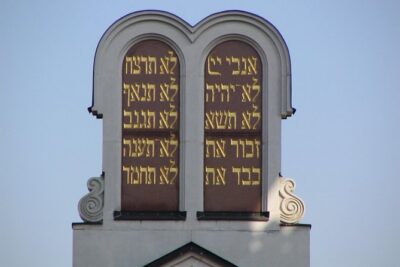
Budapest Dohany Synagogue & Hungarian Jewish Museum & free extras
Read our review →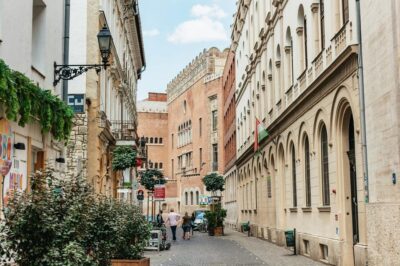
Jewish History Guided Walking Tour with Historian
Read our review →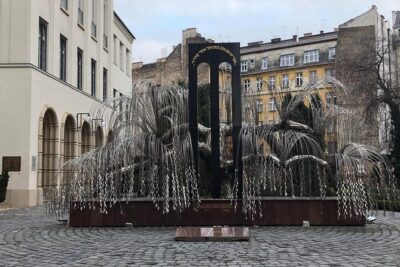
Budapest Dohany, Heroes’, Rumbach synagogues & Jewish Ghetto Tour
Read our review →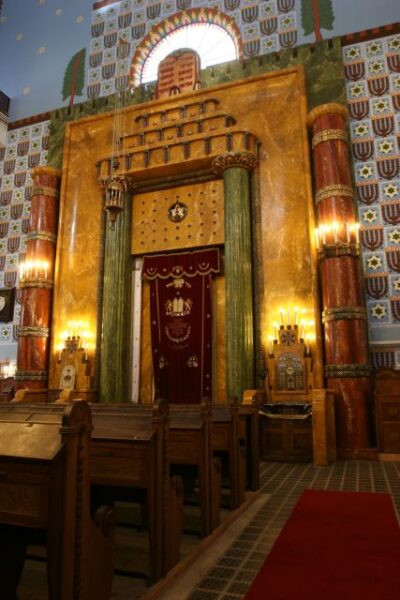
Browse the lists this tour appears in