
Reviewed · JEWISH BUDAPEST & GREAT SYNAGOGUE TOURS
Past and Present of Budapest Jewish District Tour
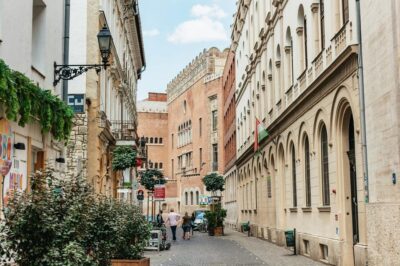
Budapest’s Jewish Quarter tells a brutal-to-hopeful story. This 1 hour 45 minute walk through District VII is interesting because it traces the neighborhood from the Belle Epoque era to the devastation that followed, using major landmarks you can actually see on the streets.
I especially like the clear, guide-led storytelling and the way your licensed local guide links each stop to the bigger timeline, including ideas like Zionism and shifting Jewish life. I also like the exterior-focused route that still gives you memorable context, like the Memorial Courtyard and cemetery views outside the Great Synagogue.
One possible drawback to plan for: this is not a tour where you go inside multiple synagogues. You will be walking, standing, and listening for a while, and the subject matter moves into heavy territory, so it may feel like a more serious experience than a casual sightseeing stroll.
In This Review
- Key highlights to look for
- Erzsébet tér kickoff: your first landmarks in District VII
- From Belle Epoque to exclusion: how the route builds the timeline
- Nagy Zsinagóga, the Memorial Courtyard, and the movements behind it
- Rumbach Street Synagogue: murals, restoration, and synagogue life without entry
- Gozsdu Udvar and the ghetto wall piece you can still see
- Kazinczy Street Synagogue area: kosher clues and Orthodox community life
- Szimpla Kert finish: orientation in a ruin bar setting
- Price and logistics: what the $3.63 rate actually means for value
- Who should book this Jewish District tour?
- Should you book Past and Present of the Budapest Jewish District tour?
- FAQ
- What is the duration of the Past and Present of Budapest Jewish District Tour?
- Is the tour in English?
- Does the tour enter the synagogues?
- Where do I meet and where does the tour end?
- Is there a group limit?
- What is the cancellation policy?
Key highlights to look for
- Erzsébet tér, by the Ferris Wheel: you start with a quick, practical orientation before the story gets dark.
- Nagy Zsinagóga (Great/Central Synagogue) from the outside: you get the movements, politics, and the memorial setting without building entry.
- Rumbach Street Synagogue restoration cues: murals and street art act like a visual guide to changing neighborhood identity.
- Gozsdu Udvar and a ghetto wall fragment: you pass the passage and spot what’s left of the separation infrastructure.
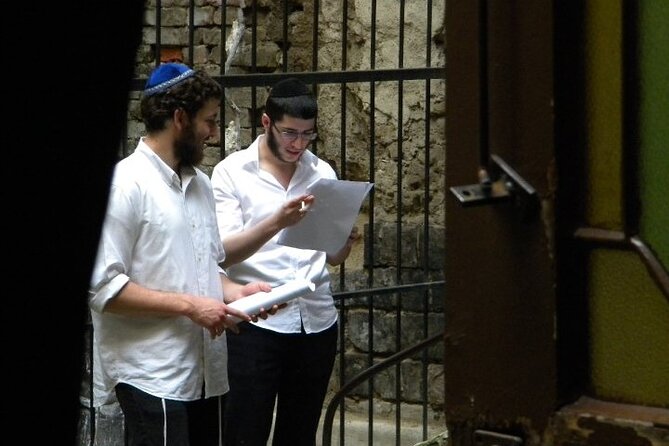
- Kazinczy Street area signals: kosher food and the ritual bath come up as you look at Orthodox life at street level.
- Szimpla Kert finish point: the tour ends in a ruin bar, handy if you want to keep exploring afterward.
Erzsébet tér kickoff: your first landmarks in District VII
You meet at Erzsébet tér, at the Budapest Ferris Wheel area, and the guide is already there to connect dots fast. In a short time, you’ll understand where you are in District VII and why these streets matter, not just as buildings, but as a map of Jewish life over time.
Expect your guide to set the rhythm early. You sketch the itinerary and major sights along the way, then get a promise of what you’ll cover: the neighborhood’s rise, its community structures, and the catastrophic break that changed everything. That upfront framing is a big part of why this tour works for first-time visitors.
If you like a walking tour that gives you a timeline you can remember later, this start helps. You won’t just see stops, you’ll know what each stop is doing in the story.
From Belle Epoque to exclusion: how the route builds the timeline
Right away, the tour positions you at the start of what people often think of as Budapest’s golden period, the Belle Epoque or Golden Age. The guide focuses on the arc from prosperity to destruction, and the way it explains that shift makes the later sites hit harder.
One stop centers on Deák Ferenc Square and how the city treated Jews differently. You’ll hear about Gaudiopolis as a City of Joy concept, and then about Schutzpass, the document that helped save thousands of Jewish lives. That contrast helps you understand that the story is not only tragedy, it’s also bureaucracy, survival choices, and daily life under pressure.
You also get a sense of physical boundaries, not just political ones. The tour points out former medieval city wall ruins tied to Jewish exclusion from trading inside the city limits. It’s a detail that turns architecture into evidence, which is exactly how this kind of neighborhood history becomes real.
Further Jewish Budapest and Great Synagogue tours:
- Budapest Jewish Heritage Memorial Walking Tour & Synagogue Entry
★ 5.0 · 568 reviews - Budapest: Jewish Heritage Guided Tour with Synagogue Ticket
★ 4.8 · 533 reviews - German tour in the Budapest city centre & the Jewish quarter
★ 5.0 · 359 reviews
Nagy Zsinagóga, the Memorial Courtyard, and the movements behind it
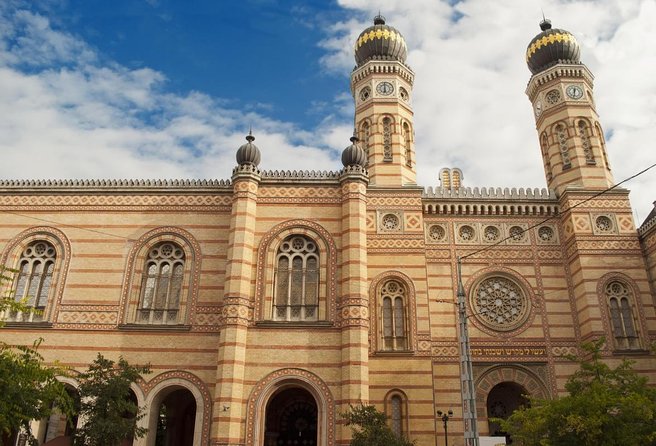
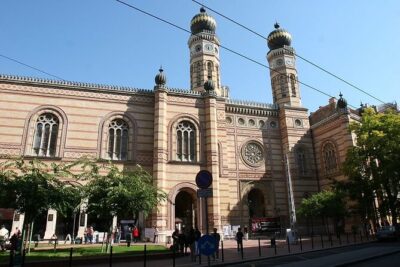
The highlight for many people is the Great or Central Synagogue, known as Nagy Zsinagóga. This is the largest synagogue in Europe, and your guide uses it as a gateway into how Hungarian Jewish communities organized themselves.
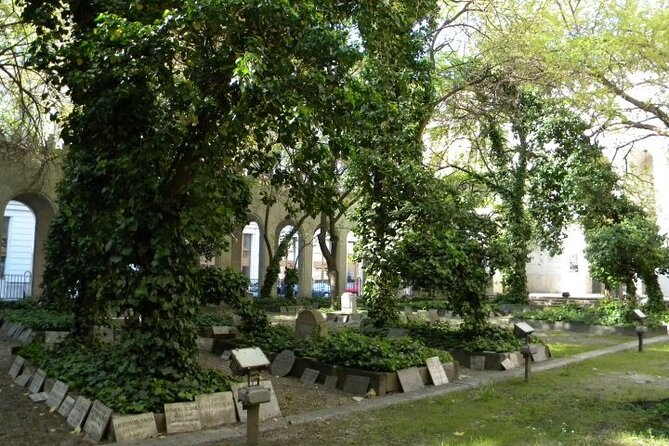
You’ll learn about the Neologue and Orthodox movements and how Zionism fit into the conversation. You do not enter the synagogue, but you do get outside views of the Memorial Courtyard and the cemetery. For me, that approach is smart: even from outside, the memorial space gives context before you move on, so the next streets feel connected rather than separate attractions.
Because the tour stays exterior, you avoid the logistical hassle of multiple entries and lines. The tradeoff is obvious though. If you want the interior atmosphere and a full look around inside, you’ll need to plan a separate visit.
Still, you’ll walk away knowing what you’re looking at, not just that it exists. That’s the difference between a quick photo stop and a tour that helps you understand District VII.
Rumbach Street Synagogue: murals, restoration, and synagogue life without entry

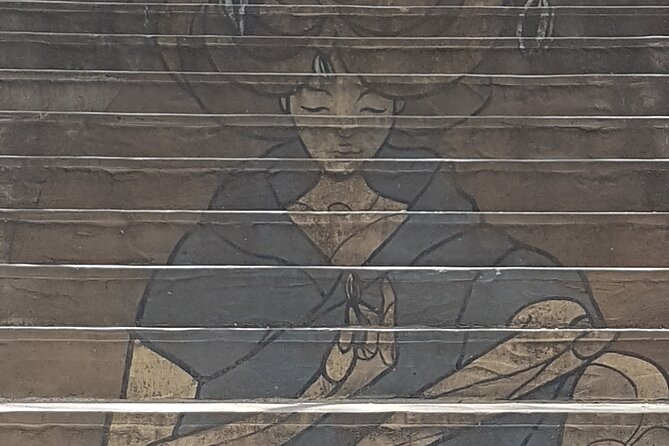
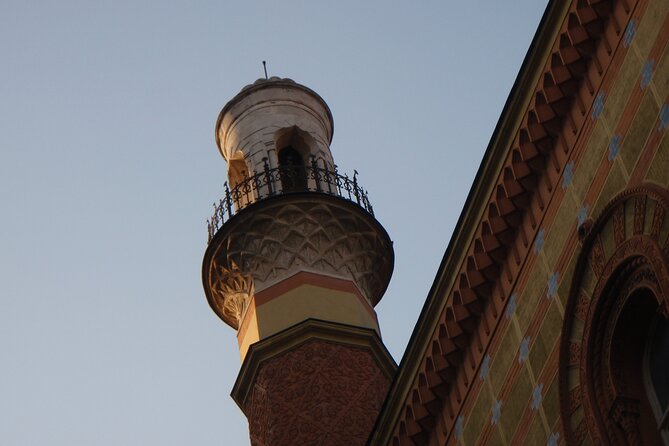
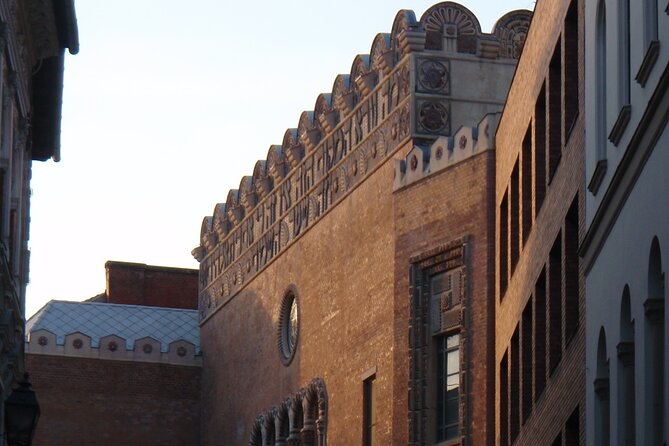
Next you head toward Rumbach Street Synagogue and you do the same smart thing again: learn first, look second. You get information about the beautifully restored Rumbach Street Synagogue and you focus on the murals and urban street art nearby.
This stop is valuable because it shows how the neighborhood still communicates. Even if you are not stepping inside, the surrounding visuals explain how the area carries identity forward. It’s a reminder that “past” here is not trapped in museums, it’s part of the streets you’re walking.
The tour also avoids trying to cram too much into too little time. Since you do not enter the synagogue, your guide keeps the pace moving, while still giving you meaningful interpretation tied to the building and its surrounding art.
If you love streets as storytelling tools, this is one of the best parts of the walk.
Gozsdu Udvar and the ghetto wall piece you can still see
At Gozsdu Udvar, you pass the Gozsdu Passage and learn how this area fits both the neighborhood’s history and its present-day role. The name on the map might make you think of shopping or nightlife, but the tour links it to what came before and what survived.
You’ll also see the last piece of the ghetto wall. That one detail changes how you look at everything around it, because it turns the idea of restriction into a visible object. It is not abstract, it is right there in the street context you’re walking through.
This stop helps you understand that the Jewish Quarter is not only places of worship. It’s also corridors, markets, passages, and spaces where separation and daily routine overlapped.
In other words, you see how the neighborhood worked, not just how it worshipped.
Still to cross in Budapest
- Budapest: City Highlights Sightseeing Cruise★ 4.6 · 43,981 reviews
- Budapest: Unlimited Prosecco, Beer and Aperol Spritz Cruise★ 4.8 · 37,304 reviews
- Budapest: Széchenyi Spa Day Ticket with Optional Upgrades★ 4.3 · 23,911 reviews
Kazinczy Street Synagogue area: kosher clues and Orthodox community life
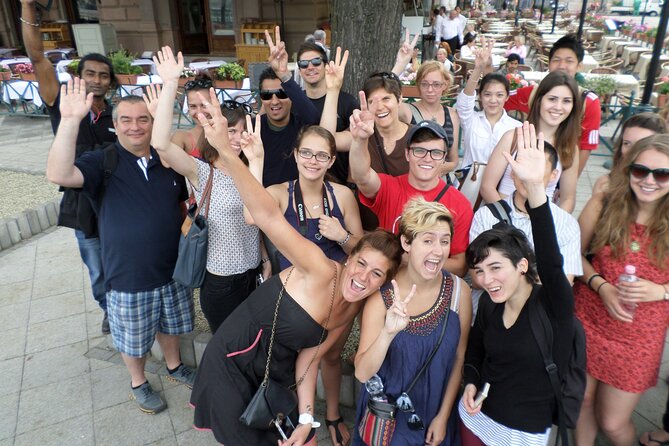
You finish the core synagogue loop around the Kazinczy Street Synagogue, tied to the Orthodox community of about 50 to 60 families. Again, the tour does not enter the building, but it explains what you’d be looking for if you did visit, including why this community size mattered.
You’ll also hear about kosher food and the ritual bath, plus other Jewish customs connected to daily practice. The value here is that it pulls history out of dates and places and into lived habits, the kind of details that help you picture real people, not just events.
This stop works best if you pay attention to what’s nearby, not just the synagogue itself. Your guide uses the street setting to connect religion, food, routine, and community boundaries.
And because you are close to multiple synagogues and Jewish landmarks, the information starts stacking up in your brain instead of feeling like disconnected facts.
Szimpla Kert finish: orientation in a ruin bar setting
The walk ends at Szimpla Kert, a ruin bar that has pop up exhibitions and serves as a practical final orientation point. Ending here is smart for two reasons. First, you get a clear place to regroup at the finish. Second, it reinforces the idea that District VII is still alive and constantly changing.
If you want to keep exploring after the tour, this is an easy launchpad. You’ll already know where you are in relation to major sites, so your next walk can be more intentional.
I also like the mood of a ruin bar ending after a heavy historical narrative. It doesn’t erase the past, but it gives your brain a place to exhale and reflect before you continue sightseeing.
Price and logistics: what the $3.63 rate actually means for value
The price listed is very low, at $3.63 per person, and the structure makes sense for a walking tour. You are paying for the guided experience plus a booking fee, while your guide relies on your choice of donations at the end.
That matters for how you should think about value. This tour is not trying to compete with paid museum-style access. It is more like an efficient orientation, a structured neighborhood history walk, and a way to understand the synagogue district without turning your day into a ticket-and-entry marathon.
A few other practical notes that affect value:
- The group size is capped at 25 travelers, which helps the guide keep control and answer questions.
- It’s in English, and your guide is fully licensed.
- You receive a mobile ticket, so you’re not scrambling for paper.
Timing is also part of the value equation. At about 1 hour 45 minutes, you can fit it early in your visit and still plan a longer second pass later.
The main consideration is intensity. One review called it heavier than other Budapest walking tours. So if you prefer light-and-lucky sightseeing, this may feel more serious than you expected. If you want respect and context, that heaviness is part of the purpose.
Who should book this Jewish District tour?
Book it if you want a guided way to connect multiple sites across District VII, especially if it’s your first time in Budapest. This tour is also a good fit if you like architecture, street-level clues, and historical explanations that help you recognize what you’re seeing.
It suits history-minded travelers who want a coherent timeline. The way the route moves from Belle Epoque optimism toward destruction gives you a story arc, not a pile of locations.
It also works well for groups that want a standard starting point. One guide, Edi, was praised for a pace comfortable even for seniors, and the small group cap helps keep things manageable.
On the flip side, skip it as your only synagogue plan if you care deeply about interior viewing. Since the tour does not enter the synagogues, you may want to add a separate time slot for inside access where possible.
Should you book Past and Present of the Budapest Jewish District tour?
My honest take: you should book it if you want a strong neighborhood orientation in a short window and you’re comfortable with the emotional weight of the subject. The exterior approach still delivers the key landmarks, including the synagogue memorial setting, while keeping the route efficient.
You might hold off if you’re expecting a mostly interior, building-by-building visit, or if you want a lighter mood. This is a history-focused walk, not a casual entertainment loop.
If you do book, come with walking shoes and a little patience. Ask questions when your guide invites them, because several guides who lead this tour, like Eszter and Gary, are praised for answering questions clearly and organizing the story so it lands.
FAQ
What is the duration of the Past and Present of Budapest Jewish District Tour?
The tour lasts about 1 hour 45 minutes.
Is the tour in English?
Yes, the tour is offered in English.
Does the tour enter the synagogues?
No. The tour focuses on synagogue exteriors only. You will see areas such as the Memorial Courtyard and the cemetery from outside, and you will not enter the synagogues.
Where do I meet and where does the tour end?
You start at the Ferris Wheel of Budapest on Erzsébet tér, Budapest (1051). The tour ends at Szimpla Kert, Kazinczy u. 14, Budapest (1075).
Is there a group limit?
Yes. The maximum group size is 25 travelers.
What is the cancellation policy?
Free cancellation is available up to 24 hours before the experience starts for a full refund. If you cancel less than 24 hours before, the amount you paid is not refunded.
The newest crossings added in Budapest






Jewish Budapest & Great Synagogue Tours, compared.
Budapest Jewish Heritage Memorial Walking Tour & Synagogue Entry
Read our review →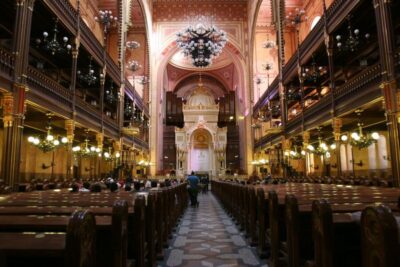
Jewish Heritage Guided Tour with Synagogue Ticket
Read our review →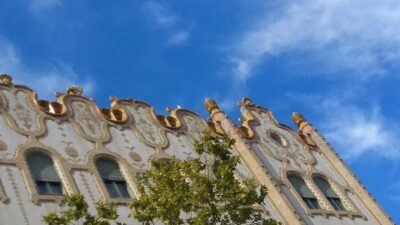
German tour in the Budapest city centre & the Jewish quarter
Read our review →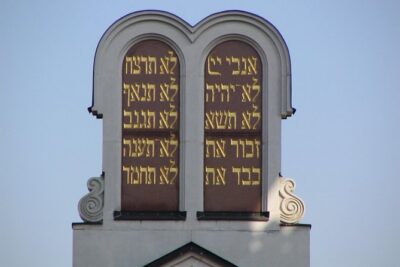
Budapest Dohany Synagogue & Hungarian Jewish Museum & free extras
Read our review →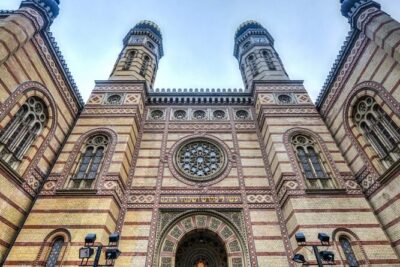
Jewish History Guided Walking Tour with Historian
Read our review →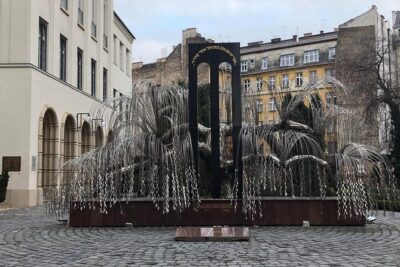
Budapest Dohany, Heroes’, Rumbach synagogues & Jewish Ghetto Tour
Read our review →
Browse the lists this tour appears in