
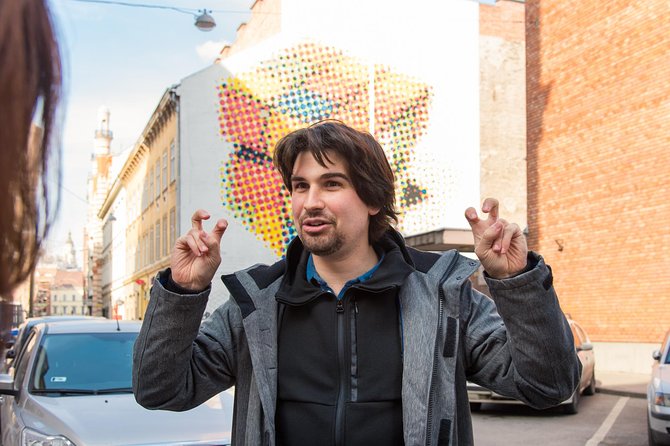
Reviewed · JEWISH BUDAPEST & GREAT SYNAGOGUE TOURS
Jewish Heritage in Hungary with a Historian
Jewish Budapest changes your pace fast. I like how this historian-led walk ties everyday streets to Jewish life, and I like the small group size that keeps questions close and on point. One consideration: you do not go inside the Kazinczy Street or Great Synagogue buildings, and those synagogue admissions are not included.
You start at Kempinski Hotel Corvinus Budapest on Erzsébet tér, with a route built for walking, about 2 hours 30 minutes total. You also get a mobile ticket, which makes check-in easy and low-stress. Most stops feel quick, so it fits well even if you have other plans.
You finish outside the Dohány Street Synagogue area, after passing key synagogues and landmarks. The best food moment is at Solinfo Café, where flódni is included, and the tour runs in English for clarity.
In This Review
- Key highlights to look for
- Jewish Heritage in Budapest, with a Historian Guide
- Price and what feels like good value at $64.71
- Meeting at Kempinski Corvinus, then walking with purpose
- Stop 1: Erzsébet tér, where medieval market energy meets modern Pest
- Stop 2: The Raoul Wallenberg statue moment you should actually pause for
- Stop 3: Szimpla Kert, ruin bars and the art of repurposing
- Stop 4: Gozsdu Udvar, Budapest’s international street feel
- Stops 5 and 6: Kazinczy Street and the Great Synagogue, what you see and what you skip
- Kazinczy Street Synagogue: learning about the Orthodox community
- The Great or Central Synagogue: Europe’s largest, shown from the outside
- Stop 7: Solinfo Café and flódni, a snack that lands with the story
- What makes the guiding here worth your time
- Who should book this, and who should plan differently
- Should you book Jewish Heritage in Hungary with a Historian?
- FAQ
- What is the duration of the tour?
- What language is the tour offered in?
- How large is the group?
- Where do we meet and where do we end?
- Is a mobile ticket provided?
- Are synagogue admission tickets included?
- Is flódni included?
- Is free cancellation available?
- Are service animals allowed?
Key highlights to look for
- Small group, up to 10 people keeps the pace thoughtful and the Q and A real
- Historian storytelling that connects the old streets to modern Budapest
- Pass-by synagogue route featuring Rumbach, Kazinczy, and the Dohány Street area
- Szimpla Kert ruin bar stop tied to how ruins became a cultural trend
- Solinfo Café flódni included for a taste of Hungarian Jewish bakery tradition
- Outside views of major synagogues including Europe’s largest, without the inside visit
Jewish Heritage in Budapest, with a Historian Guide
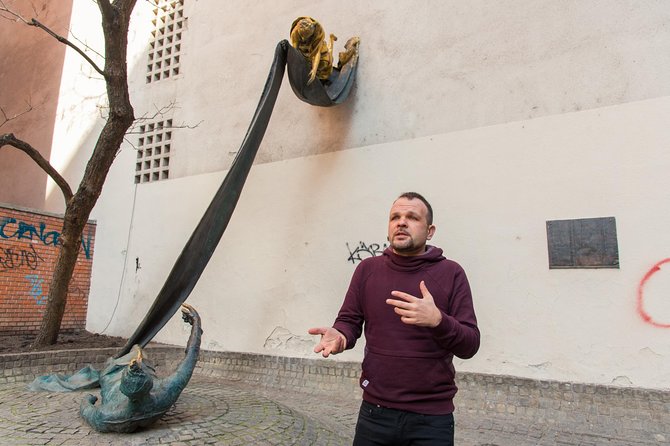
This is the kind of tour that helps you stop treating Budapest like just another pretty capital. You walk through the Jewish Quarter area and you get a guided thread that links buildings to people, politics, religion, and survival. It is not only about the 1940s, though that part matters. The stronger move here is how the story stretches across centuries, so the tragedy does not feel like a disconnected chapter.
The tour also keeps things practical. You are not doing a long museum crawl. You are doing short walks, outside viewpoints, and a couple of focused stops where you can ask questions without racing the clock. The small group size is a big deal because it turns the day into a conversation, not a lecture.
And yes, you will hit the famous spots: synagogue exteriors, a Raoul Wallenberg statue moment, the ruin bar scene at Szimpla Kert, and the international-feeling lanes around Gozsdu Udvar. It is a clever mix, because Jewish life in Budapest was never only about religious sites. It was also about markets, diplomats, street culture, food, and community institutions.
Price and what feels like good value at $64.71
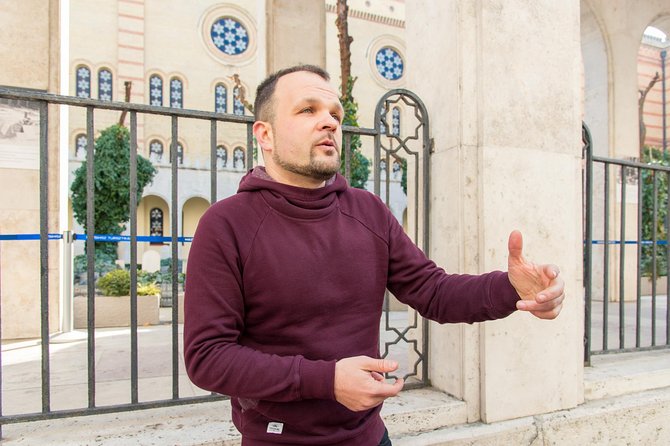
At $64.71 per person for about 2 hours 30 minutes, this is priced like a serious walking tour, not a budget stroll. What makes it feel fair is the combination of:
- A historian guide for the narrative, not just a route map
- A small group cap of 10 so the experience stays interactive
- Most stops being free to view, with costs concentrated on the food and a couple of specific synagogue admissions
Solinfo Café is included, and flódni is part of the deal, which is a real perk. On the other hand, admission to go inside the Kazinczy Street Synagogue is not included, and you also do not visit the Great Synagogue inside. So if you are expecting guaranteed indoor synagogue time, adjust your plan.
My take: this is good value if you want context and walking time, not a checklist of interior rooms. If you want to spend extended time inside multiple synagogues, you would likely pair this with separate ticketed entry visits on another day.
Further Jewish Budapest and Great Synagogue tours:
- Budapest Jewish Heritage Memorial Walking Tour & Synagogue Entry
★ 5.0 · 568 reviews - Budapest: Jewish Heritage Guided Tour with Synagogue Ticket
★ 4.8 · 533 reviews - German tour in the Budapest city centre & the Jewish quarter
★ 5.0 · 359 reviews
Meeting at Kempinski Corvinus, then walking with purpose
The meeting point is easy to find if you are comfortable with the area: Kempinski Hotel Corvinus Budapest, Erzsébet tér 7-8, 1051 Hungary. The tour starts at 10:00 am. You finish outside the Dohány Street Synagogue, around Wesselényi utca 1, 1077 Hungary.
This start and finish layout matters because it lets you build the day. You do not end up doubled back at the same spot. You can then continue exploring nearby streets, grab coffee, or line up another visit without feeling stuck.
The tour is offered in English and runs with a mobile ticket, so you do not need to hunt for paper vouchers. Service animals are allowed, and the route is near public transportation, which is handy if you are not staying far from the center.
Stop 1: Erzsébet tér, where medieval market energy meets modern Pest
The tour begins at Erzsébet ter, a medieval market square that is now one of the key squares of Pest. This is a smart first stop because it sets your frame of mind. Instead of jumping straight into religious architecture, you start with an urban space where community life played out daily.
Your guide uses this square to build context: how cities grow around trade, how communities cluster, and how public space shapes everyday belonging. Even if you think you already know Budapest’s “old town” story, this stop helps you connect it to Jewish community life in a way that feels less like facts on a page and more like how neighborhoods actually worked.
Timing is about 20 minutes, which is perfect. You get a real introduction without it dragging.
Stop 2: The Raoul Wallenberg statue moment you should actually pause for
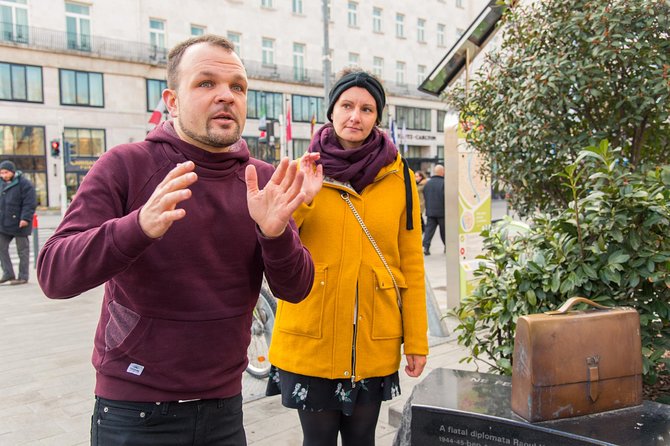
Next is the Raoul Wallenberg’s statue stop. This is one of those moments where a statue is not just a photo op. The point here is the diplomat who saved Jewish lives, and how that kind of courage showed up in real time during a horrific period.
You do not need to be an expert to get something out of this. The guide’s job is to explain why Wallenberg mattered, and how diplomacy and rescue efforts fit into the larger story. If you have ever felt that Holocaust history gets reduced to dates, this stop brings it back to individual human action.
It is a quick stop, around 10 minutes, but it is a meaningful turning point. You leave it with a clearer sense of what “saving lives” looks like historically, not just emotionally.
More centuries stacked along the banks:
- Budapest: Historic Cruise with Welcome Drink★ 4.7 · 6,512 reviews
- Budapest Historical Sightseeing – Free Walking Tour★ 5.0 · 1,302 reviews
- Buda Castle District Dark History, Legends and Vampire Night Tour★ 4.5 · 1,240 reviews
Stop 3: Szimpla Kert, ruin bars and the art of repurposing
Then you head to Szimpla Kert, described as the first ruin bar in Budapest and, importantly, in the world. This is a fun stop, but it is not random fun.
A ruin bar works as a symbol if you understand the idea behind it. Empty or damaged buildings become gathering places. A city turns scars into social space. For this tour, the guide uses Szimpla Kert to connect the past to present through city life, not through solemnity alone.
You have about 20 minutes here. That gives you time to take in the atmosphere and ask questions about how Budapest reinvented spaces over time. Even if you are not going to sit down and order anything, the stop helps you see how cultural memory can live in unusual places.
Stop 4: Gozsdu Udvar, Budapest’s international street feel
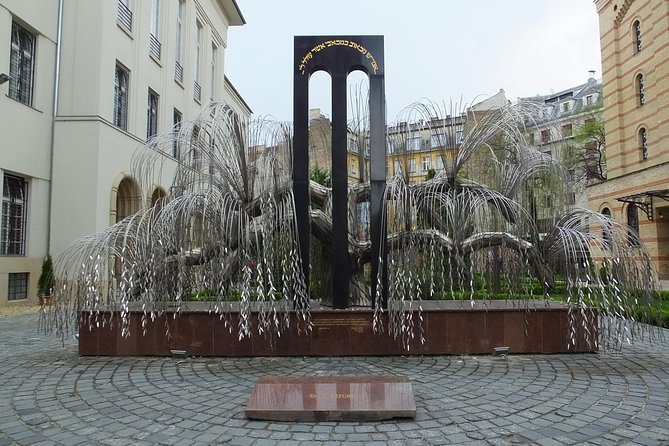
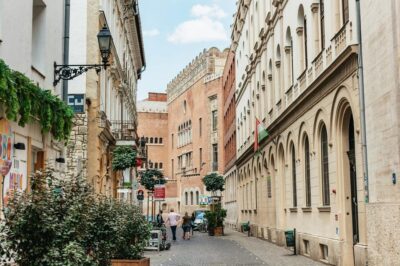
You then pass through Gozsdu Udvar, a street area known for its international vibe. This is the part of the tour that reminds you the Jewish story is not only one neighborhood’s past, it is also part of Budapest’s wider identity.
The guide uses this stop to show how streets and commerce helped shape daily life. You get a feel for what it might have looked like for people moving through the city for work, food, and social time.
The stop is short, around 10 minutes, but it helps keep the pacing from becoming all “big monuments.” It adds a living-city texture.
Stops 5 and 6: Kazinczy Street and the Great Synagogue, what you see and what you skip
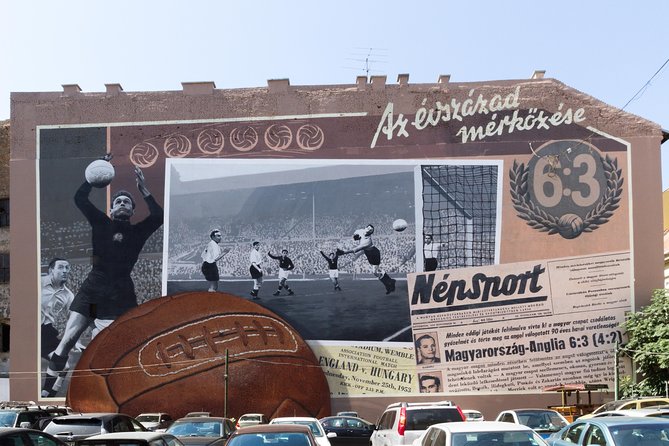
The tour continues with synagogue-focused stops, and this is where you need to read the fine print in your mind. The tour includes learning moments at Kazinczy Street Synagogue and the Great or Central Synagogue (Nagy Zsinagóga), but you do not visit the Great Synagogue inside, and the Kazinczy Street Synagogue admission is not included.
Kazinczy Street Synagogue: learning about the Orthodox community
Kazinczy Street Synagogue is about 20 minutes. The emphasis is on the Orthodox Jewish community, and what that meant within Budapest’s Jewish landscape. You will likely get explanations that help you interpret what you are seeing and why it mattered.
Drawback to keep in mind: since admission is not included, if you want to go inside that particular synagogue for the full interior experience, you may need a separate ticket plan. The tour is still worth it because the guide’s context improves what you see from the outside and around the area.
The Great or Central Synagogue: Europe’s largest, shown from the outside
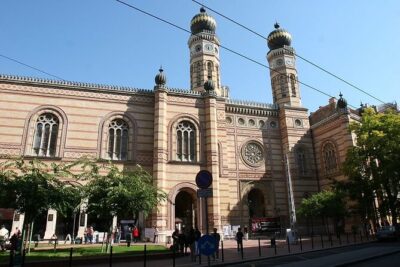
Next is the Great/Central Synagogue, known as Europe’s largest Synagogue, with historical connotations stretching back roughly two centuries. The tour gives it a focused 45 minutes window, which is longer than most exterior stops, and that tells you the guide expects you to spend time looking and absorbing.
Important note: the tour does not go inside. So you should treat this stop as a chance to understand the building’s meaning and significance from the outside, rather than a full interior visit.
If you are the type who loves architecture details, pay attention here. A long exterior stop is often better for learning than a quick walk-through, because you can actually study facades and the setting.
Stop 7: Solinfo Café and flódni, a snack that lands with the story
You end the tour with a food moment at Solinfo Café, and flódni is included. This is not an optional side quest. It is part of how the tour makes Jewish heritage feel real in daily life.
The guide frames flódni as a Hungarian Jewish cake that many Jews and non Jews in Hungary genuinely love. That matters, because it avoids making Jewish culture seem like something locked away in history books. Food is one of the easiest ways to feel continuity.
Timing is about 20 minutes, which is enough for tasting and asking one or two closing questions while the whole story is still fresh in your mind.
What makes the guiding here worth your time
This is where this tour earns its consistently strong ratings. The strongest pattern is how guides keep the tone human and honest. They cover the good and the bad in Hungary’s Jewish story, and they answer questions patiently. You get the sense that the guide is not trying to rush you past uncomfortable parts, while also making space for the larger multi-century context.
You may meet different guides depending on the day. People have been led by guides such as Andrea and Gabor, and the common thread in their approach is how they slow down to explain, then bring it back to what you can see outside.
Another big plus is sensitivity. A historian-led walk like this has to handle heavy material carefully, and the tour’s style seems built for that. You are not left alone with a list of tragedies. You are guided through how the community formed, how it changed, and how events unfolded.
That is why small group size matters. When you can ask a question without shouting over a crowd, you get a better explanation, and the walk stays personal.
Who should book this, and who should plan differently
This tour is a great match if:
- You want Jewish heritage context in Budapest without doing everything as museum-only
- You like walking tours where stops connect logically
- You prefer smaller groups, up to 10 people, where questions actually get answered
- You care about learning beyond the single era most tours focus on
You might plan differently if:
- You want to go inside multiple synagogues as part of the core experience, because the Kazinczy Street and Great Synagogue interior access are not included here
- You want a longer sit-down meal beyond the flódni stop, since the food segment is about tasting and wrapping up
Should you book Jewish Heritage in Hungary with a Historian?
I think you should book if your goal is understanding, not just sightseeing. The combination of a historian narrative, a small group, and the mix of serious stops (Wallenberg, synagogues) plus everyday anchors (market square energy, Szimpla Kert, flódni at Solinfo) makes it a smart first or second tour in Budapest.
If you are already planning separate synagogue interior visits, this tour becomes even better. It gives you the storyline so your later ticketed entries feel like part of one larger picture, not random rooms.
If you want a simple, practical way to understand Jewish Budapest in a few hours, this one is easy to recommend.
FAQ
What is the duration of the tour?
It runs for about 2 hours 30 minutes.
What language is the tour offered in?
The tour is offered in English.
How large is the group?
The maximum group size is up to 10 travelers.
Where do we meet and where do we end?
You start at Kempinski Hotel Corvinus Budapest, Erzsébet tér 7-8, 1051 Hungary, and you end outside Dohány Street Synagogue at Wesselényi utca 1, 1077 Hungary.
Is a mobile ticket provided?
Yes, the tour includes a mobile ticket.
Are synagogue admission tickets included?
Admission ticket details vary. Kazinczy Street Synagogue and the Great or Central Synagogue do not include admission tickets, and you do not visit the Great Synagogue inside. The flódni at Solinfo Café is included.
Is flódni included?
Yes, you try the local Jewish cake flódni, and it is included.
Is free cancellation available?
Yes. You can cancel up to 24 hours in advance for a full refund.
Are service animals allowed?
Yes, service animals are allowed.
The newest crossings added in Budapest






Jewish Budapest & Great Synagogue Tours, compared.
Budapest Jewish Heritage Memorial Walking Tour & Synagogue Entry
Read our review →
Jewish Heritage Guided Tour with Synagogue Ticket
Read our review →
German tour in the Budapest city centre & the Jewish quarter
Read our review →
Past and Present of Budapest Jewish District Tour
Read our review →
Budapest Dohany Synagogue & Hungarian Jewish Museum & free extras
Read our review →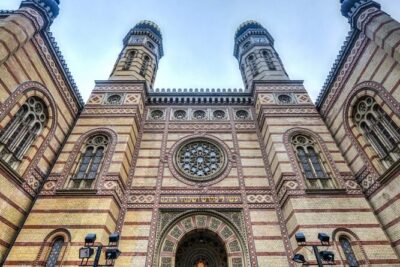
Jewish History Guided Walking Tour with Historian
Read our review →
Budapest Dohany, Heroes’, Rumbach synagogues & Jewish Ghetto Tour
Read our review →Browse the lists this tour appears in