
Synagogue streets have a memory. This Old Jewish Quarter private walking tour connects key Jewish landmarks with a clear timeline, from early roots to the Holocaust and today. What I like most is the 5-star licensed history expert guide and the chance to stop at the Ghetto Memorial Wall.
One thing to plan for: synagogue entry is not included, so you’ll usually be appreciating exteriors and the surrounding streets rather than going inside.
In This Review
- Key points before you go
- Walking the Budapest Jewish Quarter with a licensed history guide
- Meeting at Madách Imre tér near Sissi Statue, then lining up the story
- Dohány Street and the Jewish Triangle: seeing the places without rushing inside
- Rumbach Street Synagogue area: history on ordinary city streets
- The Synagogue Astoria Central Residence stop: continuity and change
- The Ghetto Memorial Wall: where the walk turns serious
- Klauzál tér and Klauzál Market Hall: ending with present-day Budapest
- Price, timing, and who this private tour fits best
- Handy tips to get more from the walk
- Should you book this Old Jewish Quarter tour?
- FAQ
- How long is the Budapest Old Jewish Quarter History Private Walking Tour?
- Where does the tour start?
- Does this tour include entry to the synagogues?
- What sights are covered during the walk?
- Is the Ghetto Memorial Wall entrance included?
- What language options are available?
- What should I wear or prepare for?
- Is it really a private tour?
Key points before you go
- Private, small group size (1 to 25 per guide) keeps the pacing human and the questions doable
- Jewish Triangle sights include Dohány Street Synagogue, plus Rumbach and Kazinczy areas
- Ghetto Memorial Wall entrance is included, which makes the most difficult moment of the walk more meaningful
- Klauzál tér and Klauzál Market Hall add present-day Budapest to all that history
- 2.5 to 3.5 km on foot with some uneven ground and steps, so comfy shoes matter
Walking the Budapest Jewish Quarter with a licensed history guide
Budapest’s Old Jewish Quarter can feel like a lot at once, even if you love history. This tour helps you make sense of it fast, because the guide keeps the story organized and points out what to look for. You are not just passing buildings. You’re learning why these streets mattered, and how the community shaped the city over time.
I especially like that it is a private walking tour with a licensed guide in your chosen language. English and Hungarian are listed, and the tour also runs in German, Spanish, French, and Italian. That matters because Jewish history in Budapest includes a mix of dates, names, and turning points, and it is much easier when you can follow every detail.
Here is the practical part: it lasts about 2 hours, and the route is moderate with some uneven surfaces or steps. You can absolutely do it, but you will feel it in your legs if you are expecting a fully flat, stroll-style walk.
Meeting at Madách Imre tér near Sissi Statue, then lining up the story
You start at Madách Imre tér 7 (near the Sissi Statue). That is a smart meeting point because it is easy to find and easy to reach with public transport. If you are staying close by, there is also pickup within 1.5 km, and the itinerary adjusts accordingly.
From the start, the guide frames the walk like a guided timeline. That is what makes this experience useful for first-timers. You get landmarks, yes, but you also get context, so the quarter does not turn into a list of stop names you later forget.
Because the tour is private, your guide can also adjust to the group. The pace is designed to be manageable for most people, and the guide adapts when surfaces get tricky. Still, do not treat it like a wheelchair-flat route, because some sections can involve steps.
Further Jewish Budapest and Great Synagogue tours:
- Budapest Jewish Heritage Memorial Walking Tour & Synagogue Entry
★ 5.0 · 568 reviews - Budapest: Jewish Heritage Guided Tour with Synagogue Ticket
★ 4.8 · 533 reviews - German tour in the Budapest city centre & the Jewish quarter
★ 5.0 · 359 reviews
Dohány Street and the Jewish Triangle: seeing the places without rushing inside
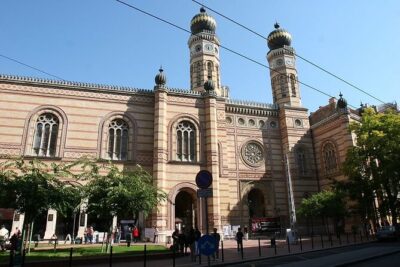
The headline here is the Jewish Triangle. You see areas connected to Dohány Street Synagogue, plus the Rumbach Street and Kazinczy Street synagogues. Even if synagogue entry is not included, you still get something valuable: a guided way of looking.
From outside, these buildings still communicate status and community life. Your guide can point out architectural cues and explain why certain synagogues became symbols for different periods and needs. This is the kind of explanation that helps you notice details instead of staring at facades like a postcard.
Now, the important limitation: entry to synagogues is not included due to restricted access. That can be a deal-breaker if your dream is to step inside and sit through the full interior experience. But if you want the bigger picture first, this walk works well. It also gives you a good foundation so, if you later choose to add an interior visit on your own, you will understand what you are seeing.
Rumbach Street Synagogue area: history on ordinary city streets
One of the early stops is the Rumbach Street Synagogue area. This is where the tour shifts from “major landmark sightseeing” to “street-level understanding.” The Old Jewish Quarter is not just about famous buildings. It is about the streets around them, the way neighborhoods evolve, and how daily life continues to leave traces.
Your guide helps connect the dots across centuries. The tour describes Jewish history in Budapest moving through major eras, including Roman times, the Black Death, the Holocaust, and the present day. That broad sweep sounds ambitious, but the guide’s job is to keep it grounded. You are not drowning in dates, because each landmark is tied to a specific chapter.
This stop also benefits from the private format. If you have family history questions, curiosities about community traditions, or just feel overwhelmed by the size of the subject, you can ask. A small group makes that possible without slowing everyone else down.
The Synagogue Astoria Central Residence stop: continuity and change
Another synagogue-related stop is Synagogue Astoria Central Residence. The way this fits into the walk is important. The Old Jewish Quarter story is not only about what was lost. It is also about what continued, what changed, and what rebuilt after catastrophe.
This is the part of the tour where you start feeling the structure of the guide’s timeline. You move from earlier chapters into later ones, and the landmarks keep reinforcing the message: Jewish life in Budapest is layered. It has old roots, breaks and rebuilding, and then a modern presence that you still see in the city today.
Even without synagogue interiors, the guide can still help you understand the “why” behind each site: why it was where it was, what the community needed, and how Budapest’s wider history shaped local Jewish life.
More of the city, bank to bank on foot:
- Budapest: Buda Castle Walk with Saint Stephen’s Hall★ 4.5 · 3,012 reviews
- Big Bus Budapest Hop-On Hop-Off Bus and Walking Tour★ 3.5 · 2,206 reviews
- Budapest: Buda Castle District Walking Tour★ 4.6 · 2,108 reviews
The Ghetto Memorial Wall: where the walk turns serious
The most emotionally important stop is the Ghetto Memorial Wall. This tour includes the entrance fee, which is a meaningful detail. It signals that this is not treated like a quick photo stop.
You should expect a more reflective moment here. The tour is designed to help you understand the Holocaust chapter with clear, careful context. If you are sensitive to heavy topics, plan for a slower mental pace at this point. Comfortable shoes and a steady start earlier make it easier to handle this portion without rushing.
I also like that this memorial fits naturally into the route. It comes after you have learned enough to understand why the surrounding streets mattered. That context makes the memorial feel less random and more connected to the community that lived nearby.
Klauzál tér and Klauzál Market Hall: ending with present-day Budapest
After the serious part, the tour ends on a lighter but still meaningful note: Klauzál tér and then Klauzál Market Hall. This is where the guide ties history back to daily life.
Klauzál Market Hall is described as lively, and that’s exactly the point. You are ending your walk in a place where you can smell the food and see everyday energy, not just monuments. If you want a “how does the city feel right now” contrast, this stop delivers it.
The walking portion continues, but you finish with a sense of what survived and what carries on. You will also get practical recommendations for the rest of your day in Budapest, which is useful when you still have time after a two-hour tour.
Just remember: food and drinks are not included, so if you want a snack after the walk, plan to buy it yourself. That is often a good move anyway, since you can choose based on your diet and cravings.
Price, timing, and who this private tour fits best
The price is $156.50 per person. For Budapest, that is not a budget impulse buy, but it is not outlandish for a private, licensed-guide experience that covers multiple major sites in about two hours.
Here is the value angle I’d look at:
- You get a history expert in your language (not just a generic guide)
- You get organized storytelling across multiple eras
- You get entrance to the Ghetto Memorial Wall
- You keep the schedule tight, so you can spend the rest of the day exploring on your own
One more thing: it is booked on average 26 days in advance. That tells me it is a popular slot, and if you have fixed travel dates, it is smart to lock it in early.
Who this suits:
- First-timers who want structure before wandering on your own
- People who want the Jewish Quarter explained in a clear, respectful way
- Travelers who prefer private pacing over joining a large group
Who might find it less ideal:
- If synagogue interior access is your top goal, note that synagogue entry is not included
- If you hate any walking with uneven ground or steps, this may be tougher than you want, even with guide adaptation
Handy tips to get more from the walk
A few practical steps will make the experience smoother.
First, wear comfortable shoes. The tour distance is not huge at 2.5 to 3.5 km, but the route can include uneven surfaces or steps. Second, dress for the weather. The tour runs rain or shine.
Next, have your expectations set: you will get a focused, guided route that hits key sites, but you are not doing a long museum day. Think of it as your historical compass, not the whole map.
Finally, check your email the day before the tour. The operator sends important info from Rosotravel, which can help you avoid last-minute confusion.
Should you book this Old Jewish Quarter tour?
If you want a short, guided, story-first introduction to Budapest’s Old Jewish Quarter, I think this is a strong choice. The licensed history guide, the Ghetto Memorial Wall entrance, and the mix of synagogue-related landmarks with Klauzál tér and Klauzál Market Hall make it more than a standard sightseeing walk.
It’s also one of the safer bets if you want the emotional heavy points handled with care, because the tour is built around the major historical chapters and appropriate landmarks.
The one reason to hesitate is simple: you will not be entering the synagogues as part of this tour. If that is essential for you, you might want to pair this walk with separate synagogue interior visits on another day.
FAQ
How long is the Budapest Old Jewish Quarter History Private Walking Tour?
It is about 2 hours.
Where does the tour start?
The meeting point is Madách Imre tér 7, 1075 Hungary, next to the Sissi Statue. The tour ends back at the meeting point.
Does this tour include entry to the synagogues?
No. Entry to synagogues is not included due to restricted access.
What sights are covered during the walk?
You’ll see the Old Jewish Quarter highlights including the Dohány Street Synagogue area, Rumbach Street and Kazinczy Street synagogues (Jewish Triangle), the Ghetto Memorial Wall, and Klauzál tér and Klauzál Market Hall.
Is the Ghetto Memorial Wall entrance included?
Yes. The tour includes the entrance fee to the Ghetto Memorial Wall.
What language options are available?
The tour offers English and Hungarian, and it is also available in German, Spanish, French, and Italian.
What should I wear or prepare for?
Wear comfortable shoes because there may be uneven surfaces or steps. The tour runs rain or shine. Food and drinks are not included.
Is it really a private tour?
Yes. It is a private tour/activity with only your group participating, with small group sizes kept for a more personalized experience.
Centuries on the Banks
- Budapest: Historic Cruise with Welcome Drink★ 4.7 · 6,512 reviews
- Budapest Historical Sightseeing – Free Walking Tour★ 5.0 · 1,302 reviews
- Buda Castle District Dark History, Legends and Vampire Night Tour★ 4.5 · 1,240 reviews
- BloodThirsty Hungary: Walking tour & Dark Historical Stories★ 4.9 · 633 reviews
The newest crossings added in Budapest






Jewish Budapest & Great Synagogue Tours, compared.
Budapest Jewish Heritage Memorial Walking Tour & Synagogue Entry
Read our review →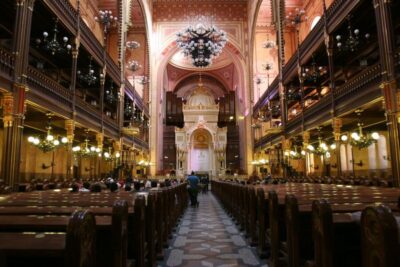
Jewish Heritage Guided Tour with Synagogue Ticket
Read our review →
German tour in the Budapest city centre & the Jewish quarter
Read our review →
Past and Present of Budapest Jewish District Tour
Read our review →
Budapest Dohany Synagogue & Hungarian Jewish Museum & free extras
Read our review →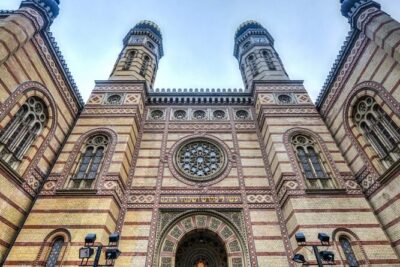
Jewish History Guided Walking Tour with Historian
Read our review →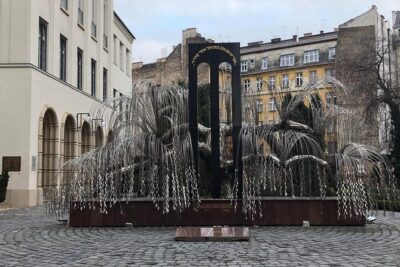
Budapest Dohany, Heroes’, Rumbach synagogues & Jewish Ghetto Tour
Read our review →Browse the lists this tour appears in