
Reviewed · WALKING TOURS
German speaking guided walking tour in Budapest
A few streets and viewpoints later, Budapest feels different. This German-language walking tour strings together Pest and the Buda Castle district in about three hours, with real background and practical local tips along the way. I especially like the focus on everyday life in Pest, not just postcards, and I love that you finish with digital guides you can use immediately after the walk.
Two things I like a lot: the anecdotes that make the landmarks easier to place, and the way the route moves you from big official buildings to smaller corners. For many people, the biggest plus is the German guiding and the fact that your questions get handled. One possible drawback: it is not a sit-down tour, so you’ll want comfortable shoes and a bit of stamina for steady walking.
In This Review
- Key highlights to watch for
- Starting at St Stephen’s Basilica, with a guide you can follow in German
- Pest city centre: Art Nouveau palaces and the stories behind them
- The Parliament building and the Danube: the city’s big geography lesson
- A short public transport hop that keeps the timing sane
- Matthias Church and Fisherman’s Bastion: views with context, not just wow-factor
- The former government district and the Royal Castle area
- What you get after the walk: restaurant guide and money-saving tips
- Small groups and the ability to ask questions
- Price and value at about $41 for three hours
- Who this tour suits best
- Should you book this Budapest walking tour?
- FAQ
- How long is the tour?
- Where does the tour meet?
- What language is the tour offered in?
- What is included in the price?
- Are public transport tickets included?
- Do I need admission tickets for the buildings?
- What should I bring with me?
- Is there free cancellation?
Key highlights to watch for
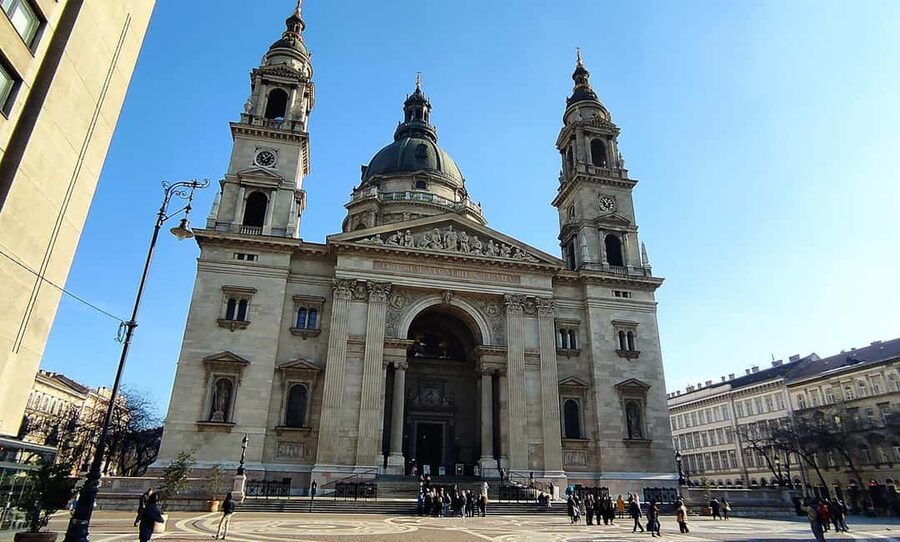
- St Stephen’s Basilica start, easy to find and a great visual tone-setter
- Freedom Square and Pest city centre, with Art Nouveau palaces and 19th-century flair
- Parliament photo moment, plus the Danube area so the city geography clicks
- Buda Castle district walking flow, from Matthias Church to Fisherman’s Bastion to the Royal Castle area
- No building entry pressure, because the focus stays outside and on context
- Digital takeaways: Insider Budapest Restaurantguide and Budapester Sparfuchs
Starting at St Stephen’s Basilica, with a guide you can follow in German
The tour begins at Szent István tér, right at the entrance of Japanika Restaurant, across from St. Stephen’s Basilica. That meeting point matters more than you might think. Budapest can feel like it has a lot of street names and shortcuts, and this start is a clean way to get your bearings fast, without a complicated trek.
Your guide for the day is Gábor Glasner, and you’ll recognize him by the badge that reads Budapest mit Gabor. That kind of clear identification is small, but it helps a lot when you’re trying to match a face to a plan. Since the tour is German, it also keeps the pace comfortable. You’re not mentally translating everything, so you can actually enjoy the stories and ask follow-up questions when something sparks your interest.
From the first stretch, the tour has a sensible rhythm. It’s guided walking, but it’s also structured sightseeing. You aren’t rushing between landmarks like a checklist, and you aren’t wandering alone either. The guide keeps you oriented with context, then points you toward the places where Budapest’s style and history make sense.
Bring a camera and a bottle of water. You’ll be outside for most of the time, and the photo stops are not just random snapshots. They’re chosen because they show how the city layers itself, from the street level upward.
Pest city centre: Art Nouveau palaces and the stories behind them
Once you leave the basilica area, you enter Pest’s city centre, where the architecture does a lot of talking. The tour highlights Art Nouveau palaces and major banking buildings such as the National Bank and the Postal Savings Bank. Even if you never planned to care about architecture, these stops work because the guide connects the buildings to the era that built them.
A smart thing here is that the tour doesn’t treat history like museum text. You get background on why these structures exist, and the guide also frames them in terms of everyday life: financial matters, society, and politics as they showed up on the street. That turns a walk through grand facades into something you can actually remember, because it explains what was happening around the people who lived there.
One of the main “you’ll understand why this matters” moments is the tour’s approach to pace and attention. Instead of saying, That building is old, you’ll hear what people did there and what the city was trying to project at the time. That’s what makes Pest feel real, not just pretty.
Freedom Square is another key stop in this part of the walk. It’s one of those places where Budapest’s public life feels visible, and the guide uses it to bridge the city’s grand civic side with what ordinary residents experienced.
If you like photos, this is also a good stretch to slow down. You’ll pass facades with details that are easy to miss when you’re walking quickly. Keep your phone or camera ready, but also look up at street level, not just across the road.
More of the city, bank to bank on foot:
- Budapest: Buda Castle Walk with Saint Stephen’s Hall
★ 4.5 · 3,012 reviews - Big Bus Budapest Hop-On Hop-Off Bus and Walking Tour
★ 3.5 · 2,206 reviews - Budapest: Buda Castle District Walking Tour
★ 4.6 · 2,108 reviews
The Parliament building and the Danube: the city’s big geography lesson
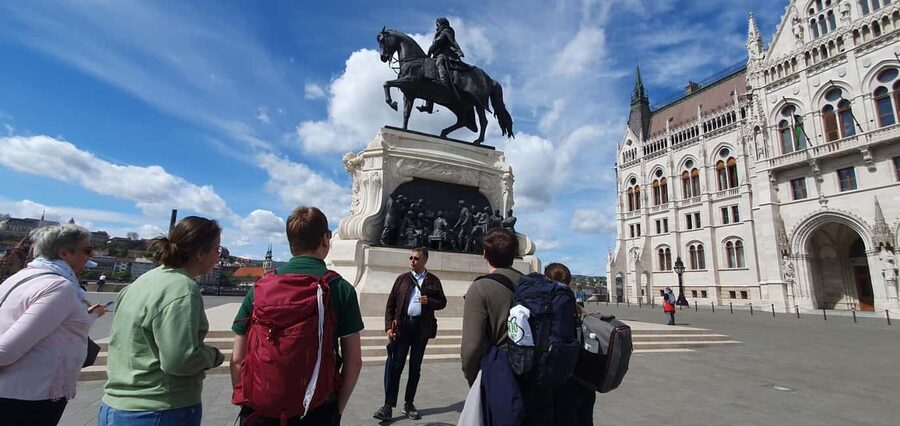
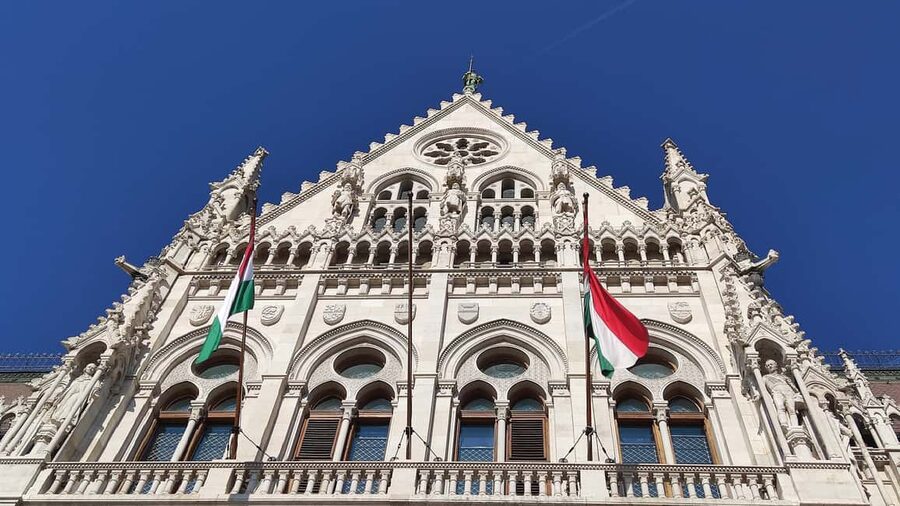
After Freedom Square, the route reaches the magnificent Parliament building, with a clear photo point built into the experience. The point isn’t to treat the landmark like a trophy shot. It’s to show you the city’s relationship to power and water, because Budapest is built around the Danube in a way that shapes how everything feels.
You also get the sense of the Danube as the thread tying the two halves of the city together. Walking in Pest makes the scale feel different than it does in Buda, and the guide uses that shift to help you understand why Budapest looks the way it does from the river.
This part of the tour is ideal if you want a quick but meaningful “aha” about Budapest’s layout. You’ll learn how Pest and Buda function like two connected cities, not two random neighborhoods.
At this stage, you also get a practical break from constant walking. The tour includes a short ride by public transport so you can reach the Buda Castle District without turning the day into a long haul.
A short public transport hop that keeps the timing sane
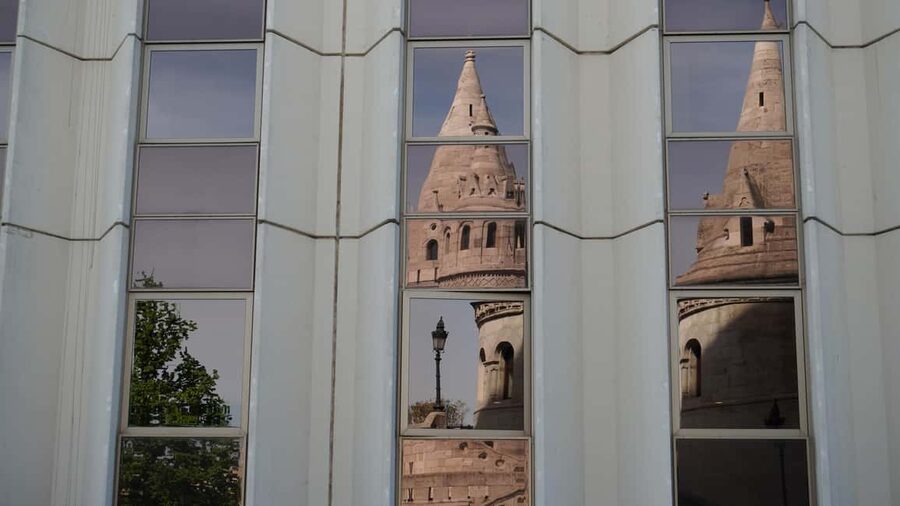
That public transport segment is, in my opinion, one of the smartest design choices in the whole itinerary. It recognizes a simple truth: when you only have three hours, you need to protect time for the stops that actually change what you see and how you feel.
So you walk Pest, then you shift to Buda Castle, rather than trying to cover the entire city on foot. That saves energy for the hilly parts in Buda, and it also keeps the tour from turning into fatigue management.
You’re not told to do anything complicated here. The tour simply continues with guided sightseeing after the ride. And because the tour is planned to avoid building entry, you’re not wasting time in lines or ticket procedures.
If you’re the type who hates waiting around, you’ll appreciate that the schedule stays focused on what you can see and learn outside.
Matthias Church and Fisherman’s Bastion: views with context, not just wow-factor
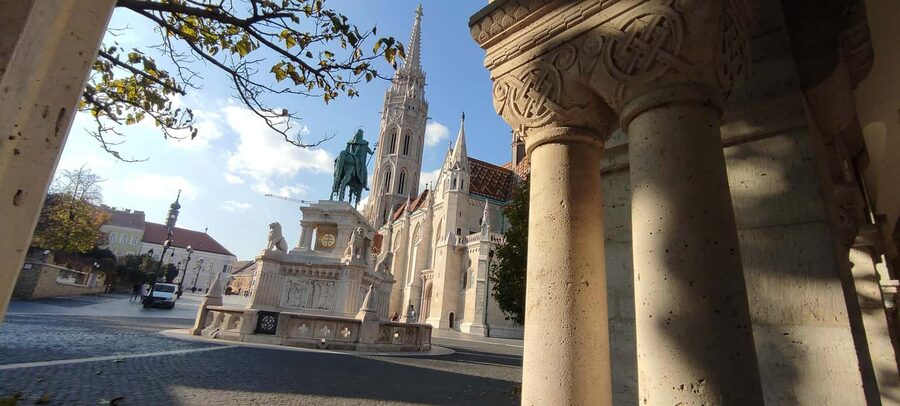
Once you reach the Buda Castle District, the tour moves into its best-known set pieces. First up is Matthias Church. The guide uses it as a reference point so you can orient yourself within the castle area. Instead of treating it as just another beautiful building, the context helps you understand why this part of Budapest became so symbolic.
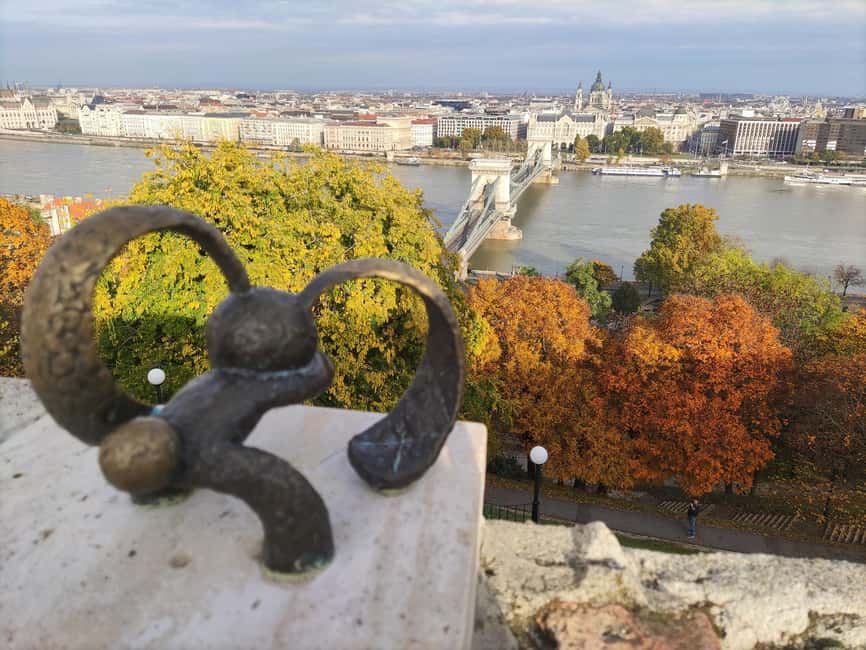
Next comes Fisherman’s Bastion. You get the classic lookouts, but the value is in how the guide frames them. You’re not only looking at a view, you’re being taught how to read the city from above, how the river shapes movement, and how the neighborhoods connect.
It’s also a good moment for photos. The Bastion gives you angles you simply can’t replicate from street level. If your camera roll needs at least one “I came to Budapest and I’ll remember this” picture, this is a strong place to get it.
Still, keep in mind one practical detail: you’ll be walking on uneven terrain and around viewpoints. The tour is only three hours, but the castle district terrain can be a bit more demanding than flat Pest. Comfortable shoes are not a suggestion here. They’re the difference between enjoying the viewpoints and feeling your feet afterwards.
Still to cross in Budapest
- Budapest: City Highlights Sightseeing Cruise★ 4.6 · 43,981 reviews
- Budapest: Unlimited Prosecco, Beer and Aperol Spritz Cruise★ 4.8 · 37,304 reviews
- Budapest: Széchenyi Spa Day Ticket with Optional Upgrades★ 4.3 · 23,911 reviews
The former government district and the Royal Castle area

The tour doesn’t stop at the obvious photo terraces. After Fisherman’s Bastion and Matthias Church, you continue through the historic centre toward the area tied to the former government district. This is where the walk starts to feel more like a guided story than a circuit of landmarks.
You’re shown how this area fits into the broader political and cultural development of Budapest. The guide’s job is to connect what you see with why it mattered, and that’s what makes this stretch worth your attention.
The final highlight is a tour around the old Royal Castle of Budapest. The phrase “around” is key. You are not going inside buildings as part of this tour, so you don’t need admission tickets. That also means you avoid a common travel frustration: spending your limited sightseeing time in queues or managing paperwork.
Instead, you can focus on the feel of the place: the massing of buildings, the way the district rises, and the way the space makes Budapest look like a historic capital shaped by the eras that ruled it.
If you enjoy architecture and city layout, this portion delivers. If you just want your checklist ticked off, you’ll still get the main sights, but you might appreciate the extra context to make it stick.
What you get after the walk: restaurant guide and money-saving tips
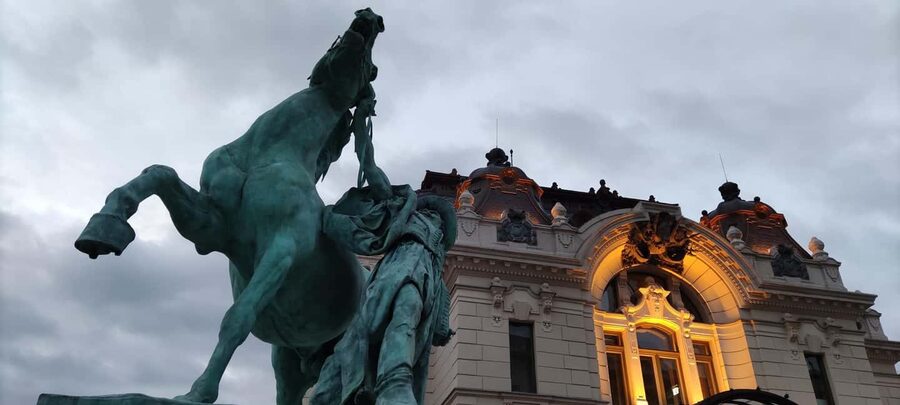
Here’s a value add that many short tours skip. At the end, you receive digital issues including an Insider Budapest Restaurantguide and the Budapest Money Saver & Guide (also branded in the materials as the Budapester Sparfuchs).
This isn’t vague advice. The guide is designed to point you toward good restaurants, cafés, street food, and bars. That matters because Budapest can be full of menus and “classic locations,” and it’s not always easy to separate dependable spots from places that survive on name recognition alone.
The Sparfuchs side is especially useful if you’re watching your budget. The tour materials frame it as help to save hundreds of euros in Budapest. The specific tactics aren’t listed here, so I can’t promise which strategies will work for your travel style. But the intent is clear: it’s not just what to eat, it’s how to make your money last.
I also like the timing. You get these guides right after the walk, so you can choose where to go while the city is still fresh in your mind. You remember the neighborhoods you saw, and now you can eat nearby instead of backtracking.
Small groups and the ability to ask questions
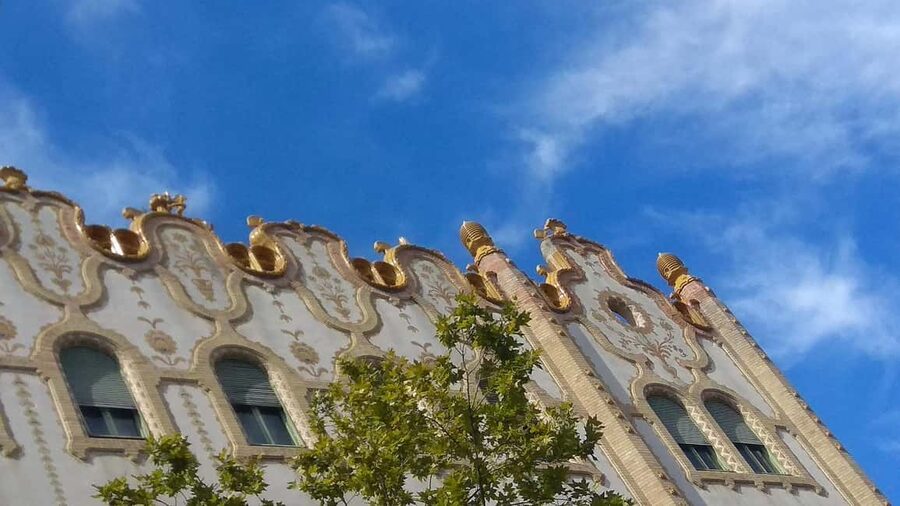
This tour runs with small or medium-sized groups, which changes the feel immediately. With fewer people, you get better interaction, and it’s easier for the guide to check that you’re following along.
One of the strongest signals from recent German bookings is that Gábor handles questions well. That is not a “nice to have.” If you’re the type who learns best by asking, you’ll like the format. And since it’s German-only, asking questions works best if you’re comfortable with that language. If not, you’ll likely need translation help from a second source, because this tour does not switch languages.
In one case, a booking context led to a much more private-feeling experience, with two people on the tour. I wouldn’t count on that happening on every date, but it’s a reminder that group size can make a big difference. When the group is small, you get more personal attention and the guide can adapt the pacing to your curiosity.
Price and value at about $41 for three hours
At $41 per person for a three-hour walking experience, you’re paying for more than movement and landmarks. You’re paying for a guided thread through Pest and Buda Castle, plus German narration, plus the digital restaurant and money-saving guides.
The best value part is the combination: you get major sights without building entry, you get context without needing to research everything on your own, and you leave with practical resources you can use the same day.
Could you do these sights independently? Of course. But doing it on your own usually means you’ll spend time figuring out routes, and you’ll still miss the “why” behind what you’re seeing. This tour is built to save you that mental effort, while keeping the route efficient.
If your German is solid, the price feels even more justified, because you’re not paying for partial understanding. You’re paying for full access to the guide’s explanations and anecdotes.
Who this tour suits best
This walk is a strong fit if you:
- Want a German-language guide and you prefer not to rely on translation apps
- Have only a half day and want both Pest and Buda Castle in one go
- Like getting context that explains what you’re seeing, not only where to stand for photos
- Care about planning meals after sightseeing, since you receive a Restaurantguide and money-saver tips
It might be less ideal if you:
- Hate walking on uneven ground and hills. The Buda Castle district can be a bit tougher, even within a short time window.
- Need a language other than German. This tour is explicitly in German.
Should you book this Budapest walking tour?
Yes, if you want a smart, efficient first taste of Budapest with German guiding, major highlights, and real tips you can use right away. This is the kind of tour that helps you connect Pest’s city-centre architecture with Buda’s viewpoints in a way that feels coherent, not random.
I’d skip it only if you strongly prefer to explore completely on your own, or if your German is not comfortable enough to follow the tour details. Otherwise, this is a solid value choice for a focused half-day, especially because the take-home digital guides help your next steps. You’ll finish with a clearer mental map and less guesswork about where to eat and how to stretch your budget.
FAQ
How long is the tour?
It lasts 3 hours.
Where does the tour meet?
Meet your guide at Szent István tér, at the entrance of Japanika Restaurant, vis á vis to St. Stephan’s Basilica.
What language is the tour offered in?
The live guiding is in German.
What is included in the price?
The tour includes live German-language guiding, plus a digital Insider Budapest Restaurantguide and a digital Budapest Money Saver & Guide. It also runs in small or medium-sized groups.
Are public transport tickets included?
No. Tickets for public transport are not included.
Do I need admission tickets for the buildings?
No. The tour notes that no buildings are entered, so admission tickets are not necessary.
What should I bring with me?
Wear comfortable shoes and bring a camera, water, and comfortable clothes.
Is there free cancellation?
Yes. You can cancel up to 24 hours in advance for a full refund.
The newest crossings added in Budapest





Walking Tours, compared.
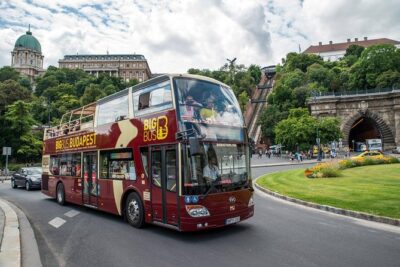
Big Bus Budapest Hop-On Hop-Off Bus and Walking Tour
Read our review →
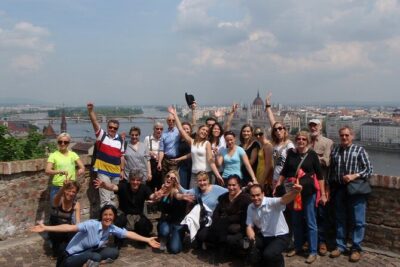
Budapest City Landmarks Walking Tour in 2 Hours
Read our review →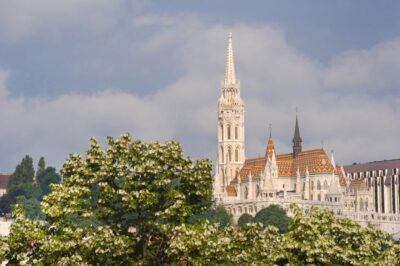
3-Hour Orientation Walking Tour of Buda and Pest
Read our review →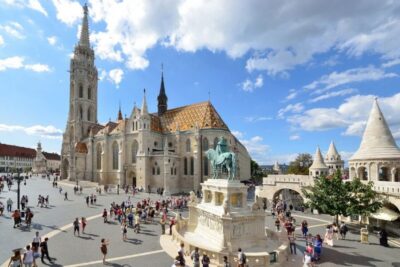
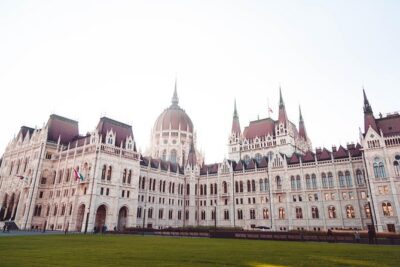
Budapest Historical Sightseeing – Free Walking Tour
Read our review →
Budapest All in One Small Group Walking Tour with Strudel Stop
Read our review →Browse the lists this tour appears in