
Reviewed · WALKING TOURS
Downtown Pest Walking Tour
Budapest history, fast and friendly. This Downtown Pest walk is interesting because it mixes landmark stops with a guide who keeps control of the pace, so you can actually ask questions as you move. I like two things most: the private guide attention and the way the route connects major Hungarian stories without turning into a rushed checklist.
The possible drawback is simple: it is a walking tour with short site stops, so if you want long museum-style time inside buildings, you will need to plan extra time on your own. I also like that the experience is designed for an English-speaking small group (up to 8), and the guide quality comes through clearly, including feedback mentioning Eszther Talaber’s friendly, caring approach.
In This Review
- Key highlights worth your time
- Why this Downtown Pest walk feels more personal than most
- Price and logistics: what you’re actually paying for
- Getting started at Szamos Cafe Budapest (and why the location helps)
- Stop 1: Great and Central Synagogue (Nagy Zsinagóga) in 10 minutes
- Stop 2: The Hungarian Parliament Building at Kossuth Square
- The neoclassical church with the mummified right hand of King St Stephen
- Heroes’ Square: the Seven chieftains and national memory in 20 minutes
- Andrássy Avenue: walking the 19th-century answer to Paris
- The Ronald Reagan Statue: Cold War memory with a Hungarian angle
- What you’ll really get from a private guide in a 3-hour window
- Who this tour fits best (and who should rethink)
- Should you book this Downtown Pest Walking Tour?
- FAQ
- How long is the Downtown Pest Walking Tour?
- What language is the tour offered in?
- How much does the tour cost?
- Where does the tour meet?
- Is the tour limited in group size?
- Are food and drinks included?
- What is the cancellation policy?
Key highlights worth your time
- Small group, guide-led pace: up to 8 travelers, so questions and detours feel realistic
- Major Downtown Pest landmarks: Great Synagogue, Parliament, Heroes’ Square, Andrássy Avenue, and a Reagan memorial
- Free-admission style stops: each listed sight is marked as admission ticket free in the itinerary
- Two departure times: you choose what fits your day better
- Mobile ticket convenience: less time fussing at check-in
- A route that tells a story: Jewish heritage, 19th-century nation-building, and Cold War memory, in one loop
Why this Downtown Pest walk feels more personal than most

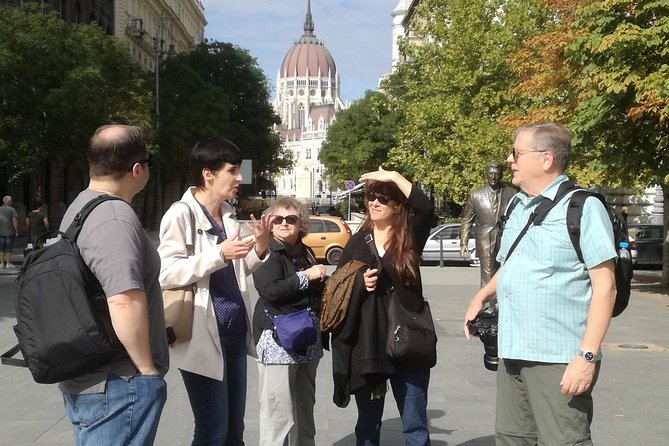
Budapest can be a lot, especially in the center where people, buses, and tour groups all collide. What I like about this tour is that it is built around attention, not crowd control. With a maximum of 8 travelers, the guide can shift the rhythm to the group and keep you from getting shoved along like baggage.
You also get the kind of structure that helps first-time visitors. Instead of wandering and hoping you stumble onto the right corners, you get a focused route through some of the most recognizable symbols of Pest. And because it is a 3-hour guided walk, you are not committing to a full day just to understand what you are seeing.
One more thing: the tour is offered in English, and you can pick one of two departure times. That matters because Budapest lighting and crowds shift fast, and your schedule should drive your choice, not the tour calendar.
Price and logistics: what you’re actually paying for
At $125.10 per person for about 3 hours, the price might look steep if you think you are only buying walking access. The value is that you are paying for a professional guide who keeps the story coherent and lets you move at the group’s comfort level.
The tour also includes a mobile ticket, which is usually the difference between a smooth start and a small stress moment. The meeting point is at Szamos Cafe Budapest, Kossuth Lajos tér 10, 1055 Hungary, which is convenient for central orientation and near public transportation.
Food and drinks are not included unless specifically noted, so budget your own coffee break. Also, each stop is listed as admission ticket free, but that does not mean you should expect everything to be open or identical in every season. Still, it suggests you are mostly paying for the guidance, not entry fees.
More of the city, bank to bank on foot:
- Budapest: Buda Castle Walk with Saint Stephen’s Hall
★ 4.5 · 3,012 reviews - Big Bus Budapest Hop-On Hop-Off Bus and Walking Tour
★ 3.5 · 2,206 reviews - Budapest: Buda Castle District Walking Tour
★ 4.6 · 2,108 reviews
Getting started at Szamos Cafe Budapest (and why the location helps)
Your tour begins at Szamos Cafe Budapest by Kossuth Lajos tér. For me, the advantage of starting here is that it anchors you in a part of the city that makes sense for the rest of the loop. You are not starting somewhere random and then trying to backtrack into the center.
Plan to arrive a little early so you can match faces to names and get your bearings. If you are the type who likes photos before you learn the meaning, arrive first and do that. Then let the guide set the tone once everyone is together.
Because the tour is near public transportation, you can usually adjust if your arrival timing is off. Just do it early enough that you are not sprinting at the meeting point.
Stop 1: Great and Central Synagogue (Nagy Zsinagóga) in 10 minutes
The tour starts at the Great / Central Synagogue (Nagy Zsinagóga), and it’s a strong choice. This is not a generic photo stop. It is a statement building, tied to the Jewish community’s strength in 19th-century Budapest.
You will have about 10 minutes here. That time is short, but it is meant to get you oriented: notice the ornate exterior, then listen for what the guide points out about its role in the city’s social and cultural life.
A practical tip: synagogues often have rules about behavior and dress, so keep it simple. In a short stop, you do not want to get bogged down with uncertainty. If you have a scarf or a layer you can easily put on, bring it along. It can save time if something is required at the moment you arrive.
Also, the itinerary lists this as admission ticket free. You should still treat it like a real cultural site, not a drive-by. The guide’s context is the whole point of the stop.
Stop 2: The Hungarian Parliament Building at Kossuth Square
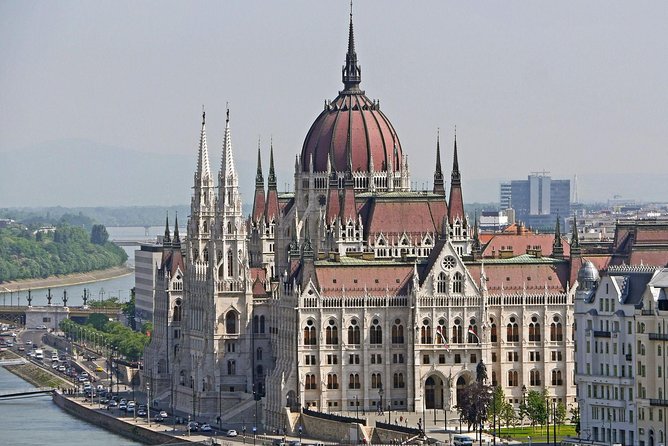
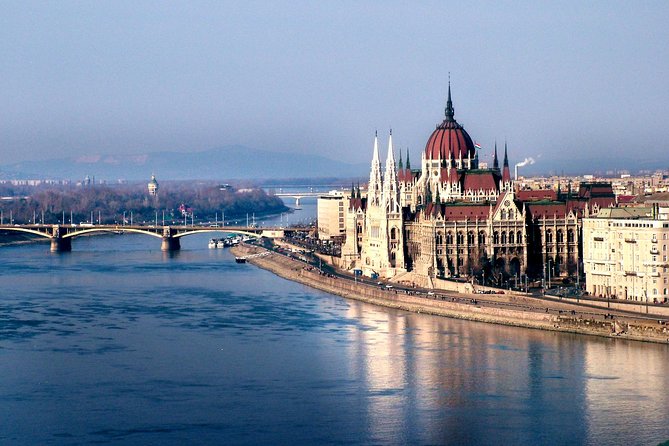
Next up is the Hungarian Parliament Building on Kossuth Square, with about 20 minutes for this stop. This building is one of Budapest’s most powerful 19th-century symbols, tied to the country’s rise after the period of transformation in that era.
What I like here is that the stop feels more like history with shape and scale. It is hard to understand a nation’s ambitions without seeing buildings that were built to project confidence. Parliament works because it is monumental in a literal way.
Drawback to consider: Parliament is an outdoor-and-approach experience on a walking tour. If you are hoping for a long interior visit, this will not replace that. It is a learn-what-you-need stop, designed to set context before you move on.
Like the synagogue, the itinerary marks admission ticket free. That suggests you will probably be able to view and access without paying at this specific point in the route, but again, keep expectations flexible based on local hours and rules.
Still to cross in Budapest
- Budapest: City Highlights Sightseeing Cruise★ 4.6 · 43,981 reviews
- Budapest: Unlimited Prosecco, Beer and Aperol Spritz Cruise★ 4.8 · 37,304 reviews
- Budapest: Széchenyi Spa Day Ticket with Optional Upgrades★ 4.3 · 23,911 reviews
The neoclassical church with the mummified right hand of King St Stephen
Between Parliament and Heroes’ Square, the tour includes a major stop: a revered neoclassical church built between 1851 and 1905 with seating for 8,500 people. It also houses one of Hungary’s most revered Catholic relics, the mummified right hand of King St Stephen.
This is one of those places where the building and the story overlap. In a short walking-tour timeframe, you will not have time to read every plaque, but the guide can connect why this relic matters and how it fits into Hungarian identity.
What makes this stop especially interesting is that it is not just an architectural photo moment. It’s a memory object. The mummified hand is the kind of detail that makes history feel physical, not abstract.
Practical consideration: this is a big church, so during busy periods you may find areas with crowds or slower movement. The tour keeps it to a set time window, so listen for what the guide recommends you focus on, then follow that order. It keeps the stop from turning into random walking inside.
Heroes’ Square: the Seven chieftains and national memory in 20 minutes
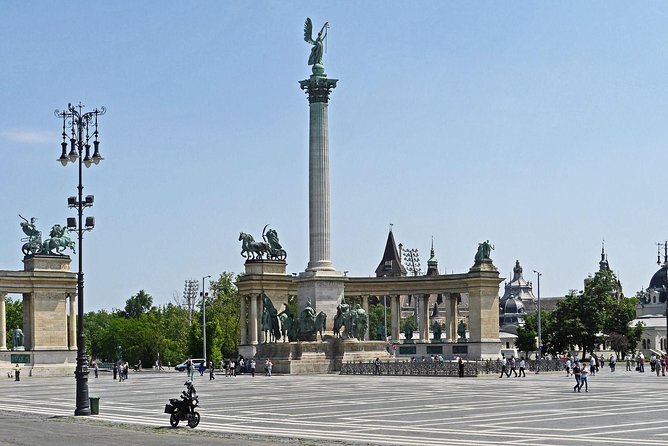
Then you head to Heroes’ Square, a place that practically demands a slow look. You get about 20 minutes, which is enough to register the overall design and then land on the specific leaders the monument represents.
The statue complex features the Seven chieftains of the Magyars, plus other national leaders. This is where the route shifts from earlier cultural roots to political storytelling. It’s the part of the walk where Hungary’s narrative becomes very visible, very intentional, and very symbolic.
If you like photos, Heroes’ Square usually gives you good wide-angle shots because the space opens up. The guide’s job is to help you see beyond the statues themselves, to understand why those figures are chosen and what message the monument tries to send.
Admission is listed as ticket free for this stop, so you are not being pushed into extra payments just to see the monument setting.
Andrássy Avenue: walking the 19th-century answer to Paris
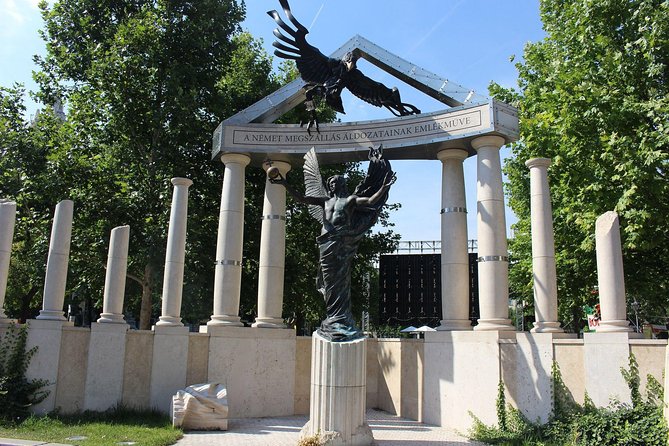
About 30 minutes are set aside for Andrássy Avenue, which the tour frames as Budapest’s answer to Paris’s Champs-Élysées in the 19th century. That is a useful comparison because it tells you the vibe the avenue was meant to project: sophistication, affluence, and urban confidence.
On a guided walk, this is where you start noticing patterns. You’ll likely pick up on how the avenue functions as a stage for the city, with buildings that signal status and a layout designed to move people in a grand way.
The value of having a guide here is that it prevents you from treating the avenue like just another long street. With context, you start seeing the “why” behind the “what.” Why this kind of avenue. Why that kind of city planning. Why people later associate Budapest with European capital energy.
Timing consideration: because you are walking an avenue rather than entering something, you will feel the pace of the group. If you prefer to stop and read every detail, mention that to your guide early. With a small group, it is more likely your interest can influence the rhythm without derailing the whole route.
The Ronald Reagan Statue: Cold War memory with a Hungarian angle
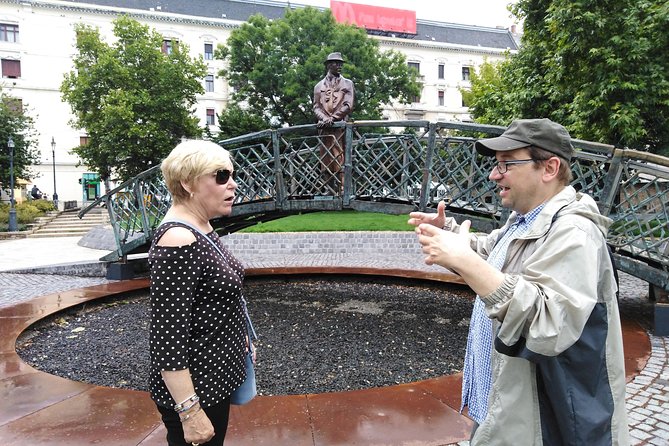
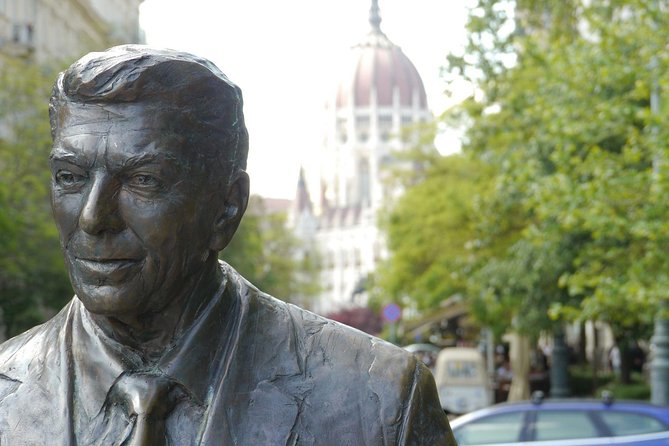
The final stop is a Ronald Reagan Statue, with about 10 minutes. The tour’s focus here is the Hungarian sense of obligation to the US president for efforts tied to bringing down the Iron Curtain, plus the creation of this memorial.
This stop is smart because it adds an international layer. Budapest’s landmarks often feel like they only belong to local stories. This one shows how global politics can leave a physical trace in a city, and it does so in a way that is easy to understand in a short time.
In 10 minutes, you cannot absorb everything, so focus on what the guide explains about why Reagan is honored here. That context will turn the statue from a random photo target into a meaningful end note.
As with other stops, it is listed as admission ticket free, so the experience is about listening and observing rather than paying for entry.
What you’ll really get from a private guide in a 3-hour window
The highlights promise undivided attention, and the best part is what that looks like in practice. A small-group tour still has limits, but when the guide can control pace, you get time to ask follow-up questions instead of asking once and moving on.
One review mentioned how impressed the guide Eszther Talaber was, with thorough city knowledge plus an extremely friendly and caring nature. Another noted that the guide was willing to take the group anywhere in the city they wanted to find out more about. That tells me this tour is not just scripted talking points. You can steer it slightly toward your interests as long as you stay within the overall time rhythm.
To make the most of it, go in with two or three questions:
- What era or theme do you want to understand first in Budapest, Jewish heritage, 19th-century nation-building, or Cold War politics?
- Are you more interested in architecture, everyday life, or big historical events?
- What would you like to do next after the tour, like where to eat or what view to catch?
If you like that style, you will probably feel satisfied even though the stops are brief.
Also, consider how you wear your day. In a tour like this, comfortable shoes matter more than fancy clothes. You will be standing and walking through open-air spaces, including broad squares and long streets.
Who this tour fits best (and who should rethink)
This works best if you want a strong orientation to Downtown Pest without getting lost. It’s ideal for:
- First-time visitors who want major landmarks with context
- People who like history but do not want museums to eat their whole day
- Travelers who prefer a small group and a guide they can ask questions of
- Anyone who wants a route that touches multiple themes, religious heritage, nation-building, and modern political memory
It might not be for you if:
- You hate walking or need lots of sitting time
- You require long interior visits at each stop
- You are the type who wants to linger 45 minutes per building and read every detail on your own
The upside is that this tour gives you a map of what to return to later. The downside is that it is not designed to replace deep individual sightseeing.
Should you book this Downtown Pest Walking Tour?
If you want a guided loop that connects Budapest’s center landmarks into a clear story, this one is a good bet. I think the value is strongest when you treat it as orientation plus context, not as a full sightseeing day.
Book it if you like small groups, you want English guiding, and you appreciate history tied to specific places like Nagy Zsinagóga, the Parliament at Kossuth Square, Heroes’ Square, Andrássy Avenue, and the Reagan memorial. The short stop times are a feature, not a bug, because they keep the pace moving while still hitting the big points.
Skip it or pair it with extra time if you know you want long interior stays. This tour will put you in the right zones and help you decide what deserves your next hour.
FAQ
How long is the Downtown Pest Walking Tour?
It runs for about 3 hours.
What language is the tour offered in?
The tour is offered in English.
How much does the tour cost?
The price is $125.10 per person.
Where does the tour meet?
The meeting point is Szamos Cafe Budapest, Kossuth Lajos tér 10, 1055 Hungary.
Is the tour limited in group size?
Yes. It has a maximum of 8 travelers.
Are food and drinks included?
No, food and drinks are not included unless specified.
What is the cancellation policy?
You can cancel for a full refund if you cancel at least 24 hours before the experience’s start time. If you cancel less than 24 hours before, the amount paid will not be refunded.
The newest crossings added in Budapest






Walking Tours, compared.
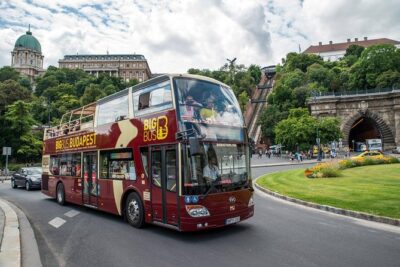
Big Bus Budapest Hop-On Hop-Off Bus and Walking Tour
Read our review →
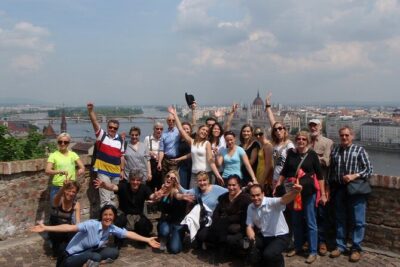
Budapest City Landmarks Walking Tour in 2 Hours
Read our review →
3-Hour Orientation Walking Tour of Buda and Pest
Read our review →

Budapest Historical Sightseeing – Free Walking Tour
Read our review →
Budapest All in One Small Group Walking Tour with Strudel Stop
Read our review →Browse the lists this tour appears in