
Reviewed · WALKING TOURS
Downtown Pest Walking Tour
Budapest gets political fast. A downtown Pest walk like this turns major landmarks into a clear story of how the new Hungary flexed power. I especially love the way Parliament and the grand civic squares connect to real historical change.
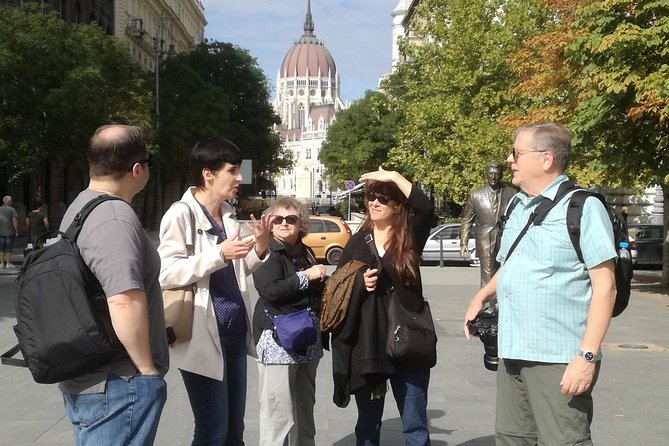
I also like the mix of beauty and memory. You’ll move from the stunning Holocaust Monument area to some of the city’s best-known Jewish and Art Nouveau landmarks, with a guide who keeps the tone respectful and focused. I had a lot of fun with the storytelling styles I’ve seen, including guides like András and Zsofia who were easy to talk to and didn’t rush you.
One possible drawback: you cover a lot of ground in 3 hours. If you want slow museum-style pacing or you hate walking, plan on comfortable shoes and expect the tour to be brisk even when it takes its time.
In This Review
- Key Things I’d Focus On
- Why Downtown Pest Tells Hungary’s 19th-Century Power Story
- Meeting at Szamos Cafe, Then Anchoring at Kossuth Square
- Inside Parliament’s Art, and Why 1896 Matters
- The Holocaust Monument by the Danube, and the Power of Place
- Freedom Square, the Stock Exchange Palace, and Budapest’s Money Moment
- Cardinal Mindszenty Statue, Faith Under Pressure, and Communism’s Long Shadow
- St. Stephen’s Basilica Area, Art Nouveau Around Every Corner
- Jewish Budapest Along the Route: Synagogue Grandeur and Civic Role
- Andrassy Boulevard: Walking an Esplanade Built for Nobility
- Heroes Square Finale: 1,000 Years of National Celebration in 1896
- Price and Value: Is $123 Worth It?
- Who Should Book This Tour (and Who Might Prefer Another Plan)
- FAQ
- How long is the Downtown Pest walking tour?
- Where does the tour meet?
- Where does the tour end?
- What language is the tour offered in?
- What is included in the price?
- Is the tour private or in small groups?
- Is there free cancellation?
- Can I reserve without paying right away?
- How much does the tour cost?
- Should You Book This Downtown Pest Walking Tour?
Key Things I’d Focus On
- Parliament as your starting map: You begin at Kossuth square and see why 1896 made it a national statement.
- Holocaust remembrance in the same city space: The memorial by the Danube adds weight to the route.
- Freedom Square and the Stock Exchange Palace: You get a feel for Budapest’s financial rise, not just postcard views.
- Art Nouveau streets around St. Stephen’s: The city’s decorative style becomes part of the lesson, not a side note.
- Andrassy Boulevard’s nobility design: The “avenue for power” idea makes more sense once you walk it.
- Heroes Square as a 1,000-year celebration: The finale ties architecture to national identity.
Why Downtown Pest Tells Hungary’s 19th-Century Power Story
Downtown Pest is where you can feel the Hungarian state growing into its big ambitions. In the second half of the 1800s, Pest became the political, financial, and religious center of the newborn Hungarian nation, and the streets show the result.
This tour is built around that idea: you’re not just sightseeing. You’re walking a timeline in stone and street design, so each stop explains why the building matters, not only how it looks.
Meeting at Szamos Cafe, Then Anchoring at Kossuth Square
You meet at Szamos Cafe on Kossuth Lajos tér 10, then the walk quickly orients you toward Kossuth square and the edge of the Parliament area. Even before you get into details, the location is smart because it sets your bearings for the rest of Pest.
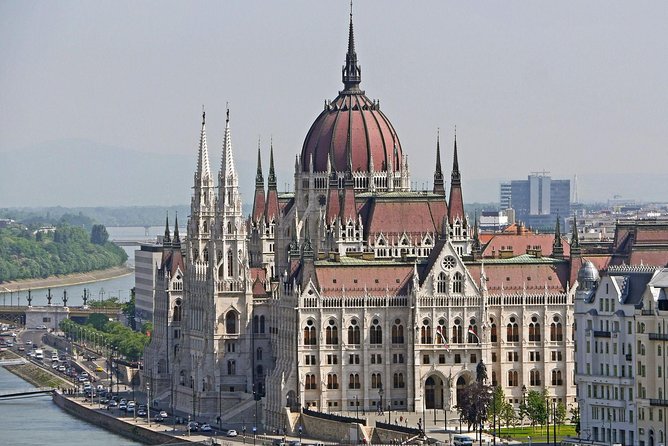
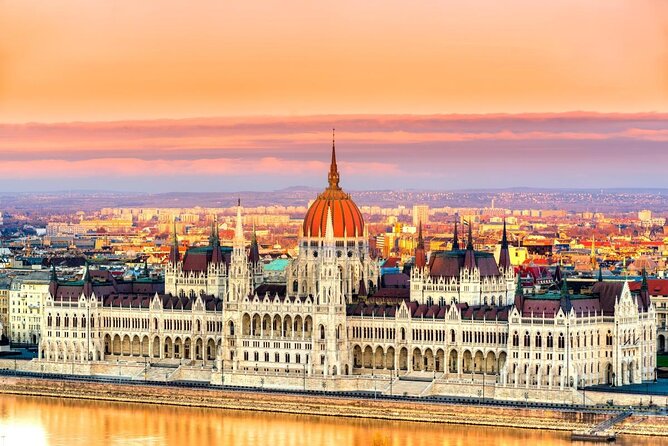
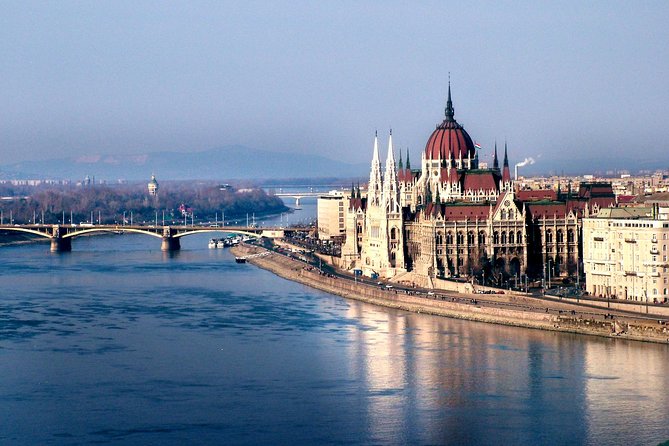
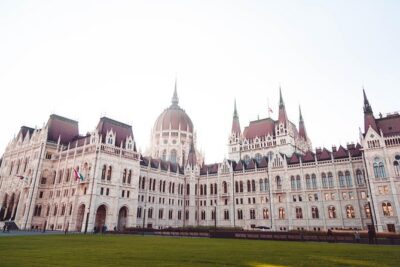
From there, you start with Hungary’s most dramatic civic statement: the Parliament building. At its inauguration in 1896, it was described as the largest and most costly structure ever built in Hungary. Your guide uses that fact to frame the “new nation” mindset, meaning the building was meant to project confidence to the world and to its own people.
More of the city, bank to bank on foot:
- Budapest: Buda Castle Walk with Saint Stephen’s Hall
★ 4.5 · 3,012 reviews - Big Bus Budapest Hop-On Hop-Off Bus and Walking Tour
★ 3.5 · 2,206 reviews - Budapest: Buda Castle District Walking Tour
★ 4.6 · 2,108 reviews
Inside Parliament’s Art, and Why 1896 Matters
From the outside, it’s massive, but the real point is what the building was trying to communicate. Inside, it houses works of art representing nearly every famous Hungarian painter and sculptor of the time, so the Parliament becomes a kind of national gallery.
What I like about how this tour handles Parliament is the balance. You get size and spectacle, but also a reason why the decoration was politically useful. The message is simple: Hungary wanted to look established, cultured, and self-defined, all at once.
Practical tip: if you’re sensitive to cold, this is one of the stops where you’ll want to be ready for open-air waiting around the square. Bring a light layer even in mild weather, since the Danube area can feel breezy.
The Holocaust Monument by the Danube, and the Power of Place
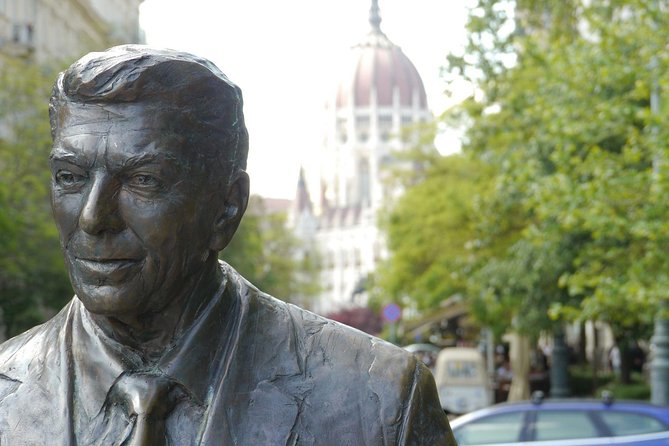
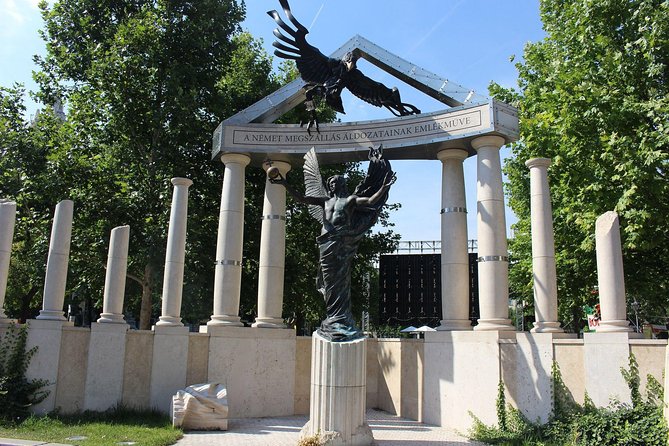
Right behind Parliament, you reach the Holocaust Monument on the banks of the Danube River. The tour doesn’t treat it like a checkbox. It frames the location as a tragic reality, tied to thousands of Jewish citizens of Budapest who were killed on that same spot in the last months of World War II.
This is where the walking route becomes more than architecture. By placing the memorial next to the political center, the guide helps you understand how a city can hold both civic pride and devastating loss in the same physical space.
If you want to get the most out of this stop, take your time at the monument area even if the group moves onward quickly. You’re allowed to slow down. In this case, pausing helps the history land.
Freedom Square, the Stock Exchange Palace, and Budapest’s Money Moment
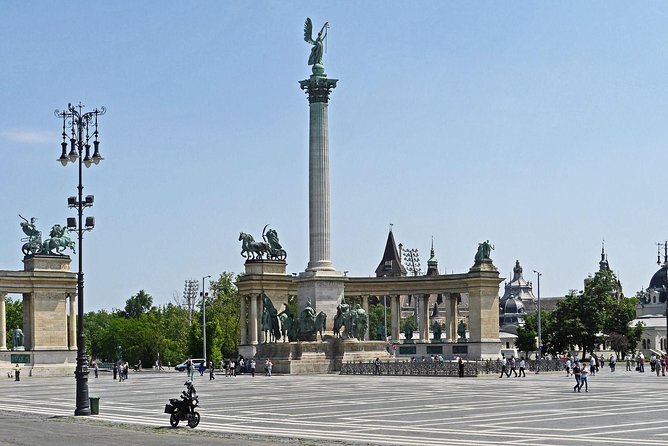
Next up is Freedom Square, a former financial center and widely considered one of Budapest’s most beautiful squares. This stop matters because it shifts the lesson from government to money, and both are part of why Pest rose so fast.
The centerpiece is the massive Stock Exchange Palace. Your guide connects its grandeur to the idea that Budapest’s financial growth wasn’t shy or temporary. It was confident, meant to look permanent, and it helped shape the city’s identity as a real economic hub.
A tip for getting your bearings here: treat the square like a stage. Look at how the buildings line up, and then listen for the explanation about banks and civic life. That visual pattern makes the financial theme easier to remember later.
Still to cross in Budapest
- Budapest: City Highlights Sightseeing Cruise★ 4.6 · 43,981 reviews
- Budapest: Unlimited Prosecco, Beer and Aperol Spritz Cruise★ 4.8 · 37,304 reviews
- Budapest: Széchenyi Spa Day Ticket with Optional Upgrades★ 4.3 · 23,911 reviews
Cardinal Mindszenty Statue, Faith Under Pressure, and Communism’s Long Shadow
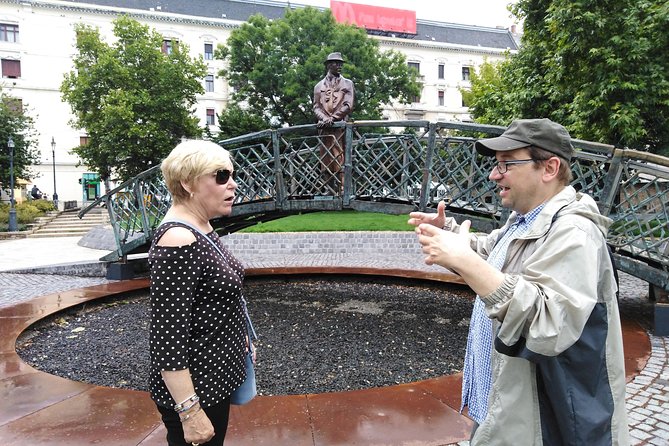
From Freedom Square, the route includes a stop to see the statue of Cardinal Mindszenty. He was the head of the Catholic church in Hungary, and the story highlighted on this tour is that he lived hidden for 15 years in the U.S. embassy while on the run from the communists.
That detail does something useful for your understanding. It turns a statue into a political-pressure story, showing how religion and politics collided in Hungary’s mid-20th-century struggle. Even if you don’t know every historical name, the tour gives you the key emotional fact: hiding for 15 years is not symbolic. It’s survival.
If you enjoy history that includes personal risk, this is a strong point. If you prefer strictly 1800s topics, it’s still worth it because it shows how later regimes changed the meaning of earlier monuments.
St. Stephen’s Basilica Area, Art Nouveau Around Every Corner
As the tour moves on toward St. Stephen’s Basilica, you pass several Art Nouveau buildings for which Budapest is famous. This is one of those moments where a guide adds value by pointing out what you might otherwise ignore.
Art Nouveau here is not just decorative. It reflects a period when the city was investing in style, identity, and modernity. When the tour ties it to the broader growth of Pest, the streets start to feel purposeful instead of random.
St. Stephen’s Basilica is your next major landmark. You get context that helps you understand why it belongs in the same route as the other civic power sites. Religious architecture, especially at big urban scale, often signals national values, not just local worship.
Jewish Budapest Along the Route: Synagogue Grandeur and Civic Role
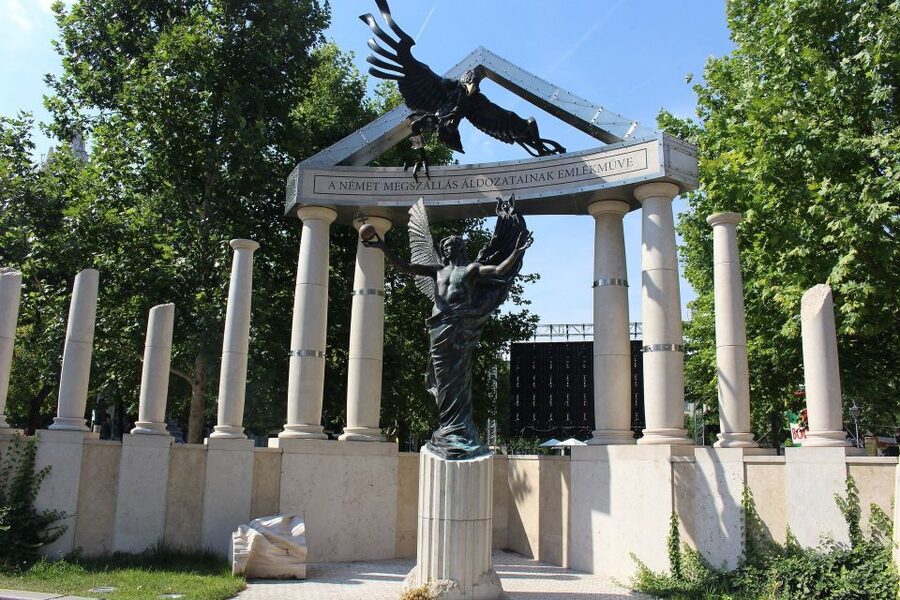
A bit farther along, you come to the second-largest synagogue in the world. The tour explains it as a monument to the vital role the city’s Jewish population and its wealthy bourgeois played in developing Budapest.
I like this approach because it resists a common trap. It doesn’t treat Jewish history as a separate, isolated chapter. It frames it as part of what built the city’s progress, wealth, and social influence.
Important context note: because the route also includes the Holocaust Monument, the story carries a heavier arc. The contrast is intentional, and it makes the overall tour more honest.
If you want to connect dots, keep a mental checklist as you walk: civic power at Parliament and Freedom Square, faith expressed publicly through major institutions, then Jewish community influence shown through major landmarks, followed by the memorial reminder of what was destroyed.
Andrassy Boulevard: Walking an Esplanade Built for Nobility
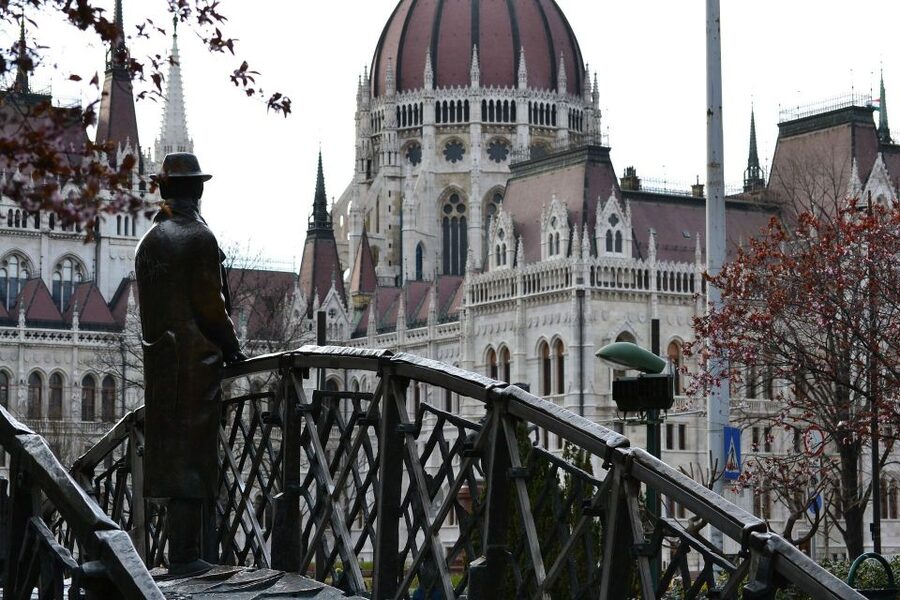
Later you travel along and under Andrassy Boulevard, described as an esplanade designed for the country’s nobility. This detail is the key to why the boulevard stop feels more than scenic.
When an avenue is designed for nobility, it shapes how people use space, where they walk, how visibility works, and how power expresses itself in daily life. Once you hear that framing, you’ll likely see the street in a different way.
The tour includes a short stop at the Opera House. It’s not presented as a standalone opera history lesson, but as part of the same “power meets culture” theme that runs throughout the route.
If you’re into photography, this is a good stretch for photos, but don’t let the camera take over. The best part is the guide’s explanation, which turns the street design into meaning.
Heroes Square Finale: 1,000 Years of National Celebration in 1896
The tour ends at Heroes Square, where in 1896 Hungarians celebrated the 1,000-year anniversary of the founding of their kingdom. This is a satisfying finish because it loops back to the Parliament starting point and reinforces the “nation showing itself” idea.
Heroes Square works as a summary in physical form. You see how large-scale monuments communicate identity at a citywide scale, and you understand why the late 1800s were so intent on self-definition.
If you have time after the tour, this is one place I’d linger. Even without going into extra sites, you can feel the intention behind the architecture.
Price and Value: Is $123 Worth It?
At $123 per person for a 3-hour guided walk with a historian guide, you’re paying for more than transit between sights. You’re paying for interpretation, and that’s what makes this route work.
Here’s the value math that matters: in one session, you cover major anchors like Parliament, Holocaust Monument, Freedom Square, the Stock Exchange Palace, St. Stephen’s Basilica, Andrassy Boulevard, and Heroes Square. That’s a lot of big-name Budapest in a short time, and the guide’s job is to make the connections between them.
If you already love self-guided city wandering, you can still do much on your own. But if you want the city explained with context, particularly around complicated topics like the Holocaust memorial, the historian format becomes more worth it.
Who Should Book This Tour (and Who Might Prefer Another Plan)
This tour is a great match if you:
- Like your history tied to real streets and buildings
- Want a focused downtown Pest route instead of scattered highlights
- Prefer a guide who tells stories with structure, not random facts
You might choose a different style if you:
- Want deep museum time and long indoor stops
- Don’t enjoy walking for 3 hours
- Are looking for strictly one era, since the route touches multiple historical periods
FAQ
How long is the Downtown Pest walking tour?
It lasts 3 hours.
Where does the tour meet?
The meeting point is Szamos Cafe, Budapest Kossuth Lajos tér 10.
Where does the tour end?
The tour ends at Heroes Square.
What language is the tour offered in?
It is offered in English.
What is included in the price?
You get a 3-hour guided walk through downtown Pest with a historian guide.
Is the tour private or in small groups?
Private or small groups are available.
Is there free cancellation?
Yes, free cancellation is available up to 24 hours in advance for a full refund.
Can I reserve without paying right away?
Yes, there is a reserve now & pay later option.
How much does the tour cost?
The price is listed as $123 per person.
Should You Book This Downtown Pest Walking Tour?
Yes, if you want Budapest’s downtown story told in a single clean route. The strongest reason to book is the combination of big civic landmarks and meaningful context, especially the shift from Parliament and financial grandeur to the Holocaust Monument and the Jewish landmarks along the way.
I’d book it when you have enough energy for a 3-hour walk and when you like learning through the built environment. If that sounds like your travel style, this is a very solid value way to understand how Pest became Hungary’s center.
The newest crossings added in Budapest




Walking Tours, compared.
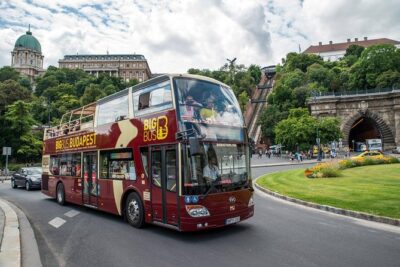
Big Bus Budapest Hop-On Hop-Off Bus and Walking Tour
Read our review →
Budapest City Landmarks Walking Tour in 2 Hours
Read our review →
3-Hour Orientation Walking Tour of Buda and Pest
Read our review →
Budapest Historical Sightseeing – Free Walking Tour
Read our review →
Budapest All in One Small Group Walking Tour with Strudel Stop
Read our review →Browse the lists this tour appears in