
Reviewed · WALKING TOURS
Discover Keszthely: Charming Private Walking Tour
Keszthely has a slow charm that begs for walking. This 2-hour private tour strings together the town’s key landmarks on Lake Balaton, with a local guide bringing in the stories that make the buildings feel personal, not just impressive.
I especially like the up-close context you get at Festetics Palace and the way the walk makes the town’s relationship to Lake Balaton feel obvious. My one watch-out: the two biggest stops (Festetics Palace and Balaton Museum) need extra admission fees, so it is worth budgeting ahead.
In This Review
- Key highlights at a glance
- Keszthely, Lake Balaton, and why this walk works
- Price and what you really get for $329.01
- Festetics Palace: more than a pretty face
- Our Lady of Hungary Church: the Gothic Church’s smart structure
- Balaton Museum: the official story of the lake as the Hungarian Sea
- Municipal Beach and the harbor area: where the town breathes
- How long the route really takes, and how to pace your day
- What kind of visitor this suits best
- Potential drawbacks to consider before you book
- Should you book Discover Keszthely?
- FAQ
- How long is the Discover Keszthely private walking tour?
- What is included in the tour price?
- What is not included?
- Is the tour in English?
- Is this tour private or group-based?
- Where do you start and end?
- Do I need to buy tickets for every stop?
- Can I cancel for a full refund?
Key highlights at a glance
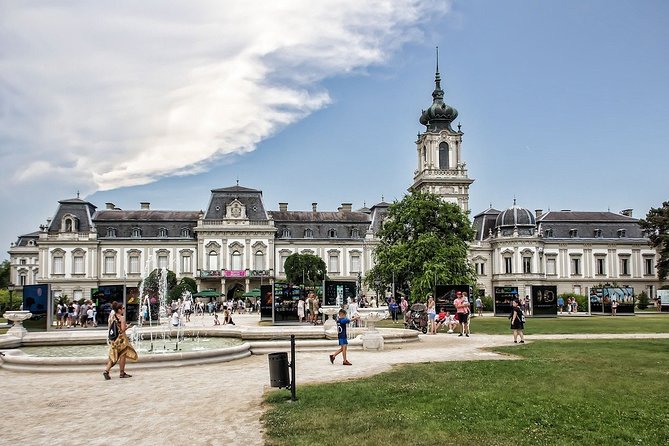
- Festetics Palace in real detail, from the 1745 start to the later work by Viktor Rumpelmayer and others
- Keszthely’s oldest structure, the 1390 Gothic Our Lady of Hungary Church, with its smart, layered layout
- The Balaton Museum’s specific focus on the region’s natural and cultural story as the Hungarian Sea
- Municipal Beach by the harbor, where the town feels most like a real summer place
- Private, English-language pacing with a local professional guide for your group
Keszthely, Lake Balaton, and why this walk works

If you are trying to understand Keszthely, this tour is built for that job. You get the main power players of the town in a compact route: a grand Baroque palace, a medieval church that still anchors the old center, an official regional museum, then the harbor area where daily life pops back into view.
What I like about this format is that you are not stuck bouncing between far-flung spots. The tour is designed as a steady walk with short stops, so you can actually look at what you are seeing, not just pass it and move on.
Also, it is private, so you do not get a forced herd pace. Your guide can slow down for the parts you care about, whether that is architecture, local history, or simply figuring out where you want to wander next on your own.
Price and what you really get for $329.01
This experience is priced at $329.01 per person for about 2 hours. That price may sound steep until you break it down: you are paying for a local professional guide and a private group experience, and you are not paying separate guide fees on top of it.
Two admission tickets are not included: Festetics Palace and Balaton Museum. If you plan to tour those interiors, you should treat this as a “guide-included” walking itinerary, not a museum pass. In practice, the value hinges on whether you will actually go inside and how much time you like spending reading labels and listening to a good explanation.
One more detail that helps: you get a mobile ticket, which makes day-of entry smoother. You also start and end back at Festetics Palace, which is convenient if you are using public transportation or you want an easy anchor point for before and after your walk.
More of the city, bank to bank on foot:
- Budapest: Buda Castle Walk with Saint Stephen’s Hall
★ 4.5 · 3,012 reviews
Festetics Palace: more than a pretty face
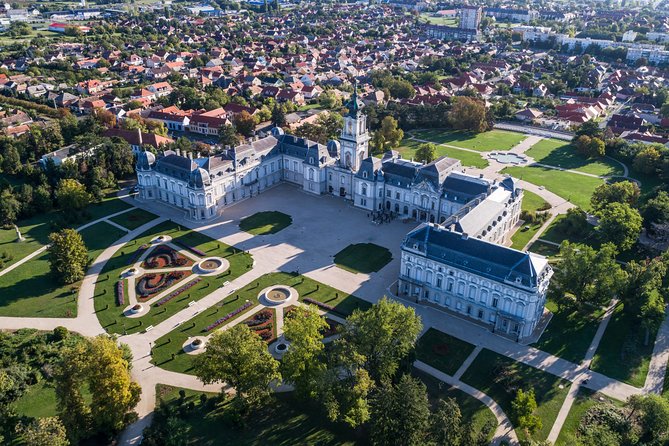
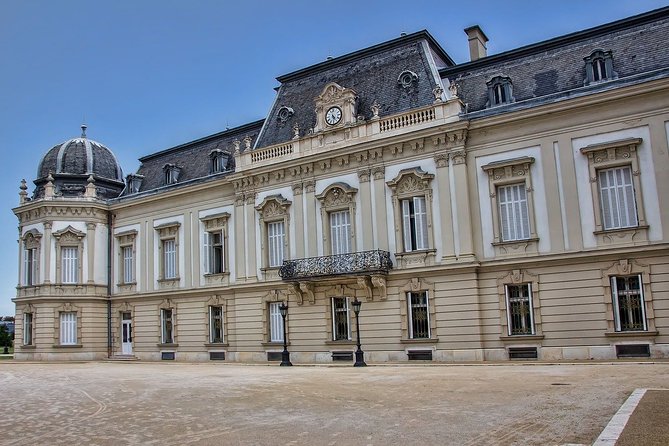
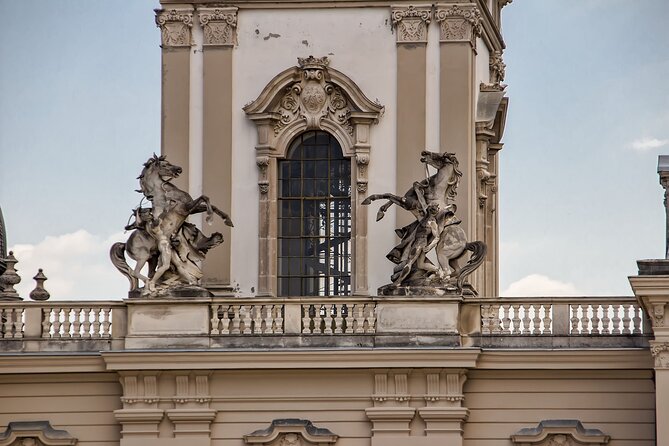
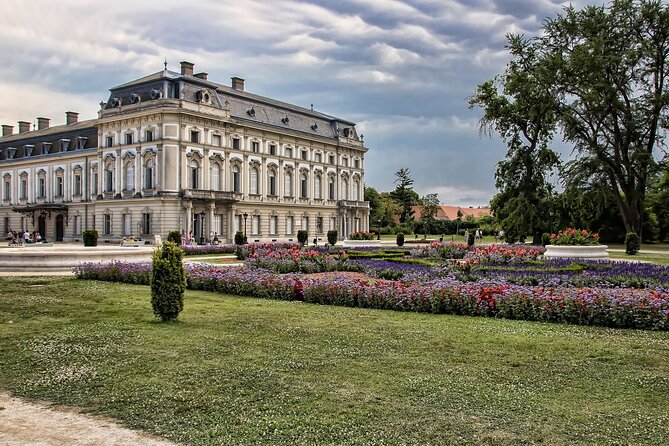
Your first stop is Festetics Palace, a Baroque palace whose construction began in 1745 and stretched more than a century. The story here is not just “a palace exists,” it is how the building changed over time, through multiple phases and different architects.
Here are the timeline beats your guide will point out:
- The palace began on foundations of a destroyed castle.
- In two consecutive building projects, the palace was tripled in size.
- The most recent major work came in the 1880s, with Vienna-based architect Viktor Rumpelmayer.
- After Rumpelmayer died in 1885, construction was completed by Gusztáv Haas and Miksa Paschkisch.
Why that matters for you: Baroque buildings can look similar from a distance, but phases of construction often show up in layout, proportions, and how rooms were later adapted. When you hear the building timeline, the palace becomes easier to read and remember.
Also, the palace today houses the Helikon Palace Museum. Even if you are just starting your day, knowing that the museum is inside helps you decide what to prioritize during your visit. If you love noble-family power displays, this is the stop to linger at.
A practical drawback: since admission fees are not included, you may want to decide before you start how deeply you want to go inside. If you only care about exterior photos and a quick orientation, you might feel like you could have spent that money elsewhere.
Our Lady of Hungary Church: the Gothic Church’s smart structure

Next up is the Our Lady of Hungary Church, often called the Gothic Church. It was built in 1390 and is the city’s oldest structure, so it functions like an anchor point for the whole town center.
What I find useful here is the church’s layout description, because it tells you where to look as you walk around:
- It is oriented toward the equinoctial east, and it is divided into three sections.
- The Neo-gothic 19th-century tower and porch sit at the front.
- Inside, you have the nave.
- The sanctuary is enclosed by three sides of an octagon.
Then there are the connected spaces that make the building feel like a living complex, not a single isolated church. The monastery, cloisters, and sacristy connect from the north, while the St. Anne Chapel connects from the south.
Why this stop is worth your attention: even if you are not an architecture nerd, the church’s layered design is a quick way to understand Keszthely over the centuries. You can see medieval bones, later additions, and how the religious complex expanded over time.
Time-wise, it is a shorter stop on this route. That is fine. Use the couple of tens of minutes to get your bearings and spot the elements the guide highlights. If you later want a deeper look, you will know exactly what you want to revisit.
Balaton Museum: the official story of the lake as the Hungarian Sea
After the church, you head to Balaton Museum, the earliest and currently only official museum of Lake Balaton. The museum focuses on the region’s most important natural and cultural qualities, and it frames the area as the Hungarian Sea, not just a big local lake.
This stop becomes more interesting because it gives you a “why” behind the scenery. If you have ever wondered why people romanticize Lake Balaton so hard, a museum like this explains the natural side and the human side together.
Some of the specific details your guide can help you connect:
- There is an archaeological collection tied to rpád Csák, previously shown in the old Economy Learning Center building.
- The natural science department was established, and the library expanded.
- János Sági built groundwork for the ethnography department.
- The idea for a museum in the Balaton region rose in the late 19th century, and the Balaton Museum Union was created in June 1897.
Why that matters for you during the walk: it turns the town into more than landmarks. You start to see Keszthely as part of a longer regional story, with trade, community life, and the lake shaping everything around it.
A drawback to plan for: admission fees are not included. If you do not want to enter, you can still get context from the guide outside, but the point of the stop is the museum itself. If museums are not your thing, you may want to weigh whether you would rather spend that money or time on the waterfront.
Municipal Beach and the harbor area: where the town breathes

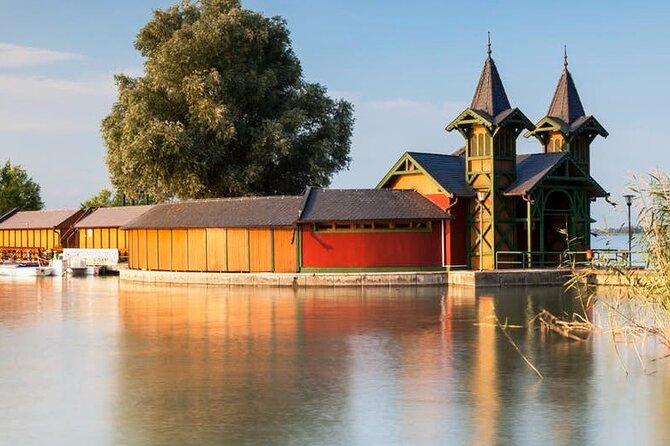
The final stop is Municipal Beach, also known as Szigetfürd és Városi Strand. It sits immediately close to the harbor, and it functions as the main beach and the social center of the Keszthely district.
The description matters because it tells you what kind of place it is. This is not a remote viewpoint. It is right where the town pauses for refreshments, where souvenir pavilions run up to the beach area, and where you can feel the day’s rhythm.
One detail I love here is the mention of the “island bath,” described as freshly rebuilt and the only one left on Lake Balaton. If you are visiting during warm weather, this is also where you can realistically build in a dip, since summer swim time is part of the area’s appeal.
If you are traveling in a season when swimming is less likely, you can still use this stop well. Think of it as your decompression point, plus a practical way to orient yourself for the rest of your day along the harbor.
If your main goal is interiors and architecture, you might find this stop lighter on “history facts.” But it has a real travel purpose: it grounds everything you just learned in the actual living landscape of Keszthely.
How long the route really takes, and how to pace your day
The tour moves in a tidy loop with stop times around 22 to 23 minutes each, starting at Festetics Palace and ending back there. With only four stops, you should expect a comfortable pace, not a long endurance walk.
That matters because Keszthely is easy to enjoy slowly. If you want to keep the rest of your day flexible, this tour gives you a strong base and then hands you back time. You can continue with your own wandering afterward, whether that means returning to museums, strolling the harbor, or finding a meal nearby.
The route is designed so most people can participate, and it is near public transportation. If you are trying to build a morning or early afternoon plan without over-committing, this fits well. And because it is private, it is easier to adjust to your walking speed than with a large group.
What kind of visitor this suits best
This tour is a great match if you want a guided orientation that still leaves room to explore on your own. I think it is especially good for:
- First-time visitors who want to understand the town quickly, not just photograph it
- People who like architecture when it comes with clear explanations of what changed and why
- Museum fans who are open to paying extra admission to go inside key sites
- Anyone who wants Lake Balaton context paired with old-town stops, in a single easy loop
It is also a nice choice for couples or small groups because it stays focused and does not sprawl across the region. If you are traveling with mixed interests, the mix of palace, church, museum, and beach helps.
Potential drawbacks to consider before you book
Here is the honest list of things that could affect your experience:
- You pay extra for Festetics Palace and Balaton Museum entry, so your final spend will be more than the base price.
- The route is short, so you do not get a long deep dive at each stop. You will get guidance and highlights, and then you decide whether to extend your time inside.
- If you expect the palace experience to be the only big payoff, the later stops may feel more “orientation” than “full museum day.” That is not bad, just a mismatch if you planned for hours at one site.
One review note that helps frame expectations: some people love the palace and park, but not everyone is equally excited about the rest of what the grounds offer. If you are the type who wants a strong interior-focused day, you may want to confirm your plan for those admissions on arrival.
Should you book Discover Keszthely?
I would book this if you want the efficient, friendly version of Keszthely. You get a local professional guide, a private pace, and a route that covers the town’s key layers: noble-era architecture, medieval religious history, the official lake story, and then the harbor beach where the town feels real.
You might skip or adjust if you hate paying for multiple admissions, or if you prefer long self-paced time inside museums instead of a guided loop. In that case, you could still enjoy Keszthely on your own, but you would lose the quick clarity a good guide brings, especially at the palace and church.
Bottom line: for a first pass at Keszthely, this is a solid value because the tour does the hard part for you, connecting buildings and places into one coherent sense of the town.
FAQ
How long is the Discover Keszthely private walking tour?
It lasts about 2 hours.
What is included in the tour price?
It includes a local professional guide.
What is not included?
Festetics Palace admission fees and Balaton Museum admission fees are not included.
Is the tour in English?
Yes, it is offered in English.
Is this tour private or group-based?
This is a private tour or activity, so only your group participates.
Where do you start and end?
You start at Festetics Palace, Kastély u. 1, 8360 Hungary, and the tour ends back at the meeting point.
Do I need to buy tickets for every stop?
Not for every stop. Our Lady of Hungary Church and Municipal Beach are described as free, while Festetics Palace and Balaton Museum have admission fees that are not included.
Can I cancel for a full refund?
Yes, you can cancel up to 24 hours in advance for a full refund. If you cancel less than 24 hours before the start time, it is not refunded.
The newest crossings added in Lake Balaton
Walking Tours, compared.
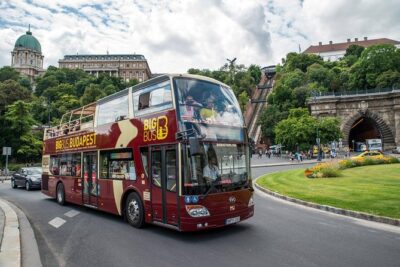
Big Bus Budapest Hop-On Hop-Off Bus and Walking Tour
Read our review →
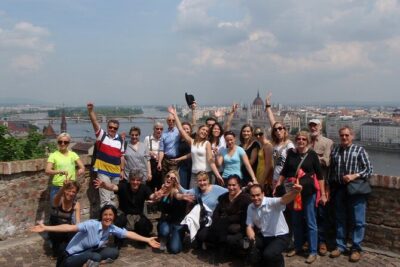
Budapest City Landmarks Walking Tour in 2 Hours
Read our review →
3-Hour Orientation Walking Tour of Buda and Pest
Read our review →
Budapest Historical Sightseeing – Free Walking Tour
Read our review →
Budapest All in One Small Group Walking Tour with Strudel Stop
Read our review →Browse the lists this tour appears in