
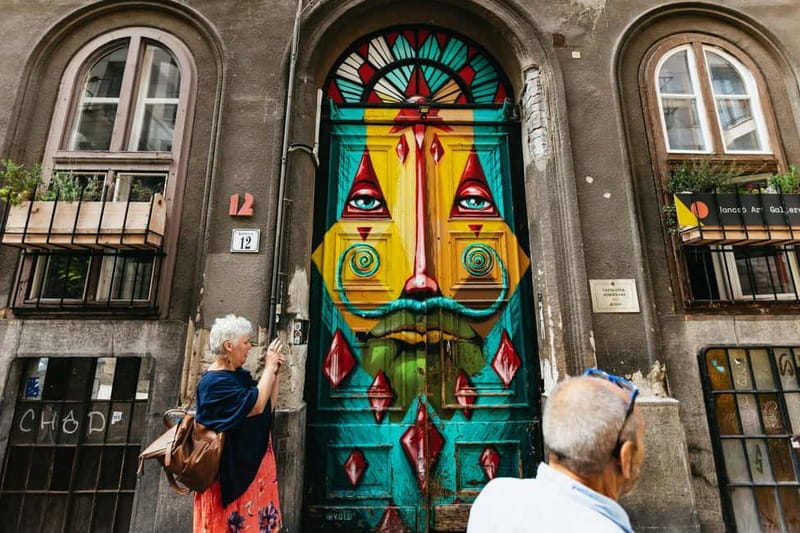
Reviewed · WALKING TOURS
Budapest: Street Art and Underground Movements Walking Tour
Budapest has graffiti you’ll actually understand. I love spotting sticker and paste-up details and I love the political stories the guide connects to the walls. You start in a sticker-covered bar, then your eyes stay open for the rest of the walk.
One possible drawback: if you only want big, polished murals, this can feel more like a smart scavenger hunt than a classic sightseeing route. It’s also a short, 2-hour format, so you’ll trade time sitting and staring for time walking and noticing.
You’ll be in a small group (up to 8), the guide speaks English, and the tour is designed to be interactive, including time for questions. If you’re the type who enjoys asking why people make art in the first place, you’re in the right place.
In This Review
- Key things to know before you go
- Telep-Art Galéria: starting your street-level map of Budapest
- How a 2-hour street-art hunt actually feels (and why it works)
- What you see along the way, from stickers to underground art
- Jewish Quarter and Erzsébetváros: why these neighborhoods matter
- The underground culture angle: politics and social messages in plain sight
- Meeting your guide: ET and Suzie’s street-art perspective
- Route highlights without the boring checklist
- Price and value: why $28 makes sense for this format
- What to wear, when to go, and how to get the most out of it
- Who this tour suits best (and who might not love it)
- After the tour: keeping the art alive in your own walk
- Should you book Budapest Street Art and Underground Movements?
- FAQ
- How long is the Budapest street art and underground movements walking tour?
- Where do you meet for the tour?
- Where does the tour finish?
- What is included in the ticket price?
- Are food and drinks included?
- Is the tour available in English?
- How many people are in the group?
- Is the tour wheelchair accessible?
- Can I book this tour as a private experience, and do I have pay later options?
Key things to know before you go
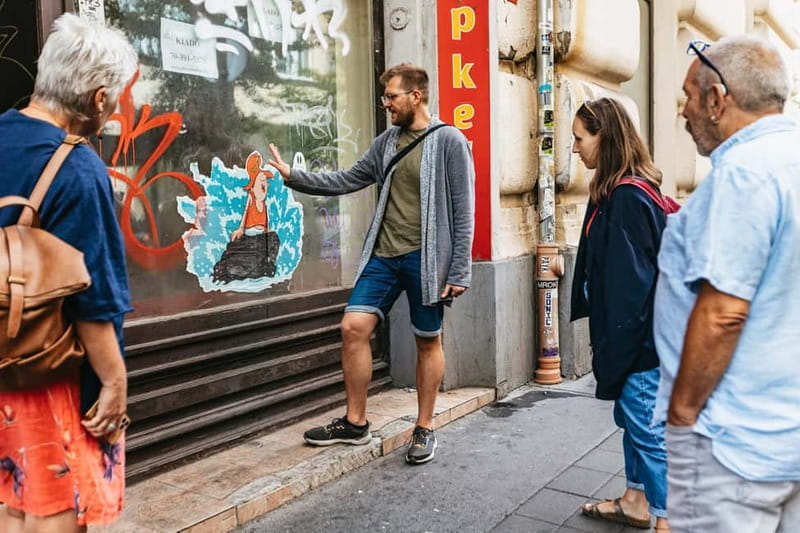
- Telep-Art Galéria sets the tone: a bar meeting point with lots of stickers on the walls.
- You learn to see street art beyond murals: stickers, lettering, and paste-ups count.
- The guide links art to real messages: political and social themes show up in the artwork.
- Small group means real conversation with time to ask questions.
- You’ll likely cover Pest areas like the Jewish Quarter and Erzsébetváros, not just the postcard spots.
- You may get extra culture moments during the walk, depending on the day and guide.
Telep-Art Galéria: starting your street-level map of Budapest
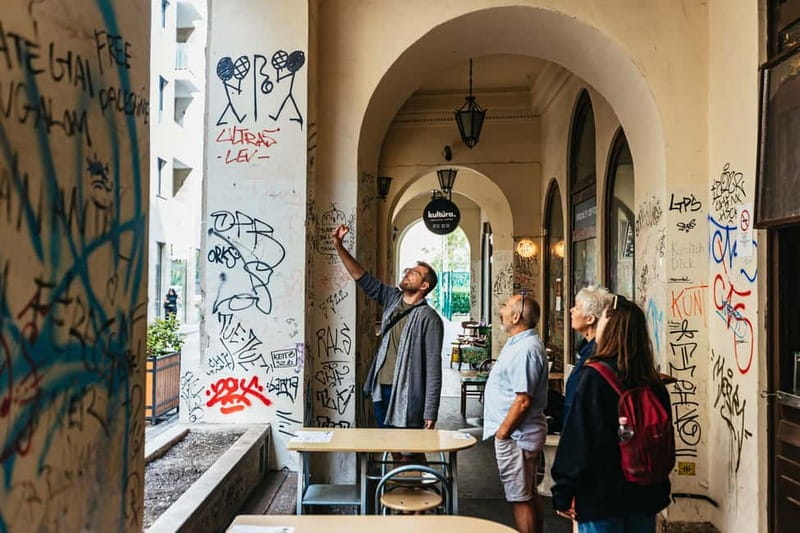
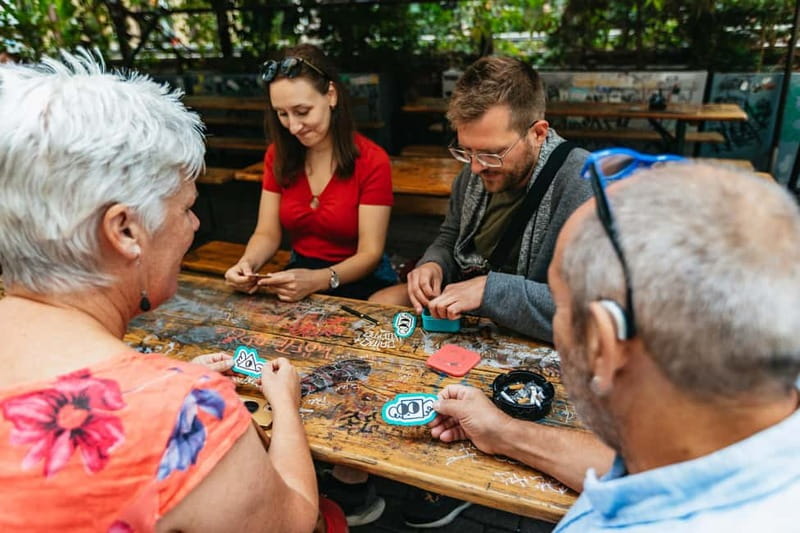
The tour kicks off at Telep-Art Galéria, a cool bar-style meeting spot where stickers are basically the language of the room. That matters more than it sounds. You begin by training your brain to look for small marks and repeated symbols, not just large wall paintings.
From there, you step out into the city with a new goal: match what you see on the street with the stories behind it. Street art is often treated like background noise, but this experience teaches you to read it like a message board, sometimes funny, sometimes uncomfortable, always intentional.
And yes, the tone is casual. People in the group often end up talking with each other because the walk is interactive, and the guide keeps checking in for questions.
How a 2-hour street-art hunt actually feels (and why it works)
This is a walk built around motion and attention. You’re out for 2 hours, not half a day, so you don’t get the slow, sit-down lecture vibe. Instead, you move from one piece to another and learn what to notice in each one.
What I like about this format is that it changes your scanning habits fast. After the first few stops, you start spotting:
- sticker clusters you would normally ignore
- lettering styles you can actually identify later
- paste-up textures, layers, and placement choices
- references and symbols that connect to the local underground scene
The guide also keeps the meaning grounded. Street art isn’t just about aesthetics. It’s about who gets heard, what gets criticized, and what people want to say when mainstream channels feel closed.
A short caution: because it’s 2 hours, it’s not the place to take your time. If you want slow photo walks with long breaks, you might feel a bit rushed. But if you want better sight lines and faster understanding, this timing is a feature.
More of the city, bank to bank on foot:
- Budapest: Buda Castle Walk with Saint Stephen’s Hall
★ 4.5 · 3,012 reviews - Big Bus Budapest Hop-On Hop-Off Bus and Walking Tour
★ 3.5 · 2,206 reviews - Budapest: Buda Castle District Walking Tour
★ 4.6 · 2,108 reviews
What you see along the way, from stickers to underground art
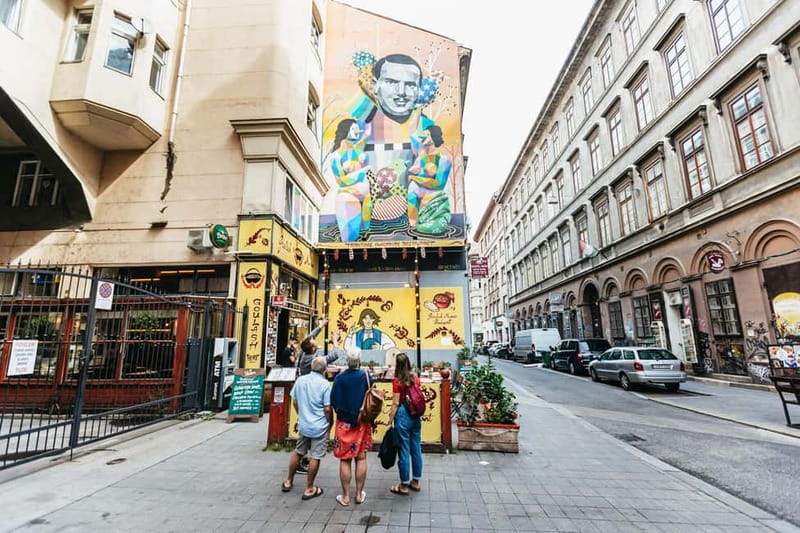
Street art here is treated as a whole system, not one style. You’re likely to encounter more than murals, and that’s one of the big draws of the tour.
You should expect variety in what you’re looking at:
- stickers and small graphic interventions
- paste-ups (paper layers and quick-install pieces)
- larger wall works, when they fit the story
Some pieces come with techniques. You’ll hear how artists build their visual language, how they place work so it reads from a real walking viewpoint, and why certain styles repeat in the underground scene.
Then comes the human part. You learn that street art is communication. The guide ties the artwork to political and social messages, including themes people argue about in everyday life. That’s where the tour becomes more than art spotting. It’s city reading.
Jewish Quarter and Erzsébetváros: why these neighborhoods matter
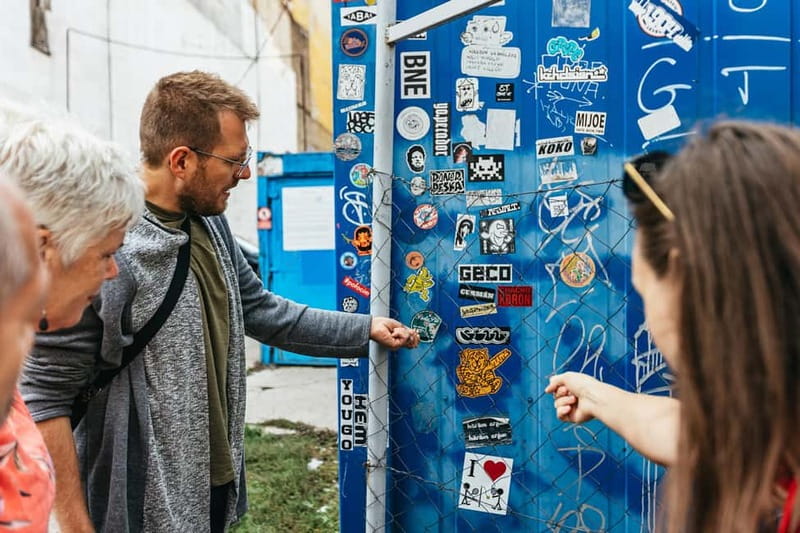
Budapest’s street art doesn’t land evenly across the city. This tour focuses on areas where the underground culture feels more present, including parts of Pest like the Jewish Quarter and nearby Erzsébetváros.
That choice is practical. If you only see the center’s most obvious sights, street art can feel random. But when you’re guided through neighborhoods with a strong identity and active youth culture, the artwork starts making sense in context.
You’ll also likely notice how the messages shift by street and community. The same wall can tell two different stories depending on where you stand and what you’re looking for. That’s why the guide’s direction matters. It’s not just where you go, it’s what you’re taught to connect.
A small note if you’re doing this early in your trip: it can really change how you walk the rest of Budapest. You start using street art as a navigation tool, almost like a second layer of the city map.
The underground culture angle: politics and social messages in plain sight
The title mentions underground movements, and the tour leans into the why behind the visuals. Street art can be protest, identity work, satire, or social commentary. Sometimes it’s bold. Sometimes it’s subtle, like a symbol tucked into a corner.
What you gain is a toolkit for interpretation:
- how artists criticize power without using official channels
- how communities use public walls to respond to current events
- how underground scenes build belonging through visual codes
This is also where the tour feels thought-provoking. The guide doesn’t just point at a piece and say it’s cool. You’ll hear stories about technique and meaning, and those stories make you look at the next wall more actively.
One more practical benefit: when you understand the references, the city stops feeling like a set of photos. It starts feeling like an ongoing conversation.
Still to cross in Budapest
- Alternative Street Art Free Walking Tour of Budapest★ 4.5 · 53 reviews
- Street Art and Alternative Tour in Budapest★ 5.0 · 52 reviews
- Street Art Tour Budapest★ 5.0 · 40 reviews
Meeting your guide: ET and Suzie’s street-art perspective
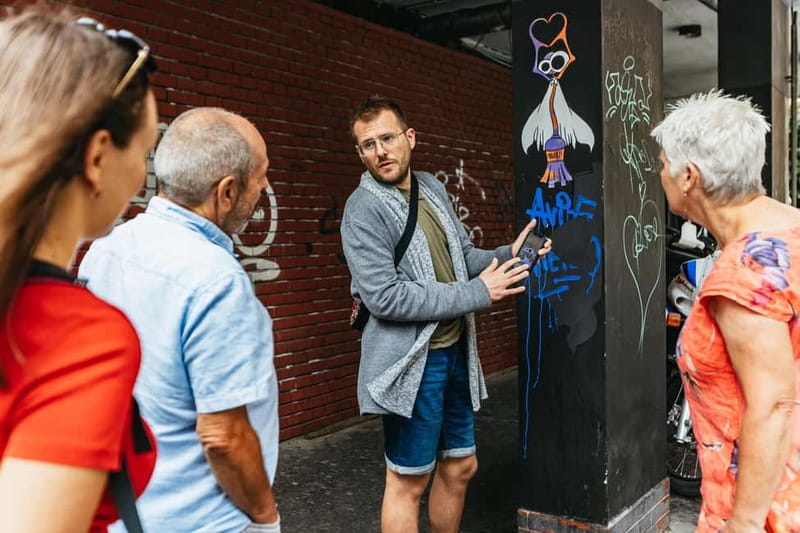
Your experience depends heavily on the guide, and the names ET and Suzie show up often. ET, in particular, is praised for mixing deep street-art context with a friendly, question-friendly style.
Here’s what stands out in the guide approach:
- high engagement during the walk, with room for questions
- a strong sense that street art belongs to local people, not just outsiders photographing walls
- explanations that make the artwork feel connected to real neighborhoods
You might also get small extras along the route, like a quick detour into a local spot or a playful moment. One review even mentioned a Rubik’s Cube bit that turned into a fun, memorable pause. These moments are never the point, but they help the tour feel human instead of scripted.
And after the tour, you’re not left hanging. The tour includes a summary after the tour, and guides often send follow-up details like artist names and ways to keep exploring. That’s a big deal because street art is constantly changing, and a follow-up helps you track what you saw.
Route highlights without the boring checklist
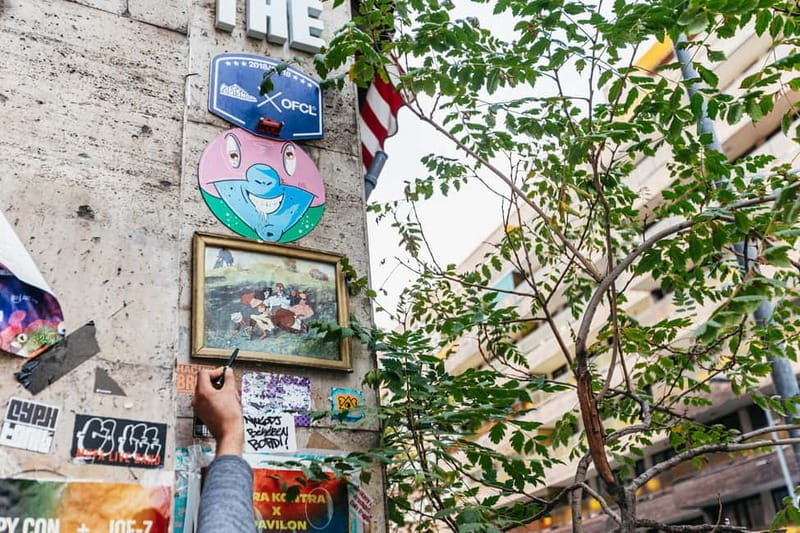
The tour structure is simple on paper, but the experience is driven by how the guide connects points together.
- Start at Telep-Art Galéria: you begin in an atmosphere that matches the topic, stickers everywhere, street-art culture in the background.
- A secret stop: there’s at least one guided hidden point that changes the walk from a generic loop into something you’d miss on your own.
- Finish at Központ: you end in a central-ish location so you can keep moving through the city afterward.
You’ll likely cover more than a single neighborhood feel. Reviews mention stops around Pest’s Jewish Quarter and Erzsébetváros, plus the “party-district” side of the city that many visitors skip unless they’re specifically looking for it.
The best way to approach this route is with curiosity, not expectations. Don’t pre-decide what street art should be. The guide’s job is to widen your idea of what counts as street art in Budapest.
Price and value: why $28 makes sense for this format
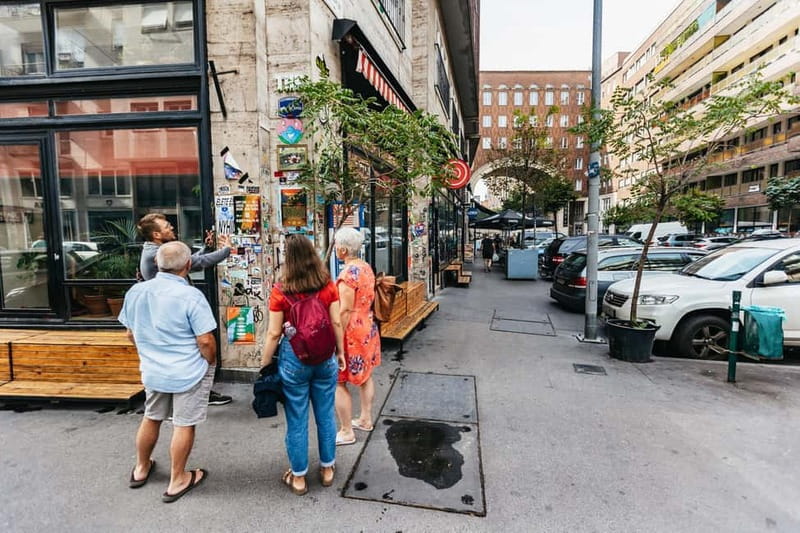
At $28 per person for 2 hours, you’re paying for two things: time and interpretation. In a city like Budapest, you can walk around on your own for free. But without guidance, a lot of street art reads like random decoration.
This tour gives you:
- a focused route built for noticing small details
- interpretation for political and social messages
- a small group setting with interaction, not a loud herd
- a summary after the tour
Small group size matters too. Limited to 8 participants means you’re more likely to get your questions answered and actually hear the explanations, not just catch a few words over other people’s conversations.
Think of it like this: you’re buying faster learning. If you’re only in Budapest for a few days, that shortcut can be worth it.
What to wear, when to go, and how to get the most out of it
This is a walking tour. That part is obvious, but worth planning for. You’ll do better if you wear shoes you can stand in for a bit and dress for temperature changes.
If you’re going in colder months, come prepared. One theme in the feedback is that the guide keeps the energy up even when weather is not ideal, but you will still enjoy it more if you’re warm and comfortable.
Timing also matters. I strongly suggest doing this early in your trip. Once you’ve learned the “street art reading” skill, you’ll spot details everywhere afterward, and that makes the rest of your days feel more alive.
Also, bring your questions. The tour is designed to be interactive, and people seem to enjoy the back-and-forth during the walk.
Who this tour suits best (and who might not love it)
This fits best if you:
- like street art but want more than photos
- enjoy the meaning behind public messages
- want a smaller, conversational group experience
- can handle a fast-moving walk
It can also work well for families because it’s described as interactive. Younger participants often enjoy the hunt aspect, especially if they like stickers, symbols, and spotting things.
You might not love it if you:
- only want classic sightseeing highlights
- dislike walking with frequent stops
- want long museum-style explanations in one place
The tour is built around movement and noticing. If that’s your style, you’ll likely have a great time.
After the tour: keeping the art alive in your own walk
One of the smartest parts of this experience is what happens after. You get a summary after the tour, and the guide approach includes follow-up help so you can keep exploring.
If you enjoyed the sticker subculture part, this is especially valuable. Stickers and paste-ups are easy to miss later if you don’t know what to search for. Follow-up details help you build your own route and keep spotting what the guide pointed out.
And because street art changes over time, the guide’s names and context can make your photos more meaningful. You stop collecting random images and start collecting references.
Should you book Budapest Street Art and Underground Movements?
Yes, I’d book it if you want to see Budapest in a sharper way. This tour is for people who like to look closely and ask questions about culture and politics.
It’s also a good value bet. For $28 in a small group, you’re paying for guided interpretation, not just walking time. The start point at Telep-Art Galéria is a strong match for the topic, and the finish at Központ helps you continue your day without getting trapped in one area.
If you’re mainly chasing big murals, you may feel like you wanted more wall-size art. But if you’re open to stickers, paste-ups, and messages, this walk can change how you see the city fast.
If you can, book early in your trip. You’ll start noticing the city’s hidden conversations right away.
FAQ
How long is the Budapest street art and underground movements walking tour?
The tour lasts 2 hours.
Where do you meet for the tour?
You meet at Telep-Art Galéria.
Where does the tour finish?
The tour finishes at Központ.
What is included in the ticket price?
The ticket includes a live guided tour and a summary after the tour.
Are food and drinks included?
No, food and drinks are not included.
Is the tour available in English?
Yes, the live tour guide speaks English.
How many people are in the group?
The group is small, limited to 8 participants.
Is the tour wheelchair accessible?
Yes, the tour is wheelchair accessible.
Can I book this tour as a private experience, and do I have pay later options?
Yes, you can book it as a private experience, and it also offers a reserve now and pay later option.
The newest crossings added in Budapest






Walking Tours, compared.


Big Bus Budapest Hop-On Hop-Off Bus and Walking Tour
Read our review →

Budapest City Landmarks Walking Tour in 2 Hours
Read our review →
3-Hour Orientation Walking Tour of Buda and Pest
Read our review →

Budapest Historical Sightseeing – Free Walking Tour
Read our review →
Budapest All in One Small Group Walking Tour with Strudel Stop
Read our review →Browse the lists this tour appears in