
Budapest’s Jewish District has layers you can walk through. This guided route is a smart way to understand how Jewish life shaped everyday streets, then see how memory still shows up in courtyards, symbols, and even murals. I also like the practical focus on what you can view on your own later, including where ghetto-era traces can still be found, plus the clear, paced way history is explained. One thing to consider: parts of the story touch heavy World War II themes, and the group keeps things respectful, with rules like no audio recording and keeping noise down.
You start near the Budapest Eye Ferris wheel at the Danubius Fountain, close to the Raoul Wallenberg Memorial, so the tour wastes no time on context. From there, you move through the neighborhood in a logical flow, with stops that connect major synagogue exteriors and local street life. The guide is a licensed local, and one name that pops up in past feedback is Andre, praised for making complex history feel clear and for answering questions without rushing you.
At the end, you’re not just dropped off. You finish at Szimpla Kert, Budapest’s first ruin pub, with a guided visit inside and time to ask anything you want before you keep exploring the district independently.
In This Review
- Key highlights you’ll actually feel on this tour
- Why the Jewish District is best seen on foot
- Starting at Danubius Fountain and the Budapest Eye context
- Deák Ferenc tér: the quick orientation you’ll be glad you have
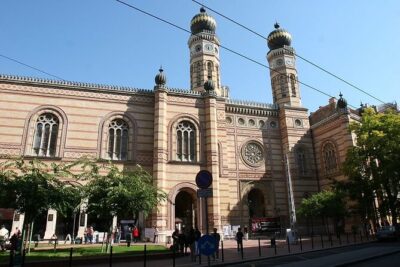
- Dohány Street Synagogue exterior: the neighborhood’s major landmark
- Rumbach Street Synagogue and the quieter rhythm of side streets
- Gozsdu Udvar: history in a place you might otherwise use
- Kazinczy Street Synagogue: more than a stop, a story checkpoint
- Tracing the Budapest Ghetto Wall remains without losing your bearings
- 20th century memory meets today: murals and street life
- Finish at Szimpla Kert: a ruin pub that closes the loop
- Price and time: what value looks like here
- Who this tour fits best (and who might not)
- Practical tips so you get more out of every stop
- Should you book this Budapest Jewish District walk?
- FAQ
- Where does the tour start?
- How long is the Budapest Jewish District walk?
- Is the tour guided, and what language is it in?
- Which sites are included on the route?
- Is Szimpla Kert part of the tour?
- What should I bring, and is it wheelchair accessible?
Key highlights you’ll actually feel on this tour
- Licensed local guide who ties architecture, street layout, and symbols to real community life
- Dohány Street Synagogue and other synagogue exteriors used as landmarks for understanding traditions and neighborhood change
- Practical guidance on where to see remaining traces related to the Budapest Ghetto Wall on your own
- Everyday urban spaces like courtyards and passages, where memory sits in plain sight
- Street art references to Hungarian history, Jewish heritage, and collective memory, explained in context
- Szimpla Kert guided stop that turns the neighborhood story into a present-day hangout plan
Why the Jewish District is best seen on foot
The Jewish Quarter in Budapest is not a museum you walk through. It is a working neighborhood where people still live, shop, and create culture. That is exactly why this kind of guided walk makes sense. On your own, you can see synagogues and memorials, sure, but a guide helps you connect the dots between what you see and what those spaces meant.
Another reason I like the walking format here is the rhythm. You get enough time at each stop to understand why it matters, but you still move through real streets and courtyards where the district’s layered story becomes visible. And because the tour is only about 1.5 hours, it fits cleanly into a first or second day in Budapest without turning your schedule into a marathon.
One more practical point: Budapest has a way of rewarding slow attention. Tiny street details, symbols on facades, and the layout of courtyards can be easy to miss. The guide’s job is to point those things out while keeping the pace relaxed, so you are not sprinting from one photo spot to the next.
Starting at Danubius Fountain and the Budapest Eye context
You meet about 10 to 15 meters from the Budapest Eye Ferris wheel, next to the Danubius Fountain in the middle of the square. If you are using the metro, the closest stop is Deák Ferenc tér (M1 yellow, M2 red, M3 blue), then a short 2 to 3 minute walk.
That location is more than convenient. It places you right by the Raoul Wallenberg Memorial, which helps set the tone for the tour’s core theme: memory and modern life side by side. Wallenberg is a bridge symbol in the story of Budapest during the war years, and starting here gives you context before you even step into the older streets.
The meeting point also helps you orient yourself. You’ll learn a bit about where the district begins, how it developed, and why Jewish community life influenced the area’s architecture, commerce, and social fabric. Even if you only half remember it at first, it clicks later as you pass courtyards and street corners.
Do bring a camera, because you can, and it helps to ask the guide for photo tips. Also, pack comfortable shoes. This is walking, and the tour runs in most weather conditions, so dress like you expect to be outside.
Further Jewish Budapest and Great Synagogue tours:
- Budapest Jewish Heritage Memorial Walking Tour & Synagogue Entry
★ 5.0 · 568 reviews - Budapest: Jewish Heritage Guided Tour with Synagogue Ticket
★ 4.8 · 533 reviews - German tour in the Budapest city centre & the Jewish quarter
★ 5.0 · 359 reviews
Deák Ferenc tér: the quick orientation you’ll be glad you have
After the square, the route goes toward Deák Ferenc tér for a brief guided orientation stop. It may sound like a throwaway segment on paper, but this part matters because it gives you a mental map before you hit the synagogue area.
Deák Ferenc tér is one of those central hubs where Budapest feels modern and busy. That contrast is useful. It helps you grasp the idea that the Jewish District did not freeze in time. It sits inside a living city, and today’s streets grew out of older patterns of community, migration, religion, and commerce.
The guide also sets expectations for what you will be learning on the walk, including the presence of both Ashkenazi and Sephardic traditions. That detail is important because it changes how you interpret what you see. You are not just looking at one single cultural story. You are learning about a neighborhood where different Jewish communities shaped religious life, social networks, and the built environment.
If you like history that feels grounded in daily reality, you’ll probably enjoy the way this tour uses orientation to make the later stops easier to understand.
Dohány Street Synagogue exterior: the neighborhood’s major landmark
The tour’s biggest early stop is the Dohány Street Synagogue exterior, where you get a guided visit section of about 25 minutes. Even if you never go inside, the synagogue exterior works like a compass. The guide uses it to explain how Jewish life influenced architecture and how the district developed from the 19th century onward.
This is where the tour’s balance shows. You’ll hear about Jewish history, religion, and community life, but the guide also links it to the street around the synagogue. That matters because the synagogue is not an isolated object. In this neighborhood, religion, commerce, and everyday social space overlapped.
One helpful angle is how the guide frames the district through symbols and urban details. You are encouraged to look at courtyards, streets, and how the area’s layout relates to community life. If you are the type who likes learning to read a city, this stop is likely a highlight.
A practical tip: take your time with photos here, but also listen first. The best shots tend to happen after you understand what the guide is pointing out.
Rumbach Street Synagogue and the quieter rhythm of side streets
Next you pass to the Rumbach Street Synagogue, with about 10 minutes of guided time. This stop is shorter than Dohány, which can feel a little odd until you realize what the guide is doing. They are building variety in scale and atmosphere, moving from the big landmark toward the smaller, more neighborhood-feeling spaces.
The value of Rumbach is how it helps you see that the district’s religious life was spread across the area, not only concentrated at the single famous building. And because you are walking between stops, you experience the transitions that a map alone cannot show.
This is also where the tour’s story about the past meeting the present becomes more tangible. As you move, you notice courtyards and the street layout. The guide is training your eyes for those details, so the district starts to look like a layered document rather than a series of attractions.
More of the city, bank to bank on foot:
- Budapest: Buda Castle Walk with Saint Stephen’s Hall★ 4.5 · 3,012 reviews
- Big Bus Budapest Hop-On Hop-Off Bus and Walking Tour★ 3.5 · 2,206 reviews
- Budapest: Buda Castle District Walking Tour★ 4.6 · 2,108 reviews
Gozsdu Udvar: history in a place you might otherwise use
After Rumbach, you reach Gozsdu Udvar, with a shorter guided segment around 5 minutes. This is a place that many visitors pass through because it is lively and central. On this tour, you look at it differently.
The guide treats urban spaces like Gozsdu Udvar as part of the district’s memory. Instead of just naming buildings, they point to courtyards and street-level cues where the past still sits underneath the present-day use of the space. That is the whole idea behind the tour: memory is not only in plaques. It can be in the way a block is shaped, how passages connect, and what symbols are visible if you know what to look for.
If you enjoy that kind of interpretive travel, you’ll likely like how quickly the guide switches gears from heavy historical context to the normal rhythms of city life.
Kazinczy Street Synagogue: more than a stop, a story checkpoint
Then you have Kazinczy Street Synagogue, with about 15 minutes of guided time. This longer stop helps you compare what you have learned already, especially in terms of Jewish community presence and heritage.
What I appreciate here is that the tour uses multiple synagogue exteriors as checkpoints. Each one reinforces a theme, so you are not just collecting names. You are building an understanding of how the neighborhood developed, how religious traditions coexisted, and how community life influenced the streetscape.
Also, since the walking segments between stops are brief, you keep momentum. You are never stuck in one place for too long, but you also get enough time to feel like you learned something real at each stop.
Tracing the Budapest Ghetto Wall remains without losing your bearings
One of the tour’s most important parts is how it addresses the 20th century and World War II with sensitivity. The guide explains the historical impact while keeping the walking flow intact, so you do not end up with a disconnected lecture.
You’ll hear about former ghetto streets and areas where remains of the Budapest Ghetto Wall can still be seen today. Importantly, the guide does more than point at the wall trace during the walk. They also provide practical information on how and where visitors can view these remains independently.
That is a smart approach. It gives you a starting place, then hands you the tools to continue at your own pace later. If you want to do the research legwork in the moment, this tour helps. If you prefer to take a break afterward and explore lightly, you also can.
This is one of those times when the tour rules make sense. You will want the group to stay quiet and respectful, and the tour structure supports that. Also, if you feel emotional about the subject, that’s normal. The best thing you can do is ask questions when you can, so you leave with clarity rather than confusion.
20th century memory meets today: murals and street life
After the major historical stops, attention turns to the Jewish District today. This is where the tour becomes unexpectedly fun, not because the subject is light, but because you start noticing what is alive.
The guide introduces urban street art and murals that reference Hungarian history, Jewish heritage, and collective memory. The key point is that they do not treat street art as decoration. They explain it as part of how the neighborhood is communicating its past in present form.
You also get an explanation of ongoing urban change. This is a helpful counterweight to pure nostalgia. Budapest’s Jewish District is not a frozen set. It keeps reshaping, and the guide helps you understand what changes mean, and what should be remembered as steady.
As you walk through these modern scenes, you realize how well the tour’s theme fits the physical layout. Courtyards and passages connect old and new. A street mural can act like a footnote. A commercial area can be a sign of how community spaces adapted over time.
Finish at Szimpla Kert: a ruin pub that closes the loop
The tour ends at Szimpla Kert, Budapest’s first ruin pub, with guided time inside and a chance to ask remaining questions. This final stop is not random. It is a bridge between history explained on the street and the neighborhood you can experience immediately afterward.
I like the logic of finishing here because it helps you keep your day moving. You are not left standing outside waiting to figure out where to go next. You have a concrete place, plus the guided visit helps you read why this kind of space exists in Budapest.
One detail worth noting from past experiences: the ruin bar part of the end is often a favorite. People tend to enjoy the mix of history, atmosphere, and practical orientation. It also makes the tour feel less like a lecture and more like a guided transition into your own exploration.
If you want to continue right after the walk, you’ll likely have an easier time doing it. You’ll know what to look for next, and you’ll have a better sense of what areas connect to the sites you visited.
Price and time: what value looks like here
The price listed is $1.89 per person and the duration is about 1.5 hours. That is extremely low for a guided experience in central Budapest, especially one led by a licensed local guide with a route that hits multiple synagogue exteriors, ghetto-era context, and an included guided visit inside Szimpla Kert.
Value is not just the low number. It is what you get in that 90-minute window:
- several key landmarks tied to community life
- historical context handled with sensitivity
- practical guidance for independent follow-up on ghetto wall traces
- an end stop that helps you continue exploring right away
If you are on a tight schedule, this is a strong use of time. And if you care about understanding what you are seeing, the guide’s explanations are what make it worth it, not just the buildings.
As a consideration, the tour is focused and relatively short. If you want a deep dive into any single synagogue or a long museum-style experience, you might add extra stops on your own after. But as a district overview that makes your later wandering smarter, the time is well spent.
Who this tour fits best (and who might not)
This is a great fit if you:
- want a structured walking route through the Jewish District
- enjoy guides who connect history to everyday streets and symbols
- like learning how past and present coexist in the same neighborhood
- want a practical plan for what to see next on your own
It may not be the best match if you:
- need a mostly light, entertainment-only tour. The World War II material is handled sensitively, but it is still heavy content.
- expect long indoor visits inside major religious sites. The stops focus heavily on exterior view and neighborhood context, plus one guided visit at Szimpla Kert.
Also, the tour rules matter. Alcohol and drugs are not allowed, making noise is not allowed, and audio recording is not allowed. If you like narrating everything you see on your phone, plan to follow those constraints.
The pace is relaxed, and it’s wheelchair accessible. You should still have a basic physical fitness level since you are walking a bit between stops.
Practical tips so you get more out of every stop
Here are the small things that make the biggest difference on this kind of walk:
- Wear comfortable shoes. Courtyards and uneven street surfaces are part of the deal.
- Bring a camera and ask for photo tips when the guide points out symbols or viewpoints.
- Expect limited public toilets. If you can, take care of needs before you start, especially near the meeting point.
- Keep expectations realistic about weather. The tour runs in most conditions, so dress for the day you get.
- Be ready to ask questions. The format includes time for discussion, and the guide can help you understand what to look for after the walk.
Should you book this Budapest Jewish District walk?
I think you should book this tour if you want an efficient, meaningful way to understand the Jewish District as a living neighborhood. The combination of synagogue exteriors, ghetto-era context including Budapest Ghetto Wall traces, and modern street art makes the district feel coherent instead of random.
It is also one of those rare tours where the ending helps you keep going. Finishing at Szimpla Kert with a guided visit and question time means you leave with both perspective and a practical next step.
If you prefer only joyful sightseeing, or you hate walking with any heavy subject matter, you might choose a lighter option instead. But if you want clarity, context, and a route that teaches you how to read the city, this one is a strong pick.
FAQ
Where does the tour start?
The meeting point is about 10 to 15 meters from the Budapest Eye Ferris wheel, next to the Danubius fountain in the middle of the square. The closest metro is Deák Ferenc tér (M1 yellow, M2 red, M3 blue), followed by a 2 to 3 minute walk.
How long is the Budapest Jewish District walk?
The tour lasts about 1.5 hours.
Is the tour guided, and what language is it in?
Yes, it is led by a licensed local guide. The tour is conducted in English.
Which sites are included on the route?
You’ll see the Dohány Street Synagogue exterior, the Rumbach Street Synagogue, Kazinczy Street Synagogue, and Gozsdu Udvar. The tour also includes ghetto-era context, and it finishes with a guided visit at Szimpla Kert.
Is Szimpla Kert part of the tour?
Yes. The tour finishes at Szimpla Kert, where there is time for questions and a guided visit inside.
What should I bring, and is it wheelchair accessible?
Wear comfortable shoes. The tour is wheelchair accessible. There are limited public toilets available at the meeting point and along the route. The tour runs in most weather conditions, so dress accordingly.
The newest crossings added in Budapest






Jewish Budapest & Great Synagogue Tours, compared.
Budapest Jewish Heritage Memorial Walking Tour & Synagogue Entry
Read our review →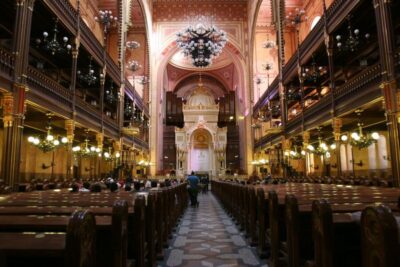
Jewish Heritage Guided Tour with Synagogue Ticket
Read our review →
German tour in the Budapest city centre & the Jewish quarter
Read our review →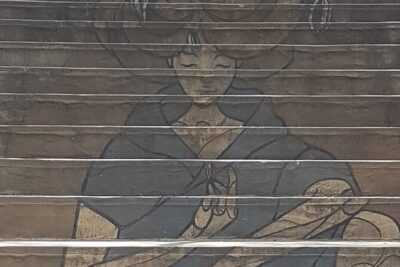
Past and Present of Budapest Jewish District Tour
Read our review →
Budapest Dohany Synagogue & Hungarian Jewish Museum & free extras
Read our review →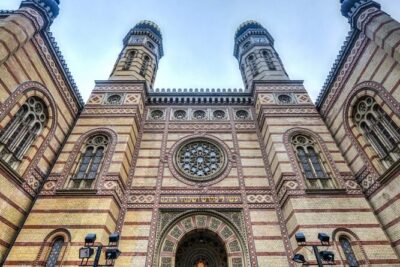
Jewish History Guided Walking Tour with Historian
Read our review →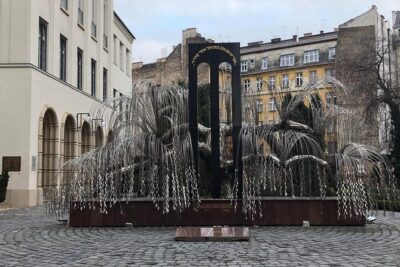
Budapest Dohany, Heroes’, Rumbach synagogues & Jewish Ghetto Tour
Read our review →Browse the lists this tour appears in