

Reviewed · WALKING TOURS
Budapest Castle Walk
Buda Castle tells stories in every turn. This 3-hour Budapest Castle Walk threads medieval courts, Ottoman and Habsburg eras, and the 1945 Siege of Budapest through UNESCO cobbles and baroque streets. You also get Danube-side breaks, plus the kind of viewpoints that make the hill feel worth the climb.
I love the included St. Matthias Church stop, especially seeing the interior and the multi-colored tiled roof tied to Hungarian coronations. I also like how the route earns the big views, with Fisherman’s Bastion positioned like a payoff rather than just another photo stop.
One consideration: double-check the exact start time on your booking confirmation. There was at least one scheduling hiccup reported where the purchase flow did not clearly show the tour time, so arriving at the wrong moment would be a real pain.
In This Review
- Key points before you lace up
- Why the Buda Castle district works so well on a walking tour
- Price and what you actually get for the money
- The walk length, start time, and pacing that affects your day
- How the tour starts at Fisherman’s Bastion, and why the viewpoint isn’t the whole story
- Matthias Church: the coronation site, the tiled roof, and the WWII scars
- The National Széchenyi Library stop and the golden-age angle
- Castle Garden and the Danube stretch to Várkert Bazaar
- Hidden gardens, courtyards, and the quiet details you usually miss
- Coffee break value: a real reset, not just a stop on a schedule
- Comfort and timing tips for this hill district
- Who this walking tour is best for
- Should you book the Budapest Castle Walk?
- FAQ
- How long is the Budapest Castle Walk?
- Where does the tour start?
- Where does the tour end?
- Is St. Matthias Church admission included?
- Is there a coffee or drink break during the tour?
- How big are the groups?
- Is free cancellation available?
Key points before you lace up
- 3 hours on Budapest’s UNESCO Buda Castle hill, built around history you can actually see in the stones
- St. Matthias Church entrance included, plus a guided look at its interior and why it matters
- Danube views from Fisherman’s Bastion and the restored Várkert Bazaar area
- Jewish community history included, not just royal kings and wars
- Coffee or a drink included, with a real break so your legs can reset
- Small group, max 8, with options for private or small-group upgrades
Why the Buda Castle district works so well on a walking tour
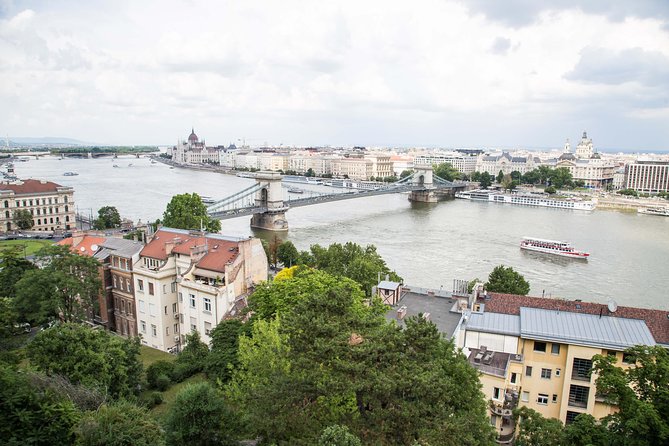
Budapest’s Buda Castle district is the kind of place where you can keep walking and still feel like you’re arriving somewhere new. On foot, the hill’s shape makes sense. You notice how streets fold and rise, how courtyards open suddenly, and how the Danube shows up when you least expect it.
This tour is designed around that “you’ll see it better walking” idea. It takes you through the medieval core where the neighborhood began settling in the 1200s, then forward into the period when Hungary’s royal court became a major presence in the 1300s. You’re not just collecting landmarks. You’re learning what changed over time, and how those changes left physical marks you can point to.
And yes, there’s a WWII thread here too. The district was heavily damaged during the Siege of Budapest in 1945, and your guide explains what happened in and around these streets when Russian and German forces met. That context makes the place feel less like a postcard and more like a living city with scars that still matter.
Price and what you actually get for the money
The cost is $125 per person for about 3 hours. That sounds steep until you look at what’s included.
You get:
- An English-speaking local guide
- A coffee or another drink stop during the tour
- Entrance to St. Matthias Church
- Time for photos and questions at multiple viewpoints and courtyards
Entrance tickets can add up in Budapest, and Matthias Church is not a freebie experience. On top of that, you’re paying for interpretation, meaning someone connects the Ottoman and Habsburg chapters to specific buildings and street corners, rather than you reading five signs and calling it history.
If you’re comparing options, ask yourself this: do you want a guided route with stops and context, or do you want to wander on your own and pay for entrance sites separately? This price is really for the guided pacing plus the built-in Matthias visit and the coffee break.
More of the city, bank to bank on foot:
- Budapest: Buda Castle Walk with Saint Stephen’s Hall
★ 4.5 · 3,012 reviews - Big Bus Budapest Hop-On Hop-Off Bus and Walking Tour
★ 3.5 · 2,206 reviews - Budapest: Buda Castle District Walking Tour
★ 4.6 · 2,108 reviews
The walk length, start time, and pacing that affects your day
This 3-hour tour starts at 3:00 pm. The meeting point is near the Zero Kilometre Stone at Clark Ádám tér, 1013 Hungary, and it finishes at Matthias Church at Mátyás Templom, Szentháromság tér 2, 1014 Hungary.
The tour is available year-round, which is useful if you’re traveling in shoulder season. And it’s a small-group format with a maximum of 8 travelers and a minimum of 2. Smaller groups matter here because the Castle district is a maze. A big group can turn into a slow-moving human conga line. A small group usually means you get clearer answers and more room at viewpoints.
One practical tip: the tour is planned for about three hours, but if you want to keep it tight, mention if you have something booked afterward. If not, the flow of walking and questions can stretch the timing a bit.
How the tour starts at Fisherman’s Bastion, and why the viewpoint isn’t the whole story
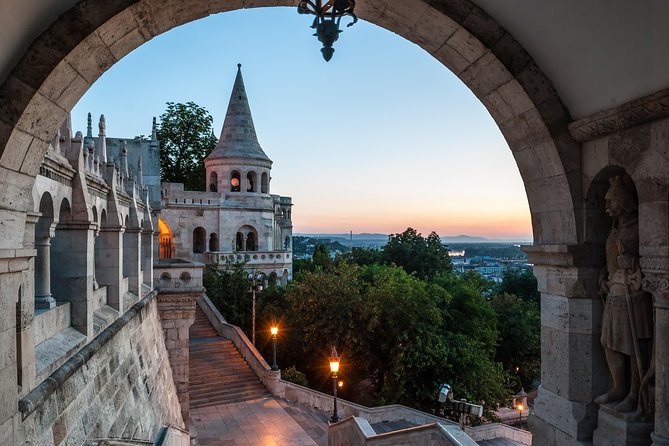
Your first stop is Fisherman’s Bastion, a place people visit for views of the Danube and Pest below. But on this walk, the viewpoint is the beginning, not the end.
Your guide ties the hill’s medieval development to the street pattern you’re standing on. The story goes back to the mid-1200s, when the first royal residence was built in the area, shaping how this neighborhood grew.
This is also where the tour brings in the Jewish population thread in a clear way. Instead of treating the Jewish history as a side note, your guide explains how this district shaped community life over time. You also hear about the Hungarian royal presence and the Habsburg empire, so you start seeing Buda Castle as a place with shifting power and mixed communities, not one static era.
Why I think this matters for you: the Castle district can feel like “royals and churches” at first glance. Starting with a more social history lens helps the later stops click, especially when you get to Matthias Church and the stories around damage during WWII.
Matthias Church: the coronation site, the tiled roof, and the WWII scars
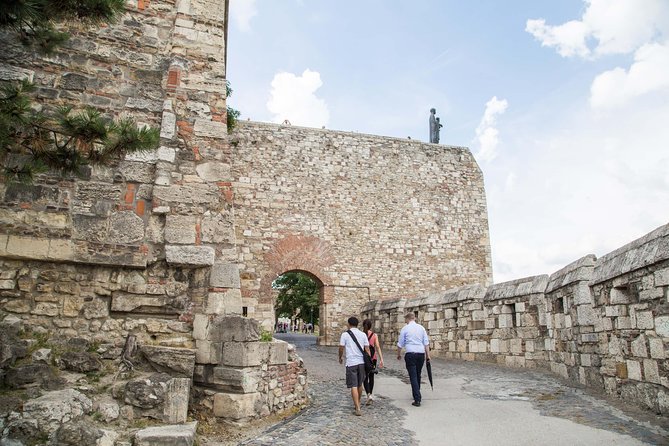
The second main stop is Matthias Church, where entrance is included. You’ll spend about 20 minutes inside, learning how the church links to Hungary’s kings and coronations.
The guide focuses on what you can see right then, including the interior and the famous multi-colored tiled roof. Even if you’ve seen photos before, being inside gives the architecture weight. You can feel why this is one of the most significant churches in Budapest.
And then you get the historical pivot: WWII. Your guide explains how the siege and heavy fighting in 1945 left a brutal imprint on the neighborhood, with streets destroyed when Russian and German forces met here. You also hear about the broader European importance of Buda in the 15th century and how it became a melting pot of nations.
That mix of royal symbolism and modern tragedy is a lot for one stop. But it’s exactly what makes Buda Castle feel honest. You’re not just admiring a church. You’re understanding why this place keeps being rebuilt and reinterpreted.
Still to cross in Budapest
- Budapest: City Highlights Sightseeing Cruise★ 4.6 · 43,981 reviews
- Budapest: Unlimited Prosecco, Beer and Aperol Spritz Cruise★ 4.8 · 37,304 reviews
- Budapest: Széchenyi Spa Day Ticket with Optional Upgrades★ 4.3 · 23,911 reviews
The National Széchenyi Library stop and the golden-age angle
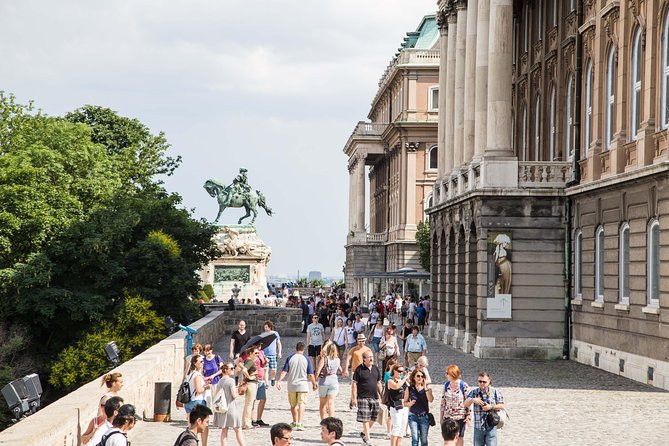
Next up is the National Széchényi Library, where you’ll get a short 10-minute stop. This part can surprise people because the library is not the “obvious” place you’d pick for a walking tour of castles.
The story your guide connects here is about the royal court’s influence. You learn how the court helped spark a golden age, even though no royals actually lived in this spot. It’s a smart way to teach you a key lesson: Buda Castle’s importance was about power and patronage, not just who slept where.
You also hear how the palace and neighborhood were destroyed and rebuilt multiple times over, especially after World War Two when the damage was extensive. That repeated rebuilding is why the area looks the way it does now, with layers you can still sense if someone points them out.
If you like historical explanation that stays visual, this stop is worth it. It helps you understand why the district can look like one style on the surface and still be a timeline underneath.
Castle Garden and the Danube stretch to Várkert Bazaar
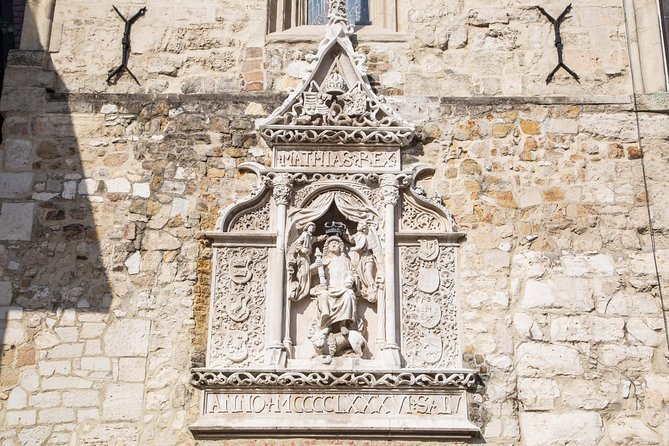
After the library, you move to Castle Garden, another 10-minute stop. This area is tied to the present day too, not just the past. Your guide explains how the Hungarian president calls this neighborhood home, alongside a few hundred regular citizens living in historic buildings that have been around for centuries.
It’s a good reminder that the Castle district is not only a museum district. People live here. That changes how you experience the courtyards and buildings, because you’re not just walking through a themed set. You’re passing through a real neighborhood.
From there, you also get the Danube-side Várkert Bazaar experience. This section is described as a restored neo-Renaissance area by the river. It’s a nice break in the walking rhythm because you’re near the water and the views open up again.
Then, with that hard work behind you, the panoramas from Fisherman’s Bastion and other viewpoints land with more impact. You’re seeing the city the way the hill was built to show it off.
Hidden gardens, courtyards, and the quiet details you usually miss
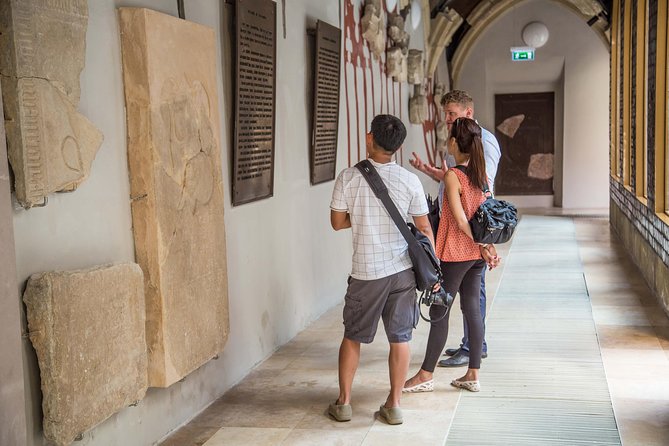
One of the best parts of this kind of guided walk is that it gives you permission to slow down and notice things most visitors skate past. Even when you don’t have time to enter museums, you can still catch details in the courtyards, gardens, palaces, and statues.
Your guide’s focus includes:
- Baroque and Gothic architecture
- Historical remnants and restored areas
- The way Buda attracted a mix of nationalities across centuries
This is where the tour earns its “less missed, more understood” feel. Without a guide, you might stand in front of one building and spend the rest of the time guessing what era it represents. With a guide, you can place it in time and understand why the story keeps shifting.
Coffee break value: a real reset, not just a stop on a schedule
Your tour includes a coffee or another drink, plus coffee and/or tea. That might not sound like a headline feature, but it matters in a place like Buda Castle.
Three hours on cobbled streets is no joke. Even when you’re not walking far, the uneven ground and hill grade add up. Having a planned break helps your legs recover and keeps the tour from becoming one long shuffle.
It also gives you a moment to ask questions and get a quick read on what you should prioritize after you finish, since the tour ends near Matthias Church.
Comfort and timing tips for this hill district
If you want the best experience, prepare for the basics:
- Wear shoes with grip for cobblestones
- Bring a light layer, since weather can shift quickly on the hill
- If you have a tight schedule after 3:00 pm, tell the guide at the start so the timing stays respectful
Because the tour ends at Matthias Church, it’s easy to plan your next step there. You can also use the viewpoints you visited to decide which direction you want to keep exploring.
Who this walking tour is best for
This tour is a strong fit if you want:
- A guided history walk that connects eras from medieval through Ottoman, Habsburg, and WWII
- A route that includes major sights like Matthias Church and Fisherman’s Bastion without turning into a checklist
- A small-group experience, capped at 8 travelers
It can also work well for couples and solo travelers who like learning as they walk, not after reading museum labels.
If you prefer a purely relaxed sightseeing pace with no WWII and conflict context, you might find the history heavy in places. But if you want the Castle district to make sense, the story does the job.
Should you book the Budapest Castle Walk?
I’d book it if you want a structured way to experience the Buda Castle district in just 3 hours, with St. Matthias Church entrance handled for you and a guide who ties viewpoints and buildings to specific chapters of Budapest’s past. The small group size helps keep it moving without feeling rushed.
I’d pause and think twice if you dislike paced routes or if you’re the type who wants to pick your own stops and wander without interpretation. Also, take a minute to confirm the start time on your own confirmation, since schedule clarity has been an issue for at least one booking.
If you line up your afternoon, bring comfortable shoes, and show up ready to walk and listen, this is a very practical way to see why Buda Castle remains Budapest’s best “on foot” experience.
FAQ
How long is the Budapest Castle Walk?
The tour lasts about 3 hours.
Where does the tour start?
It starts near the Zero Kilometre Stone at Clark Ádám tér, 1013 Hungary.
Where does the tour end?
It ends at Matthias Church, Mátyás Templom, Szentháromság tér 2, 1014 Hungary.
Is St. Matthias Church admission included?
Yes. Entrance to St. Matthias Church is included.
Is there a coffee or drink break during the tour?
Yes. A coffee or another drink is included during the tour.
How big are the groups?
This is a small-group tour with a minimum of 2 guests and a maximum of 8 travelers.
Is free cancellation available?
Yes. You can cancel up to 24 hours in advance for a full refund.
The newest crossings added in Budapest






Walking Tours, compared.


Big Bus Budapest Hop-On Hop-Off Bus and Walking Tour
Read our review →
Budapest City Landmarks Walking Tour in 2 Hours
Read our review →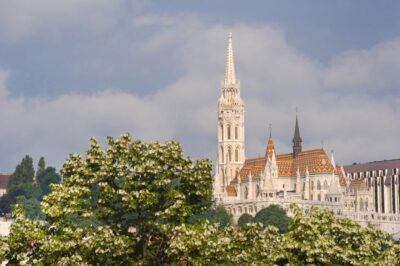
3-Hour Orientation Walking Tour of Buda and Pest
Read our review →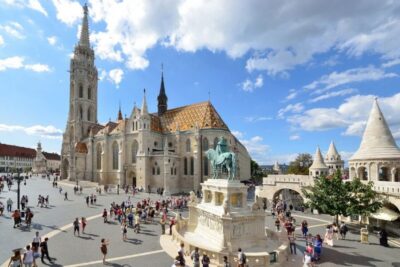

Budapest Historical Sightseeing – Free Walking Tour
Read our review →
Budapest All in One Small Group Walking Tour with Strudel Stop
Read our review →Browse the lists this tour appears in