
Reviewed · WALKING TOURS
Budapest Art Nouveau Walking Tour
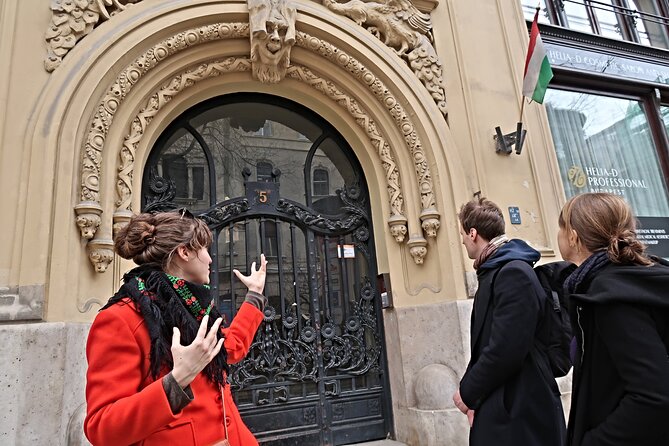
Budapest’s Art Nouveau hides in plain sight, and this 3-hour walk turns facades into stories with a historian guide and Art Nouveau details. I especially like how you stop at major buildings and actually learn what you are looking at, instead of just snapping photos.
The second thing I like is the focus on key designers and signature materials, especially the work tied to Ödön Lechner. One possible drawback: the meeting area at Madal Cafe can feel crowded, so show up a bit early and double-check you are at the right spot.
In This Review
- Key highlights at a glance
- Art Nouveau in Budapest that you can actually see on the street
- Meeting at Madal Cafe, then a paced 3-hour route
- Stop 1 Gresham Palace: from offices and apartments to a luxury hotel facade
- Stop 2 Postatakarek Bank: the Royal Postal Savings Bank and Ödön Lechner’s signature
- Stop 3 Thonet House: tilework, Zsolnay ceramics, and why Budapest looks the way it does
- Stop 4 Kazinczy Street Synagogue: the Art Nouveau interior, with day-of-week limits
- How the guide helps you spot Art Nouveau fast
- Walking, transit hops, and small-group comfort
- Price value: what $126.16 buys you in real terms
- Should you book this Budapest Art Nouveau walking tour?
- FAQ
- How long is the Budapest Art Nouveau walking tour?
- What language is the tour offered in?
- How big is the group?
- Where does the tour start and end?
- Do I get a mobile ticket?
- Which buildings do you visit on the route?
- Are entrance fees included for all stops?
- Is public transportation included?
- Is the Kazinczy Street Synagogue interior always included?
- Can I cancel for a full refund?
Key highlights at a glance
- Historian-led architecture talk that helps you read Budapest buildings like a map
- Ödön Lechner connections through landmarks tied to his Art Nouveau style
- Signature Budapest Art Nouveau details, like decorative tiles and ornate interiors
- A short, manageable route with comfortable pacing over about 3 hours
- Small-group feel, typically limited to six, with a cap of eight people
Art Nouveau in Budapest that you can actually see on the street
Budapest is famous for grand sights, but the real fun starts when you slow down and notice the “in between” details. This walk is built around Art Nouveau in a practical way, meaning you learn the patterns, materials, and design ideas that show up across the city. You do not need to be an architecture nerd. You just need eyes, good shoes, and a guide who can point out what matters.
I like that the tour connects style to place, not just facts. You get a sense of how this movement shaped buildings you will pass for years, long after the tour ends. And you also get a clearer picture of how Hungarian Art Nouveau developed its own look, including the use of decorative ceramic and tile work.
If you want a quick way to “get your bearings” with Budapest architecture, this is a solid choice. It is also a good match if you like short walks that still feel substantial, because the stops are thoughtfully spaced and each one gives you something concrete to look for.
Meeting at Madal Cafe, then a paced 3-hour route
Your tour starts at Madal Cafe on Alkotmány u. 4 (1054). The tour ends at the Budapest Orthodox Synagogue on Kazinczy u. 29-31 (1075), so you will finish in a different spot than where you began. That is convenient if you want to keep exploring afterward in the same neighborhood.
The tour runs about 3 hours and you are looking at a moderate amount of walking. You will be moving, stopping, moving again. Comfortable shoes matter, especially since some cobblestones or uneven sidewalks can pop up in older city areas.
You also might use public transport during the walk. That part is at your own expense, so keep a transit pass or payment method ready. The upside is that those short hops can reduce fatigue and help the route stay efficient.
Group size is meant to feel personal. One version of the tour is described as a small-group with a maximum of six people, and the overall cap is eight. Either way, you should expect a group that stays close together and allows the guide to answer questions.
Finally, there is a morning or afternoon departure option, so you can pick the time that fits your day.
More of the city, bank to bank on foot:
- Budapest: Buda Castle Walk with Saint Stephen’s Hall
★ 4.5 · 3,012 reviews - Big Bus Budapest Hop-On Hop-Off Bus and Walking Tour
★ 3.5 · 2,206 reviews - Budapest: Buda Castle District Walking Tour
★ 4.6 · 2,108 reviews
Stop 1 Gresham Palace: from offices and apartments to a luxury hotel facade
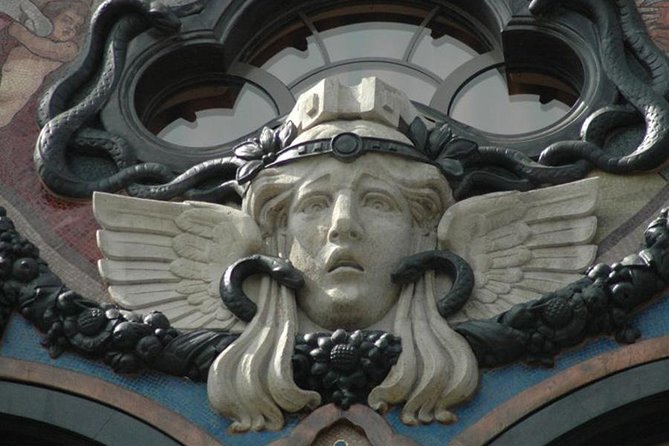
Gresham Palace is the kind of building that makes you stop even if you are not planning to. This stop is about more than the exterior. You get a chance to admire the facades and then step inside to see how the design carries through.
What makes this stop worth your time is the contrast. The palace was once an office space and a series of luxury apartments, and today it functions as Budapest’s most luxurious hotel. That history helps you understand why the building’s ornament feels so confident and why the interior choices were meant for wealthy everyday life, not just show.
You will spend about 20 minutes here. That is enough time to take in the key visual elements without turning the stop into a long museum-style visit. Also, the admission ticket for this site is listed as free for the tour.
Tip for your photos: spend your first minute looking up and framing. Then, once you have the big lines, go for the smaller decorations. The guide’s pointers will help you know where to look, instead of wasting time wandering.
Stop 2 Postatakarek Bank: the Royal Postal Savings Bank and Ödön Lechner’s signature
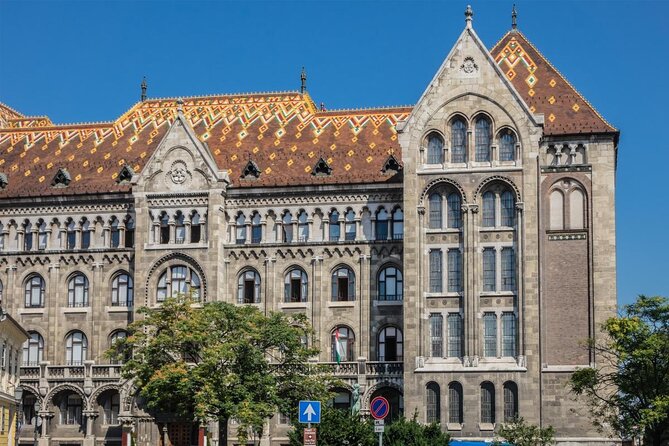
The next stop is the Royal Postal Savings Bank, also known as Postatakarek Bank, designed by Hungary’s best-known Art Nouveau architect, Ödön Lechner (sometimes shown as Odon Lechner). If you only take one theme from this tour, make it this: Lechner’s buildings are a visual argument for why ornament can feel structural, not just decorative.
This is where you see the style get louder and more theatrical. The highlights specifically point out the entrance hall and its interior design elements, and that is the best place to focus your attention. When you walk into the hall, you start to understand the movement’s love of pattern, form, and expressive design choices.
You will spend about 20 minutes at this stop, and admission is listed as free. The guide also ties this landmark to the wider Hungarian Art Nouveau movement, so it feels like part of a larger story rather than a one-off building you pass by.
One extra reason I like this stop: it makes Lechner feel practical. You are not learning the name as trivia. You are learning what to look for, then testing it with your own eyes.
Stop 3 Thonet House: tilework, Zsolnay ceramics, and why Budapest looks the way it does
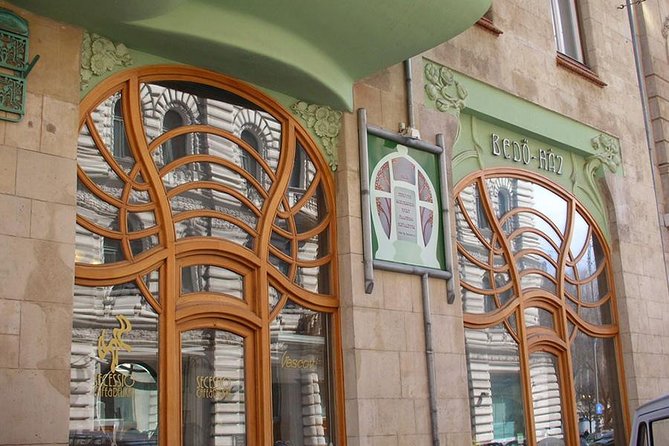
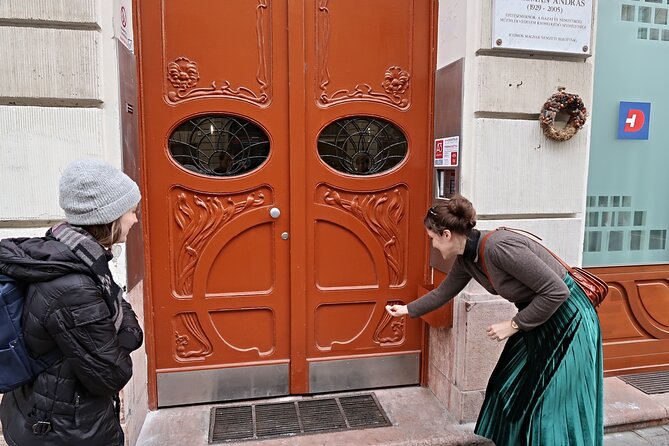
Thonet House is your tile lesson, and it is one of the smartest parts of the tour. Hungarian Art Nouveau became famous for decorative tiles, and Thonet House gives you a visual chance to connect that reputation to a real facade.
The tour also brings in a key ingredient from southern Hungary: the Zsolnay porcelain and ceramics factory in Pécs. The idea here is simple and useful. Hungary’s Art Nouveau look was not only about designs on paper. It depended on local materials and manufacturing innovations. When you understand that, the ornament stops feeling random and starts feeling engineered.
At this stop, you spend about 20 minutes and you can pause to take in the facade patterns. Admission is listed as free for this tour stop.
If you want to get more out of this moment, do this: look for the places where the tilework creates movement, then ask yourself how that changes the building’s “mood.” Even without being able to name every element, you will recognize the difference.
Also, the tour highlights include examples like an Art Nouveau flower shop. Even if you are not entering it like a museum, it helps to see that the style shows up in everyday-facing storefronts and not only grand civic or hotel buildings.
Still to cross in Budapest
- Budapest: City Highlights Sightseeing Cruise★ 4.6 · 43,981 reviews
- Budapest: Unlimited Prosecco, Beer and Aperol Spritz Cruise★ 4.8 · 37,304 reviews
- Budapest: Széchenyi Spa Day Ticket with Optional Upgrades★ 4.3 · 23,911 reviews
Stop 4 Kazinczy Street Synagogue: the Art Nouveau interior, with day-of-week limits
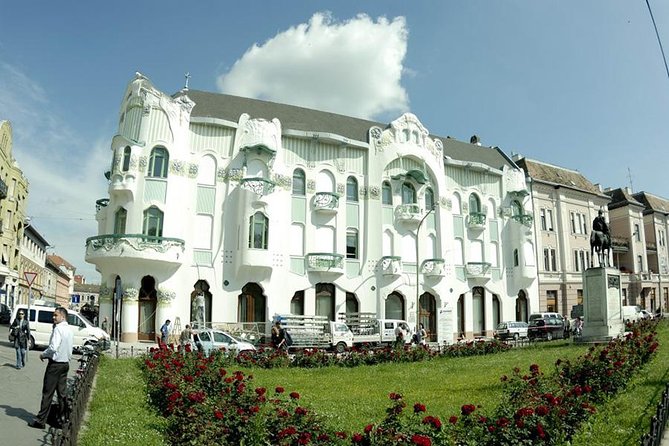
The tour concludes at the Kazinczy Street Synagogue, an orthodox synagogue decorated in Art Nouveau style. This is a powerful way to end, because it shows that Art Nouveau was not only a secular, street-facing style.
Plan for timing and entry rules. The tour includes an interior visit except on Saturdays. Admission for the synagogue is not included, so you should expect an extra cost if you are visiting on a day when the interior is open to tour visits.
You will spend about 25 minutes at this final stop, which is a comfortable amount of time to admire the details without feeling rushed. This is also your best moment to slow down, because religious architecture rewards patience.
One practical note: because this stop is the endpoint, make sure you know your next plan after the tour ends. You will be in a new location, and it is easy to lose track if you assume your route will mirror where you started.
How the guide helps you spot Art Nouveau fast
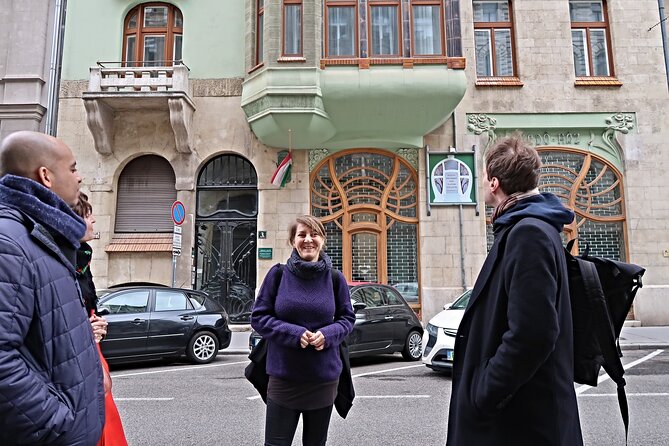
What separates this walk from a basic photo stroll is the way the guide connects the dots. You learn the style’s history and its design elements, then you see those ideas in multiple real buildings across the route. That repetition helps your brain lock onto recognizable features.
You also hear about Hungary’s major Art Nouveau architect, Ödön Lechner, which matters because the buildings you see are not random. They share a design language. Once you learn what Lechner is doing, you will start spotting similar patterns in other buildings you pass afterward.
This is also where the guide’s approach shows up in real-world value. One of the strongest praises from people who have done the tour is that the guide knows a lot and is willing to steer you toward what you care about next. That is the kind of bonus that matters when your time is limited and you do not want to waste it guessing.
If you like architecture, you get useful names and clear explanations. If you are more casual, you still get plenty of concrete “look at this” moments. Either way, you leave with a better eye and a better reason to notice what Budapest offers.
Walking, transit hops, and small-group comfort
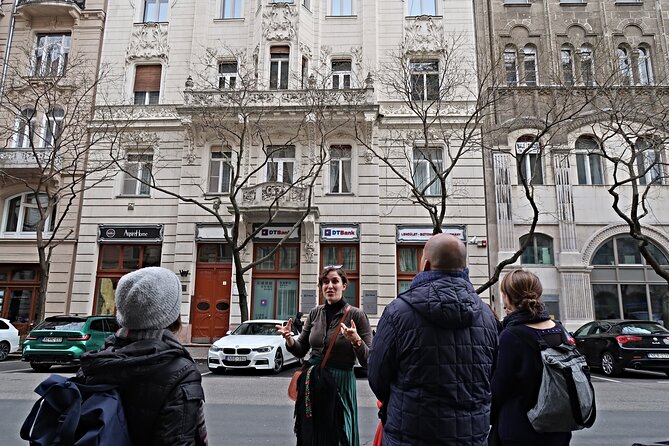
This is a walking tour, but it is not a long-distance slog. Expect about 3 hours of steady movement with a moderate amount of walking. Comfortable shoes are the right call.
The route may include some public transport, and those passes are at your own expense. That is a small cost, but it can improve the experience by cutting down on fatigue and tightening the route.
Small-group size is one of the quiet strengths. With up to six people on the small-group option, you get fewer interruptions and more time for questions. If you are the type who likes to ask, this setup makes it easier to actually hear the answer.
One caution I will give you based on the kind of places involved: the meeting point at Madal Cafe can be busy. Not chaotic, just active. Arrive a few minutes early, and if you see multiple tours gathering, pick the one that matches the guide and your correct start time. It saves a bit of stress on day one.
Price value: what $126.16 buys you in real terms
At $126.16 per person for about three hours, you are paying for a guide who can interpret architecture, not just escort you between stops. That value gets stronger because several of the core stops are listed with free admission tickets for the tour, including the first three sites.
What you should budget for separately is mainly the synagogue interior. The Kazinczy Street Synagogue admission is listed as not included, and whether you can see the interior depends on the day. If you are visiting on a day when the interior is available, you will likely feel this price more directly, because the tour ends with a high-impact final stop.
Also, because this is an English-language tour and comes with a mobile ticket, it is easier to manage than paper-only options. You also get the benefit of a small-group experience, which usually means better interaction and less waiting.
The tour has a strong track record, with a 4.9 rating and a high recommendation rate. A big part of the value is that you leave with a clearer understanding of what you saw, not just images on your phone.
Should you book this Budapest Art Nouveau walking tour?
Book it if you want an organized way to experience Budapest’s Art Nouveau side without getting lost in guidebook pages. It fits best if you like architecture, design details, and learning the “why” behind what you see. It also works well as a first or second day activity, because it trains your eye for later exploring.
Skip it or plan differently if you know you do not want to pay any extra entrance fees at the end, or if your schedule puts you on a day when the synagogue interior visit might be limited. Also, if you struggle with even moderate walking, you might find the pacing a bit brisk.
If you are deciding between a random self-guided wander and a guided route, I would pick the guided option here. The stops are well-chosen, the focus is specific, and you get enough structure to make the city feel more legible fast.
FAQ
How long is the Budapest Art Nouveau walking tour?
The tour lasts about 3 hours.
What language is the tour offered in?
The tour is offered in English.
How big is the group?
It is described as a small-group tour limited to a maximum of six, and the overall maximum is eight travelers.
Where does the tour start and end?
The tour starts at Madal Cafe, Alkotmány u. 4, 1054 Budapest. It ends at the Budapest Orthodox Synagogue, Kazinczy u. 29-31, 1075 Budapest.
Do I get a mobile ticket?
Yes, the tour includes a mobile ticket.
Which buildings do you visit on the route?
You visit Gresham Palace, Postatakarek Bank (Royal Postal Savings Bank), Thonet House, and Kazinczy Street Synagogue.
Are entrance fees included for all stops?
Admission tickets are listed as free for Gresham Palace, Postatakarek Bank, and Thonet House. Admission for the Kazinczy Street Synagogue is not included.
Is public transportation included?
Some use of public transport is mentioned, but public transportation passes are not included, so you would pay at your own expense.
Is the Kazinczy Street Synagogue interior always included?
The interior visit is included except on Saturdays. On Saturdays, you will not include the interior visit as described.
Can I cancel for a full refund?
Yes. You can cancel up to 24 hours in advance for a full refund. If you cancel less than 24 hours before the start time, the amount you paid will not be refunded.
The newest crossings added in Budapest






Walking Tours, compared.

Big Bus Budapest Hop-On Hop-Off Bus and Walking Tour
Read our review →
Budapest City Landmarks Walking Tour in 2 Hours
Read our review →
3-Hour Orientation Walking Tour of Buda and Pest
Read our review →

Budapest Historical Sightseeing – Free Walking Tour
Read our review →
Budapest All in One Small Group Walking Tour with Strudel Stop
Read our review →Browse the lists this tour appears in