
Reviewed · WALKING TOURS
Budapest Art Nouveau Walking Tour
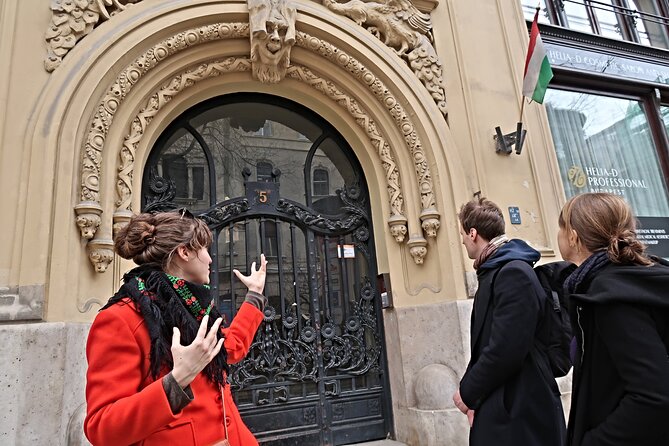
Budapest Art Nouveau has one foot in heaven. In a tight 3-hour walk, you get expert context for why these buildings look so theatrical, from Ödön Lechner’s Postal Bank to the polished grandness of Gresham Palace. I especially like that you are not just looking at facades, you are also getting a peek into entrance halls where the design logic shows up in real details.
What I also like is the way the guide teaches you how to read Hungarian Secession, with Zsolnay porcelain and Asian-flavored motifs explained in a way that feels practical, not like homework. One thing to plan for is that openings vary by day, so on weekends you may lose access to a couple of interiors, and you might face small extra entry fees when certain sites are open.
If you want Art Nouveau to make sense fast, this tour is a strong start.
In This Review
- Key highlights I would not skip
- How Hungarian Secession turns Art Nouveau into something local
- Royal Post at Lechner, plus why entrance halls matter
- Gresham Palace: luxury style you can actually see inside
- Zsolnay porcelain at Thonet House, and how to spot it quickly
- Asian motifs and European Orientalism, explained in plain terms
- The in-between stops: Bedö House, Hungarian State Treasury, and more
- Ending at the Kazinczy Street Synagogue, when it is open
- Price and what makes this a value buy
- When to book, and how to avoid day-of surprises
- Who this tour is for
- Should you book this Budapest Art Nouveau walking tour?
- FAQ
- How long is the Budapest Art Nouveau walking tour?
- How much does the tour cost?
- What kind of guide do I get, and is it in English?
- Where do we meet if there is no hotel pickup?
- Can I enter the Hungarian National Bank on weekends?
- Is the Kazinczy Street Orthodox Synagogue included on Saturdays?
- Are there extra entrance fees for some stops?
- Are tram or metro tickets included?
- Is free cancellation available?
Key highlights I would not skip
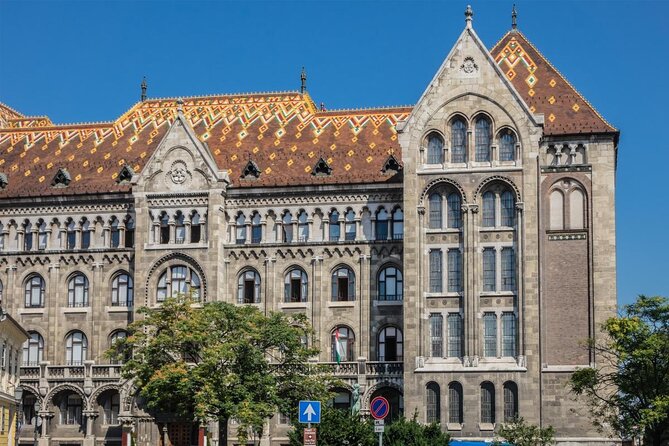
- Royal Post entrance-hall details at Lechner’s flamboyant work, known in Budapest circles for the I-cannot-believe-this-is-real look.
- Gresham Palace facade and interior hints, plus a guide who connects the exterior style to the design thinking inside.
- Zsolnay porcelain tiles and ceramics story, with examples you can spot directly on buildings.
- Asian motifs explained, including why designers leaned on Eastern references during European-wide Orientalism.
- A satisfying finale at Kazinczy Street Synagogue, when it is open, with its distinctive Art Nouveau interior.
How Hungarian Secession turns Art Nouveau into something local
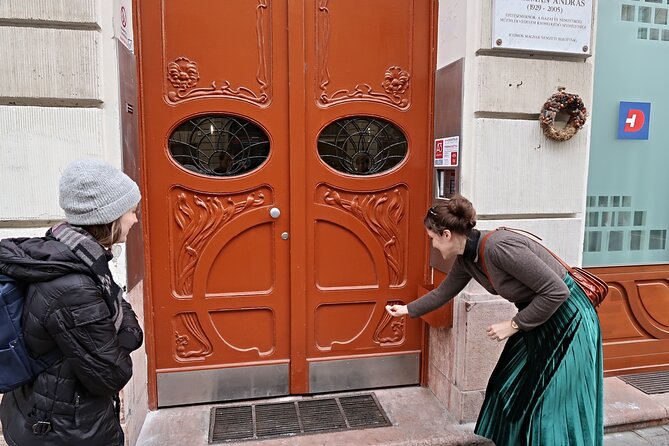
Art Nouveau in Budapest is not the same as Art Nouveau in, say, Paris or Brussels. Here, the style grows a Hungarian identity through a movement often called Hungarian Secession. The core idea is simple and useful: designers wanted modern, expressive design, but they also wanted it to feel connected to Hungary.
The tour frames that identity around the founding figure, Ödön Lechner, and his brand of creativity. You will see how Lechner and other designers used ceramic and porcelain, and how the shapes and decorative choices can include Asian motifs. That sounds abstract, but you will learn what to look for while you walk. Instead of just admiring, you start spotting patterns, materials, and symbolism, then you understand why those choices were radical at the time.
I like that the pace stays focused. In three hours you do not chase every single Art Nouveau corner in the city. You concentrate on the buildings that represent Budapest affluence and cosmopolitan ambition in the early 1900s, when the city felt like it was plugged into wider European fashion and global curiosity.
Also, you end with a different kind of memory. Many people remember only the fanciest facade. After this walk, you are more likely to remember the design system, the material choices, and the way certain motifs get reused like a visual language across multiple stops.
Royal Post at Lechner, plus why entrance halls matter
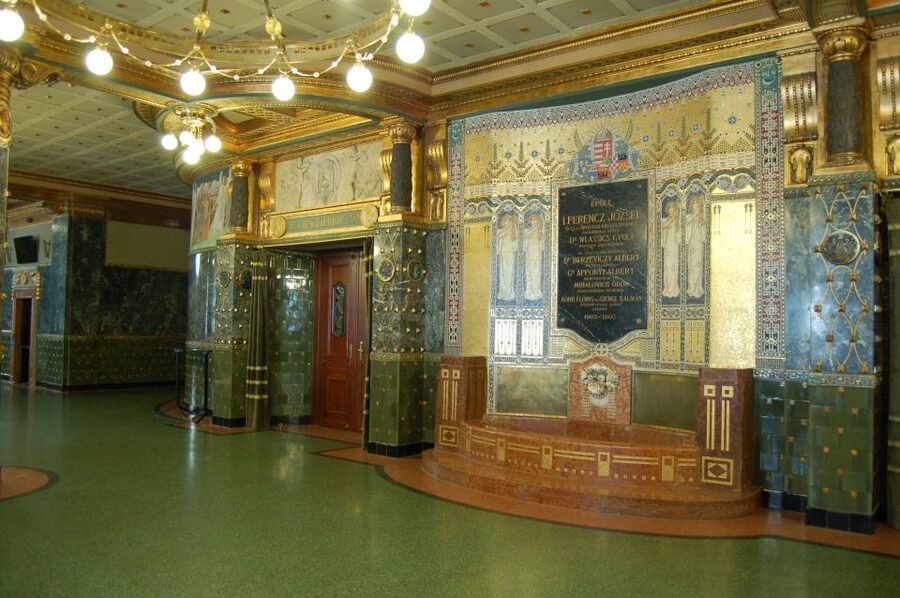
The tour’s first major power move is the Palace of the Royal Post, usually tied to Lechner and famous for its daring surface treatment. You get the best of both worlds: exterior views that let you appreciate how loud and elegant the building can be, plus access to the entrance hall, so you can see how the decoration works at human height.
This is not just a nice bonus. Art Nouveau can feel like a facade-only style, especially when you stop in front of a building from the sidewalk. When you see interior entrance-hall details, you understand that the ornament is not random. It is part of a planned experience, where the street meets the interior through a consistent design mood.
If your goal is to travel smarter, this is a great lesson. You are spending your time where design reveals itself instead of just taking photos at a distance. And you are doing it with a historian guide who can connect what you see to the wider Art Nouveau wave across turn-of-century Europe.
A practical note: the tour description flags that access is available in the Royal Post entrance hall. That matters because some Art Nouveau masterpieces worldwide are exterior-only. Here, you get more than a postcard view.
More of the city, bank to bank on foot:
- Budapest: Buda Castle Walk with Saint Stephen’s Hall
★ 4.5 · 3,012 reviews - Big Bus Budapest Hop-On Hop-Off Bus and Walking Tour
★ 3.5 · 2,206 reviews - Budapest: Buda Castle District Walking Tour
★ 4.6 · 2,108 reviews
Gresham Palace: luxury style you can actually see inside
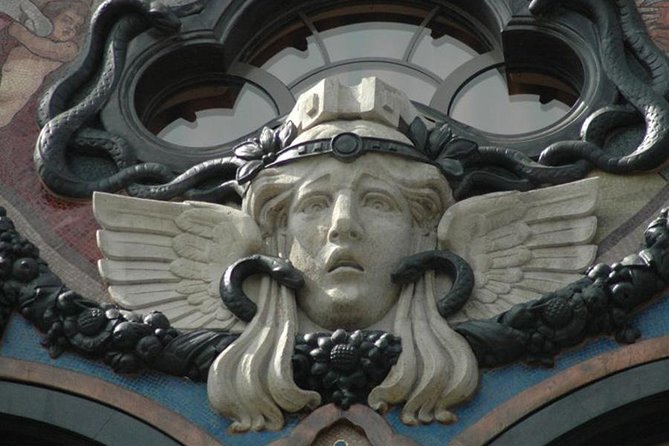
Next you move to Gresham Palace, another showpiece where the tour does something I think is smart. You get to admire the facade and then you get a look into the entrance hall where details are easier to study.
Gresham Palace is a good counterweight to Lechner’s wild energy. Lechner can feel like a visual fireworks show, while a building like Gresham Palace can feel like polished urban confidence. Seeing both in one walk helps you understand that Art Nouveau was not one single look. It could be flamboyant or formal, ornamental or refined, depending on the building and its patrons.
During this stop, you will be guided to notice how design elements show up in multiple places, not just one decorative panel. That is one of the reasons this tour works well for first-timers. You are learning how to observe.
A possible drawback is timing. You only have a few stops in three hours, so you need to be ready to focus. If you stop for long photo sessions at one building, you might feel rushed later. The trade-off is that the tour keeps you moving to the most informative interiors.
Zsolnay porcelain at Thonet House, and how to spot it quickly
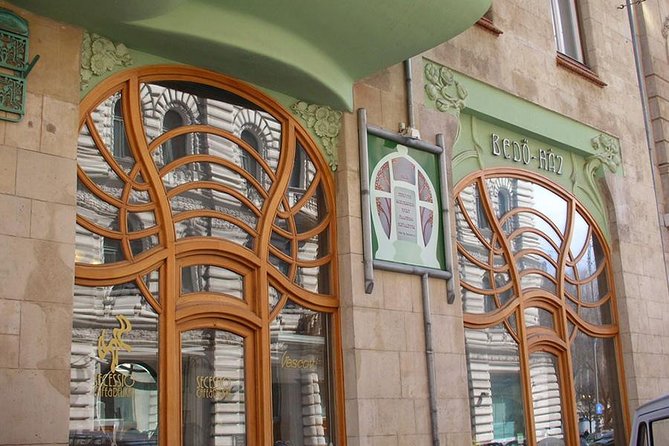
One of the tour’s signature themes is Hungarian Secession’s love affair with ceramics. The guide highlights Zsolnay porcelain tiles, associated with the famous Zsolnay factory in Pécs. This matters because in Budapest, porcelain is not just decoration. It is part of the architecture’s surface identity, how light and color bounce across a facade.
At Thonet House, the tour encourages you to consider the use of these tiles on the exterior. Even if you cannot identify every tile variation instantly, you will learn a quick method: look for areas where surface texture, color variation, and repeating ceramic patterns make the building feel almost alive. That is the kind of detail that often gets missed when you walk by at normal speed.
Zsolnay ceramics also connect Budapest to a broader industrial story. Instead of Art Nouveau being only about handcrafted whimsy, you see how modern production enabled consistent, high-quality decorative work on big city buildings. That is part of why the architecture reads as both elegant and cosmopolitan.
If you only remember one thing from this section, let it be this: in Hungarian Secession, ceramics are not an accessory. They are architecture.
Asian motifs and European Orientalism, explained in plain terms
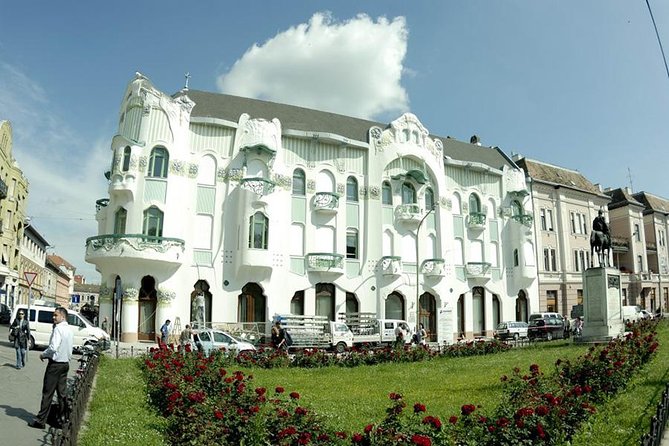
You will also spend time with an idea that can sound complicated on paper: designers using Asian motifs and elements. The tour’s framing includes two layers.
First, you hear about the supposed eastern origins of the Hungarian nation, which some designers tied into artistic choices. Second, you get context for European-wide Orientalism, where designers across Europe were inspired by imagined or romanticized versions of the East.
The value here is not just the explanation. It changes how you interpret what you see. Decorative patterns that might look random become purposeful choices tied to a moment in history when identity, fashion, and art theory mixed in the same room.
Practically, this means you will be looking for design cues like pattern repeats, stylized shapes, and motifs that feel directional or symbolic. The guide helps you connect those visual cues to the cultural influences described during the walk.
This is one of the tour aspects that makes it more than a photo run. You start asking better questions while you are standing in front of the building.
Still to cross in Budapest
- Budapest: City Highlights Sightseeing Cruise★ 4.6 · 43,981 reviews
- Budapest: Unlimited Prosecco, Beer and Aperol Spritz Cruise★ 4.8 · 37,304 reviews
- Budapest: Széchenyi Spa Day Ticket with Optional Upgrades★ 4.3 · 23,911 reviews
The in-between stops: Bedö House, Hungarian State Treasury, and more
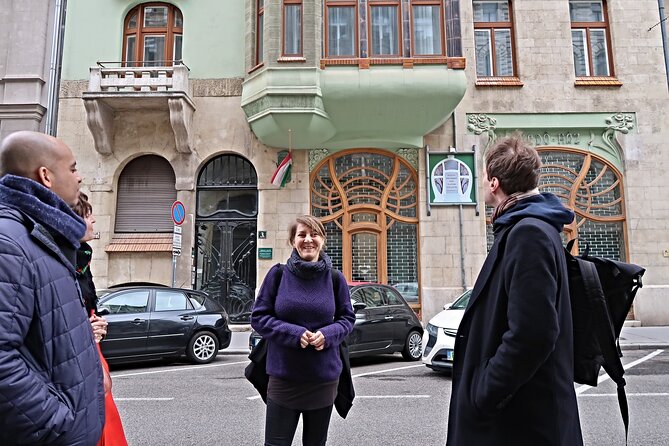
Between the major anchor buildings, you make several other stops that help the style feel real instead of museum-like.
You will have guided time at Bedö House and the Hungarian State Treasury. Both are part of the same Art Nouveau world, and the point is to show how the Hungarian Secession language can shift from building to building. Even when the stops are shorter, you are still learning the same visual grammar: facade energy, material choices, and ornament placement.
You also walk through Rózsavölgyi utca and Paris passage, which are included to keep the experience grounded in Budapest street life. Instead of only staring at landmarks, you see how the design style works along everyday routes. That is where you often get the biggest surprise value, because small passages and side streets can show design concentration that does not look important at first glance.
One more reason I like these in-between stops: they help you build a mental map. After a tour like this, you are more likely to spot Art Nouveau in the city even after the guide is gone.
You are also told to expect a few smaller, specific style moments during the walk, such as a flower shop with an original interior, a department store, and a small Art Nouveau museum and coffee house. Even if you do not go deep inside every single one, the tour gives you enough context to know what you are seeing.
Ending at the Kazinczy Street Synagogue, when it is open
The grand finish is the Kazinczy Street Synagogue, described as a fascinating place to see an Art Nouveau interior. This is a meaningful ending because religious interiors often pull design in a different direction than banks and palaces.
The tour also gives a heads-up: the Orthodox Synagogue on Kazinczy street is closed on Saturdays. On the days it is open, the timing can feel perfect because you finish with something more unusual and emotional than the earlier commercial grandeur.
There may also be an extra entry fee if you want to include the synagogue interior on the day it is available. The tour info lists 2000 HUF per person (about $7). If it is closed, the tour can be adjusted to match what is accessible.
Either way, your takeaway is the same. You will finish with a sharper appreciation for Belle Époque glamour and for the radical design mindset that shaped Budapest in its most optimistic era.
Price and what makes this a value buy
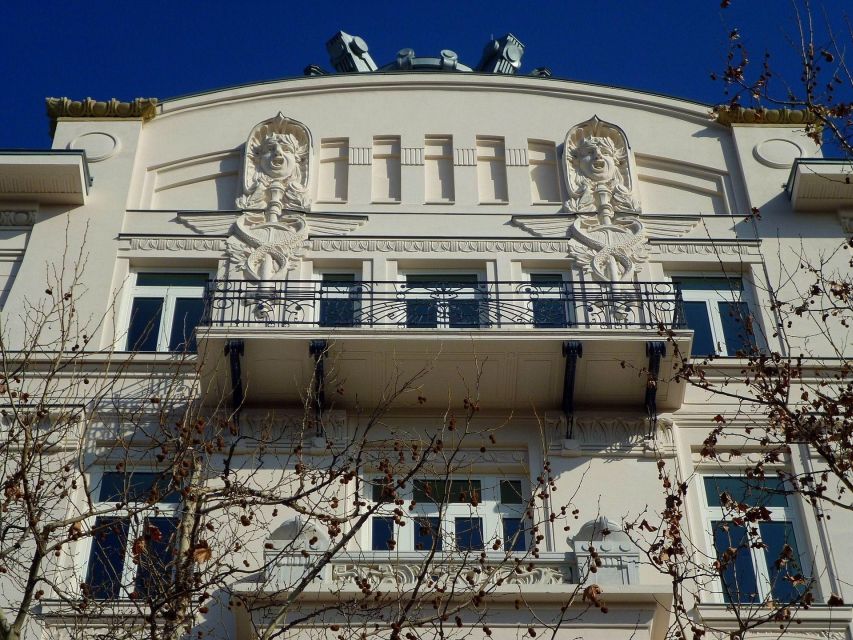
The tour price is $123 per person for a 3-hour walking experience with a historian guide. That is not a budget price. But you are paying for three things that matter in Budapest.
First, you are getting guided access to interior entrance halls at major buildings like the Royal Post and Gresham Palace. Exterior photo time is everywhere. Interior context is less common, and it is exactly where Art Nouveau becomes more than decorative surface.
Second, you are paying for expert storytelling. The tour is led in English by a historian guide, and a guide named Anna is singled out as friendly, very educated in Budapest art and history, and even noted for strong German. That kind of guide quality matters because Art Nouveau can look like pure ornament unless someone teaches you the design logic.
Third, the route is curated around high-impact examples rather than turning into a long wandering march. Three hours forces focus.
What you should factor in: tram and metro tickets are not included, so you might want to plan an easy walk from your starting area or budget for local transport if needed. Also, some interiors can have additional costs on the day, like the House of Hungarian Art Nouveau or the synagogue.
When to book, and how to avoid day-of surprises
This tour is built around buildings that sometimes open and sometimes do not, and the schedule can change depending on the day of the week.
Two specific day-related notes are important:
- On weekends, you cannot enter the Hungarian National Bank, even though it has fine Zsolnay porcelain examples.
- The Kazinczy Street Synagogue is closed on Saturdays.
If your dates land on a weekend or Saturday, do not assume you will see everything exactly as advertised. The tour says it can adapt to your interests or extend to other Art Nouveau sites, including places like Gellért Bath Hotel, the Museum of Applied Arts, and the Geology Museum. That flexibility helps protect your value even if one or two interiors are unavailable.
If you want a smoother day, you should also be ready for small extra entry fees that may apply when certain sites are open. The tour info lists:
- House of Hungarian Art Nouveau: 1000 HUF per person (about $3.50)
- Kazinczy Street Synagogue: 2000 HUF per person (about $7)
Who this tour is for
This walk is ideal if you like:
- Art Nouveau as architecture, not only as decoration
- Budapest city design in the Belle Époque era
- Material-focused sightseeing, especially when ceramics and porcelain are involved
- A small dose of cultural context, like why Hungarian Secession borrowed from Asian motifs and European Orientalism
It might be less ideal if you want a long, unhurried museum-style experience. The format is built for a focused 3-hour route with guided stops, so you will need to accept that you cannot linger everywhere.
If you want to learn the quickest way to spot Hungarian Secession in the wild afterward, this tour is a good match.
Should you book this Budapest Art Nouveau walking tour?
I would book it if you want the best mix of big-name buildings plus real design context in a short time. The Royal Post and Gresham Palace entrance-hall access is exactly the kind of value that turns a walking tour from sightseeing into understanding. Add the guide support on Lechner, Zsolnay porcelain, and Asian motifs, and you get a mental checklist you can use when you explore on your own afterward.
I would think twice if your travel days fall on a weekend or Saturday and you strongly care about the Hungarian National Bank or the Kazinczy Street Synagogue interiors. In that case, it can still work, but you should expect adjustments and maybe different sites.
In short: if you want Art Nouveau in Budapest to make sense fast, this is a practical, high-impact way to start.
FAQ
How long is the Budapest Art Nouveau walking tour?
It lasts 3 hours.
How much does the tour cost?
The price is $123 per person.
What kind of guide do I get, and is it in English?
You get a live tour guide described as an art or architecture historian, and the tour is offered in English.
Where do we meet if there is no hotel pickup?
If you choose the central meeting option, the meeting point is Madal Café, Budapest, Alkotmány u. 4.
Can I enter the Hungarian National Bank on weekends?
No. On weekends you cannot enter the Hungarian National Bank.
Is the Kazinczy Street Orthodox Synagogue included on Saturdays?
No. The Orthodox Synagogue on Kazinczy street is closed on Saturdays.
Are there extra entrance fees for some stops?
Additional costs may apply if certain sites are open. The House of Hungarian Art Nouveau lists 1000 HUF per person (about $3.50), and the Kazinczy Street Synagogue lists 2000 HUF per person (about $7).
Are tram or metro tickets included?
No. Tram and metro tickets are not included.
Is free cancellation available?
Yes. You can cancel up to 24 hours in advance for a full refund, and you can also reserve and pay later.
The newest crossings added in Budapest






Walking Tours, compared.
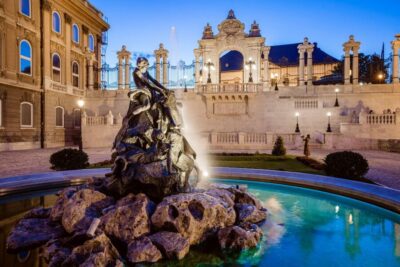
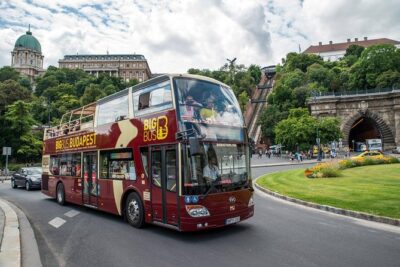
Big Bus Budapest Hop-On Hop-Off Bus and Walking Tour
Read our review →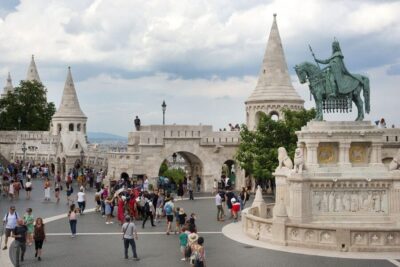
Budapest City Landmarks Walking Tour in 2 Hours
Read our review →
3-Hour Orientation Walking Tour of Buda and Pest
Read our review →
Budapest Historical Sightseeing – Free Walking Tour
Read our review →
Budapest All in One Small Group Walking Tour with Strudel Stop
Read our review →Browse the lists this tour appears in