
Reviewed · WALKING TOURS
Budapest: 3-Hour Walking Tour of Pest with a Historian
Pest has a way of turning history into something you can walk through. This 3-hour Pest walking tour with a historian is built for real context, with stops like St. Stephen’s Basilica inside (ticket included) plus a guide who actively answers questions as you move. I especially like that the pace is balanced, so you get major landmarks without feeling herded from one photo to the next.
The other big win is the small group. With a cap of 10 participants, guides like Judit, Andrea, and Greg can tailor explanations and keep it conversational, not lecture-like. The only real consideration is simple: it is still a 3-hour city walk, plus a subway ride, so wear comfortable shoes and plan for streets that change surface and slope.
In This Review
- Key highlights you should care about
- Why Pest with a historian is a smart use of 3 hours
- Where you meet: Erzsébet Square and Kempinski Hotel Corvinus
- St. Stephen’s Basilica, ticket included, and why the interior matters
- Heroes’ Square: where stories about Hungary’s leaders click
- Andrássy Avenue and the State Opera area: UNESCO on foot
- Gresham Palace, the Academy of Sciences, and the Danube Promenade feel
- Zrínyi Street cobblestones: where Pest feels like Pest
- Riding the Millennium Underground: the oldest subway ride on the continent
- Price and value: what $57 buys you here
- Who this tour suits best (and who should think twice)
- Should you book Budapest Explorers for the Pest historian walk?
- FAQ
- How long is the Budapest Pest walking tour?
- Is the tour offered in English?
- What is included in the tour price?
- Do I need to buy a ticket for St. Stephen’s Basilica?
- Will the tour include a subway ride?
- Where is the meeting point?
- What is the maximum group size?
- Is there free cancellation?
Key highlights you should care about
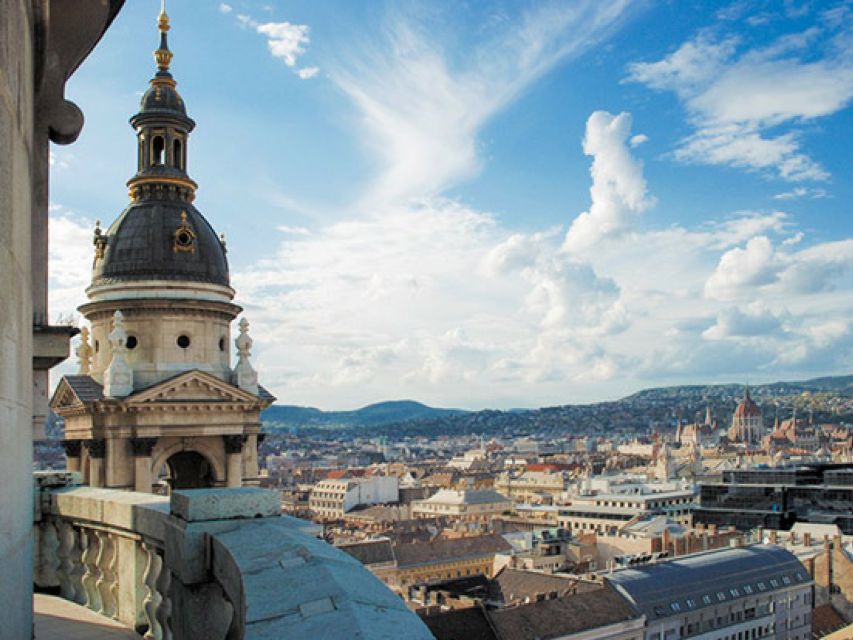
- St. Stephen’s Basilica inside, with your entry ticket included
- Heroes’ Square and a clear, story-driven tour of influential Hungarian figures
- A ride on the Millennium Underground, the oldest subway line on the continent
- Andrássy Avenue’s UNESCO setting, with landmark views as you stroll
- A real Pest focus, with contrasts between Pest and Buda explained as you go
- Small-group questions, with guides praised for warm delivery and great pacing
Why Pest with a historian is a smart use of 3 hours
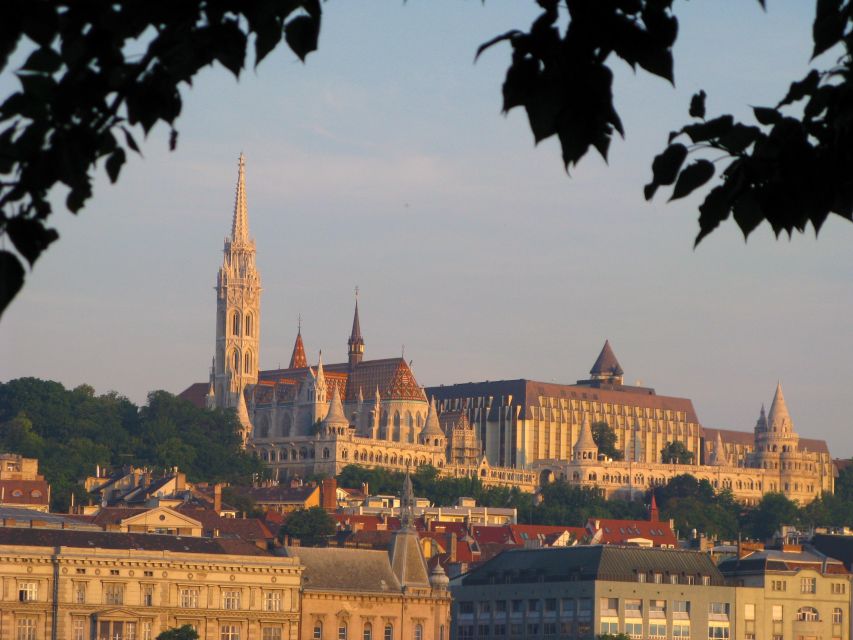
Budapest is famous for big sights, but the history can feel scattered unless you have a thread. This tour gives you that thread fast. You spend your time on Pest, the “younger” and more downtown side of the city, and you get the feel of how it has worked over time: what people cared about, how politics shifted, and how daily life looks today.
I like tours that treat time like money. At 3 hours, you do not have room for random stops. Here, every segment supports the story. You hit major anchor points, then connect them to what you are seeing on the streets, from ornate architecture to the gritty comfort of cobblestones. And because it is led by a historian, the guide keeps the what and the why together, so you are not just collecting names.
You will also notice something important about the style. Multiple guides were praised for turning long timelines into understandable chunks. That matters because Hungary’s 1000-year story can overwhelm you if you try to self-guide with guidebooks alone.
Where you meet: Erzsébet Square and Kempinski Hotel Corvinus
Your tour meets right in the center of action, in front of Kempinski Hotel Corvinus Budapest on Erzsébet tér 7, facing the Ferris wheel on Erzsébet square. If you are coming in by metro, you can reach Deák Ferenc tér stop on M1, M2, or M3, then connect by foot from there. Buses and trams also serve the area, so you are not stuck with one route.
I like this meeting point because it is easy to orient yourself. Erzsébet square is not some obscure side street, so you can arrive, take a quick look around, and calm your nerves before the walk starts. It also means you will not spend the first 20 minutes trying to decode where you are.
Practical tip: arrive a few minutes early. Not because anything is complicated, but because you want to settle in before the guide kicks off the Pest story.
More of the city, bank to bank on foot:
- Budapest: Buda Castle Walk with Saint Stephen’s Hall
★ 4.5 · 3,012 reviews - Big Bus Budapest Hop-On Hop-Off Bus and Walking Tour
★ 3.5 · 2,206 reviews - Budapest: Buda Castle District Walking Tour
★ 4.6 · 2,108 reviews
St. Stephen’s Basilica, ticket included, and why the interior matters
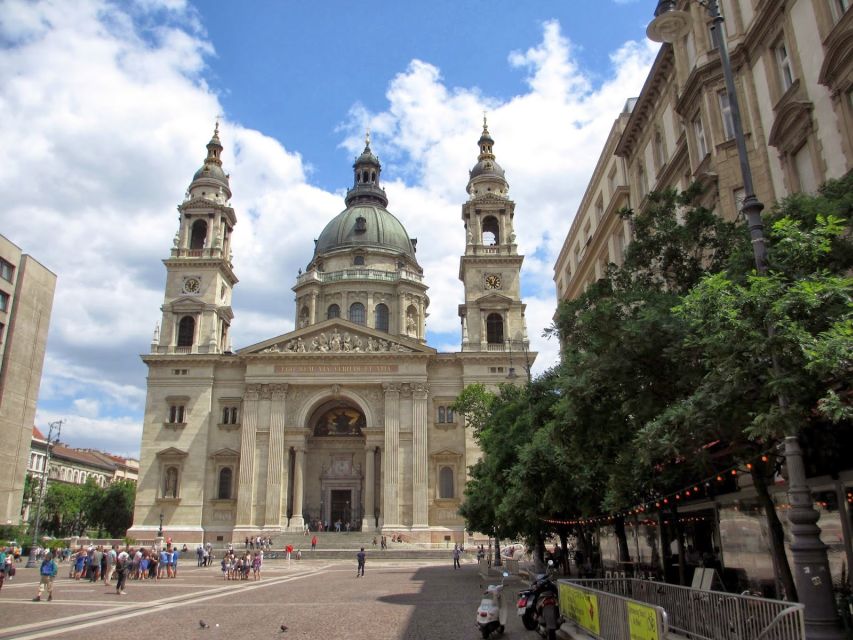
One of the cleanest value plays here is that St. Stephen’s Basilica is not treated as an outside-photo stop. You visit the basilica inside, and the entrance ticket is included. That shifts the whole experience. Exterior views give you shape and scale, but the interior is where you can slow down and absorb why this church is such a big deal in Budapest.
The tour positions it as Budapest’s largest church, and it is an ideal early anchor. If you are new to the city, this kind of landmark helps you understand the city’s priorities at a glance: what was built, what was funded, and what the culture chose to make visible.
Is there any drawback? If you have little patience for indoor sightseeing, this could feel like a sit-and-look moment when you might prefer more street time. Still, for most first-time visitors, it is a strong payoff because it starts you with the emotional and historical weight of one of the city’s most prominent institutions.
Heroes’ Square: where stories about Hungary’s leaders click
Next, you shift from sacred space to public memory. Heroes’ Square is part landmark, part history lesson. The tour highlights the “most influential historical persons,” and the guide explains the context so those figures do not feel like random statues.
I like this stop because it teaches you how a country tells its own story in stone and space. If you later walk around Budapest on your own, you will recognize the symbolism more quickly. That is the real benefit of pairing a visual place with interpretation.
The tour also connects this stop to a big-picture frame: 1000 years of Hungarian history. That does not mean you get one overwhelming wall of dates. In guides’ praised delivery, you get a structured timeline that you can actually remember, then carry into later stops as the city changes around you.
Andrássy Avenue and the State Opera area: UNESCO on foot
Then comes the elegant walking section: Andrássy Avenue, identified as a UNESCO world heritage site. You get the feel of how Pest’s downtown power and wealth expressed themselves through architecture and urban planning, not just through events.
This part is also a visual reset from the heavier history stops. You will be walking a grand avenue lined with attention-grabbing facades, and the route includes the Hungarian State Opera. Even if opera is not your top interest, the building and setting help you understand why Budapest looks the way it does in its civic-center areas.
One practical consideration: this is still a walk. If the weather is rough, you may feel it more here than in sheltered indoor stops. Bring a layer and be ready for variable conditions, because the route is designed to keep you moving rather than stopping every five minutes.
Still to cross in Budapest
- Budapest: City Highlights Sightseeing Cruise★ 4.6 · 43,981 reviews
- Budapest: Unlimited Prosecco, Beer and Aperol Spritz Cruise★ 4.8 · 37,304 reviews
- Budapest: Széchenyi Spa Day Ticket with Optional Upgrades★ 4.3 · 23,911 reviews
Gresham Palace, the Academy of Sciences, and the Danube Promenade feel
The tour threads through a cluster of iconic Pest sights and institutions. You will see Gresham Palace noted for its Art Nouveau splendor, plus the historic Academy of Sciences, and you also pass the Danube Promenade.
I like these because they show Pest as more than just “old buildings.” You get a sense of what the city wanted to communicate: culture (Art Nouveau styling), learning and institutions (the Academy), and the city’s relationship to its riverfront (the Danube Promenade).
A good guide keeps the eye moving. If you only look at what is pretty, you miss the point. The strength of this tour is that you get enough historical and political context to make these architectural statements feel connected to real change over time.
If you prefer to travel by vibe, this section may still work. But if you want your walking tour to explain what you are seeing, the historian angle gives you that extra layer without dragging the pace.
Zrínyi Street cobblestones: where Pest feels like Pest
Some Budapest tours stay stuck at the postcard level. This one includes moments that remind you you are walking a real city. Zrínyi Street gets a specific callout for its cobblestones, which means the ground under your feet becomes part of the experience.
This is not just an aesthetic detail. Cobblestones change how a street feels. They slow you down slightly, and they make it harder to rush. That helps you absorb the surrounding architecture and street texture.
And since the tour is Pest-focused, this kind of street-level stop supports the larger contrast the guide explains between Pest and Buda residents. You are not just seeing buildings, you are learning how the city’s “feel” shaped different identities and daily routines.
Riding the Millennium Underground: the oldest subway ride on the continent
At some point, you get on public transit. The highlights list specifically includes the Millennium Underground, described as the oldest one on the continent. In a tour context, that matters more than you might think.
Walking gives you context, but a subway ride gives you tempo. You shift from sightseeing to real transit, and that helps you connect Budapest’s history to how it moves today. It is also one of those experiences that feels oddly personal even when you are with a small group. You are not just looking at the city, you are moving through it.
What I like most is that it is not optional. The tour includes the subway ticket(s), so you can focus on the experience rather than budgeting or figuring out fare rules mid-walk.
A drawback to consider: if you dislike transit segments or prefer fully walk-only tours, this one includes a set subway portion. It is still short, and it fits the story, but it is part of the structure.
Price and value: what $57 buys you here
The price is $57 per person for a 3-hour guided walking tour with a historian. On paper, that is not the cheapest option in Budapest, but it does not try to be. The value comes from three concrete inclusions:
- Historian guide (not just a general guide)
- Entrance ticket to St. Stephen’s Basilica
- Subway ticket(s)
When you add up paid entries and local transit, the total is less abstract. Plus, the small-group format (limited to 10 participants) gives you more chances to ask questions and actually interact with the guide. That is where the cost tends to pay off, because Budapest history is not something you always get right from quick audio snippets.
I also factor in pacing. Guides were consistently praised for having a pace that felt right and content that covered big eras without turning into a nonstop monologue. That matters. A tour can include the right sights and still feel inefficient. Here, the 3-hour timing seems to be used well.
Who this tour suits best (and who should think twice)
This tour is a strong match if you:
- Want a Pest-focused overview that also explains the past and how people live with it today
- Like history that connects to visible places, not just facts on a page
- Enjoy asking questions, including about major periods like the Austro-Hungarian era, WWII, and the Communist era, since guides have been praised for covering those themes clearly
- Prefer a small group rather than a big crowd shuffle
You might want to think twice if you:
- Want a fully self-paced route with no transit segment
- Hate walking for 3 hours, even if the group stays small and the stops are well chosen
If you are visiting for the first time and want your bearings fast, I think this is exactly the kind of tour that makes later exploration easier.
Should you book Budapest Explorers for the Pest historian walk?
Yes, if you want a tour that makes Pest feel understandable instead of just photographed. The strongest reasons to book are practical: the basilica entry is included, you ride the Millennium Underground, and you walk Andrássy Avenue in a way that is tied to context. The small-group size and the consistent praise for guides like Judit, Barbara, Monica, Andrea, and Greg suggest you are likely to get both structure and room for questions.
My decision rule is simple: do you want the city explained while you still have energy to absorb it? If that sounds like you, book it. If you already have a strong interest in Hungarian political eras and want the “why” behind what you see, this tour is a solid use of a half-morning or early afternoon.
FAQ
How long is the Budapest Pest walking tour?
It lasts 3 hours.
Is the tour offered in English?
Yes, the tour is in English.
What is included in the tour price?
The tour includes a historian guide, the entrance ticket to St. Stephen’s Basilica, subway ticket(s), and the walking tour.
Do I need to buy a ticket for St. Stephen’s Basilica?
No. The entrance ticket to St. Stephen’s Basilica is included.
Will the tour include a subway ride?
Yes. You will ride the Millennium Underground, and subway ticket(s) are included.
Where is the meeting point?
The meeting point is in front of Kempinski Hotel Corvinus Budapest, facing the Ferris wheel on Erzsébet square (Erzsébet tér 7, 1051).
What is the maximum group size?
The group is limited to 10 participants.
Is there free cancellation?
Yes. Free cancellation is available up to 24 hours in advance for a full refund.
The newest crossings added in Budapest






Walking Tours, compared.


Big Bus Budapest Hop-On Hop-Off Bus and Walking Tour
Read our review →
Budapest City Landmarks Walking Tour in 2 Hours
Read our review →
3-Hour Orientation Walking Tour of Buda and Pest
Read our review →

Budapest Historical Sightseeing – Free Walking Tour
Read our review →
Budapest All in One Small Group Walking Tour with Strudel Stop
Read our review →Browse the lists this tour appears in