
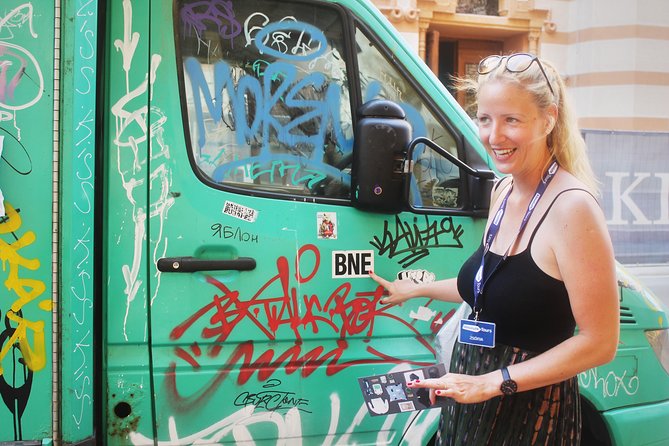
Reviewed · WALKING TOURS
Alternative Budapest Walking Tour
Budapest has a second face, if you walk for it. This alternative route connects street art with today’s underground culture, bouncing between Buda and Pest and steering you away from the usual postcard loops. You’re not just looking at walls, you’re learning how the scene grew and where it’s heading next.
Two things I really like: the tour is built for small groups (max 10), so you get time for real questions instead of shouting over the crowd. And I love that guides are tuned into what’s happening now, not just what used to happen, including how murals, music venues, and ruin bars fit together.
One thing to consider: this is a walking-heavy tour with uneven streets and lots of steps, so it’s not a match for wheelchair users or people with mobility impairments. Come with comfortable shoes and a weather-ready layer.
In This Review
- Key things that make this alternative Budapest walk worth your time
- Meeting at the Lutheran Church, then walking into the alternative map
- Why the street art route beats the classic Budapest loop
- Jewish district stops: squats, cultural centers, and why the city changed
- Ruin bars and live music venues, where the street art spills into nightlife
- Coffee, beer, and design shops: the practical break that keeps the tour flowing
- Your guide drives the difference, from Raymond to Petra to Anna
- What you pay, and why it can still feel like value
- How the 2.5 hours likely plays out, stop by stop
- Who this tour suits best, and who should choose another style
- Should you book the Alternative Budapest Walking Tour?
- FAQ
- How long is the Alternative Budapest Walking Tour?
- What is the group size?
- Where do we meet the guide?
- Is the tour in English?
- What is included in the price?
- Are entrance fees included?
- Are food and drinks included?
- Is the tour refundable if plans change?
- Is this tour suitable for people with mobility impairments?
Key things that make this alternative Budapest walk worth your time
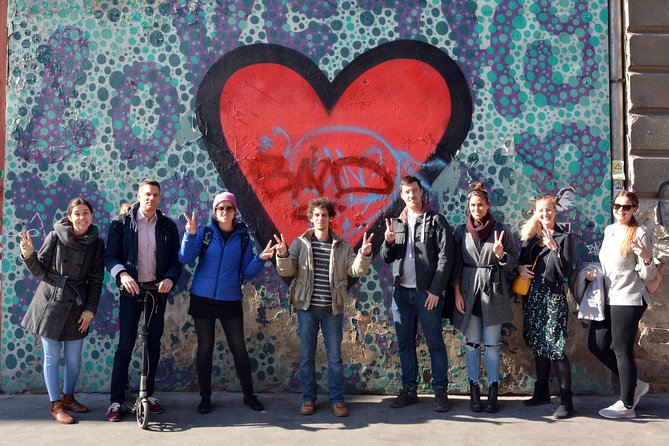
- Street art plus local context, with pointers on graffiti writers and how the scene works
- Real alternative stops like ruin bars, art collectives, studios, and live music venues
- Jewish district focus, where current culture grew out of forgotten and ignored spaces
- Small group pace, so you can ask questions and get tailored advice for the rest of your trip
- Guides with current city know-how, including names like Raymond, Anna, and Petra showing up across tours
- Coffee or a beer break, often at creative spaces that feel like part of the neighborhood
Meeting at the Lutheran Church, then walking into the alternative map
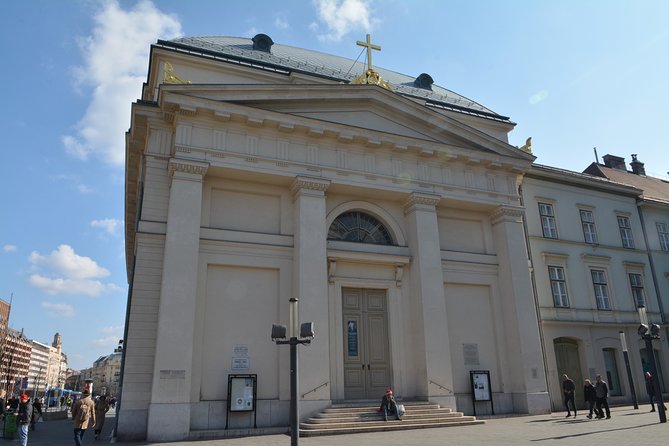
The tour starts at a very specific spot, in front of the Lutheran Church, the pale yellow one. You meet your guide on the church steps, right where it’s easy to locate everyone before the group splits off into smaller streets. That matters, because the whole vibe of the walk is about finding your bearings first, then getting out of the tourist flow.
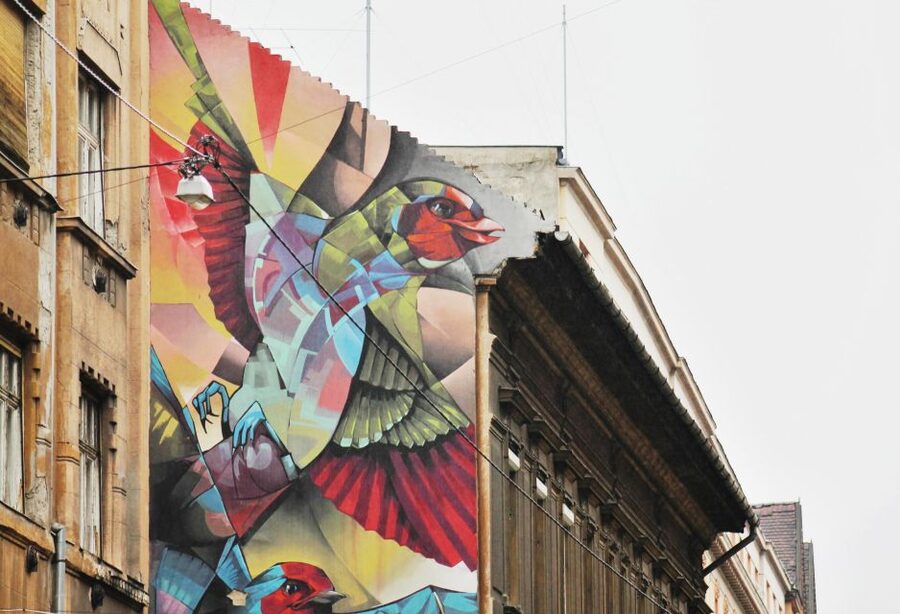
From there, you’ll slowly shift from “main streets you recognize” to the neighborhoods where street art and alternative culture are the point. A common theme is that the guide gets you looking at details: building facades, the logic behind murals, and how certain blocks function as meeting places for artists, musicians, and design fans.
If you’re the type who likes getting a city layout in your head fast, this kind of start helps. By the time you’re heading deeper into the Jewish district and the 7th district area, you’re not just following stops, you’re understanding why those stops exist where they do.
Why the street art route beats the classic Budapest loop
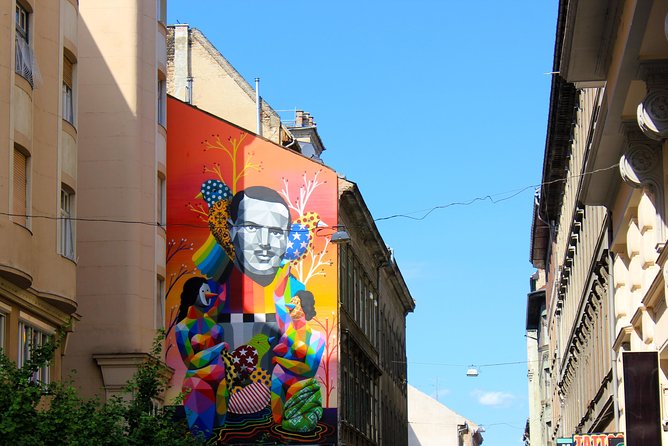
Most Budapest tours focus on what’s famous, then quickly move on. This one focuses on what’s changing and what locals talk about when they mean today’s Budapest. You’ll be out seeing murals and street art, but the best part is how the guide ties the artwork to the city’s underground culture rather than treating it like decoration.
You can expect explanation that goes beyond what you see. The tour is designed to give you a working sense of local street art culture, including who’s making it and why certain areas became canvases in the first place. It also helps you notice the way political and social pressures can show up in art, especially in neighborhoods that have had to reinvent themselves.
That’s also where you’ll start to feel the difference between “historical landmark viewing” and “living culture noticing.” One guide approach you’ll likely experience is a mix of stories and practical interpretation, so you finish the walk knowing what to look for if you keep wandering on your own.
More of the city, bank to bank on foot:
- Budapest: Buda Castle Walk with Saint Stephen’s Hall
★ 4.5 · 3,012 reviews - Big Bus Budapest Hop-On Hop-Off Bus and Walking Tour
★ 3.5 · 2,206 reviews - Budapest: Buda Castle District Walking Tour
★ 4.6 · 2,108 reviews
Jewish district stops: squats, cultural centers, and why the city changed
A major draw here is heading toward the Jewish district, where alternative culture often kicks off. The core idea is that Budapest has districts that used to be neglected, and those areas started attracting artists, musicians, and small communities looking for space and a lower cost of living.
In this part of the walk, you’ll hear how squats and cultural centers developed, and you may also see references to abandoned synagogues and art galleries tied to that story. Even when a specific building is quiet from the outside, the guide will give you the meaning behind it, like who used the space, what it replaced, and how it connects to today’s art scene.
A couple of guides highlighted across tours have a similar style: they keep the pace human, and they talk in a way that makes the area feel like a place people live and create, not a set of facts you memorize. Guides with names like Cristian (sometimes spelled differently in listings), Krisztián, and Anna show up repeatedly, and the consistent strength is how they connect the Jewish quarter to modern nightlife, not just to the past.
There’s also an important practical upside. Once you understand the neighborhood’s reinvention story, it’s easier to make sense of why certain bars and cafés feel so embedded in the streets around them. You won’t just think, Nice bar. You’ll think, This makes sense for this block.
Ruin bars and live music venues, where the street art spills into nightlife
Ruin bars are the signature move, and this tour uses them as more than a drink stop. The idea is that these spaces became community hubs, part bar, part cultural center, and part stage for the city’s music and design scene. You might hear about how they support local artists and help neighborhoods regain energy.
Places you could run into include famous ruin bars like Szimpla Kert, and the tour also points you toward the broader ecosystem: live music venues, hangout spots, and spaces where creative people gather. If the day’s route includes it, you could even end up around venues like the A38 ship bar, which is exactly the kind of oddball location that fits this alternative Budapest mood.
What makes these stops work for most visitors is that they’re not just random nightlife suggestions. The guide explains how ruin bars connect to the city’s alternative culture, including the way they revived parts of the entertainment district after it had fallen into neglect.
One more thing I like: the tour doesn’t treat alcohol as the main event. It’s more like a pause that keeps you moving through the scene with less fatigue. If you’re not into beer, there are coffee and creative spaces in the mix.
Coffee, beer, and design shops: the practical break that keeps the tour flowing
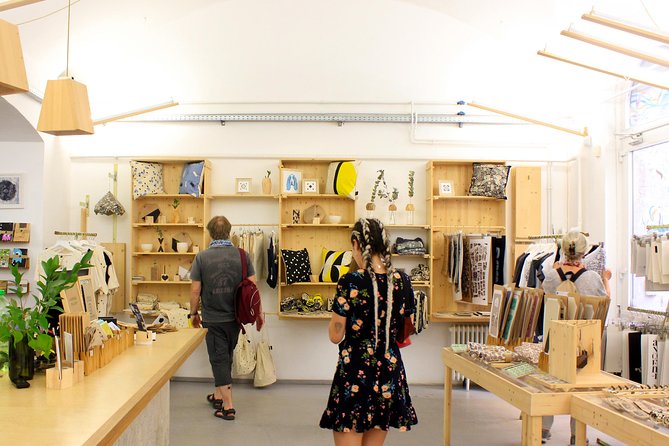
This walk includes breaks, and that’s genuinely smart for a 2.5 hour experience in Budapest weather. You may stop for a coffee or beer at an art and coffee collective, or at a ruin bar that doubles as a community center. In some routes, you might also pass by places tied to analogue photography, creative workshops, or even bike workshop culture.
One specific shop that showed up in past experiences is Printa, an eco design shop where a coffee stop made the tour feel grounded in modern local taste. Another common pairing is a book shop café stop, which is a great break point if you’re trying to stay warm or just reset your brain between mural clusters.
The big value is that these stops are part of the storytelling. Instead of being purely a rest break, they help you see what the alternative scene actually buys, reads, listens to, and talks about. You’ll leave with better “what to do next” ideas than you’d get from a generic sightseeing list.
Still to cross in Budapest
- Budapest: City Highlights Sightseeing Cruise★ 4.6 · 43,981 reviews
- Budapest: Unlimited Prosecco, Beer and Aperol Spritz Cruise★ 4.8 · 37,304 reviews
- Budapest: Széchenyi Spa Day Ticket with Optional Upgrades★ 4.3 · 23,911 reviews
Your guide drives the difference, from Raymond to Petra to Anna
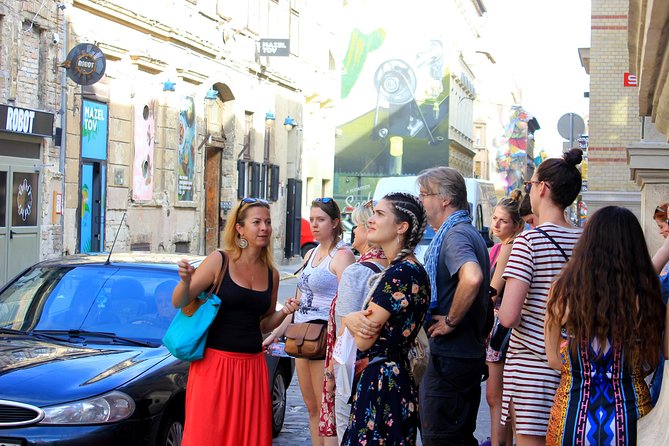
This is one of those tours where the guide is the product. You’ll see that in the way small-group touring works here: guides can answer questions, shift pace, and point out what you should notice during your remaining time in Budapest.
In the feedback patterns, guide names like Raymond (and Ray), Petra, Anna, Bella, Lauren, Bogata, Antonia, and Zsophia come up again and again. The most consistent praise is not just that the facts are correct, it’s the tone. The guides tend to be friendly and responsive, with an approach that feels personal rather than scripted.
A good example of why that matters: the tour often ends with up-to-the-minute pointers for where to go next. If you’re trying to pick a neighborhood for dinner, find a music venue, or choose between two ruin bars, you can benefit from that local sorting. You’re not guessing in the dark after the walk.
If your language comfort is English, you’re also in good shape here. The tour is offered in English, and it’s paced for visitors who want to understand the city, not just “hear some background.”
What you pay, and why it can still feel like value
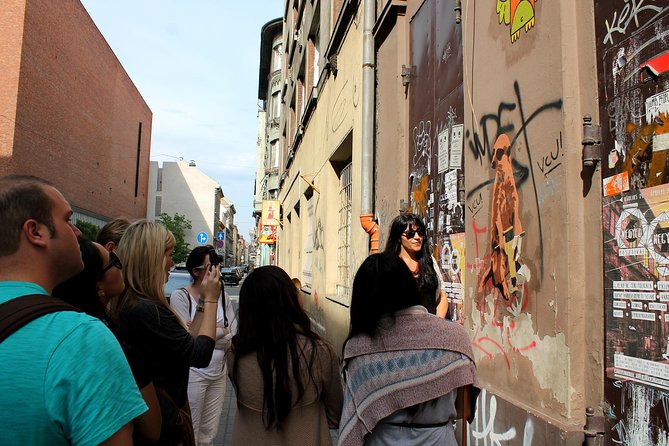
The price listed is $67 per person for about 2.5 hours, with a small group capped at 10. That’s not the cheapest walking tour in Budapest, and one comment does mention it can feel a bit pricey.
But here’s where the value argument makes sense. You’re paying for two things that are hard to replicate on your own:
- Expert interpretation of street art, alternative spaces, and the Jewish district reinvention story
- Route access to places you’d likely miss if you only follow the classic tourist map
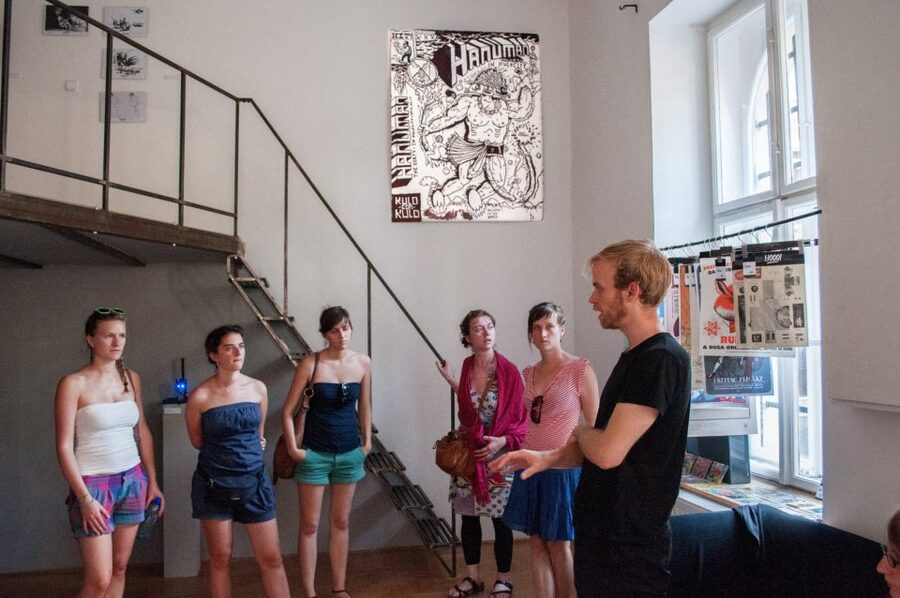
Also, with small groups, the guide can spend more time per person. In a bigger tour, your questions get cut off. Here, the format gives you a better chance to get answers that actually help you later that evening.
My practical take: if you’re the type who enjoys culture that feels current, and you like seeing how neighborhoods evolve, this price can feel fair. If you only want must-see monuments, you’ll probably feel underwhelmed. You’re buying interpretation of Budapest’s street-level present.
How the 2.5 hours likely plays out, stop by stop
You won’t get an ultra-structured museum vibe. This is more like a guided walk that keeps tightening the story as you go.
Start near Deák Ferenc Square area by the pale yellow Lutheran Church. After the meeting point and quick orientation, the guide starts training your eye. This early stage is mostly about setting context, so later stops land better.
Move into the Jewish district and the 7th district atmosphere. This is where you’ll connect street art with the neighborhood’s changing use of space. You may see street art clusters, references to cultural centers, and cues that the area has gone through a dramatic cultural shift.
Hit ruin bars and community-style venues. Expect at least one key stop where the guide connects nightlife to community history. Even if you’re not there to drink, the explanation is the point, and the break helps you keep your energy.
Pause at creative cafés, design shops, or book café spaces. These stops keep the tour comfortable and also make the alternative scene feel tangible. You’re seeing how people spend afternoons, not just how they party at night.
End with practical recommendations. The tour’s final push is often about helping you use the rest of your trip well: where to go for more street art, which kind of venue fits your taste, and how to keep exploring without walking in circles.
Because the exact street art wall, café, or bar can vary by season and what’s open, think of the stops as “types of places” the guide will match to what you’ll enjoy most.
Who this tour suits best, and who should choose another style
You’ll love this tour if you:
- Like street art and want context, not just photos
- Want to understand Budapest’s alternative culture as a living scene
- Enjoy small-group walks where you can ask questions and get suggestions for the rest of your stay
- Prefer neighborhoods and street-level culture over only churches and museum interiors
You might skip it if:
- You need fully accessible routes, because this walk isn’t set up for mobility impairments or wheelchair users
- You want a monument-first itinerary with lots of indoor time
- You’re expecting a strictly chronological history tour, because the focus is the present and future of the scene more than a museum-style timeline
If you’re traveling with friends who think they want something “different but safe and informative,” this hits that sweet spot. The group stays small, the guide is the glue, and you still get structure.
Should you book the Alternative Budapest Walking Tour?
I think it’s worth booking if your Budapest trip includes at least one evening where you want to feel what’s happening beyond the main sights. This tour is built to help you see the city’s alternative side with street art, ruin bars, and neighborhood stories you can actually use.
Do book it if you enjoy walking, you’re curious about culture that’s still growing, and you want a guide who can steer you toward the right kind of cafés, galleries, and music venues. Skip or pair it with something monument-focused if you’re mainly chasing famous landmarks.
If you’re ready to experience Budapest as a place people make and remake daily, this is one of the smartest ways to start.
FAQ
How long is the Alternative Budapest Walking Tour?
The tour duration is listed as 2.5 hours.
What is the group size?
It is a small group limited to 10 participants.
Where do we meet the guide?
Meet your guide in front of the Lutheran Church (pale yellow), on the church steps.
Is the tour in English?
Yes, the live tour guide offers English.
What is included in the price?
The walking tour and a professional guide are included.
Are entrance fees included?
No, entrance fees are not included.
Are food and drinks included?
No, food and beverages are not included.
Is the tour refundable if plans change?
Free cancellation is offered up to 24 hours in advance for a full refund.
Is this tour suitable for people with mobility impairments?
No, it is not suitable for people with mobility impairments or wheelchair users.
The newest crossings added in Budapest





Walking Tours, compared.

Big Bus Budapest Hop-On Hop-Off Bus and Walking Tour
Read our review →
Budapest City Landmarks Walking Tour in 2 Hours
Read our review →
3-Hour Orientation Walking Tour of Buda and Pest
Read our review →

Budapest Historical Sightseeing – Free Walking Tour
Read our review →
Budapest All in One Small Group Walking Tour with Strudel Stop
Read our review →Browse the lists this tour appears in