
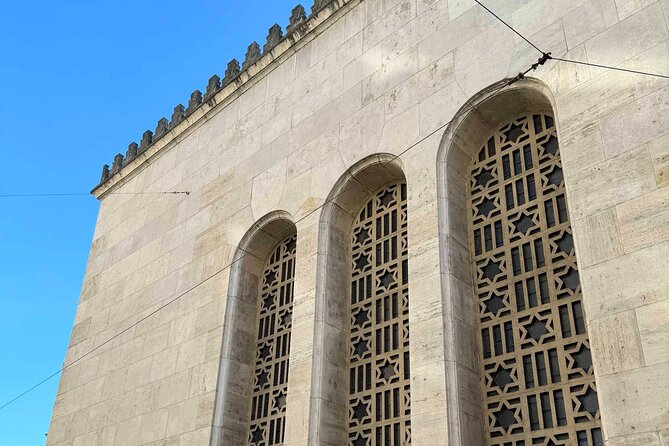
Reviewed · JEWISH BUDAPEST & GREAT SYNAGOGUE TOURS
A Self-Guided Tour Through Budapest’s Jewish Quarter
District 7 tells stories at walking pace. This self-guided audio tour takes you through Budapest’s Jewish Quarter with stops that mix major landmarks, street-level reminders of WWII, and today’s nightlife. The narration is by Vince, a Budapest-born history fan and wine lover, who threads in surprising connections like Houdini and even pop-culture names.
Two things I really like: you get the freedom to choose your own speed, and the route is short enough to feel doable (about 1 hour 15 minutes to 1 hour 45 minutes). You’ll also have offline audio and maps, so you are not stuck hunting for service when you are on the move. One thing to think about: this is not a traditional, deep guided lecture style tour, so if you want the neighborhood to feel very strictly “Jewish-only,” you may find the mix leans into art, culture, and broader city stories more than expected.
In This Review
- Key Highlights to Look For
- Why This Walk Fits Your Day (Self-Guided Audio, Offline Maps)
- From Operetta Theatre to Dohány Street Synagogue: The Big Opening Moment
- Ghetto Wall Fragment: A Short Stop With Heavy Weight
- Gozsdu Passage: When Old Streets Become a Modern Hangout
- Rumbach Street Synagogue: A Restoration Story You Can Feel
- Theodor Herzl and Heroes’ Temple: Zionism to World War I
- Kazinczy Street Synagogue and Orthodox Customs, Followed by Ruin Bars
- The Vince Factor: How Pop Culture Names Fit a Walking History
- Price and Value: $11.99 for an Audio Tour You Can Repeat
- Who Should Book This Tour, and Who Should Skip It
- Should You Book It?
- FAQ
- How long is the tour?
- What does the tour cost?
- What do I need to bring?
- Where does the tour start?
- Where does the tour end?
- Is the tour self-guided or do I meet a guide?
- Is offline use available?
- Do I have access after I book?
- Can I listen without doing the full walk?
- What is the cancellation policy?
Key Highlights to Look For
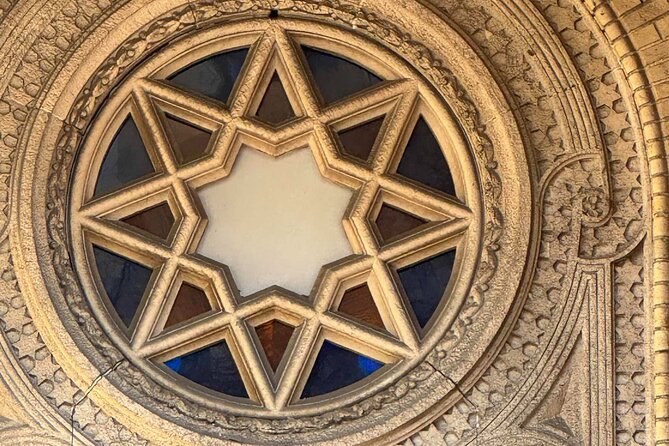
- Dohány Street Synagogue: Europe’s largest synagogue, right up front, with audio context for what you are seeing.
- WWII remembrance in the street: a fragment of the Jewish ghetto wall that makes the past feel close.
- Gozsdu Passage: a historic passage now packed with drinks and snacks, showing how the area changed over time.
- Rumbach Street Synagogue: a quieter stop focused on restoration and survival of community landmarks.
- Szimpla Kert finale: the famous ruin bar as an easy, fun landing point for your walk.
Why This Walk Fits Your Day (Self-Guided Audio, Offline Maps)
This tour is built for people who like to move on their own terms. You start at Budapest Operetta Theatre and end at Szimpla Kert, and the audio guides you stop to stop like an audiobook you can pause, back up, or speed through. The big practical win is that it works on your schedule, not a group schedule.
It is also designed to be low-stress tech-wise. You bring your smartphone and headphones (they are not included), but once you have them, you can use offline access for audio, maps, and geodata. That matters in Budapest because street networks and cell coverage can be spotty enough to mess with “download later” plans. Here, the setup is meant to keep you moving.
The other plus is the flexibility built into the product: you get unlimited, lifetime use before and after your booking date, plus a virtual playback option so you can listen like an audiobook from anywhere. That means if you rush the first time, you can come back and do it again without paying twice.
From Operetta Theatre to Dohány Street Synagogue: The Big Opening Moment
You begin at Budapest Operetta Theatre, Nagymező u. 17 (1065). The experience includes directions to the starting point so you do not spend your first 15 minutes wandering. This is one of those tours where the start location matters, because District 7 is full of interesting streets, and it is easy to go off course if you are guessing.
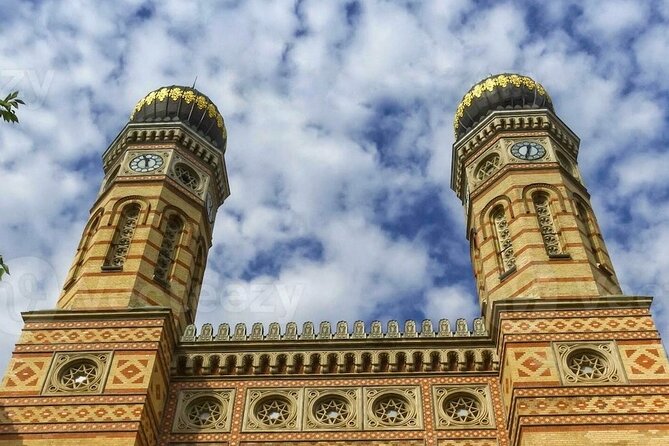
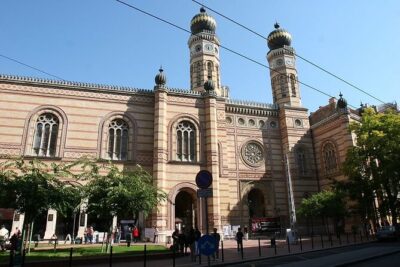
Your first major stop is Dohány Street Synagogue, widely known as the largest synagogue in Europe. With the audio running, you are not just looking at impressive architecture. You are learning how it functioned as a centre of Jewish life in Budapest, which changes the way you read the façade and surroundings. When you understand the role a building played, photos stop being the goal. You start noticing details like scale, layout, and the feeling of permanence.
If you are the type who likes getting the key landmark out early, this works well. The tour also fits nicely into days when you do not want a 3-hour commitment, since the total time runs roughly 1 hour 15 minutes to 1 hour 45 minutes.
Further Jewish Budapest and Great Synagogue tours:
- Budapest Jewish Heritage Memorial Walking Tour & Synagogue Entry
★ 5.0 · 568 reviews - Budapest: Jewish Heritage Guided Tour with Synagogue Ticket
★ 4.8 · 533 reviews - German tour in the Budapest city centre & the Jewish quarter
★ 5.0 · 359 reviews
Ghetto Wall Fragment: A Short Stop With Heavy Weight
After the synagogue, the route takes you past a fragment of the Jewish ghetto wall. This is one of the stops that can quietly reset your headspace. It is small compared with the synagogue, but it has a blunt message: this neighborhood was shaped by forced confinement and violent disruption during World War II, and the Jewish community’s resilience mattered even in the worst circumstances.
I like these kinds of audio stops because they keep history tied to the sidewalk. You are not looking at a distant museum wall. You are passing a real remnant, and the narration helps you connect that physical trace to the bigger story.
Practical tip: slow down here. It is the kind of stop where rushing means you miss what the audio is asking you to notice.
Gozsdu Passage: When Old Streets Become a Modern Hangout
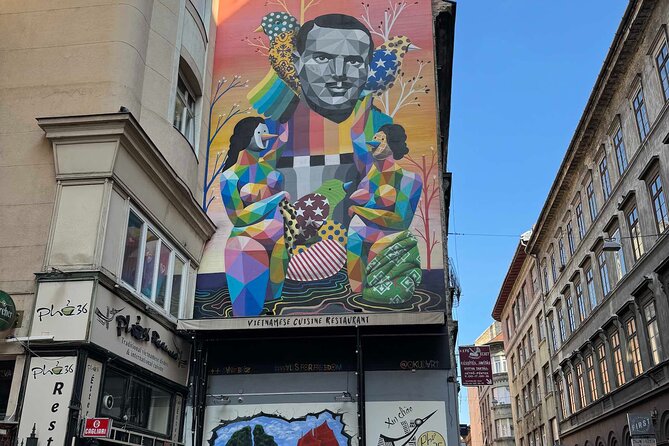
Next comes Gozsdu Passage, a historic complex that now functions as a lively mix of restaurants, bars, and shops. This is where you see how District 7 evolved. The same streets that held community life in the past can also hold modern daily routines and nightlife energy.
I find that this stop helps you balance the tour. You go from a monumental memorial vibe (synagogue, then ghetto wall) into a place where people actually gather and talk. It is not “history park” mode. It is lived-in city mode.
That said, if you expected the entire walk to feel like it is strictly about Jewish religious sites and memorials, this is where some people may feel the tone shift. The tour is telling you a broader story: survival, change, and what comes after.
Rumbach Street Synagogue: A Restoration Story You Can Feel
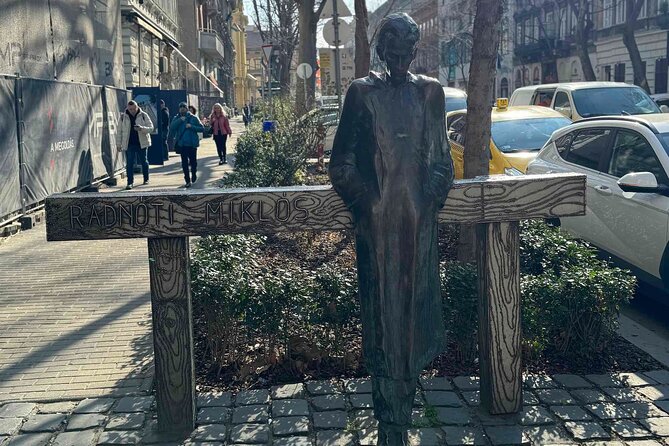
Then you reach Rumbach Street Synagogue, described as a hidden and storied stop with a past shaped by neglect and later restoration. Even without going deep into architectural jargon, this stop can land emotionally because the story is about endurance. The building did not simply appear and survive. It had a tougher chapter, and then it was brought back.
I like putting restoration in an audio tour because it forces a different kind of looking. When you hear how a place fell into disrepair and then came back, you notice signs of past damage and later care. You also understand that heritage is not just what exists today. It is what people fought to keep from disappearing.
This stop is also a reminder that “District 7” is not one single experience. It is many layers of Jewish life and many generations of Budapest dealing with loss and rebuilding.
Still to cross in Budapest
- Budapest: Parliament Building Entry Ticket and Audio Guide★ 4.5 · 3,844 reviews
- Budapest Danube Cruise with Drink, Audio Guide, Margaret Island★ 4.5 · 1,036 reviews
- Budapest River Cruise with 1 Free Tokaj Frizzante and Audio Guide★ 4.5 · 473 reviews
Theodor Herzl and Heroes’ Temple: Zionism to World War I
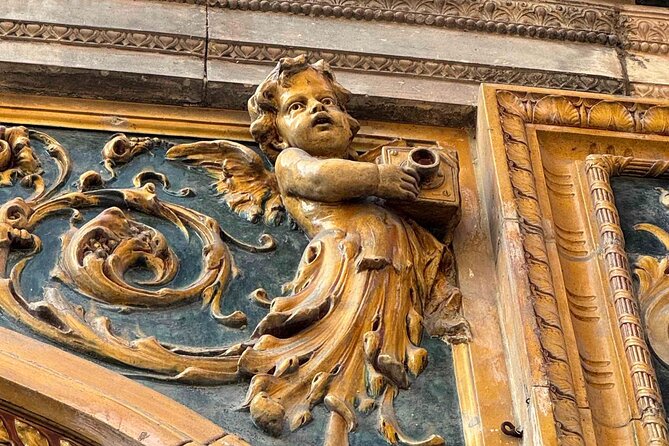
Two of the most specific identity and memory stops on this route are the Mini Statue of Theodor Herzl and the Heroes’ Temple.
The Herzl stop is small, but the audio framing is big. Herzl is known as the visionary founder of modern Zionism, and the narration connects his legacy to Jewish communities around the world. This is a “you learn why it’s here” type of stop. Even if you have heard the name before, it helps to connect the ideas to the physical city.
Then comes Heroes’ Temple, dedicated to honoring Jewish soldiers who fought and died for Hungary during World War I. This is not simply a memorial plaque moment. It is a sacred space tied to national sacrifice and the relationship between Jewish life and Hungarian history.
If you like history that explains both community and country, this is one of the strongest sections of the walk. You get an example of how one community’s story can be linked to larger national events, not treated as separate.
Kazinczy Street Synagogue and Orthodox Customs, Followed by Ruin Bars
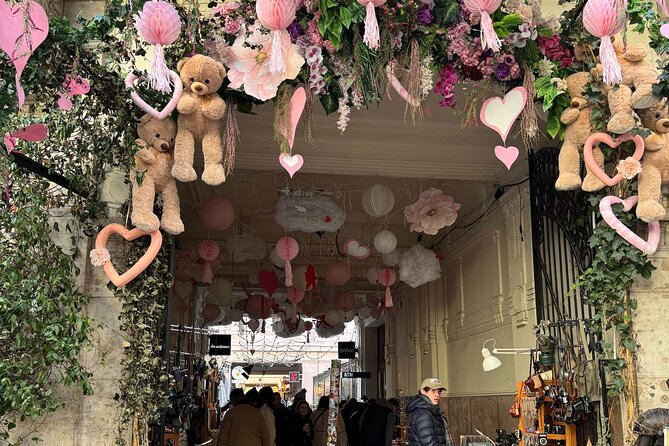
After Heroes’ Temple, the route takes you to Kazinczy Street Synagogue, where the audio focuses on its role as a centre of Jewish life and culture in Budapest. You also get context about the diverse traditions of the local Orthodox community.
This is another spot where audio helps you look beyond the obvious. A synagogue is not only architecture. It reflects religious routines, community identity, and continuity. If you pay attention here, you start seeing how different institutions can tell different parts of the same larger story.
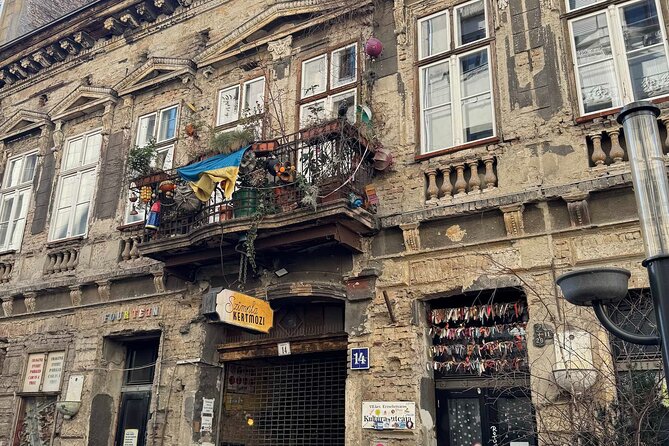
Finally, the tour pivots into Budapest’s famous ruin bar scene, ending at Szimpla Kert at Kazinczy u. 14 (1075). The ending makes sense because ruin bars are one of the most memorable “after hours” experiences in Budapest. You finish right where the neighborhood’s modern atmosphere is easiest to step into.
Keep your expectations practical: this is not a guided bar crawl. The tour ends at the bar area, so you can choose whether you want a drink, a snack, or just a quick final walk around before you head back.
The Vince Factor: How Pop Culture Names Fit a Walking History
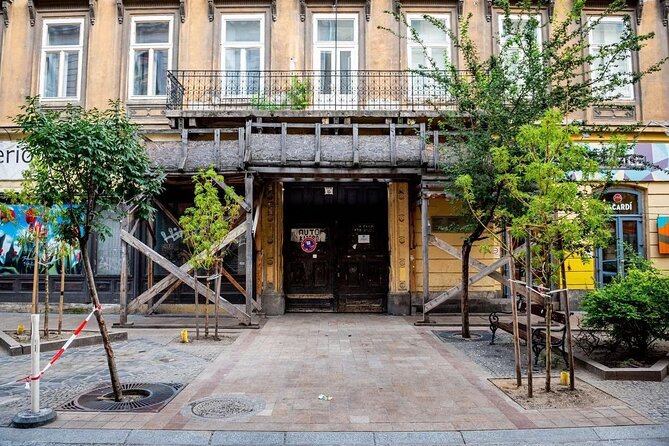
One of the distinctive features here is the narration voice. Vince, born and raised in Budapest, is described as a part-time tour guide, a history freak, and a wine lover. That personality matters because it often shows up in pacing and curiosity, not just facts.
The audio also includes an unusual set of connections to people like Harry Houdini, a King of England, Arnold Schwarzenegger, Brad Pitt, and Tony Curtis. Even if those names do not immediately sound like they belong in a synagogue-and-ghetto-wall tour, the point is usually to help you remember that District 7 is part of Budapest’s broader cultural orbit, not a sealed museum section.
I like when a tour uses surprise connections to keep your brain engaged. It helps on a self-guided route where you are not watching someone point at things every ten seconds. The audio gives you a reason to keep listening.
Still, if you want strictly religious or strictly political history with no side detours, this may feel a little too “wide angle.” The pace can be narrative, and not everyone wants the story told that way.
Price and Value: $11.99 for an Audio Tour You Can Repeat
At $11.99 per person, this tour is priced like a low-cost way to learn the streets without paying for a full guided group. For me, the value comes from two choices the format makes for you.
First, you get lifetime use of the tour audio. That turns one purchase into multiple visits. You can do it once on a first trip, then run it again later when you notice different details, or you can catch it on another day when you have more time near District 7.
Second, you get offline access to audio and maps. In practice, that reduces “tech stress,” which is part of why some audio tours feel better than others. If you have ever started an audio walk and then lost signal or got lost, you know that is a time tax. This setup is meant to prevent that.
The only downside related to price is the same downside connected to self-guided tours in general: you have to like the narration style and the route mix. If you want a heavily guided, stop-by-stop explanation that feels tightly focused, this may not feel like enough.
Who Should Book This Tour, and Who Should Skip It
This is a great match if you want:
- a short, walkable route that still covers major stops
- a way to learn at your own speed with offline audio
- a mix of landmarks, memorial context, and then a fun city finish at Szimpla Kert
- an easy early start idea, since some people prefer doing it in the morning to avoid heat and crowds
It might not be the best fit if you want:
- a tour that feels like it is strictly about the neighborhood’s Jewish religious sites with minimal lifestyle detours
- a very dense, lecture-style walkthrough at every stop
- a route that you expect to run long, because the whole experience is designed for about 1 hour 15 minutes to 1 hour 45 minutes
Because the overall rating is modest, I would call it a “good, not perfect for everyone” choice. The two reviews you might resonate with are exactly the two different ways this kind of tour can land: one person loves the shorter time and morning flexibility, another wanted something more directly focused and less story-heavy.
Should You Book It?
If you are planning a first or second trip to Budapest and you want a focused District 7 introduction without locking yourself into a long guided tour, I think you should book. The price is reasonable, the route is compact, and the ending at Szimpla Kert gives you an easy close to the experience.
If you already know a lot about Budapest Jewish history and you want maximum depth from a live guide, you might prefer a more traditional guided walking tour. But if you like history on the move and you want your headphones to do the heavy lifting, this one is worth your time.
FAQ
How long is the tour?
The walking time is approximate, about 1 hour 15 minutes to 1 hour 45 minutes.
What does the tour cost?
It costs $11.99 per person.
What do I need to bring?
You need your own smartphone and headphones.
Where does the tour start?
It starts at Budapest Operetta Theatre, Nagymező u. 17, 1065 Hungary.
Where does the tour end?
It ends at Szimpla Kert, Kazinczy u. 14, 1075 Hungary.
Is the tour self-guided or do I meet a guide?
It is self-guided. The narration is provided through the audio tour, and you move at your own pace.
Is offline use available?
Yes. The tour includes offline access to audio, maps, and geodata.
Do I have access after I book?
You get unlimited, lifetime use of the tour, before and after your booking date.
Can I listen without doing the full walk?
Yes, there is a virtual playback option so you can listen like an audiobook from anywhere.
What is the cancellation policy?
Free cancellation is available. You can cancel up to 24 hours in advance for a full refund, and changes within 24 hours are not accepted.
The newest crossings added in Budapest





Jewish Budapest & Great Synagogue Tours, compared.
Budapest Jewish Heritage Memorial Walking Tour & Synagogue Entry
Read our review →
Jewish Heritage Guided Tour with Synagogue Ticket
Read our review →
German tour in the Budapest city centre & the Jewish quarter
Read our review →
Past and Present of Budapest Jewish District Tour
Read our review →
Budapest Dohany Synagogue & Hungarian Jewish Museum & free extras
Read our review →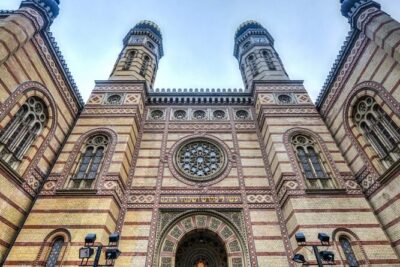
Jewish History Guided Walking Tour with Historian
Read our review →
Budapest Dohany, Heroes’, Rumbach synagogues & Jewish Ghetto Tour
Read our review →Browse the lists this tour appears in