
Reviewed · JEWISH BUDAPEST & GREAT SYNAGOGUE TOURS
A Journey through Jewish Budapest – Walking Tour
Budapest’s Jewish history is right on the sidewalk. This 3-hour walking tour connects major sites like the Dohány Street Synagogue and the Shoes on the Danube memorial to the lived reality of Jewish life in the city before WWII. I especially like the historian-led approach, and I like how the route keeps moving from big names and grand buildings to the smaller, harder stories.
One thing to plan for: the Dohány Synagogue requires a separate ticket, and you need shoulders and knees covered before entry.
In This Review
- Key highlights to look for
- Why Jewish Budapest hits different on foot
- Kamara Café start and Herzl’s birth square
- Dohány Street Synagogue: Moorish Revival, heroes, and museum rooms
- Ghetto Wall Memorial, Kazinczy Street, and the mikve moment
- Status Quo Ante and Rumbach Street Synagogue
- Shoes on the Danube Bank: reflection with real weight
- What you’re paying for: $123 for a 3-hour, guide-forward experience
- Who this tour suits, and who might want a different style
- Practical tips for a smoother walk
- Should you book this Jewish Budapest walking tour?
- FAQ
- How long is the Jewish Budapest walking tour?
- Where does the tour start?
- What is included in the price?
- Is the Dohány Synagogue ticket included?
- What language is the tour offered in?
- What should I wear to enter the Dohány Synagogue?
- Is this tour private or in small groups?
- Is there free cancellation?
Key highlights to look for
- Historian-led storytelling that ties the sites to daily life and the shift in Jewish life before WWII
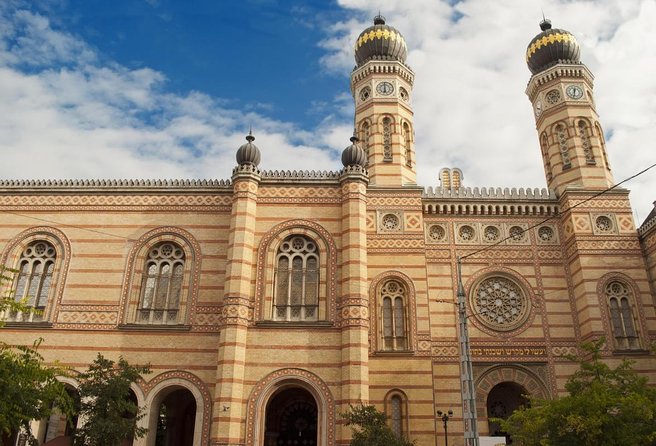
- Dohány Street Synagogue visit with a Jewish Studies Scholar and the chance to see major spaces inside the complex
- Ghetto Wall Memorial sight, including a 2014 memorial wall along your path
- Mikve and orthodox-synagogue exteriors that show how religious life shaped neighborhood texture
- Status Quo Ante and Rumbach Street Synagogue facade for a clearer view of internal Jewish community history
- Shoes on the Danube memorial stop focused on remembrance and reflection, not just photos
Why Jewish Budapest hits different on foot
Budapest can feel like one city with two faces, grand and gray, old and modern. This tour turns that feeling into understanding. You walk through a part of the city where, before WWII, about a quarter of the population was Jewish. That scale matters because it explains why Jewish institutions, streets, and neighborhoods were so visible, and why the loss later was not abstract, it was personal and immediate.
The best part is the mix of places. You are not only staring at famous architecture. You are also hearing how different Jewish communities lived, worshipped, argued, organized, and built their world. That makes the walk feel like history you can actually locate.
Kamara Café start and Herzl’s birth square
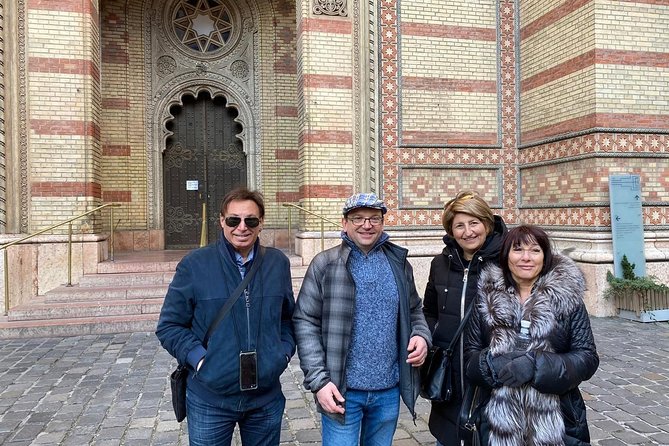
You begin at Kamara Café, on Dohany utca 1/A. The start matters, because it sets a tone of context first. Instead of rushing straight to the synagogue, you begin with a key political and cultural reference point: the square where Theodor Herzl, often called the father of modern Zionism, was born.
Even if you already know the headline name, this framing helps. It signals that the story is not only about religion. It is also about identity, politics, and how communities imagined futures under pressure.
You’ll be with a live guide who is not just a script reader. The tour notes that guides can be professors, doctoral students, historians, journalists, art critics, or published authors. That variety tends to make the explanations more human, with detail that fits the buildings rather than floating above them.
Further Jewish Budapest and Great Synagogue tours:
- Budapest Jewish Heritage Memorial Walking Tour & Synagogue Entry
★ 5.0 · 568 reviews - Budapest: Jewish Heritage Guided Tour with Synagogue Ticket
★ 4.8 · 533 reviews - German tour in the Budapest city centre & the Jewish quarter
★ 5.0 · 359 reviews
Dohány Street Synagogue: Moorish Revival, heroes, and museum rooms
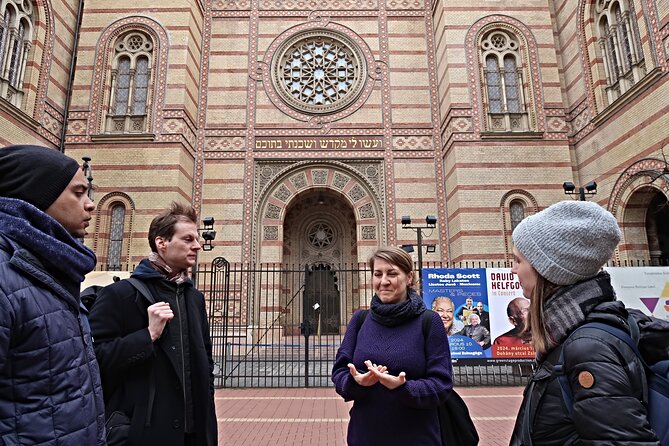
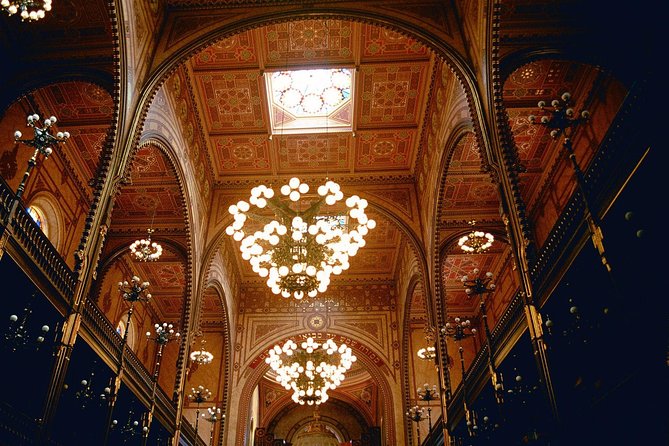
The walk’s first major anchor is the Dohány Street Synagogue, a place that is hard to exaggerate once you see it. It is described as the greatest Jewish house of worship in Europe, and the architecture backs that up. You’ll notice the lavish Moorish Revival style before you even get into the deeper meaning.
Entry does require planning. The tour does not include Dohány Synagogue tickets, and the ticket cost is listed as 14,500 Ft per person. Also, before you go in, you need shoulders and knees covered. That is not just a nice-to-know rule. It is part of what you should plan for in the first half of your day.
Once inside, you get a guided visit assisted by a Jewish Studies Scholar. The visit isn’t only the main sanctuary. Within the complex, you also tour areas that help you understand the community’s priorities and memory, including the Temple of Heroes, the Jewish Museum, and a Memorial Park.
This is one of the most valuable segments of the tour because it offers a full slice of what a major Jewish institution can include. It is a church-like space for worship, but it is also a community archive and a memorial site. You are seeing how one place holds multiple jobs at once.
Ghetto Wall Memorial, Kazinczy Street, and the mikve moment
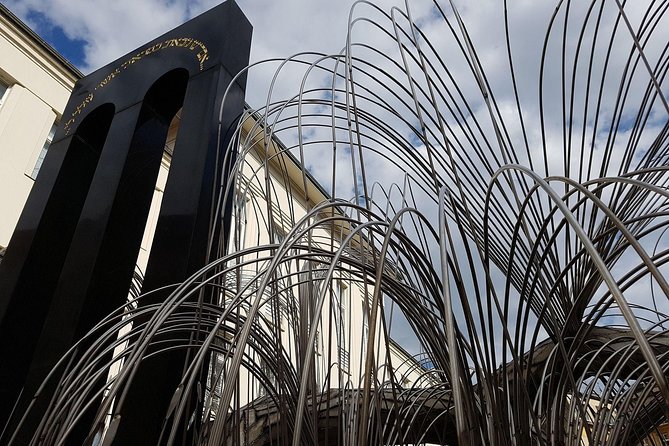
After Dohány, the tour shifts from grand interior to neighborhood edges. Next comes the Ghetto Wall Memorial, which was erected in 2014. Seeing a memorial wall in its real streetscape location changes the way it lands. Instead of thinking of the ghetto as a distant event, you understand it as something that physically shaped daily routes, doors, and walls.
From there, you continue toward Kazinczy Street and the surrounding area. You’ll pass the exteriors of an Art Nouveau orthodox synagogue on Kazinczy, and you also get a special mention of a mikve, a Jewish ritual bath. Even when you are only seeing it as part of the path, the mikve reference is important because it reminds you that religious life was not only about big events. It was also about routines and physical preparation.
Here, the guide’s job is to connect architectural details to practical meaning. You’ll likely catch how design choices reflect community needs and identity, not just taste.
A small practical note: you are still in a walking sequence. If you want time to read signs or pause, build it in. This is not a breakneck sprint.
Status Quo Ante and Rumbach Street Synagogue
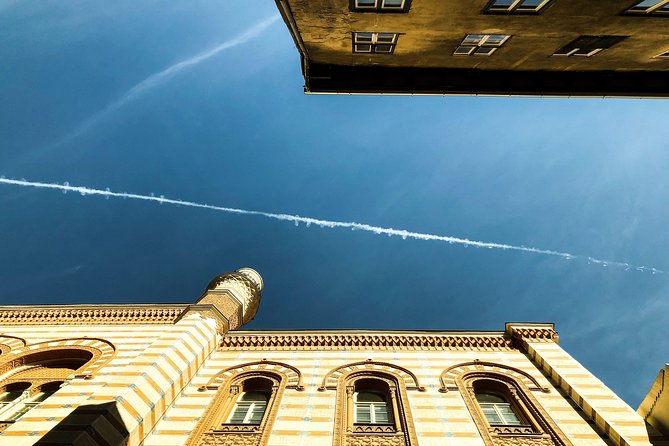
The tour also pays attention to the way different Jewish streams shaped communal life. You will learn about the Status Quo Ante stream of Judaism while observing the impressive facade of the Rumbach Street Synagogue.
This part is easy to skip over on your own if you only focus on what a building looks like. The value here is that you get a framework for why the synagogue world was not monolithic. Different groups had different traditions, governance structures, and loyalties, and those differences affected everything from how a community organized to how worship worked in practice.
Seeing the Rumbach facade after learning the Status Quo Ante context helps it make sense. You are not just looking at another ornate facade. You are seeing how identity disputes and community arrangements can become visible in the public face of religious life.
More of the city, bank to bank on foot:
- Budapest: Buda Castle Walk with Saint Stephen’s Hall★ 4.5 · 3,012 reviews
- Big Bus Budapest Hop-On Hop-Off Bus and Walking Tour★ 3.5 · 2,206 reviews
- Budapest: Buda Castle District Walking Tour★ 4.6 · 2,108 reviews
Shoes on the Danube Bank: reflection with real weight
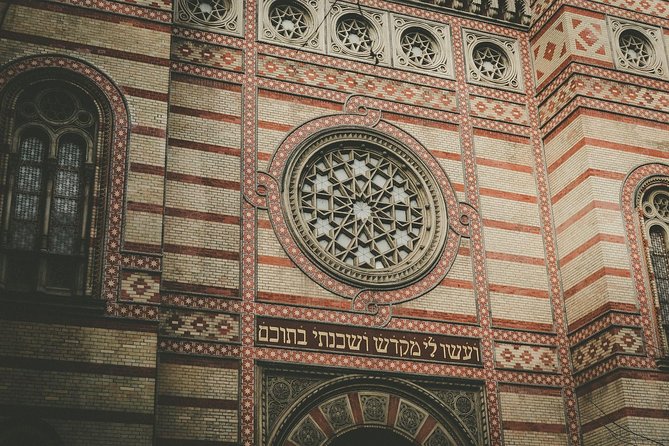
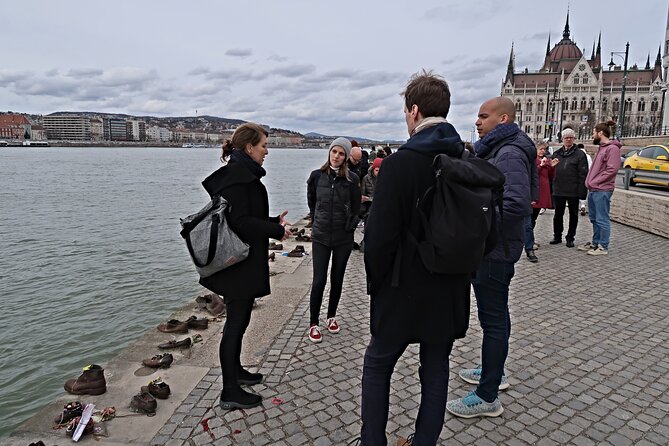
The tour ends at the Shoes on the Danube Bank memorial. This is the kind of site that can feel blunt and quiet at the same time, because it does not ask you to process history at a distance. It asks you to picture specific people, specific moments, and specific losses.
The tour experience here is about reflection. The idea is to remember the Jewish lives lost at this location and then to consider how Budapest’s Jewish community has been revitalized today.
In at least one booking, the guide Endres added a meaningful layer to the respect moment by helping the group cleanse several “stumbling stones,” with materials provided. That detail shows the tour’s tone at its best. It is not just explanation and walking. It is also care for how visitors engage with memory.
That said, keep in mind the mood here is heavy. Plan your day so you are not rushed afterward. It is not the place for a quick photo and off you go.
What you’re paying for: $123 for a 3-hour, guide-forward experience
At $123 per person for about 3 hours, you are paying mostly for the guide. The route includes key landmarks, but the real value is the historian-led interpretation and the structure of the walk: big architecture, community institutions, and memorial grounding all in one sweep.
Also note what is included and what is not. The tour includes the 3-hour walking tour and the historian guide. The Dohány Synagogue ticket is not included and costs 14,500 Ft separately. So if you are budget planning, treat that as a likely add-on for the full experience.
The price feels more reasonable when you get personalization. In one case, a booking ran with just one couple, which made the pacing and attention feel unusually direct. The tour also notes private or small groups are available, and that tends to help with questions and slow moments.
If you prefer a guided experience that explains rather than just points, this format is a good fit.
Who this tour suits, and who might want a different style
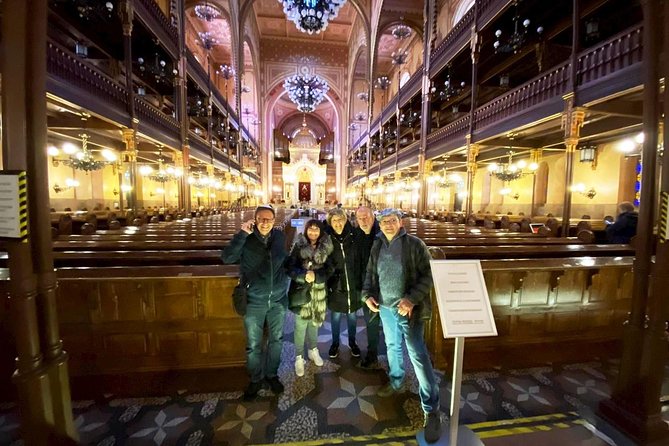
This tour fits you best if you want Jewish history with strong site-based storytelling. It is also ideal if you enjoy context about how communities lived and how events changed their lives, especially in the period leading up to WWII.
If you dislike walking, or if you want only broad, surface-level photo stops, you might feel the pace is too story heavy. And if you expect all entrances included, remember the Dohány ticket and the dress requirements are on you.
Because the guide group can include professors, doctoral students, historians, journalists, art critics, and authors, you are likely to get different styles of emphasis. That can be a plus if you like detail, or a mismatch if you want only simple summaries.
Practical tips for a smoother walk
- Wear shoes made for walking. You will move between multiple synagogues, memorial sites, and streets.
- For Dohány, plan clothing for the required shoulders and knees covered rule.
- Bring a small water bottle if you tend to get thirsty. The tour is 3 hours, and you want energy for reading and reflection.
- If you have questions, ask them early. Guides are often the type who can tailor answers to what you notice in front of you.
- Expect a mix of tone. You go from architecture and museum-like explanations to memorial reflection, so it helps to mentally pace yourself.
Should you book this Jewish Budapest walking tour?
If you want Jewish Budapest to make sense as more than postcard landmarks, I think this tour is a strong choice. The historian guide setup is the core strength, and the route balances major institutions like Dohány with the memorial gravity of the Shoes on the Danube. Add in the chance for a guided, scholar-assisted look inside the Dohány complex and you get a day that feels structured and meaningful in the right way.
Book it if you like walking, you want context about pre-WWII Jewish life, and you are willing to plan for the Dohány ticket and dress code. Skip it if you want only quick highlights, or if you cannot handle the emotional weight at the memorial stop.
FAQ
How long is the Jewish Budapest walking tour?
It lasts 3 hours.
Where does the tour start?
The meeting point is Kamara Café, Dohany utca 1/A.
What is included in the price?
The tour includes a 3-hour walking tour and a historian guide.
Is the Dohány Synagogue ticket included?
No. Dohány Synagogue tickets are not included. The listed individual ticket price is 14,500 Ft.
What language is the tour offered in?
The tour guide speaks English.
What should I wear to enter the Dohány Synagogue?
Visitors are requested to have shoulders and knees covered.
Is this tour private or in small groups?
It offers private or small groups.
Is there free cancellation?
Yes, you can cancel up to 24 hours in advance for a full refund.
The newest crossings added in Budapest






Jewish Budapest & Great Synagogue Tours, compared.
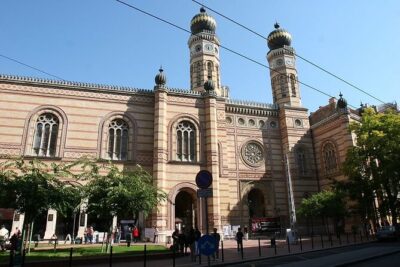
Budapest Jewish Heritage Memorial Walking Tour & Synagogue Entry
Read our review →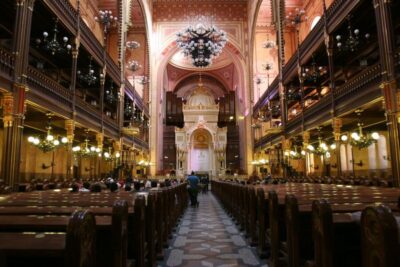
Jewish Heritage Guided Tour with Synagogue Ticket
Read our review →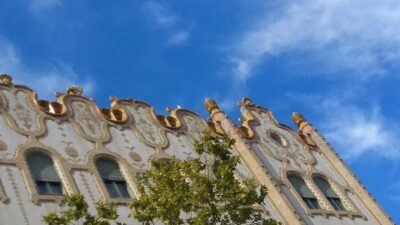
German tour in the Budapest city centre & the Jewish quarter
Read our review →
Past and Present of Budapest Jewish District Tour
Read our review →
Budapest Dohany Synagogue & Hungarian Jewish Museum & free extras
Read our review →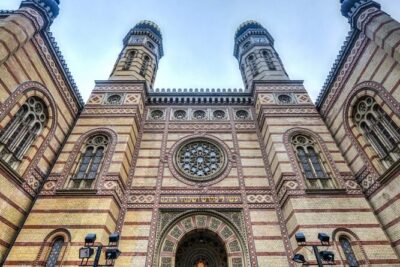
Jewish History Guided Walking Tour with Historian
Read our review →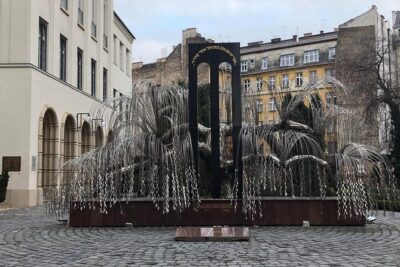
Budapest Dohany, Heroes’, Rumbach synagogues & Jewish Ghetto Tour
Read our review →Browse the lists this tour appears in