
Reviewed · JEWISH BUDAPEST & GREAT SYNAGOGUE TOURS
A Journey through Jewish Budapest – Walking Tour
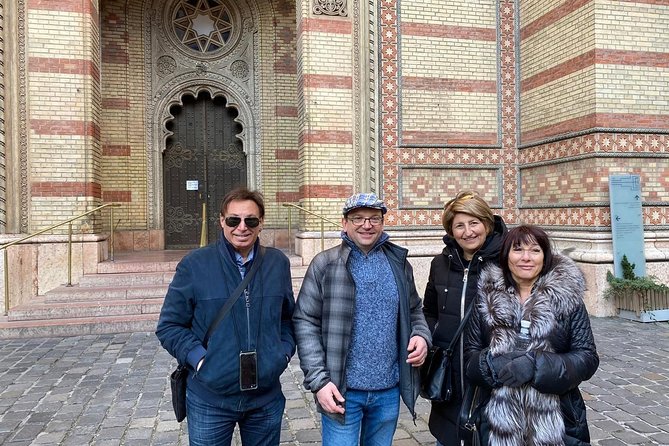
A walk like this makes the city’s past feel close, not abstract. This 3-hour Jewish history and heritage tour connects major synagogue sites and ghetto-era reminders in Budapest’s VIIB and VIIIB districts, with stops designed to help you understand what you are actually looking at. I especially like the small-group feel (limited to up to six people) and the chance to see multiple worship spaces like the Great Synagogue complex and the Kazinczy and Rumbach Street synagogues.
One practical thing to plan for: synagogue admission tickets are not included, and you will need to dress for entry (shoulders and knees covered).
In This Review
- Key highlights you will care about
- Why Jewish Budapest feels different when you walk it
- The 3-hour route in plain terms
- Stop 1: Great or Central Synagogue (Nagy Zsinagóga) and the bigger complex
- Who you might see as your guide at this stage
- Stop 2: Kazinczy Street Synagogue, the Ghetto Wall, and a Mikve moment
- Stop 3: Rumbach Street Synagogue and the Status Quo Ante connection
- Final stop: Shoes on the Danube Bank and the WWII memorial story
- Small-group size changes how the tour feels
- The guides: strong academic context, human delivery
- Tickets and the dress code you should not ignore
- Price and value: what $126.16 gets you
- Start location and where you finish, so you can plan your next move
- Morning vs afternoon: choose the rhythm that fits your Budapest plans
- Who this walking tour is best for
- Should you book this Jewish Budapest walking tour?
- FAQ
- What is the duration of the Jewish Budapest walking tour?
- How much does it cost?
- Is pickup offered, and where is the meeting point?
- What time does the tour start?
- Are synagogue admission tickets included?
- What should I wear to visit the synagogues?
Key highlights you will care about
- Up to six people, so questions and pacing stay human-sized.
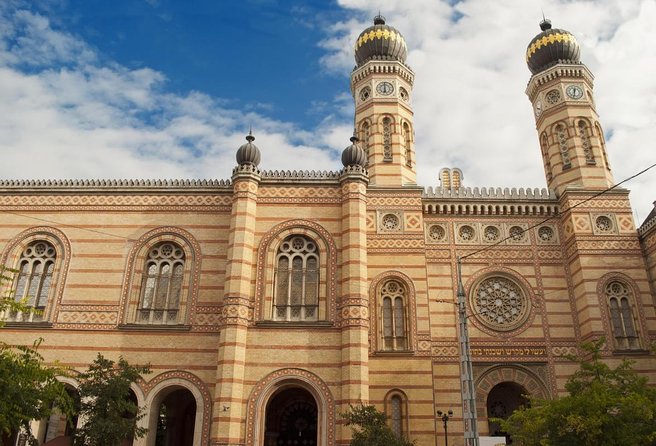
- Three synagogue stops, including Dohány Street, Kazinczy Street, and Rumbach Street.
- A historian guide, with Jewish Studies Scholar support at the Great Synagogue complex.
- Ghetto-era context on the route, including the Ghetto Wall Memorial and a Mikve stop when open to view.
- Shoes on the Danube Bank is your emotional closing point, with the WWII story explained clearly.
- Morning or afternoon departures, so you can match the walk to your Budapest rhythm.
Why Jewish Budapest feels different when you walk it
Budapest can be stunning on postcards, but Jewish Budapest history is the kind of story that needs context. On this tour, you are not just passing buildings. You are learning why particular places matter, how Jewish life shaped the neighborhood over time, and how the darkest parts of WWII left physical marks in the city.
I like that the route deliberately mixes places of worship with memorial sites and neighborhood landmarks. That mix helps you understand that this was not only a tragic timeline, it was also community life, culture, and daily rhythm for centuries. And because it is a walking tour, you get the “why here” feeling, since the geography of the Jewish quarter is part of the story.
The 3-hour route in plain terms
The walk is about 3 hours, moving step-by-step through the Jewish quarter area. It starts at Kamara Café on Dohány Street, right by the Great Synagogue. From there, you work through the cluster of sites tied to Budapest’s Jewish communities, then finish at Shoes on the Danube Bank in Budapest 1054.
The order matters. You begin with the biggest landmark complex (so you get a baseline), then you go to smaller synagogues and the memorial reminders, and you end with a WWII atrocity memorial that forces you to slow down and take in what the city is remembering.
Further Jewish Budapest and Great Synagogue tours:
- Budapest Jewish Heritage Memorial Walking Tour & Synagogue Entry
★ 5.0 · 568 reviews - Budapest: Jewish Heritage Guided Tour with Synagogue Ticket
★ 4.8 · 533 reviews - German tour in the Budapest city centre & the Jewish quarter
★ 5.0 · 359 reviews
Stop 1: Great or Central Synagogue (Nagy Zsinagóga) and the bigger complex
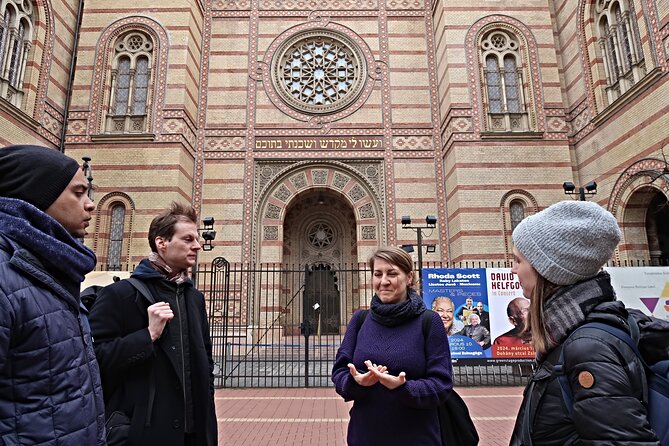
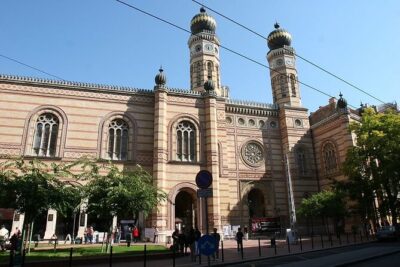
Your first major stop is the Great or Central Synagogue, the Dohány Street Synagogue complex. This is the largest synagogue in Europe, and it is also a place where architecture does storytelling. The tour focuses on the Moorish Revival look, then pulls you inside the complex’s key areas.
Here’s what makes this stop useful for first-time visitors: you get a guided explanation that helps you recognize details instead of just admiring the building from the outside. You also get time at the Temple of Heroes, the Jewish Museum, and a Memorial Park within the complex.
One important catch: the tour time at this stop is roughly 30 minutes, and admission tickets are not included. So if you want the museum areas fully on your own pace, plan to buy any required entry ahead of time or accept that your guided time may be focused on highlights rather than a slow wander.
Who you might see as your guide at this stage
The tour runs with a historian guide, and past guides listed include people such as Orsolya, who has a strong academic background and a gift for making context feel real. On the Great Synagogue complex, the tour also notes assistance by a Jewish Studies Scholar, which is a smart touch if you care about meaning, terminology, and historical nuance.
Stop 2: Kazinczy Street Synagogue, the Ghetto Wall, and a Mikve moment
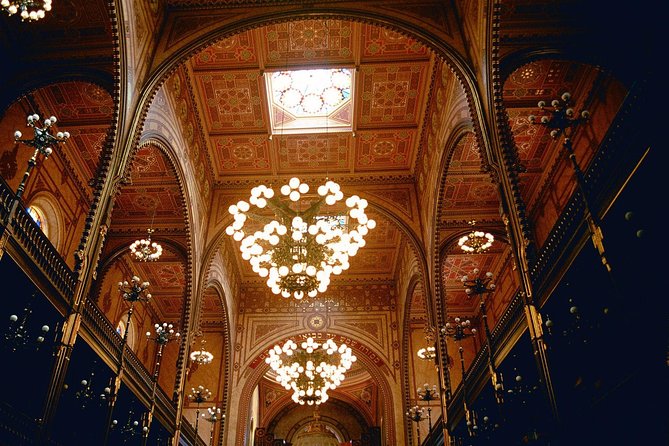
Next you walk toward the Kazinczy Street Synagogue area. This segment is designed to connect the community story to the physical boundaries that were imposed during the ghetto era.
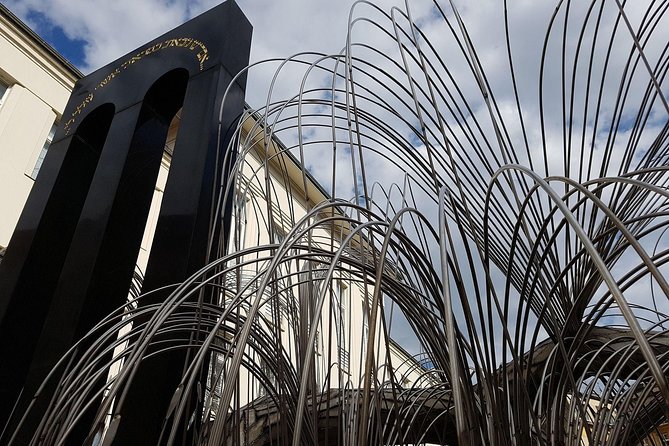
You pass the Ghetto Wall Memorial, erected in 2014. That is not just a plaque stop. The point is to help you understand how space itself became part of the historical trauma. Then you continue to a Mikve, a Jewish ritual bath, before reaching the Art Nouveau orthodox synagogue on Kazinczy Street.
A practical benefit here: the tour states that you visit the interior of the synagogue when it is open to the public. So you are not always limited to exterior views. At the same time, synagogue openings can vary, so you should expect your guide to work within what is accessible on the day.
Like the first stop, admission tickets are not included. Also note the clothing rule: for the Dohány and Kazinczy synagogues, visitors are requested to have shoulders and knees covered. If you do not, you might be turned away or asked to adjust.
More of the city, bank to bank on foot:
- Budapest: Buda Castle Walk with Saint Stephen’s Hall★ 4.5 · 3,012 reviews
- Big Bus Budapest Hop-On Hop-Off Bus and Walking Tour★ 3.5 · 2,206 reviews
- Budapest: Buda Castle District Walking Tour★ 4.6 · 2,108 reviews
Stop 3: Rumbach Street Synagogue and the Status Quo Ante connection
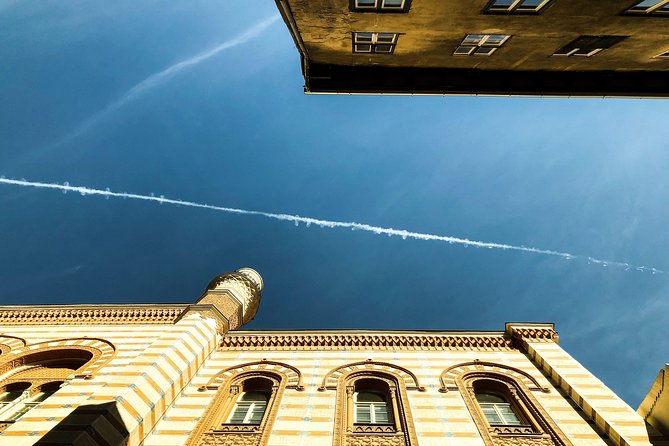
The tour then heads to the Rumbach Street Synagogue, where the focus shifts toward a specific stream of Jewish practice, tied to the Status Quo Ante idea. If you have ever wondered why you will hear different terms about Jewish communities across Europe, this stop helps you see how internal differences shaped synagogues and leadership over time.
The guided explanation here is what makes this location more than a pretty building. You get the historical background for why the synagogue exists in the neighborhood and what “Status Quo Ante” means in a real-world, local context. The tour again notes that you visit the interior when open to the public, which is worth factoring into your expectations.
This stop is about 25 minutes. That is a good length because you get orientation and story without feeling like you are rushing through a sacred place.
Final stop: Shoes on the Danube Bank and the WWII memorial story
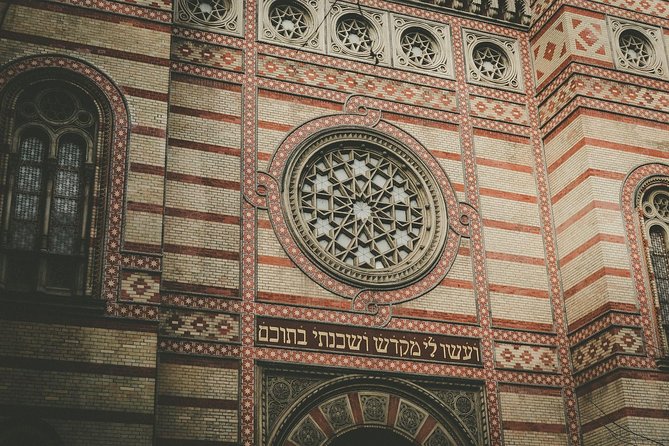
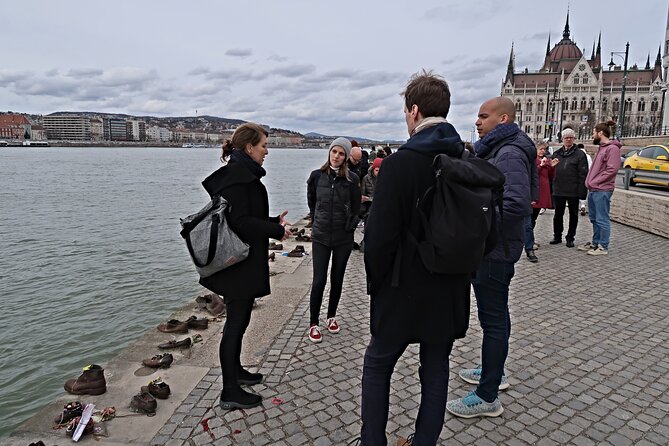
You wrap up at Shoes on the Danube Bank, a memorial erected on April 16, 2005. The story is stark: people were ordered to take off their shoes, then were shot at the water’s edge so their bodies fell into the river and were carried away. The memorial represents those shoes left behind on the bank.
This ending works because it ties the historical thread to the city’s present landscape. You have already seen community landmarks, so the memorial lands with more weight. And because it is a memorial site, plan to keep your voice low and your attention steady.
The tour states this stop has free admission. Still, treat it like a structured moment, not a photo break.
Small-group size changes how the tour feels
The tour is limited to a maximum of eight travelers, and the highlights mention a smaller group of up to six for a personalized experience. That matters more than you might think.
With a smaller group, your guide can slow down for questions, stop to clarify terminology, and adjust pacing if the group is absorbing or moving quickly. It also helps during synagogue entry moments, where clothing and timing matter.
If you like learning on your feet, not from a headset monotone, this group size is one of the strongest reasons to book.
The guides: strong academic context, human delivery
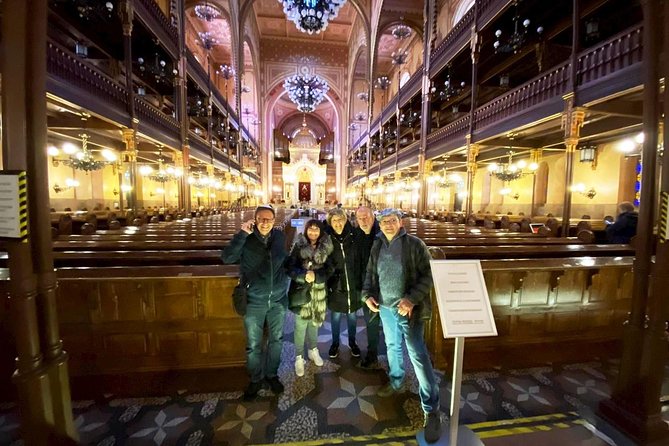
This tour comes with a historian guide, and the experience notes support from a Jewish Studies Scholar at the Great Synagogue complex. In plain terms, that means you are more likely to get clear explanations of Jewish terms and Hungarian historical context, not just a checklist of sites.
The named guides in the provided feedback include Orsolya, Agi, Endre, and Veronika. Their common thread is clear in the comments: they connect Jewish history in Budapest to how Hungarian life and policy shaped what happened, and they do it in a way that keeps you engaged for the full 3 hours.
Also, one small but real perk: one guide recommendation thread included food advice, including a mention of a flodni cake. If you enjoy that kind of local add-on, your guide may help you plan a tasty break nearby.
Tickets and the dress code you should not ignore
Here are the practical rules that can affect your day:
- Synagogue admission tickets are not included for Dohány, Kazinczy, and Rumbach Street synagogues.
- For Dohány and Kazinczy synagogues, visitors are requested to have shoulders and knees covered.
So, before you go, I recommend you do two quick checks:
- Wear something you are comfortable moving in for a 3-hour walk.
- Bring a light layer for your shoulders if your outfit is sleeveless, and avoid shorts or a short skirt that hits above the knee.
If you forget these things, you might lose time at the start of key stops. And since each stop has a timed window, time matters.
Price and value: what $126.16 gets you
At $126.16 per person for about 3 hours, you are paying for guided interpretation of multiple major sites, not just a simple walking route.
What’s included:
- a 3-hour guided walking tour
- a historian guide
What is not included:
- admission tickets for the synagogue interiors and related areas listed (Dohány, Rumbach, Kazinczy)
So the real value equation is this: you are buying time saved and meaning added. You could technically walk around the Jewish quarter on your own, but you would likely miss why each location matters, and you might not understand the differences between communities and institutions. The guide’s job is to connect the dots, and here the tour is set up to do exactly that.
If you are the type of traveler who enjoys reading plaques, this may still be worth it because you get explanation and structure. If you mainly want photos and quick stops, you might find the timed pacing a bit structured.
Start location and where you finish, so you can plan your next move
The meeting point is Kamara Café, Dohány u. 1b, 1074 Budapest, which is described as right opposite the Great Synagogue area. Pickup is offered at Kamara Café, Dohány u. 1a, 1074 Budapest, and you receive the guide’s photo, phone, and bio after booking.
The tour ends at Shoes on the Danube Bank, Budapest 1054, which makes it convenient if you are planning an afternoon or evening around the Danube waterfront.
Because the tour is near public transportation, you can also stitch it into your day without extra stress. Just make sure you give yourself enough time to reach Kamara Café a bit early, especially if you need to sort your outfit for synagogue entry.
Morning vs afternoon: choose the rhythm that fits your Budapest plans
The tour offers a choice of morning or afternoon departure. That is helpful in Budapest, where you might want to pair the walk with another major sight day.
If you prefer museums after the walking tour, mornings can give you a calmer start. If you like softer light for walking and photos and you have time for a later meal, the afternoon option can feel smoother.
Either way, you are looking at a compact 3-hour window. I’d pick the departure that best protects your energy, since the last stop is emotionally heavy and you will likely appreciate having your schedule open after the tour.
Who this walking tour is best for
This is a great fit if you:
- want Jewish Budapest history tied to specific locations, not just general facts
- like structured stops with synagogue interiors when they are open
- enjoy learning from a historian guide with Jewish studies support
- are visiting Budapest for the first time and want a high-signal overview of the Jewish quarter area
It is also a strong choice if you like walking tours but do not want an all-day marathon. At around 3 hours, you get focused context, then you can continue independently.
If you are sensitive to WWII memorial subject matter, just know the ending at Shoes on the Danube Bank is built to be serious and direct.
Should you book this Jewish Budapest walking tour?
If your goal is to understand what you are seeing, I think you should book it. The combination of multiple synagogue visits, ghetto-era landmarks like the Ghetto Wall Memorial, and a guided walk that ends at Shoes on the Danube Bank gives you a clean narrative arc in a short time.
I would still consider the two practical points before you commit: synagogue admission tickets are extra, and you need to plan clothing for shoulders and knees covered at the relevant sites. If you can handle those, the tour is a strong value for the amount of guided context you get.
Overall, this is the kind of walking tour that helps you leave with more than pictures. You leave with a map in your head, and a better sense of why these places exist where they do.
FAQ
What is the duration of the Jewish Budapest walking tour?
The tour lasts about 3 hours.
How much does it cost?
The price is $126.16 per person.
Is pickup offered, and where is the meeting point?
Pickup is offered at Kamara Café on Dohány u. 1a or Dohány u. 1b, near the Great Synagogue. The meeting point is listed as Kamara Café Budapest, Dohány u. 1b, 1074.
What time does the tour start?
A start time of 10:00 am is listed, and the tour also offers a choice of morning or afternoon departure.
Are synagogue admission tickets included?
No. Tickets for the Dohány Synagogue, Rumbach Street Synagogue, and Kazinczy Street Synagogue are not included.
What should I wear to visit the synagogues?
For the Dohány and Kazinczy synagogues, visitors are requested to have shoulders and knees covered.
The newest crossings added in Budapest






Jewish Budapest & Great Synagogue Tours, compared.
Budapest Jewish Heritage Memorial Walking Tour & Synagogue Entry
Read our review →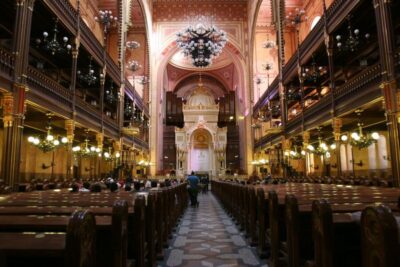
Jewish Heritage Guided Tour with Synagogue Ticket
Read our review →
German tour in the Budapest city centre & the Jewish quarter
Read our review →
Past and Present of Budapest Jewish District Tour
Read our review →
Budapest Dohany Synagogue & Hungarian Jewish Museum & free extras
Read our review →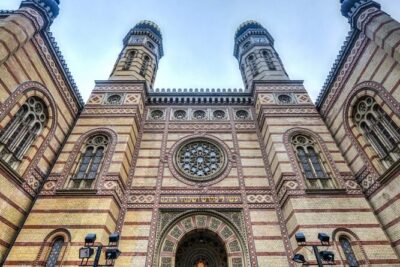
Jewish History Guided Walking Tour with Historian
Read our review →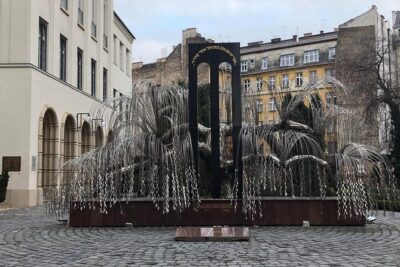
Budapest Dohany, Heroes’, Rumbach synagogues & Jewish Ghetto Tour
Read our review →Browse the lists this tour appears in