
Reviewed · JEWISH BUDAPEST & GREAT SYNAGOGUE TOURS
2-Hour Jewish Quarter Walking Tour in Budapest with Historian
Synagogues tell Budapest a survival story. This 2 to 3 hour Jewish Quarter walk with historian Daniel Kalman is interesting because you see how a neighborhood formed, flourished, and then got nearly crushed in the Holocaust. I especially like how he ties the buildings to real people and daily life, and you also get two historical synagogues with admission included when buildings are open. One thing to plan for: Rumbach can be closed on weekdays in winter schedules, and Kazinczy can be temporarily shut for restoration, so you may not always get full interior access.
I also like the small group size, capped at 15, which makes it easier to ask questions and keep the pace comfortable. The tour ends at Klauzál tér, where you can grab a quick coffee nearby after your walk. And yes, it includes a brief stop at the Carl Lutz Memorial, where the guide explains his role and the wider rescue effort during the Holocaust.
If you’re hoping for a long, sit-down museum style experience, this is more like a focused street-level history walk. It is still very manageable for most visitors, but it is a walking tour, and the exact access to interiors can vary by day.
In This Review
- Key highlights you will care about
- Why this Jewish Quarter walk feels different
- Meet Daniel Kalman and the “walking expert” format
- Route overview: from Madách Imre tér to Klauzál tér
- Stop 1: Rumbach Street Synagogue and Otto Wagner details
- Stop 2: Kazinczy Street Synagogue, Art Nouveau in 1912
- Stop 3: Carl Lutz Memorial and the rescue story
- What makes the synagogues worth your time
- Price and value: is it worth $46.46?
- Timing, group size, and how to plan your day
- Practical tips: tickets, closures, and comfort
- Who should book this tour
- Should you book this Budapest Jewish Quarter tour?
- FAQ
- How long is the Jewish Quarter walking tour?
- What is the meeting point and where does the tour end?
- What time does the tour start?
- What is the price per person?
- What is included in the tour?
- Are synagogue entrance tickets included?
- What if the synagogues are closed?
- Is there a stop connected to the Holocaust?
- Is coffee included after the tour?
- What is the cancellation policy?
Key highlights you will care about
- Historian-led context focused on East-Central European Jewish heritage, not just dates and names
- Rumbach Street Synagogue with Otto Wagner architecture, plus ticketed access when open
- Kazinczy Street Synagogue in Art Nouveau style, built in 1912 by Löffler Brothers
- Carl Lutz Memorial with an explanation of rescue during the Holocaust
- Small group, up to 15 people, so questions stay practical and on-topic
Why this Jewish Quarter walk feels different
Budget a couple of hours and you will get a neighborhood story told through landmarks, not textbooks. You start on the Pest side, where Budapest’s Jewish community grew strong from the late 1700s through the mid-1900s, and where the physical remnants of that community still shape the cityscape today.
What makes this tour work is the historian approach. Daniel Kalman brings a broader East-Central Europe lens, which matters because Jewish life here did not develop in isolation. You hear the connections that help you interpret what you see, especially when you get to memorial ground that cannot be explained with architecture alone.
The second strong point is balance. You see major synagogues as living heritage, then you also stop at Holocaust remembrance, including the Carl Lutz Memorial. That combination is important because it keeps the story from becoming only tragic or only celebratory.
Meet Daniel Kalman and the “walking expert” format
You will be walking with Daniel Kalman, a field expert who focuses on Jewish heritage and monuments across East-Central Europe. That means when he points out details on the synagogues, he is not only describing a façade. He is connecting monuments to how communities worshipped, organized, and endured.
The group size is capped at 15 travelers. That sounds like a small detail, but it affects your experience. In a group that size, you can ask follow-up questions and you are more likely to get a real answer instead of a rushed one. One review note I find especially useful is that Daniel took time at the end to help people navigate toward their next point of interest in Budapest. That is exactly the kind of practical support you want when you are done with a guided walk and want to keep moving.
Further Jewish Budapest and Great Synagogue tours:
- Budapest Jewish Heritage Memorial Walking Tour & Synagogue Entry
★ 5.0 · 568 reviews - Budapest: Jewish Heritage Guided Tour with Synagogue Ticket
★ 4.8 · 533 reviews - German tour in the Budapest city centre & the Jewish quarter
★ 5.0 · 359 reviews
Route overview: from Madách Imre tér to Klauzál tér
You start at Madách Imre tér at 11:00 am and finish at Klauzál tér. The total time is 2 to 3 hours, which is a sweet spot. It is long enough to cover meaningful sites, but short enough that you can still do something else the same day.
This route also makes sense geographically. Ending near Klauzál tér gives you options for a rest and a snack, and the tour guide’s end point is close to a cozy café area. Coffee and food are not part of the tour itself, so bring water if you are the type who likes to sip during walks.
The tour uses a mobile ticket. That is a convenience for your day because you do not need to worry about printed vouchers.
Stop 1: Rumbach Street Synagogue and Otto Wagner details
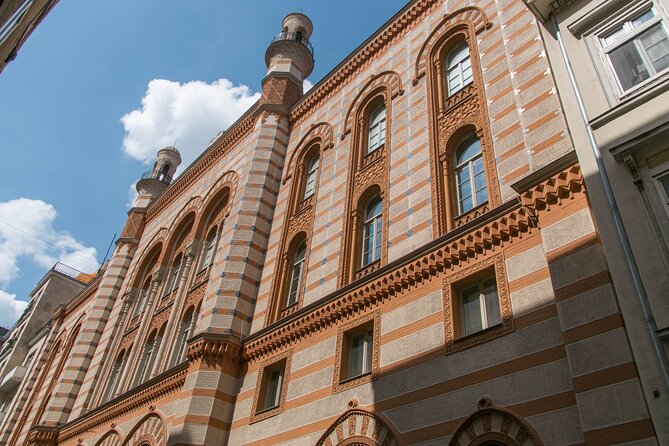
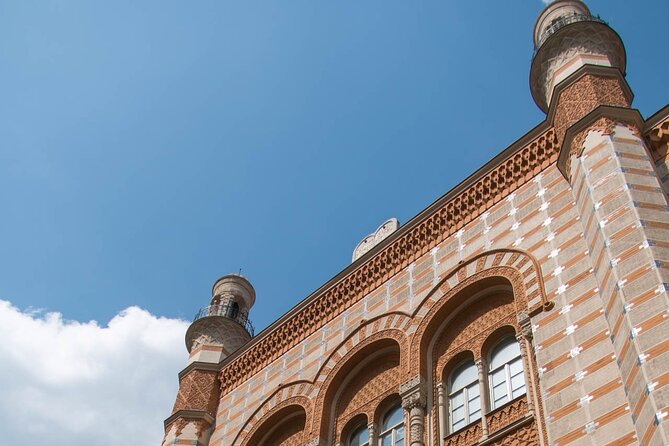
Rumbach Street Synagogue is one of the key synagogues on the Pest side. You spend about 30 minutes here, and admission is included when the building is open.
The standout detail is the connection to Otto Wagner, a major figure in Hungarian architecture. Rumbach was built in the 1870s, and the synagogue has been beautifully renovated in recent years. When you are standing there, the goal is not only to admire the restoration, it is to read the building like a historical document. You can treat the renovation as proof of something important: Jewish heritage is not only remembered, it is maintained.
Practical note: Rumbach has a winter weekday closure schedule. So if you are traveling during winter, plan to be flexible. If interior access is limited, you may still get the historical and architectural framing outside, but it may not match the full “walk-through” experience you might expect.
If you want to get the most out of your time here, arrive ready with basic curiosity. Ask yourself what your first impression is, then compare it to what Daniel explains about how the community used spaces like this.
Stop 2: Kazinczy Street Synagogue, Art Nouveau in 1912
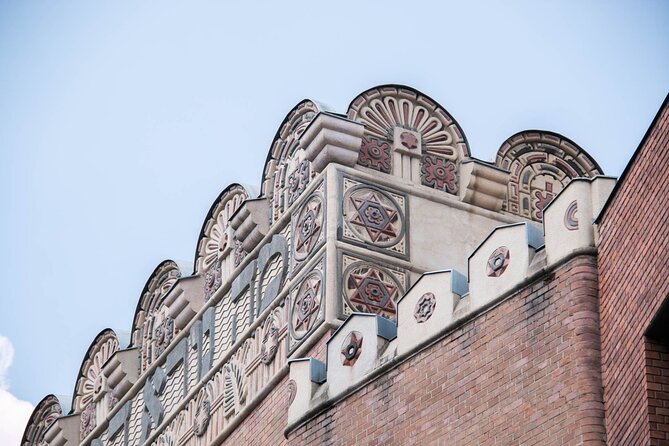
Next comes Kazinczy Street Synagogue, another 30-minute stop where the architecture does most of the work at first glance. This one is built by the Löffler Brothers in 1912, and it is in an Art Nouveau style.
Even if you are not an architecture person, Art Nouveau buildings tend to invite slow looking. Ornamental design often feels like the building is dressed for a reason, and Daniel’s job is to connect that style to the time period and community identity. You also get a sense of how the synagogue was both a religious space and a statement of cultural presence.
The catch: Kazinczy can be temporarily closed due to restoration. Admission may be included in the tour, but if the building is shut, you might not be able to access it the same way. In a situation like that, you can still learn from what you see around the site, and Daniel may use materials like photos to explain interior features. One review specifically noted photos of the interiors when access was not possible due to a holiday closure.
My advice: do not over-plan your hopes for an interior visit. If the synagogue doors are open, great. If they are not, you can still gain a lot by listening closely and taking note of exterior details.
More of the city, bank to bank on foot:
- Budapest: Buda Castle Walk with Saint Stephen’s Hall★ 4.5 · 3,012 reviews
- Big Bus Budapest Hop-On Hop-Off Bus and Walking Tour★ 3.5 · 2,206 reviews
- Budapest: Buda Castle District Walking Tour★ 4.6 · 2,108 reviews
Stop 3: Carl Lutz Memorial and the rescue story
You finish with a brief stop at the Carl Lutz Memorial, around 10 minutes. This is short by design. Memorial stops are not about time on a bench. They are about focus, respect, and clarity.
Daniel explains Carl Lutz’s role, and also how others contributed to helping people survive the Holocaust. This moment changes the tone of the walk. After you see synagogues as cultural and religious landmarks, you are reminded that preservation and destruction happened within the same physical cities and communities.
You do not need extra background before you go, but if you can handle one idea in advance, make it this: Carl Lutz is remembered for rescue work connected to saving lives during the Holocaust. The memorial stop is where the tour makes sure you carry that understanding beyond architecture.
What makes the synagogues worth your time
You might have seen synagogues elsewhere in Europe, but this pair is valuable for a simple reason: they represent different ways a community expressed itself over time.
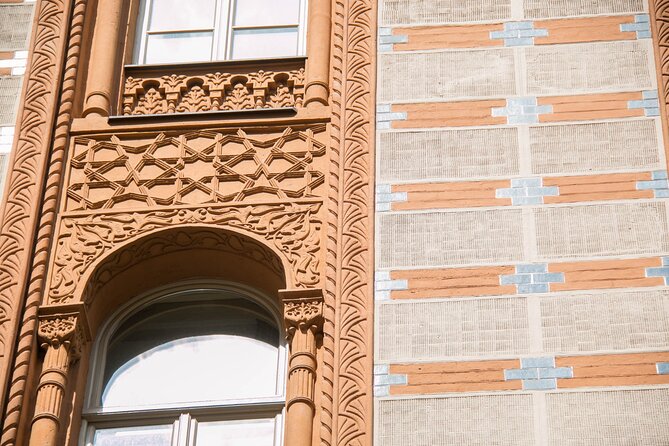
At Rumbach, built in the 1870s and associated with Otto Wagner, you get the sense of a community establishing enduring structures. Then at Kazinczy, built in 1912 in Art Nouveau style by the Löffler Brothers, you see another layer, where design language reflects the period’s tastes and the community’s confidence in building for the future.
That is also why the guide’s historian framing matters. You do not only learn the who and when. You learn how a neighborhood’s physical landmarks relate to social life, identity, and change.
Price and value: is it worth $46.46?
At $46.46 per person, this is not a budget-only free-walk style tour. But for the time and what is included, it is fairly priced, especially if you care about learning.
Here is why the value holds up:
- You get a field expert historian guide during the walk.
- You visit two historical synagogues, and admission tickets are included where access is available.
- The total time is 2 to 3 hours, which keeps your cost aligned with a focused experience.
The only value caveat is the one you should always consider with tours that rely on specific buildings: if Rumbach or Kazinczy are closed due to schedule or restoration, your experience may shift toward exterior study and explanations through photos or context. That does not make it a bad tour. It just means you should view it as a guided historical walk through the Jewish Quarter, with interior access as a bonus when possible.
If you compare this to doing the sites alone, you are paying for interpretation. In a neighborhood like this, interpretation is the difference between seeing buildings and understanding what they meant.
Timing, group size, and how to plan your day
Starting at 11:00 am is helpful. It usually gives you the morning to do something else afterward, and it avoids the late afternoon rush that can make walking tours feel like a sprint.
The tour ends at Klauzál tér, which is convenient because you can continue on your own without having to retrace steps. If you like to fill in time with a snack, this is the moment to do it since coffee and food are not included in the tour.
Group size matters again here. With up to 15 people, the walk stays social but not chaotic. You will still hear the guide, and you will still have time to look.
Practical tips: tickets, closures, and comfort
This tour uses a mobile ticket, which is simple, but still make sure you have your phone charged and ready. You do not want a last-minute scramble during check-in.
Bring comfortable walking shoes. This is a city walk through a neighborhood, so you will want good traction and support.
Now the most important planning tip: assume that synagogue access can vary. Rumbach can be closed on weekdays in winter schedules, and Kazinczy can be temporarily shut for restoration. If you show up with that expectation, you will not feel disappointed. You will appreciate the guide’s ability to explain what you cannot enter.
If you are traveling around holidays, closures can also happen. The experience is still worthwhile because Daniel can describe interiors and details through other means, like photos, when needed.
Who should book this tour
Book this if you want:
- A clear, respectful Jewish Quarter walking experience in Budapest
- Architecture plus human context, especially connected to Holocaust memory
- A guide who can answer questions beyond the basic tour script
It is especially good for first-time visitors who want a guided foundation before exploring more of the area on your own. It also suits travelers who like small group tours with a real expert. If you prefer to take your time and ask questions, this format will feel natural.
If you only want a quick highlight walk with zero history, you might find it a bit too thoughtful. But if you are curious and willing to listen, you’ll get a lot for your time.
Should you book this Budapest Jewish Quarter tour?
Yes, I think you should book it if you care about understanding what you are looking at. The combination of a historian guide, two major synagogues, and a memorial stop gives you a well-rounded picture of Budapest’s Jewish heritage, including survival and remembrance.
Just book with smart expectations: interior access can be limited depending on schedule and restoration. When that happens, the tour still makes sense because Daniel’s strength is interpretation, not just entry tickets.
If you want a respectful, informative walk that ends in a practical spot for your next stop, this is a strong choice.
FAQ
How long is the Jewish Quarter walking tour?
It runs for about 2 to 3 hours.
What is the meeting point and where does the tour end?
The tour starts at Madách Imre tér in Budapest and ends at Klauzál tér in Budapest.
What time does the tour start?
The start time is 11:00 am.
What is the price per person?
The price is $46.46 per person.
What is included in the tour?
The tour includes visiting two historical synagogues with a field expert historian guide.
Are synagogue entrance tickets included?
Admission tickets are included for Rumbach Street Synagogue and Kazinczy Street Synagogue when access is available.
What if the synagogues are closed?
Rumbach Street Synagogue can be closed on weekdays in winter schedule, and Kazinczy Street Synagogue can be temporarily closed due to restoration. In those cases, you may still learn through the guide’s explanations, including using photos of the interiors.
Is there a stop connected to the Holocaust?
Yes. You briefly stop at the Carl Lutz Memorial to discuss his and others’ role in helping people survive the Holocaust.
Is coffee included after the tour?
No. Coffee and tea (or a café stop) are optional and not included.
What is the cancellation policy?
You can cancel for a full refund up to 24 hours before the experience starts. Free cancellation is available, with the cutoff based on local time.
The newest crossings added in Budapest






Jewish Budapest & Great Synagogue Tours, compared.
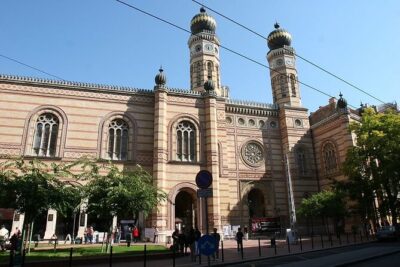
Budapest Jewish Heritage Memorial Walking Tour & Synagogue Entry
Read our review →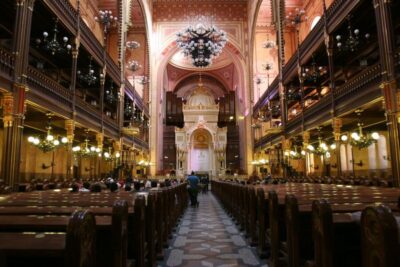
Jewish Heritage Guided Tour with Synagogue Ticket
Read our review →
German tour in the Budapest city centre & the Jewish quarter
Read our review →
Past and Present of Budapest Jewish District Tour
Read our review →
Budapest Dohany Synagogue & Hungarian Jewish Museum & free extras
Read our review →
Jewish History Guided Walking Tour with Historian
Read our review →
Budapest Dohany, Heroes’, Rumbach synagogues & Jewish Ghetto Tour
Read our review →Browse the lists this tour appears in