Reviewed · TOURS
Urban Tour of Budapest’s Most Controversial District.
Budapest gets real in District VIII.
This walk takes you beyond the usual center sights and into Józsefváros’s tougher, more political side, starting at Keleti pályaudvar and ending at the massive China Market. You’ll move through train-station grandeur, crime stories, cemetery rituals, and working-class neighborhoods, with plenty of context so it all makes sense.
I especially like two things. I love the way the route mixes famous Budapest landmarks with local, off-the-radar stops you’d miss on your own. I also love the human tone, my guide Victoria was funny and smart, and she kept the pace lively while handing you details you would not find quickly on the street.
The main drawback is the subject matter. The Police Museum includes grim crime imagery, and parts of the walk touch on sensitive political debates around memory and suffering. If you’re not up for heavy themes, you may want to plan your comfort level before you start.
In This Review
- Key points that make this tour worth your time
- Price and walking pace: what you’re really paying for
- Starting at Keleti pályaudvar: history you can stand inside
- Police Museum in District VIII: the forensics and the warning sign
- Fiumei Road Cemetery: death customs, architecture, and payoff views
- Laszlo tér and the carbon market story in a refurbished square
- Párbeszéd Háza, the House of Fates: why unfinished matters
- Orczy tér and Csobánc Társasház: architecture as a social story
- Golgota tér, lost chapels, and a first TV station’s strange end
- MÁVAG Kolónia: worker housing with bathhouse comfort and fortress vibes
- China Market (Kínai Piac): street food, immigrant stories, and smart exploring
- Plan your start and wrap-up at Keleti and the market
- Should you book this controversial-district walk?
- FAQ
- What is the duration of the tour?
- How far do I need to walk?
- Is the tour offered in English?
- Where does the tour start and end?
- Is the Police Museum open on Sundays?
- When is the China Market closed?
- Can I cancel for a full refund?
Key points that make this tour worth your time
- Budget-friendly value for a 2.5-hour route across several major Outer District VIII sites.
- Off-the-tourist-trail focus, from stations and cemeteries to architecture and markets.
- Crime-and-history context, including forensic exhibits and notorious cases in the Police Museum.
- Unusual viewpoints, like climbing up to Kossuth’s tomb for a strong urban panorama.
- Working-class Budapest, including MÁVAG worker housing that still looks built like a fortress.
- A true finish-line payoff at the China Market, where you can keep wandering after the tour.
Price and walking pace: what you’re really paying for
This is priced at $27.04 per person for about 2 hours 30 minutes, and that number is easier to swallow once you see what you cover. You’re not just taking a long chat on a sidewalk. You’re ticking through several distinct places that usually take extra planning, like Keleti pályaudvar, Fiumei Road Cemetery, and a major market area.
The walk is also real. You need to be able to walk 4 km in 2.5 hours, so it’s not a slow stroll. You’ll move at a pace that works best if you dress for city walking and bring water. For me, that’s part of the value: you get more ground covered than the shorter, single-neighborhood tours.
Finally, it’s offered in English, with mobile tickets, and it runs as a private tour just for your group. That matters because you can ask direct questions when the topics get uncomfortable or confusing, like crime history or political museum messaging.
Starting at Keleti pályaudvar: history you can stand inside
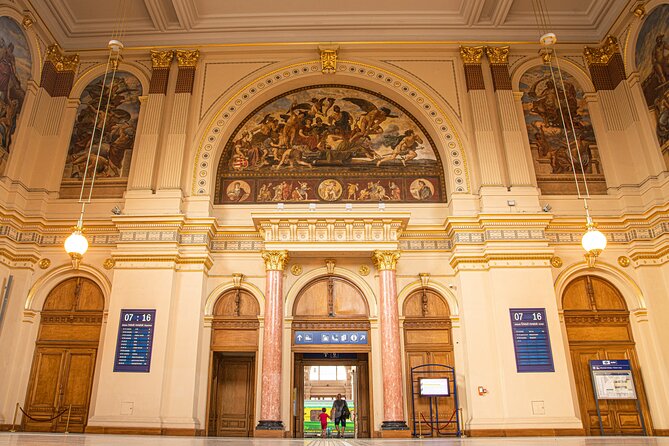
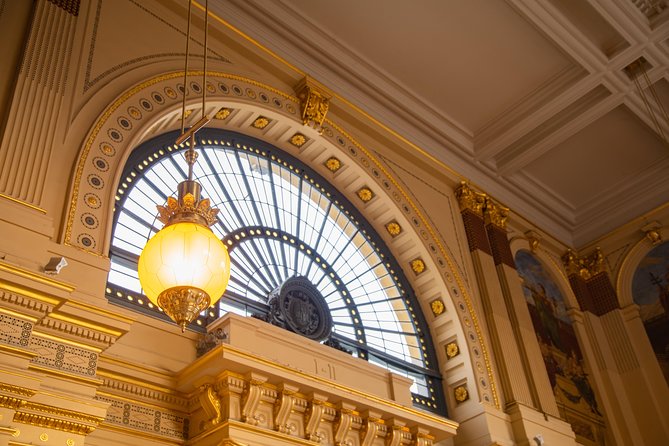
Keleti pályaudvar is a grand entry point, and the tour uses it well. You start there, then focus on the train station’s history and its famous arrival hall linked to Princess Sissi. Even if you’ve seen other European stations, this one has a different flavor because it mixes elegance with an old-world, slightly worn character.
One of the smart parts here is the contrast. You see the arrival hall and learn how it was built to impress, then you also hear how the station area fits into a bigger story of Hungary in motion. The arrival hall may not be as visually polished as the more frescoed, iconic sections you might associate with Budapest’s “treasury” style spaces, but it still hits. The guide points out things like Greek-style supporting columns, big window frames, marble coverings, and carved wooden details.
Keep in mind that you might notice the building isn’t in brand-new shape. That’s not a deal breaker. It’s part of the point, you’re seeing a living, working monument, not a museum set with everything freshly restored.
Still to cross in Budapest
- Budapest: City Highlights Sightseeing Cruise
★ 4.6 · 43,981 reviews - Budapest: Unlimited Prosecco, Beer and Aperol Spritz Cruise
★ 4.8 · 37,304 reviews - Budapest: Széchenyi Spa Day Ticket with Optional Upgrades
★ 4.3 · 23,911 reviews
Police Museum in District VIII: the forensics and the warning sign
The Police Museum is short, but it’s one of the most intense stops. This is where the tour leans into the district’s reputation for controversial stories, showing forensic science exhibits and specific cases.
You’ll encounter exhibits tied to notorious Hungarian and regional cases, including the Black Angel crime case, crimes connected to Béla Kiss (described as the first Hungarian serial killer), and other named cases like the Whiskys crime case and the Martfűi serial murder. There’s also a police history section with uniforms, weapons, documents, certificates, sculptures, awards, and photos, plus a photo exhibition under the theme Past and Present.
Here’s the practical note: this stop includes grim material. If you’re sensitive to crime imagery, plan for that mentally before you walk in. The upside is that you’re not just seeing sensational content. You’re learning how investigation and policing are presented, and how society remembers specific crimes.
Also, Sunday is different. The Police Museum is closed on Sundays, and the tour does not enter that stop on that day. If your travel dates fall on a Sunday, keep expectations flexible and be ready for the tour to shift emphasis.
Fiumei Road Cemetery: death customs, architecture, and payoff views
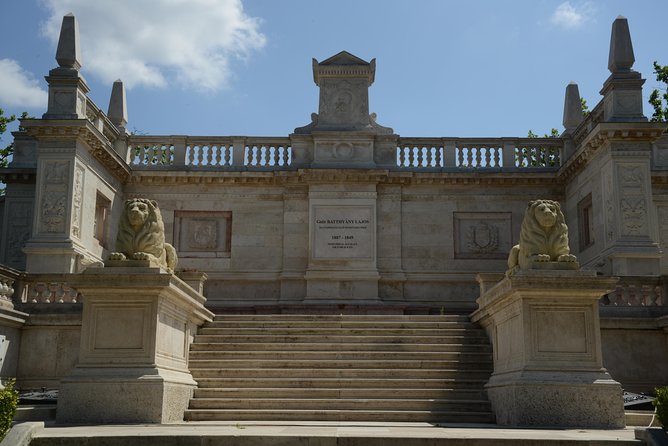
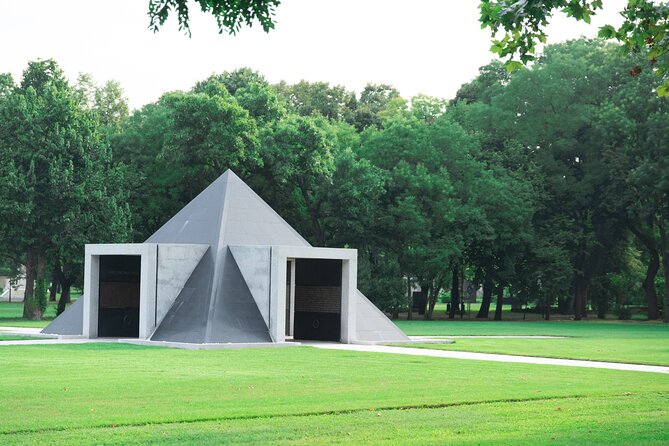
Next comes one of the most memorable and moving stops: Fiumei Road Cemetery. This cemetery is sometimes called the Communist Cemetery, and you’ll learn why that label stuck, then hear about how burial practices and attitudes toward death changed over time.
What I liked about this stop is that it reads like an outdoor museum. You’re not stuck behind ropes. You walk through paths lined with tombs and architecture that feel like a history book you can see and touch with your eyes. The guide also explains local death customs, which gives you more context than just admiring headstones.
There’s also a physical payoff. You climb to the top of Kossuth’s tomb for the best views over District VIII. Even if you don’t love heights, it’s worth it, because it helps you understand the neighborhood layout, not just the memorials.
You’ll also hear about the fate of martyred prime minister Batthany and visit inside one of the mausoleums. Another standout detail is the appearance of a grand horse-drawn funeral hearse last used for Count Apponyi. That kind of ceremonial detail is exactly why cemeteries can feel unexpectedly important in a city tour.
You’ll likely finish the cemetery portion feeling calmer than when you started, but also more aware. It’s one of those stops that changes the way you look at the city’s public spaces.
Laszlo tér and the carbon market story in a refurbished square
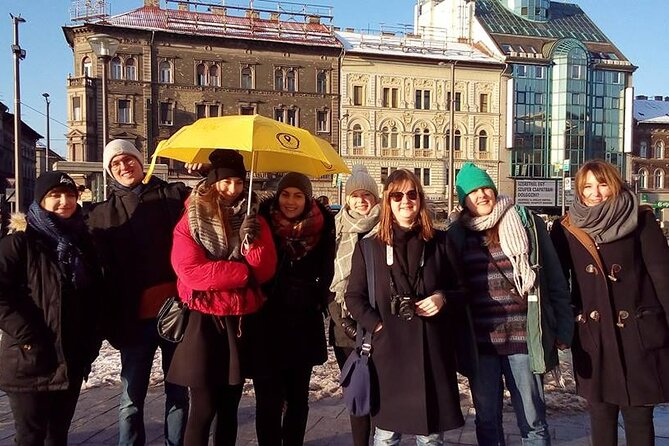
After the cemetery’s weight, you get a lighter, more everyday urban stop: Természet Fitotéka Kkt. at Laszlo tér. The tour points out the refurbished square and ties it to the history of the carbon market that once existed there, plus why the area is named after a famous Hungarian writer.
This is a short stop, but it’s useful. You learn how a neighborhood’s commercial function can shift over time, and how even a small square becomes a clue to the city’s changing economy. For practical sightseeing, it’s also a nice reset point. You move from heavy memory and ritual into something more like normal street life.
If you like tours that connect architecture, naming, and past uses of real street corners, you’ll appreciate this moment.
Back across the water in Budapest:
- Budapest: Nighttime or Daytime Sightseeing Cruise★ 4.2 · 21,062 reviews
- Budapest: By Night Sightseeing Cruise with Welcome Drink★ 4.3 · 15,533 reviews
- Budapest: St. Stephen’s Basilica Entry with Options★ 4.6 · 12,322 reviews
Párbeszéd Háza, the House of Fates: why unfinished matters
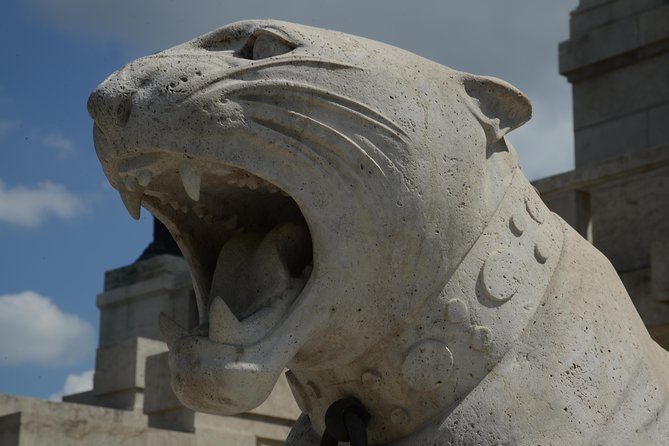
Then comes one of the most controversial sights on the route: Párbeszéd Háza, also described as the House of Fates. The tour frames it as an unfinished museum in Budapest tied to messages from the government of Viktor Orbán about the Holocaust of Hungarian Jews.
You’ll learn that Holocaust memory in Hungary has been debated for decades, and that the topic triggered extremely strong emotions in public life, especially after the end of communist control. That doesn’t mean you’re getting a single, simple message. It means you’re being shown how politics can shape buildings, museums, and public interpretation of history.
The building itself is strange in a memorable way, with a giant star and railway carriage towers in its design language. The tour explains that these elements serve as reminders of the terrible start of events, and that the location ties into those beginnings.
This stop is not “fun,” but it is informative. If you want Budapest as it actually is, not only as postcards, you need moments like this where the city’s arguments are visible in brick and concrete.
Orczy tér and Csobánc Társasház: architecture as a social story
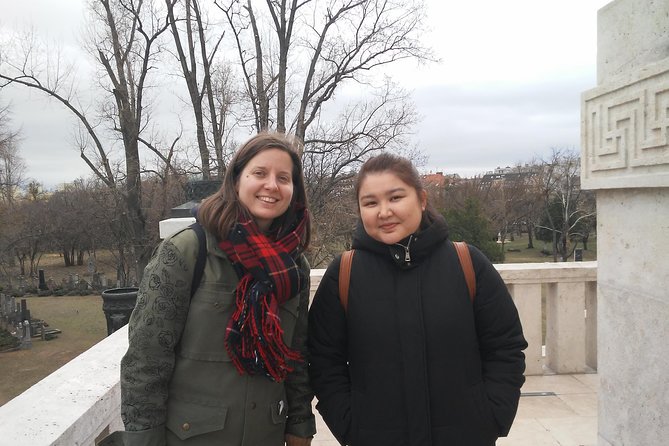
At Orczy tér, the tour shifts again into visible conflict. The area is described as an unfortunate symbol of traffic disorder, with tram tracks and sidewalk islands that many see as confusing and disreputable. The guide also connects the physical mess to social problems and heavy commuter flow.
What you do next is where it becomes worthwhile. You visit Csobánc Társasház, designed by architect György Kévés. This is described as a striking complex architectural work, and it’s easy to see why. The brick architecture with many arches evokes an earlier modern style around 1910.
At the center, you also get the Kokárda Catacomb, memorial and underground chapel tied to the failed revolutions of 1848 and 1956. That’s an important layer: the building is not just housing, it’s a site of commemoration.
One of the sharpest points here is gentrification. The tour explains how this new housing complex became the start of a painful gentrification process in the area. In other words, you’re looking at architecture, but you’re also learning how urban renewal can produce winners and losers.
Golgota tér, lost chapels, and a first TV station’s strange end
Golgota tér is where the tour turns from major monuments back to smaller, quieter evidence of everyday life. You wander through small gardens and see the remains of a chapel once frequented by workers who lived in nearby apartment buildings.
The guide explains that communist forces only succeeded in destroying it after the third attempt. That detail matters because it shows how much effort went into erasing certain local symbols, even when the goal was framed as practical. It’s history measured in repeated actions.
Next, you look at reconstructed bronze 14 reliefs by sculptor Antal Szécsi, featuring the Máriabesnyő Calvary Station. This is another moment where religion and politics overlap, but through art and physical rebuilding.
Then you continue a bit on your own with guidance to understand Budapest Europe Television, described as Hungary’s first commercial TV station. The tour talks through its unusual structure, and even notes that tensions between the manager and the liquidator almost escalated to violence, before you finally hear how the station ended.
You wrap this segment by seeing Goyla bar and community center and learning about events and activities it runs. This is one of the best ways to keep the tour from feeling like a history lecture. You end near a place where local life continues.
MÁVAG Kolónia: worker housing with bathhouse comfort and fortress vibes
Next stop: MÁVAG Kolónia. This is a fortress-like apartment block that housed three thousand workers when it was built. The tour emphasizes that these apartments were designed with a room and kitchen, and that the MÁVAG company built them to provide strong care for workers, not only wages.
You’ll hear what that meant in practical terms. There was a bathhouse, canteen, laundry, doctor’s office, kindergarten, and a public market. That cluster of services is a reminder that “worker housing” can be more than a dorm-style box. It was built as a whole support system.
Today, the colony is frequently used as a film location, with titles mentioned like Colorado Kid, The Exam, and the documentary The City Dweller’s. Even if you have not seen those, the point lands. Places like this keep their identity because they look like how they were built to function.
It’s also a good breather from the heavier political topics, because here the focus is on daily life structure, not debate.
China Market (Kínai Piac): street food, immigrant stories, and smart exploring
The tour finishes at Kínai Piac, also called the China Market and linked to Józsefváros’s Four Tigers market nickname. This is in an old industrial estate and is described as one of the largest markets in Eastern Central Europe for Southeast Asian goods.
Expect scale. The guide notes there are over 10,000 workers and about 1,500 businesses. You’ll see items ranging from socks and frying pans to dragon fruit, live fish, Chinese medicine, fake flowers, and even oddities like plastic surgery offerings. The sheer mix is a window into how global supply chains have arrived in everyday neighborhood shopping.
You’ll explore the market with your guide, and they’ll share stories about immigrants who settled here. That makes the market feel less like a theme market and more like a real local economy.
At the end, you get time to keep wandering on your own and you can try the street food options. The guide also offers advice on do’s and don’ts, which is especially helpful here. Markets move fast, and it’s easy to get swept up without knowing where it’s safe or comfortable to pause.
Two practical closures matter: the China Market is closed on Christmas and Easter.
Plan your start and wrap-up at Keleti and the market
You start at Keleti pályaudvar in Budapest 1087 Hungary, at 10:30 am, and you finish at Kínai Piac (China Market) at Kőbányai út 25 in 1087 Hungary. The tour uses a mobile ticket, so you’ll want your phone charged.
Your ending options are built in. After the tour, you can join the guide at Goyla a ruin pub, go off alone to keep exploring the market, or you can ask for a walk to the nearest tram stop, which is described as about 5 minutes. From there, you can take public transport back toward the city center.
Also note: the route is near public transportation, and service animals are allowed. If you like to keep your flexibility, this setup helps.
Should you book this controversial-district walk?
Book it if you want Budapest that feels lived in, not just museum clean. This route is strongest when you like context, architecture details, and the kind of stories that explain why District VIII looks and feels the way it does.
Skip it or go only if you’re comfortable with heavy material if crime imagery and political memory debates would drain you. The Police Museum stop is the biggest flag, and the House of Fates adds another layer of sensitive discussion.
If you’re the kind of traveler who enjoys walking 4 km to get a real neighborhood education, this is a smart value at $27.04. You finish with a market full of sensory chaos, and you can decide how much more you want to explore on your own.
FAQ
What is the duration of the tour?
The tour lasts about 2 hours 30 minutes.
How far do I need to walk?
You must be able to walk 4 km during the tour.
Is the tour offered in English?
Yes, it is offered in English.
Where does the tour start and end?
It starts at Keleti pályaudvar (1087 Hungary) and ends at Kínai Piac (China Market) on Kőbányai út 25, 1087 Hungary.
Is the Police Museum open on Sundays?
No. On Sundays, the Police Museum is closed, and the tour does not enter it.
When is the China Market closed?
The China Market is closed on Christmas and Easter.
Can I cancel for a full refund?
Yes. Free cancellation is available if you cancel up to 24 hours in advance for a full refund. If you cancel less than 24 hours before, the amount paid is not refunded.
The newest crossings added in Budapest





Tours, compared.
Buda Castle District Vampires and Myths Night Tour
Read our review →
Big Bus Budapest Hop-On Hop-Off Bus and Walking Tour
Read our review →
Budapest City Landmarks Walking Tour in 2 Hours
Read our review →