
Reviewed · HISTORICAL TOURS
Historical and Cultural Walking Tour in Budapest
Budapest has a talent for hiding the story in plain sight. This private half-day walking tour turns landmarks into context, with a guide who explains what you are looking at and how everyday life shaped the city. I love the tight focus on Buda and Pest must-sees, plus the option to customize what you spend time on. One consideration: you are walking for about 4 hours, so bring comfy shoes and a moderate stamina level.
I also like that the tour is designed for real navigation. You start at Deák Ferenc tér, and you get on-foot sightseeing with on-street clarity, not just postcard stops. Hotel pickup is included, the group stays small, and you will see a lot without feeling rushed.
In This Review
- Key highlights worth planning around
- What you get from a guided Budapest walk (and what you do not)
- Price and group size: is $277.64 per group good value?
- Meeting point and pickup: starting at Deák Ferenc tér
- Stop 1: Heroes’ Square, where Hungarian identity is carved into stone
- Stop 2: City Park and Vajdahunyad Castle, plus a look inside
- Stop to know: Széchenyi bath culture and Hungary’s thermal water
- Stop 3: Andrássy Avenue, Budapest’s Champs-Élysées vibe
- Stop 4: Hungarian State Opera House, a highlight for architecture lovers
- Stop 5: St. Stephen’s Basilica and the Holy Right Hand
- Crossing to Parliament: Liberty Square to the Hungarian Parliament
- Stop 6: Buda Castle and the Chain Bridge crossing
- Who this tour suits best
- What to do before and during the walk
- The bottom line: should you book this Budapest history walk?
- FAQ
- How long is the Budapest historical and cultural walking tour?
- Where do you start and where does the tour end?
- Is hotel pickup included?
- What does the tour cover?
- Are any admission tickets required?
- Is food or drinks included?
- Can I cancel for a full refund?
Key highlights worth planning around
- Private, guided route that connects landmarks to Hungarian culture and daily routines
- Hotel pickup included to reduce the first-street scramble
- City Park and thermal bath culture via a look at Széchenyi’s area
- Iconic architecture in a logical order, from Heroes’ Square to Buda Castle
- Landmark interiors where possible, including time at Vajdahunyad Castle
- Small-group feel with a maximum of 10 travelers
What you get from a guided Budapest walk (and what you do not)
Budapest can feel split in two, even when you are standing in the middle of it. Pest carries the big civic and commercial energy, while Buda wraps the old royal core and views. This tour works because it treats that split as part of the story, not just a map detail.
The value is in the way a guide turns the “what” into the “why.” You will see Heroes’ Square, Andrássy Avenue, and St. Stephen’s Basilica, but the more useful part is the links between politics, faith, and everyday habits. The tour is also built to be flexible. If you care more about architecture than ceremony, or you want extra time for photos, your guide can adjust.
What you do not get is a long, slow day of wandering at your own pace. This is a structured half-day. If you want hours of free time in one spot, or you hate moving every 20 to 30 minutes, you might feel a bit “scheduled.”
Also, there is no food or transportation ticket included. That is normal for a walking tour, but it means you should plan for a snack break on your own if you get hungry.
Price and group size: is $277.64 per group good value?
The price is listed as $277.64 per group, up to 15 people, and the tour notes a maximum of 10 travelers. Either way, the cost is per group, not per person. That means your per-person value improves when the group fills up.
Here is the math so you can decide fast. If the group is capped at 10, you are roughly at $27.76 per person. If the group reaches 15, it could be about $18.51 per person. Either figure is fairly reasonable for a 4-hour private-style guided route that includes hotel pickup.
You are paying for:
- a professional guide for a focused half-day,
- hotel pickup to start clean,
- a route that covers multiple major areas without you figuring it out alone.
If you are traveling solo or as a couple with a small group, the per-person cost goes up. Still, you can think of this as buying time and clarity. Budapest’s “major sights” are close on a map, but not always easy on the ground. A guide can save you from dead ends and wasted walking.
More of the city, bank to bank on foot:
- Budapest: Buda Castle Walk with Saint Stephen’s Hall
★ 4.5 · 3,012 reviews - Big Bus Budapest Hop-On Hop-Off Bus and Walking Tour
★ 3.5 · 2,206 reviews - Budapest: Buda Castle District Walking Tour
★ 4.6 · 2,108 reviews
Meeting point and pickup: starting at Deák Ferenc tér
You meet at Deák Ferenc tér, and the tour ends back at the same meeting point. Start time is 9:00 am, and the tour lasts about 4 hours.
Hotel pickup is offered, which matters more than it sounds. Budapest has plenty of transit, but getting your footing early reduces stress, especially if you are coming from a hotel outside the center. If pickup is not offered to your exact address, you can still anchor your day at Deák Ferenc tér, since it is a major transit hub.
You’ll also receive a mobile ticket, so have your phone ready. And since the tour expects moderate physical fitness, plan to wear shoes you can walk in for a few hours. This is not “stroll only,” it is a true walking route.
Stop 1: Heroes’ Square, where Hungarian identity is carved into stone
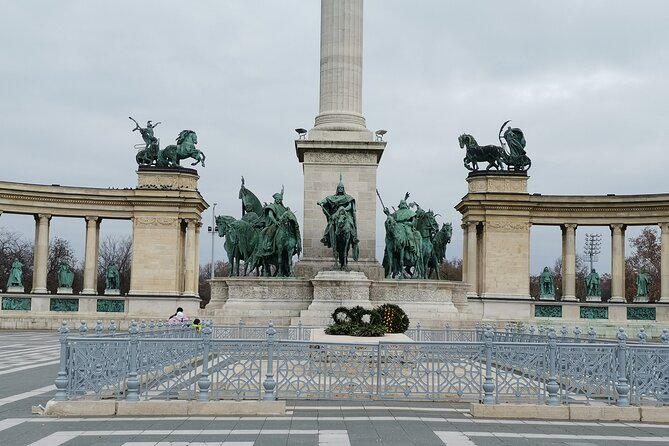
You begin at Heroes’ Square, one of Budapest’s most iconic public spaces. The big idea here is roots. The statues commemorate major figures in Hungarian history, and your guide uses that to explain where Hungarian identity fits in the region’s larger story.
This stop is short, about 20 minutes, so it is not a long museum-style session. Instead, it is a fast visual orientation. You get the names, the symbolism, and the reason the square matters.
Practical tip: if the weather is clear, this is a good place to settle into the “look around” mode. You will be seeing grand architecture later, so it helps to start by understanding what you are supposed to notice.
Stop 2: City Park and Vajdahunyad Castle, plus a look inside
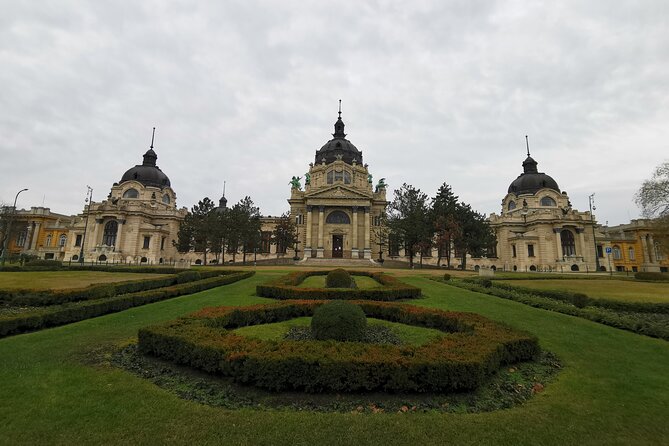
Next you head into City Park, described as one of the first public parks in the world opened for relaxation. That framing is useful. This is not only a pretty green space. It’s part of how public life formed in Budapest.
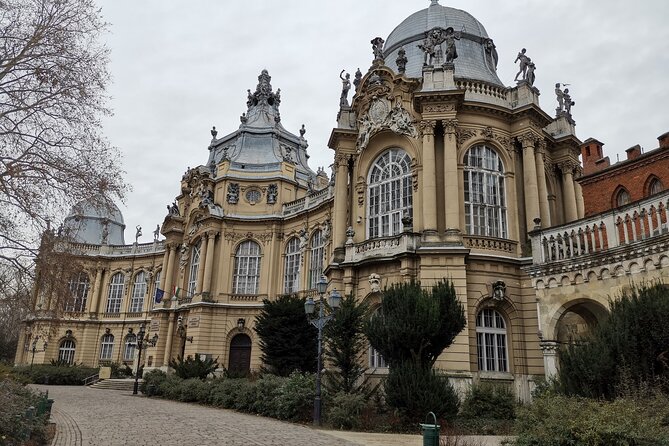
Within the park is Vajdahunyad Castle, built to embody about 1000 years of Hungarian architecture. The tour includes time at the castle and mentions a look inside, which is a key difference from tours that only snap exterior photos.
Time is around 45 minutes here, which is just enough for:
- a careful exterior scan,
- a guided explanation of what you are seeing,
- and a chance to look around without feeling rushed.
Potential drawback: if you are not interested in architecture history, the castle can feel like a lot of explanation. In that case, lean on your guide for the practical angle, like what elements to notice and how the styles relate to different eras.
More centuries stacked along the banks:
- Budapest: Historic Cruise with Welcome Drink★ 4.7 · 6,512 reviews
- Budapest Historical Sightseeing – Free Walking Tour★ 5.0 · 1,302 reviews
- Buda Castle District Dark History, Legends and Vampire Night Tour★ 4.5 · 1,240 reviews
Stop to know: Széchenyi bath culture and Hungary’s thermal water
While you are still in City Park, you will talk about bath culture and you will see the famous Széchenyi baths from the area. This is a smart add-on, because in Hungary, baths are not only for tourists. They are part of daily life and a long-running local habit tied to thermal water.
The tour does not position this as a full bath stop where you buy a ticket and soak. Instead, it gives context, so you can recognize the cultural “why” when you see the bath complex later.
If you plan to do a soak on a different day, this stop helps you pick a goal. You can ask your guide what bath vibe matches your time and preferences, rather than guessing from photos alone.
Stop 3: Andrássy Avenue, Budapest’s Champs-Élysées vibe
After the park, you move onto Andrássy Avenue, which is often compared to the Champs-Élysées in terms of prominence. Here the focus turns to streetscape: Neo-renaissance mansions and townhouses, plus high-end boutiques, restaurants, and coffeehouses.
This is a 30-minute walk-through stop, so think of it as “reading the street.” Your guide explains what the buildings represent and how the boulevard functions as a kind of public statement.
The best way to enjoy this segment is to pay attention to details: façades, symmetry, and how the street feels planned. If you rush, you miss the point.
Stop 4: Hungarian State Opera House, a highlight for architecture lovers
You then visit the Hungarian State Opera House, the Magyar Állami Operaház, one of the most beautiful buildings on Andrássy Avenue. The tour gives time, about 25 minutes, and includes an interesting story about the opera house.
Even if you do not attend a performance, the building is worth it. Opera houses are built for visibility and prestige, so you can learn a lot about politics, culture, and who had influence in the era that shaped the grand public spaces.
Good to know: this is still within a walking tour rhythm. If you love opera or want more time inside, this may feel like a quick stop. But for most people, it lands as a memorable “wow” moment.
Stop 5: St. Stephen’s Basilica and the Holy Right Hand
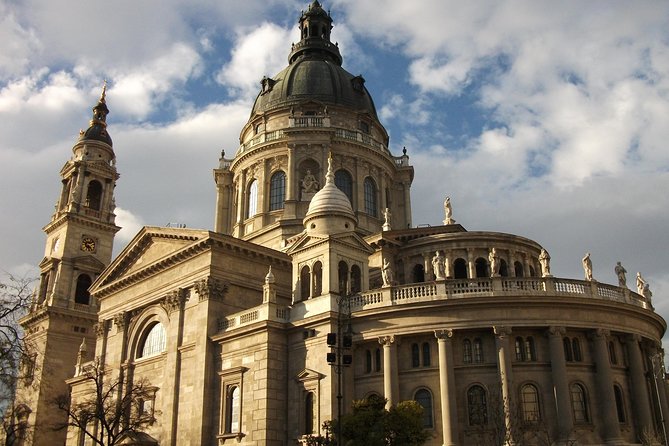
St. Stephen’s Basilica is the biggest church in Budapest dedicated to Hungary’s first king. The tour highlights the essential relic connected to Hungarian history, the Holy Right Hand, described as the mummified hand of St. Stephen.
Time here is about 15 minutes. That may sound short, but the goal is not a long devotional visit. It’s to hit the landmark fast, understand the symbolism, and connect it to the country’s story.
If you want a quieter experience, come back later on your own for more time. For the tour purpose, this stop works because it gives you a central historical anchor before moving into the political showpiece next.
Crossing to Parliament: Liberty Square to the Hungarian Parliament
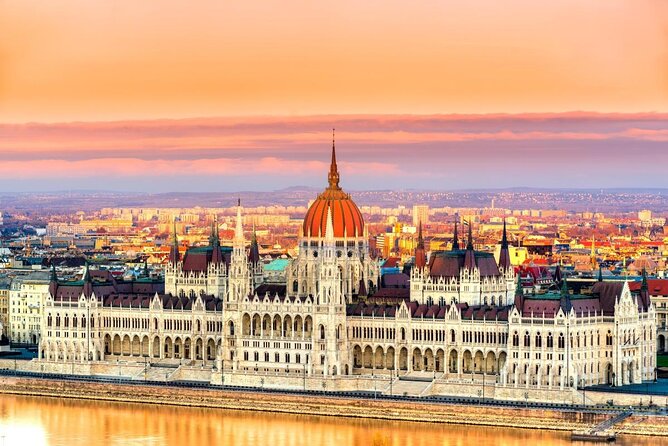
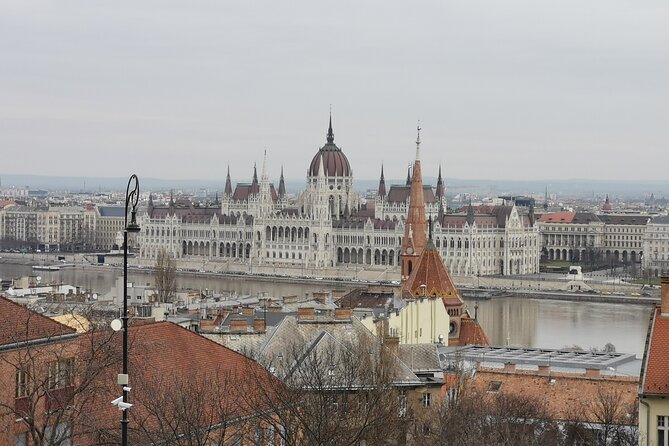
After the basilica, you cross through Liberty Square and continue toward the Hungarian Parliament. Your guide ties the monuments to political life across different periods: dictatorship, communism, and democracy.
This portion matters because it shifts the tone of the day. Up to this point, you have been in culture and identity. Now you see how power and ideology are staged in public spaces.
Practical note: keep your camera ready, but also keep your attention on the explanations. The Parliament building is impressive even without context. With context, it becomes more than a photo.
Stop 6: Buda Castle and the Chain Bridge crossing
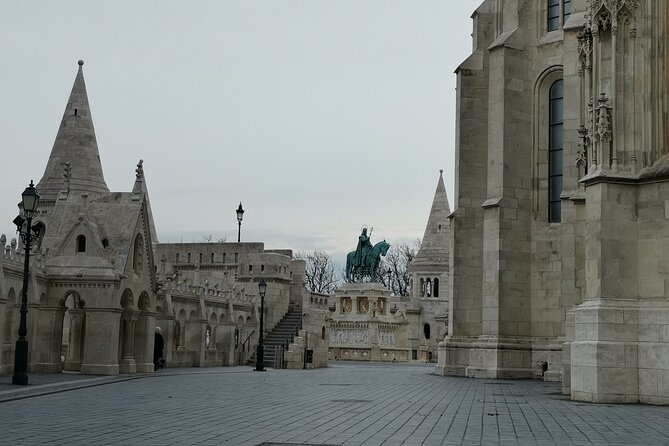
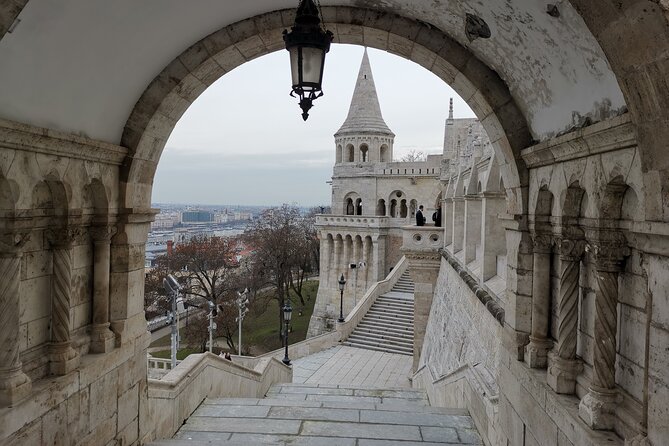
Finally, you head into Buda Castle, the medieval residency place of Hungarian kings from the 14th century. This is the end stretch, with about 1 hour allocated here, and the tour includes crossing the Chain Bridge to get there.
This stop is a big one, and it pays off if you are the type of traveler who likes “top layer and backstory.” Buda Castle represents royal authority and old-world Budapest. When you connect that with your earlier stops, you start to see the full timeline in one walk.
The Chain Bridge itself is more than a crossing. Bridges in big cities often mark the moment people commit to connecting different sides. Here it literally links the tour’s “Pest story” to the “Buda story.”
Potential drawback: you will walk and you will likely climb a bit as you reach the castle area. If your stamina is limited, tell your guide early so pace and breaks can match you.
Who this tour suits best
This is a strong match if you:
- want a guided route that connects the city’s landmarks to culture and politics,
- like architecture and public monuments,
- appreciate a flexible itinerary rather than a fixed script.
It is also a good option for people who do not want to spend their vacation time reading guidebooks in the street. A professional guide helps you move faster with less guesswork.
If you are someone who hates structured walking, or you want slow museum time and long photo stops, you might prefer a more free-form tour style. This one is designed as a half-day route that balances multiple key sites.
What to do before and during the walk
Because food and drinks are not included, plan a light breakfast before you start at 9:00 am. Budapest mornings can be crisp, and you will move straight into outdoor walking.
Wear shoes you can trust. You are mixing broad avenues, park paths, and castle area terrain. Bring a layer for temperature swings, and keep water handy, even if it is just a small bottle.
If you care about specific priorities, decide before the tour. For example:
- If basilica relics are your thing, be ready for more focus there.
- If bath culture matters, ask questions when you see Széchenyi’s area so you can pick your best soaking day later.
- If architecture is your priority, slow down when your guide points out façade details, especially on Andrássy Avenue and at Vajdahunyad Castle.
The bottom line: should you book this Budapest history walk?
I think this tour is worth booking if you want a smart, efficient way to see Budapest’s top sights and understand what makes them more than scenery. The price per group can be good value, especially when the group fills, and the hotel pickup reduces friction. The route also hits the big thematic points: identity at Heroes’ Square, architecture at City Park, cultural routines at Széchenyi’s area, power and ideology near Parliament, and the old royal core at Buda Castle.
I would skip it or choose a different style if you have limited mobility, hate structured walking, or you want long time in interiors and churches. This is a guided walk built for breadth and context, not a slow day of lingering.
If you are in Budapest for a short stay and want your bearings fast, this is the kind of tour that gives you a strong foundation for the rest of your trip.
FAQ
How long is the Budapest historical and cultural walking tour?
It runs for about 4 hours.
Where do you start and where does the tour end?
You start at Budapest, Deák Ferenc tér, Hungary, and the tour ends back at the same meeting point.
Is hotel pickup included?
Yes, on-foot hotel pickup is included.
What does the tour cover?
You visit Heroes’ Square, City Park including Vajdahunyad Castle, the Széchenyi baths area for bath culture, Andrássy Avenue, the Hungarian State Opera House, St. Stephen’s Basilica, and Buda Castle, including a Chain Bridge crossing.
Are any admission tickets required?
Admission tickets are listed as free for the stops.
Is food or drinks included?
No, food and drinks are not included. Transportation tickets are also not included.
Can I cancel for a full refund?
Yes. You can cancel up to 24 hours in advance of the start time for a full refund. If you cancel less than 24 hours before, the amount paid is not refunded.
The newest crossings added in Budapest






Historical Tours, compared.

Budapest Historical Sightseeing – Free Walking Tour
Read our review →
Buda Castle District Dark History, Legends and Vampire Night Tour
Read our review →
BloodThirsty Hungary: Walking tour & Dark Historical Stories
Read our review →
Budapest Jewish Heritage Memorial Walking Tour & Synagogue Entry
Read our review →
Jewish Heritage Guided Tour with Synagogue Ticket
Read our review →
Budapest Historic Downtown Bicycle Tour in small groups
Read our review →
Historic Downtown ride on E-Bicycles Buda & Pest
Read our review →Browse the lists this tour appears in