
Reviewed · CITY TOURS
Half day Budapest city tour by car / minivan
Four hours, and Budapest feels twice as big. This half-day private drive is built for first-timers, with quick stops at the city’s headline landmarks and enough time outside the car to actually look and take photos. I especially like the door-to-door pickup and air-conditioned vehicle plus bottled water for the ride.
The other thing I really like is how the stops stay tight and purposeful, so you get a clear snapshot instead of a long, tiring slog. Guides such as Gergely Szabó, Gregory, and Gabriel show up in the guide mix, and the common thread is short, well-told explanations that make the sights click fast.
One possible drawback: it’s a short, fast route, so you will spend time driving, and some major interiors cost extra, including St. Stephen’s Basilica, Matthias Church, and the upper viewpoint areas at Fisherman’s Bastion.
In This Review
- Key points before you go
- Why this 4-hour Budapest drive is the right move for short stays
- Andrássy Avenue: UNESCO-grade boulevard, plus shopping and grand facades
- Heroes’ Square and the moment you understand Hungary’s national story
- City Park power duo: Vajdahunyad Castle and the House of Music Hungary
- Széchenyi medicinal bath and the “big thermal bath” reality check
- Opera House and St. Stephen’s Basilica: two different kinds of grandeur
- Liberty Square and Hungary’s parliament, viewed from the “power center”
- Bridges and street markers: Chain Bridge, Margit Bridge, and the Zero Kilometre Stone
- Matthias Church and Fisherman’s Bastion: the Buda Castle District payoff
- Citadel and Gellért Baths: the hilltop contrast that makes Budapest feel dramatic
- Price and timing: does $141.56 per person feel fair?
- Who should book this Budapest highlight loop, and who might not?
- FAQ
- How long is the half-day Budapest city tour?
- Is pickup from my hotel included?
- Is this a private tour or shared with others?
- What language is the tour guide?
- What is included in the tour price?
- Are entrance fees included for all sights?
- Do I get a mobile ticket?
- Are free cancellation options available?
- Are service animals allowed?
Key points before you go
- Private car with door-to-door pickup so you spend time seeing, not figuring out transit.
- Short, photo-friendly stops that still include meaningful context for each place.
- A smart mix of Pest landmarks and Buda viewpoints via the bridges and Danube crossings.
- City Park highlights from the Millennium-era Vajdahunyad Castle to the new House of Music Hungary.
- Thermal-bath area contrast with both Széchenyi and Gellért Baths on the route.
- Plan for extra tickets for St. Stephen’s Basilica, Matthias Church, and Fisherman’s Bastion viewpoints.
Why this 4-hour Budapest drive is the right move for short stays
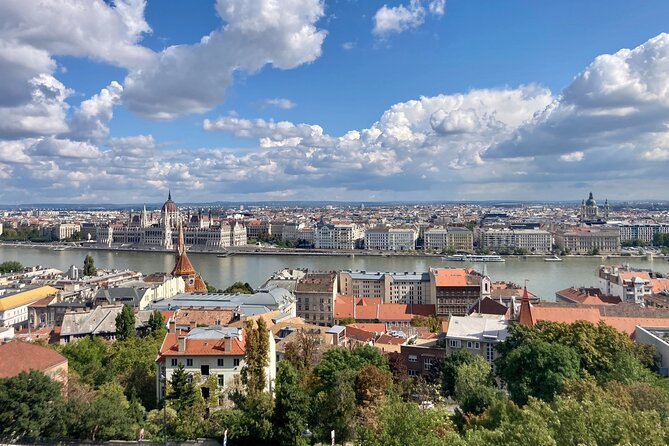
Budapest can feel big. You have grand boulevards, wide riverside views, and hilltop churches that take effort to reach on foot. This tour solves that with a private car or minivan setup, so you can cover a lot of ground without burning your energy before dinner.
The sweet spot is the timing. At about 4 hours, you get classic orientation: where the Danube runs, where the money and the parliament sit, how Buda’s Castle District rises, and why the viewpoints matter. If you only have one afternoon to “get bearings fast,” this is the kind of route that helps you come back later with purpose.
And because it’s private, you are not forced into a rigid group pace. The guide can usually tailor the stops to what you care about most, especially if you have already seen part of the city.
Andrássy Avenue: UNESCO-grade boulevard, plus shopping and grand facades

The drive starts with Andrássy Avenue, a boulevard dating back to 1872 that links the city center to Heroes’ Square. It’s not just pretty. It’s also a World Heritage Site (since 2002), lined with Neo-Renaissance mansions and townhouses, plus embassies, theaters, and cafés.
For your planning, this matters because Andrássy Avenue is where you start to “read” Budapest’s style. You will notice the mix of elegance and everyday life: luxury boutiques alongside street-level cafés, with the architecture doing a lot of storytelling.
You can treat this stretch like an outdoor gallery. Even if you don’t walk far, you’ll have enough time to look up and snap photos, then move on without losing momentum.
Still to cross in Budapest
- Budapest: City Highlights Sightseeing Cruise
★ 4.6 · 43,981 reviews - Budapest: Unlimited Prosecco, Beer and Aperol Spritz Cruise
★ 4.8 · 37,304 reviews - Budapest: Széchenyi Spa Day Ticket with Optional Upgrades
★ 4.3 · 23,911 reviews
Heroes’ Square and the moment you understand Hungary’s national story
At Heroes’ Square, you get one of Budapest’s most iconic statue complexes. The monument shows the Seven chieftains of the Hungarians, plus other important national leaders, and there is the Memorial Stone of Heroes nearby.
If you want context, this is a good place to start. Heroes’ Square isn’t only a museum-like stop. It also connects to modern Hungarian history, including major political moments such as the reburial of Imre Nagy in 1989.
You’ll get around 20 minutes, and admission is free. That time is ideal for:
- a quick photo lineup
- reading the statues from a couple angles
- getting a sense of why this square feels ceremonial and significant
If you like churches and castles more than monuments, this might feel like a detour. But for first-time orientation, it’s one of the strongest starting points.
City Park power duo: Vajdahunyad Castle and the House of Music Hungary
Next up is the City Park area, starting with Vajdahunyad Castle. This building was created in 1896 for the Millennium Exhibition celebrating 1000 years since the Hungarian Conquest of the Carpathian Basin in 895. What’s fun is that the castle design is meant to echo several landmark buildings across the Kingdom of Hungary, so it feels like a history lesson built out of architecture.
You’ll usually have about 15 minutes here, and admission is free. It’s enough time to circle for photos and notice the “made to look like many places” concept without needing a full museum visit.
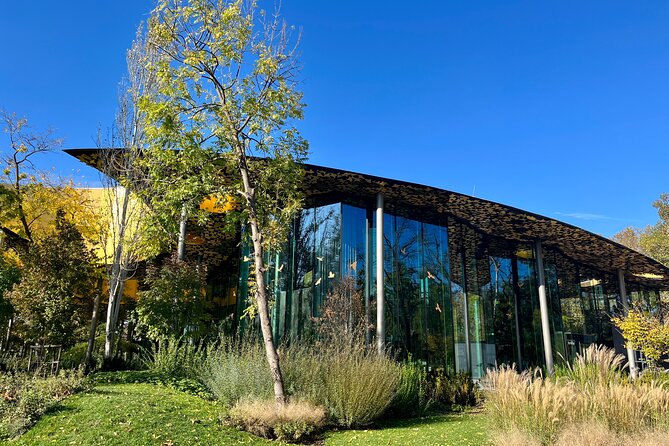
Then comes House of Music Hungary, a newer stop in the same park area. It opened in January 2022 and was chosen from 170 international projects in an architectural competition. It’s described as a musical initiation institution and also holds a major exhibition on the history of music.
The stop time is short, around 10 minutes, and admission is free. That means this isn’t a deep museum day. It’s best for you if you want a taste of modern Budapest and a recognizable modern building, then you move on to older, more famous landmarks.
Széchenyi medicinal bath and the “big thermal bath” reality check
The route also passes Széchenyi Medicinal Bath, highlighted as the largest medicinal bath in Europe. Its waters come from two thermal springs, with temperatures around 74°C (165°F) and 77°C (171°F).
This is mostly an exterior-style stop on a half-day plan. Even without changing into a swimsuit, you’ll understand why Budapest is so famous for bath culture: these aren’t small neighborhood pools, they’re major complexes tied to the city’s identity.
If you want to actually soak, you’ll need to plan that as a separate block of time. A short stop is enough to point you to the right area and get excited, but you won’t get a full bath experience in a 4-hour circuit.
More of both banks in one sweep:
- Budapest: City Sightseeing Hop-On Hop-Off Bus Tour & Extras★ 4.1 · 4,337 reviews
- Budapest City Landmarks Walking Tour in 2 Hours★ 5.0 · 2,048 reviews
- Budapest: Nighttime or Daytime City Sightseeing Cruise★ 4.1 · 2,046 reviews
Opera House and St. Stephen’s Basilica: two different kinds of grandeur
On Andrássy Avenue again, you’ll catch the Hungarian State Opera House. It’s a neo-Renaissance building right on the avenue. This is another “look up and take it in” stop, around 10 minutes, with free admission for the outside view.
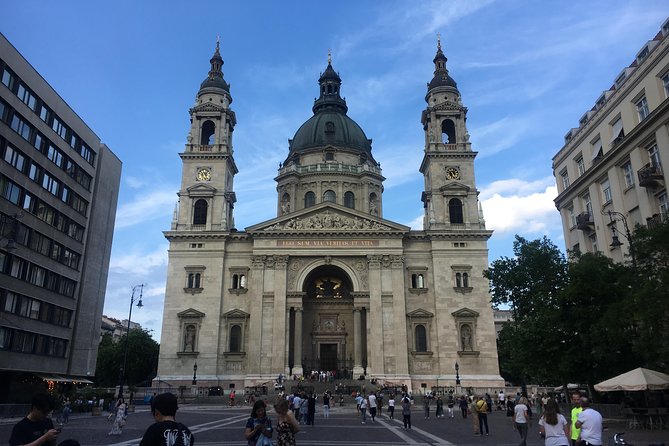
Then the tour reaches St. Stephen’s Basilica, one of Budapest’s most important Roman Catholic churches. It is named for Stephen, the first King of Hungary, and the reliquary includes his right hand. It’s described as the third-largest church building in present-day Hungary and is also the co-cathedral of the Roman Catholic Archdiocese of Esztergom-Budapest.
This is the kind of stop where timing really matters. You get about 10 minutes, and the note is clear: entrance fees are not included for some interior visits, including this basilica. If you want the interior experience, bring a little extra budget and expect lines depending on the day.
Liberty Square and Hungary’s parliament, viewed from the “power center”
Liberty Square (Lipotváros) is your setup to understand modern Budapest. It mixes business and residential buildings, and key institutions sit nearby, including the United States Embassy in Hungary and headquarters-style buildings connected to the Hungarian National Bank. Some buildings around the square are Art Nouveau-styled.
You’ll have about 15 minutes here, admission free. It works as a transition: you go from royal-national symbolism at Heroes’ Square into the real-world political and economic center of the city.
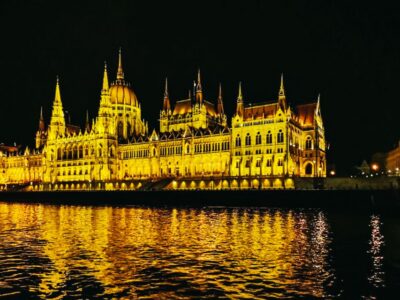
Then it’s on to the Hungarian Parliament Building, one of the biggest landmarks in Budapest and the seat of the National Assembly of Hungary. It sits in Kossuth Square on the Pest side of the city, right by the Danube, and it’s described as the largest building in Hungary.
You’ll also get about 15 minutes at this stop. Admission is free for the stop itself, but if you want interior access you would likely need to check additional ticketing (the tour notes that optional interior visits can require extra fees).
Bridges and street markers: Chain Bridge, Margit Bridge, and the Zero Kilometre Stone
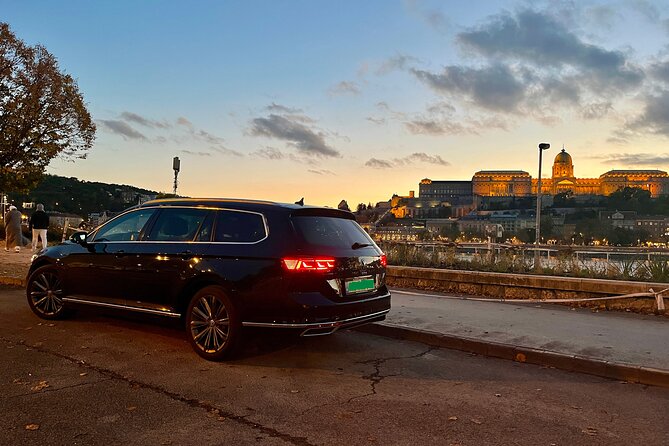
This part is practical, because bridges are how Budapest connects its stories. Instead of only stopping at buildings, you travel the river crossings so you feel the city’s geography.
You’ll pass Margit Bridge, described as the second oldest bridge in Budapest, built in 1876, linking Pest and Buda and connecting to the recreation area of Margaret Island.
Then there’s the Zero Kilometre Stone, a 3-meter limestone sculpture that marks Budapest’s distance reference point. It’s an easy stop to miss on your own, but it gives you that nice map feeling: you understand how the city measures roads from the center.
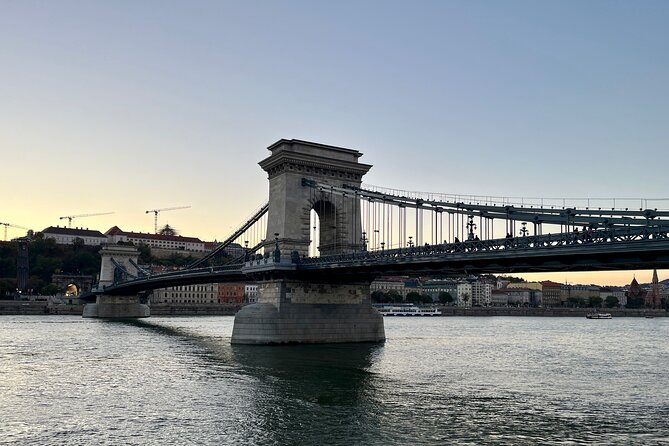
After that comes the star bridge for many visitors: Széchenyi Chain Bridge. It spans the Danube between Buda and Pest, built by Scottish engineer Adam Clark, with design credited to English engineer William Tierney Clark. It’s described as the first permanent bridge across the Danube in Hungary and opened in 1849.
In a short tour, the real value here is perspective. You’ll see how the city lines up with the river, and that makes later viewpoints in Buda Castle District feel more logical.
Matthias Church and Fisherman’s Bastion: the Buda Castle District payoff
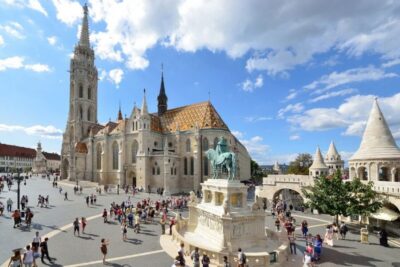
Now you’re in the area people come to see postcards from. Matthias Church is in front of the Fisherman’s Bastion area in the Castle District. It’s called the Church of the Assumption of the Buda Castle, and it’s commonly known as Matthias Church. The current building is late Gothic from the second half of the 14th century, with restoration work in the late 19th century.
You’ll have about 20 minutes at this stop, and entrance fees are not included for interior visits. If you want to go inside, plan to pay on top.
Then it’s Fisherman’s Bastion, one of Budapest’s most recognized monuments. It was built between 1895 and 1902 on the base of Buda Castle walls, and the lookout terraces are the big reason it’s famous. You’ll get about 15 minutes, and again, admission is not included for certain areas, including viewpoints.
Here’s the practical tip: with only a short window, go for the view first, not the perfect photo angle. Once you know where the best angle is from your spot, you can decide if you want to linger for photos or move along.
Citadel and Gellért Baths: the hilltop contrast that makes Budapest feel dramatic
The tour ends with two linked areas on Gellért Hill.
First is Citadel Lookout, associated with the Citadella fortification. It was built in 1851 by Julius Jacob von Haynau, described here as an Austrian Empire commander. It’s one of the most spectacular lookouts in Budapest, and you’ll typically get about 20 minutes.
Then you reach St. Gellért Thermal Bath and Swimming Pool, part of the Hotel Gellért complex. The bath complex was built between 1912 and 1918 in Art Nouveau (Secession) style. The stop time is short, around 10 minutes, and admission is noted as free for the stop.
This finish is smart because it contrasts eras and moods. The Citadel gives you a panoramic, strategic feeling. The thermal bath gives you the everyday Budapest identity: people come here to rest, recover, and socialize.
Price and timing: does $141.56 per person feel fair?
At $141.56 per person for about 4 hours, you’re not paying for a museum ticket day. You’re paying for three things you would struggle to replicate easily on your own in half a day:
- Private guiding that keeps the stops meaningful
- Private transportation so you cut transit time
- Door-to-door pickup that removes friction at the start and end
The tour also includes bottled water and an air-conditioned vehicle, which is not just comfort. It can be a real advantage when your itinerary is built on quick stops that happen close together.
Where the cost can change your math is entrance fees for interior visits. The tour notes extra ticketing for places like St. Stephen’s Basilica, Matthias Church, and Fisherman’s Bastion viewpoint areas. If you plan to go inside all of those, budget more.
If you are the type who wants to see the headline sights first, then pick one or two deeper experiences later, this price can feel like a good shortcut. If you want mostly museums and long indoor time, you may find the route moves too fast for the money.
Who should book this Budapest highlight loop, and who might not?
You should book if:
- You’re on a tight schedule and want an organized path to the main landmarks.
- You prefer comfort and easy logistics, especially with door-to-door pickup.
- You want a guide to connect sights, not just point at them.
You might skip or pair it with something else if:
- You know you want lots of interior time. This is structured for short stops, and some interiors cost extra.
- You dislike fast pacing and prefer slower wandering days.
A good strategy is to use this tour as your orientation afternoon, then plan a second day for one deeper neighborhood or one bath experience you actually want to enjoy.
FAQ
How long is the half-day Budapest city tour?
The tour lasts about 4 hours.
Is pickup from my hotel included?
Yes. Pickup is offered, and the tour can start from any hotel or other accommodation type in Budapest.
Is this a private tour or shared with others?
It is a private tour. Only your group participates.
What language is the tour guide?
The tour is offered in English.
What is included in the tour price?
Included items are private guiding, private transportation, door-to-door service, bottled water, and an air-conditioned vehicle.
Are entrance fees included for all sights?
No. Entrance fees for optional interior visits are not included, and some places like St. Stephen’s Basilica, Matthias Church, and the upper floor or viewpoint areas of Fisherman’s Bastion require additional tickets.
Do I get a mobile ticket?
Yes. A mobile ticket is provided.
Are free cancellation options available?
Yes. Free cancellation is available, and you can cancel up to 24 hours in advance for a full refund.
Are service animals allowed?
Yes. Service animals are allowed.
The newest crossings added in Budapest




City Tours, compared.
Budapest City Landmarks Walking Tour in 2 Hours
Read our review →

Hungarian Chimney Cake Workshop in the City Center
Read our review →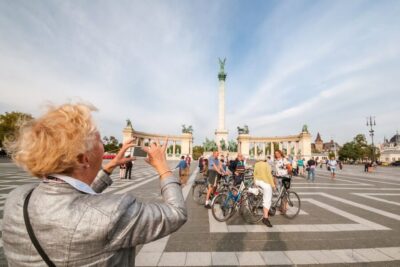
Browse the lists this tour appears in