
Reviewed · CASTLE DISTRICT WALKS & TICKETS
Gems of the Budapest Castle District Walking Tour
Budapest Castle stories start fast. This is a 2-hour, high-walking route that turns famous sights like Fisherman’s Bastion into something you can actually picture, and I especially love the free-admission stops plus the regular photo breaks. One possible drawback: it is a hilly district with lots of steps, so you will want solid shoes and a steady pace.
The biggest reason I’d do it again is the guide. In the feedback I saw, Antel comes up as a standout, with English that is easy to follow and a style that mixes facts, symbolism, and jokes without turning it into a lecture.
You also get a practical, modern setup, like a mobile ticket, English-only narration, and a group size capped at 45. If weather is rough, the tour depends on good conditions, so plan this for a clear afternoon.
In This Review
- What makes this Castle District walk worth your time
- How the 3:00 pm route runs, from Holy Trinity Statue to Castle Garden Bazaar
- Stop 1: Holy Trinity Statue, a column you can read like a lesson
- Stop 2: Matthias Church, foundation story plus architecture cues
- Stop 3: Fisherman’s Bastion, double-cross symbolism and the Pest view
- Stop 4: Pope Innocent XI area, kings, scholars, and a clue to age
- Stop 5: National Archives of Hungary, Vienna Gate and Golden signatures
- Stop 6: Church of Saint Mary Magdalene, coronation mantle plus WWII ruins
- Stop 7: Arpad Toth Promenade (Setany), WWII edges and a long view
- Stop 8: Mounted Andras Hadik, knight fame and a sweets angle
- Stop 9: The Labyrinth, a natural cave used as a dungeon
- Stop 10: Statue of Independence War, 1848 revolution and a Houdini link
- Stop 11: Szent György Street, government offices and medieval ruins
- Stop 12: Buda Hill Funicular, zero kilometer stone and the oldest bridge
- Stop 13: Turul Bird Statue, the national bird and naming of Hungarians
- Stop 14: Fountain of King Matthias, prettiest fountain and a romantic-tragedy angle
- Stop 15: Lions Court in Buda Castle, facade myths you can spot
- Stop 16: Royal Riding Hall, the royal stable vibe
- Stop 17: Prince Eugene of Savoy’s Equestrian Statue, biggest figure and Ottoman context
- Stop 18: S. Maria Mater Dei, bridges and monarch connections
- Stop 19: Castle Garden, spiral staircase tower and the Triton fountain
- Stop 20: Castle Garden Bazaar, Varkert Bazar architecture and facade statues
- Price and value, why $3.61 can still feel like a real deal
- Who this tour suits best, and when to choose something else
- Should you book the Gems of the Budapest Castle District Walking Tour?
- FAQ
- How long is the Gems of the Budapest Castle District Walking Tour?
- Where does the tour start and end?
- Is the tour offered in English?
- Do I need to buy admission tickets for the stops?
- How many people are in the group?
- What kind of ticket do I get?
- What happens if the weather is poor?
What makes this Castle District walk worth your time
- Symbol spotting: You learn what specific figures and symbols mean, like the double cross connection at Fisherman’s Bastion.
- Photo timing built in: Short breaks are built into the route, so you are not constantly asking the group to stop.
- A smooth, compact route: You cover major spots from Matthias Church area all the way toward Castle Garden Bazaar.
- Small-group feel: Up to 45 people, so you are not fighting a crowd the whole way.
- One clear language plan: Offered in English with a live guide.
How the 3:00 pm route runs, from Holy Trinity Statue to Castle Garden Bazaar
This walk starts at Holy Trinity Statue (Szentháromság u., 1014) and ends at Castle Garden Bazaar (Ybl Miklós tér 2-6, 1013), right near the Castle Garden. The listed start time is 3:00 pm, with a duration of about 2 hours 10 minutes, so it is long enough to feel satisfying but not so long that you melt into the cobblestones.
You get a mobile ticket after booking, and confirmation comes at the time of reservation. The tour is English, and it is capped at 45 travelers, which matters here because the Castle District can bottleneck at viewpoints and narrow stair segments.
The guide leads the whole thing, and at each main stop the info says admission ticket is free, which is a big value point for a guided afternoon. You are also looking at a “good weather required” situation. If it gets canceled for poor conditions, you should expect an offered different date or a refund.
Stop 1: Holy Trinity Statue, a column you can read like a lesson
You kick off at Holy Trinity Statue, where you do not just look at the sculpture. You get context on how the column was constructed and what the figures symbolize. That small shift matters. When you understand what you are seeing, you stop treating the Castle District like a pile of postcards and start treating it like a readable neighborhood.
Even with only about 5 minutes here, the goal is clear: give you a framework for the rest of the route. Many of the stops later are about kings, church foundations, and national symbols. Starting with a monument that has built-in meaning helps you catch those themes as they show up again.
Practical tip: stand back just a bit when you first arrive, so you can take in the full vertical composition before you hunt for details.
More of Castle Hill, cobble by cobble:
- Budapest: Buda Castle Cave Tour
★ 4.7 · 5,677 reviews - Budapest: Buda Castle District Vampires and Myths Night Tour
★ 4.6 · 3,830 reviews - Budapest: Buda Castle Walk with Saint Stephen’s Hall
★ 4.5 · 3,012 reviews
Stop 2: Matthias Church, foundation story plus architecture cues
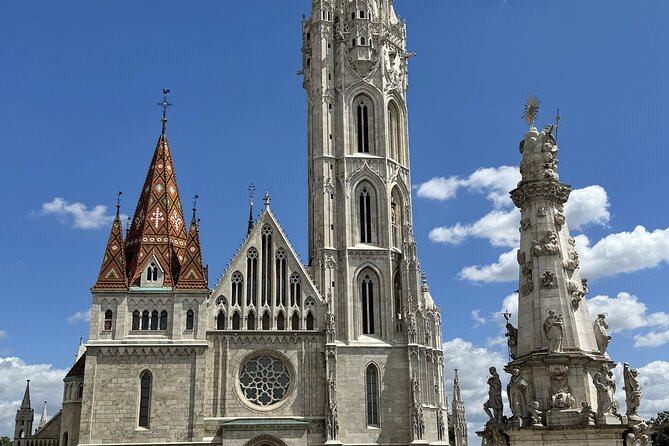
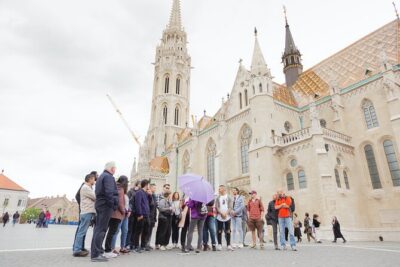
Matthias Church is next, with a quick but focused chat on the foundation of the church and some key architectural details. You get a sense of why the church matters, not only as a landmark, but as a piece of how Budapest’s power and identity were shaped over time.
The time at this stop is about 5 minutes, so you will want to do the obvious thing first, a quick walk-around glance, then come back for whatever detail the guide points out. If you are the type who likes to photograph religious buildings, this is the kind of stop where a guide’s direction saves you time.
Stop 3: Fisherman’s Bastion, double-cross symbolism and the Pest view
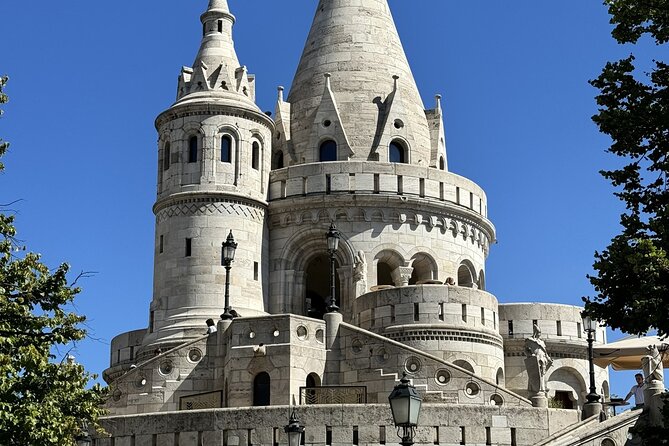
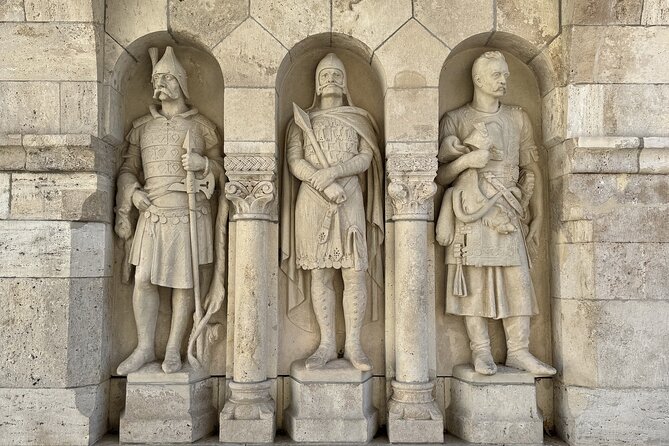
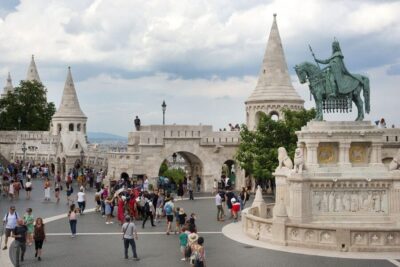
Fisherman’s Bastion is where the walk really earns its reputation. You spend about 20 minutes, and it is not only for taking photos, though the Pest skyline views are the star. You also get a guided read on the interesting statues here, including the relationship of the double cross and how it connects to Hungarians.
This is also where legends come in. The route description includes intriguing legends, and that is a big part of why Fisherman’s Bastion feels different when you have someone explain the stories. You will look at the statues and realize they are not random decoration. They are cues.
Photo tip: if you want sharper skyline shots, find a stable spot and let the group’s timing flow. The extra minutes here help, because you are not rushed through like a drive-by.
Stop 4: Pope Innocent XI area, kings, scholars, and a clue to age
After the Bastion viewpoint, you move to the Statue of Pope Innocent XI, with the guide linking it to nearby historical figures and monuments. The stop description specifically calls out connections to Pope Sylvester II and a coronation statue of King Matthias.
This is also framed as tied to age, with mention of the oldest building of Hungary in the area. Even if you do not memorize every name, you come away with a strong sense that the Castle District is stacked with time. The guide keeps it understandable, which is the real value on stops this short, around 5 minutes.
More of the city, bank to bank on foot:
- Big Bus Budapest Hop-On Hop-Off Bus and Walking Tour★ 3.5 · 2,206 reviews
- Budapest: Buda Castle District Walking Tour★ 4.6 · 2,108 reviews
- Budapest City Landmarks Walking Tour in 2 Hours★ 5.0 · 2,048 reviews
Stop 5: National Archives of Hungary, Vienna Gate and Golden signatures
Next is the National Archives of Hungary, about 5 minutes, and it is one of the more satisfying “quick stops.” The description points to architectural wonders, a Vienna Gate, and Golden signatures by Uri street.
You also get stories tied to statues in the vicinity, which helps you see the building and its surroundings as part of the same narrative, not separate pieces. This stop is a good reminder that archives are not just paperwork. They are a statement about identity and memory.
If architecture is your thing, spend your minute-and-a-half looking for the specific elements the guide mentions, then save the rest of your time for a last wide-angle photo.
Stop 6: Church of Saint Mary Magdalene, coronation mantle plus WWII ruins
The Church of Saint Mary Magdalene stop runs about 5 minutes. Here the focus is the monument of the coronation mantle of the Hungarian kings, plus the presence of ruins from WWII.
This mix can be heavy, but it is handled in a way that adds depth to the afternoon. You are seeing how religion, monarchy, and tragedy overlap on the same ground. That is part of what makes the Castle District more meaningful than a simple viewpoint run.
What to do: look at the church area first for the visual mass, then listen for what the guide says about the coronation mantle theme. It helps you connect the symbolism to the building, instead of just reading signage.
Stop 7: Arpad Toth Promenade (Setany), WWII edges and a long view
Now you get a different kind of history: WWII and the siege of Budapest. At Arpad Toth Promenade (Setany), you spend around 10 minutes.
You hear about the first flag after WWII, a row of cannons, and you get views toward the Buda hills. There is also a Statue of Szekely Knight, plus a brief history of the WWII and siege context.
Why this stop is valuable is simple: it makes the Castle District feel lived-in and contested, not just royal and scenic. The Castle District is often sold as old-world beauty, but it also carries wartime scars and memorial cues.
If the light is good, this is also a great area for a couple of quick Buda Hill photos before you move on.
Stop 8: Mounted Andras Hadik, knight fame and a sweets angle
At the Statue of Mounted Andras Hadik, the stop is short, about 5 minutes, but it adds flavor. You get the background on Andras Hadik as the most famous Hungarian knight, and the route info also mentions local trends and the oldest Hungarian confectionery.
That last part is a nice reality check for food-minded travelers. Even if you do not stop for a treat right away, you are reminded this neighborhood still works as a neighborhood, not a museum shell.
Stop 9: The Labyrinth, a natural cave used as a dungeon
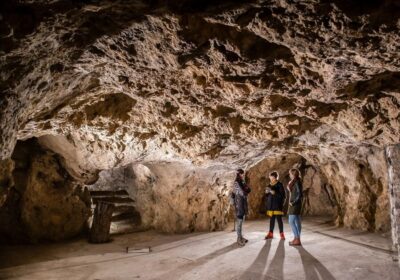
Next is the Labyrinth, where you visit a natural cave used as a dungeon. You get a story angle that includes Dracula and Vlad the Impaler.
This is about 10 minutes, so it is not an extended spooky tour, but it is enough time to connect the site to the larger wave of vampire-era storytelling Budapest gets associated with. The guide’s job here is to keep it grounded and understandable, not just thrill-seeker theatrics.
Shoes matter more here than most stops. Cave or uneven ground can be slippery, and you want to move safely while still getting the story.
Stop 10: Statue of Independence War, 1848 revolution and a Houdini link
This stop, around 5 minutes, is built around the Statue of Independence and its connection to the Hungarian revolution of 1848. The route description says the guide connects the symbolism of the statues to the original war, which is exactly what you want from a memorial stop.
You also pass the House of Houdini here. That is a fun name drop, but the tour keeps it linked to the independence story rather than random detours, based on how the stop is presented in the route outline.
This is a “listen for meaning” stop. Take in what the statue represents, then let the guide’s explanation tie the symbol to the timeline.
Stop 11: Szent György Street, government offices and medieval ruins
Szent György Street is about 5 minutes, and it adds a modern layer. The description notes the offices of the president and prime ministers, plus ruins of medieval castles and secret stories.
This blend is helpful because it breaks the Castle District into eras that still coexist. You do not walk from old to new in neat blocks. You walk through overlap.
If you like urban texture, this is one of the best short stops. It shows how official power and older traces exist side-by-side.
Stop 12: Buda Hill Funicular, zero kilometer stone and the oldest bridge
The Buda Hill Funicular stop is listed as about 5 minutes, and it includes several concrete landmarks you can anchor your memory to. You get mention of the funicular as the second oldest funicular, plus the zero kilometer stone and the oldest bridge of Hungary.
This is a strong “practical sightseeing” stop. It helps you understand the geography of the hill and how movement up and down mattered, historically and today. Even if you do not ride it during the tour, the explanation makes the area feel like a system, not random streets.
Tip: if you want a quick panorama, stand where you can see the direction of the hill and the bridge area the guide points out.
Stop 13: Turul Bird Statue, the national bird and naming of Hungarians
Next is the Turul Bird Statue, about 5 minutes. The focus is the national bird of Hungary and background on the naming of the Hungarians.
This stop is where national identity symbolism becomes tangible. You are not only looking at an animal statue. You are learning why it was chosen and how it ties into origin storytelling.
If you are traveling with kids or you have friends who zone out at long memorial lectures, this is the kind of stop that tends to stay interesting because it is visual and myth-adjacent without being chaotic.
Stop 14: Fountain of King Matthias, prettiest fountain and a romantic-tragedy angle
The Fountain of King Matthias gets about 5 minutes, and it is described as the prettiest fountain in Budapest, plus a romantic-tragedy story.
This is one of those stops where aesthetics and story work together. A pretty fountain is easy to photograph, but the tragedy piece adds a reason to linger.
Practical advice: if you are photographing, set your shot, then let the guide finish the story before you move on. The story gives the scene context.
Stop 15: Lions Court in Buda Castle, facade myths you can spot
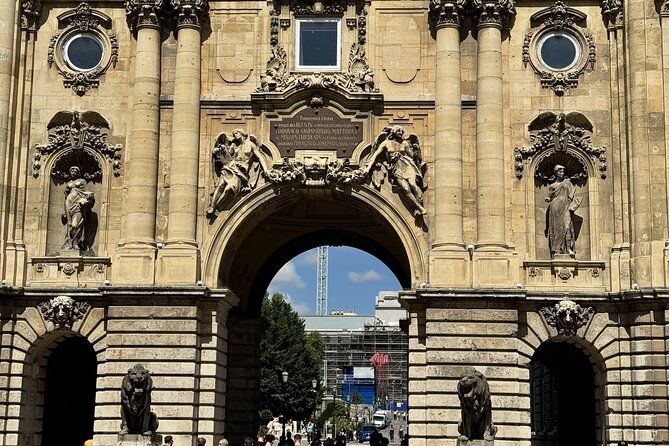
Now you enter the Buda Castle courtyard area, the Lions Court, about 5 minutes. The description highlights mythical statues and explains them on the facade.
Courtyards are where you notice details you would miss at a distance. This is also a good “reset your brain” moment after lots of statues and viewpoints. You get a change in scale, open space, and then a focused look at what the facade is trying to say.
If you enjoy facades, this stop will feel like a payoff.
Stop 16: Royal Riding Hall, the royal stable vibe
The Royal Riding Hall stop is short, about 2 minutes, but it calls out the royal Hungarian stable and includes interesting local trends.
Two minutes means you should be ready to quickly identify what the guide is pointing at and then move with the group. Do not expect a long interior explanation. Think of it as a quick “what you are looking at” moment.
Stop 17: Prince Eugene of Savoy’s Equestrian Statue, biggest figure and Ottoman context
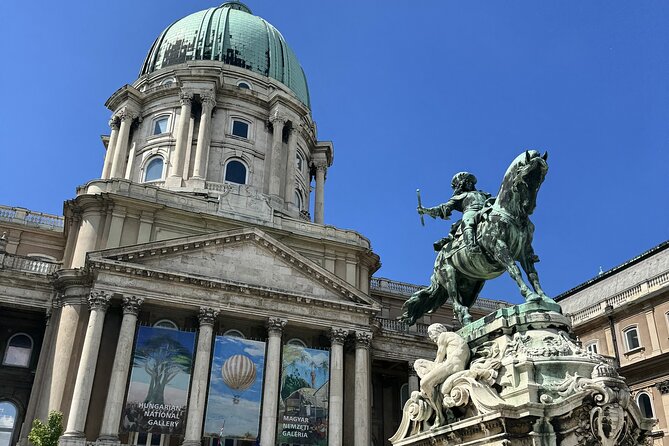
This is a major landmark, about 5 minutes: Prince Eugene of Savoy’s Equestrian Statue, described as the biggest statue in the Castle District. The context is his role as a liberator of Hungarians from the Ottomans, plus fun facts.
This is a strong “big statue” stop, but also a strong storytelling stop because it frames why the monument is here, not just that it is tall.
If you want a moment for photos that feel cinematic, this is one of the best places on the tour for it.
Stop 18: S. Maria Mater Dei, bridges and monarch connections
At S. Maria Mater Dei, you spend about 5 minutes. The description focuses on the Statue of Virgin Mother Mary and baby Jesus, plus a note about the bridges of Budapest and how they relate to Hungarian monarchs.
This is another meaning-focused stop. It encourages you to connect what you see in the Castle District to what you will notice later around the city, especially if you plan to walk riverside.
Stop 19: Castle Garden, spiral staircase tower and the Triton fountain
Castle Garden takes about 5 minutes. You get the garden setting, the spiral staircase tower, and the Triton fountain.
This is the part of the walk where it feels less like a sprint of monuments and more like a breather. It still supports your photos, but it also helps you reset before the final bazaar area.
If you like calm minutes, this is your spot.
Stop 20: Castle Garden Bazaar, Varkert Bazar architecture and facade statues
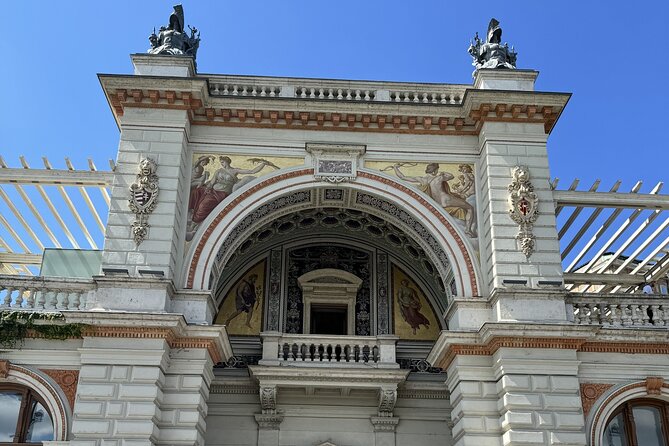
The tour ends at Castle Garden Bazaar, around 5 minutes at the final stop. The description includes the architecture of Varkert Bazar and statues on the facade.
This is a good finishing note. Instead of ending at a random exit, you end near a place designed for strolling, looking, and wrapping up your afternoon.
After the tour, you are in a convenient position to keep exploring, especially if you want to linger at the garden area or head back toward the city.
Price and value, why $3.61 can still feel like a real deal
Let’s talk value honestly. The listed price is $3.61 per person, for a live guide and about 2 hours 10 minutes of guided walking through a dense cluster of landmarks.
Even if you ignore the price and just judge the content, the structure makes sense. You get:
- a guided explanation at every stop, not just a self-guided checklist
- a lot of points of interest packed into a compact walk
- free admission at the stops listed, which helps you avoid surprise costs
And the reviews highlight the guide quality. Antel is repeatedly described as having excellent English and a style that adds perspective and humor, so you are not just collecting names. For a first-time Castle District visit, that alone often makes the cost feel trivial.
One consideration: because it is so cheap, expectations should be kept realistic. This is not an all-access palace visit. It is a walking, storytelling route across public spaces and key buildings, with plenty of looking rather than waiting for tickets.
Who this tour suits best, and when to choose something else
This works best if you:
- want a first-pass orientation of the Castle District
- like symbolism, legends, and short stories tied to monuments
- want built-in time for photos and viewpoints
- prefer an English guide you can actually follow
It may be less ideal if:
- you have mobility limits that make hilly cobblestone areas difficult
- you hate walking and want mostly indoor sights
- you are expecting a long, slow pace at every location
Also, go in with good timing mindset. The stop sequence is tight, with many around 5 minutes. That means you should treat it like a guided highlight reel, not an extended museum tour.
Should you book the Gems of the Budapest Castle District Walking Tour?
I’d book it if you are arriving to Budapest Castle District and want to understand what you are looking at fast. The best-case outcome is exactly what the guide feedback suggests, English that stays clear, stories that make statues and viewpoints feel connected, and photo breaks that keep you sane.
Skip it or pair it with a slower plan if you want long stops, heavy museum time, or you cannot handle uneven, uphill walking. But for most visitors, this is a smart, efficient way to get your bearings and leave with real context, not just pictures.
If you do book, wear shoes you trust and aim for an afternoon with stable weather. Then bring your curiosity. This route rewards it.
FAQ
How long is the Gems of the Budapest Castle District Walking Tour?
The tour lasts about 2 hours 10 minutes.
Where does the tour start and end?
It starts at Holy Trinity Statue, Szentháromság u., 1014 Hungary, and ends at Castle Garden Bazaar, Ybl Miklós tér 2-6, 1013 Hungary.
Is the tour offered in English?
Yes, the tour is offered in English.
Do I need to buy admission tickets for the stops?
The tour information lists admission as free at the stops included in the route.
How many people are in the group?
The tour has a maximum of 45 travelers.
What kind of ticket do I get?
You receive a mobile ticket.
What happens if the weather is poor?
This experience requires good weather. If it is canceled due to poor weather, you are offered a different date or a full refund.
The newest crossings added in Budapest





Castle District Walks & Tickets, compared.

Buda Castle District Vampires and Myths Night Tour
Read our review →
Buda Castle District Dark History, Legends and Vampire Night Tour
Read our review →
Buda Castle District Walking Tour with a Historian
Read our review →
Walking tour in the Buda Castle incl. Fisherman’s Bastion
Read our review →Browse the lists this tour appears in