Reviewed · TOURS
Café Wandering: An Excursion through Budapest’s Belle Epoque
Budapest cafés hide serious art history. This 3-hour walk turns café culture into a guided story of 19th and early 20th century architecture, with stops like Café Gerbeaud and Café Astoria. The main trade-off is simple: you pay for any cakes, coffees, or drinks you choose during the tour.
I also like that it is a small group (up to 8), so your art historian guide can pause for the details you would normally miss. Expect a mix of walking plus a tram ride along the Danube, and an art nouveau finale at the Kazinczy Street Orthodox Synagogue.
In This Review
- Key highlights to look for on this tour
- Why Budapest Belle Epoque cafés are more than coffee stops
- Meeting at Café Gerbeaud in Vörösmarty Square
- Gerbeaud to Central Café and Restaurant 1887 by tram
- Café Astoria: grandeur you can spot right away
- Művész Coffee House and the idea of the Artist Café
- New York Palace Café and the designer language behind motifs
- Urania Café on Rakoczi Street, cafés with an audience
- Museum Café and lavish interiors you should learn to read
- The art nouveau finish at Kazinczy Street Orthodox Synagogue
- Price and value for a 3-hour architecture and café story
- What the included guide backgrounds mean for your experience
- Who should book this tour, and who should skip it
- Should you book Café Wandering in Budapest?
- FAQ
- How long is the Café Wandering tour?
- Where does the tour start?
- What language is the tour offered in?
- How big is the group?
- What is included in the price?
- What is not included?
- Which major stops are part of the tour?
- Do you take public transport during the tour?
- Is the tour refundable if I cancel?
- Can I reserve without paying right away?
Key highlights to look for on this tour
- Café Gerbeaud interiors explained: you get context for its Imperial Budapest role as a social hub for visitors and locals.
- Tram ride along the Danube to connect the dots: the city itself becomes part of the lesson.
- Central Cafe and Restaurant 1887: dignified Habsburg-era café culture, read through décor and atmosphere.
- Asian motifs in café design: the guide points out the design choices that blend different visual influences.
- Urania Café on Rakoczi Street: a café linked to lectures and the oldest film theater in Budapest.
- Kazinczy Street Orthodox Synagogue as the art nouveau finish: you end with a striking architectural transition from cafés to sacred space.
Why Budapest Belle Epoque cafés are more than coffee stops
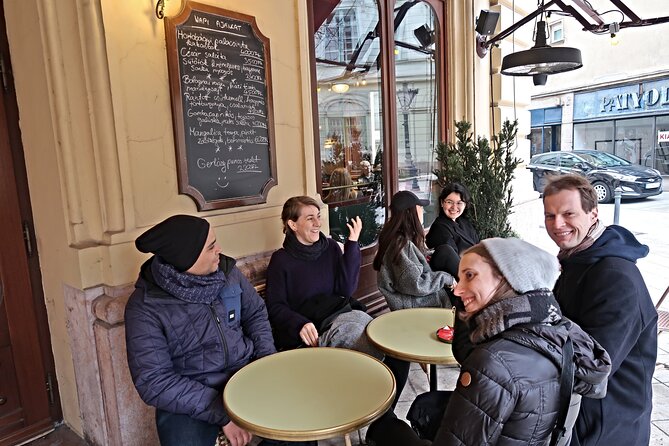
If you only treat Budapest cafés like pit stops, you miss half the city. Café life in the late 1800s and early 1900s was a public stage, where writers, artists, and thinkers mixed with regular people, and where design mattered as much as the espresso.
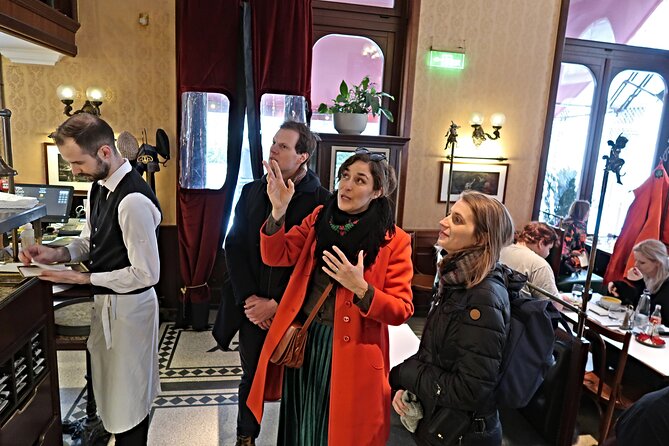
What I like about this experience is that you do not just look at pretty rooms. You walk with an art historian who helps you understand why these places look the way they do, and how they fit into the bigger story of Budapest under the Habsburg Empire. In one small group experience, the guide Kota was singled out as excellent, and that matches the tone of the whole tour: smart, practical, and focused on what you can actually see.
The other thing you get is momentum. You start at Café Gerbeaud in central Vörösmarty Square, then move café to café with short stretches of walking and a tram hop. In three hours, you build a mental map of how the city’s architecture evolved, one interior at a time.
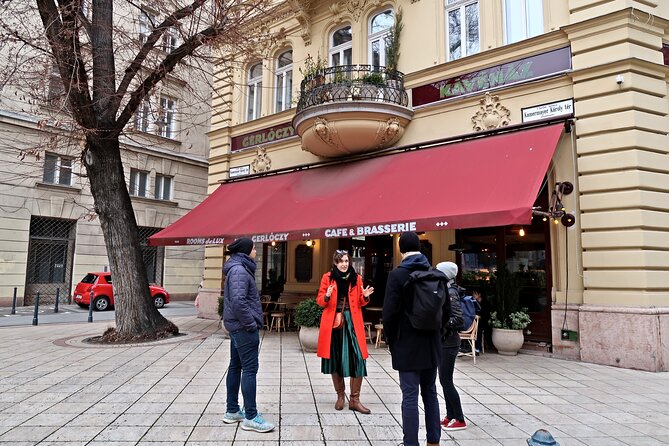
Meeting at Café Gerbeaud in Vörösmarty Square
Your tour begins at Café Gerbeaud, right at Budapest Vörösmarty tér 7-8 (1051). This matters because Vörösmarty Square is central, easy to orient yourself around, and it sets the tone fast: this is Budapest at street level, not tucked away in a back alley.
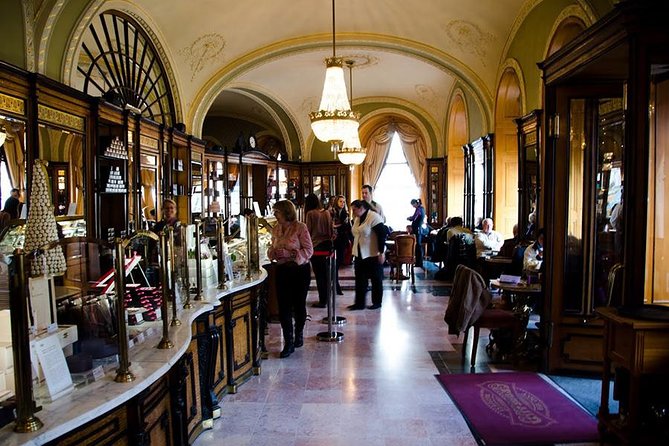
At Gerbeaud, the guide frames the experience in terms of Imperial Budapest. You will focus on the café’s exquisite interior and its long run as a social gathering place, serving as a hub for late 19th century life. The value here is not just nostalgia. You learn how café design worked as a statement, signaling wealth, culture, and connection.
Practical tip: if you want the most from the interior details, arrive a few minutes early and take in the façade and entrance first. It makes the interior commentary click the moment you step inside.
Still to cross in Budapest
- Budapest: City Highlights Sightseeing Cruise
★ 4.6 · 43,981 reviews - Budapest: Unlimited Prosecco, Beer and Aperol Spritz Cruise
★ 4.8 · 37,304 reviews - Budapest: Széchenyi Spa Day Ticket with Optional Upgrades
★ 4.3 · 23,911 reviews
Gerbeaud to Central Café and Restaurant 1887 by tram
From Gerbeaud, the route takes you by tram along the Danube toward Central Cafe and Restaurant 1887. Even if you are not a transit person, this short ride is useful. It ties the story to the city’s geography, so you understand why certain neighborhoods and landmark corridors developed when they did.
When you reach Central Cafe and Restaurant 1887, the emphasis shifts to dignity and atmosphere during the Habsburg Empire’s peak economic and cultural power in the 19th century. You will notice how the décor, food, desserts, and drinks are part of the same sensory message. The guide helps you read the room, not just admire it.
What to watch for: pay attention to the way the space is arranged for social life. Café culture was designed for lingering. That is why interiors tend to feel ceremonial, even when the menu is simple.
If you are the kind of person who likes to travel with your eyes switched on, you will love this segment. It gives you a quick but grounded framework for the rest of the tour.
Café Astoria: grandeur you can spot right away
After Central Café, you move into another famous interior: Café Astoria. This stop is all about classic European coffee-house grandeur, and it helps that Café Astoria is famous for its lavish look and long timeline in Budapest café life.
Astoria is a great place to practice your new habit from the first stops: looking for design signals. The guide will connect what you see to the broader Belle Epoque idea, where art, taste, and social status overlapped constantly. You can enjoy the room even if you do not know the terminology, because the explanation is aimed at what you are seeing in front of you.
One consideration: interiors like this can feel busy when the café is active. If you prefer quiet photo moments, choose angles that let you step back slightly while the guide is talking, then approach for photos when the group settles.
Művész Coffee House and the idea of the Artist Café
The itinerary includes Művész Coffee House, also known as Artist Cafe. This is where the story leans more into creative culture, the idea that cafés were intellectual meeting points as much as they were places to eat.
Why this stop works: it links the architecture lesson to human behavior. You start to see café rooms as stages for poets, artists, and writers, not just as decorative interiors. When your guide points out design choices, they are often tied to the social rhythm of the place: where people sat, how conversation flowed, and why these spaces encouraged discussion.
If you like walking tours that feel more like a guided conversation than a lecture, this is a good moment to lean in. Your guide is an art historian with academic backgrounds, and the pace is geared toward understanding, not memorizing.
Back across the water in Budapest:
- Budapest: Nighttime or Daytime Sightseeing Cruise★ 4.2 · 21,062 reviews
- Budapest: By Night Sightseeing Cruise with Welcome Drink★ 4.3 · 15,533 reviews
- Budapest: St. Stephen’s Basilica Entry with Options★ 4.6 · 12,322 reviews
New York Palace Café and the designer language behind motifs
The tour also includes New York Palace Café. This stop is especially helpful for anyone who thinks café design is only about wallpaper and chandeliers.
Here, the focus turns toward the visual language designers used, including the Asian motifs and elements referenced as part of the architectural and interior detailing. The guide helps you examine those influences so you do not just notice them, you understand why they might appear in a Hungarian café setting.
How to make the most of this stop: look at repeating patterns first, then trace where they appear in the room. Do not rush. The whole point of a guided art-focused tour is to slow down just enough that you notice what your eye normally skips.
Also, if you care about photography, this is one of the best places to plan angles. Decorative detail can be hard to capture cleanly, so ask yourself while you are listening: what element do I want to record, the overall impression or the pattern work?
Urania Café on Rakoczi Street, cafés with an audience
Next is Urania Café on Rakoczi street. The standout detail here is that it houses the oldest film theater in the city. That fact alone gives you a quick sense of how closely café life and public culture were linked.
Urania is also described as a place known for lectures given by prominent intellectuals before large audiences. In practical terms, that means you are not just learning about decorative rooms, you are learning about how ideas spread in public spaces. This is Belle Epoque culture in action, not in textbook form.
One smart way to enjoy this stop: when your guide talks about lectures and intellectuals, look around as if you were imagining a crowd. You get the interior context faster because you can translate it into a real use case: people coming together, listening, then chatting over drinks.
Museum Café and lavish interiors you should learn to read
The tour highlights include Museum Café, described as having lavish, more than century old walls. This stop is where the architecture becomes almost like a visual document.
When you are standing in a room like this, it can help to think in layers. Start with the overall layout, then move to the surfaces. That is where you will understand how designers used decoration to create status, comfort, and a sense of occasion.
This is also one of the places where the Asian motifs theme can feel especially clear, depending on what design elements the guide points out during your walk. The main idea is that café interiors often borrowed visual ideas from multiple sources, then adapted them to local tastes.
Do not worry if you feel overwhelmed by details. Your art historian guide is there to connect the dots without turning it into a jargon contest.
The art nouveau finish at Kazinczy Street Orthodox Synagogue
You end at the Kazinczy Street Synagogue, described as art nouveau Orthodox. Ending here is clever, because it shifts your perspective. You start with social spaces where people gathered for culture and conversation. You finish in a sacred space that still reflects the era’s design instincts.
This change of setting helps you see the Belle Epoque style as something bigger than cafés. When you compare the way decoration functions in each place, you understand that Budapest’s design culture had a wide reach.
If you want a final photo moment, save it for the synagogue area after the last commentary. The group dynamics tend to relax slightly toward the end, and you will be better able to frame the building rather than chasing quick shots.
Price and value for a 3-hour architecture and café story
At $123 per person for a 3-hour guided walk, this is not a budget-only activity. But the price can make sense if you value expert interpretation and a tight route.
You get:
- a live English guide who is an art historian
- a planned route through multiple major café interiors
- context for architecture spanning the 19th and early 20th centuries
And the tour is intentionally short. Three hours is long enough to learn meaningful things, but short enough that you can still plan the rest of your day independently. If you are in Budapest for a few days and you want your time to count, this kind of concentrated route is usually a strong value.
The other value factor is group size. With a cap of 8 participants, it is easier to ask questions and get specific answers. That is the difference between passive sightseeing and active learning.
What the included guide backgrounds mean for your experience
The tour provider states that guides can include professors, doctoral students, historians, journalists, art critics, and published authors. That background matters for you because it usually means the explanations are built to be clear, not just impressive.
You will feel the guide is tailoring the narrative to the room you are standing in. That is why the tour tends to work well even if you do not consider yourself an architecture person. You will still come away with the ability to notice design choices on your own.
Also, the reviews reflect this kind of clarity. Monica from India rated it 5 and highlighted it as informative. Nermina from Germany also rated it 5 and praised Kota as excellent. That is the sort of feedback that usually means the guide can keep the story grounded while still covering real art details.
Who should book this tour, and who should skip it
This tour is ideal for you if:
- you like architecture and interiors, not just exteriors
- you want café culture explained in plain language
- you prefer a small group pace over large group rush
You might skip it if you mainly want food and want to sit for long meals. Refreshments are not included, and the tour is designed as a guided walk through spaces rather than a full dining experience.
If you enjoy taking notes in your head, you will do well here. You will start recognizing motifs, design signals, and the social logic of café layouts as you walk.
Should you book Café Wandering in Budapest?
Yes, if you want a focused, art-minded tour that connects real places, real interiors, and the Belle Epoque mood into one easy three-hour plan. The price is fair for what you get when you factor in an art historian guide, multiple landmark cafés, a tram ride, and a strong architectural finale at Kazinczy Street Synagogue.
Book it especially if you will not have time for separate museum research sessions. This tour helps you see Budapest as a designed city, not just a photographed city.
If you are still unsure, consider what you enjoy most on city trips. If you like to stand in rooms and understand them, this is a strong match.
FAQ
How long is the Café Wandering tour?
The tour lasts 3 hours.
Where does the tour start?
The meeting point is Café Gerbeaud, Budapest Vörösmarty tér 7-8 1051.
What language is the tour offered in?
The live tour guide speaks English.
How big is the group?
The group is small, limited to 8 participants.
What is included in the price?
You get a 3-hour guided walk and an art historian guide.
What is not included?
Cost of refreshments, cakes, and coffees selected at the cafés are not included.
Which major stops are part of the tour?
The tour includes Café Gerbeaud, Central Cafe and Restaurant 1887, Café Astoria, Művész Coffee House, New York Palace Café, and it concludes at Kazinczy Street Orthodox Synagogue. A stop at Urania Café on Rakoczi Street is also part of the experience.
Do you take public transport during the tour?
Yes, the route includes a tram ride along the Danube to reach the Central Cafe.
Is the tour refundable if I cancel?
Free cancellation is available up to 24 hours in advance for a full refund.
Can I reserve without paying right away?
Yes, you can reserve now & pay later, meaning you pay nothing today.
The newest crossings added in Budapest





Tours, compared.
Buda Castle District Vampires and Myths Night Tour
Read our review →
Big Bus Budapest Hop-On Hop-Off Bus and Walking Tour
Read our review →
Budapest City Landmarks Walking Tour in 2 Hours
Read our review →