Reviewed · TOURS
Budapest: Virtual Reality Tour in 8 Languages
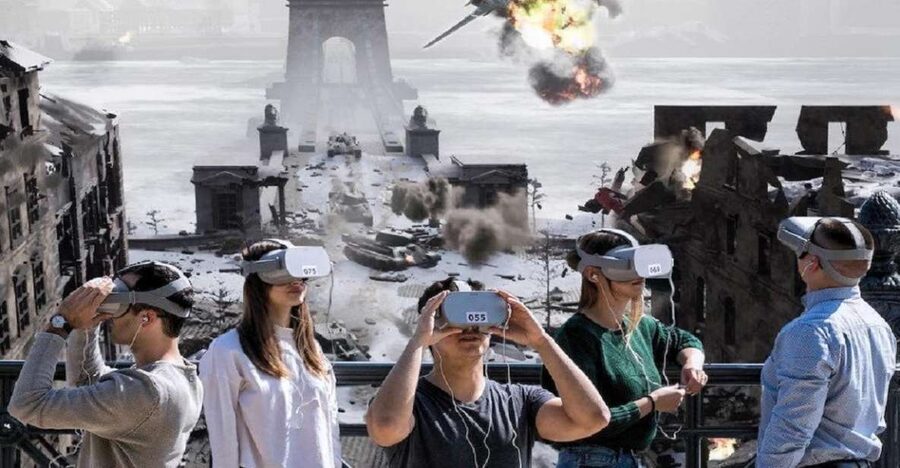
Budapest turns into a movie set. You’ll start by Chain Bridge, then wear VR gear that stages key moments around Buda Castle and beyond. It’s a different way to learn Budapest, built around what you see and hear, not just what you read.
I love how the tour mixes site-walking with VR stops. You’re not stuck in one room all the time, and your guide keeps things moving as you cross between viewpoints and story beats.
One thing to consider is the tone and the physical part. Expect a light hike into the Castle District, plus VR scenes that include war and destruction, so it can feel intense for some people.
In This Review
- Key things to know before you go
- VR gear, earplugs, and picking your language
- Starting near Chain Bridge, then walking into the Castle District
- VR over the construction of Buda Castle, medieval style
- Battles, World War II destruction, and staying grounded
- The 1956 Hungarian Revolution: context you can actually remember
- The bird’s-eye Budapest view and the real-world payoff
- How the six stops work as a story, not a checklist
- Price and value for a tech-forward history lesson
- Who this Budapest VR tour suits best
- Practical tips so you stay comfortable and enjoy it
- Should you book this VR tour?
- FAQ
- How long is the Budapest VR tour in 8 languages?
- Where is the meeting point, and when should I arrive?
- How many VR stops are included?
- What languages are included in the audio guide?
- Is a mask provided with the VR headset?
- What do I need to bring for the VR headset?
- Is the tour difficult?
- Who should avoid this experience?
- Is there free cancellation?
Key things to know before you go
- Six VR stops across the city, each tied to a specific era of Hungarian history
- Buda Castle and the Royal Palace as central visual targets, even when you are standing in modern Budapest
- 8-language audio guide delivered through headsets, with context for each scene
- Bird’s eye view over Budapest, which is great for orientation but can be tough if heights worry you
- Earplugs and headphones help you focus, even when the streets are busy
- A walking tour pace with real steps, so comfortable shoes matter more than you’d think
VR gear, earplugs, and picking your language
The meeting point is on the Buda side, at Lánchíd u. 23, 1013. You’ll look for the VR Tour flags facing the street, and you’ll want to arrive about 15 minutes early so you have time to check in and get fitted.
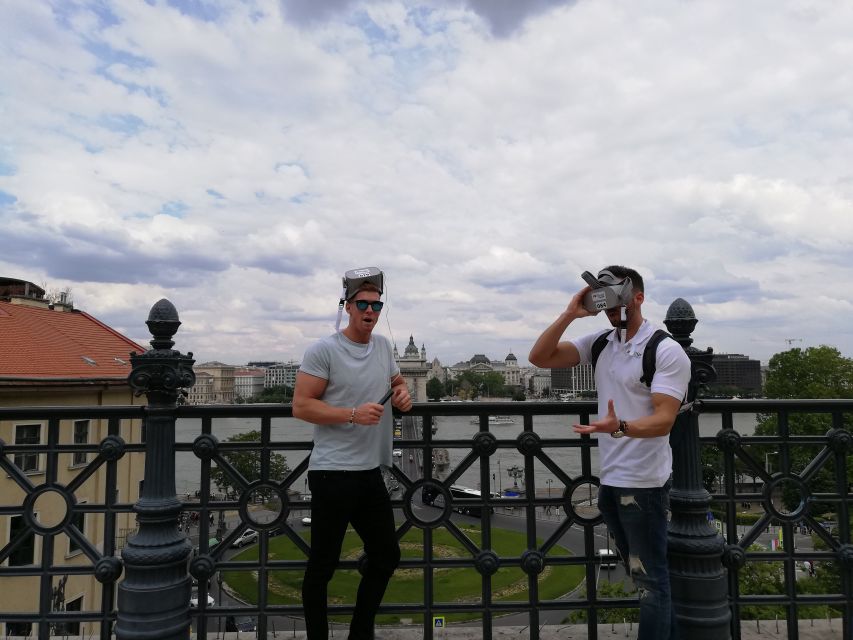
Before you start walking, you’ll put on VR equipment. You get a sterile headset, and there’s a hygienic mask upon request. If you want to feel practical about it, this part is the real “warm-up.” You decide your preferred language (the audio guide is available in multiple options), then you’re off.
During the VR segments, you also get audio through an included guide system. The tour’s audio is offered in English, Chinese, German, Hungarian, Spanish, Russian, Italian, and French. That matters because this format only works if the narration keeps pace with what’s happening onscreen. You’re essentially syncing your eyes to your ears, and the tour is designed for that.
One neat touch from the experience style is that the setup focuses on comfort and focus. You may even get earplugs, which helps when you’re standing outside near traffic or street noise. The headset and the audio together mean you’ll spend less time trying to interpret what’s happening around you, and more time following the story.
Starting near Chain Bridge, then walking into the Castle District
Your tour begins near some of Budapest’s biggest magnets: the Chain Bridge area and Clark Ádám Square. You meet your guide, get your gear, and then you head toward the Castle District.
This walking portion is short enough to keep it fun, but it’s not just a flat stroll. The tour includes a light hike, and one of the best ways to prepare is simple: wear shoes that handle uneven ground and stairs. The Castle District can be steep, and even if the climb feels manageable, you’ll still want your feet ready.
I like that your guide does more than hand you a headset. Between VR stops, they lead you, help you navigate, and keep your timing under control. In practice, that makes the whole experience feel like one continuous storyline instead of six random tech demos.
Also, the location choices help you get your bearings. You start in a central area, then shift up toward the castle views. Even if the VR scenes are the star, the walking route helps you connect those scenes to real Budapest. By the time you reach the viewpoint moments, your brain already has a map.
Still to cross in Budapest
- Budapest: City Highlights Sightseeing Cruise
★ 4.6 · 43,981 reviews - Budapest: Unlimited Prosecco, Beer and Aperol Spritz Cruise
★ 4.8 · 37,304 reviews - Budapest: Széchenyi Spa Day Ticket with Optional Upgrades
★ 4.3 · 23,911 reviews
VR over the construction of Buda Castle, medieval style
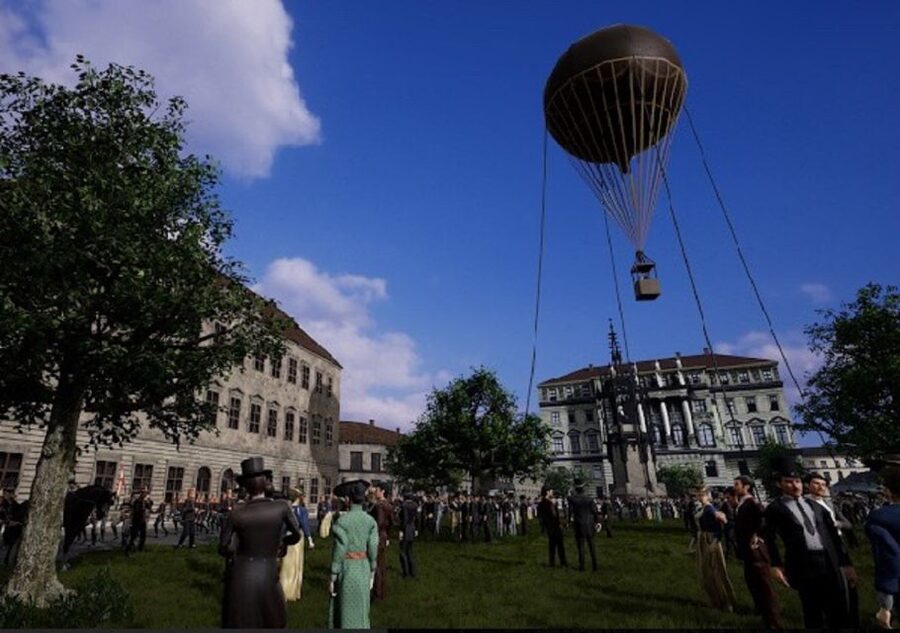
The big early story beat takes you back to the Middle Ages, during the construction period tied to the Castle area. Standing near the castle side of Budapest while the VR visuals layer over the present day is one of the strongest parts of this tour, because it gives the castle a reason to exist, not just a postcard look.
What you’ll feel here is time compression. You’re in a modern European city street, then the visuals reset the scene to earlier centuries. The narration then walks you through what you’re looking at and why it mattered, so you’re not left with a generic “cool video” moment.
If you like history but get bored by long museum lectures, this format can work well. You get visuals first, then explanation. It flips the usual order and can make details stick.
A practical note: this segment is best if you can handle intensity visually. Some scenes are action-heavy, and the medieval portion is likely more chaotic than a calm heritage reenactment. It’s fun if you enjoy motion and storytelling, less ideal if you prefer quiet sightseeing.
Battles, World War II destruction, and staying grounded
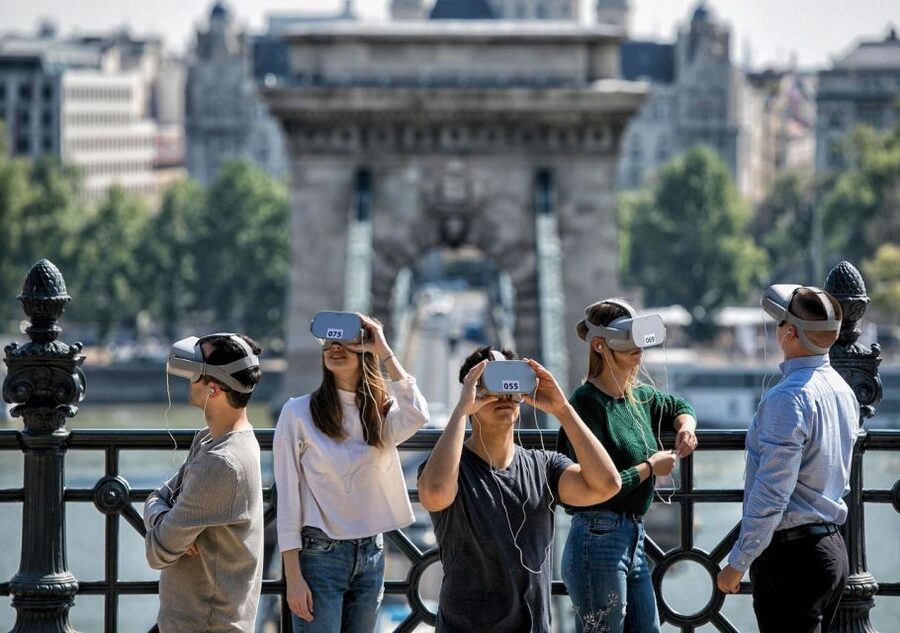
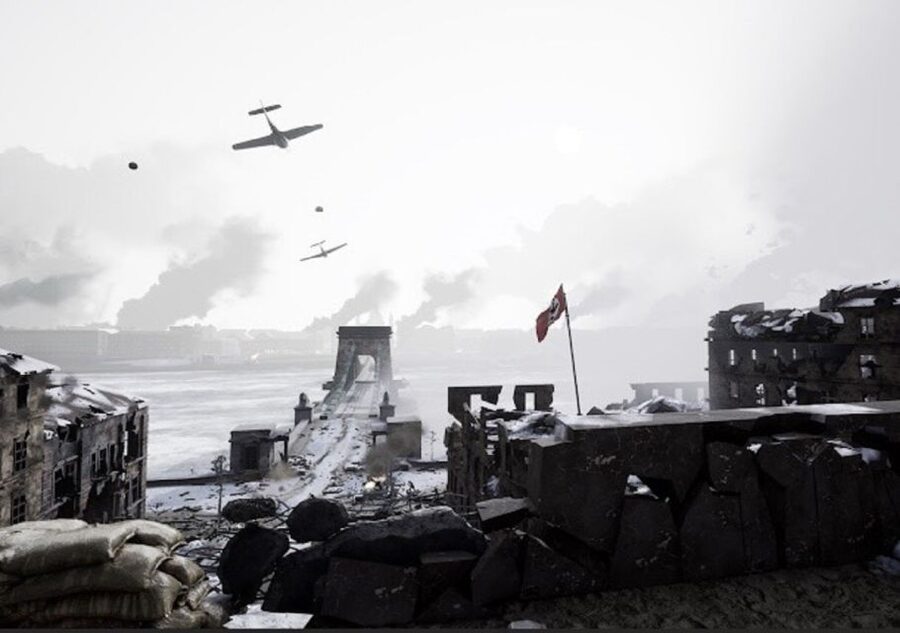
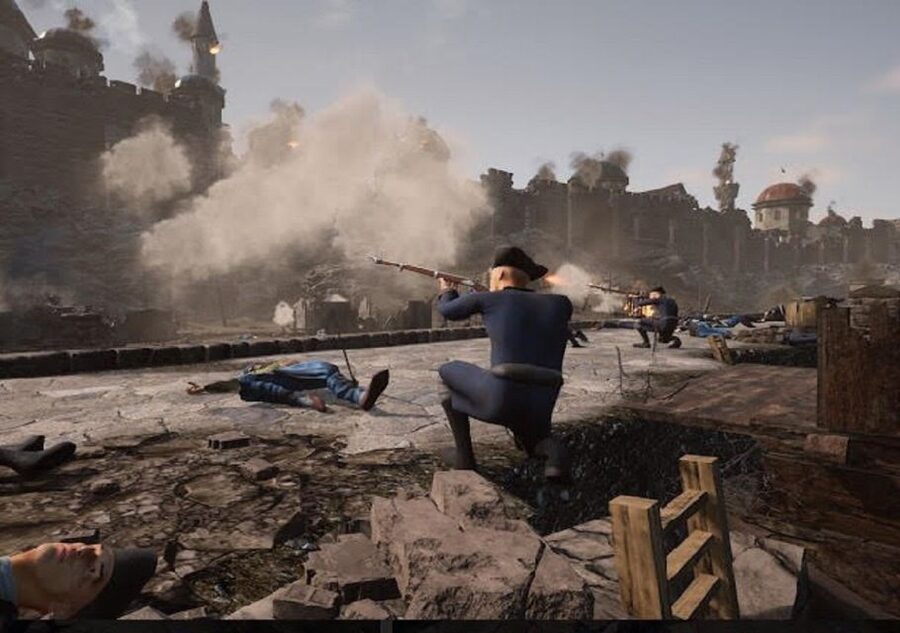
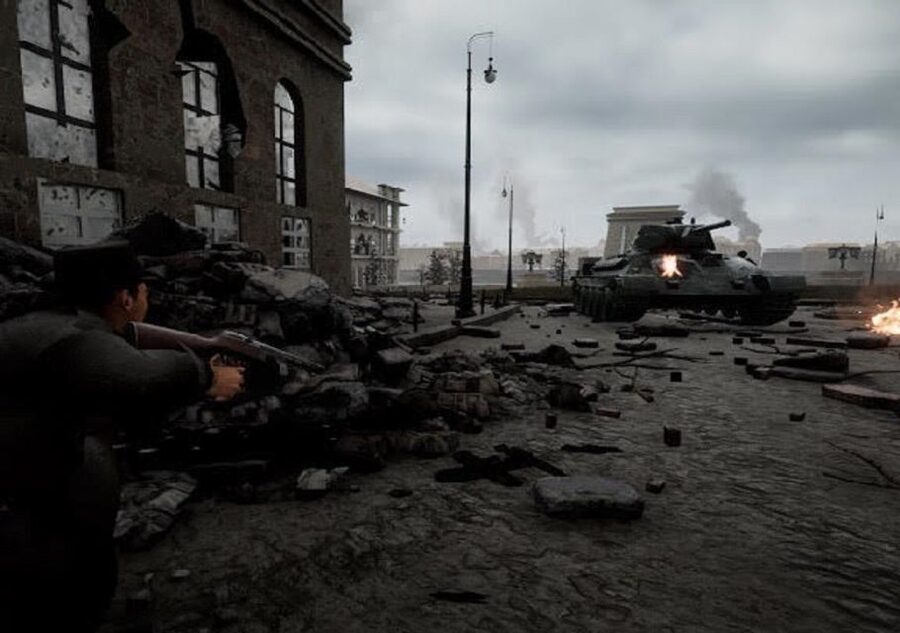
Later in the tour, the tone shifts hard into conflict, including scenes tied to World War II and major destruction. This is where the experience becomes more emotionally charged than you might expect if you’re only thinking about castle views and romantic Budapest.
I’d call this the tour’s power and its risk. The VR format can show scale and devastation in a way that a plaque never will. But it also means you are viewing war imagery in a guided “walk-and-watch” setup. If that’s not your thing, you might find the experience heavy.
There’s a second consideration too. The narration is doing real work here, explaining context and linking events to what followed. When it’s hitting, it’s impressive. You understand not just what happened but why it shaped Budapest’s identity.
But if your goal is purely sightseeing, this might surprise you. The tour is built around turning points. That naturally includes brutal sections, so you’ll want to go in with your expectations aligned.
And because you’re outdoors with a guided pace, you have a small advantage. You can always pause, take a breath, or step back when a scene feels like too much. You’re not trapped in a dark room where you just have to take it.
The 1956 Hungarian Revolution: context you can actually remember
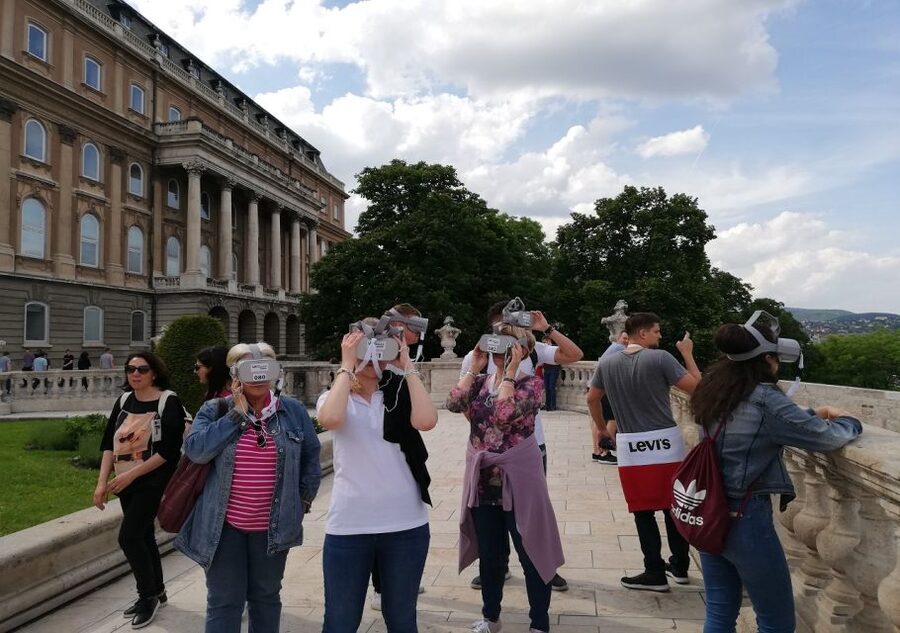
Another major highlight is the Hungarian Revolution of 1956. This section matters because the tour doesn’t treat history like a disconnected list of dates. The audio guide explains what is unfolding and frames its importance within Hungarian history.
In my view, this is one of the most valuable aspects of the format. VR gives you a dramatic presentation. The narration keeps you from getting lost in spectacle. When the context lands, you start connecting Budapest’s geography to the people and events that shaped the country.
This is also where the multi-language audio becomes useful even if you know English well. You can choose the language you’re most comfortable with, so you stay fully engaged rather than mentally translating. The tour supports many languages, including major European options plus Chinese.
The Revolution segment is also a good reminder of how much the city carries. Budapest is stunning today, but this tour nudges you toward the reason it survived and changed. If you want a deeper feel for the country beyond architecture, this is the part that helps.
Back across the water in Budapest:
- Budapest: Nighttime or Daytime Sightseeing Cruise★ 4.2 · 21,062 reviews
- Budapest: By Night Sightseeing Cruise with Welcome Drink★ 4.3 · 15,533 reviews
- Budapest: St. Stephen’s Basilica Entry with Options★ 4.6 · 12,322 reviews
The bird’s-eye Budapest view and the real-world payoff
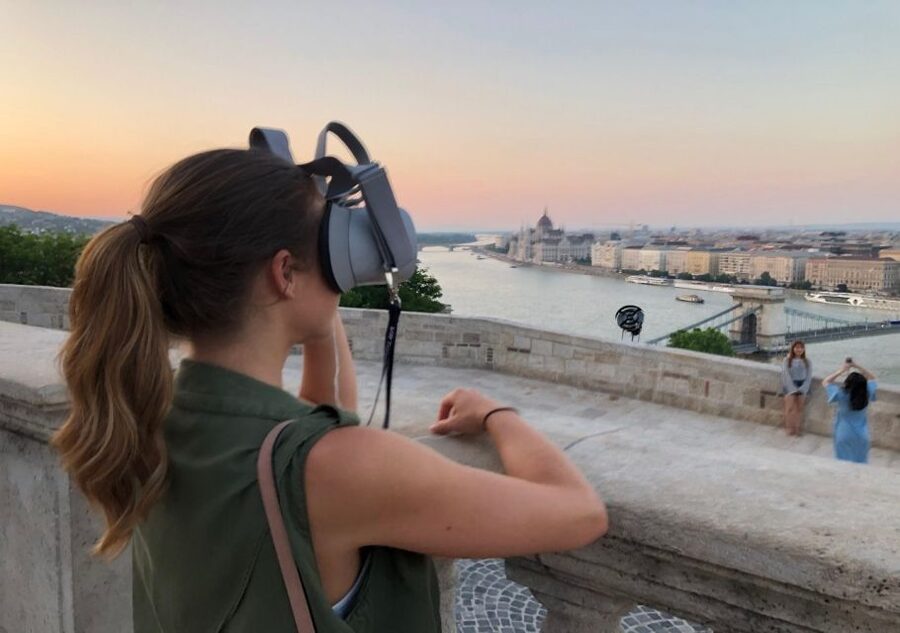
One of the stated highlights is a bird’s eye view over the whole city. That moment is less about remembering a single event and more about understanding Budapest’s shape.
When you get a top-down view, it helps you connect the dots between what you just learned and where you are standing. Even if you’ve seen photos before, the “from above” perspective makes the city’s layout click. You can better understand why the river matters, why the castle area dominates the skyline, and why so many landmarks are positioned where they are.
Now, here’s the practical caution. The tour includes people for whom certain experiences are not recommended, including anyone afraid of heights. Even if you handle heights fine, this is still a real factor. The VR can create a sense of elevation that feels more intense than a normal lookout.
After the bird’s eye view moment, you’ll likely feel two things at once. First, a hit of wonder. Second, a desire to walk and see if the “virtual” orientation matches the streets under your feet. That’s exactly the real-world payoff this tour is aiming for.
How the six stops work as a story, not a checklist
Across roughly 90 minutes, the tour includes six VR stops. The stops are what make the experience feel structured. Instead of watching one long clip, you get repeated resets, each one anchored to an era and explained by audio.
That structure helps your attention. It also helps you avoid the common VR problem where you feel motion sickness or you want to yank the headset off halfway through. Shorter segments give your body time to adjust, and they keep your curiosity alive.
Between stops, your guide leads you along the route. That walking time isn’t filler. It’s your transition period, and it gives you a chance to check your surroundings, orient yourself, and soak in the castle district views in between the “time travel” scenes.
It also means the tour is not a strict “watch only” activity. You’re participating. If you’re okay with light walking and turning your attention on and off between real street and virtual scene, you’ll probably enjoy it more than you expect.
Price and value for a tech-forward history lesson
At $43 per person, this is not bargain-basement sightseeing. But value here isn’t about buying cheap. It’s about buying a specific experience: guided VR history delivered in multiple languages, with a planned set of moments rather than random VR content.
So the value equation depends on you. If you love practical history, enjoy modern technology, and want something that feels different from a standard walking tour, this price can make sense. You’re getting a guide, VR gear, and an audio guide that connects the visuals to context.
If you mostly want top-tier graphics and cinematic polish, you might feel the cost more sharply. One concern that comes through in feedback is that the visuals can look more like a simplified game style than a movie-level production. That doesn’t automatically ruin the tour, but it can change how worth it it feels.
If you want classic Budapest sightseeing, you might compare this to other half-day tours that focus on landmarks without the intensity of war scenes. The VR tour is a trade. You pay for storytelling mechanics and convenience of guided context. You give up some of the relaxed pace and “just enjoy the city” feeling.
For some people, $43 feels fair. For others, it feels steep for what is essentially a sequence of VR clips tied to a walk. My practical advice is to decide based on your tolerance for war topics and your interest in VR as a learning tool.
Who this Budapest VR tour suits best
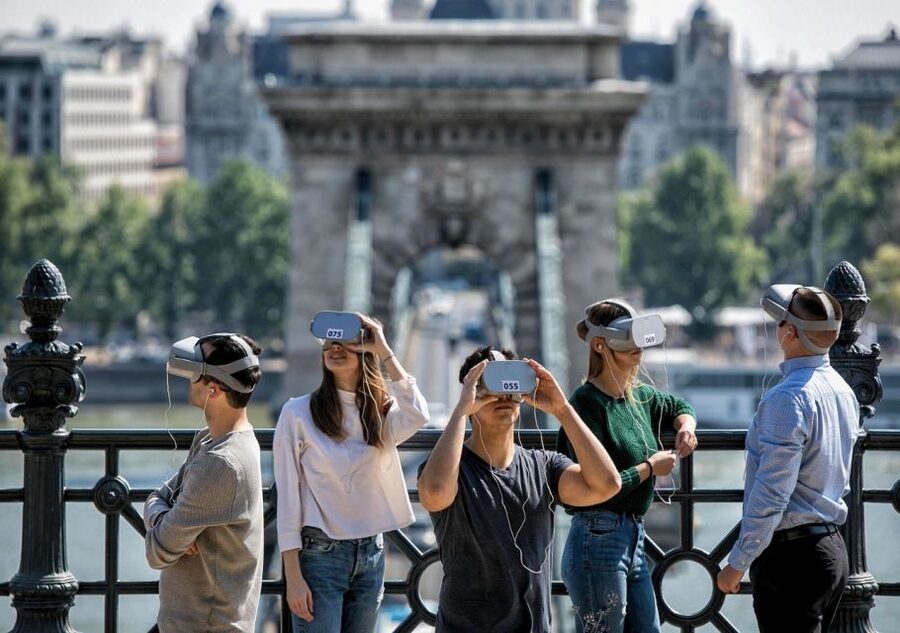
This tour is strongest for people who want a guided learning experience and are curious about how Budapest became what it is today.
You’ll likely enjoy it if:
- You want history you can visualize, not just read
- You prefer a structured tour with clear story beats rather than open wandering
- You like a short outing with a mix of walking plus high-tech stops
- You’re okay with the fact that the scenes include war and destruction, including World War II and the 1956 uprising
It may feel less ideal if:
- You find war scenes hard to watch, or you want a purely scenic tour
- You hate heights sensations, since there’s a bird’s eye view moment and the overall experience may trigger height anxiety
- You need full accessibility accommodations, since it is not suitable for people with mobility impairments
Also, it’s not recommended for people who suffer from migraines, and it is not suitable for people with heart problems, people afraid of heights, or people with epilepsy. If any of those categories apply to you, take the safety limits seriously.
Practical tips so you stay comfortable and enjoy it
Bring passport or ID. You may also need a deposit option. The tour notes that you should bring your passport, ID, or 200 euros as a deposit for the VR headset. That’s a detail worth treating like a checklist item, because forgetting it can derail your day.
Wear comfortable shoes. This is where people get caught: “light hike” still means uneven ground and stairs in a historic district.
On hot summer tours, bring something to drink. The tour is only 90 minutes, but Castle District walking adds up faster than you’d expect when you’re focusing on audio and VR.
If you have sensitivity to migraines, I would think twice and plan a different kind of visit. VR can trigger symptoms, and the tour explicitly says it’s not recommended for migraines.
Finally, plan to show up early. Check-in and headset fit take time, and arriving on the dot can compress your comfort window.
Should you book this VR tour?
Book it if you want a guided, high-tech shortcut to understanding Budapest’s turning points, and you’re comfortable with conflict-heavy scenes. I especially think it’s a smart choice for people who want more than architecture photos and want the city’s past attached to what you’re standing in front of.
Skip it if you want calm, relaxed sightseeing only, or if you’re sensitive to heights sensations, war imagery, or VR-related health limitations. In those cases, Budapest’s neighborhoods will still reward you, but you’d probably prefer a standard walking itinerary without the headset.
If you’re on the fence about value, be honest with yourself about what you’re paying for. You’re paying for six structured VR moments, live guidance, and audio in eight languages, not for a museum with optional reading time. When that matches your style, it feels like a clever way to see Budapest with your eyes and ears working together.
FAQ
How long is the Budapest VR tour in 8 languages?
The tour duration is 90 minutes.
Where is the meeting point, and when should I arrive?
The meeting point is Budapest, Lánchíd u. 23, 1013 Magyarország. Look for the VR Tour flags facing the street, and please arrive 15 minutes prior to departure.
How many VR stops are included?
The tour includes 6 stops with VR displays.
What languages are included in the audio guide?
The audio guide is available in English, Chinese, German, Hungarian, Spanish, Russian, Italian, and French.
Is a mask provided with the VR headset?
A hygienic mask is available upon request.
What do I need to bring for the VR headset?
Bring passport or ID card. You may also need 200 euros as a deposit for the VR headset.
Is the tour difficult?
It includes a light hike, so comfortable shoes are recommended. It is not suitable for people with mobility impairments.
Who should avoid this experience?
It is not recommended for customers who suffer from migraines. It is also listed as not suitable for people with heart problems, people afraid of heights, and people with epilepsy.
Is there free cancellation?
Yes. You can cancel up to 24 hours in advance for a full refund.
The newest crossings added in Budapest





Tours, compared.

Buda Castle District Vampires and Myths Night Tour
Read our review →

Big Bus Budapest Hop-On Hop-Off Bus and Walking Tour
Read our review →
Budapest City Landmarks Walking Tour in 2 Hours
Read our review →