
Reviewed · CITY TOURS
Budapest: Inner City Walking Tour in German
Budapest is at its best when you walk, not rush. This German inner-city tour strings together big-vision architecture with the kind of human stories that actually stick, from St Stephen’s Basilica to the Danube memorials. It’s a focused 2 hours that keeps you oriented while you see the city’s most famous monuments.
I really like the balance here. You get grand sights, including the Hungarian Parliament building area, and you also get a guide who can explain what the buildings meant to people, not just how they look. That includes context around Nazi occupation, Communist oppression, and the 1956 revolution.
One drawback to plan for: the tour is German only. If your German is basic, you might miss nuance in the historical parts, even if the photo stops still feel rewarding.
In This Review
- Key highlights worth your attention
- Starting in Elizabeth Park, with Budapest Eye in your view
- St Stephen’s Basilica: why the dome matters on foot
- Mr. Safe on the pedestrian streets: a lighter beat in the middle
- Liberty Square: where the guide turns monuments into meaning
- Kossuth Square and the Parliament area: dictatorship and the 1956 revolution
- Shoes on the Danube Bank: a quiet, respectful end by the river
- Price and value: is $23 for 2 hours fair?
- Group size, language, and accessibility: how to judge fit fast
- Who should book this Budapest inner-city tour?
- Should you book it? My decision guide
- FAQ
- Where do I meet the guide?
- How long is the Budapest inner-city walking tour in German?
- What language is the tour offered in?
- How much does the tour cost?
- Is the tour wheelchair accessible?
- What are the main stops during the walk?
- Is free cancellation available?
Key highlights worth your attention
- Professional German-speaking local guide who can handle questions and add practical context
- St Stephen’s Basilica dome and colonnade as the visual anchor of the walk
- Elizabeth Park and Budapest Eye to get your bearings early in the center
- Mr. Safe statue for a quick, funny pause on the pedestrian streets
- Liberty Square and the stories tied to Nazi occupation and Communist oppression
- Shoes on the Danube Bank for a thoughtful end near the river
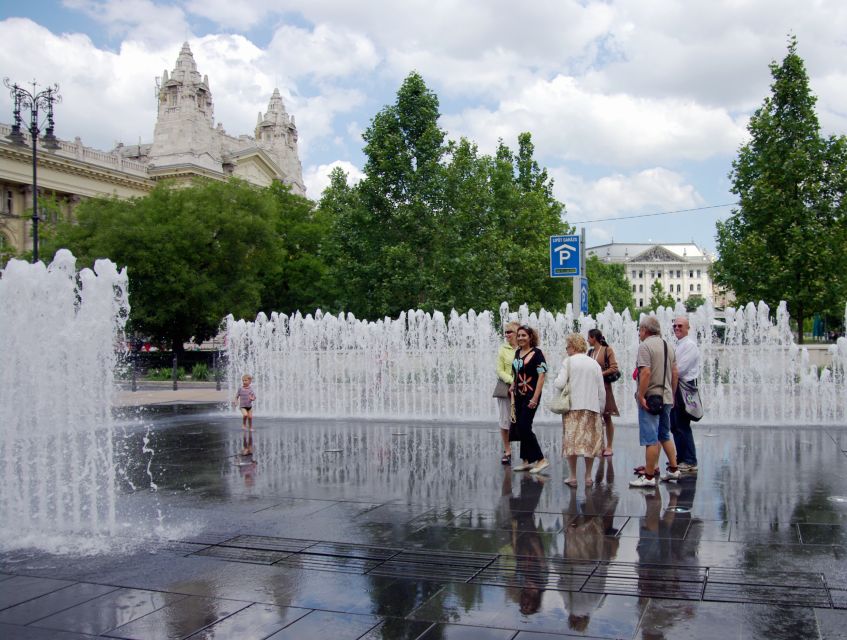
Starting in Elizabeth Park, with Budapest Eye in your view
This tour works because it begins with an easy warm-up. You meet your guide in front of the cafe and pastry shop Molnar’s Kürtöskalacs, right in the city center, then you start with a stroll through Elizabeth Park.
Elizabeth Park is a good first step because it helps you settle into Budapest’s layout. You are not dropped into a crowded stop-and-start scramble. Instead, you move through the green-and-city transition that lets you start noticing the scale of buildings around you.
Then comes Budapest Eye, the largest Ferris wheel in Europe. You will see it as part of the opening flow, which is great if you are trying to place modern Budapest alongside the older, more ceremonial parts of the city. Even if you do not ride it, seeing it early tells you what neighborhood energy feels like in Pest right now.
Practical note: wear shoes that handle pavement and curb cuts. You are going to move for the full 2 hours, and the best way to enjoy this kind of city walk is to keep your legs comfortable.
St Stephen’s Basilica: why the dome matters on foot
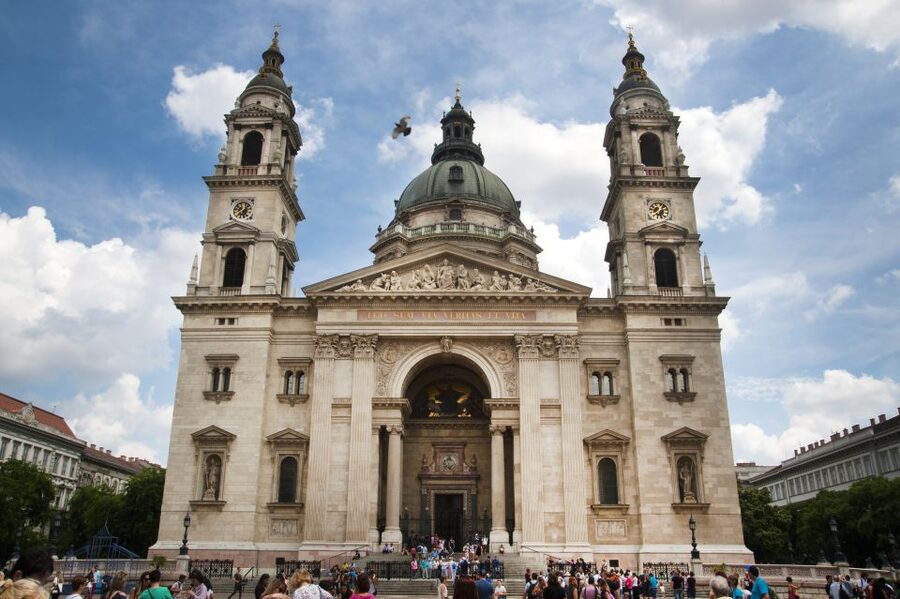
St Stephen’s Basilica is one of those monuments that can look impressive in a photo and still feel bigger in real life. On this tour, you see it for a reason: its monumental dome and colonnade give you a clear visual center for the entire walk.
Why it matters: as you keep moving across Pest, the city’s grand architecture tends to orbit around landmark forms like this. When you take a moment here, you start to understand why locals and visitors treat it as a key reference point, not just a sightseeing checkbox.
What I like about this stop is the pacing. You get the classic wow moment without it turning into a long detour. In two hours, you need sights that give you maximum payoff, and basilicas like this do that fast.
If you like architectural details, watch the lines and edges of the colonnade. From different angles along the pedestrian streets, the building can look calmer or more dramatic, and your guide can help you connect that to the overall story of Budapest’s “classical” look.
More of the city, bank to bank on foot:
- Budapest: Buda Castle Walk with Saint Stephen’s Hall
★ 4.5 · 3,012 reviews - Big Bus Budapest Hop-On Hop-Off Bus and Walking Tour
★ 3.5 · 2,206 reviews - Budapest: Buda Castle District Walking Tour
★ 4.6 · 2,108 reviews
Mr. Safe on the pedestrian streets: a lighter beat in the middle
After the big religious monument, the tour shifts to traditional pedestrian streets. That change is not just logistical, it helps the mood. After dome-and-column grandeur, you get human-scale street life, shopfronts, and walking space that makes it easier to breathe.
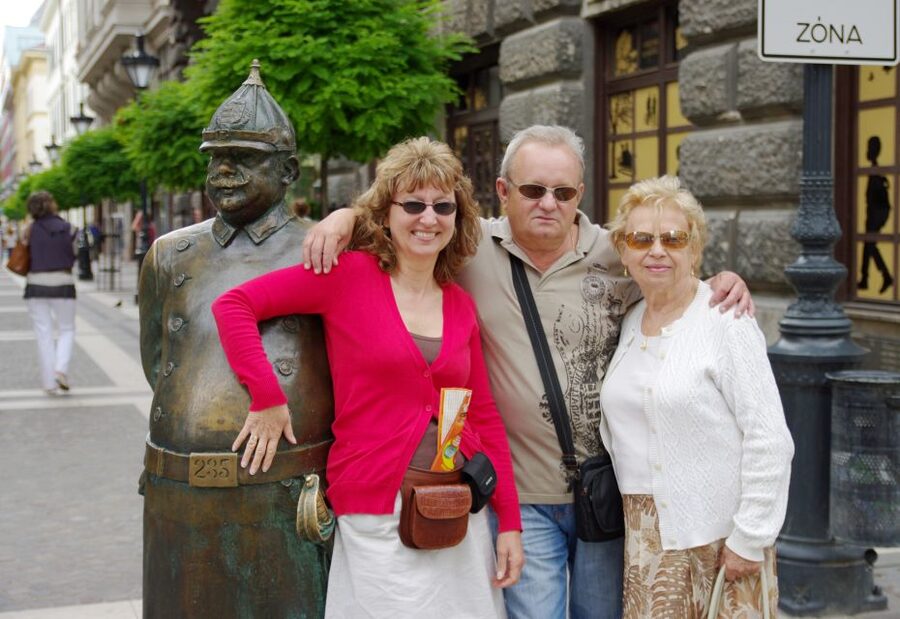
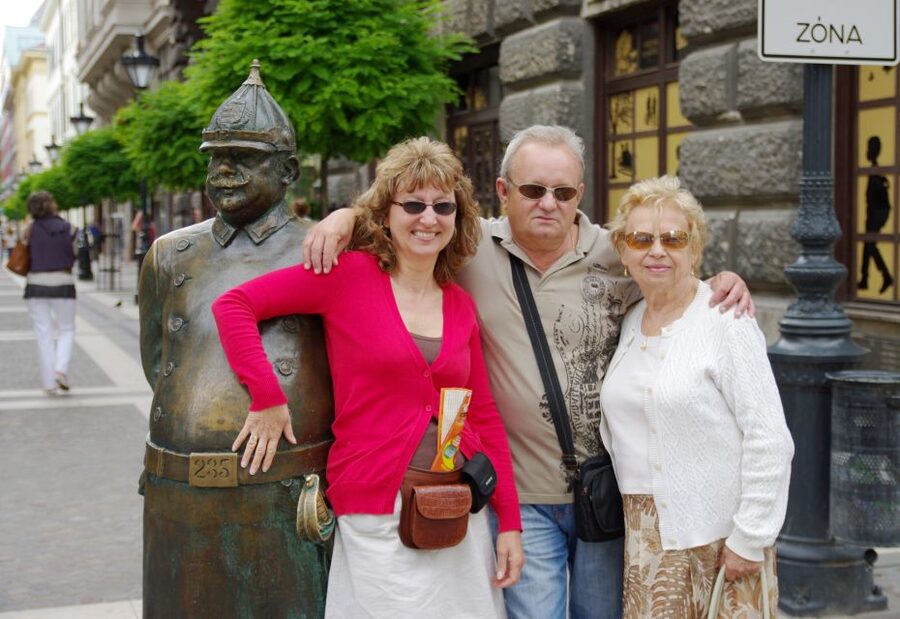
Then you reach the statue of Mr. Safe. It sounds like a silly name, but this kind of playful street art or sculpture stop is exactly what makes a walking tour feel human instead of museum-like. You get a quick photo moment and a smile, and it breaks up the heavier themes that come later.
I also think this stop is useful for a first visit because it helps you remember the city as more than monuments. Budapest is dramatic, yes, but it is also everyday life. This little pause makes you notice that.
Liberty Square: where the guide turns monuments into meaning
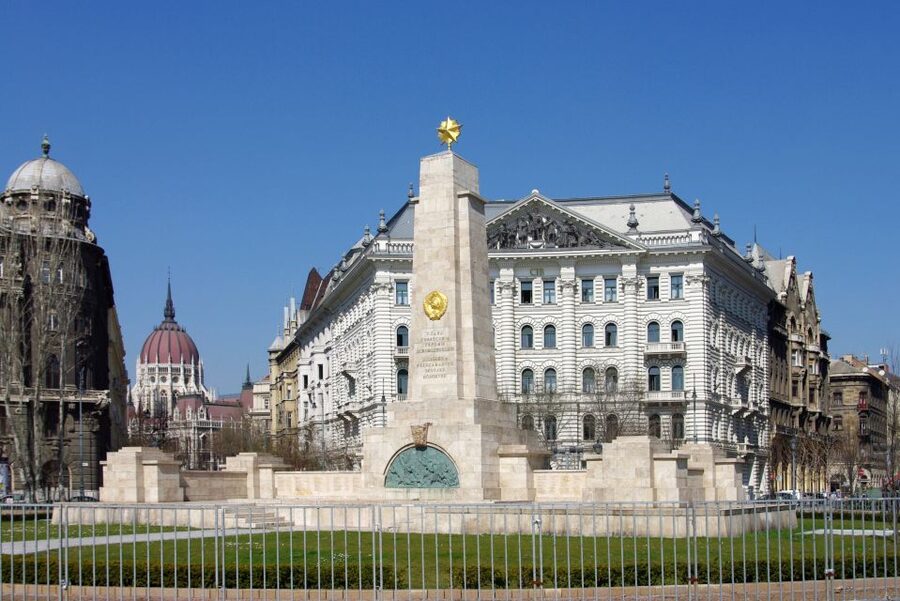
Liberty Square is where the tour grows heavier. You learn about Budapest’s traumatic past as a center of Nazi occupation and Communist oppression.
This is the part of the walk that many people remember most, because it connects what you see in stone and streets to what happened to real people. Liberty Square matters not only for historical facts, but for how the stories change your lens. Suddenly, the architecture and civic spaces stop feeling purely ceremonial.
A quick piece of advice: bring emotional bandwidth for this segment. If you prefer history only in light doses, this may feel intense. But if you want context, it’s exactly the kind of guided explanation that turns a city walk into understanding.
Also, keep an eye on how your guide frames the timeline. You will be hearing dictatorship and oppression themes again later, and it helps to think of the tour as building momentum rather than piling on unrelated facts.
Kossuth Square and the Parliament area: dictatorship and the 1956 revolution
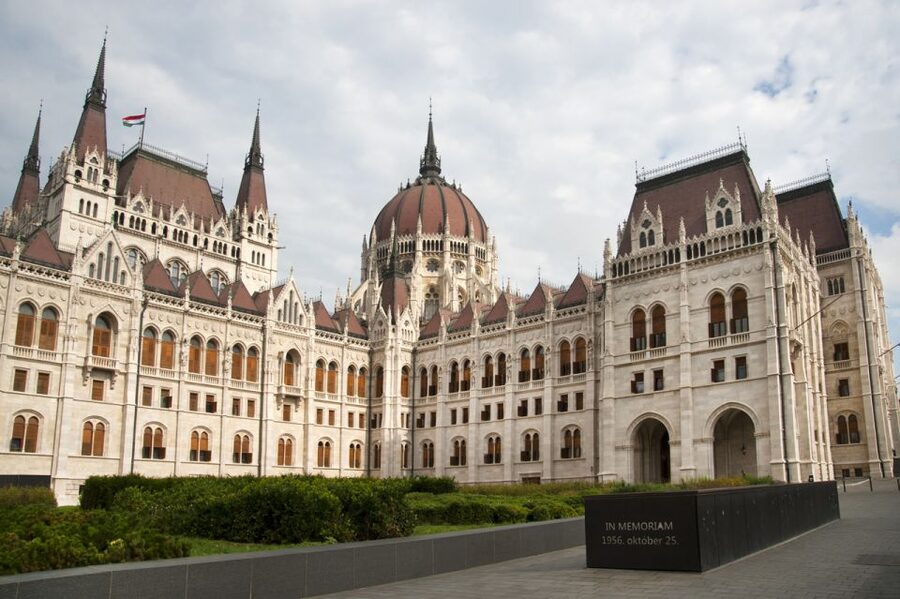
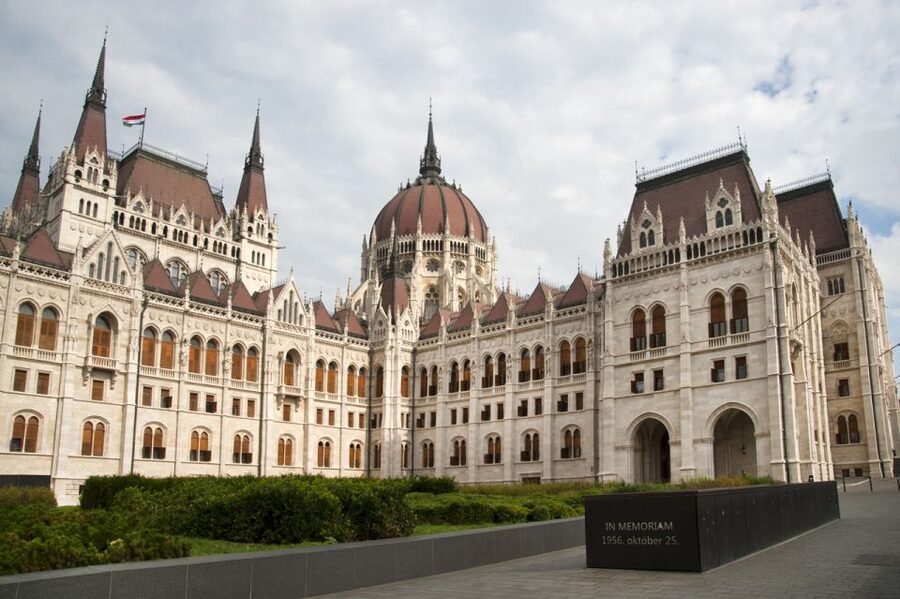
The finish zone is Kossuth Square, with the sights surrounding the majestic Hungarian Parliament building. Standing in the Parliament area gives you a sense of how power and national identity get built into a city’s layout.
Here is what makes this stop more than just a photo. You hear stories of dictatorship and the 1956 revolution. The guide’s role becomes especially important now. Without narration, Parliament can feel like only an architectural object. With narration, it becomes a stage where political changes left visible marks on everyday life.
I like that this tour stays inner-city and purposeful. It is not trying to cover every museum or side street in Budapest. Instead, it concentrates on a short list of locations that form a narrative arc.
Photo tip: plan on circling your viewpoint with your eyes before your phone comes out. Parliament looks different depending on where you stand, and a guide can point out angles that help the building look proportional rather than stretched.
Still to cross in Budapest
- Budapest: City Highlights Sightseeing Cruise★ 4.6 · 43,981 reviews
- Budapest: Unlimited Prosecco, Beer and Aperol Spritz Cruise★ 4.8 · 37,304 reviews
- Budapest: Széchenyi Spa Day Ticket with Optional Upgrades★ 4.3 · 23,911 reviews
Shoes on the Danube Bank: a quiet, respectful end by the river
At the end, you either visit the poignant Shoes on the Danube Bank monument or you take time for a stroll along the banks of the river. Both choices fit the same purpose: shift from civic-political stories to a more reflective riverside mood.
Shoes on the Danube Bank is one of those memorials you do not just look at and move on from. It asks you to slow down. Even if you only spend a short moment, it can change how you interpret the whole city center, because the Danube is not only scenic. It is part of the human story.
If you are the type who likes walking beside water, the river-banks option also gives you a gentle decompression. You finish with space for your thoughts and a chance to enjoy Budapest’s famous river views without another tight stop.
No matter what, the closing phase is a good reminder: you can measure a good walking tour not by how many stops it hits, but by how it lands the final emotional note.
Price and value: is $23 for 2 hours fair?
At $23 per person for a 2-hour guided walk, this tour is priced like a practical city orientation with a professional guide. That price matters less than what you get inside those 2 hours.
You get:
- a German-speaking professional local guide
- major landmarks clustered in Pest’s inner city
- both architecture moments and historical context, including Nazi occupation, Communist oppression, dictatorship, and the 1956 revolution
- a finishing experience near the Danube, either at Shoes on the Danube Bank or along the river
That combination is the value. Many short tours show you buildings with minimal context. Here, the guide is there to connect the sights to meaning. And the fact that it is a private group can make it easier for the guide to answer questions and adjust pacing for your comfort.
Is it cheap? No one in Budapest walks for free. But for the mix of iconic monuments and guided storytelling, $23 feels like a reasonable spend, especially if it saves you the effort of piecing the route together yourself.
Also, you are covered for planning flexibility. The experience includes free cancellation up to 24 hours in advance and a reserve now, pay later style option, which is helpful when your schedule is still shifting.
Group size, language, and accessibility: how to judge fit fast
This experience is listed as a private group and it is wheelchair accessible. That is a big plus if you want a calmer, less chaotic walking pace than big-van tours.
Language is the only major “make or break” factor. It is German throughout, so it works best if you:
- speak German comfortably or want to practice with real-world listening
- prefer guided explanations over reading on your phone
- like historical storytelling, not just sightseeing
If you are traveling with someone who does not speak German, you may need to decide whether the history segment will still be valuable through shared understanding, summaries, or separate self-guided time.
The good news is that many major landmarks are visually impressive even without perfect language skills. Still, the impact of the heavier parts depends on your ability to follow the narration.
Who should book this Budapest inner-city tour?
I think this tour is ideal for you if you are:
- on a first visit to Budapest and want a clean, efficient route through Pest’s core
- drawn to architecture, especially grand civic and religious buildings
- interested in understanding the city’s political past in a guided way
- someone who likes walking at a steady pace for about 2 hours
It also suits you if you want an “in-between” experience. You are not stuck only in museums, and you are not doing a purely scenic stroll. You get the city center as a connected story.
Guides for this tour include people such as Zsóka and Uschi, and the feedback style points to a guide who is friendly, answers questions, and brings the place to life with personal local context. If you enjoy that conversational format, this should land well.
Should you book it? My decision guide
Book this tour if you want a short, high-impact inner-city walk in Pest that combines landmark architecture with real historical context. The $23 price makes sense because the guide adds meaning to what would otherwise be just impressive buildings.
Skip it or think twice if you are not comfortable with German, because the narrative is a key part of why the tour works. Also, if you only want light sightseeing with zero heavy topics, Liberty Square and the Parliament-area stories may feel too intense for your mood.
Otherwise, this is a strong choice for a half-day in Budapest, especially if you want to leave with both photos and a better sense of what shaped the city.
FAQ
Where do I meet the guide?
Meet your guide in front of the cafe and pastry shop Molnar’s Kürtöskalacs.
How long is the Budapest inner-city walking tour in German?
The tour lasts 2 hours.
What language is the tour offered in?
The tour guide speaks German.
How much does the tour cost?
The price is $23 per person.
Is the tour wheelchair accessible?
Yes, the tour is wheelchair accessible.
What are the main stops during the walk?
You will see Elizabeth Park and Budapest Eye, visit St Stephen’s Basilica, pass through pedestrian streets to the statue of Mr. Safe, learn about history at Liberty Square, admire the Parliament area from Kossuth Square, and finish with Shoes on the Danube Bank or a stroll along the river banks.
Is free cancellation available?
Yes. You can cancel up to 24 hours in advance for a full refund.
The newest crossings added in Budapest





City Tours, compared.

Budapest City Landmarks Walking Tour in 2 Hours
Read our review →

Hungarian Chimney Cake Workshop in the City Center
Read our review →
Browse the lists this tour appears in