
Budapest hides movie magic in plain streets. This 2.5-3 hour walk strings together St. Stephen’s Basilica legends and Hollywood filming locations, then sprinkles in the stories behind the music you hear when you’re in the city center.
I also love how the guide pulls you toward mini statues and short memorial stops that you’d never notice on your own, including the Frog Breki mini statue by Kolodko and the Shoes on the Danube Bank. One consideration: you’ll be on your feet for a good stretch, so wear comfortable shoes and expect some standing.
In This Review
- Key moments I’d plan around
- Starting at St. Stephen’s Basilica, then walking through Budapest’s “two faces”
- Policeman statue, occupation memorials, and the meaning of small stops
- Exchange Palace and the film-city lesson: why Budapest looks like everywhere
- Kolodko mini statues, quirky legends, and why locals touch the details
- Soviet War Memorial, US Embassy, and Reagan Square energy
- Parliament and the Danube: the “big scenes” with a human timeline
- The music thread: Gloomy Sunday, Goulash Communism, and how sound becomes identity
- What you actually get on the ground, plus practical timing
- Who should book, and who might skip
- Should you book Budapest: History, Hollywood & Music?
- FAQ
- Where does the tour start?
- How long is the walking tour?
- What language is the tour guide?
- Is the tour wheelchair accessible?
- Do I need entry tickets for attractions?
- What should I bring?
- Does the tour run in bad weather?
- Are pets allowed?
- Are there any restrictions during the tour?
- Is cancellation free?
Key moments I’d plan around
- St. Stephen’s Basilica to Parliament in one story-driven line, not a random sightseeing checklist
- Real film-world backdrops tied to productions like Dune, Blade Runner 2049, The Martian, Red Sparrow, The Crown, and Nuremberg
- Mini statues and memorial details that add meaning without turning the walk into a lecture
- Danube riverbank stops that pair quiet history with strong photo moments
- Music legends like the story around Gloomy Sunday and the spirit of the Goulash Communism era
- Local tips after the tour, focused on food, drinks, wandering, and viewpoints
Starting at St. Stephen’s Basilica, then walking through Budapest’s “two faces”
The tour kicks off at St. Stephen’s Basilica, right by the main entrance. Look for the red or green umbrella. From the first minutes, the vibe is “history with personality.” You’re not just shown buildings, you’re guided through the way Budapest stories get retold, sometimes with legend, sometimes with satire, sometimes with just a wink.
St. Stephen’s Basilica is a solid first stop because it anchors the city in faith, identity, and old-school pride. Even if you’ve seen cathedrals before, you’ll notice how the guide frames what you’re looking at, so the landmark becomes part of the walking narrative instead of a quick photo and move on.
You’ll then head into the tight web of civic life. Szabadság Square (Liberty Square) is the kind of place where people flow through quickly, but the guide slows you down just enough to point out how public spaces in Budapest carry different eras at the same time.
If you’re short on time, this start matters. Budapest is big on grand monuments, but the real magic is in the connections between them. Getting those connections early helps the whole route feel coherent.
Policeman statue, occupation memorials, and the meaning of small stops
One of the tour’s strengths is its mix of “major stops” and “blink-and-you-miss-it” moments. Early on you’ll see The Policeman, Budapest, and it’s a fun palate-cleanser after the scale of the Basilica. This is where the guide’s personality shows. In the same spirit, the route includes a stop at the memorial for the victims of German occupation, which changes the mood quickly in a respectful way.
That contrast is important. Budapest can look like a postcard city, but it’s also a place that lived through occupation, repression, and recovery. These memorial stops keep the walk honest without dragging it down.
And yes, the guide has a playful streak. In the mini-statue moments, you might get cheeky local prompts, like a quick touch or pat on a sculpture as a bit of folk superstition. It’s not disrespectful, it’s more like Budapest’s way of saying, we can remember hard things and still enjoy the street life around them.
A potential drawback here is pacing. If you want only upbeat sights, memorial stops will slow the energy for a bit. But if you’re here to understand the city, that shift is exactly what makes the tour feel worthwhile.
More of the city, bank to bank on foot:
- Budapest: Buda Castle Walk with Saint Stephen’s Hall
★ 4.5 · 3,012 reviews - Big Bus Budapest Hop-On Hop-Off Bus and Walking Tour
★ 3.5 · 2,206 reviews - Budapest: Buda Castle District Walking Tour
★ 4.6 · 2,108 reviews
Exchange Palace and the film-city lesson: why Budapest looks like everywhere
One of the coolest parts of the walk is the way it uses Budapest’s architecture as a storytelling tool for cinema. You’ll visit places that have been used as film locations, and you’ll learn the general idea of why Budapest works so well on camera.
The route includes the Exchange Palace, which is a great example of how the city blends power, beauty, and history in one package. Standing in front of strong facades, you start to see how filmmakers can swap identities from screen to screen. Budapest can stand in for other cities because its streets and buildings have the right mix of grandeur and texture.
The guide ties this to specific productions shot in Budapest, including:
- Dune
- Blade Runner 2049
- The Martian
- Red Sparrow
- The Crown
- Nuremberg
You do not just hear “this was used in a movie.” You learn what visual qualities make the locations believable, and how Budapest’s layers allow directors to frame it as multiple places in different time periods. That changes how you look at the city after the tour too. Even on your own, you’ll start noticing angles that match scenes you’ve seen.
If you’re a movie buff, this section is likely to be your favorite. If you’re not, the good news is that the film talk still lands as architecture and city design, not just trivia.
Kolodko mini statues, quirky legends, and why locals touch the details
Budapest’s mini statues culture is one of those things you can walk past for a week and only realize later that it’s actually a whole language. This tour gives you a direct hit of that world, including the Frog Breki mini statue by Kolodko.
Frog Breki is perfect for a walking tour because it’s small, memorable, and just weird enough to stick in your mind. The guide’s job is to connect it to the larger vibe of Budapest, where humor and history share the same pavement.
This is also where the route feels most “local.” The guide doesn’t treat these sculptures like museum objects. Instead, you get the sense that people interact with them, partly for fun and partly as a way of making the city feel personal.
The tradeoff is practical: mini statues mean shorter stops, but you’re also likely to do some stopping-and-starting. If your ideal tour is pure long-view sightseeing, you’ll still enjoy it, just expect a few moments of looking closely, then moving on.
Soviet War Memorial, US Embassy, and Reagan Square energy
The route doesn’t keep Budapest frozen in one era. It jumps across 20th-century politics and into modern cultural symbolism. You’ll see the Soviet War Memorial, then you’ll move toward the US Embassy area and the Ronald Reagan Statue.
These are powerful stops, and the guide handles them in a way that’s informative without turning the group into a solemn queue. The point is to help you read the city like a historical map: where the power centers were, how alliances shifted, and how public art and institutions show up in stone and lettering.
You’ll likely notice that Budapest’s monuments do not just celebrate. They also communicate what was at stake, what was remembered, and what people wanted future generations to understand.
The one consideration here is sensitivity. Some memorials and war-related monuments can hit emotionally. If you prefer your sightseeing light and fast, this section could feel heavy. But if you want the full Budapest story, this is a big part of why the walk is more than a highlight reel.
More centuries stacked along the banks:
- Budapest: Historic Cruise with Welcome Drink★ 4.7 · 6,512 reviews
- Budapest Historical Sightseeing – Free Walking Tour★ 5.0 · 1,302 reviews
- Buda Castle District Dark History, Legends and Vampire Night Tour★ 4.5 · 1,240 reviews
Parliament and the Danube: the “big scenes” with a human timeline
Hungarian Parliament Building is one of those places you can’t really skip in Budapest, and this tour makes it feel less like a standalone object. You get guided context first, then you get a photo stop so you can actually take in the details.
Kossuth Lajos tér is also part of the experience here, and the stop timing helps. You’re given the chance to look around, then the guide brings you back to the specific story thread so it doesn’t feel like you’re just standing in a wide open plaza.
From there, the tour brings you to the Danube riverbank with the Shoes on the Danube Bank memorial. This stop tends to land hard in the best way, because it turns an abstract tragedy into a vivid image you can see and understand instantly.
What I like about including this memorial in a walking tour like this is the framing. You’re not only told what it represents. You’re also walking through the physical space around it, which helps your brain connect the history to the geography.
You’ll end up at Akadémia 3. ponton near the finish at Széchenyi István tér, which is a nice way to close the walk with a river-view moment. Even if you don’t plan to spend hours by the water afterward, you’ll leave with a sense of where the best angles are.
A practical note: Danube bank areas can feel windy. Dress for it, even if the morning looks calm.
The music thread: Gloomy Sunday, Goulash Communism, and how sound becomes identity
A walking tour that treats music like a city history tool is rare, and this one does it well. Music shows up here as emotion and survival, not background entertainment.
You’ll hear the legend surrounding Gloomy Sunday. You’ll also get the story of the Goulash Communism era, which is framed around creative spirit and the way people found room to breathe through art.
This is valuable because it changes how you interpret what you see. Budapest is full of bars, cafes, and concert spaces, but most visitors experience them as “things to do.” This tour helps you understand why those spaces feel meaningful. The city’s soundtrack is part of its social history.
If you love literature, film, and music, the connection between these themes makes the route feel cohesive. If you’re less into music legends, you can still enjoy it as storytelling, but you might want to keep your expectations flexible. The tour is still built around walking and landmark context first.
What you actually get on the ground, plus practical timing
This is a guided walking tour lasting about 2.5 to 3 hours. The guided portion is described as 2.5 hours packed with stories, legends, and local insight, with short walking segments and photo time built in.
That length is a sweet spot in a city like Budapest:
- Long enough to feel like you gained real understanding
- Short enough to fit into a half-day plan
- Enough time for the “Hollywood plus music plus memorials” blend to make sense
The pace is relaxed. It’s the kind of route where the guide stops often, explains, and then moves you on before you get bored.
Included in the experience are the guided walking tour, film locations, hidden details (the mini statues and small memorial-type moments), and personal recommendations for where to eat, drink, wander, and get views after you finish.
What’s not included is basically everything that costs extra: entry fees to attractions, food and drinks, transportation, and personal expenses. Good to know, because this tour is designed so you can plan it without turning your day into a budgeting puzzle.
Price is listed at about $3.54 per person. That’s extremely low compared to typical walking tours. Even if you treat that as a promotional figure rather than a forever price, it signals good value if you’re trying to get a story-first overview without spending much. The best way to judge value is what you’re paying for: not just landmarks, but the connecting stories, the filming context, and the final local tips.
Who should book, and who might skip
I’d recommend this tour if you want Budapest beyond postcard mode. You’ll get:
- A tight loop of landmarks you can later recognize on your own
- Film location context linked to major productions
- Music legends and eras tied to daily life and emotions
- Mini statues and memorial details that deepen your understanding
You might consider skipping if:
- You want a fully accessible, sit-down tour format (this is not that)
- You prefer only upbeat content, with no war or occupation memorials
- You’re unable to handle about 2.5 to 3 hours of walking and standing
It is wheelchair accessible, and pets are welcome, but the tour is also noted as not suitable for severe mobility limitations. If you’re on the edge, it’s worth thinking carefully about your day plan.
People over 95 years old are listed as not suitable, so if that applies, you’ll want a different option.
The tour runs in all weather conditions, so bring weather-appropriate clothing. In Budapest, that can mean wind, rain, or cold snaps, even when your phone says it will be fine.
Should you book Budapest: History, Hollywood & Music?
Book it if you like your sightseeing with stories attached. This walk is designed to help Budapest feel familiar fast, because it links big monuments, small details, film history, and music legends into one route you can remember.
Skip it if you want pure sightseeing with minimal context. The tradeoff for all the story threads is that you will spend time listening. But if you enjoy hearing how locals read the city, how monuments connect to eras, and how Budapest becomes a movie stand-in, this is a strong value plan.
If you’re building your first day in Budapest, I think this is a great way to get your bearings quickly, then use the local recommendations afterward to choose where to eat, drink, and wander next.
FAQ
Where does the tour start?
The meeting point is in front of the main entrance of St. Stephen’s Basilica. Look for the red or green umbrella.
How long is the walking tour?
It lasts about 2.5 to 3 hours.
What language is the tour guide?
The tour is offered in English.
Is the tour wheelchair accessible?
Yes, it is listed as wheelchair accessible. It is not suitable for guests with severe mobility limitations.
Do I need entry tickets for attractions?
Entry fees to attractions are not included, and they are described as not needed for this tour.
What should I bring?
Bring comfortable shoes and weather-appropriate clothing.
Does the tour run in bad weather?
Yes, the tour runs in all weather conditions. Dress accordingly.
Are pets allowed?
Yes, pets are welcome.
Are there any restrictions during the tour?
Alcohol and drugs are not allowed.
Is cancellation free?
Free cancellation is available up to 24 hours in advance for a full refund.
The newest crossings added in Budapest






Historical Tours, compared.
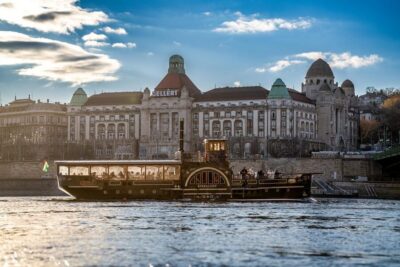

Budapest Historical Sightseeing – Free Walking Tour
Read our review →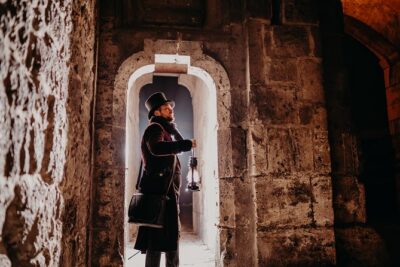
Buda Castle District Dark History, Legends and Vampire Night Tour
Read our review →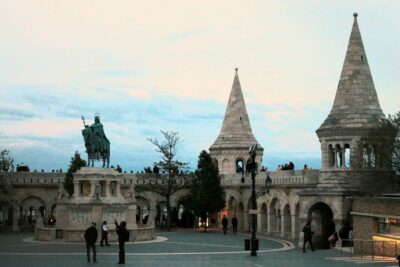
BloodThirsty Hungary: Walking tour & Dark Historical Stories
Read our review →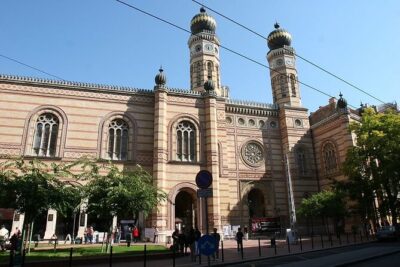
Budapest Jewish Heritage Memorial Walking Tour & Synagogue Entry
Read our review →
Jewish Heritage Guided Tour with Synagogue Ticket
Read our review →
Budapest Historic Downtown Bicycle Tour in small groups
Read our review →
Historic Downtown ride on E-Bicycles Buda & Pest
Read our review →Browse the lists this tour appears in