
Reviewed · CITY TOURS
Budapest Exoskeleton Robotics Powered City Walk
Powered city walks in Budapest, with help from robot legs.
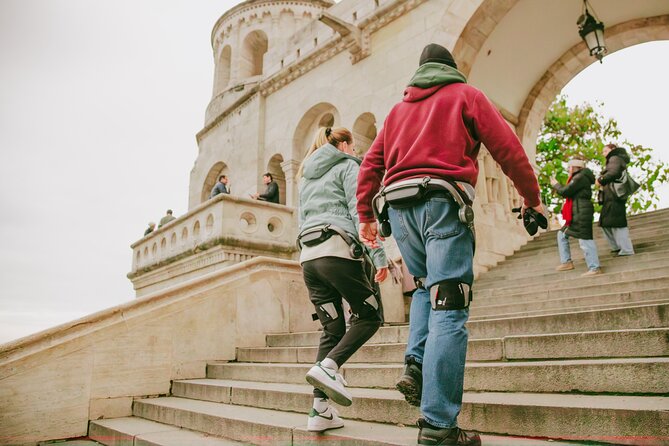
This 2.5-hour outing mixes big views with an Hypershell exoskeleton trial, so you can tackle hills and stairs without turning the whole day into a workout. You’ll move at a walking pace between the most famous hilltop spots, with the added bonus of a tech twist that makes the experience feel more like an activity than a standard sight tour.
What I really like is how the exoskeleton assistance is built into the flow of the route, not tacked on at the start. And I love that the stops are chosen for payoff, from Gellért Hill viewpoints to the fairy-tale towers of Fisherman’s Bastion and the sweeping Danube bridge crossing.
One thing to keep in mind: the ride is weather-dependent, and if conditions are poor the tour can be moved or refunded. Also, while the device can make walking easier, it is not described as an official medical device.
In This Review
- Key takeaways before you go
- Why Budapest’s hilltop sights feel easier with exoskeleton assistance
- Meeting at Várkert rkp 16, and why the small group matters
- Price and value: what $71.04 really buys you here
- Gellért Hill and the Citadel viewpoint, with less hill pain
- Buda Castle for a hilltop feel, without the leg workout
- Fisherman’s Bastion, fairy-tale towers and the Parliament view
- Castle Garden terraces for that Danube-side “backstage” feeling
- Szechenyi Lánchíd crossing: your slow-motion link between Buda and Pest
- How the Hypershell exoskeleton works during the walk
- Who should book this powered city walk
- Should you book Budapest Exoskeleton Robotics Powered City Walk?
- FAQ
- Where do I meet for the tour?
- What time does the tour start?
- How long is the Budapest Exoskeleton Robotics Powered City Walk?
- What’s included in the price?
- What is not included?
- Is this tour offered in English?
- Is the exoskeleton a medical device?
- What happens if weather is bad or I need to cancel?
Key takeaways before you go
- Small group format, capped at 8 people, keeps the pace comfortable and questions easy
- Briefing, fitting, and testing are included, so you’re not guessing when the device turns on
- You get free entry for the main sights along the route (no extra ticket fees listed for stops)
- The route covers real ups, downs, stairs, and varied ground, so you get to test the modes
- You’ll finish back at the Várkert rkp. 16 meeting point, making it simple to plan the rest of your afternoon
Why Budapest’s hilltop sights feel easier with exoskeleton assistance
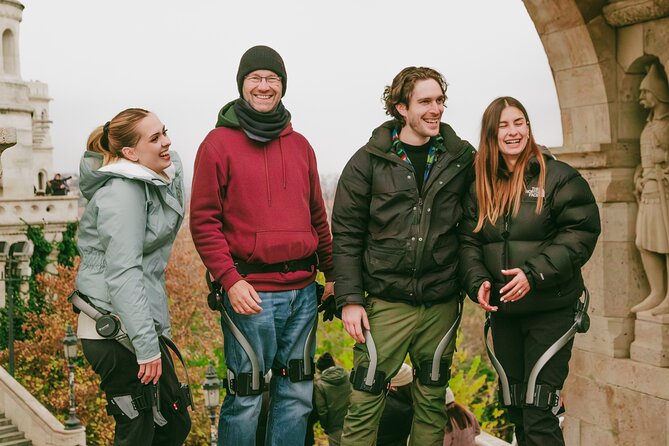
Budapest is gorgeous, but the city can be a leg test. This is the idea behind the Hypershell powered walk: you still do the sightseeing, you still cover ground on foot, but you get movement support that can make climbs and stairs feel more manageable.
From the reviews, the fun part is how natural it feels once you’re fitted and briefed. People describe it as lighter steps, a smoother push through uphill sections, and even help across rougher trail textures like rocky or muddy paths. You don’t need to think like a tech person to enjoy it, because the device is used as part of the route.
The other reason it works so well is pacing. Instead of rushing between stops, you’re given enough time at each viewpoint to look around, take photos, and enjoy the view in layers, not as a quick checklist.
Meeting at Várkert rkp 16, and why the small group matters
You start at Budapest, Várkert rkp. 16, 1013 Hungary at 1:30 pm, and the tour returns to the same spot at the end. That “back where you began” setup is practical, especially if you’re pairing this with a late dinner plan or other nearby sightseeing.
This is also a maximum 8 travelers experience. That small size tends to matter with anything involving gear. You get more attention during fitting and testing, and you’re less likely to feel like you’re getting pulled along in a big crowd.
Because it’s near public transportation, you can usually slot it into a flexible day without needing a hotel pick-up. The tour is English-offered, and confirmation is provided at booking time.
More of the city, bank to bank on foot:
- Budapest: Buda Castle Walk with Saint Stephen’s Hall
★ 4.5 · 3,012 reviews - Big Bus Budapest Hop-On Hop-Off Bus and Walking Tour
★ 3.5 · 2,206 reviews - Budapest: Buda Castle District Walking Tour
★ 4.6 · 2,108 reviews
Price and value: what $71.04 really buys you here
At $71.04 per person, the cost can feel surprising if you compare it to a basic walking tour. The value comes from what’s included: the Hypershell exoskeleton device plus briefing, fitting, and testing, with a professional and certified tour guide.
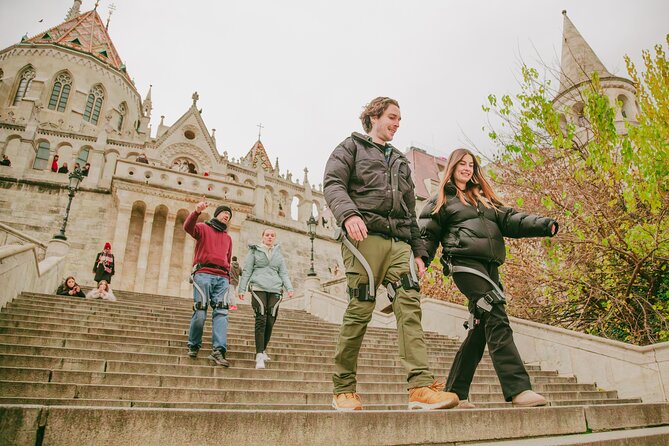
That matters because the device is not just a souvenir moment. You’re on it through the same climb and descent sections that make Budapest famous and tiring at the same time. And since stops listed along the route have free admission tickets, you’re mainly paying for guidance, time on the device, and a structured route.
If you want a “one-time wow” experience during a Budapest trip, this fits the bill. It’s also a good choice when you still want the major sights, but your energy is limited that day, after travel, or after another long walk.
Gellért Hill and the Citadel viewpoint, with less hill pain
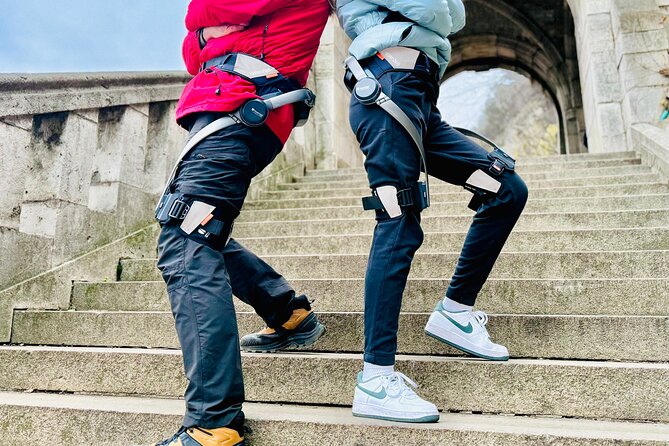
Your first stop is Gellért Hill, above the Danube, with panoramic views that sweep across both sides of Budapest. This is one of those areas where the walking trails are part of the experience, not just the path to the top.
You’re there for about 1 hour, and the terrain is the point. Reviews mention climbs and rougher outdoor paths where the device helped keep movement steady and smooth. People even describe it as feeling like an easy gear boost, while still walking properly on uneven ground.
At the summit area you’ll be around major landmarks such as the Citadel and the Liberty Statue. Even with assistance, you’ll still want to slow down and look. These views are wide and layered, and it’s easier to take them in when your legs are not fully empty.
A small consideration: if you’re sensitive to uneven outdoor surfaces, you’ll still be walking on a hill area. The exoskeleton can help with effort, but it doesn’t erase the fact that you’re moving through a real outdoor setting.
Buda Castle for a hilltop feel, without the leg workout
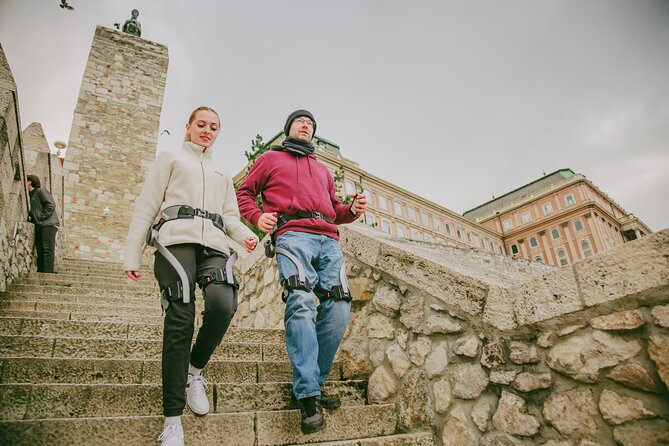
Next comes Buda Castle, the former royal seat, later bombed, then rebuilt. It has that classic hilltop atmosphere where you feel elevated above the city and can read the layout of Budapest from above.
You get about 45 minutes here, which is a meaningful chunk. It’s long enough to wander, orient yourself, and enjoy the setting without feeling like you’re sprinting for the best photo spot.
What I like about this stop in the powered format is the emotional shift. You’re not just surviving the ascent. You can actually look around while you’re moving. The castle area rewards you for lingering, and support from the device can help you do that.
One practical note: there’s a lot of stairs and elevation in this district area. Since the tour includes exoskeleton modes that support climbs and stairs, it’s designed for this kind of terrain, not a flat stroll.
Still to cross in Budapest
- Budapest: City Highlights Sightseeing Cruise★ 4.6 · 43,981 reviews
- Budapest: Unlimited Prosecco, Beer and Aperol Spritz Cruise★ 4.8 · 37,304 reviews
- Budapest: Széchenyi Spa Day Ticket with Optional Upgrades★ 4.3 · 23,911 reviews
Fisherman’s Bastion, fairy-tale towers and the Parliament view
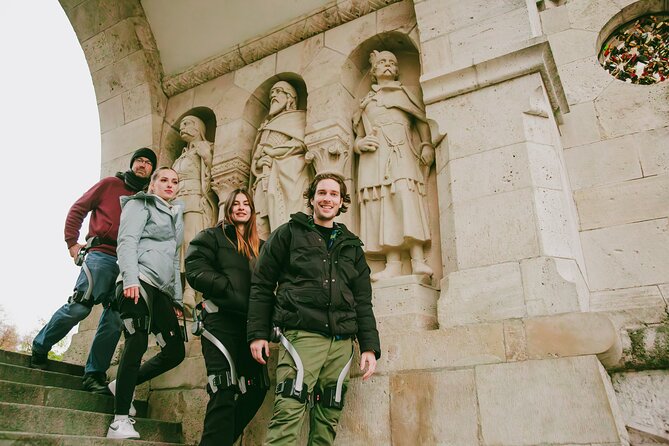
Fisherman’s Bastion is where Budapest leans into postcard mode. The towers look almost storybook, and the viewpoint is famous for a reason.
You’ll spend about 15 minutes here. That time isn’t meant for deep museum exploration, it’s for soaking in the view, getting your angles, and moving on. One highlight from the information provided is the best Parliament view in the city, which is the kind of claim you can quickly test with your own eyes once you’re there.
The powered walk helps at a place like this because you’re usually stepping around the area and staying alert for viewpoints and photo angles. With assistance, you can keep your focus on where you’re standing, not only on conserving energy.
Castle Garden terraces for that Danube-side “backstage” feeling

Castle Garden is the in-between stop that helps the route feel like more than just a sequence of landmarks. It’s described as a glamorous riverside garden in the past, later becoming a ruin, and now returning with a cultural presence.
You get about 15 minutes. That might sound short, but in this type of stop, short often works best because terraces and viewpoints are meant to be sampled. From here, you can enjoy the sense of the palace area reaching down toward the water.
If you like Budapest because of its contrasts, this is one of the best ways to experience them on foot. You get hilltop structures above, then you shift your attention toward the Danube below. The route pacing also matters, because you’re not arriving here wiped out from a single long grind.
A possible drawback is timing. If you’re the kind of person who could spend a long time photographing architectural details, you may feel the stop runs quickly. Still, it’s designed as a quick, high-impact terrace intermission.
Szechenyi Lánchíd crossing: your slow-motion link between Buda and Pest
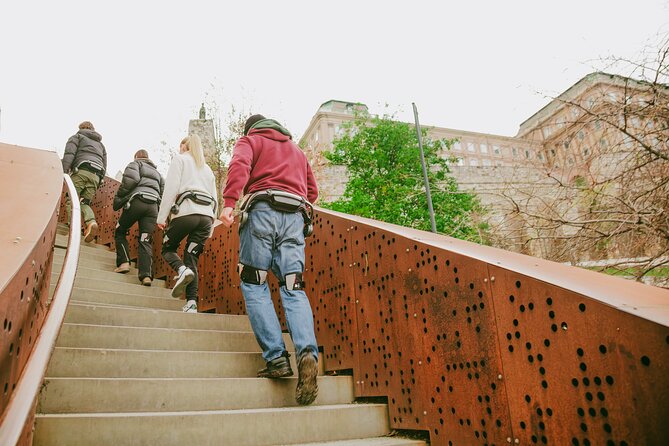
Your last stop is Szechenyi Lánchíd, the Chain Bridge. This is the classic line connecting Buda and Pest, and walking it is a different experience than viewing it from a platform.
You’ll spend about 15 minutes here. Think of it as a moving viewpoint, because the bridge frames the city as you progress. The information describes it as a runway feel, and that’s exactly how walking it tends to register, even when you’re not running for photos.
This is also where the powered format often turns funny. Reviews describe a sci-fi, superpower vibe, where you feel lighter on your feet and more playful about the pace. Crossing at walking speed keeps it relaxed, but the assisted movement makes it feel less like effort and more like momentum.
The best part is how the route closes the loop. You’ve been on hilltop viewpoints and terrace edges, and now you’re on a wide, iconic connector. It helps your day feel complete.
How the Hypershell exoskeleton works during the walk
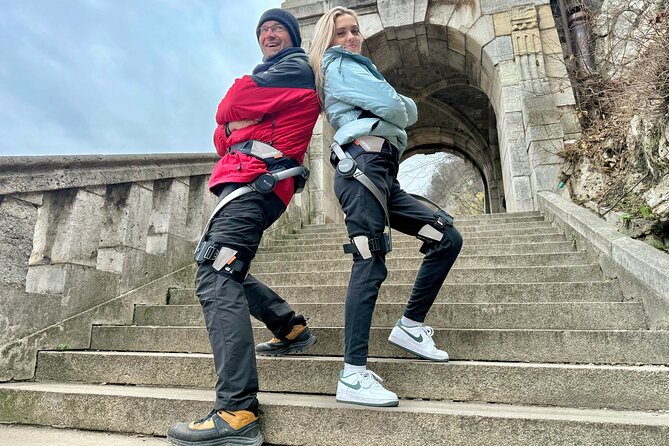
You’ll use a Hypershell exoskeleton device, and that includes briefing, fitting & testing before you start moving around the route. That’s key. Without a proper fit and test, powered gear could feel awkward or distracting. With it, people describe it as natural and fun quickly.
From reviews, it supports multiple movement types. People mention modes for climbing, uphill, downhill, descending, and stairs, including the ability to handle rough paths. In other words, the tour isn’t pretending Budapest is flat. The help is applied to the real walking tasks you’ll face during the route.
Still, keep the medical expectations realistic. The device is described as not an official medical device, even though it can greatly help walking. If you’re dealing with a specific mobility condition, it’s smart to think carefully and ask questions before you commit.
The tour also includes a professional and certified tour guide, which matters for safety and confidence. This is not a DIY rental. You’re part of a guided experience that’s designed around using the device in a structured way.
Who should book this powered city walk
This is a strong match if you want the classic Budapest landmarks, but you also want help with effort. It’s especially appealing when your legs are tired, you’re coming off another hike or long travel day, or you simply want to spend your energy on seeing and photographing, not on leg burn.
It also feels good for families and groups who want an activity that’s more than just standing in line at viewpoints. Reviews describe a playful, superpower feeling, and the small group size supports that relaxed vibe.
You might want to think twice if you dislike stairs or uneven terrain, because the route includes hills and stair-heavy areas, even with assistance. And because the experience requires good weather, you’ll want to plan around possible rescheduling.
Should you book Budapest Exoskeleton Robotics Powered City Walk?
If your goal is to see the big Budapest hits without turning the day into a strenuous hike, I think this is a smart yes. For the money, you’re paying for the exoskeleton time, the included fitting and testing, and a guided route that hits Gellért Hill, Buda Castle, Fisherman’s Bastion, Castle Garden, and Szechenyi Lánchíd in about 2 hours 30 minutes.
Book it if you want something active that still feels sightseeing-centered. Book it if you like tech, or if you simply want to experience how robot-assisted movement changes what you’re able to enjoy in a hilltop city.
Skip it only if you strongly dislike weather uncertainty, or if you’d rather spend your budget on traditional tours and do the climbs under your own power.
FAQ
Where do I meet for the tour?
You meet at Budapest, Várkert rkp. 16, 1013 Hungary. The tour ends back at the same meeting point.
What time does the tour start?
The start time is 1:30 pm.
How long is the Budapest Exoskeleton Robotics Powered City Walk?
It lasts about 2 hours 30 minutes.
What’s included in the price?
The price includes the Hypershell exoskeleton device, a briefing, fitting and testing, and a professional and certified tour guide.
What is not included?
Meals are not included, and there is no hotel pick-up or drop-off. Personal travel insurance is also not included.
Is this tour offered in English?
Yes, the tour is offered in English.
Is the exoskeleton a medical device?
No. The exoskeleton helps with walking, but it is not considered an official medical device.
What happens if weather is bad or I need to cancel?
The experience requires good weather. If it’s canceled due to poor weather, you’ll be offered a different date or a full refund. You can cancel for free up to 24 hours in advance for a full refund.
The newest crossings added in Budapest






City Tours, compared.

Budapest City Landmarks Walking Tour in 2 Hours
Read our review →



Hungarian Chimney Cake Workshop in the City Center
Read our review →

Browse the lists this tour appears in