
Reviewed · CITY TOURS
Budapest: City Highlights Walking Tour
Budapest compresses a lot of magic fast. This 4-hour walk strings together Heroes’ Square monuments, then delivers huge payoff with Citadel viewpoints over the Danube. I like the way the tour pairs grand landmarks with the real geography of the city, the river cutting Pest from the hills of Buda.
Two standout things I’d repeat: you get a guided look at major icons like the State Opera House and the Hungarian Parliament area, and you finish with panorama time from Gellért Hill. One consideration, plan for hills and lots of outdoor walking, especially toward the end when you’re working your way up for those views.
In This Review
- Key takeaways
- Why this Budapest highlights walk is a smart use of time
- Meeting at Deák Ferenc, then snapping the city into focus
- Heroes’ Square and City Park: monuments plus elbow room
- Vajdahunyad Castle: why this building feels like a national highlight
- Széchenyi Thermal Bath stop: spa culture without the ticket hassle
- Andrássy Avenue to the State Opera House and House of Terror
- St. Stephen’s Basilica and Parliament: church and government in the same breath
- Fishermen’s Bastion and Matthias Church: your panorama plus a classic backdrop
- Gellért Hill Citadel finale: how to enjoy the last climb
- Price and value: is $294 per group worth it?
- Who this walking tour suits best
- Should you book the Budapest City Highlights Walking Tour?
- FAQ
- Where do we meet your guide?
- How long is the walking tour?
- What is the group size?
- What languages is the live guide available in?
- Is the tour wheelchair accessible?
- What does the $294 price cover?
- What is included in the tour price?
- Are attraction tickets included, and is there a ticket-line benefit?
- What are the cancellation rules and payment options?
Key takeaways
- Small-group max of 10 helps you get answers and pace yourself
- Multilingual guide (English, Spanish, Hungarian, Italian) keeps things smooth across languages
- Heroes’ Square and City Park give you a strong first impression fast
- Opera House to House of Terror Museum mixes beauty with weight, all in one route
- Fishermen’s Bastion and St. Stephen’s Basilica are quick photo wins with context
- Citadel on Gellért Hill is the big, final view over Budapest
Why this Budapest highlights walk is a smart use of time
If you only have a half-day in Budapest, this is the kind of route that helps you get oriented without feeling rushed. The best part is the logic of the city itself, the Danube as a natural divider. You’ll move through key sights that represent Pest’s flatter energy and Buda’s hillier drama, so the geography actually makes sense by the time you reach the final viewpoints.
I also like that the tour is designed for a small group, up to 10 people, so you’re not fighting for attention at every stop. That matters in a city where the buildings are the stars, and the guide’s job is to connect what you’re seeing to why it’s famous. And with Erika Kathy leading the walk, you’ll have a real person steering the route, not just a generic audio script.
The “four hours” duration is a key value point. It’s long enough to hit a lot of top landmarks, but short enough that you still have energy left for dinner afterward. The downside is simple: walking is non-negotiable here. Wear good shoes and bring a plan for weather.
Meeting at Deák Ferenc, then snapping the city into focus
You meet your guide at Budapest, Deák Ferenc u. 23, 1052, Starbucks. That’s handy because Deák Ferenc is one of the city’s most central transit areas, so you can arrive without a complicated puzzle.
Once you start, the tour does something useful right away: it frames Budapest in terms of the river and the two sides. You’ll hear how the Danube winds through the city, acting like a boundary between Pest and the undulating hills of Buda. It’s a simple explanation, but it instantly changes how you look at the streets and viewpoints.
Practical tip: if you’re prone to getting tired early, this is the moment to pace. The first part of the route can feel like a steady march from one landmark to another. Use the early stops to regroup, take a breath, and watch for the river and bridges that keep popping up in your sightline.
More of the city, bank to bank on foot:
- Budapest: Buda Castle Walk with Saint Stephen’s Hall
★ 4.5 · 3,012 reviews - Big Bus Budapest Hop-On Hop-Off Bus and Walking Tour
★ 3.5 · 2,206 reviews - Budapest: Buda Castle District Walking Tour
★ 4.6 · 2,108 reviews
Heroes’ Square and City Park: monuments plus elbow room
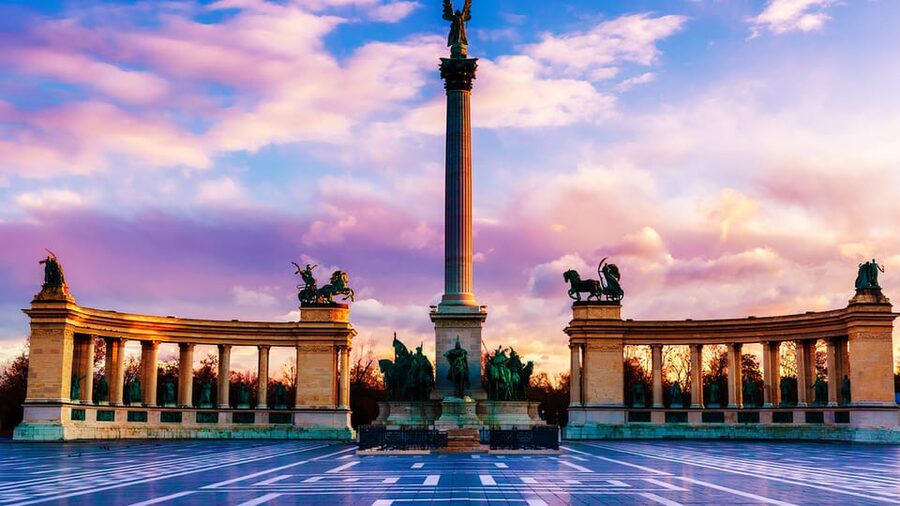
Heroes’ Square is the tour’s early anchor. You’ll visit this iconic spot, the largest square in Budapest, and spend time with the historic figures represented there. It’s one of those places where architecture and symbolism work together. Stand where you can see the layout of the square, then look back toward the route you’ll be following next.
From there, you head into City Park, described as picturesque in the tour route. This stop matters because it gives you a calmer shift from the monument intensity of Heroes’ Square. Instead of only looking up at statues, you get a more park-like rhythm, with time to slow down, look around, and appreciate the setting.
If you love photos, Heroes’ Square is a strong one. If you love learning why a place was built the way it was, the guided context helps. You’re not just seeing famous names, you’re getting the “what you’re looking at and why it’s there” angle that turns a picture into a memory.
Vajdahunyad Castle: why this building feels like a national highlight
A key stop here is Vajdahunyad Castle. The tour route focuses on it as an architectural synthesis, a mix of Hungary’s diverse styles. That phrasing is useful. It tells you not to treat the castle like a single-style museum object. Instead, think of it as a collage of national design influences.
You’ll see why this makes the building a great “middle stop” between the grand square and the later downtown icons. It’s dramatic, but not overwhelming like some landmark-heavy stops can be. It’s also a stop where you can take your time looking at details, then step back to absorb the overall silhouette.
Consider this if you’re traveling with kids or a group with mixed interests. A multi-style building like this can keep different people engaged. One person can focus on photos, another on design, and you can all still feel like you’re sharing the same moment.
Széchenyi Thermal Bath stop: spa culture without the ticket hassle
The tour includes a visit to Széchenyi Thermal Bath, positioned as a symbol of Budapest’s spa culture. Even if you do not go inside, this is still a valuable stop. Why? Because Budapest is famous for thermal baths, and seeing where that culture lives helps everything click later, including what you might choose on your own time.
Important practical note: attraction tickets are not included. So treat this as a guided stop where you’ll learn and see the site, while any entry into specific areas would require separate payment. The tour also lists skip the ticket line as an available benefit, but since tickets are not included, you’ll want to confirm what that means for the specific attraction you plan to enter.
If you’re the type who wants to plan a future soak, this stop is a good cue. You can decide if you prefer a classic historic bath experience, or if you want a different vibe based on what you’ve seen from the outside.
Still to cross in Budapest
- Budapest: City Highlights Sightseeing Cruise★ 4.6 · 43,981 reviews
- Budapest: Unlimited Prosecco, Beer and Aperol Spritz Cruise★ 4.8 · 37,304 reviews
- Budapest: Széchenyi Spa Day Ticket with Optional Upgrades★ 4.3 · 23,911 reviews
Andrássy Avenue to the State Opera House and House of Terror
Andrássy Avenue is one of those city stretches that feels made for a walking tour. You’ll traverse it and marvel at the grandeur of the State Opera House. This is a great moment for architecture lovers, because the building’s presence is immediate. It’s also a nice tempo change, moving from park and castle tones into a more urban, grand civic feel.
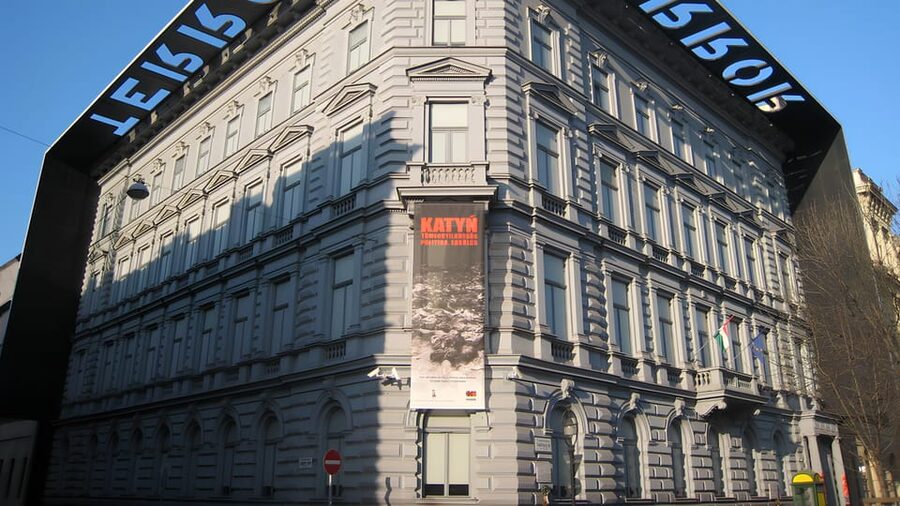
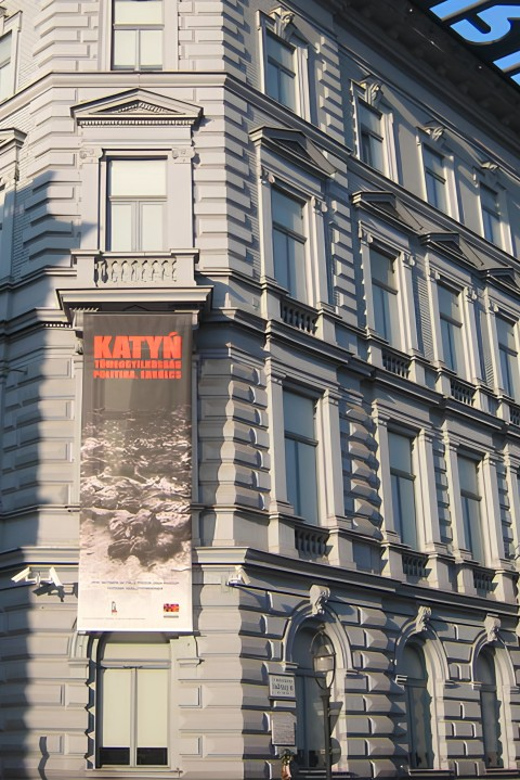
Then comes a heavier stop area: the House of Terror Museum. The tour frames it as somber and powerful, and that tone matters. When you visit places tied to difficult events, it’s helpful to have a guide giving meaning instead of leaving you to guess. Even if you don’t enter a museum during a walking tour, seeing the site with context can be more useful than just snapping a photo and moving on.
One thing to keep in mind: you’re walking through multiple landmark zones in a short time. If you’re easily overwhelmed by emotional subject matter, take breaks where you can. Stand back, let the information land, and remember you can always choose how much time you spend in each spot.
St. Stephen’s Basilica and Parliament: church and government in the same breath
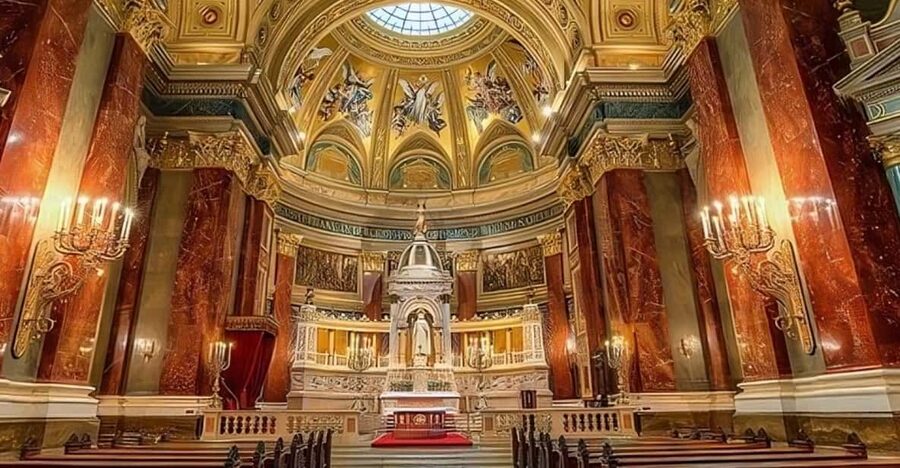
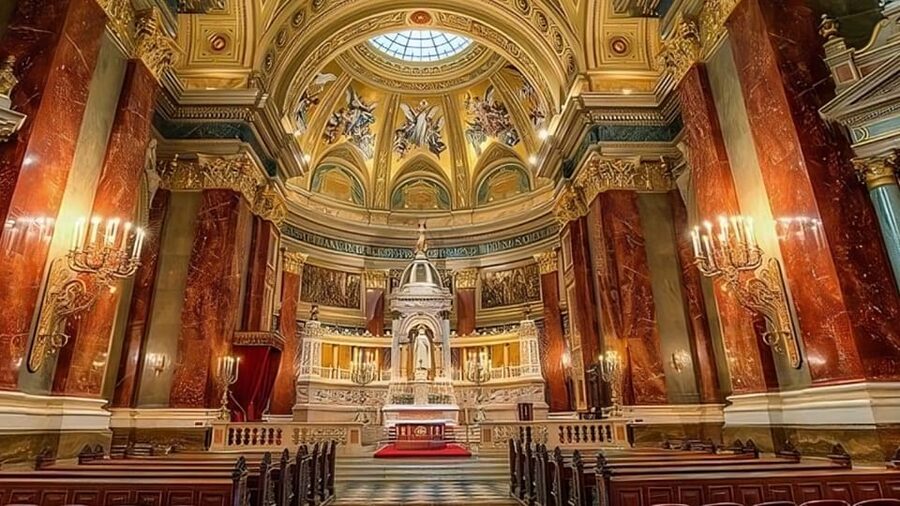
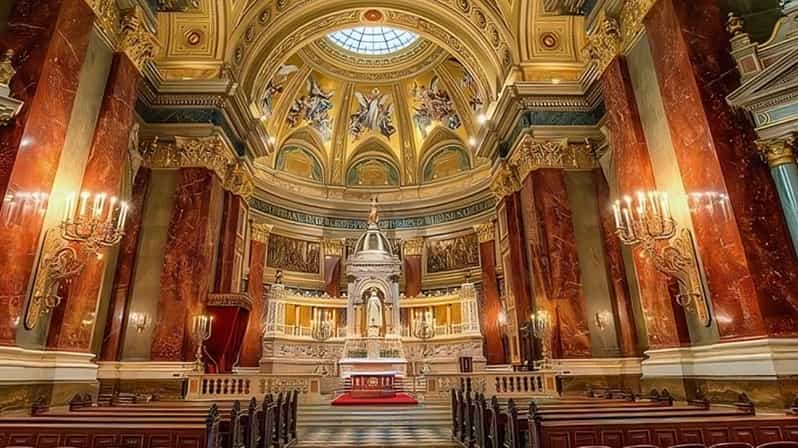
As the route continues, you’ll see St. Stephen’s Basilica, one of Budapest’s most recognizable religious landmarks. It’s the kind of stop where you can admire the scale and form quickly, then appreciate it more as you learn what you’re looking at. A guided walk helps because you’re not just staring at a big church, you’re connecting it to the city’s identity.
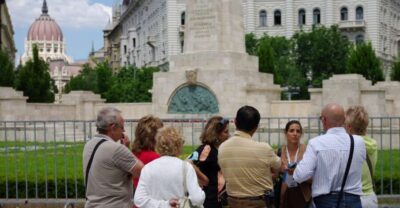
Next is the Hungarian Parliament Building. The tour positions it as imposing, and it is. This is another location where photos work best when you understand the surroundings and sightlines. If you’ve ever wondered why some cities place government buildings where they do, this stop gives you a visual answer.
Practical tip for the Parliament area: keep an eye on where the best viewpoints are in relation to the street layout. In a walking tour, your best shot often depends on where you stop for conversation. So don’t rush ahead when the guide is explaining, listen for the cues about where to stand.
Fishermen’s Bastion and Matthias Church: your panorama plus a classic backdrop
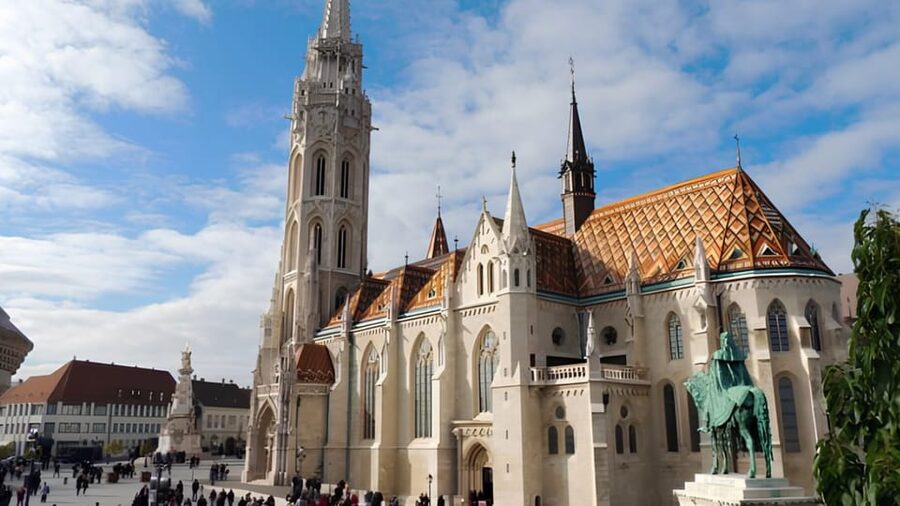
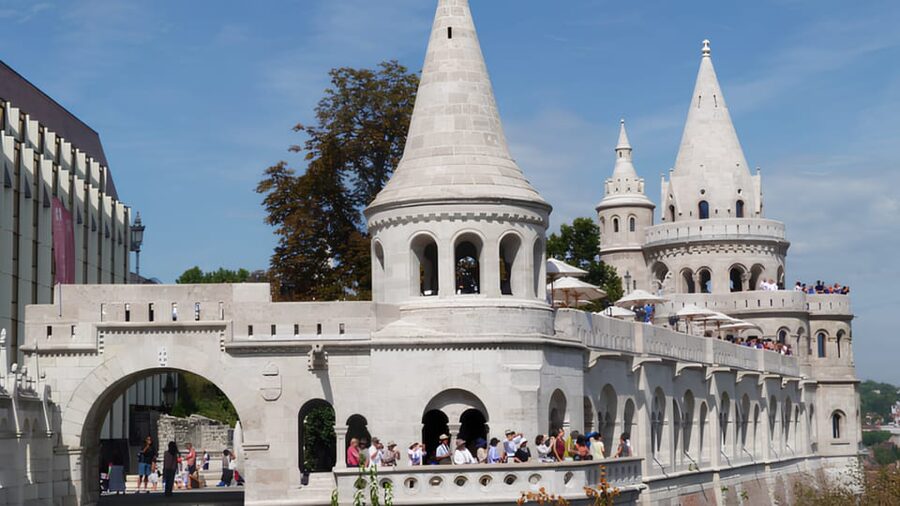
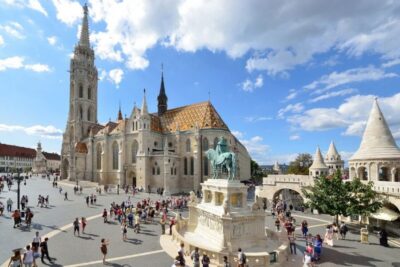
One of the most photogenic sections is the Fishermen’s Bastion area, with the stunning backdrop of Matthias Church. The tour treats this as iconic, and it makes sense. This is where the city’s hillier side shows off, and it gives you that postcard feeling without needing you to hunt across town.
Here’s why it works on a walking tour. You’re not only seeing famous places, you’re seeing them in sequence, after you’ve already absorbed something about Buda’s contours. That earlier context makes the viewpoints feel earned rather than random.
If you’re traveling in a group, Fishermen’s Bastion is a place where you can let people take their photos while still staying together. Even if you move a little slower, the guide can often keep everyone oriented by pointing out key angles and explaining what sits where.
Gellért Hill Citadel finale: how to enjoy the last climb
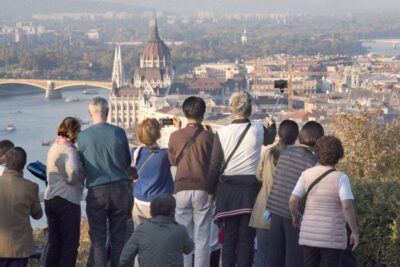
The tour ends at the Citadel, on top of Gellért Hill, with panoramic views over Budapest. This is the finale that ties the whole walk together. You spend earlier parts learning the city’s landmarks and cultural pieces, then the final viewpoint gives you the big picture, the Danube cutting through town and the hills stepping up toward the skyline.
Plan to savor this moment instead of treating it like a last photo stop. Yes, you’ll want pictures, but also use the viewpoint to locate what you saw earlier. It’s one of the fastest ways to make sense of Budapest as a place you could navigate on your own later.
One consideration: since the Citadel is on a hill, the final stretch may feel more intense if you’re not used to walking uphill. Bring water, dress for sun or rain, and keep your pace steady. If you’ve got any mobility concerns, the overall route is listed as wheelchair accessible, which can help you talk to the guide about what pace works best for your group.
Price and value: is $294 per group worth it?
The price is $294 per group, up to 10 participants, with a 4-hour duration. That’s not a per-person price. The value depends on your group size.
If you book near the maximum of 10 people, the cost works out to about $29 per person before any separate attraction costs. If fewer people join, your per-person cost rises. In other words, this tour is a strong deal when you can share it, or when you’re traveling with friends and want a guided highlight route without paying a premium for a private custom walk.
What you’re getting that justifies the fee is the guided stitching together of multiple top-tier sights, with a multilingual guide, small-group pacing, and a route that moves logically through major landmark zones. Attraction tickets are not included, so if you plan to enter multiple paid sites, you should budget for those separately.
Also note: the tour is listed as including skip the ticket line. Since tickets are not included, think of it as help with efficiency if you choose to purchase entry separately during the tour.
Who this walking tour suits best
This tour is ideal for you if you want a structured, fast overview of Budapest’s biggest landmarks, without spending a full day. It’s also a good fit if you like history and architecture but do not want to get bogged down in overly long museum hours. The route mixes outdoor sightseeing with museum-linked context, like the State Opera House and the House of Terror area, while still keeping moving.
It’s especially good for small groups, since the max is 10, and for mixed-language groups, since the guide works in English, Spanish, Hungarian, and Italian. If you’re traveling solo, it can still work well because the guide can keep you oriented while others ask questions and you benefit from the conversation.
If you dislike hills or do not do well with long walking stretches, keep expectations realistic. The ending at Citadel and Gellért Hill is the main physical challenge.
Should you book the Budapest City Highlights Walking Tour?
Yes, if your goal is a guided, high-impact introduction to Budapest within half a day. You’ll get the kind of landmark sequence that helps the city make sense fast, especially the link between the river, Pest, and Buda.
Book it if you value a small-group experience, want a multilingual guide named Erika Kathy, and prefer walking with context instead of wandering alone. Just make sure your shoes are solid and your schedule can handle hills at the end. If that sounds like you, this is a good way to start a Budapest trip with confidence.
FAQ
Where do we meet your guide?
You meet at Budapest, Deák Ferenc u. 23, 1052, Starbucks.
How long is the walking tour?
The tour runs for 4 hours.
What is the group size?
It is a small group limited to 10 participants.
What languages is the live guide available in?
The live tour guide is available in English, Spanish, Hungarian, and Italian.
Is the tour wheelchair accessible?
Yes, the tour is listed as wheelchair accessible.
What does the $294 price cover?
The price is $294 per group, up to 10 participants, for a guided walking tour.
What is included in the tour price?
The tour includes a multilingual guide and the walking tour itself.
Are attraction tickets included, and is there a ticket-line benefit?
Attraction tickets are not included. The tour lists skip the ticket line as an added benefit, but you would still need to plan for any tickets separately.
What are the cancellation rules and payment options?
You can cancel up to 24 hours in advance for a full refund. You can also reserve now and pay later, so you pay nothing today.
The newest crossings added in Budapest





City Tours, compared.

Budapest City Landmarks Walking Tour in 2 Hours
Read our review →

Hungarian Chimney Cake Workshop in the City Center
Read our review →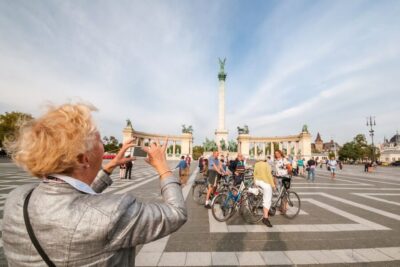
Browse the lists this tour appears in