
Reviewed · CITY TOURS
Budapest: City Center Tour & Folk Music Performance
Budapest moves fast, but this tour slows it down. You get a focused, 3-hour walking circuit through the city center plus a Hungarian folk music finale that turns sightseeing into something you can feel. I like that the guide ties the buildings to stories, so you see why these places matter, not just what they look like.
Two things I especially enjoy here are the way you get big-name landmarks covered efficiently, and the closing moment in Károlyi kert where the guide sings folk songs and demonstrates dance steps. One consideration is that it is an active walk on uneven sidewalks, so comfortable shoes and good weather clothes matter.
In This Review
- Key Points at a Glance
- Kálvin tér Start: Where the Tour Sets Its Pace
- Március 15. Square and the Hungarian National Museum Focus
- UNESCO Pest Danube Promenade Views, Coffee Houses, and Belle Epoque Facades
- St. Stephen’s Basilica: A Big Church With a National Relic
- Dohány Street Synagogue on Small Boulevard: Legends and World-Scale Architecture
- Károlyi kert Finale: Folk Songs and Dance Steps You Can Watch Closely
- Price, Timing, and Who This 3-Hour Walk Serves Best
- Should You Book the Budapest City Center Tour and Folk Music?
- FAQ
- How long is the Budapest City Center Tour & Folk Music Performance?
- Where is the meeting point?
- Is the folk music performance included?
- Are entry tickets to monuments included?
- Is the tour available in English and is it wheelchair accessible?
- What should I bring for a comfortable tour?
Key Points at a Glance
- UNESCO Pest Danube Promenade viewpoints with wide Buda-side panoramas
- Story-led sightseeing that connects monuments to Hungarian people, kings, and saints
- St. Stephen’s Basilica and Dohány Street Synagogue as major architectural stops (exterior viewing)
- Historic city-center stops from grand churches to elegant coffee house vibes
- Károlyi kert garden finale with live Hungarian folk music and dance steps
Kálvin tér Start: Where the Tour Sets Its Pace
You meet at Kálvin tér, right in the middle of the square, in front of the ALFA Insurance Company building. The guide holds a board with the Maggino logo, a dark blue stork with an orange musical note in its beak, plus the word MAGGINO underneath. It is a handy landmark, and it makes it easier to join up without guesswork.
This tour is designed for a 3-hour window, so you should expect walking between stops and short guided moments at each point. The advantage is that you do not waste time figuring out what to look at. The guide’s job is to help you see the patterns in the city center, the way the architecture changes by era, and the way major religious sites and civic buildings shape the street life around them.
I like the tone here. It is not a lecture marathon. It is more like guided street theater, with history and legend used to sharpen your attention. You will learn how the city’s look in the present day connects to “great Hungarians” and to stories tied to kings and saints. That matters because Budapest can feel like a postcard if you just rush through. This slows you down at the exact places where details help you understand the whole picture.
Március 15. Square and the Hungarian National Museum Focus
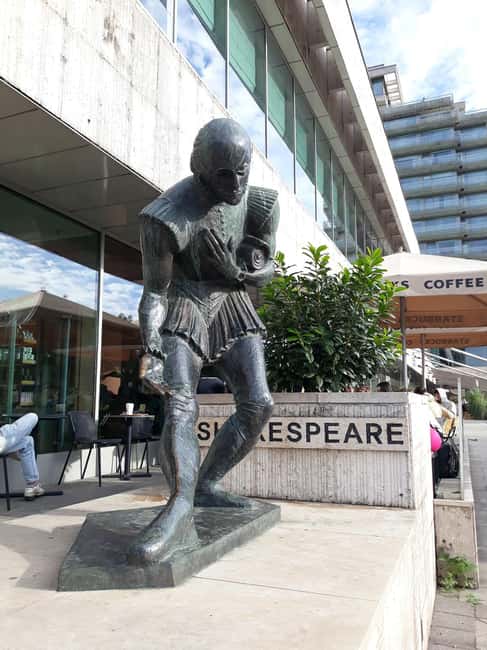
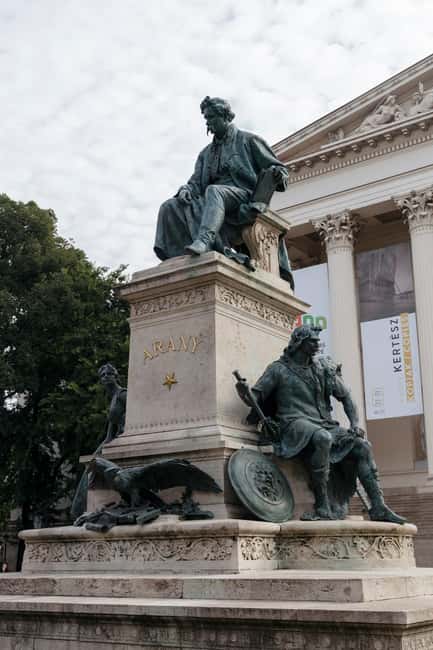
Early on, the walk brings you to Március 15. Square and then toward the Hungarian National Museum area, starting from Small Boulevard. The guide begins with the Hungarian National Museum and the statue of the Hungarian Shakespeare standing in front. That opening is a smart move, because it anchors the tour in a cultural identity story before you move into churches, synagogues, and river views.
Even without going inside, the exterior stop works. Museums on grand boulevards are never just about collections. They also signal what a country decides to remember and how it wants visitors to understand it. Here, the guide explains why this museum is important to Hungarians, and that context changes the way you see the stone and the symbolism. Instead of thinking, okay, another impressive building, you start noticing the “why” in the design.
Then you continue along the city fabric, heading toward the UNESCO Pest Danube Promenade viewpoint route. One practical tip: if you are the type who likes photos, you may want to keep your phone ready early. Promenade views come fast and the best angles are often the ones you only get for a minute before the group moves on.
This section also gives you a feel for Budapest’s layers around the turn of the 19th and 20th centuries, when facades, street corners, and public squares took on that distinctive confidence. You get a quick taste of the atmosphere without needing a full museum day.
Still to cross in Budapest
- Budapest: City Highlights Sightseeing Cruise
★ 4.6 · 43,981 reviews - Budapest: Unlimited Prosecco, Beer and Aperol Spritz Cruise
★ 4.8 · 37,304 reviews - Budapest: Széchenyi Spa Day Ticket with Optional Upgrades
★ 4.3 · 23,911 reviews
UNESCO Pest Danube Promenade Views, Coffee Houses, and Belle Epoque Facades
The tour highlights the UNESCO World Heritage Site Pest Danube Promenade, where you get panoramic views across the river toward Buda. This is the part I think most people will remember, because it is both scenic and story-friendly. You are not just looking at rooftops. You get guided help identifying key landmarks on the Buda side.
From here, you should expect views of the Castle District, including the Royal Buda Palace, Matthias Church, and Fisherman’s Bastion. That trio matters. It is the skyline that defines many Budapest photos, but on this tour you get to connect the skyline to what you are about to see and to the historic role of the area.
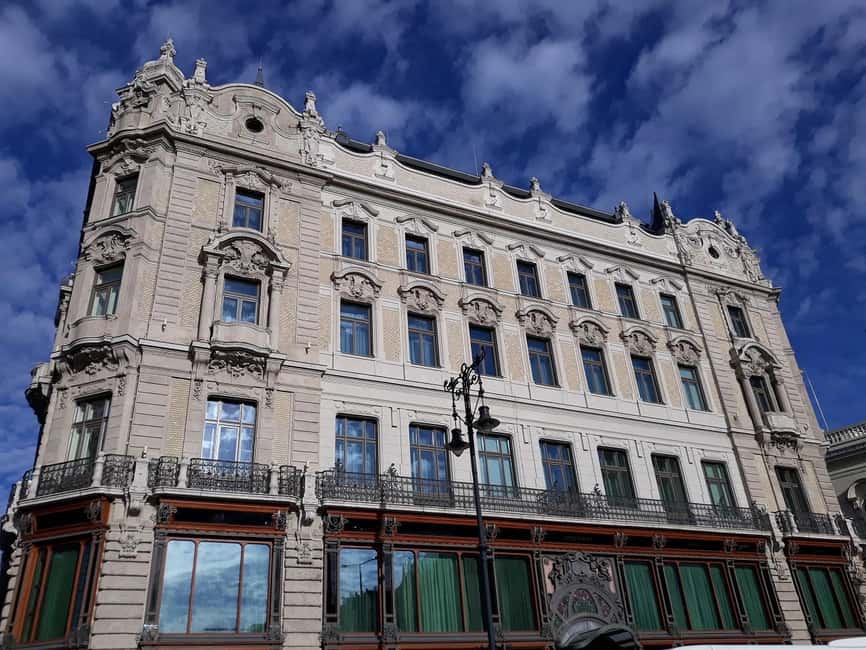
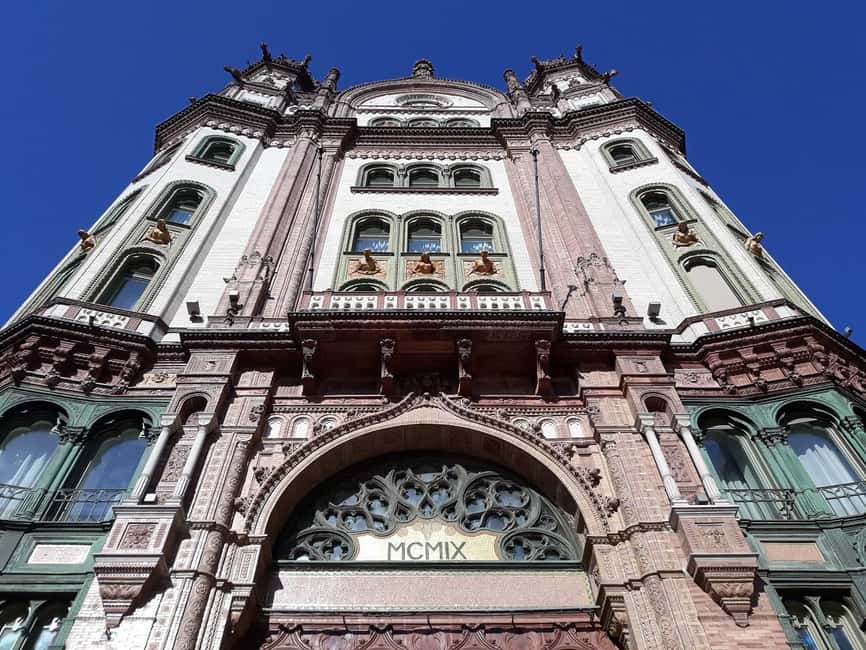
While you move through the center afterward, the guide keeps pointing out architectural style shifts, including Art Nouveau palaces and churches. You also pass an elegant, historic coffee house. That might sound like a small detail, but it is not. Coffee houses are a Budapest personality trait. They are where social life and intellectual life overlap, and even seeing one from the outside helps you understand why the city is so comfortable with public conversation.
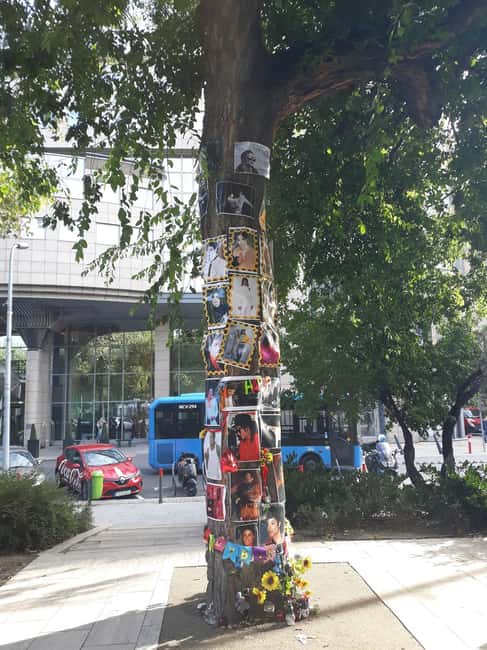
There are also lighter, modern city touches in the route: you pass by a fashionable confectioner tied to the Christmas market scene, you see a tree in memoriam of the King of Pop, and you walk near a square where Budapest youth gather often. You even pass by the Ferris Wheel of Budapest. These stops prevent the tour from becoming only about monuments. You get a sense of how the same streets that hold old stories also serve today’s rhythms.
The main drawback to keep in mind is timing. This is a tight schedule, so you may not linger for a full photo session at every facade. If you care about golden-hour light, check the time of day you book and plan accordingly.
St. Stephen’s Basilica: A Big Church With a National Relic
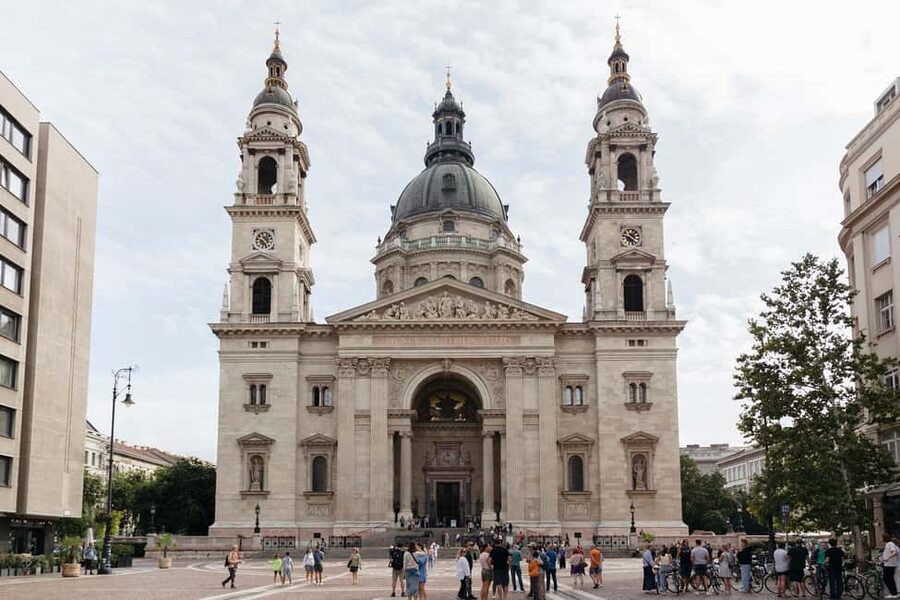
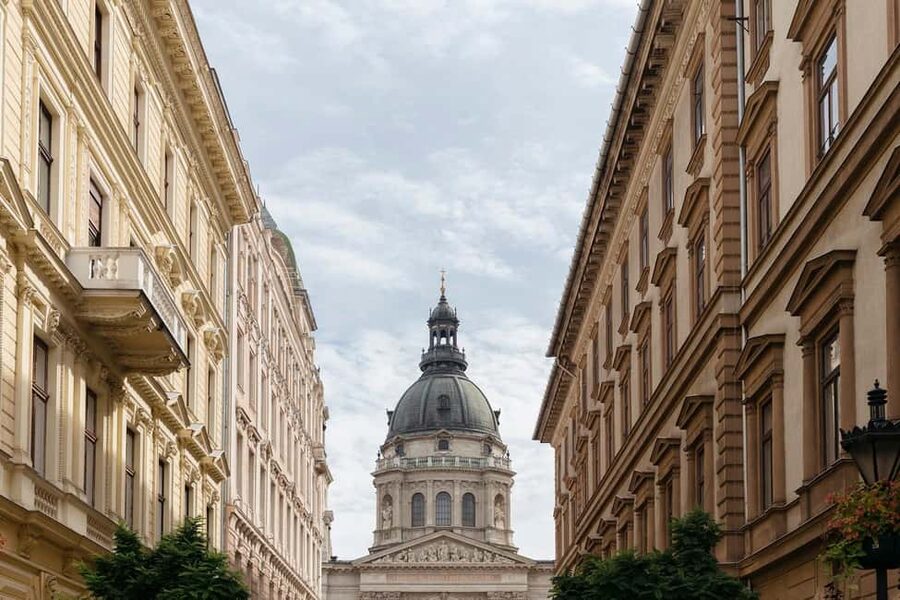
Next comes St. Stephen’s Basilica, Hungary’s third largest Catholic church. You get a sightseeing segment focused on the building’s exterior and architectural description, plus context around one of Hungary’s invaluable national relics. Even without entering, this stop has power. St. Stephen’s is the type of monument that makes the city feel grand the moment you see it.
The guide talks through the story of the basilica’s construction and gives you a full architectural read. That is a big part of why this works as a walking tour. You do not just stand there and look up. You learn what features to notice and why the building took shape the way it did.
It is also a useful pause in the itinerary. After river panoramas and street facades, you get a single focal point, and you can compare it with other religious architecture you will see later. Expect the group to slow down here so you can take in the scale and the details that separate this church from smaller historic ones.
Practical note: the tour includes exterior visits rather than museum-style entry tickets. So if your dream is inside-the-church time, you may want to plan a separate visit. Still, the guided description is valuable if you want meaning and not just photos.
Once you’re finished around the basilica, you move onward toward another major landmark connected to a different community and a different architectural tradition, which is exactly what makes this tour feel balanced across Budapest’s identity.
Dohány Street Synagogue on Small Boulevard: Legends and World-Scale Architecture
The tour then steers you toward the Dohány Street Synagogue, described here as the world’s second largest synagogue. You get a sightseeing segment and a guided walk that includes other beautiful historical buildings on Small Boulevard.
This stop is one of the best “architecture lesson” moments in the tour. A building this large does not just impress. It forces you to notice how the city’s religious and cultural history is written into streets and skylines. Even as an exterior visit, the scale and design cues help you understand why the synagogue is such a landmark.
The guide adds story layers too, including legends related to great Hungarian kings and saints, and tales about former famous residents of the city. That storytelling angle matters because it prevents the route from becoming a simple highlight reel. Instead, you get a sense of Budapest as a place where myth, identity, and architecture meet.
You also walk through an area connected to one of Budapest’s signature “grand boulevard” vibes. The tour mentions touching the starting point of the Champs-Élysées of Budapest. That phrase is a clue that the city center has a kind of staged elegance, a place where people expect to stroll, see and be seen, and connect everyday life to big public history.
One more practical consideration: synagogue exteriors can be visually intense, and the group moves fairly quickly. If you want the perfect exterior angles, try to stay close to the guide at the main viewing moments, then step out only after the group has positioned.
More of both banks in one sweep:
- Budapest: City Sightseeing Hop-On Hop-Off Bus Tour & Extras★ 4.1 · 4,337 reviews
- Budapest City Landmarks Walking Tour in 2 Hours★ 5.0 · 2,048 reviews
- Budapest: Nighttime or Daytime City Sightseeing Cruise★ 4.1 · 2,046 reviews
Károlyi kert Finale: Folk Songs and Dance Steps You Can Watch Closely
The tour ends in Károlyi kert, the garden finish where the cultural piece becomes the main event. This is where the Hungarian folk music performance happens, made by your tour guide. You also get to hear beautiful Hungarian folk songs and learn traditional folk dance steps, with the guide showing you how the dance moves work.
This ending is a smart match for everything earlier in the day. Morning and midday are architecture and stories. The final segment is participatory, even if you only watch. It helps you remember the city not as a list of monuments, but as a living culture.
Garden settings also change the feel of a walking tour. After hours of streets and buildings, you get a calmer space, and the focus returns to sound and movement. It is a good moment to relax and compare what you just learned to what you are now experiencing. Folk music and dance are not “separate attractions.” They are another form of storytelling, and here they tie back to the guide’s theme of Hungarian identity.
If you are considering whether to book: this finale is the value booster. At $76 per person, you are not just buying a walking route. You are buying a guide, plus live performance time that turns the last 30 to 60 minutes into something that feels distinctly Hungarian.
Price, Timing, and Who This 3-Hour Walk Serves Best
At $76 per person for 3 hours, the price makes sense if you want guided interpretation plus a live cultural performance. What is included is key: a professional licensed Hungarian guide, exterior visits, and that folk music performance delivered by the guide. You also get flexibility, with tours adjusted to guests’ needs and private or small groups available.
What you should watch for is what is not included. There are no entry tickets for the visited monuments. That keeps the tour moving and keeps costs controlled, but it also means you are not getting full inside access to St. Stephen’s Basilica or the Dohány Street Synagogue. If you want interior time, plan those separately.
This is best for you if:
- You like walking tours where the guide explains what you are looking at
- You want the main Budapest city center highlights without a full day commitment
- You enjoy cultural extras like live music and dance
- You travel with limited time but want value-packed stops
It may be less ideal if you need long quiet stops for photos, or if you want to go inside every major monument you see. The schedule is built for coverage and flow, not for lingering.
Also plan for comfort. Wear comfortable shoes, bring weather-appropriate clothing, and bring water. Budapest sidewalks add up fast, even on a 3-hour route. And yes, check the forecast. The tour is wheelchair accessible, but walking outdoors still depends on conditions.
Should You Book the Budapest City Center Tour and Folk Music?
I think you should book this tour if you want a compact Budapest experience that feels more like understanding than collecting photos. The combination of central landmarks, UNESCO river views, and then a garden finale with Hungarian folk songs and dance steps is a good use of time.
I would skip or complement it with an extra plan if you specifically want monument interiors, since entry tickets are not included and the focus is exterior viewing. If you do not mind that, you get a guide-led story chain that connects Hungarian cultural identity to the city’s most recognizable architecture, plus a live performance that gives you something to carry home beyond images.
FAQ
How long is the Budapest City Center Tour & Folk Music Performance?
The tour lasts 3 hours.
Where is the meeting point?
You meet in the middle of Kálvin tér (Kálvin Square), in front of the ALFA Insurance Company building. The guide will hold a board with the Maggino logo.
Is the folk music performance included?
Yes. The tour includes a Hungarian folk music performance made by your tour guide, and the tour ends with folk songs and traditional dance steps in Károlyi kert.
Are entry tickets to monuments included?
No. Entry tickets to the visited monuments are not included.
Is the tour available in English and is it wheelchair accessible?
Yes. The live tour guide is in English, and the tour is wheelchair accessible.
What should I bring for a comfortable tour?
Bring comfortable shoes and weather-appropriate clothing. Water is recommended.
The newest crossings added in Budapest






City Tours, compared.

Budapest City Landmarks Walking Tour in 2 Hours
Read our review →

Hungarian Chimney Cake Workshop in the City Center
Read our review →
Browse the lists this tour appears in