
Reviewed · CASTLE DISTRICT WALKS & TICKETS
Buda Castle Tour: History and Architecture
Castle Hill tells a story in stones. This Buda Castle walk is a guided, layered history tour focused on what you can actually see: palaces, churches, courtyards, street corners, and the architectural scars from war and rebuilding.
Máté drives it with clear explanations, plus visual backups on his iPad so you can picture how spaces worked in their medieval prime. Two things I really like are the small group size and the way the route connects palace politics to daily street life.
One possible drawback: it is a 3.5 hour walking route on uneven ground, and it is not suitable for limited mobility.
In This Review
- Key highlights to watch for
- A walking tour that makes Castle Hill make sense
- Meeting Prince Eugene and starting in the right place
- Royal Palace: the real show is in the layers
- Quick heads-up
- Sigismund Church remains: a tiny stop with a big meaning
- Tárnok Street: medieval commerce under your feet
- Úri Street: noble power, gateways, and thick walls
- Church of Saint Mary Magdalene: the tower that survived
- Országház Street: Italian merchants and a rare sgraffito detail
- The neo-gothic finance building and a reconstruction debate
- Matthias Church area: the landmark you know, explained correctly
- Fortuna Street: printing history on a quiet street
- Becsi Kapu Square: medieval marketplace energy, minus the crowds
- National Archives building: medieval look, modern purpose
- Siege of Buda outer walls: where history becomes geometry
- Medieval Jewish Chapel area: a quiet, high-impact stop
- Reused ruins on Táncsics Mihály utca
- Dominican monastery ruins and the Hilton connection
- Fisherman’s Bastion: iconic views, but not the top terrace
- What the guide style adds (and why it matters)
- How much value you get for $43.25
- Practical tips so you enjoy the walk
- Should you book this Buda Castle history and architecture tour?
- FAQ
- What is the duration of the Buda Castle Tour?
- How much does the tour cost?
- Is the tour offered in English?
- What entrance fees are included?
- Is the Jewish Praying House always open?
- Is the Royal Palace interior included?
- Is the interior of Matthias Church included?
- Will we go to the upper panoramic terrace at Fisherman’s Bastion?
- Where do we meet and where does the tour end?
- Is the tour suitable for children and mobility limits?
- FAQ
- Can I cancel for a full refund?
- What if the tour is canceled due to weather?
Key highlights to watch for
- Royal Palace layers: Gothic, Baroque, and Neoclassical elements showing centuries of power shifts
- Sigismund Church remains: a short courtyard stop where early palace history is still visible underfoot
- Medieval streets with surviving houses: Tárnok Street and Úri Street keep commerce and noble life in view
- Jewish quarter access: you get inside the excavated medieval Jewish prayer house (closed Saturday and Monday)
- Siege of Buda storytelling: the outer walls and 1686 breach points tie architecture to real events
- Architectural “argument” in stone: the Dominican ruins beside the modern Hilton creates a Heritage vs Progress debate you will feel
A walking tour that makes Castle Hill make sense
The Buda Castle District can feel like a collection of big landmarks, but this tour turns it into a connected story. You go from the Royal Palace complex, down through the medieval merchant and noble quarters, then back out to the edges where wars shaped the city.
The group stays small, up to 12 people, which means you actually get time for questions. In my view, that is the difference between reading plaques and understanding why buildings look the way they do.
Meeting Prince Eugene and starting in the right place
You meet at the Statue of Prince Eugene of Savoy in Budapest, and the tour finishes by Matthias Church at Szentháromság Square. That ending is useful because it leaves you close to food, photo spots, and the option to visit the church interior on your own schedule.
The tour uses a mobile ticket, so you do not need to hunt for printed passes. I also liked that the guide provides a guest pass with a lanyard during the walk, then collects it at the end, which keeps entry points organized.
More of Castle Hill, cobble by cobble:
- Budapest: Buda Castle Cave Tour
★ 4.7 · 5,677 reviews - Budapest: Buda Castle District Vampires and Myths Night Tour
★ 4.6 · 3,830 reviews - Budapest: Buda Castle Walk with Saint Stephen’s Hall
★ 4.5 · 3,012 reviews
Royal Palace: the real show is in the layers
Stop 1 is the Royal Palace, one of Budapest’s most iconic sights. The point here is not just admiring grand walls, it is learning how a medieval stronghold became a royal residence, then got damaged, rebuilt, and reshaped again and again.
You will hear how different eras left their fingerprints on the palace, from Gothic to Baroque to Neoclassical elements. The practical payoff is this: once you spot those shifts, the building stops being one big mass and starts looking like a timeline you can walk along.
Quick heads-up
Interior access to the Royal Palace is not included, so think of this part as exterior plus context. If you want to go inside, plan a separate visit after the tour ends.
Sigismund Church remains: a tiny stop with a big meaning
You get a quick look at the medieval Sigismund Church remains in the palace courtyards. This is a short stop, but it matters because you are seeing the foundation of a Gothic royal chapel built during King Sigismund’s early 15th century expansion.
It is one of those moments where you can feel the weight of earlier construction phases. Even a few minutes here helps you understand that the palace complex did not grow in one clean step, it grew in stages.
More centuries stacked along the banks:
- Budapest: Historic Cruise with Welcome Drink★ 4.7 · 6,512 reviews
- Budapest Historical Sightseeing – Free Walking Tour★ 5.0 · 1,302 reviews
- Buda Castle District Dark History, Legends and Vampire Night Tour★ 4.5 · 1,240 reviews
Tárnok Street: medieval commerce under your feet
Next up is Tárnok Street, the main commercial street of the old burgher town below the royal court. This lane is cobbled, and the experience is basically architecture with a job description, storage, trade, and daily life.
You visit three authentic buildings that have withstood fire, siege, and centuries of urban change. I like this segment because it gives you a reality check: the palace may be the headline, but the city’s economy is what kept life moving.
Úri Street: noble power, gateways, and thick walls
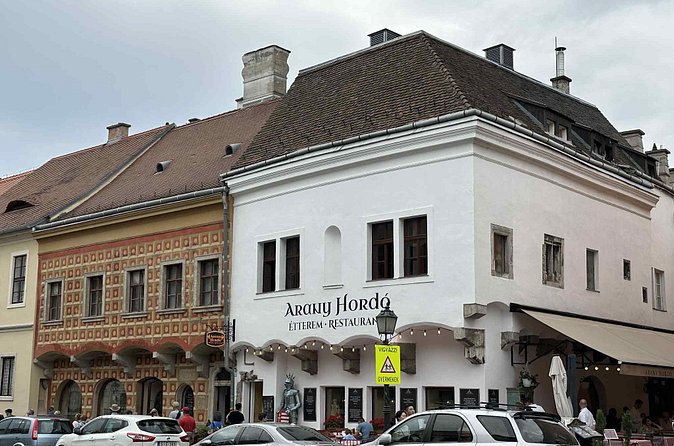
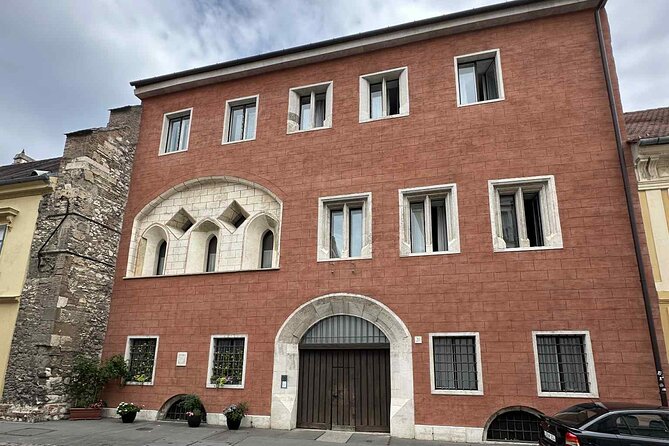
Then you walk to Úri Street, once the noble residential quarter. Here the focus shifts from merchants to aristocrats, with remnants of residential houses and aristocratic palaces built on original 14th to 15th century foundations.
Pay attention to the collection of ornate medieval gateways. Even from street level, those entrances explain how people arrived, where authority announced itself, and how craftsmen and travelers moved through elite space.
Church of Saint Mary Magdalene: the tower that survived
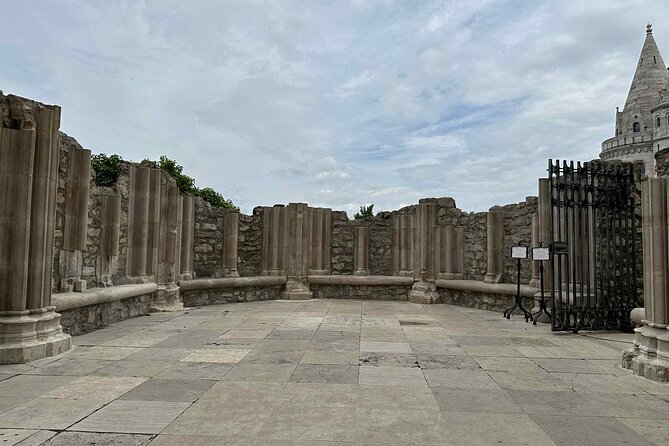
Stop 5 is the Church of Saint Mary Magdalene, built on the site of the earliest church on Castle Hill. You get the story of partial destruction during the 1686 siege, and then the more modern heartbreak of demolition in the 1950s under Hungary’s communist regime, with only the medieval tower surviving.
This is a powerful reminder that not all losses are ancient. I found it especially meaningful that the remaining tower is treated as an anchor for memory and preservation.
The interior of this church is not included, so you are mainly absorbing the site and its history.
Országház Street: Italian merchants and a rare sgraffito detail
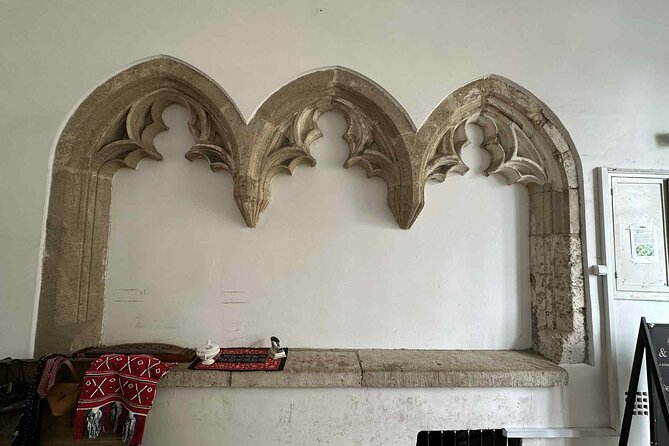
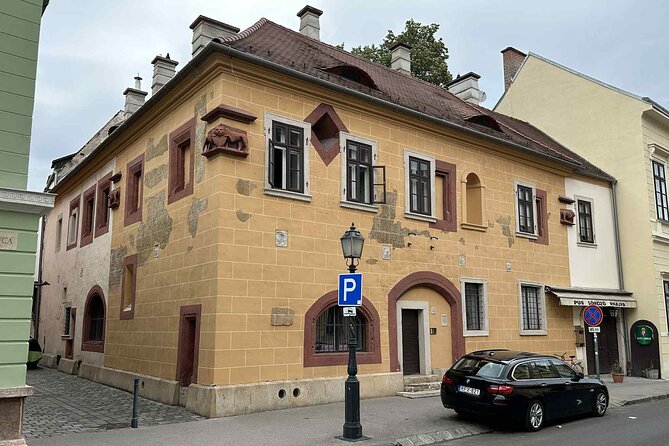
On Országház Street, you are following what medieval Budapest called the Italian Street. This is where Italian merchants played a key role in the city’s commercial and cultural life, reflected in the grand medieval houses lining the way.
One specific detail you will be pointed to is the only surviving 16th-century sgraffito decoration in the Castle District. It is a small visual thing, but it helps you notice how Renaissance art mixed into Gothic stone.
The neo-gothic finance building and a reconstruction debate
Stop 7 is the Volt Magyar Királyi Pénzügyminisztérium, a Neo-Gothic building now used by Hungary’s Ministry of Finance. It was built in the early 20th century, and the tour explains that it required demolishing several medieval structures to clear the site.
After World War II damage, the façade was simplified, and in the past five years the façade has been reconstructed. There is also controversy tied to that work, including debate about what was demolished to do it. In other words, you are not only learning about style, you are learning about tradeoffs.
Matthias Church area: the landmark you know, explained correctly
You will reach Matthias Church, often casually misnamed as Matthias Church, even though the official name is the Church of the Assumption of the Buda Castle. The tour’s emphasis is cultural history, including that it originally served Buda’s German-speaking community.
The interior of Matthias Church is not included, so expect to focus on the exterior and the surrounding context. If that interior is on your list, the tour ends in exactly the right place to add it.
Fortuna Street: printing history on a quiet street
On Fortuna Street, the tour shifts into late medieval innovation. Today it is known for restaurants, but you are guided back to the 1470s, when Andreas Hess, a German-born printer, produced Hungary’s first printed book here, the Chronica Hungarorum.
You also hear the story of the Red Hedgehog Inn, Vörös Sün, once a major meeting place for travelers and intellectuals. This is one of those transitions that makes a city feel alive, because it connects architecture to ideas you might never expect to find there.
Becsi Kapu Square: medieval marketplace energy, minus the crowds
At Becsi Kapu Square, you get a glimpse of a former marketplace and a main entrance to medieval Buda. The tour frames it as a social crossroads where Hungarian townsfolk and the local Jewish community interacted through trade, talk, and worship.
Even though the square is calmer now, it is still a useful anchor point. It helps you see the Castle District as a working city, not just a museum shelf.
National Archives building: medieval look, modern purpose
Next comes the National Archives of Hungary, built in the early 20th century in a Neo-Romanesque style. The guide explains the intention to echo the medieval character of the Castle District, making it feel older than it really is.
You are also reminded that the building’s real job is national memory, storing documents spanning Hungary’s written past. I like this stop because it links architecture to what survives, and why preservation matters.
Siege of Buda outer walls: where history becomes geometry
You walk along the outer castle walls at Arnavut Abdurrahman Abdi Paşa Emlékműve area, focusing on the dramatic Siege of Buda in 1686. You are shown where the walls were first breached by Christian allied forces, plus nearby context about the Ottoman Pasha of Buda falling in battle.
This is a story told through lines on stone. Once you have the locations in your head, the walls do not just look impressive, they look purposeful.
Medieval Jewish Chapel area: a quiet, high-impact stop
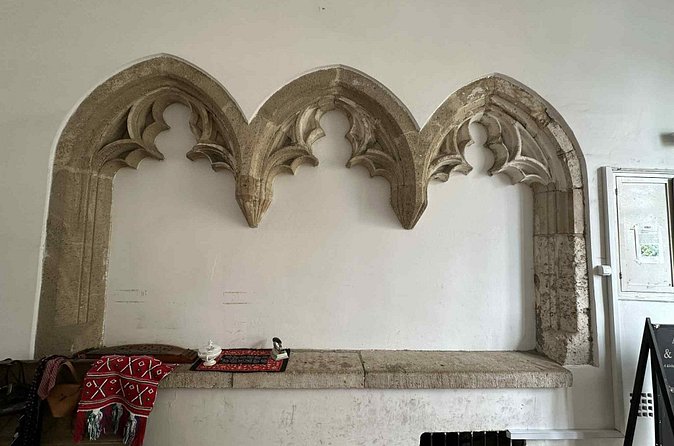
Stop 13 is the Mediaeval Jewish Chapel, inside the medieval Jewish quarter within the Castle walls. The tour pauses at the site of the former Gothic synagogue, destroyed in the past, and then moves to the excavated medieval Jewish prayer house.
This is the big included entrance on the walk. The prayer house is modest in size but meaningful in what it reveals about everyday religious life, resilience, and faith in a community that was later silenced.
Important timing note: the Jewish prayer house is closed on Saturday and Monday. If you are booking for those days, you may need to adjust expectations for this specific included component.
Reused ruins on Táncsics Mihály utca
On Táncsics Mihály utca, you see how old structures did not simply disappear. Medieval Gothic walls and cellars were incorporated into later Baroque and residential buildings during the 17th and 18th centuries.
I like this segment because it trains your eye to spot layering. You start noticing that medieval Buda did not end in a single catastrophe and restart from scratch, it rebuilt on top of what remained.
Dominican monastery ruins and the Hilton connection
Stop 15 is Dominikánus Udvar, with the remains of the Dominican monastery of Saint Nicholas. You hear about Friar Julianus and the 13th century journey tied to this order, then you get the long arc of destruction from fire, siege, and neglect.
Then comes the controversial modern chapter: the ruins were reinterpreted during construction of the Hilton Hotel in the 20th century. This creates a blend of medieval stonework and modern architecture that you can literally stand in front of and judge for yourself.
Fisherman’s Bastion: iconic views, but not the top terrace
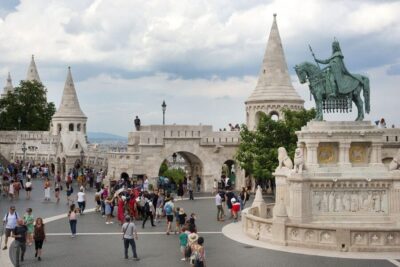
The final major landmark stop is Fisherman’s Bastion. You will see the equestrian statue of King Saint Stephen, Hungary’s first Christian king, as the central symbol of the birth of the Hungarian state.
You will also get a key limitation upfront: you admire the monument and structure from the main level, but you do not enter the upper panoramic terrace because access requires a separate ticket.
If you want the terrace views, you can buy tickets on site after the tour. Personally, I think it is smart to do that if the weather is clear, because that part is all about the perspective.
What the guide style adds (and why it matters)
This tour is led by a licensed English-speaking guide, and the vibe is friendly, funny, and focused. One pattern from past experiences with Máté is how he connects architecture to what it used to do, and how he uses images on his iPad to show likely past appearances.
That visual support helps when you are standing in a courtyard that feels empty. Instead of guessing, you get a guided mental reconstruction.
How much value you get for $43.25
At $43.25 per person for about 3 hours 30 minutes, the price feels fair because you are paying for interpretation plus an included site. The big value lever is the included entrance fee to the excavated Jewish prayer house.
You are also getting a route that covers far more than one landmark. You are not just seeing palace walls, you are walking through medieval streets, surviving foundations, siege context, and even reconstruction controversies. That kind of context is hard to piece together on your own in the time most people have.
Practical tips so you enjoy the walk
This is a moderate physical effort tour. The terrain is mainly on Castle District streets and courtyards, and it is not suitable for limited mobility.
Wear shoes you trust, especially in wet weather. Plan for decent cold or wind if you are touring in shoulder or winter months, because the hill can feel exposed.
Also, this tour is booked an average of 44 days in advance, which is a hint to secure your date early for best availability.
Should you book this Buda Castle history and architecture tour?
Book it if you want a structured, walking-based explanation of how Buda Castle District evolved, from royal power to merchant life to Jewish quarter heritage and siege history. This is a great fit when you like architecture that has scars and layers, and when you want a guide who can tie details together without drowning you in jargon.
Skip it or plan extra time on your own if you specifically want to go inside the Royal Palace, the interior of Matthias Church, or the upper terrace at Fisherman’s Bastion during this same tour. Those interiors and that terrace are not included, so you will need to add separate visits.
FAQ
What is the duration of the Buda Castle Tour?
The tour lasts about 3 hours 30 minutes.
How much does the tour cost?
The price is $43.25 per person.
Is the tour offered in English?
Yes. It is an English-language tour with an officially licensed guide.
What entrance fees are included?
Entrance to the Jewish Praying House is included. The guest pass with a lanyard is also provided during the tour.
Is the Jewish Praying House always open?
No. The Jewish Praying House is closed on Saturday and Monday.
Is the Royal Palace interior included?
No. Admission to the interior of the Royal Palace is not included.
Is the interior of Matthias Church included?
No. Admission to the interior of Matthias Church is not included.
Will we go to the upper panoramic terrace at Fisherman’s Bastion?
No. You will admire Fisherman’s Bastion from the main level, but the upper terrace is not included. You can purchase tickets on site if you want to enter.
Where do we meet and where does the tour end?
You start at the Statue of Prince Eugene of Savoy in Budapest and end at Szentháromság Square by Matthias Church.
Is the tour suitable for children and mobility limits?
Children under 10 are not permitted. It is also not suitable for guests with limited mobility. The tour requires moderate physical fitness.
FAQ
Can I cancel for a full refund?
Yes. You can cancel up to 24 hours in advance for a full refund. If you cancel less than 24 hours before the start time, it is not refunded.
What if the tour is canceled due to weather?
This tour requires good weather. If it is canceled because of poor weather, you will be offered a different date or a full refund.
The newest crossings added in Budapest






Castle District Walks & Tickets, compared.
Buda Castle District Vampires and Myths Night Tour
Read our review →
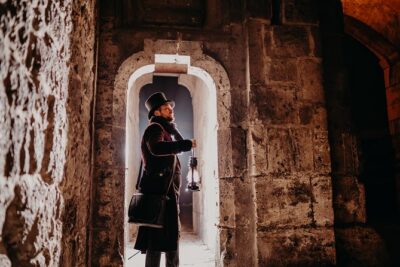
Buda Castle District Dark History, Legends and Vampire Night Tour
Read our review →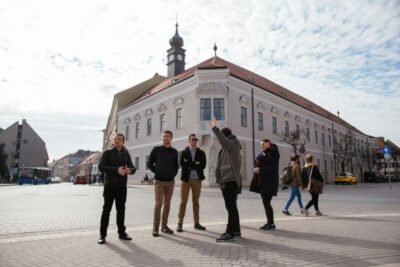
Buda Castle District Walking Tour with a Historian
Read our review →
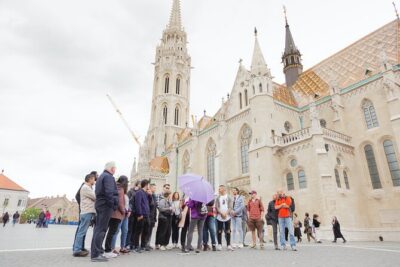
Walking tour in the Buda Castle incl. Fisherman’s Bastion
Read our review →Browse the lists this tour appears in