
Reviewed · CASTLE DISTRICT WALKS & TICKETS
Buda Castle Private Walking Tour: A Kingdom of Many Nations
Budapest’s Castle Hill is never just scenery. You get a guided walk through a place that has served different kingdoms, empires, and rulers, all on the same tight streets and courtyards. The best part is the historian-style commentary, which helps the buildings click into place instead of feeling like random stone.
I especially love how this tour is built for walking and seeing, not rushing. You start with the Buda Castle area, then move through the nearby landmarks while your guide connects the dots between royal power, Ottoman rule, and the later rebuilding of the area into what you see today.
One thing to consider: some major stops are ticketed on your own, including Matthias Church and Fisherman’s Bastion. So if you want a purely included-price experience, plan for those extra entries before you go.
In This Review
- Key highlights worth knowing before you go
- Castle Hill feels like a map of power
- Entering Buda Castle: more than one palace in one place
- A practical note on what you actually see at the start
- The changing function of the palace, in plain language
- Sándor Palace: a short stop with a real “present day” feel
- Matthias Church: the roof you came for, plus the why behind it
- Fisherman’s Bastion: photo views, explained with a purpose
- Vienna Gate: finishing with sightlines toward Óbuda and Aquincum
- Price, group size, and whether this feels like value
- A fair expectation check about tickets and what counts as included
- Choosing the right time: morning vs afternoon
- Who this private walking tour fits best
- Should you book this Buda Castle Private Walking Tour?
- FAQ
- How long is the Buda Castle private walking tour?
- How many people are in a group?
- Where do we meet for the tour?
- Is pickup available?
- Are tickets included for Matthias Church and Fisherman’s Bastion?
- Is free cancellation available?
Key highlights worth knowing before you go
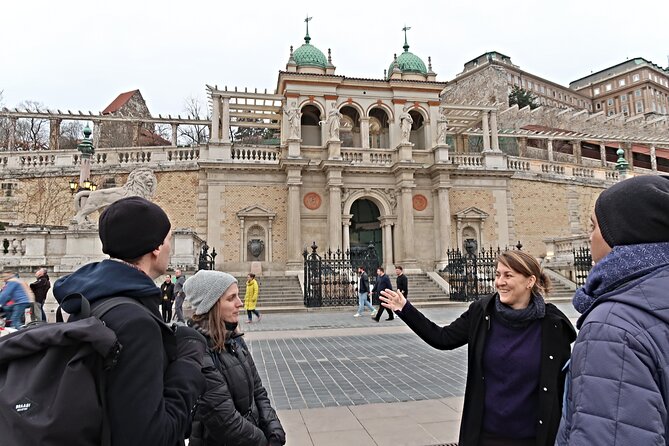
- Small private group (up to 10, with a max of 8 per booking), so you can ask questions along the way
- Historian guide commentary that explains why the hill matters, not just what it looks like
- Morning or afternoon start, so you can match the light to your photo plans
- Matthias Church and Fisherman’s Bastion need tickets, while other viewpoints in the area are free
- Flexible views at the end, finishing at Vienna Gate for a wide look toward Óbuda and Aquincum
Castle Hill feels like a map of power
Castle Hill is the oldest part of Budapest, and it shows. The streets are narrow and cobbled, and the facades can look baroque from one angle and Gothic from another, even when you are standing in the same spot.
What makes this walk genuinely useful is that you do not just look at buildings. You learn how the same ground changed hands again and again, which is why the architecture can feel like layers piled on layers. Once you understand the eras, you start noticing details you would probably miss on your own.
This is where the historian guide earns their keep. They point out the quiet clues, like how the palace complex shifted functions over time, and why the area’s look was heavily shaped in the 20th century after major destruction.
Entering Buda Castle: more than one palace in one place

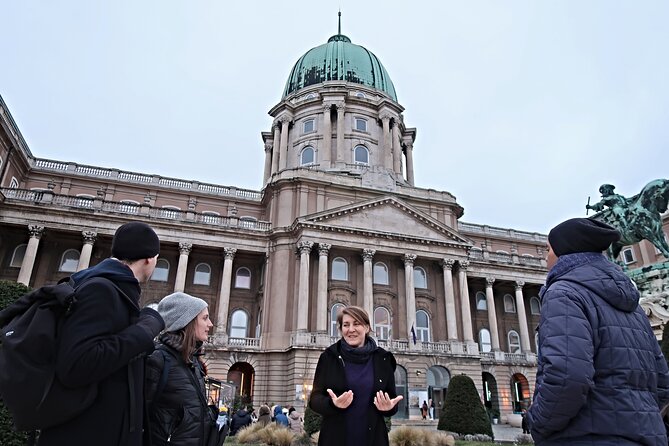
Your tour begins in the Buda Castle area, with a focus on Castle Hill’s main highlights. You spend time on the hilltop where two big visual anchors face you: the massive palace on the southern tip and the colorful Matthias Church roof in the middle, with that tall pointed steeple.
The palace itself has an unusually complicated story. It was rebuilt, extended, changed, burned down, and rebuilt again, and it only developed its current eclectic look after World War II. If you have ever wondered why a historic site can look both grand and oddly mismatched, that history explains it.
I also like that the tour gives you a time-based storyline, starting with early fortress building. The first ruler linked to Castle Hill here is King Béla IV, who erected a fortress around 1250 after a devastating Mongol invasion. From there, the narrative keeps moving forward through major turning points.
You will hear about King Matthias, who made it one of Europe’s famous courts at the end of the 15th century. Then you get the long Ottoman period under Turkish pashas, lasting over 150 years, and after that, the succession of Habsburg emperors. It is a lot of history in about three hours, but it stays grounded because you are walking past what those eras left behind.
More of Castle Hill, cobble by cobble:
- Budapest: Buda Castle Cave Tour
★ 4.7 · 5,677 reviews - Budapest: Buda Castle District Vampires and Myths Night Tour
★ 4.6 · 3,830 reviews - Budapest: Buda Castle Walk with Saint Stephen’s Hall
★ 4.5 · 3,012 reviews
A practical note on what you actually see at the start
The tour time at the Buda Castle stops is listed as free entry for those portions, so you can focus on the walk and the exterior views without feeling nickel-and-dimed right away. That said, Matthias Church and Fisherman’s Bastion are ticketed separately, so you should budget for them mentally from the beginning.
The changing function of the palace, in plain language
One of the core ideas of this walk is simple: the building kept changing jobs. You can understand a lot of Hungarian and Central European history just by watching how power moved and how rulers wanted the site to represent them.
In the Renaissance period, the emphasis shifts toward court life and prestige, especially with King Matthias. Later, under different rulers, the palace role changes again, and the look you see today is not the same look from those early centuries.
This is the kind of lesson that stays with you when you leave. After the tour, you can look at the complex and feel like you are reading a timeline instead of guessing which century you are looking at.
And if you get the kind of guide people rave about, you will hear the details put into context. In past departures, guides such as Kata have been praised for making the sights feel historically relevant, with those subtle, specific notes that turn a quick viewpoint into a real understanding.
Sándor Palace: a short stop with a real “present day” feel
Next you move to Sándor Palace, which is the official residence of the President of Hungary and the seat of the Office of the President since 2003. The original palace was built in Neoclassical style in 1806, commissioned by Count Vincent Sándor, an aristocrat and philosopher in the Austro-Hungarian Empire.
This stop is brief, but it gives you a valuable shift in perspective. You are no longer only in the realm of monarchs and empires. You see that the hill is still connected to government and national identity today.
Because the stop is short, it works best if you are the type of traveler who likes quick, high-impact context rather than long museum time.
More of the city, bank to bank on foot:
- Big Bus Budapest Hop-On Hop-Off Bus and Walking Tour★ 3.5 · 2,206 reviews
- Budapest: Buda Castle District Walking Tour★ 4.6 · 2,108 reviews
- Budapest City Landmarks Walking Tour in 2 Hours★ 5.0 · 2,048 reviews
Matthias Church: the roof you came for, plus the why behind it
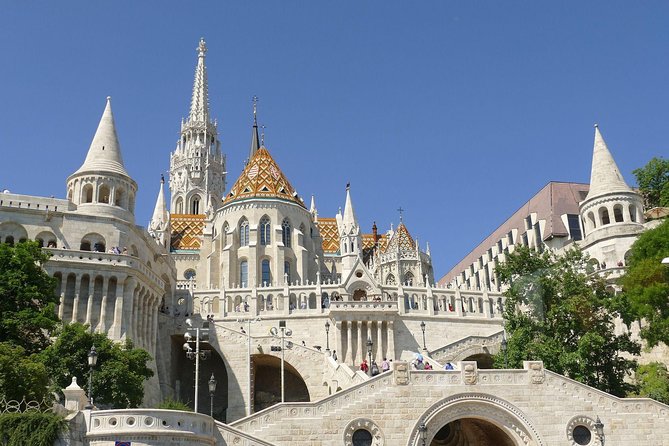
Matthias Church is often what pulls people onto Castle Hill in the first place. On this tour, it becomes a highlight for a reason: the roof is richly decorated, and the church’s interior is considered exceptional.
One key detail that matters for your expectations is the style and time of the current building. It is described as a fine Neogothic reconstruction fantasy from the end of the 19th century. That means you are not only looking at a medieval church in a medieval condition, you are seeing a later artistic reconstruction that still feels spectacular.
If you have only seen churches from the outside, you will appreciate the guide’s framing here. You will likely walk away understanding how later generations chose to represent the past through design, instead of treating history like it was frozen in time.
Tickets for Matthias Church are not included, so you should plan for the extra entry. The upside is that you are not stuck paying ticket costs the moment the tour begins, and you get the rest of the hill first while you build momentum.
Fisherman’s Bastion: photo views, explained with a purpose

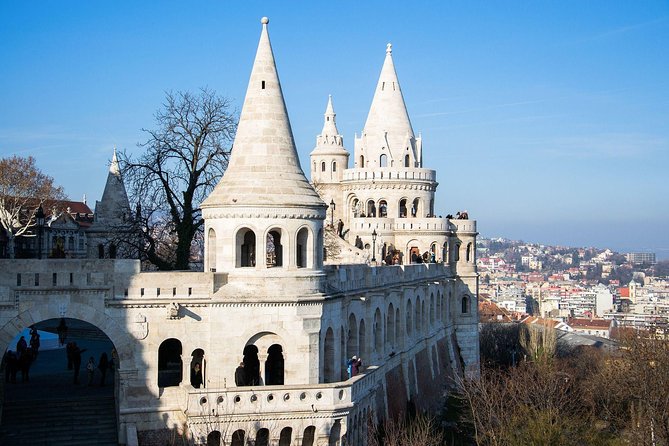
Fisherman’s Bastion is a set of terraces and towers that looks like it belongs in an art book. It was designed and built between 1895 and 1902, in neo-Gothic and neo-Romanesque styles, which means it was also shaped by the taste of a later era, not just medieval survival.
The seven towers are the big story element. They represent the seven Magyar tribes that settled in the Carpathian Basin at the end of the 9th century. So even though you will probably spend a chunk of time photographing the viewpoint, you are also getting the meaning behind the design.
What I love here is the payoff. The terrace provides one of the most famous panoramic views of the Danube, Margaret Island, Pest, and Gellért Hill. You do not just point your phone and hope. You stand in a better place to understand where you are in the city’s geography.
Tickets for Fisherman’s Bastion are also not included, so again, expect a small add-on. The tour timing includes enough time here that you can slow down and enjoy the view instead of treating it like a quick stop for selfies.
Vienna Gate: finishing with sightlines toward Óbuda and Aquincum

The tour ends at Vienna Gate. It may sound like a small final note, but it matters because it changes what you see. From here, you can look all the way toward Óbuda, where the Romans founded the city called Aquincum.
That Roman link is a great final lesson. You started on Castle Hill with medieval and later power centers, and you end with a reminder that the city’s story is far older than the royal timeline. It helps Budapest feel bigger than one neighborhood.
This ending also works well if you plan to continue on your own afterward. You get a clear view and you leave with a sense of direction, which makes it easier to decide what to do next without feeling lost on steep streets.
Price, group size, and whether this feels like value
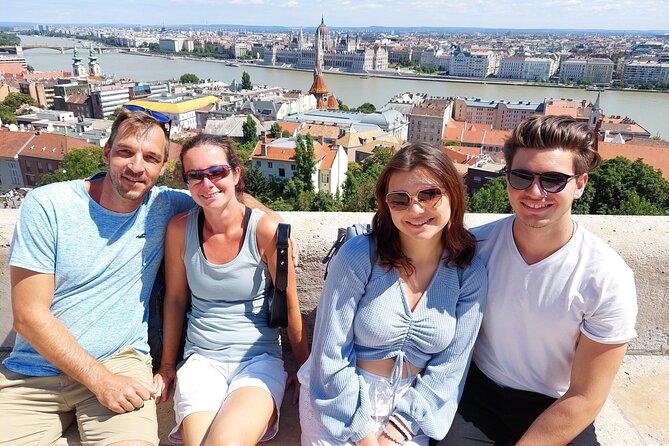
The price is listed at $397.36 per group, up to 10 people, for about three hours. On paper, that might look expensive if you think of it as a per-person tour. But value changes quickly when you realize it is private, and the group size is capped.
For a small group, the cost per person can drop a lot. This is one of those tours where I tell people to do the math based on who you are traveling with, not just the sticker price. If you are a solo traveler, it is still a great option if you care about personalized pacing and direct questions, but you will likely feel the premium more.
What you are buying is a guided walk with an historian guide, plus a practical structure: start at Castle Hill, move through the key stops, and finish at Vienna Gate in time to keep the day from getting bogged down. You also have a choice of morning or afternoon departure, which gives you control over the experience.
And based on past guide feedback, the commentary is where many people feel the difference. Guides like Julia have been praised for being amazing, with the kind of historical relevance that makes the hill feel real instead of like a postcard checklist. Just be sure your expectations match a walking tour.
A fair expectation check about tickets and what counts as included
The itinerary shows that Buda Castle portions are marked with admission ticket free, while Matthias Church and Fisherman’s Bastion are not included. Sándor Palace is also ticket-free for the stop time listed. So the tour is not all paid entry, but it is not fully all-inclusive either.
If your dream is a deep interior museum day, this may feel short or incomplete. If your dream is a smart, fast, guided walk that gives you context for what you see, this is exactly the kind of value package that works.
Choosing the right time: morning vs afternoon
The tour offers morning or afternoon departures. That matters on Castle Hill because you want comfortable walking time and, ideally, light that makes those rooftops and river views look their best.
If you care about photos, afternoon can give you warmer tones for the Danube view. Morning can feel calmer on the hill. Either way, you are not stuck with one schedule, which is a real plus for planning the rest of your Budapest day.
Who this private walking tour fits best
I would point this tour toward three types of travelers.
First, if you like history but want it delivered in a way that connects to buildings you can actually see, you will enjoy how the guide ties events to places. Second, if you hate slow, aimless sightseeing and prefer a structured walking route, this gives you that.
Third, if you are traveling with a small group and want a private guide rather than a crowded group tour, the group size cap is a big deal. You can ask follow-up questions without waiting for a pause in the guide’s script.
If you are traveling with very young kids who cannot handle uneven cobblestones or steep sections, you might still consider it, but you will want to be realistic about comfort and attention span. The good news is that it is about three hours, so it is not an all-day grind.
Should you book this Buda Castle Private Walking Tour?
Yes, if you want Castle Hill to make sense fast. This is a small-group private walk with historian-style commentary, and it focuses on the big story threads: royal power at Buda Castle, the present-day role of Sándor Palace, the Neogothic reconstruction story at Matthias Church, and the symbolic design behind Fisherman’s Bastion’s towers.
Book it especially if you value a guide who explains the why, not just the where. If you are okay paying entry tickets for Matthias Church and Fisherman’s Bastion, you will get a smooth, satisfying route with a strong finish at Vienna Gate and wide views toward Óbuda and Aquincum.
If your budget is tight and you want everything included without any extra tickets, or if you want a heavy interior museum schedule, you may feel the gaps. In that case, consider whether a self-guided route plus paid entries matches your style better.
FAQ
How long is the Buda Castle private walking tour?
It lasts about 3 hours.
How many people are in a group?
It is listed as up to 10 travelers, with a maximum of 8 people per booking.
Where do we meet for the tour?
Unless hotel pickup is arranged, meet your guide 15 minutes before the start time at the default meeting point: Bálthazár, Országház utca 31, 1014 Budapest (about 50 meters from the first bus stop on Castle hill).
Is pickup available?
Pickup is offered, but you should meet at the default meeting point if hotel pickup has not been arranged.
Are tickets included for Matthias Church and Fisherman’s Bastion?
No. Matthias Church and Fisherman’s Bastion tickets are not included.
Is free cancellation available?
Yes. You can cancel for free up to 24 hours in advance for a full refund.
The newest crossings added in Budapest






Castle District Walks & Tickets, compared.

Buda Castle District Vampires and Myths Night Tour
Read our review →
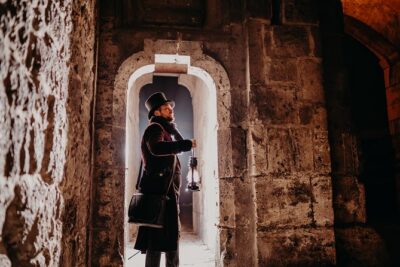
Buda Castle District Dark History, Legends and Vampire Night Tour
Read our review →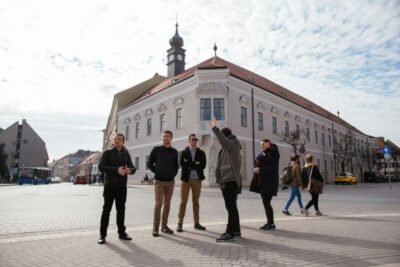
Buda Castle District Walking Tour with a Historian
Read our review →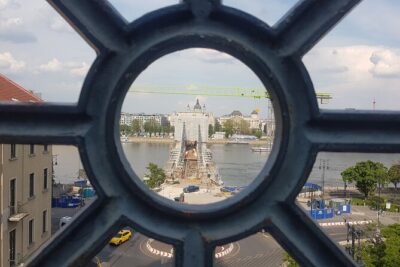
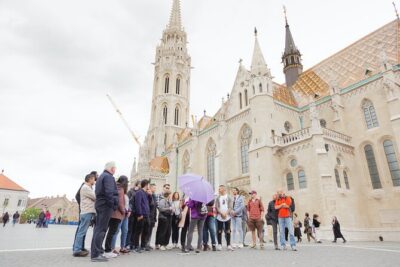
Walking tour in the Buda Castle incl. Fisherman’s Bastion
Read our review →Browse the lists this tour appears in