
Reviewed · CITY TOURS
8-hour private Budapest city tour by car / minivan
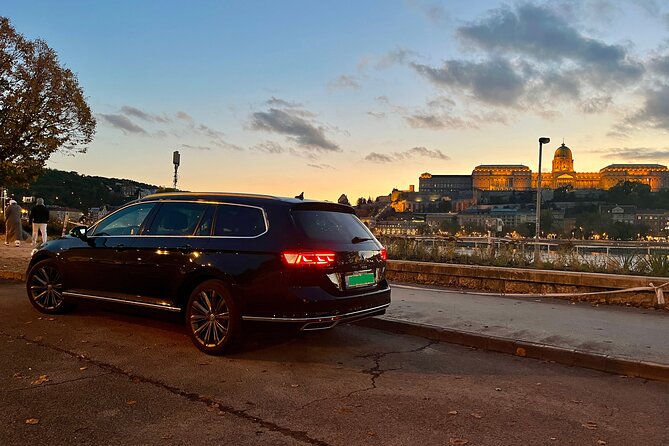
Eight hours, no transit stress, all the highlights. This private Budapest tour uses a car or minivan to connect Pest and Buda with short, manageable stops, so you see more without wearing yourself out. It also includes door-to-door pickup, which is a big deal in a city where everything looks close on a map but feels far on foot.
I especially like the private guide angle. You get explanations built for your questions, not a one-size script, and you can pause for photos or quick questions without worrying about holding up a group. I also like the mix of major monuments and smart viewpoint time, so the day feels like Budapest at human speed, not a blur.
The main consideration is that this is a “see a lot” plan. Some interior visits are not included, including places like St. Stephen’s Basilica, Matthias Church, and the upper level of Fisherman’s Bastion, so you’ll want to budget extra if you go inside. Also, a short stop like Széchenyi Baths is just enough for a quick taste, not a full soak.
In This Review
- Key Things I’d Pay Attention To
- The Smart Case for a Private Car Tour in Budapest
- Andrássy Avenue, Heroes’ Square, and Getting Oriented Fast
- Széchenyi Baths and City Park Without the Time Sink
- House of Music Hungary, the Opera Area, and What’s New in Budapest
- St. Stephen’s Basilica and Liberty Square, Two Different Kinds of Big
- Parliament by the Danube, Chain Bridge, and the Shoes Memorial
- Margit Bridge, Zero Kilometre, and Small Stops That Feel Useful
- Matthias Church, Fisherman’s Bastion, and Buda Castle District Views
- Citadella Lookout on Gellért Hill, the Final “Now I Get It” View
- Price, Time, and Who This Tour Is For
- Should You Book This Private 8-Hour Budapest Tour?
- FAQ
- How long is the private Budapest city tour?
- How much is the tour, and how many people can it include?
- Is pickup available, and where does it start?
- Is the tour guided, and is it offered in English?
- Are entrance fees included for all stops?
- Is lunch included in the tour price?
- What is the cancellation policy?
Key Things I’d Pay Attention To
- Door-to-door pickup means less time herding yourself across town
- Car plus light walks keeps the pace friendly for first-timers
- Major sights without the crowds grind because your guide can work the flow
- New stop, House of Music Hungary gives you something modern among classic landmarks
- Buda Castle District viewpoints come with the city panorama payoff
- Flexibility to get on and off where it makes sense for your priorities
The Smart Case for a Private Car Tour in Budapest
Budapest is gorgeous, but it can be a workout. Even if you love walking, the reality is that hills, river distances, and “just one more stop” energy can drain a day fast. This private 8-hour tour by car or minivan solves that problem by doing the heavy movement for you. You still get out to see things up close, but the itinerary is built around quick, focused stops instead of long trek marathons.
That matters for two reasons. First, Budapest rewards you for slowing down at key points, like Parliament’s Danube-side setting and the terraces around Fisherman’s Bastion. Second, a private guide can explain the why behind what you’re seeing, which is where a city like this clicks. You’re not just collecting photos, you’re connecting the dots between the Austro-Hungarian era, communist-era changes, and modern politics.
The personal touch is clear from the guide feedback in the reviews. Names like Gregory (Gergő/Greg), Gergely, and Gabriel come up with the same theme: they tailor the pace, work with what you want to see next, and keep the day smooth from pickup to drop-off. One review even highlights a guide’s ability to suggest what to avoid, which is a quiet superpower when you have limited time.
Andrássy Avenue, Heroes’ Square, and Getting Oriented Fast
Your day starts on Andrássy Avenue, a grand boulevard dating to 1872 and recognized as a UNESCO World Heritage Site in 2002. This is one of those places where the architecture does half the storytelling. Neo-Renaissance facades line the street, and it’s also a working artery of the city, with cafes, restaurants, theatres, embassies, and luxury shopping. In a normal walking day, you might see buildings. On a guided day, you also get context on why this boulevard mattered and how it shaped the city’s image.
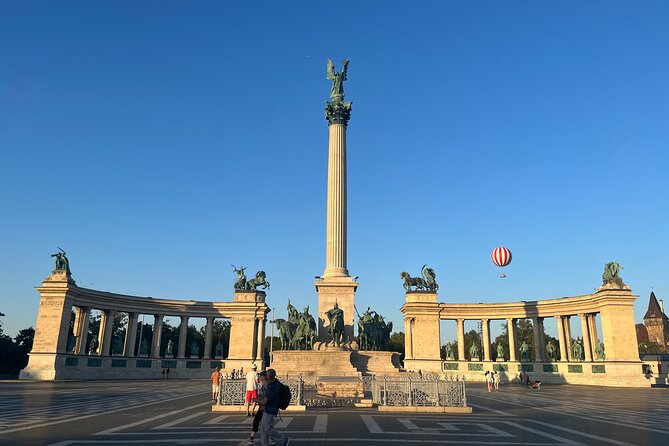
Next up is Heroes’ Square, one of Budapest’s signature plazas, famous for the statue complex of the Seven chieftains and other national leaders, plus the Memorial Stone of Heroes. What I like about this stop is that it’s not just decorative. The square has played a role in Hungary’s modern political life, including the reburial of Imre Nagy in 1989. A guide helps you understand why the monuments here hit so hard, even if you did not grow up with these names.
Timing is tight at both stops, around 20 minutes each. That’s exactly right for first-timers. You get a strong first impression, you learn the main story beats, and then you can decide later what you want to revisit.
Still to cross in Budapest
- Budapest: City Highlights Sightseeing Cruise
★ 4.6 · 43,981 reviews - Budapest: Unlimited Prosecco, Beer and Aperol Spritz Cruise
★ 4.8 · 37,304 reviews - Budapest: Széchenyi Spa Day Ticket with Optional Upgrades
★ 4.3 · 23,911 reviews
Széchenyi Baths and City Park Without the Time Sink
Then you shift toward Széchenyi Medicinal Bath and Pool, tucked into the City Park area. This is the largest medicinal bath in Europe, and the thermal waters come from two springs at about 74 °C (165 °F) and 77 °C (171 °F). Even if you’re not planning to spend hours, it’s still a fascinating cultural stop because the bath tradition is woven into everyday life here.
But here’s the practical truth: your stop time is about 10 minutes, and entrance is not included. That means you should treat it like a quick preview, not a spa day. If you want the full bath experience, you’ll likely want to schedule it separately later.
Still, the benefit of including it on a one-day highlights tour is huge. It gives you a sense of Budapest’s rhythm. And your guide can help you understand what to do next depending on whether you’re the type who wants a full soak or just a look around.
House of Music Hungary, the Opera Area, and What’s New in Budapest
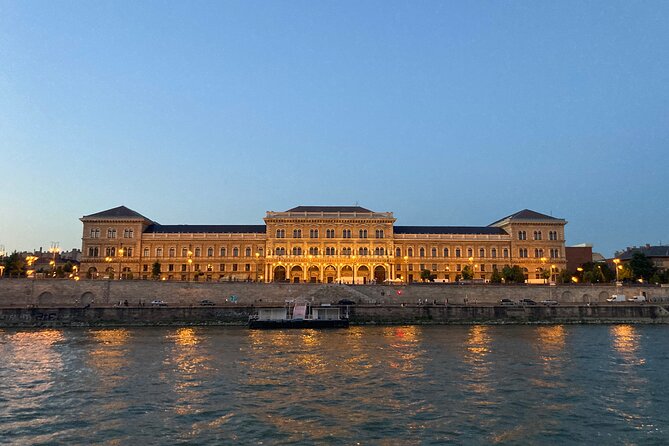
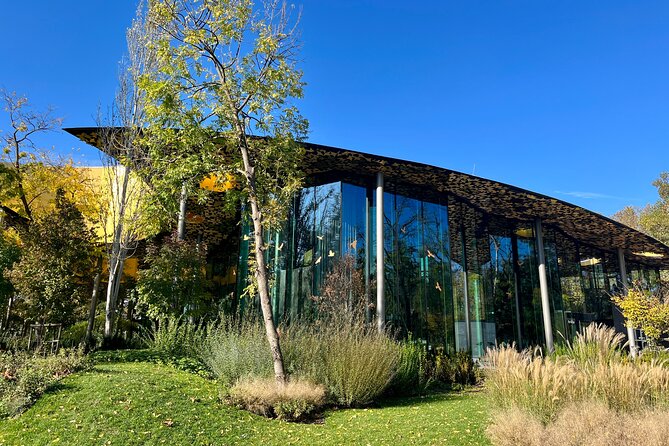
City Park keeps going, and you’ll also stop at House of Music Hungary. This opened in January 2022 and is described as a complex institution for musical initiation, plus it holds the country’s first comprehensive exhibition about the history of music. Architecturally, it has drawn major attention since it was selected from 170 international projects in the competition process.
This is the kind of stop I like on a tour because it breaks the pattern of only visiting old-world landmarks. Budapest is not stuck in the past, and the House of Music Hungary is a good signpost that modern culture matters here too. Admission is listed as free for this stop, but if you want more than a quick exterior and orientation, you’ll need to plan based on what the tour includes for that moment.
Next, you’re in the Hungarian State Opera House area on Andrássy Avenue. The opera house is a neo-Renaissance landmark on this same boulevard. Entrance is not included, so plan on seeing it as an architectural highlight from the outside unless you choose an interior visit separately.
St. Stephen’s Basilica and Liberty Square, Two Different Kinds of Big
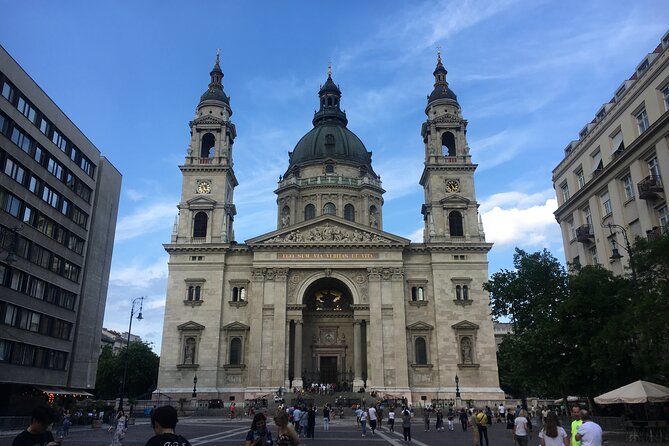
St. Stephen’s Basilica is next, with a longer stop time of about 30 minutes. This is a Roman Catholic basilica named for Stephen, the first King of Hungary, whose right hand is housed in the reliquary. The basilica is also described as the co-cathedral for the archdiocese of Esztergom-Budapest and is the third largest church building in present-day Hungary.
Admission is not included, so you’ll need to decide on the day whether you want the interior. For me, the strategic value of adding it is that even a short visit helps you “read” the city. You understand how major religious heritage sits in the middle of everyday Budapest life.
Then you move to Liberty Square, a public square in Lipótváros. What’s interesting here is the mix: the US Embassy sits nearby, along with the Hungarian National Bank headquarters in a historicist style, and some nearby buildings feature Art Nouveau elements. It’s a quieter stop than the basilica, but it helps round out the city picture.
Back across the water in Budapest:
- Budapest: Nighttime or Daytime Sightseeing Cruise★ 4.2 · 21,062 reviews
- Budapest: By Night Sightseeing Cruise with Welcome Drink★ 4.3 · 15,533 reviews
- Budapest: St. Stephen’s Basilica Entry with Options★ 4.6 · 12,322 reviews
Parliament by the Danube, Chain Bridge, and the Shoes Memorial
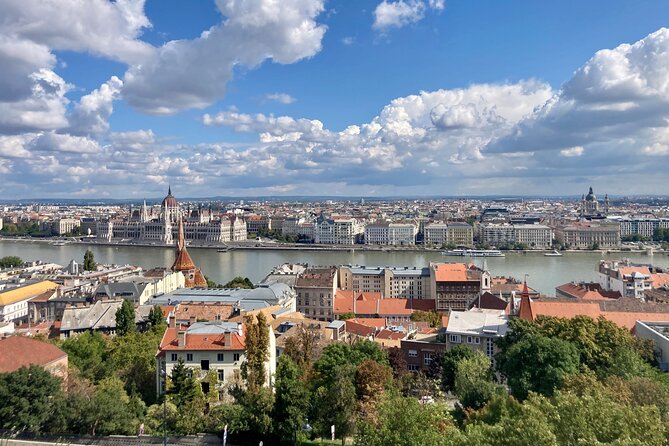
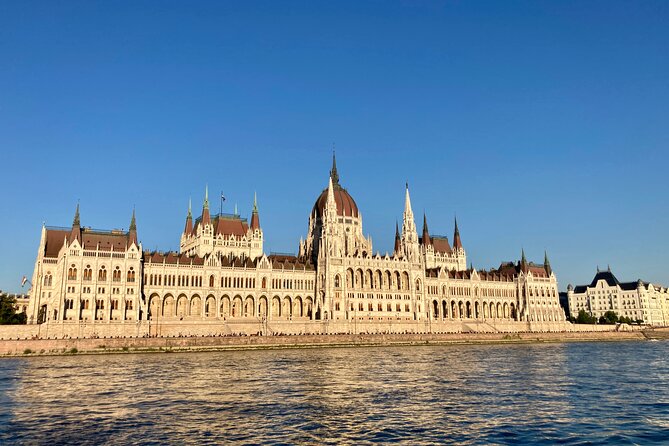
After seeing major city and cultural landmarks, the tour heads toward Hungarian Parliament Building on Kossuth Square, on the Pest side by the Danube. It’s noted as the seat of the National Assembly and the largest building in Hungary. The entrance is not included, so again, your experience may focus on the exterior and the setting unless you add an interior visit.
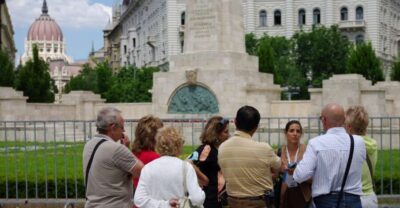
This is where your guide’s approach really matters. Standing by the river in front of Parliament gives you a sense of how much Hungary’s story is shaped by location, politics, and visibility.
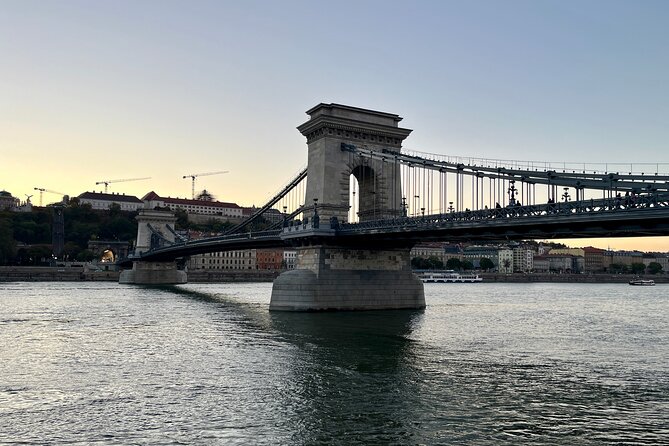
From there, you cross into river-history territory with the Széchenyi Chain Bridge. This was the first permanent bridge across the Danube in Hungary, opened in 1849 and designed by English engineer William Tierney Clark, with Scottish engineer Adam Clark connected to the building. It’s one of Budapest’s most recognizable views, and it acts like a visual hinge between Buda and Pest.
Next comes Shoes on the Danube Bank, a memorial created by film director Can Togay with sculptor Gyula Pauer. It honors Jews killed by Arrow Cross militiamen during World War II. This stop is free and short, about 20 minutes, but it’s emotionally heavy. I find these moments land best when you take the time to actually look, not just read a plaque and rush to the next photo spot.
If you want to keep the day moving without losing meaning, this is exactly the kind of stop a private guide can help you manage. You learn what you’re looking at, then you decide how long you want to stay.
Margit Bridge, Zero Kilometre, and Small Stops That Feel Useful
Your river route continues with the Margit Bridge, noted as the second oldest bridge in Budapest built in 1876. It connects Pest and Buda and links to Margaret Island, which is a popular recreation area.
Then there’s a quirky but helpful stop: the Zero Kilometre Stone. It’s a limestone marker that indicates the reference point for road distances to Budapest, with the pedestal showing “KM.” It’s not dramatic, but it’s a clever way to connect the city you’re seeing to the geography that shapes travel inside Hungary.
These might sound like “filler” stops, but they actually work well in a private day because they help you build mental maps. After you’ve seen bridges and reference points, Budapest starts to make more sense at street level.
Matthias Church, Fisherman’s Bastion, and Buda Castle District Views
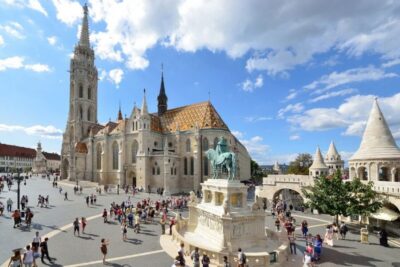
Now comes the big-picture payoff in Buda Castle District. First you reach Matthias Church (30 minutes). It’s commonly known as the Church of the Assumption of the Buda Castle and sits near Fisherman’s Bastion. The building you see is described as florid late Gothic, constructed in the second half of the 14th century and later restored in the late 19th century. Entrance is not included, so if you want the interior, you’ll need a separate plan.
Right after that, you get Fisherman’s Bastion, with about 20 minutes. It’s one of Budapest’s most well-known monuments, built between 1895 and 1902 on the base of older walls. The terraces provide the famous panorama over the Danube and Pest skyline. Admission is not included here either, and the upper floor is one of the optional extras that can cost more.
This is one stop where I think your expectations should be clear. You’re not just visiting a building, you’re paying for a viewpoint. If you’re short on time, you’ll still feel satisfied because even a brief stop can deliver the skyline moment.
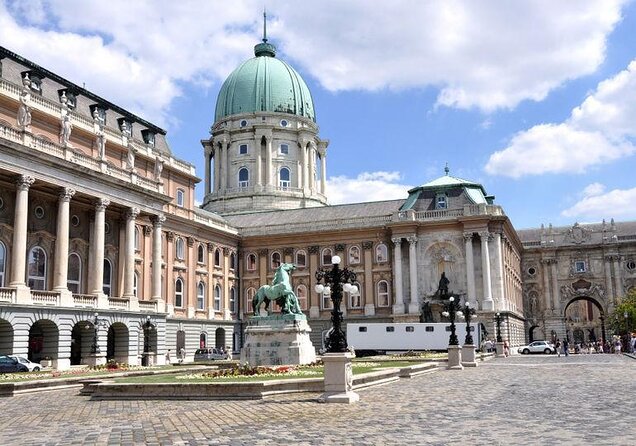
Finally, you reach Buda Castle itself (about 45 minutes). It’s the historical castle and palace complex of Hungary’s kings. The site dates to 1265, while the big Baroque palace today was built between 1749 and 1769. It’s also part of the Budapest World Heritage Site, declared in 1987. Admission is listed as free for this stop, which helps you keep costs controlled if you decide to explore a bit on your own.
This part of the day is where you understand how Budapest layers time. Old foundations, rebuilt palaces, and a hilltop position that turns into a natural stage for the city story.
Citadella Lookout on Gellért Hill, the Final “Now I Get It” View
To close the day, you’ll head to Citadel Lookout. The fortification, known as the Citadella, sits on top of Gellért Hill. It was built in 1851 by Julius Jacob von Haynau, tied to the Austrian Empire. Admission is listed as free for this stop, and it’s about 30 minutes.
This is the viewpoint that ties everything together. You’ve spent the day moving between the grand avenues, the Danube’s political stage, and the Buda Castle skyline. From up here, Budapest stops feeling like separate neighborhoods. It starts feeling like one city shaped by rivers and history.
Your guide can also help you choose what to photograph and where to stand so you get the best angle without spending your limited time stuck in the wrong spot.
Price, Time, and Who This Tour Is For
The price is $505.73 per group (up to 3) for approximately 8 hours. At first glance, it feels steep compared to a basic walking tour. But here’s the math that matters: you’re paying for a private car, parking fees, taxes, and a professional guide guiding in English. For families, couples, or small friend groups, that can actually be good value because you’re replacing multiple transit hassles and potentially multiple separate tours.
The itinerary also has a clear logic for short visits. It hits the must-see monuments and the big viewpoint moments, plus it includes a few memorable diversions like House of Music Hungary and Shoes on the Danube Bank. Those are the kinds of stops that take time to research, plan, and connect if you’re doing it on your own.
This tour is especially well-suited if:
- You’re a first-timer who wants the highlights without over-walking
- You want personalized context on Hungarian history and culture, not just photos
- You’re traveling in a small group and want the convenience of pickup and drop-off
- You’re short on time and want a guide to help you decide what to revisit later
The optional add-on reality is also important. Entrance fees are not included for some sites, and lunch is not included. That doesn’t ruin the value, but it does mean you should carry some extra spending for interior tickets and food. The upside is that many of the most iconic stops are free or quick to enjoy from outside.
Should You Book This Private 8-Hour Budapest Tour?
If you want a Budapest day that feels efficient but not rushed, I think this one is worth serious consideration. The blend of private guidance, car-based movement, and major sights on both banks makes it one of the easiest ways to get your bearings fast.
I’d book it if your goal is simple: see the core Budapest monuments, learn what they mean, and end the day with enough clarity to choose what to do next. It’s also a smart option for small groups who can split the cost and want comfort.
I’d think twice only if you are trying to do everything for free and skip most interiors. Because some of the most famous churches and viewpoints you may want to go inside are explicitly not included, you’ll likely pay extra if you want the full experience.
FAQ
How long is the private Budapest city tour?
The tour is about 8 hours.
How much is the tour, and how many people can it include?
It costs $505.73 per group and is listed for up to 3 people.
Is pickup available, and where does it start?
Pickup is offered from any hotel or other accommodation in Budapest.
Is the tour guided, and is it offered in English?
Yes, the tour includes private guiding by a professional guide, and it is offered in English.
Are entrance fees included for all stops?
No. Entrance fees are not included, and some optional interior visits require additional tickets.
Is lunch included in the tour price?
Lunch is not included. There is time for an optional lunch break, but meals are paid on-site.
What is the cancellation policy?
Free cancellation is available up to 24 hours in advance for a full refund.
The newest crossings added in Budapest






City Tours, compared.
Budapest City Landmarks Walking Tour in 2 Hours
Read our review →

Hungarian Chimney Cake Workshop in the City Center
Read our review →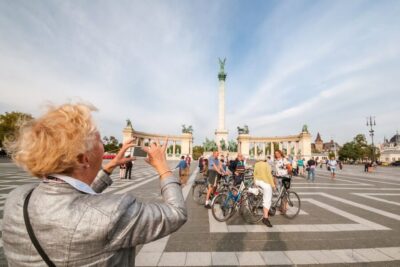
Browse the lists this tour appears in