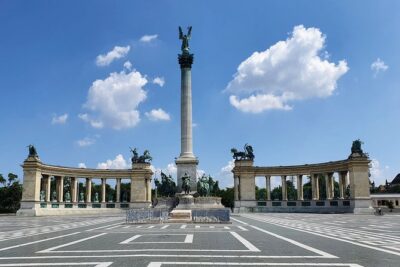
Budapest’s Art Nouveau buildings have attitude. This private 4 hour tour connects Hungarian Secession to everyday street scenes, with interior access at key spots and a stop for complimentary coffee in a matching style setting. I especially like that you’re not stuck staring at facades, you get names, motifs, and context tied to what you’re looking at, like Lechner and Miks a Roth.
Two things I really like: the private guide format (so you can ask questions and move at your pace), and the tight mix of landmarks plus walking time on Vaci Street so the architecture feels part of the city, not a museum display. One drawback to keep in mind is coordination. One past guest noted trouble with message replies for meeting details, so double-check your pickup instructions and keep an eye out for updates.
In This Review
- Key highlights you will actually notice
- Budapest Secession on a walking, human scale
- Private guide makes the architecture click (Suzy, Szoke Zsuzsanna, Bogata, Michael)
- Price and value: $243.53 per group, not per person
- The 4 hour route: how the timing keeps it fun
- Stop by stop: Parisian Passage Café and the Liszt Academy hall
- Vaci Street’s Art Nouveau clues, then the Roth-to-Art Deco transition
- Lechner’s Secession feeling at Postatakarek Bank and the House of Hungarian Art Nouveau
- Budapest Zoo architecture glimpses and the Museum of Applied Arts facade
- The coffee and tea break is part of the design lesson
- Pickup, smart casual, and all-weather reality
- Who should book this private Art Nouveau tour
- Should you book this tour?
- FAQ
- How long is the Private Art Nouveau Tour Budapest?
- What is the group size for the private tour?
- What does the tour cost?
- Is the tour offered in English?
- Do I get hotel or port pickup and drop-off?
- Is there a coffee or tea stop?
- Are admission tickets included?
- What do we see at the Museum of Applied Arts?
- Does the tour run in bad weather?
- Is cancellation free?
Key highlights you will actually notice
- Private, small-group feel (up to 15) with an Art Historian guide who ties buildings to Hungarian culture
- Hotel or port pickup and drop-off so you spend less time figuring out logistics
- Multiple free-entry stops plus interior moments in major sites you might otherwise pass by
- A real Art Nouveau coffee or tea break, including praised settings with period-style furnishings
- Craft and transitions up close, from Secession to the Art Nouveau to Art Deco shift
- Smart pacing, with short stops that still cover a lot of architectural ground in about 4 hours
Budapest Secession on a walking, human scale
Art Nouveau in Budapest is not just decoration. It is a way the city told its story, using plants, geometry, and myth-like forms to say, we are modern, we are Hungarian, and we have taste. What makes this tour especially useful is that you are not learning from an endless lecture. You are walking, looking, and hearing the “why” behind the details in places where you can see it clearly.
Budapest is also a city where architecture changes personality block by block. On this route, you move from the kind of ornate interior design that makes you slow down, to bank and academy buildings where the symbolism is hiding in plain sight. That contrast is the point, and it helps you start spotting patterns on your own later.
Private guide makes the architecture click (Suzy, Szoke Zsuzsanna, Bogata, Michael)
Here is what I think makes the private format worth it. With a group tour, you often hear the same talking points and you move on. With a private guide, you can ask, why this motif, why this shape, what does this building want you to notice first. Recent experiences highlight guides such as Suzy, Szoke Zsuzsanna, Bogata, and Michael. Across these names, the common thread is clear passion, plus history and art explanation stitched together so you do not just memorize dates.
One guide-focused win stands out: tailoring. In one account, the guide adapted for limited walking ability using taxis and public transportation. That matters because architecture walking tours can get tiring fast. If your legs need a gentler rhythm, this is the kind of tour where the guide can often adjust.
Also, a well-explained building changes how you feel about the street outside it. The guide approach here aims for that shift: you leave with a mental map of what you saw and why it matters.
Still to cross in Budapest
- Budapest: City Highlights Sightseeing Cruise
★ 4.6 · 43,981 reviews - Budapest: Unlimited Prosecco, Beer and Aperol Spritz Cruise
★ 4.8 · 37,304 reviews - Budapest: Széchenyi Spa Day Ticket with Optional Upgrades
★ 4.3 · 23,911 reviews
Price and value: $243.53 per group, not per person
The headline price is $243.53 per group, and the tour runs for your group size up to 15 people. That is not cheap if you are traveling solo or as a couple, but it becomes a strong value when you split it with friends or family.
Quick math to make it real:
- If you are 2 people, it is about $121.77 each.
- If you are 6 people, it is about $40.59 each.
- If you fill the top group size of 15, it is about $16.24 each.
Why I think that pricing works: you are getting hotel or port pickup and drop-off, a professional art historian guide, and free admission at several stops. You are also getting the “human sorting” of architectural styles. Paying for a guide makes sense when you want to understand why buildings look the way they do, not just take a photo and move along.
The 4 hour route: how the timing keeps it fun
This tour clocks in at about 4 hours and is often booked around 20 days in advance. The pacing is built on short, high-impact stops, plus a couple of walking segments. That structure keeps energy up, and it helps you avoid the classic problem where you spend more time traveling between points than actually seeing the good stuff.
A practical note: it operates in all weather, so you will want clothing that can handle Budapest rain and sudden temperature swings. Smart casual is the suggested dress code, which for this kind of city stroll means comfortable shoes and a jacket you do not mind bringing out again.
Stop by stop: Parisian Passage Café and the Liszt Academy hall
Your route starts with an iconic Art Nouveau landmark where you get both exterior viewing and interior exploration. The key idea here is that you learn the language of the style in the place where it is meant to be experienced, not just photographed from across the street. If you only ever look at architecture from a distance, you miss half the conversation.
Then comes Parisian Passage Café. It is described as recently renovated, and the experience focuses on the passage itself, with a chance to glimpse inside. I like this stop for two reasons. First, passages are where you learn how architecture guides people through space. Second, it is an easier, more intimate interior moment than some larger public buildings, which keeps the tour feeling friendly and readable.
Next is Liszt Academy, in the heart of the city. You focus on the academy’s building and then venture inside to see mosaics and interior details. Even if you do not know Hungarian music history yet, you will still appreciate the visual message: this is a music institution presented with the same artistic seriousness as the city’s most decorative architecture. The academy hall is a good “pattern spotter” stop, because you can compare the decorative logic to what you saw outside earlier.
Back across the water in Budapest:
- Budapest: Nighttime or Daytime Sightseeing Cruise★ 4.2 · 21,062 reviews
- Budapest: By Night Sightseeing Cruise with Welcome Drink★ 4.3 · 15,533 reviews
- Budapest: St. Stephen’s Basilica Entry with Options★ 4.6 · 12,322 reviews
Vaci Street’s Art Nouveau clues, then the Roth-to-Art Deco transition
A longer look at Vaci Street is built into the tour. You are walking Budapest’s famous fashion and shopping street, but you are not sightseeing like a shopper. You are sightseeing like a detective. The stop is about spotting Art Nouveau heritage in urban palaces, meaning you learn how to recognize style choices on a street that is not specifically an architecture museum.
From there you go to Torok-Bankhaz Building. This is where the tour helps you understand the transition between pre-war architectural trends, especially how Art Nouveau moves toward Art Deco. The building is specifically tied to MIKSA ROTH. I find this kind of “transitional” stop especially useful, because it stops people from thinking of styles as separate, clean chapters. Instead, you see change happening in real buildings, in real time.
This stop is also short, which is good. It gives you a focused hit on the motifs and the timing shift without turning the tour into a slog.
Lechner’s Secession feeling at Postatakarek Bank and the House of Hungarian Art Nouveau
Next is Postatakarek Bank, tied to Secession’s Hungarian National branch, with LECHNER named as part of what you are meant to notice. If you have ever felt that Art Nouveau is too ornamental, Lechner-related details are the antidote. The style here often feels like architecture with a brain. The forms are not random. You learn what to look for: edges, ornament logic, and how the building communicates stability while still looking artistic.
Then you visit House of Hungarian Art Nouveau. This site is specifically dedicated to the Secession period in Hungarian architecture, including influences. If you want one stop that helps you connect “style” to “identity,” this is it. The goal is not to name every motif. The goal is to understand that Hungarian National Style was shaping itself through the broader European Secession movement while still staying distinctly local.
One more good thing about these stops: they are short and concentrated. You will not feel lost. The guide frames each location, and you get enough time to actually observe the details the guide is calling out.
Budapest Zoo architecture glimpses and the Museum of Applied Arts facade
After the interior-focused stops, the tour includes a look at buildings of the Budapest Zoo, using them as a kind of visual bridge. The idea is that you see diversity in Art Nouveau and Secession architecture without needing yet another long indoor visit. Even if you only get glimpses and exterior context, it helps you notice that this style shows up in different city functions, not only grand landmarks.
The final major architectural stop is the Museum of Applied Arts. Here, the big practical detail is that it is still under renovation, so you can only explore the facade. That might sound like a letdown, but it can actually be useful. You see how the exterior composition works even without the inside experience, and you can use what you already learned from the earlier interiors to read the facade more accurately.
The coffee and tea break is part of the design lesson
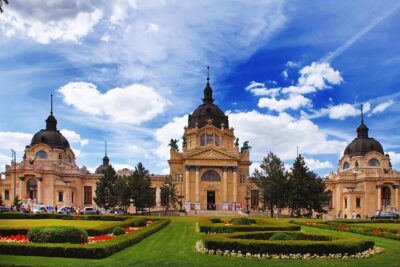
This tour includes coffee and/or tea, and the setting is described as an Art Nouveau environment. One highlight from real experiences is how striking these period-style spaces can be, with furnishings that make you feel like you stepped into the styling concept itself, not just a café stop for fuel.
I like breaks that do not break the theme. If you are doing an architecture tour, it is easy for the food stop to feel tacked on. Here, it is integrated, and that helps you keep your attention on the style the whole time.
Pickup, smart casual, and all-weather reality
Hotel or port pickup and drop-off is included. That is a big deal in Budapest, because even when the city is walkable, the best Art Nouveau stops are spread out enough that you can waste time. With pickup, you can start with the most important moments right away.
The tour uses a mobile ticket, and it is offered in English. Confirmation is expected within 48 hours, depending on availability. Dress code is smart casual, and the tour runs in all weather, so plan for rain and wind. Bring a light rain layer, and keep comfortable shoes at the top of your packing list.
One more practical point: the tour is near public transportation, so if you are curious about backup planning, it is not a place where you are totally stranded if plans change.
Who should book this private Art Nouveau tour
Book it if you want:
- A guided way to recognize Secession and Art Nouveau motifs in real Budapest buildings
- Interior time, not just exterior photos
- A guide who can tailor the experience to your pace, like adapting for limited walking
- A culture-focused tour that connects architecture to Hungarian identity and artistic development
I think it is less ideal if you want a very long, unhurried museum-style visit. Stops are short by design, so you will see a lot, but you will not hang out for hours in one room.
Should you book this tour?
I would book it if your goal is to come away with real understanding and a sharper eye, not just snapshots. The best value comes when you have at least a few people to split the group price, and the best experience comes when you are comfortable asking questions and looking closely.
If you are the type who enjoys architectural details, especially the shift from Art Nouveau ideas toward later trends, this route is a strong fit. And if you care about comfort, the included pickup and the praised ability to adjust for walking needs are meaningful.
If you are considering it for a first trip to Budapest, this is a smart way to set your visual language early. Once you learn what to look for, the city stops being random and starts speaking back.
FAQ
How long is the Private Art Nouveau Tour Budapest?
The tour lasts about 4 hours.
What is the group size for the private tour?
It is a private tour for your group, with up to 15 people per group.
What does the tour cost?
The price is $243.53 per group.
Is the tour offered in English?
Yes, it is offered in English.
Do I get hotel or port pickup and drop-off?
Yes. Hotel and port pickup and drop-off are included.
Is there a coffee or tea stop?
Yes. Coffee and/or tea is included.
Are admission tickets included?
Admission tickets for the listed stops are free.
What do we see at the Museum of Applied Arts?
Because it is under renovation, you can explore the building’s facade.
Does the tour run in bad weather?
Yes, it operates in all weather conditions, so you should dress appropriately.
Is cancellation free?
Free cancellation is available. You can cancel up to 24 hours in advance for a full refund.
The newest crossings added in Budapest





Private, compared.

Private Budapest TukTuk Tour: Custom Route, Hotel Pickup
Read our review →
Budapest Essentials Private Tour Highlights and Hidden Gems
Read our review →
Budapest Private Luxury Sightseeing Tour with Guide and Transport
Read our review →
Private Budapest City tour with Classic Russian Jeep or G-Wagon!
Read our review →
Budapest Private Full Day City Sightseeing Tour Walking or by Car
Read our review →