
Reviewed · CYCLING TOURS
Monster Bike Sightseeing Tour – City Budapest on Electric Rollers
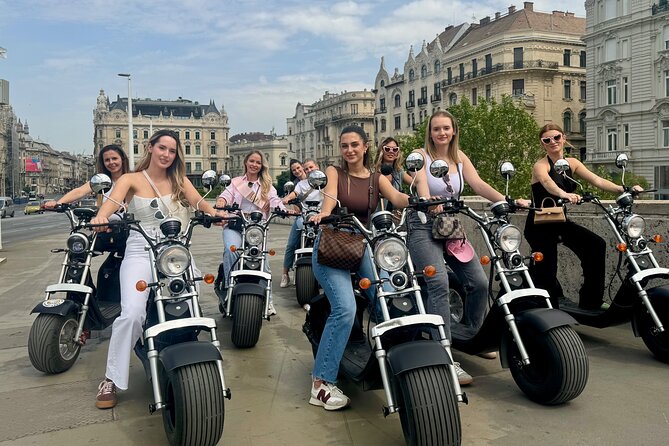
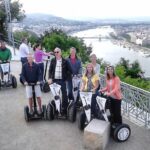
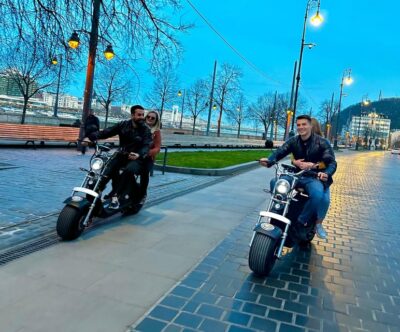
Budapest from an electric roller feels faster. This is a small-group ride that stacks major sights into about 2.5 hours, and you get the vehicle and equipment handled for you. I like the chance to ask questions without a huge crowd, and you can keep moving even if the weather turns.
The one thing to keep in mind is that you are on a machine for the full experience, so there is a bit of a learning curve when you get your instructions at the start. If you dislike sitting astride or standing on a riding platform, this might not be your favorite format.
In This Review
- Key things you will notice
- Why Budapest Looks Especially Good From Electric Rollers
- Meeting at Galamb u. 3: Equipment, Instructions, and a Quick Start
- Riding Past Gellert Hill Viewpoints and the St. Gerard Sagredo Statue
- Varkert Bazar: A Historic Landmark Stop at the Danube’s Edge
- Clark Adam Square and the “What You’re Looking At” Lesson
- Fisherman’s Bastion: The Photo Window With Panoramic Reward
- Chain Bridge Crossing: A Key Link Between Buda and Pest
- Shoes on the Danube Bank: A Serious Stop That Changes the Mood
- Hungarian Parliament and Liberty Square: Seeing Power and Scale
- St. Stephen’s Basilica Finish: A Strong Ending Point
- Small-Group Ride, English Guidance, and Asking for Sam
- Price and Timing: Is $60.34 Worth It for 2.5 Hours?
- What to Wear and How to Prepare for a Comfortable Ride
- Who This Tour Fits Best in Budapest
- Should You Book This Monster Bike City Tour?
- FAQ
- How long is the Monster Bike Sightseeing Tour in Budapest?
- What does the tour cost?
- Where do I meet the tour?
- Is the electric roller rental included?
- What language is the tour offered in?
- Is there a group size limit?
- Are raincoats provided?
- Can kids join?
- Do I get free admission at the stops?
Key things you will notice
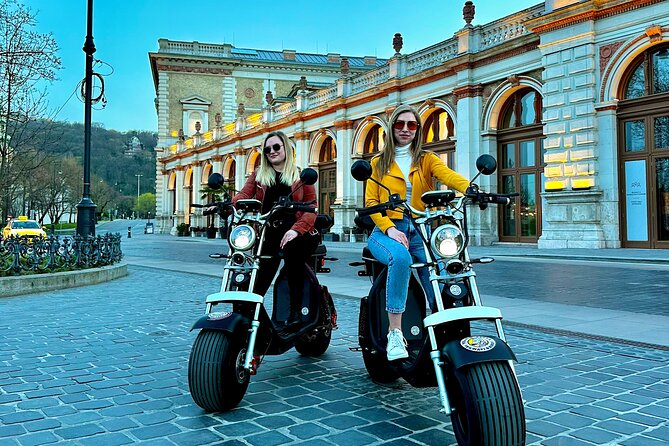
- Included roller rental so you skip the hassle of arranging a vehicle on your own
- Raincoat provided, useful for quick showers and mist off the Danube
- Max 10 travelers, which makes the guide easier to talk to
- Long sightline stops, including a photo window at Fisherman’s Bastion
- Iconic Budapest landmarks packed in, from Chain Bridge to St. Stephen’s Basilica
Why Budapest Looks Especially Good From Electric Rollers
Walking tours are great, but you spend a lot of time crossing streets and catching your breath. On electric rollers, you trade some of that for more consistent motion, which makes it easier to see a broad arc of the city in one sitting. In a place like Budapest, where neighborhoods and viewpoints are close together but not always walk-friendly, that matters.
I also like how this tour is built for “get your bearings fast.” You cover major landmarks on the Buda and Pest sides, plus the stretches between them, so you leave with a mental map you can actually use later. And because it is small, the guide can adjust the pace and field questions without turning it into a rushed lecture.
If your priority is museum time or deep historical detail for hours, this is not designed to replace that. Think of it as the strong, practical overview that sets you up for the rest of your trip.
Meeting at Galamb u. 3: Equipment, Instructions, and a Quick Start
The tour begins at Budapest, Galamb u. 3, 1052 Hungary, where you get your gear and the basics for riding. It is a short stop to get everyone set up, so you will want to show up ready, not still searching for the meeting point.
This is where your comfort level gets tested. Electric rollers depend on balance and simple control, so the instruction time is your best friend. Pay attention to the safety guidance, and ask questions immediately if anything feels confusing. A good moment to do that is right when you are being shown how to start, slow, and stop.
The practical upside is that once you understand it, the rest of the tour flows. You are not stuck trying to figure it out while moving past crowds and traffic.
More flat spins along the embankments:
- Budapest: Grand Sightseeing Bike Tour
★ 4.8 · 984 reviews - Budapest Highlights Bike Tour
★ 5.0 · 770 reviews - Budapest: Guided City Discovery Bike Tour
★ 4.7 · 702 reviews
Riding Past Gellert Hill Viewpoints and the St. Gerard Sagredo Statue
Early on, you make a stop in front of Gellert Hill’s Citadel viewpoint area, tied to the St. Gerard Sagredo Statue. This is a smart opener because it gives you a strong visual reference point for the rest of the route. Seeing Budapest from this angle helps you understand why people come for panoramas.
It is not just about the view either. When your guide points out key landmarks nearby, your later stops make more sense. Even if you have photos already saved in your phone, your brain works differently when you are looking at the skyline in real time.
Timing here is brief, so the best strategy is to keep your phone ready, but also look up for a few seconds without recording everything. That is how you’ll remember the shape of the city later.
Varkert Bazar: A Historic Landmark Stop at the Danube’s Edge
Next you pass through Varkert Bazar. It is described as a historic neo-Renaissance complex built between 1875 and 1883, positioned at the foot of Buda Castle along the Danube. That location is exactly why this stop works on rollers.
If you have only seen Budapest from bridges or wide streets, this is the kind of place that shows the city’s layers. The Danube gives you the horizontal sweep, and buildings like this help you feel the vertical story of Buda rising above the river.
This is a short stop, so treat it like a photo-and-orientation moment. Let your guide explain how the area relates to what you will see on the castle hill routes a bit later.
Clark Adam Square and the “What You’re Looking At” Lesson
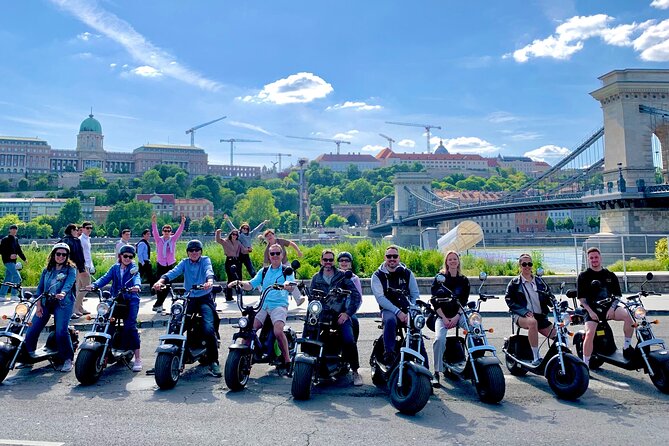
At Clark Adam Square (Clark Adam ter), the guide focuses on several big-picture landmarks and routes: Chain Bridge, the Zero Kilometre stone, the Budapest Castle Hill Funicular, the Buda Castle Tunnel, and the Adam Clark Statue.
This is the stop where you should lean in hardest. The tour quickly becomes more meaningful if you know what these names refer to. Even if you do not plan to take every funicular or tunnel, understanding the infrastructure helps you recognize how people and views connect across the river and hills.
Clark Adam Square also acts like a turning point on the day. After this, you are effectively moving through a “Budapest systems map,” where major routes and viewpoints line up. That is how you get far more sight value than a walking-only approach.
Still to cross in Budapest
- Budapest: City Highlights Sightseeing Cruise★ 4.6 · 43,981 reviews
- Budapest: Unlimited Prosecco, Beer and Aperol Spritz Cruise★ 4.8 · 37,304 reviews
- Budapest: Széchenyi Spa Day Ticket with Optional Upgrades★ 4.3 · 23,911 reviews
Fisherman’s Bastion: The Photo Window With Panoramic Reward
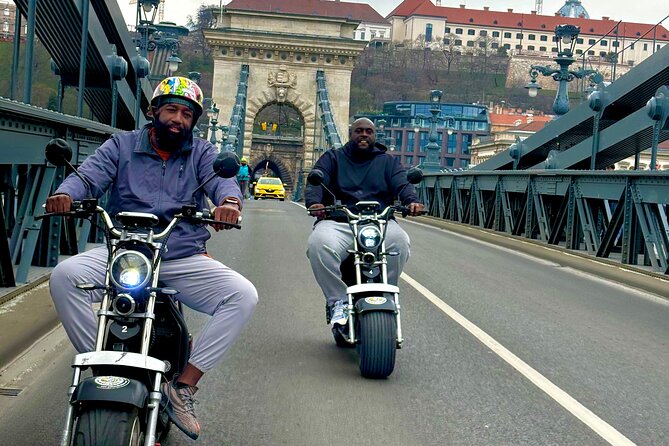
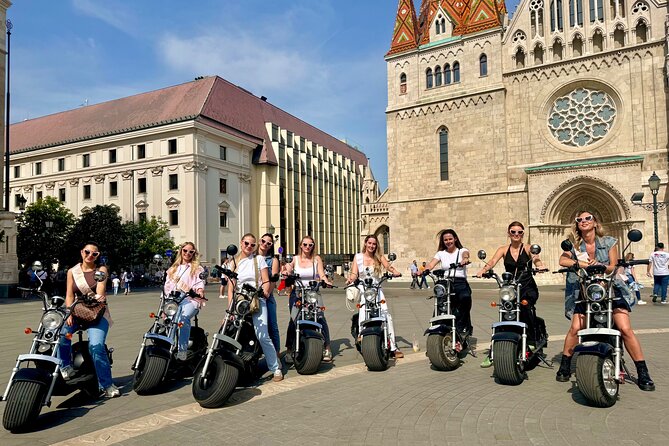
Then you reach Fisherman’s Bastion, one of those places where the views are the whole reason people slow down. You get about 10 minutes of free time to take photos from the top of the hill. In that short block, you will see major landmarks your guide connects to the day’s route, including Matthias Church, Trinity Square, and the Statue of St. Stephen.
What I like here is the pacing balance. You are not forced to stand in one spot with the group the entire time. Free time gives you the chance to pick your angle, adjust for light, and decide what to prioritize for your own photos.
One practical note: if it is windy, plan for it. Hilltop viewpoints can be cool and gusty, and that can affect how comfortable it feels to keep your hands steady for photos.
Chain Bridge Crossing: A Key Link Between Buda and Pest
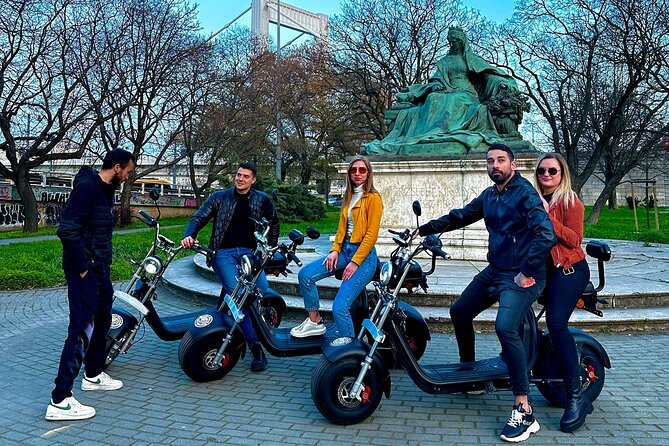
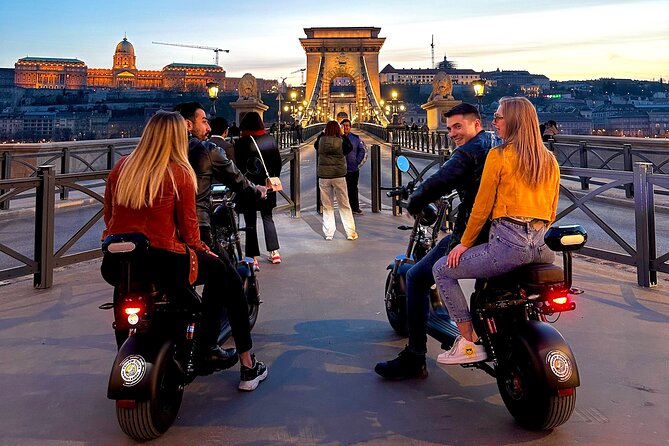
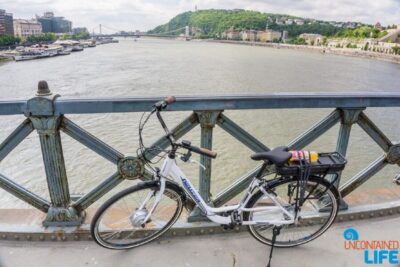
A major segment is when you cross Chain Bridge. This is one of those “you recognize it instantly” moments, and having it in the middle of the tour is helpful. You are already seeing Buda’s rise, then you connect it visually to the flatter layout of Pest.
This bridge is also a great time to look at the river geometry. Budapest’s beauty is not just single buildings. It is the way the Danube frames them.
Your guide’s running commentary is particularly useful during this part. When someone explains what you are seeing while you are actually moving across it, the city starts to click in a way that photos alone rarely do.
Shoes on the Danube Bank: A Serious Stop That Changes the Mood
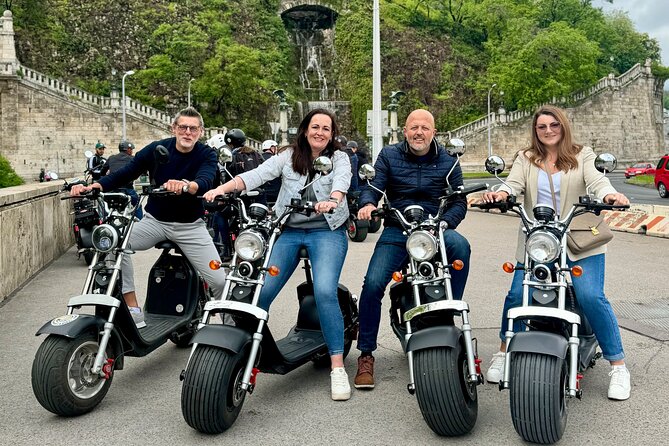
After the river crossing, you come to Shoes on the Danube Bank, a Holocaust memorial of iron shoes. It is only a short time on this stop, but it hits hard, because it is designed for reflection in place.
I appreciate that the tour does not treat this as just another quick photo stop. Even with limited minutes, it is worth taking a moment to read or at least process what you are looking at. This is one of the few points on the route that shifts the tone from “sightseeing” to “memory.”
If you are traveling with kids, keep the moment age-appropriate in your own words. The tour is still moving, but you can pause mentally and guide your group gently through what it means.
Hungarian Parliament and Liberty Square: Seeing Power and Scale
Next is the Hungarian Parliament Building, the main building in Hungary. You only get a brief stop, but it is enough time to appreciate its scale and to connect it to the city’s layout.
After that, the route includes Liberty Square. The time here is not long, so treat it like a skyline and landmark check-in. Use it to spot how the city opens up around the major institutions and squares you already have in your mental list.
This portion of the tour can be a highlight if you like big architectural visuals without committing to a full walking loop. If you prefer quiet time, you might feel the tempo is fast. Still, the quick stops do a good job of getting you the “wow factor” efficiently.
St. Stephen’s Basilica Finish: A Strong Ending Point
The tour wraps with St. Stephen’s Basilica (Szent Istvan Bazilika), described as the most important and largest churches in Hungary. This is a fitting ending because basilicas and domes give you a clear final anchor for your photos and your memories.
You get about 5 minutes here, which is long enough to admire the structure and position yourself for a few shots. If you want to go deeper later, this stop is the perfect setup. The basilica is the kind of place you can return to on your own with a longer schedule once you know where it sits relative to everything else.
After that, you head back to the office, completing the loop at the original meeting point.
Small-Group Ride, English Guidance, and Asking for Sam
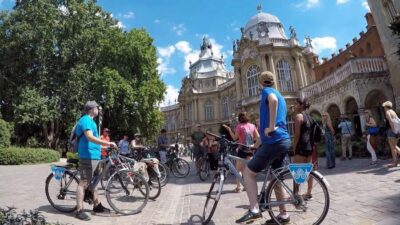
This tour is offered in English, and the group size is capped at 10 travelers. That smaller number matters more than people think. It makes it easier to hear explanations, easier to ask questions, and less stressful when someone needs an extra reminder for control or safety.
One name shows up strongly in the feedback: Sam. If your schedule lines up and Sam is available, I would treat that as a lucky break. Reviews specifically call out Sam as friendly and informative, and that lines up with what you want from a guide on a riding-based tour. The best guides do two things at once: they keep things moving safely, and they make the sights make sense while you are actually seeing them.
On your end, the best question to ask is simple: What should I look for right after this stop, not later? You’ll get the most value if your guide helps you focus in the moment.
Price and Timing: Is $60.34 Worth It for 2.5 Hours?
At $60.34 per person for about 2 hours and 30 minutes, the value is mostly about what is included and how much ground you cover. You do not need to line up vehicle hire, because the tour includes the rental. You also get a raincoat, which is one of those small inclusions that can save your day if weather shifts mid-route.
The itinerary is also tightly stacked: major viewpoints, river landmarks, and large iconic buildings. That density is exactly where electric rollers win. Walking the full set of sightlines at this pace would likely take you much longer, and you would spend more time moving between them without the same “see it now” payoff.
The one tradeoff is time depth. You do not get long museum-style sessions at each stop. If you want that, you should use this as a guided overview, then come back later to the places that grabbed you.
What to Wear and How to Prepare for a Comfortable Ride
You do get a raincoat, so you will be covered for light rain. Still, think about comfort for a moving ride on uneven surfaces. Wear shoes that give you grip and let you stand comfortably for short periods.
Bring the usual city tools: a phone for photos, water if you like it, and something to keep your hands comfortable if it is windy at viewpoints. Since the tour is about motion and stops, you do not want to fight with bags or loose items while riding.
If you are worried about riding basics, say so early. The best time to fix uncertainty is at the start during instructions, not mid-ride.
Who This Tour Fits Best in Budapest
This is a tour where most travelers can participate, and children between 7 and 15 are permitted to sit behind an adult. So it can work for families who want a shared sightseeing experience without splitting into two different plans.
It is also a good match if you:
- want a fast, guided way to learn the city layout
- prefer seeing several big landmarks rather than one neighborhood slowly
- like photo windows with guidance, like at Fisherman’s Bastion
If you are someone who prefers to spend most of the day on foot, or you need lots of time inside places, you may find this too quick. Think of it as a smart “orientation tour” plus major landmark hits, not a substitute for slower independent exploring.
Should You Book This Monster Bike City Tour?
I would book it if you want a high-value Budapest overview where you get the vehicle rental included, a small-group vibe, and a lineup of recognizable stops that make the city click quickly. It is especially appealing if you are short on time but still want both skyline viewpoints and Pest-side landmarks.
Skip it if riding feels like a deal-breaker for you, or if you want lots of time inside churches, museums, or historical buildings. In that case, a slower walking plan might suit you better.
If you can, check availability and consider reserving ahead. On average, this kind of tour is booked about 28 days in advance, which is a sign it fits a lot of travel schedules.
FAQ
How long is the Monster Bike Sightseeing Tour in Budapest?
It lasts about 2 hours 30 minutes.
What does the tour cost?
The price is $60.34 per person.
Where do I meet the tour?
The meeting point is Budapest, Galamb u. 3, 1052 Hungary, and the tour ends back at the same location.
Is the electric roller rental included?
Yes. The tour includes the rental and equipment.
What language is the tour offered in?
The tour is offered in English.
Is there a group size limit?
Yes. The maximum is 10 travelers.
Are raincoats provided?
Yes. A raincoat is included, so you can explore in different weather.
Can kids join?
Children between 7 and 15 can sit behind an adult.
Do I get free admission at the stops?
The stops listed include admission ticket free.
The newest crossings added in Budapest




Cycling Tours, compared.
Browse the lists this tour appears in