
Reviewed · 1-DAY TOURS
From Vienna: Bratislava & Budapest Guided one day Round Tour
Two capitals in one day, no stress. This guided round tour keeps the pacing easy while still hitting the big emotional spots, starting with Bratislava Old Town stories at Michael’s Gate and St. Martin’s Cathedral, then switching to Budapest with clear orientation around the Hungarian Parliament Building and Chain Bridge. I really like the small-group feel and the built-in free time that lets you grab a pastry, shop a bit, and take photos at your speed, but the tradeoff is simple: the full day is long at 13.5 hours, so you need comfortable shoes and realistic expectations.
I also like how the guide team uses practical storytelling, not lectures. In one December booking, the main guide worked with a colleague named Michael, and that tag-team approach made the history feel shared, not forced, with extra energy when the group moved from stop to stop. Optional add-ons like Devín Castle and Győr are great if conditions allow, but if you prefer a totally fixed schedule, keep in mind those pieces depend on time and daylight.
You start in Vienna, ride toward Slovakia, and reach Bratislava quickly. Then it’s castles, old streets, and views over the Danube, followed by Budapest’s bigger scale, grand architecture, and riverfront memorials. By the time you head back to Vienna, you should feel like you saw two capitals as living cities, not just postcards.
In This Review
- Key things I’d circle before you book
- Two capitals, one day: how the rhythm stays manageable
- Bratislava Old Town walk: Michael’s Gate to St. Martin’s Cathedral
- Bratislava Castle with Danube views that reach into two countries
- Devín Castle optional stop: when the day needs a calm pause
- Győr on the way to Budapest: Baroque streets without the detour stress
- Budapest orientation on both sides of the Danube
- Hungarian Parliament, Chain Bridge, and the Danube memorial moment
- Free time in Bratislava and Budapest: what you can actually do
- Price and value: why $111 can work for the right traveler
- Who should book, and who might prefer a different plan
- Should you book the Vienna to Bratislava and Budapest one-day combo?
- FAQ
- How long is the tour?
- Is hotel pickup and drop-off in Vienna included?
- Is there free time to explore on my own?
- Are Devín Castle and Győr guaranteed stops?
- What languages is the live guide available in?
- What should I bring, and is cancellation flexible?
Key things I’d circle before you book
- Old Town orientation that makes Bratislava feel walkable, including Michael’s Gate and St. Martin’s Cathedral.
- A guided Bratislava Castle visit where you learn what changed over centuries, with Danube and cross-border views on clear days.
- Budapest’s Pest-to-Buda contrast explained with simple, clear geography so Fisherman’s Bastion actually makes sense.
- Big-photo stops with a human pace, including Parliament and Chain Bridge, plus Danube riverfront time.
- Optional extras that can turn the day greener or calmer, like Devín Castle and the Baroque town of Győr.
- Free time in both capitals, so you can eat, shop, or just sit with a warm drink.
Two capitals, one day: how the rhythm stays manageable
This tour is built for people who want two different Central European city vibes without doing the classic rushed “see everything, remember nothing” loop. The total duration is about 13.5 hours, and yes, it is a full day with driving. But the schedule is arranged in tight blocks, with guided time at each major stop and real breathing room afterward.
Transfers are done by air-conditioned van, and pickup is included from any accommodation in Vienna. That matters more than it sounds, because you do not waste time hunting for a meeting point while your feet are already getting sore.
You also get small comforts that add up on a long day: bottled water, a small local snack, and even an optional tasting of local wines and spirits. Those little details are exactly what keeps the day from feeling like a nonstop sprint.
One practical consideration: some stops are labeled optional and time-dependent, so your experience can shift slightly based on daylight and the flow of the day. If that sounds stressful, you can still plan your mindset around the core Bratislava and Budapest highlights, which remain the backbone.
Bratislava Old Town walk: Michael’s Gate to St. Martin’s Cathedral
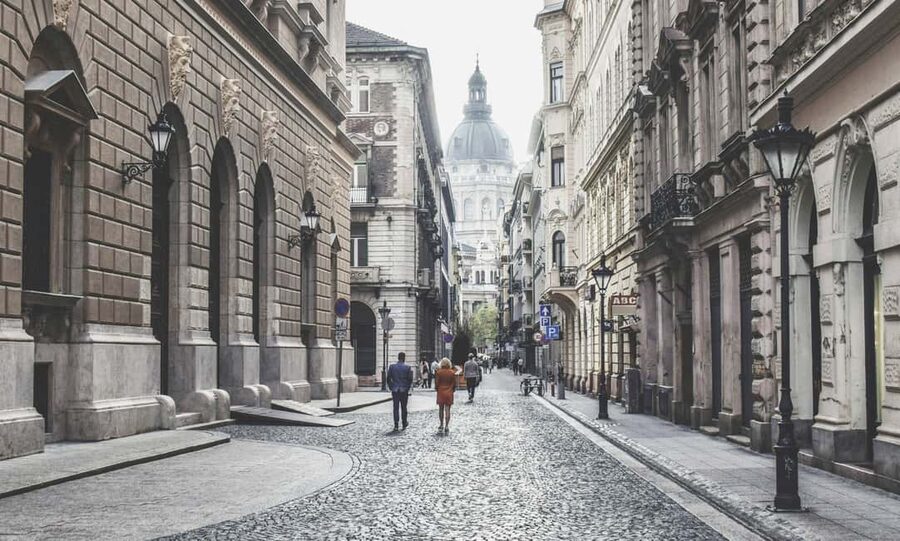
Bratislava works best when you have orientation first. The guided start through the Old Town does that job, and it does it without making you memorize a map. You’ll pass Michael’s Gate, the Main Square, and St. Martin’s Cathedral, then continue along small, cozy streets where everyday life and centuries of architecture sit close together.
I like this approach because it teaches you how to read what you’re seeing. Instead of throwing dates at you, the guide focuses on stories that make the city understandable. That means when you later look back at the skyline or the square, it feels connected, not random.
The pacing is also friendly. You get about 45 minutes of guided Old Town time, then you’re not immediately forced into the next thing. You get additional free time (about 75 minutes) in Bratislava, which is where you can slow down and do the stuff that makes a city feel real: eat something, browse, or simply walk without listening for the next cue.
If you’re someone who gets overwhelmed by big-city information dumps, this is a good pattern. It’s structured enough to guide you, but flexible enough to keep you in control.
Bratislava Castle with Danube views that reach into two countries
After the Old Town, the tour heads to Bratislava Castle, the bright white landmark above the Danube. The guided portion is short, about 30 minutes, but it’s purposeful: you tour around the terraces and courtyards and learn how the fortress changed shape through kings, wars, and rebuilds.
What makes this stop worth it is the viewpoint. On clear days, you can look across toward Austria and Hungary. Even if the weather is less cooperative, you still get that “how can a place feel this strategic?” sense, because you’re seeing the Danube corridor from the high ground.
One good detail: after learning the fortress story, you’ll have context for why the river matters so much here. Bratislava is smaller than many European capitals, which makes the castle views feel more intimate than you might expect. You’re not battling crowds to get a photo, and the skyline is easier to read.
This is also a good moment to regroup mentally. Your guided time has explained what you’re looking at. The rest of the day shifts into Budapest’s larger, more dramatic feel, and it helps to have a castle stop as your visual reset button.
Devín Castle optional stop: when the day needs a calm pause
Devín Castle is optional, and that’s for a good reason. If you have the time and daylight, it adds a quieter, scenic layer to the day.
Devín sits above the meeting point of two rivers, and even a shorter visit can give you that “ancient settlement made sense here” perspective. The vibe is less about grand interiors and more about open air, river views, and the feeling that people have been using this place as a crossroads for a very long time.
If your goal is mostly landmarks and city scenes, you can skip it and still have plenty of Bratislava time. But if you want one moment in the day that feels slower and more atmospheric, Devín Castle is the likely candidate.
Keep your expectations practical. The tour doesn’t promise a full excursion. It’s a guided visit designed to fit inside a packed one-day format.
Győr on the way to Budapest: Baroque streets without the detour stress
Between Bratislava and Budapest, there may be a stop in Győr, a Baroque town with colorful streets and a relaxed mood. Győr is also optional, and the guided time is about one hour.
Think of Győr as a palate cleanser. Budapest is big, and Bratislava is compact. Győr lives in between in feel, with a traditional town atmosphere that helps you understand how Hungarian life looks beyond the capital centers.
Because it’s short, you won’t walk away with a thesis on Hungarian art. But you will get something that the capitals alone sometimes miss: street scale. You see what everyday city movement looks like when you’re not under the spotlight of the main monuments.
If you’re the type who loves getting even a small “local town” stop on a day tour, this is a nice add-on. If you prefer to maximize your time only in the headline cities, treat Győr as a bonus.
Budapest orientation on both sides of the Danube
Budapest arrives with an immediate contrast. Where Bratislava feels welcoming and compact, Budapest is larger, more dramatic, and full of architectural statements.
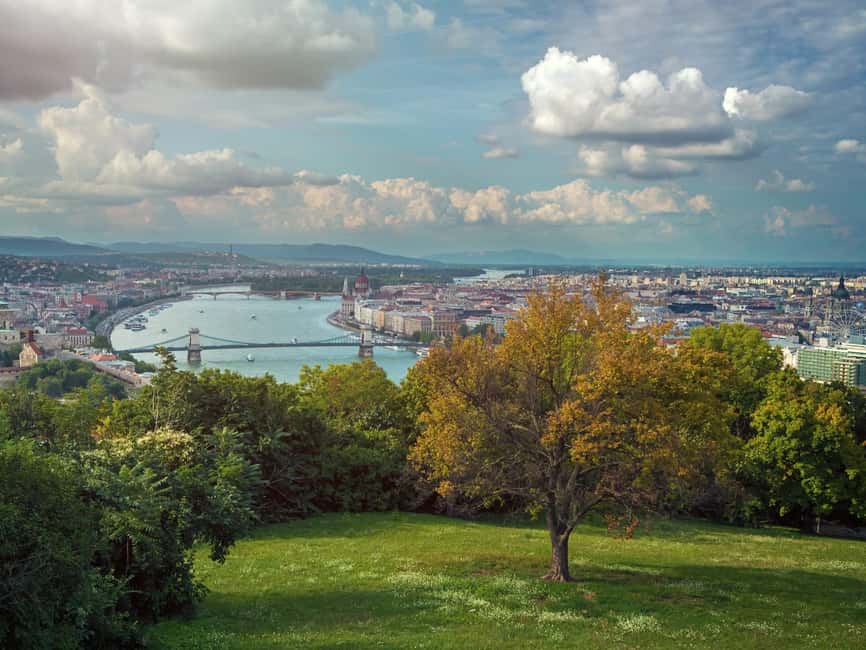
The guided portion starts on the Pest side and focuses on orientation: elegant squares, a basilica area, and the riverfront. The guide explains how the city grew through different empires and how it became a cultural center in Central Europe. That context helps you connect the dots as you move from one landmark view to the next.
Then you cross the river into Buda, where the mood softens. This is where the tour leans into the best postcard geometry: the castle district and Fisherman’s Bastion. The guide explains the difference between Buda and Pest and how the two sides eventually became one city.
This Pest-to-Buda explanation is more than trivia. It helps you understand why you’re seeing the Parliament building framed in the river view, why Fisherman’s Bastion feels like a crown above the water, and why Budapest’s skyline can look theatrical from so many angles.
Hungarian Parliament, Chain Bridge, and the Danube memorial moment
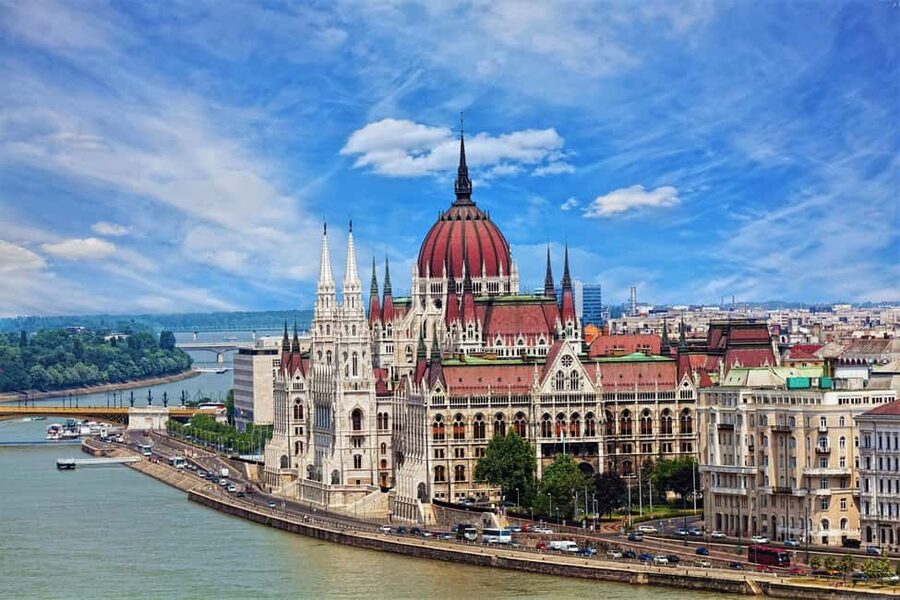
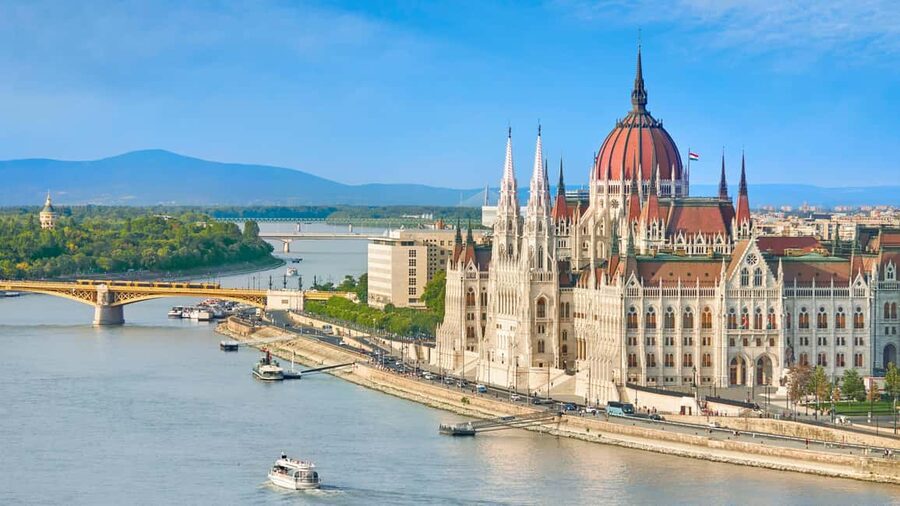
In Budapest, you get guided stops at major photo-and-understanding points, including the Hungarian Parliament Building and the Chain Bridge, each with about 30 minutes guided time.
This is also where the tour can hit emotional depth. One highlight from a past booking was a visit to the Shoes on the Danube Bank. That memorial is heavy, and the value is in how it gives the Danube story a human weight, not just a scenic one. If you prefer your sightseeing light and upbeat, just know this part of the riverfront can be emotionally intense.
The good news: the overall day keeps moving. After you absorb something serious, you still have free time to shift gears.
Free time in Bratislava and Budapest: what you can actually do
Free time is not filler here. It’s part of the design, so you’re not stuck feeling like you’re only passing through.
In Bratislava, you get about 75 minutes of free time after the Old Town. In practice, that’s enough to do one meal or a snack, pop into shops, and take your own photos without being rushed. The tour is well-paced, so this break feels like a reward, not a reset.
In Budapest, there’s guided time and then additional room to roam. You’ll have about 20 minutes around the Buda side, then about 1.5 hours of free time in Budapest afterward. This is where you can:
- grab a traditional pastry
- browse shops
- take photos along the river
- sit with a warm drink and just watch the city
If you’re traveling in December, one booking specifically mentioned enjoying Christmas markets and cafés in Budapest. Even if your trip is outside that season, the same free-time idea still works. You can treat Budapest like a choose-your-own-adventure, not a checklist.
Price and value: why $111 can work for the right traveler
The price listed is $111 per person, and the value is driven by what’s included, not just the number.
You’re paying for:
- pickup and drop-off in Vienna
- air-conditioned van transport
- guided local tours at each stop
- free time for photos and meals
- bottled water and a small local snack
- an optional wine and spirits tasting
On a route like this, the biggest costs are usually transportation and paying for guides separately. Doing it as one bundled day makes sense if you’re short on time and want someone to manage the route, the sequencing, and the story behind what you see.
Where the price can feel less worth it is if you personally dislike group travel or if you want long, slow museum time. This is a “see the highlights plus learn how to look” day, not a deep-dive into one theme. If that sounds like your style, the cost lines up well.
Who should book, and who might prefer a different plan
This tour fits best if:
- you’re seeing Vienna and want a high-impact day outside Austria
- you’re a first-timer in Bratislava or Budapest and want orientation fast
- you like guided context but still want freedom to eat and wander
- you enjoy seeing contrasts, Bratislava’s compact charm and Budapest’s big-scale architecture
You might want a different plan if:
- you have very limited mobility or hate long days on your feet (there is wheelchair access, but it’s still a long day with multiple stops)
- you want lots of museum time or a fully unhurried pace
- you prefer a trip with no optional stops and no variation in what you see
The day is long, but the structure helps. The guide approach, the short guided blocks, and the repeated free-time breaks keep you from feeling trapped in the van.
Should you book the Vienna to Bratislava and Budapest one-day combo?
Yes, if you want one well-organized day that teaches you how to read both cities. The combination of Bratislava Old Town, Bratislava Castle, and Budapest’s Pest-to-Buda viewpoint is a smart way to get a real sense of place, not just landmark photos.
Also, the inclusions help the day feel easier, especially the hotel pickup, transport, water, and snacks. That reduces stress, which matters on a 13.5 hour schedule.
If you’re the type who gets cranky when a day is packed, plan for it. Bring your best walking shoes, keep your expectations flexible for optional stops like Devín Castle and Győr, and use the free time to reset.
If you do that, you’ll likely come away with a vivid sense of how these two capitals share a region, but not the same mood.
FAQ
How long is the tour?
The duration is listed as 13.5 hours, including the driving time from Vienna to Slovakia, then to Hungary, and back to Vienna.
Is hotel pickup and drop-off in Vienna included?
Yes. The tour includes pickup and drop-off in any accommodation in Vienna.
Is there free time to explore on my own?
Yes. You get free time at major stops, including Bratislava (about 75 minutes) and Budapest (about 1.5 hours). There is also shorter free time on the Buda side (about 20 minutes).
Are Devín Castle and Győr guaranteed stops?
They are described as optional. Devín Castle and the stop in Győr may be included if time and daylight allow.
What languages is the live guide available in?
The live tour guide is available in English, Arabic, Chinese, Traditional Chinese, and German.
What should I bring, and is cancellation flexible?
Bring comfortable shoes and weather-appropriate clothing. The tour offers free cancellation up to 24 hours in advance for a full refund.
1-Day Tours, compared.


One Day Wonder Hike – The Essence of the Danube Bend
Read our review →
Budapest Puszta Day Trip to Kecskemet with Horse Show & Lunch
Read our review →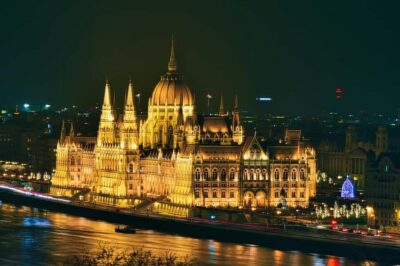
Hévíz Wellness Escape: Thermal Lake Day Trip from Budapest
Read our review →Browse the lists this tour appears in