Reviewed · HALF-DAY
Capital Budapest – Half Day Private Tour (4hr)
Four hours, and Budapest clicks into place.
This private half-day route is built to help you see the key sights in both Buda and Pest, with handy local travel along the way. I like that it mixes famous views like Fisherman’s Bastion with major civic landmarks, so you get variety without the whole-day grind.
My favorite part is the mix of practical transit and prime stop locations. You’ll use the Metro Line M1, and the itinerary is paced around where people actually move through the city. I also appreciate the human touch, including the guide Miklos, who shows the “why” behind the sights with lots of engaging historical stories.
One thing to think about: several big sights on the route are listed with admissions not included, so plan a little extra for tickets if you want to go inside. Also, the Castle District connections mean some uphill street time for photos and viewpoints.
In This Review
- Key highlights to expect
- How this private 4-hour route works, from pickup to Astoria
- Riding Metro Line M1 like a shortcut, not a hassle
- Liberty Bridge to Castle District viewpoints, the Budapest “wow corridor”
- Dísz tér and the Buda Castle approach, where the streets feel historical
- Fisherman’s Bastion and Matthias Church: the iconic skyline, plus a bonus church stop
- Vienna Gate Square to Széll Kálmán tér: from old stone to transport reality
- Heroes’ Square and the Hungarian Parliament: big civic Budapest in one pull
- St Stephen’s Basilica and the Great Synagogue area: two different forms of landmark gravity
- Kamara Café at the end: a included drink that makes the tour feel complete
- Price and value for a $489.24 private group of up to 4
- Who should book, and who might want a different style
- Should you book Capital Budapest Half Day Private Tour?
- FAQ
- How long is the Capital Budapest half day private tour?
- Is pickup available, and where is the tour start?
- Does the tour include public transportation?
- What’s included in the price?
- Are tickets for major sights included?
- What times is the tour offered?
- What happens if I need to cancel or the weather is poor?
Key highlights to expect
- A fast loop across Buda and Pest in about four hours, so you are not guessing where to start
- Metro Line M1 included, which is the oldest Budapest underground and a shortcut between areas
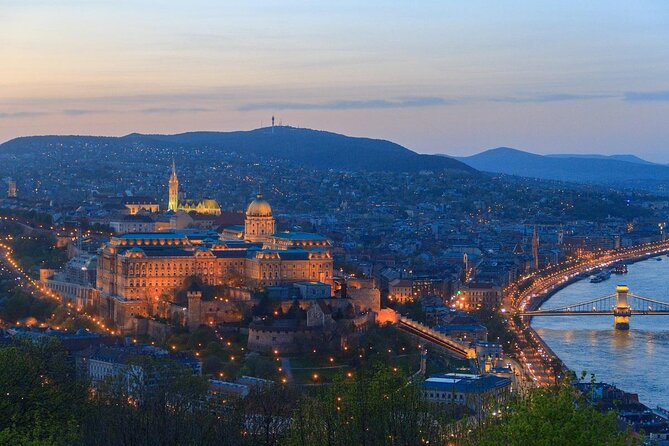
- Castle District photo stops grouped together, including the view arc toward Fisherman’s Bastion and the Royal Palace area
- Free walk-by moments at Liberty Bridge and Heroes’ Square, so you can spend time where you want
- Major landmarks with ticketed options, including Fisherman’s Bastion, Matthias Church, Parliament, St Stephen’s Basilica, and the Great Synagogue
- A included break at Kamara Café, with one hot or cold drink to slow down and plan the rest of your trip
How this private 4-hour route works, from pickup to Astoria
This tour is designed as a tight highlight circuit with a private guide, for up to four people. You start either with pickup at your hotel in Budapest or at a central agreed meeting point, then you end in the downtown area near Károly körút, with Astoria Metro noted as the endpoint. There is also flexibility where the tour ends based on a personalized itinerary.
The timing is about four hours, which is enough to get the “I get it now” feeling without running on empty. You are not just staring at landmarks from far away either, because the route includes key squares and viewpoint streets that show how Budapest is laid out across the Danube.
One practical note: you will move between areas, so having a plan for comfortable shoes and a small water habit is smart. The good news is that the tour includes a public transport pass, plus a city map and a notebook with pen, so you leave the tour with tools for the rest of your day.
Riding Metro Line M1 like a shortcut, not a hassle
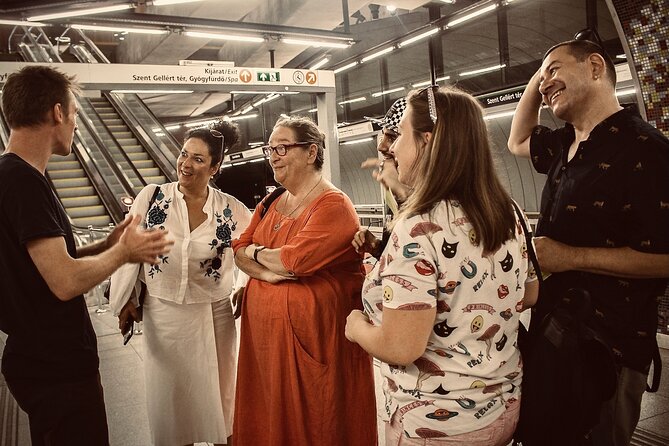
A standout feature here is transportation. The tour specifically uses Metro Line M1, officially the Millennium Underground Railway. It is the oldest line of the Budapest Metro, the first underground on the European mainland, and the world’s third oldest after the London Underground and Liverpool’s Mersey Railway.
That matters because it is not just about getting somewhere. You are using a historic transit line that helps you connect Pest and downtown nodes efficiently, which keeps your half-day focused on seeing things, not transferring trains endlessly. Plus, it is a great way to get that practical orientation early in your trip.
You also get a public transport pass included, so you are not doing math on tickets mid-day. It is a small thing that makes the whole experience smoother, especially if you arrive in Budapest with jet lag and limited patience for ticket counters.
Still to cross in Budapest
- Budapest: City Highlights Sightseeing Cruise
★ 4.6 · 43,981 reviews - Budapest: Unlimited Prosecco, Beer and Aperol Spritz Cruise
★ 4.8 · 37,304 reviews - Budapest: Széchenyi Spa Day Ticket with Optional Upgrades
★ 4.3 · 23,911 reviews
Liberty Bridge to Castle District viewpoints, the Budapest “wow corridor”
Your first big visual cue is Liberty Bridge (Szabadság hid), connecting Buda and Pest across the Danube. It is the third southernmost public road bridge in Budapest, and it was originally named the Franz Joseph Bridge. This is a short stop, listed at about 10 minutes with admission free, so treat it as a quick orientation moment and photo chance rather than a long stay.
Then you start stepping into Buda’s personality. St Gellért Square is next, named after Bishop St Gellért, known as the Martyr for Hungarian Christendom. Even if you are only stopping briefly, it is a useful way to see how Budapest’s street naming and plazas point to local identity.
From there, you pass through Clark Square, where major streets converge and transportation funnels in and out. The flower-laden roundabout in the middle is a longtime Budapest feature, and this kind of stop is underrated because it shows you the city’s daily rhythm, not just its museum-grade landmarks.
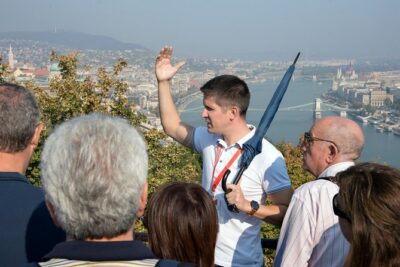
Finally, the route turns toward the Buda Castle area, right under Fisherman’s Bastion toward the Royal Palace for photos. This is where the itinerary starts to pay off, because you get a perspective of how the Castle District sits above the Danube. It is one of the best ways to understand Budapest’s layers quickly.
Dísz tér and the Buda Castle approach, where the streets feel historical
Dísz tér is an old-residential square in the Castle District area, running north-south through central Buda. In the Middle Ages it had simpler Gothic houses, and the remains can still be found in foundations and walls of several houses. That is the kind of detail that helps the place feel lived-in rather than just postcard-perfect.
In practice, your stop here is a turning point. It sets you up for Fisherman’s Bastion by placing you in the Castle District flow, where narrow streets, stone surfaces, and dramatic viewpoints push you to look around. You are getting the “shape” of the area before you hit the big photo platform.
There is also a practical advantage to placing Dísz tér before Fisherman’s Bastion. You are not simply dropping you at the headline viewpoint and sending you away. You are walking the middle steps that make the viewpoint make sense.
If you are someone who likes architecture and street context, this portion is especially rewarding. If you prefer only major monuments with interiors, it might feel like a prelude, but it still strengthens your understanding of where the sights are in relation to each other.
Fisherman’s Bastion and Matthias Church: the iconic skyline, plus a bonus church stop
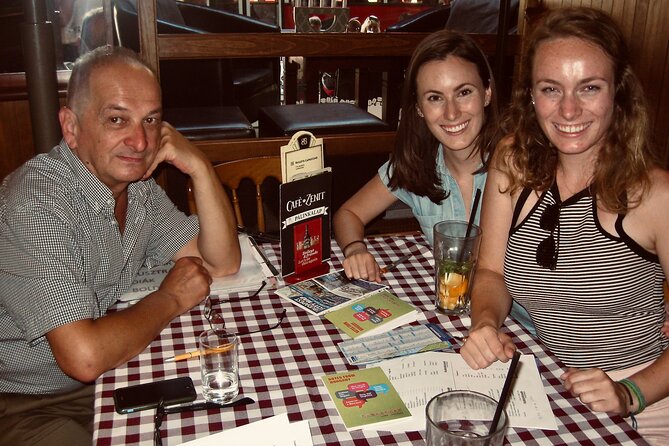
Fisherman’s Bastion (Halászbástya) is one of Budapest’s most photographed spots, and the itinerary treats it accordingly with about 10 minutes. The big draw is the panorama from the Neo-Romanesque lookout terraces near Buda Castle. The seven high-pitched stone towers symbolize the seven chieftains of the Hungarians who founded Hungary in 895.
Admission is not included for this stop, so you will want to decide quickly whether you are going for the viewpoints inside the complex or just snapping outside views. The time allocation suggests you should aim for the best views without over-committing.
Matthias Church (Mátyás-templom) is next, also listed at about 10 minutes and admission not included. It sits right in front of Fisherman’s Bastion in the Castle District and is Roman Catholic. Tradition says it was originally built in Romanesque style in 1015, though no archaeological remains exist.
What I like about pairing these two stops is how they complement each other. Fisherman’s Bastion gives you the wide city sweep, and Matthias Church adds a strong focal point at human scale. Together, they help you see the area as both scenery and story.
If you are short on time, this is the right way to spend it: quick orientation, then a photo-forward plan, then move on before your energy drops.
Back across the water in Budapest:
- Budapest: Nighttime or Daytime Sightseeing Cruise★ 4.2 · 21,062 reviews
- Budapest: By Night Sightseeing Cruise with Welcome Drink★ 4.3 · 15,533 reviews
- Budapest: St. Stephen’s Basilica Entry with Options★ 4.6 · 12,322 reviews
Vienna Gate Square to Széll Kálmán tér: from old stone to transport reality
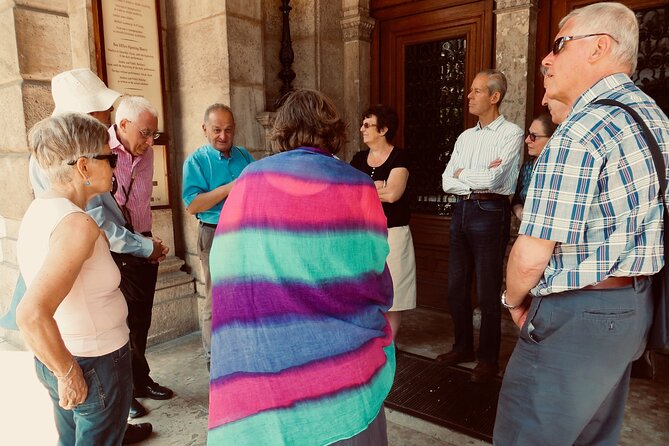
After the Castle District highlights, the route shifts to other key areas that help you understand Budapest beyond the postcard zone. You pass by the square connected to the Vienna Gate (Bécsi kapu). The name points to its historical role as a port connecting the Castle with the highway to Vienna.
That kind of detail sounds small until you realize it explains why certain streets matter. It is a reminder that roads and city gates shaped movement long before today’s maps and signs.
Next is Széll Kálmán tér, a major transport interchange and often considered the center of Buda due to traffic and surrounding stores, including the Mammut shopping mall. This is also a historical name note: it was formerly known as Moszkva tér, or Moscow Square, between 1951 and 2011. Even if you do not go inside anywhere here, it is useful because it grounds your day in how people actually travel.
This stop also keeps the itinerary moving. Instead of getting stuck in one district for too long, the tour threads you into a transit and city-life node that makes it easier to continue to Pest highlights.
Heroes’ Square and the Hungarian Parliament: big civic Budapest in one pull
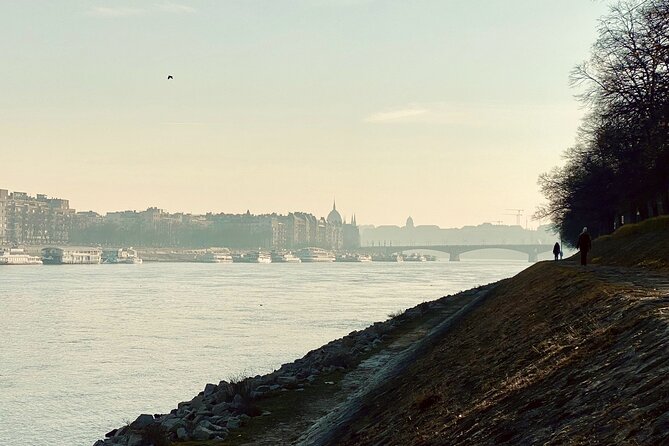
Heroes’ Square is one of Budapest’s major squares, and it is scheduled for about 15 minutes with admission free. The statue complex is the centerpiece, featuring the Seven chieftains of the Magyars and other important Hungarian national leaders, plus the Memorial Stone of Heroes, sometimes mistakenly called the Tomb of the Unknown Soldier.
I like this stop for two reasons. First, it gives you a clear national-symbol view in a way that is hard to replicate on your own in a short time. Second, it breaks up the day with open space, which is a nice reset after the tighter Castle District streets.
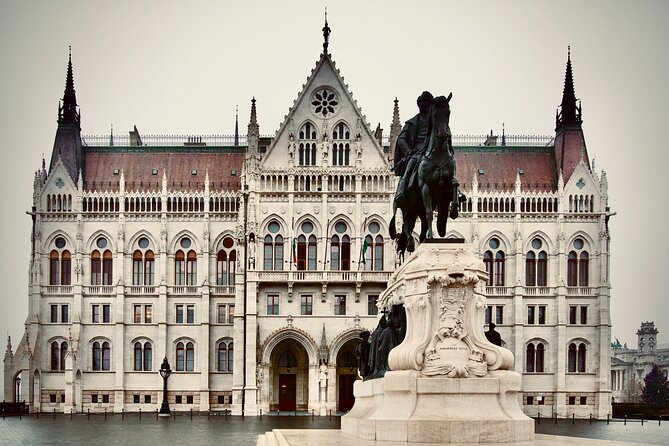
Then comes the Hungarian Parliament Building, also about 15 minutes. Admission is not included here. The building is the seat of Hungary’s National Assembly, and it is designed by Imre Steindl in neo-Gothic style, opened in 1902. It is described as the largest building in Hungary since completion.
If you plan to go inside, this is where you might spend your ticket budget. If you do not, you can still enjoy the exterior and the sense of scale. Either way, parking it on Kossuth Square gives you the right setting, because it is on the Pest side of the Danube, facing the surrounding institutions and squares.
St Stephen’s Basilica and the Great Synagogue area: two different forms of landmark gravity
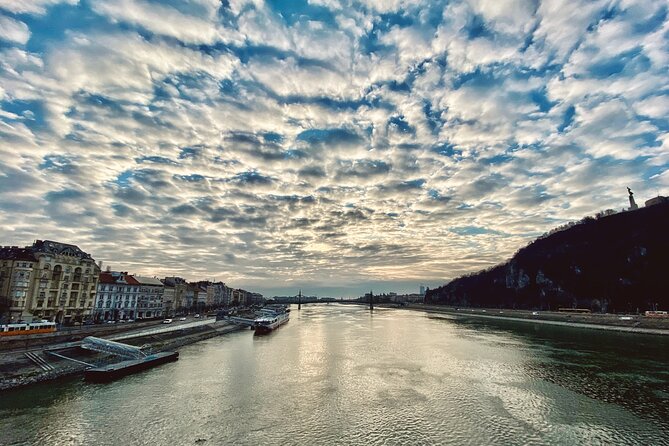
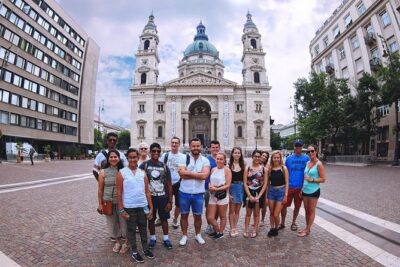
St Stephen’s Basilica (Szent Istvan Bazilika) is another about-15-minute stop, with admission not included. It is named for Stephen, the first king of Hungary, whose supposed right hand is housed in a reliquary. The basilica’s scale is noted in the description, and it is also described as having been one of the largest church buildings in Hungary before 1920.
This stop works well because it adds variety. Earlier landmarks have a defensive or civic mood. Basilica time feels different, more spiritual and architectural in tone.
After that, you reach the area near Deák Ferenc tér, and the itinerary notes a nearby park where young people gather and alcoholic beverages are sold in the grassy area, common until midnight. This is a small cultural snapshot built into the route, showing you how people use public space at night and on breaks.
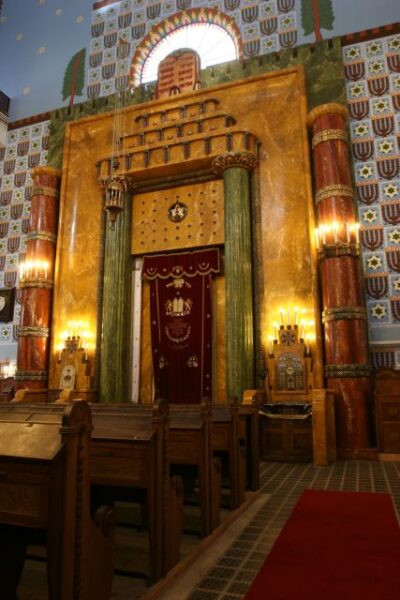
Finally, you visit the Great/Central Synagogue (Nagy Zsinagoga), also about 15 minutes with admission not included. It is the Dohány Street Synagogue, described as the largest synagogue in Europe, seating 3,000 people, and a center of Neolog Judaism.
Even if you skip interior time, the synagogue area is powerful because it is a major identity landmark. If you do want to go inside, this tour’s pacing gives you the chance to decide based on how you are feeling and how much time you have left.
Kamara Café at the end: a included drink that makes the tour feel complete
The closing move is simple and smart: Kamara Café, with about 30 minutes and one hot or cold beverage included. It is positioned near the synagogue area, which gives you a low-stress wrap-up after walking and landmark spotting.
This is more than a random stop. The tour explicitly frames it as a chance to slow down, practice Hungarian, and plan how to get the best out of the rest of your stay. That matters if you are traveling with specific interests, like architecture, food neighborhoods, or just choosing the right next museum without wandering blindly.
The included beverage also helps the value feel real. You get time to sit, think, and mark which sights you want to return to later under your own schedule.
Price and value for a $489.24 private group of up to 4
The price is $489.24 per group for up to four people, for about 4 hours. If you fill the group, you are roughly looking at about $122 per person, which can feel reasonable in a city where private, guide-led time is expensive. Even if you do not fill all four spots, you are buying convenience, pacing, and decision-making help.
What makes this feel like value is what is included:
- a public transport pass, so you can use the Metro smoothly
- a city map to support your next moves
- a notebook with pen, helpful for notes as you go
- one hot or cold drink at Kamara Café
What is not included is equally important. Several major stops list admission not included: Fisherman’s Bastion, Matthias Church, Hungarian Parliament Building, St Stephen’s Basilica, and the Great Synagogue. Liberty Bridge and Heroes’ Square are listed as free. So the true budget depends on how many interiors and ticketed viewpoints you want.
My advice is to treat this as a smart way to build your Budapest route, then add paid visits based on your priorities. That keeps the cost under control and avoids the classic problem of paying for everything just because it is on the itinerary.
Who should book, and who might want a different style
This works best if you want a guided highlight framework without spending your whole day in transit. The itinerary mixes iconic spots with square-level city context, so it suits first-timers who want direction and also people who have visited before and want help choosing what to revisit.
It is also a good match for small groups who value flexibility. Because it is private and capped at four, your guide can adjust the pacing around how quickly you want to photograph or linger at viewpoints.
If you are the kind of traveler who only wants museum or church interiors and does not care about squares and street-level context, this might feel a bit too stop-and-go. The tour is built around short, efficient segments, and tickets at several landmarks are not included.
The tour is offered in English, runs daily within the posted hours (8:00 AM to 6:00 PM), and confirmation is received at booking time. It is also listed as suitable for most travelers, and service animals are allowed.
Should you book Capital Budapest Half Day Private Tour?
I think you should book this if you want Budapest highlights connected into a logical route, with Metro Line M1 used in a practical way and a guided plan that saves you time. The Castle District viewpoints plus major Pest landmarks in one half-day is exactly the kind of efficiency that pays off on a first trip.
Skip it or consider a different option if you know you want to spend long hours inside ticketed sights with no time limits. This tour is about smart orientation and key stops, not a slow museum day.
If you are planning soon, book early, since it is commonly reserved about 15 days in advance on average.
FAQ
How long is the Capital Budapest half day private tour?
It runs for about 4 hours.
Is pickup available, and where is the tour start?
Pickup is offered at your hotel in Budapest or at a central meeting point you agree on. The start location is listed as Budapest, Dohány u. 4, 1074 Hungary.
Does the tour include public transportation?
Yes. A public transport pass is included, and the itinerary mentions using Metro Line M1.
What’s included in the price?
Included items are a public transport pass, a city map, one hot or cold beverage, and a notebook with pen.
Are tickets for major sights included?
Not for all stops. Liberty Bridge and Heroes’ Square are listed as free, while Fisherman’s Bastion, Matthias Church, the Hungarian Parliament Building, St Stephen’s Basilica, and the Great Synagogue are listed as admission not included.
What times is the tour offered?
The listed opening hours are Monday through Sunday, 8:00 AM to 6:00 PM.
What happens if I need to cancel or the weather is poor?
Free cancellation is available up to 24 hours in advance for a full refund. The experience requires good weather, and if it is canceled due to poor weather, you are offered a different date or a full refund.
The newest crossings added in Budapest


Half-Day, compared.
Countryside Half-day Gastro-Wine Tour from Budapest Meal & pickup
Read our review →

Budapest Guided Half-Day Grand City Tour with Parliament Visit
Read our review →