
Reviewed · CASTLE DISTRICT WALKS & TICKETS
Budapest: The WWII Siege of Buda Castle & Bomb Shelter Tour
History hits hard in Budapest’s underground tunnels. This English walking tour links Buda Castle Cave passages and cellars with the story of the siege that shattered the city in World War II. You get the kind of perspective that dates and battle lines can’t match, because the guide tells it through survivor accounts.
I especially like the way the route mixes above-ground Castle district clues with the underground spaces where people actually hid. One reason the tour works so well is that it stays human, using diaries and memoir-style recollections to explain what cold, darkness, and overcrowding felt like for German, Hungarian, wounded people, and civilians alike.
The main thing to plan for is physical intensity down there. With steep stairs, narrow corridors, and sometimes wet surfaces, this tour is not a fit if you’re claustrophobic or have mobility challenges.
In This Review
- Key things that make this tour worth your time
- Why the Siege of Buda Castle Feels Different From Usual WWII Tours
- Start at Dísz Square: How to Find the Tour Before You Even Begin
- Úri Street and Castle Hill: The Above-Ground Intro That Makes the Underground Pay Off
- Entering the Buda Castle Cave: Cold Air, Narrow Corridors, Real Scale
- The WWII Bomb Shelter Story: What “Refuge” Looked Like in 1944
- Cellars and Labyrinth Paths: Why the Underground Route Matters
- How Long Is This, and How Fast Will You Walk?
- Price and Value: Is $24 a Good Deal for 90 Minutes Underground?
- Choosing the Right Guide Style: Rita, Jonas, Kopp, and Others
- When You Finish at Szentháromság tér, You’ll See the District Differently
- Should You Book This WWII Siege and Bomb Shelter Tour?
- FAQ
- How long is the tour?
- Is the tour offered in English?
- Is the tour mostly underground?
- What should I bring?
- What temperature should I expect in the caves?
- Who is this tour not suitable for?
- Where do I meet, and where does it end?
Key things that make this tour worth your time
- Buda Castle Cave visit plus an authentic WWII-era bomb shelter and a cellar
- The story of the 52-day siege of Budapest told through survivor diaries and memoirs
- A route that’s both outdoor and indoor, with dark but illuminated sections
- A tight 90-minute format that still covers “before, during, and after” the siege
- English guides like Rita, Jonas, Kopp, Balacsz, and Cop who keep the pace engaging
- Practical tools like personal audio support (some participants mention personal headphones), which helps on busy outdoor segments
Why the Siege of Buda Castle Feels Different From Usual WWII Tours
Most WWII tours tell you what happened. This one helps you understand what it meant day to day, in a place that people couldn’t just walk away from.
On Christmas Eve 1944, the Soviet Red Army encircled German-occupied Budapest, and the 52-day siege began. The tour connects that large-scale history to the smaller realities that get lost: people trying to survive amid cold, darkness, lack of water and food, overcrowding, and disease. That’s why the siege of Budapest is often compared to Stalingrad. Not because the maps look identical, but because the human experience of encirclement, suffering, and fear can rhyme across continents.
What I like most is that you’re not only shown places. You’re guided through a story of movement under pressure, from Royal Palace areas to cave and cellar systems that became emergency refuge. It’s a walking lesson with a “hands-on” setting.
Start at Dísz Square: How to Find the Tour Before You Even Begin
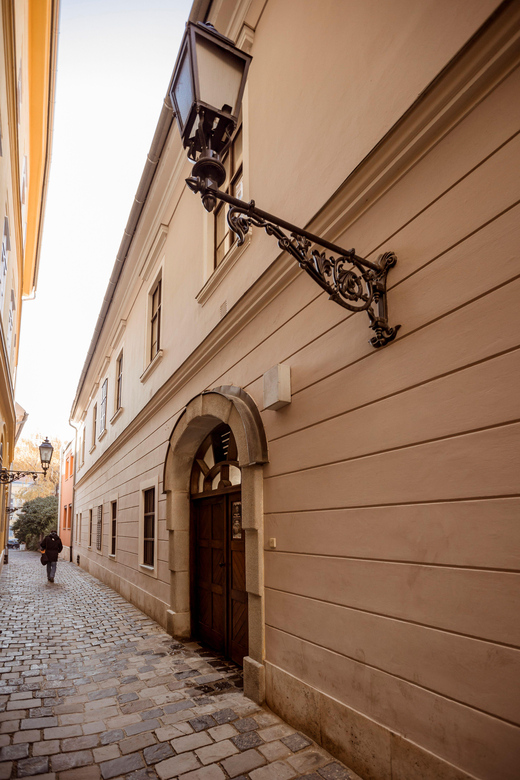
The whole experience starts at De la Motte-B.-Palace, Dísz tér 15, 1014 Budapest, next to the Posta building at the big green gate. Look for a staff member holding a turquoise umbrella with the Buda Castle Walks logo.
Two practical tips based on real-world friction points:
- Give yourself extra minutes to locate the meeting spot. There can be building work in the area, which makes it harder to spot the group quickly.
- Arrive on time. The program starts promptly at the listed time and the guide cannot wait for latecomers.
This matters more than you’d think because you’re heading into a route with stairs and enclosed passages. Starting late can throw off your whole day, including your energy level before you even go underground.
More of Castle Hill, cobble by cobble:
- Budapest: Buda Castle Cave Tour
★ 4.7 · 5,677 reviews - Budapest: Buda Castle District Vampires and Myths Night Tour
★ 4.6 · 3,830 reviews - Budapest: Buda Castle Walk with Saint Stephen’s Hall
★ 4.5 · 3,012 reviews
Úri Street and Castle Hill: The Above-Ground Intro That Makes the Underground Pay Off
Before you go beneath Castle Hill, you get oriented in the Palace District. You walk through parts of the castle-area streets that help you later “read” the underground network like a continuation of the city above.
On the surface, your guide points out what people could see, move toward, and hide from as the siege tightened around Budapest. This above-ground context is what makes the cave visit more than a curiosity stop. You’ll better understand why people packed into cellars and caves in the first place: shelter wasn’t abstract. It was close, limited, and hard-won.
Even if you already know the broad story of Budapest in 1944 and 1945, this section helps you connect it to the layout of the district. You’ll walk the streets with a map in your head, not just in your phone.
Entering the Buda Castle Cave: Cold Air, Narrow Corridors, Real Scale
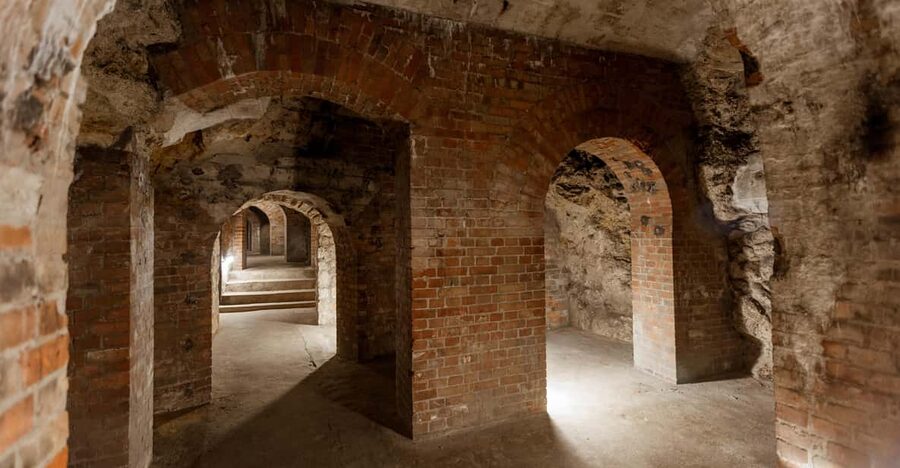
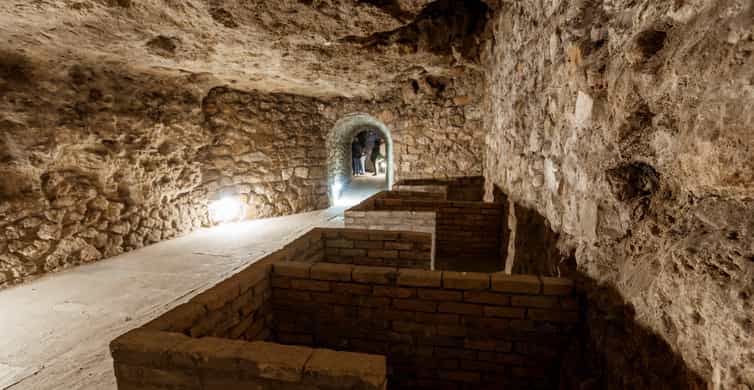
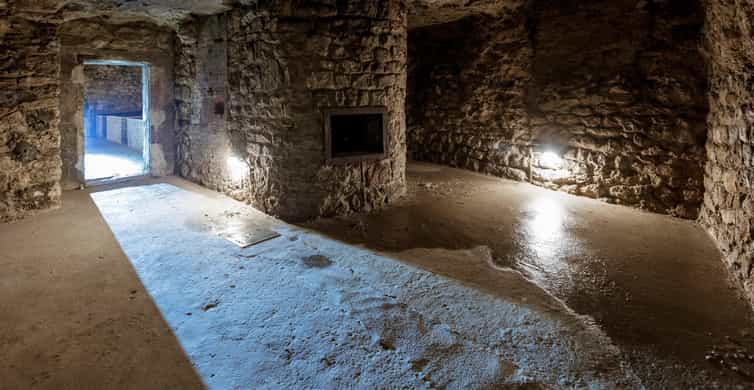
The highlight here is the time inside the Buda Castle Cave system, including a visit to a WWII bomb shelter. The tour includes both cave passages and an underground labyrinth, so you’re not just “in and out.”
Expect a controlled experience, but still a real one:
- You’ll be moving through tight spaces and dark corridors that are illuminated enough to follow along.
- You’ll encounter steep stairs and solid surfaces that can be wet.
- The temperature in the cellar and cave is about 12°C (54°F) year-round, so layers are not optional.
This is also where the emotional weight becomes more tangible. The siege wasn’t only about explosions. It was about survival conditions people couldn’t fix. In the cave and shelter, you’re physically reminded of what the guide is explaining: the lack of space, limited airflow, and the constant pressure of uncertainty.
If you’re the kind of person who likes your history grounded in physical reality, this part lands hard in a good way. If you dislike confined spaces, take the tour guidance seriously.
The WWII Bomb Shelter Story: What “Refuge” Looked Like in 1944
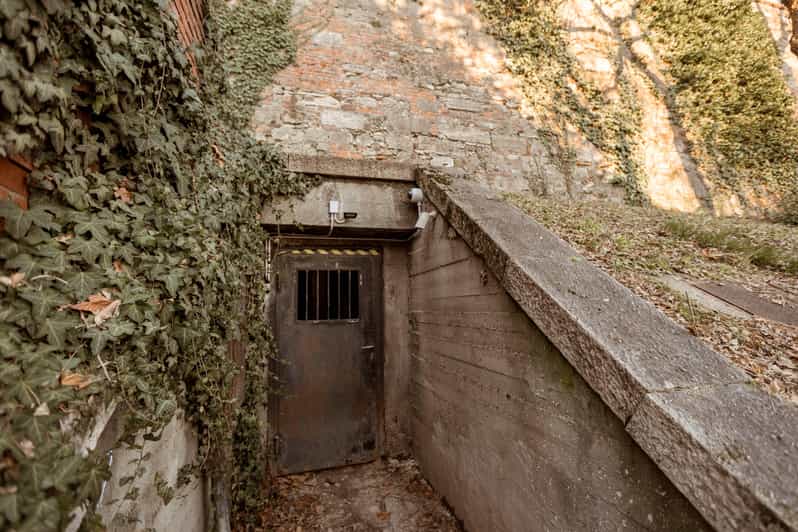
Inside, the tour focuses on how thousands of people sought refuge in Buda Castle during the siege. The people sheltering varied, including German and Hungarian soldiers, the wounded, and civilians. That mix is important because it makes the cave story broader than one side of the conflict.
Your guide walks you through what it took to keep going underground:
- cold and inadequate conditions
- darkness and difficulty moving
- overcrowding and disease risk
- the struggle to protect belongings and, in some cases, treasures associated with the Royal Palace area
A point I found valuable is that the guide links these conditions to human behavior. You’re not only hearing about hardship. You’re seeing why people still tried to salvage what they could. In a siege, people cling to small plans because big plans collapse.
Some guides named in participant feedback include Rita and Balacsz, and you may get different personalities depending on the day. Still, the core approach stays consistent: survivor-style storytelling in a real underground setting.
Still to cross in Budapest
- Budapest: City Highlights Sightseeing Cruise★ 4.6 · 43,981 reviews
- Budapest: Unlimited Prosecco, Beer and Aperol Spritz Cruise★ 4.8 · 37,304 reviews
- Budapest: Széchenyi Spa Day Ticket with Optional Upgrades★ 4.3 · 23,911 reviews
Cellars and Labyrinth Paths: Why the Underground Route Matters
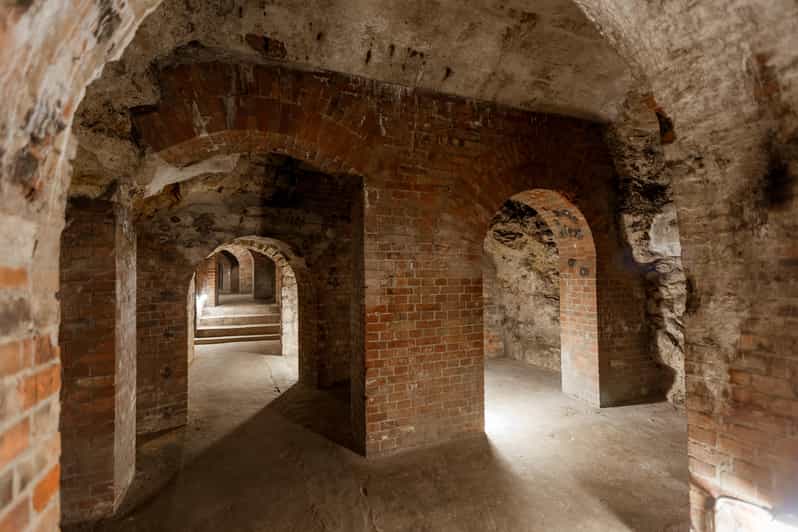
The tour isn’t a straight line from one sign to another. It includes a cellar from an old dwelling house and then the authentic WWII bomb shelter spaces in the cave system beneath the district.
That “maze-like” structure matters because it mirrors how confusing refuge could be during an emergency. In a normal day, you navigate by routine. During bombardment, you navigate by urgency, limited information, and limited safe options.
Also, the tour includes both indoor and outdoor time. That balance prevents the whole experience from feeling like a single museum hallway. You get moments to reset your eyes, then return to the claustrophobic feeling with fresh context.
One small but meaningful advantage: some participants mention the use of personal headphones. In practice, that can make a big difference when you’re walking outdoors and then switching into darker indoor areas where it’s easy to lose audio clarity.
How Long Is This, and How Fast Will You Walk?
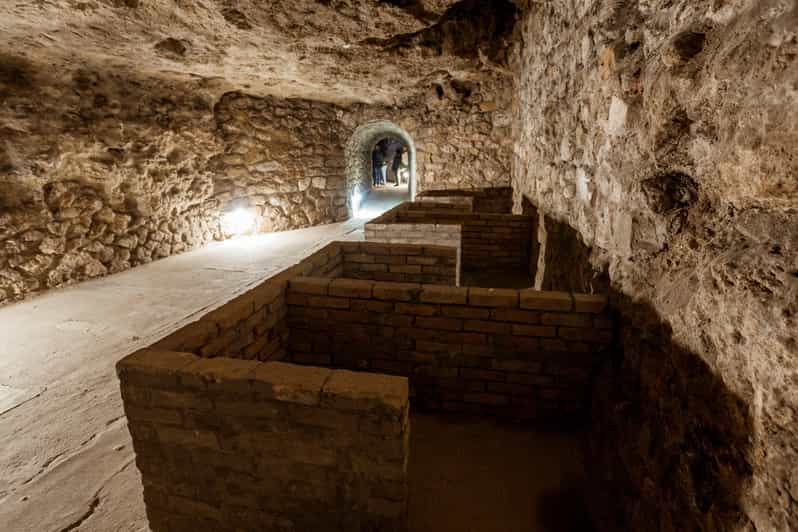
This is a 90-minute tour (listed duration 1.5 hours). It’s designed to be long enough to cover both the Castle district context and the underground passages, without turning into a full half-day project.
The pace is active, and that’s worth stating clearly. The route winds on cobbled streets and then continues into darker illuminated caves with steep stairs, narrow corridors, and sometimes wet footing. Comfortable shoes are a must, and warm clothing helps even above-ground, because you’ll move between cold stone and open air.
It’s recommended for ages 14 and up. It also isn’t suitable for:
- children under 14
- people with mobility impairments
- wheelchair users
- people with claustrophobia
If you’re deciding between “I can handle stairs” and “I hate tight spaces,” choose honestly. This tour is not the place for “I’ll try it and see.”
Price and Value: Is $24 a Good Deal for 90 Minutes Underground?
At $24 per person for about 90 minutes, this is fairly strong value for two reasons.
First, you’re paying for access to real underground spaces, not just a guided lecture at street level. Cave systems and bomb shelter areas are not something most visitors stumble onto easily.
Second, the tour is not only about the siege in general. You’re guided through a specific setting beneath the Castle district, including a cellar and WWII bomb shelter elements. That combination makes it feel like you’re getting both story and place, instead of one or the other.
One additional value signal: multiple participant comments highlight that the tours can feel personal when bookings are low. You should not assume that always happens, but it’s a nice bonus when it does.
Bottom line: for the content and the setting, $24 feels like a practical buy, as long as you’re comfortable with stairs and enclosed spaces.
Choosing the Right Guide Style: Rita, Jonas, Kopp, and Others
Guides strongly shape how a history tour feels. In the feedback for this experience, several names come up repeatedly, including Rita, Jonas, Kopp, Balacsz, and Cop. Common praise themes include how engaging the dialogue is, how well the guide keeps you moving, and how much detail is packed into the time.
There are also a couple of useful cautions to keep in mind:
- One participant noted Jonas’s English pronunciation could be a bit hard to catch at times if you’re a non-native speaker. If you’re sensitive to audio clarity, you may want to rely on any provided audio support and keep your expectations flexible.
- Another participant flagged that tunnels can feel claustrophobic. That aligns with the “not for claustrophobia” guidance.
If you tend to enjoy politics, history, and how people reason under extreme stress, this tour style usually clicks. One feedback comment even framed it as fun for a history, politics, and philosophy type mind, which sounds right. The siege wasn’t only military. It was also ethics, survival logic, and collapse of normal life.
When You Finish at Szentháromság tér, You’ll See the District Differently
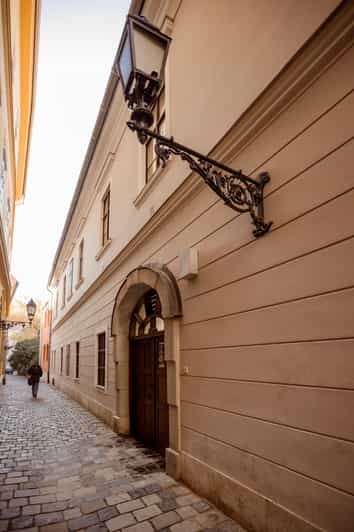
The tour ends at Szentháromság tér. By then, your brain will likely keep connecting what you saw underground back to the district streets you walked earlier.
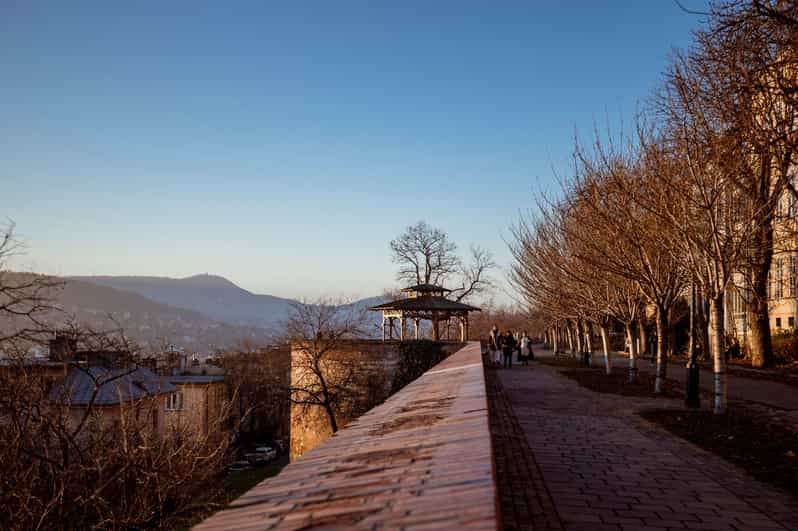
If you happen to do it late in the day, you might catch good Castle views during the return. One participant specifically mentioned finishing shortly before sunset on the west side of the castle walls. Timing isn’t guaranteed, but it’s a nice option if you want photos after the emotional weight of the caves.
Should You Book This WWII Siege and Bomb Shelter Tour?
Book it if you want a WWII experience that feels physical, not just factual. This tour is best for you if you:
- like walking history tours in real locations
- want to understand the siege of Budapest through survivor diaries and memoir-style stories
- are comfortable with stairs, caves, and enclosed spaces
- can handle cold stone temperatures by dressing in layers
Skip it if you’re prone to claustrophobia or you need step-free access. The route includes steep stairs, narrow corridors, and areas that may be wet. It’s also not recommended for children under 14.
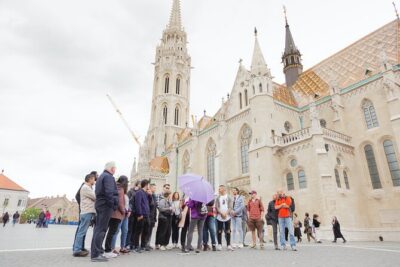
Finally, if you’re visiting Budapest and you already plan to spend time around Fisherman’s Bastion and Matthias Church, this tour is a smart counterpoint. It trades postcard views for the darker, real underside of the Castle district. That contrast is exactly what makes it memorable.
FAQ
How long is the tour?
It lasts about 90 minutes (1.5 hours).
Is the tour offered in English?
Yes, it’s guided in English.
Is the tour mostly underground?
A large portion is underground, including time in the Buda Castle Cave and shelter areas, with some above-ground walking as well.
What should I bring?
Bring comfortable shoes, warm clothing (layers help), snacks, and water.
What temperature should I expect in the caves?
The cellar and the Buda Castle Cave are about 12°C (54°F) all year round.
Who is this tour not suitable for?
It’s not suitable for children under 14, people with mobility impairments, wheelchair users, or people with claustrophobia.
Where do I meet, and where does it end?
Meet at De la Motte-B.-Palace, Dísz tér 15, 1014 Budapest, at the big green gate next to the Posta building, looking for the turquoise umbrella with the Buda Castle Walks logo. The tour ends at Szentháromság tér.
The newest crossings added in Budapest






Castle District Walks & Tickets, compared.
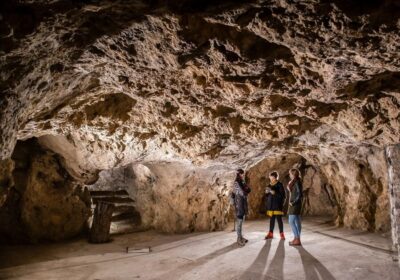

Buda Castle District Vampires and Myths Night Tour
Read our review →
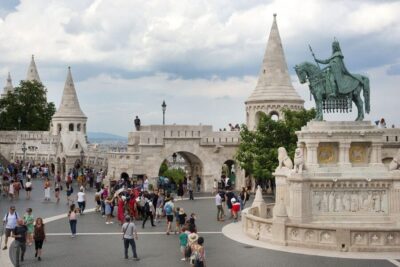
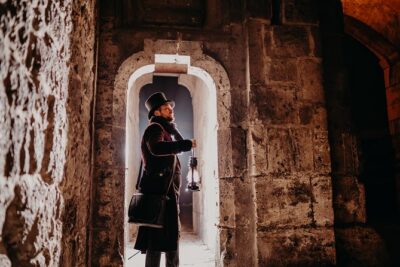
Buda Castle District Dark History, Legends and Vampire Night Tour
Read our review →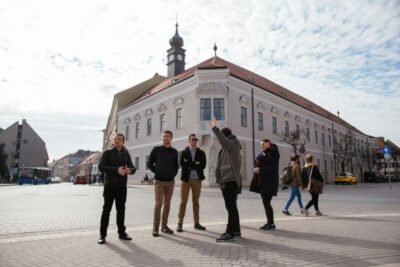
Buda Castle District Walking Tour with a Historian
Read our review →
Walking tour in the Buda Castle incl. Fisherman’s Bastion
Read our review →Browse the lists this tour appears in